

Blogs Trusted by Industry Leaders
A space to share our views and insights on the industry.
The Gambling Empire: Inside Thailand’s Billion-Baht Online Betting and Money Laundering Network
In April 2026, a Thai court sentenced the son of a former senator to more than 130 years in prison in connection with a major online gambling and money laundering operation that authorities say moved billions of baht through an extensive criminal network.
At the centre of the case was not merely illegal gambling activity, but a sophisticated financial ecosystem allegedly built to process, distribute, and disguise illicit proceeds at scale.
Authorities said the operation involved online betting platforms, nominee accounts, layered fund transfers, and interconnected financial flows designed to move gambling proceeds through the financial system while obscuring the origin of funds.
For banks, fintechs, payment providers, and compliance teams, this is far more than a gambling enforcement story.
It is another example of how organised financial crime increasingly operates through structured digital ecosystems that combine:
- illicit platforms,
- mule-account networks,
- layered payments,
- and coordinated laundering infrastructure.
And increasingly, these operations are beginning to resemble legitimate digital businesses in both scale and operational sophistication.

Inside Thailand’s Alleged Online Gambling Network
According to Thai authorities, the investigation centred around an online gambling syndicate accused of operating illegal betting platforms and laundering significant volumes of illicit proceeds through interconnected financial channels.
Reports linked to the case suggest the network allegedly relied on:
- multiple bank accounts,
- nominee structures,
- rapid movement of funds,
- and layered transaction activity designed to complicate tracing efforts.
That structure matters.
Modern online gambling networks no longer function as isolated betting operations.
Instead, many operate as financially engineered ecosystems where:
- payment collection,
- account rotation,
- fund layering,
- customer acquisition,
- and laundering mechanisms
are all tightly coordinated.
The gambling platform itself often becomes only the front-facing layer of a much larger financial infrastructure.
Why Online Gambling Remains a Major AML Risk
Online gambling presents a unique challenge for financial institutions because the underlying financial activity can initially appear commercially legitimate.
High transaction volumes, rapid fund movement, and frequent customer transfers are often normal within betting environments.
That creates operational complexity for AML and fraud teams attempting to distinguish:
- legitimate gaming behaviour,
- from structured laundering activity.
Criminal networks exploit this ambiguity.
Funds can be:
- deposited,
- redistributed across multiple accounts,
- cycled through betting activity,
- withdrawn,
- and transferred again across payment rails
within relatively short periods of time.
This creates an ideal environment for:
- layering,
- transaction fragmentation,
- and obscuring beneficial ownership.
And increasingly, digital payment ecosystems allow this movement to happen at scale.
The Role of Mule Accounts and Nominee Structures
No large-scale online gambling operation can effectively move illicit proceeds without access to account infrastructure.
The Thailand case highlights the critical role of:
- mule accounts,
- nominee account holders,
- and intermediary payment channels.
Authorities allege the network used multiple accounts to receive and redistribute gambling proceeds, helping distance the organisers from the underlying transactions.
These accounts may belong to:
- recruited individuals,
- account renters,
- synthetic identities,
- or nominees acting on behalf of criminal operators.
Their role is operationally simple but strategically important:
receive funds, move them rapidly, and reduce visibility into the true controllers behind the network.
For financial institutions, this creates a major detection challenge because individual transactions may appear ordinary when viewed in isolation.
But collectively, the patterns may indicate coordinated laundering behaviour.
The Industrialisation of Gambling-Linked Financial Crime
One of the most important lessons from this case is that organised online gambling is becoming increasingly industrialised.
This is no longer simply a matter of illegal betting websites collecting wagers.
Modern gambling-linked financial crime networks increasingly resemble structured digital enterprises with:
- payment workflows,
- operational hierarchies,
- customer acquisition systems,
- layered account ecosystems,
- and dedicated laundering mechanisms.
That evolution changes the scale of risk.
Instead of isolated illicit transactions, financial institutions are now confronting criminal systems capable of processing large volumes of funds through interconnected digital channels.
And because many of these flows occur through legitimate banking infrastructure, detection becomes significantly more difficult.

Why Traditional Detection Models Struggle
One of the biggest operational problems in gambling-linked laundering is that many suspicious activities closely resemble normal transactional behaviour.
For example:
- rapid deposits and withdrawals,
- frequent transfers between accounts,
- high transaction velocity,
- and fragmented payments
may all occur legitimately within digital gaming environments.
This creates substantial noise for compliance teams.
Traditional rules-based monitoring systems often struggle because:
- thresholds may not be breached,
- transaction values may appear routine,
- and individual accounts may initially show limited risk indicators.
The suspicious behaviour often becomes visible only when viewed collectively across:
- multiple accounts,
- devices,
- counterparties,
- transaction patterns,
- and behavioural relationships.
Increasingly, organised financial crime detection is becoming less about isolated alerts and more about understanding networks.
The Convergence of Gambling, Fraud, and Money Laundering
The Thailand case also reinforces a broader regional trend:
the convergence of multiple financial crime categories within the same ecosystem.
Online gambling networks today may overlap with:
- mule-account recruitment,
- cyber-enabled scams,
- organised fraud,
- illicit payment processing,
- and cross-border laundering activity.
This convergence matters because criminal organisations rarely specialise narrowly anymore.
The same infrastructure used to process gambling proceeds may also support:
- scam-related fund movement,
- account abuse,
- identity fraud,
- or broader organised criminal activity.
For financial institutions, separating these risks into isolated categories can create dangerous blind spots.
The financial flows are increasingly interconnected.
Detection strategies must evolve accordingly.
What Financial Institutions Should Monitor
Cases like this highlight several important behavioural and transactional indicators institutions should monitor more closely.
Rapid pass-through activity
Accounts receiving and quickly redistributing funds across multiple beneficiaries.
Clusters of interconnected accounts
Multiple accounts sharing behavioural similarities, counterparties, devices, or transaction structures.
High-volume low-value transfers
Repeated fragmented payments designed to avoid scrutiny while moving significant aggregate value.
Frequent account rotation
Beneficiary accounts changing rapidly within short timeframes.
Unusual payment velocity
Transaction behaviour inconsistent with expected customer profiles.
Links between gambling-related transactions and broader suspicious activity
Connections between betting-related flows and potential scam, fraud, or mule-account indicators.
Individually, these signals may appear weak.
Together, they can reveal coordinated laundering ecosystems.
Why Financial Institutions Need More Connected Intelligence
The Thailand gambling case highlights why static AML controls are increasingly insufficient against organised digital financial crime.
Modern criminal ecosystems evolve quickly:
- payment channels change,
- laundering routes shift,
- mule structures rotate,
- and digital platforms adapt constantly.
This creates operational pressure on institutions still relying heavily on:
- isolated transaction monitoring,
- static rules,
- manual investigations,
- and fragmented fraud-AML workflows.
What institutions increasingly need is:
- behavioural intelligence,
- network visibility,
- typology-driven monitoring,
- and the ability to connect signals across fraud and AML environments simultaneously.
That is especially important in gambling-linked laundering because the suspicious behaviour often emerges gradually through relationships and coordinated movement rather than single anomalous transactions.
How Technology Can Help Detect Organised Gambling Networks
Advanced AML and fraud platforms are becoming increasingly important in identifying complex laundering ecosystems linked to online gambling.
Modern detection approaches combine:
- behavioural analytics,
- network intelligence,
- entity resolution,
- and typology-driven detection models
to uncover hidden relationships within financial activity.
Platforms such as Tookitaki’s FinCense help institutions move beyond isolated transaction monitoring by combining:
- AML and fraud convergence,
- behavioural monitoring,
- collaborative intelligence through the AFC Ecosystem,
- and network-based detection approaches.
In scenarios involving gambling-linked laundering, this allows institutions to identify:
- mule-account behaviour,
- suspicious account clusters,
- layered payment structures,
- and coordinated fund movement patterns
earlier and with greater operational context.
That visibility becomes critical when criminal ecosystems are specifically designed to appear operationally normal on the surface.
How Tookitaki Helps Institutions Detect Gambling-Linked Laundering Networks
Cases like the Thailand gambling investigation demonstrate why financial institutions increasingly need a more connected and intelligence-driven approach to financial crime detection.
Traditional monitoring systems are often designed to review transactions in isolation. But organised gambling-linked laundering networks operate across:
- multiple accounts,
- payment rails,
- beneficiary relationships,
- mule structures,
- and layered transaction ecosystems simultaneously.
This makes fragmented detection increasingly ineffective.
Tookitaki’s FinCense platform helps financial institutions strengthen detection capabilities by combining:
- AML and fraud convergence,
- behavioural intelligence,
- network-based risk detection,
- and collaborative typology insights through the AFC Ecosystem.
In gambling-linked laundering scenarios, this allows institutions to identify:
- suspicious account clusters,
- rapid pass-through activity,
- mule-account behaviour,
- layered payment movement,
- and hidden relationships across customers and counterparties
more effectively and earlier in the risk lifecycle.
The AFC Ecosystem further strengthens this approach by enabling institutions to leverage continuously evolving typologies and real-world financial crime intelligence contributed by compliance and AML experts globally.
As organised financial crime becomes more interconnected and operationally sophisticated, institutions increasingly need detection systems capable of understanding not just transactions, but the broader ecosystems operating behind them.
The Bigger Picture: Online Gambling as Financial Infrastructure Abuse
The Thailand case reflects a broader regional and global shift in how organised crime uses digital infrastructure.
Online gambling platforms are increasingly functioning not merely as illicit entertainment channels, but as financial movement ecosystems capable of:
- processing large transaction volumes,
- redistributing illicit funds,
- and integrating criminal proceeds into the legitimate economy.
That distinction matters.
Because the challenge for financial institutions is no longer simply identifying illegal gambling transactions.
It is understanding how legitimate financial systems can be systematically exploited to support broader criminal operations.
And increasingly, those operations are designed to blend into normal digital financial activity.
Final Thoughts
The massive online gambling and money laundering case uncovered in Thailand offers another clear reminder that organised financial crime is becoming more digital, more structured, and more operationally sophisticated.
What appears outwardly as illegal betting activity may actually involve:
- coordinated laundering infrastructure,
- mule-account ecosystems,
- layered financial movement,
- nominee structures,
- and highly organised criminal coordination operating behind the scenes.
For financial institutions, this creates a difficult but increasingly important challenge.
The future of financial crime prevention will depend less on identifying isolated suspicious transactions and more on understanding hidden financial relationships, behavioural coordination, and evolving laundering typologies across interconnected payment ecosystems.
Because increasingly, organised financial crime does not look chaotic.
It looks operationally efficient.

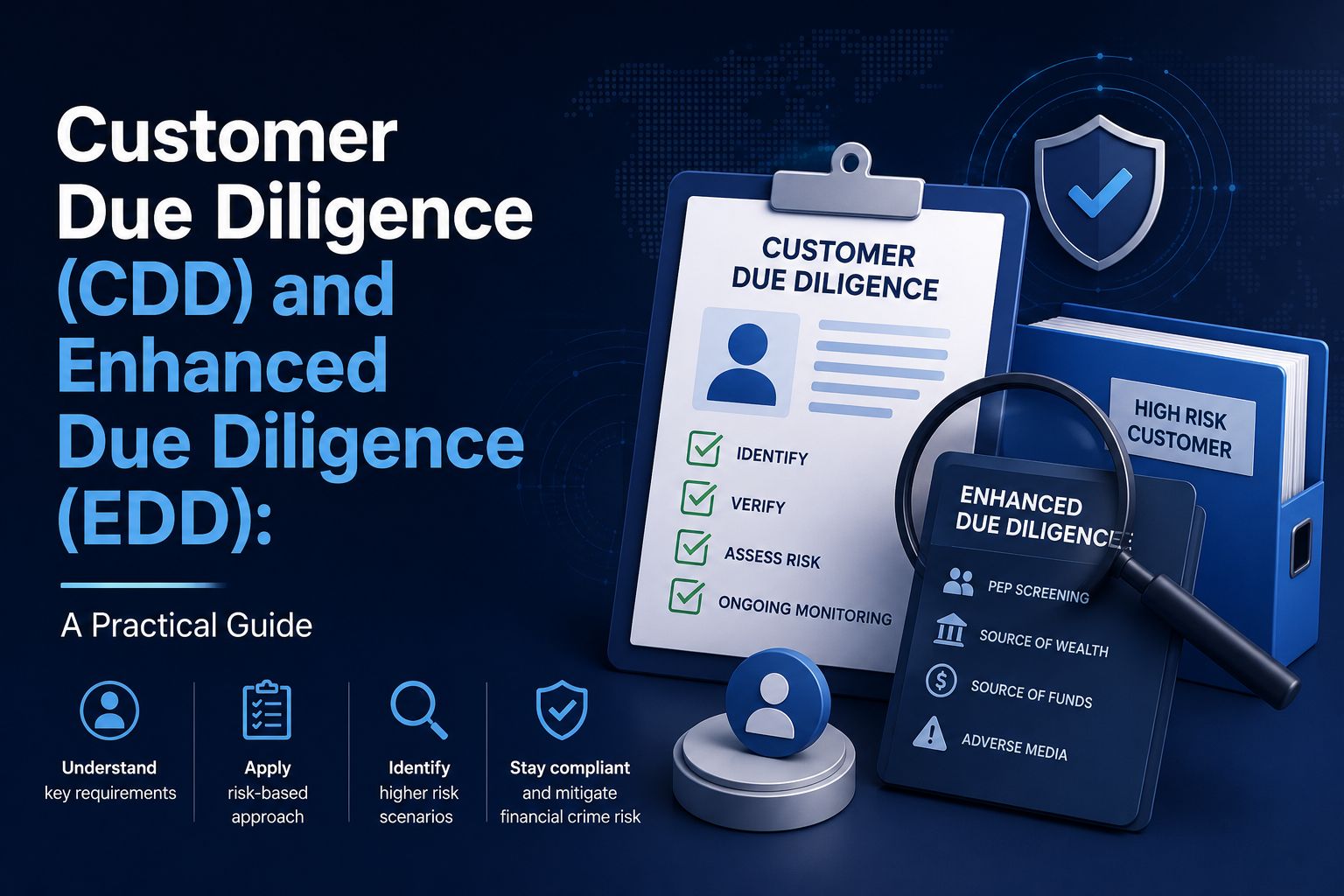
Customer Due Diligence (CDD) and Enhanced Due Diligence (EDD): A Practical Guide
Most CDD failures that auditors find are not in the trigger decision. Compliance teams generally know when to apply enhanced due diligence. The problem is what happens next: the review gets done, the account stays open, and three years later an examiner opens the file and finds a risk assessment with no source-of-wealth narrative, a senior management approval that amounts to a single line in an email chain, and no evidence that monitoring was ever adjusted upward.
A poorly documented EDD review is treated by supervisors the same as no EDD at all. That is the uncomfortable reality driving examination findings across MAS, BNM, BSP, and AUSTRAC-regulated institutions right now.
This guide is not a glossary. It is a working reference for compliance professionals at banks, fintechs, and payment institutions across APAC who need to understand what CDD and EDD require, how the three tiers operate under each major regulator, and what examiners actually look at when they review a customer file.
What Is Customer Due Diligence (CDD)?
Under the FATF Recommendations, customer due diligence is the process of identifying and verifying a customer's identity, understanding the purpose and nature of the business relationship, and conducting ongoing monitoring of that relationship and the transactions flowing through it.
CDD is the core of the KYC process. It sits at the foundation of every AML/CFT programme and applies from the moment a customer relationship is established.
FATF Recommendations 10 through 12 set out four core CDD elements:
- Customer identification and verification — collect identifying information and verify it against reliable, independent source documents
- Beneficial ownership identification and verification — identify the natural persons who ultimately own or control a legal entity, and verify their identities
- Understanding the purpose and intended nature of the business relationship — establish why the customer wants an account, what they intend to do with it, and what transaction volumes to expect
- Ongoing monitoring — continuously review the customer relationship, monitor transactions against the customer's profile, and keep CDD records current
The fourth element is where most programmes are weakest. Institutions invest heavily in onboarding controls and then treat the relationship as static. Customers' risk profiles change. Beneficial ownership structures change. Transaction behaviour changes. A customer who was low-risk at onboarding may not remain low-risk at year three — and the programme has to be capable of detecting and responding to that shift.
Three Tiers of CDD: Simplified, Standard, and Enhanced
Simplified Due Diligence (SDD)
Simplified CDD applies where the risk of money laundering or terrorism financing is demonstrably low. FATF allows reduced identification requirements and less frequent monitoring — but it does not eliminate CDD obligations entirely.
Across APAC, SDD is generally permissible for:
- Government entities and state-owned enterprises
- Companies listed on recognised stock exchanges in low-risk jurisdictions
- Certain low-value financial products, such as basic deposit accounts below a specified threshold
The key word is demonstrably. SDD is a documented, risk-based decision. Using it as a default to reduce onboarding friction — without a written risk rationale — is a compliance failure, not an efficiency gain. Examiners will ask for the rationale and they will expect to find it in the file.
Standard CDD
Standard CDD is the default tier. It applies to all customers who do not qualify for SDD and do not trigger EDD.
For individual customers, standard CDD requires:
- Government-issued photo identification
- Proof of address — or an equivalent verification method where physical documents are not available (see the guide to eKYC as a CDD method under BNM's guidelines
- A record of the purpose and expected nature of the account
For legal entity customers, standard CDD requires:
- Certificate of incorporation
- Memorandum and articles of association
- Register of directors
- Beneficial ownership identification — who owns 25% or more of the entity, or who exercises effective control
- Business description and expected transaction patterns
The purpose-of-account requirement is often under-documented. "General business transactions" is not sufficient. The record should capture the customer's stated business activity, the expected transaction types, the anticipated value range, and the source of the initial deposit for corporate accounts.
Enhanced Due Diligence (EDD)
EDD is not optional when it is triggered. It applies to customers with higher-risk characteristics and requires:
- Source of funds verification — where did the money come from for this specific transaction or deposit?
- Source of wealth verification — how did the customer accumulate their overall wealth?
- Senior management or board approval before establishing or continuing the relationship
- Enhanced ongoing monitoring — higher alert sensitivity and more frequent periodic reviews
FATF Recommendation 12 specifies EDD for politically exposed persons. Individual APAC regulators have extended these requirements to cover additional high-risk categories (see the comparative table below).
EDD is a process of investigation, not a checklist. Collecting a salary slip and noting "source of funds: employment income" does not constitute adequate source-of-wealth documentation for a PEP with an account balance of SGD 4 million. The quality of the investigation is what an examiner assesses.
EDD Triggers — When Standard CDD Is Not Enough
The following characteristics trigger EDD requirements across APAC jurisdictions:
PEP status. Any customer identified as a politically exposed person — or a known close relative or close associate of a PEP — triggers mandatory EDD. See our PEP screening guide for the full classification framework, including how "close associate" is defined across different regimes.
High-risk jurisdiction. Customers resident in, or transacting with, jurisdictions on the FATF grey or black lists trigger EDD. The FATF list currently includes Iran, North Korea, and Myanmar. APAC regulators may apply additional country designations based on their own risk assessments.
Complex ownership structure. Beneficial ownership held through multiple layers of legal entities, trusts, or nominee arrangements — particularly in offshore jurisdictions — triggers EDD. The structural complexity itself is a risk indicator, not just the underlying beneficial owner's profile.
High-value transaction inconsistent with profile. A transaction materially inconsistent with the customer's stated purpose, income level, or established transaction history triggers a review. Whether that review rises to EDD depends on what the initial investigation reveals.
Monitoring alerts that cannot be resolved at standard investigation. An alert that the transaction monitoring team cannot close through normal investigation escalates to EDD review. The two processes are connected: transaction monitoring is the mechanism by which ongoing CDD obligations are operationalised. When a customer's transaction behaviour diverges from their risk profile, the CDD record must be updated.
Correspondent banking. Under FATF Recommendation 13, correspondent banking relationships always require EDD. Before establishing a correspondent relationship, the respondent institution's AML/CFT programme must be assessed, the nature of the relationship must be documented, and senior management approval must be obtained.
APAC Regulatory Requirements — Comparative Overview
The following table summarises how the major APAC regulators implement the FATF CDD framework. The instruments and specific requirements differ, but the underlying obligations are consistent.
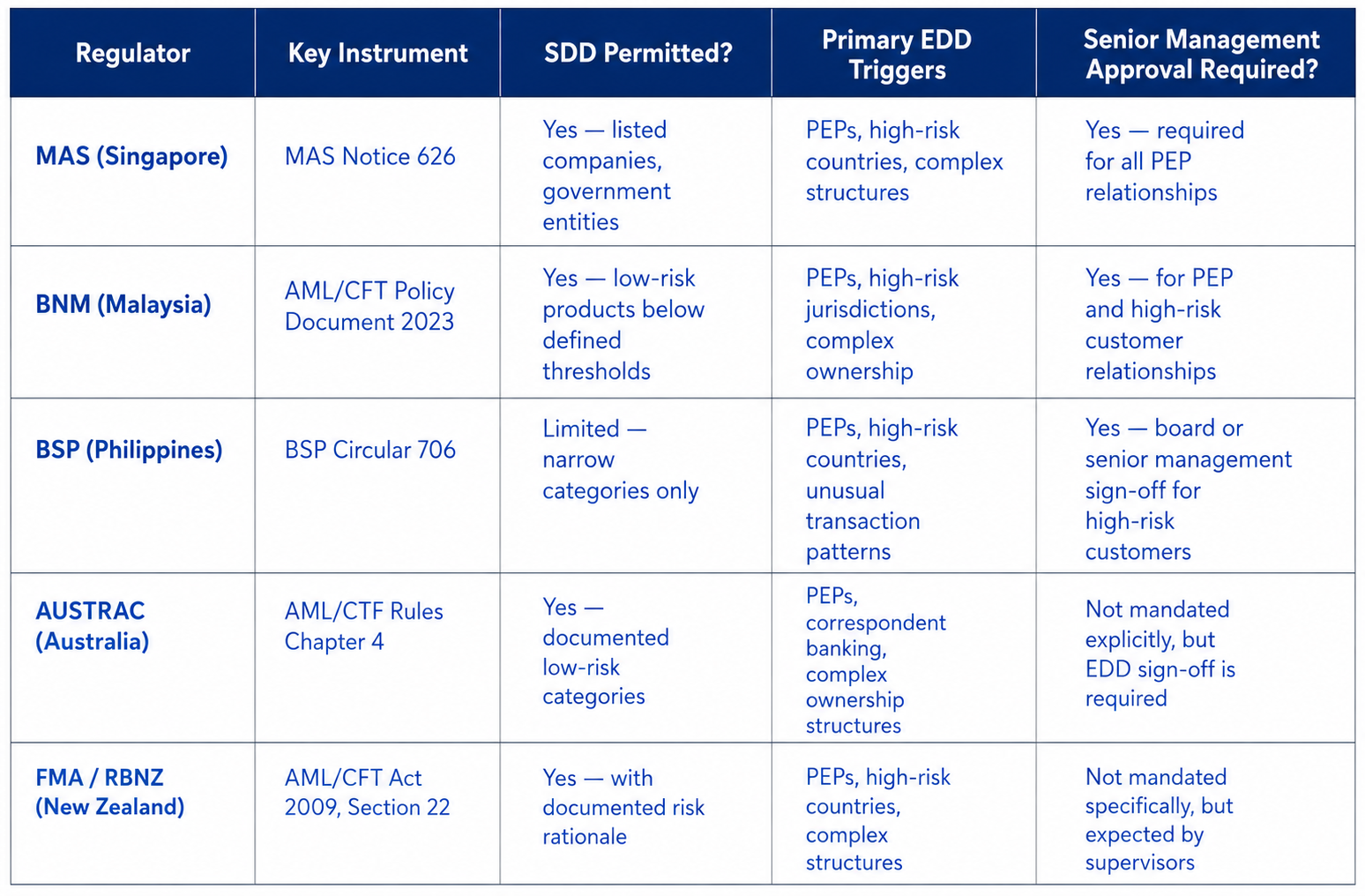
MAS Notice 626 is the most prescriptive of these instruments on the question of PEP approval — it requires that a senior officer approves the establishment or continuation of a PEP relationship, not just that the relationship is flagged. BSP's Circular 706 requires approval at board or senior management level for all high-risk customers, which is broader than the PEP-specific requirement in some other jurisdictions.
Beneficial Ownership — The Hardest Part of CDD in Practice
FATF Recommendation 10 requires identifying the ultimate beneficial owner (UBO) — the natural person or persons who ultimately own or control a legal entity. The standard FATF threshold is 25% ownership or effective control.
APAC regulators apply variations: BNM and MAS both use 25%. BSP applies 20% for certain entity types. Effective control — the ability to direct the decisions of a legal entity regardless of ownership percentage — applies across all jurisdictions regardless of the threshold.
UBO verification is the most common CDD gap in APAC examination findings. The reasons are practical: complex layered ownership structures, nominee shareholding arrangements, and trusts without publicly accessible beneficiary registers make verification genuinely difficult.
The practical approach is to collect the full ownership chain — every layer, every entity, until you reach the natural person at the top. If a structure is genuinely opaque after reasonable investigation, that opacity is itself a risk indicator requiring EDD, not a reason to proceed with the account on the basis of what the customer has disclosed. An examiner will ask whether the institution made reasonable efforts to verify, and what happened when verification was incomplete.
Ongoing CDD — What "Continuous" Means in Practice
FATF's requirement for ongoing monitoring is not satisfied by periodic review alone. It has two components: scheduled reviews and event-based triggers.
Periodic reviews vary by risk tier. Most APAC regulators expect high-risk customers to be reviewed at least annually. Standard-risk customers are typically reviewed every two to three years, though the specific interval should be documented in the institution's risk appetite and CDD policy.
Event-based triggers require a review regardless of the scheduled cycle. These include:
- A transaction monitoring alert linked to the customer
- Adverse media coverage naming the customer
- A change in the customer's beneficial ownership
- A material change in transaction patterns
- A change in the customer's business activity or geographic footprint
Re-KYC is required when a periodic review or event trigger shows that existing CDD documentation is insufficient, outdated, or no longer accurate. The institution must re-verify the customer's identity and update the CDD record.
Every review must be documented. An examiner looking at a three-year-old account should be able to open the file, find the review dates, see what was assessed at each review, and understand what was found. A review that happened but was not recorded is indistinguishable from a review that did not happen.
What Examiners Actually Check
Documentation requirements differ by customer type, but the principle is the same across all of them: the file must tell a coherent story about who the customer is, what they do, and why the institution assessed them at the risk tier they sit in.
Individual customer files should contain:
- The original ID document reference or eKYC session record, including the verification method and date
- Address verification
- A purpose-of-account statement, not a generic field entry
- Any review dates and what the review assessed
Corporate customer files should contain:
- A complete corporate structure chart reaching the UBO
- UBO identification with the verification source documented
- Business purpose documentation that goes beyond the registered company description
- Expected transaction volume and product usage at account opening
EDD customer files should contain:
- Source of funds evidence — bank statement, salary slip, property sale contract, or equivalent
- Source of wealth narrative — not just an assertion that wealth came from "business activities," but a documented account of how
- The senior management or board approval record, with the date and the approver named
- Confirmation that enhanced monitoring has been configured and is active
The audit trail requirement covers every step: each CDD review, each document update, each approval decision. Everything should be timestamped and linked to the customer record. When examiners trace an alert back to the customer file, they expect to find a complete picture of the relationship, not a collection of disconnected documents.
How Technology Supports CDD
A modern CDD and KYC platform automates document collection, verification — including remote eKYC — UBO mapping, risk scoring, and the ongoing monitoring review cycle. The automation does not reduce the compliance obligation; it reduces the operational cost of meeting it and produces the audit trail that manual processes frequently fail to generate.
The critical integration point is between CDD and transaction monitoring. When a customer's monitoring profile changes — new alert patterns, unusual activity, a shift in counterparty geography — that signal should trigger a CDD review. In institutions where these systems operate independently, the connection rarely happens in a timely or documented way. For a full framework covering how to evaluate software that handles both CDD and transaction monitoring together, see our Transaction Monitoring Software Buyer's Guide.
Book a demo to see how FinCense manages CDD, customer risk scoring, and ongoing monitoring in a single integrated platform — with a full audit trail that meets examiner expectations across MAS, BNM, BSP, and AUSTRAC-regulated environments.
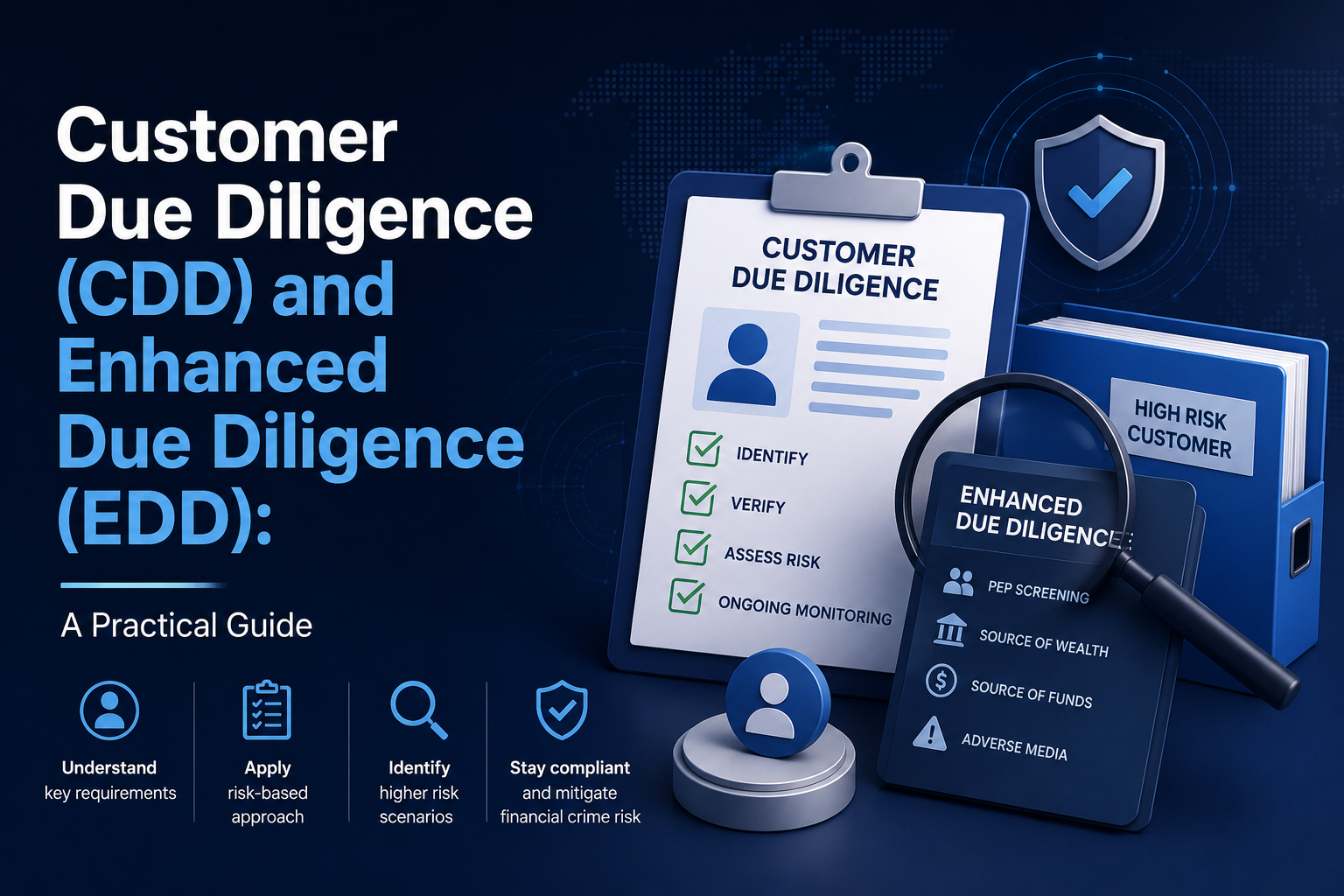
Transaction Monitoring in the Philippines: BSP and AMLC Requirements Explained
The Philippines was grey-listed by FATF in June 2021. The formal findings cited several strategic deficiencies — inadequate suspicious transaction report filings, weak transaction monitoring calibration, and gaps in oversight of virtual asset service providers. These were not abstract policy failures. They reflected real examination findings inside real financial institutions.
The Philippines exited the grey list in January 2023 after demonstrating legislative reform and measurable supervisory improvement. That exit was a significant regulatory milestone. It was not the end of BSP's focus on transaction monitoring quality.
If anything, the post-exit period has intensified examination scrutiny. BSP examiners now have two years of data on which institutions improved their AML programmes during the grey-list period and which made the minimum adjustments to satisfy the timeline. Compliance teams treating January 2023 as the end of a compliance improvement cycle are misreading where BSP examination focus is heading in 2026.
The Philippines AML Framework: The Foundation for Transaction Monitoring
Transaction monitoring obligations for Philippine financial institutions rest on a layered statutory and regulatory framework.
The primary legislation is Republic Act 9160, the Anti-Money Laundering Act of 2001, as amended by RA 9194, RA 10167, RA 10365, and RA 11521 in 2021. RA 11521 was the most significant package of amendments — it expanded the list of covered persons, strengthened freeze and forfeiture powers, and addressed VASP oversight, which had been a specific FATF deficiency finding.
The Anti-Money Laundering Council (AMLC) is the Philippines' Financial Intelligence Unit. It is a collegial body comprising the BSP Governor, the SEC Chairperson, and the Insurance Commissioner. AMLC issues implementing rules and regulations under AMLA, maintains the Philippines' FIU reporting systems, and receives CTR and STR filings from covered institutions.
BSP functions as the prudential supervisor for banks, quasi-banks, e-money issuers, remittance companies, and virtual asset service providers. In the AML context, BSP issues its own circulars that operationalise AMLA requirements for supervised institutions. BSP Circular 706 is the foundational AML circular, establishing the programme requirements — customer due diligence, transaction monitoring, record-keeping, reporting — that all BSP-supervised institutions must implement. Subsequent circulars have amended and extended these requirements.
For a detailed explanation of how transaction monitoring works as a function within a broader AML programme, the compliance hub guide covers the mechanics. What this article addresses is the specific Philippine regulatory framework that governs how that function must be structured.
BSP Circular 706: What the Monitoring Requirement Actually Requires
BSP Circular 706 does not prescribe a specific system architecture or vendor. It requires covered institutions to implement a risk-based transaction monitoring system commensurate with the nature, size, and complexity of their business.
The system must be capable of detecting:
- Unusual transactions that deviate from the customer's established pattern
- Suspicious patterns across multiple transactions over time
- Transactions inconsistent with the customer's stated business purpose or risk profile
- Structuring activity — transactions split or sequenced to avoid reporting thresholds
Alert investigation is where many institutions' programmes fall short. Under Circular 706, every alert generated by the monitoring system must be assessed by the designated AML compliance officer or a delegated AML officer. The assessment must be documented. Either the alert is closed with a written rationale explaining why it does not require escalation, or it is escalated to an STR review. An alert queue with no documented dispositions is an examination finding regardless of the sophistication of the detection logic that generated those alerts.
Calibration requirements are explicit: monitoring thresholds and detection scenarios must be reviewed when the institution's customer profile changes materially, when new products are launched, and at minimum on an annual basis. Institutions that deployed a monitoring system with vendor-default thresholds and have not since documented a calibration review — with written evidence, specific dates, and sign-off from a named responsible officer — cannot demonstrate compliance with this requirement.
Record retention applies to all investigation records. BSP examiners will sample alert dispositions. They expect to see both the trigger logic that generated the alert and the investigation rationale that determined its outcome. A system that generates alerts but cannot produce the decision trail does not meet the documentation standard.
AMLC Reporting: Thresholds, Timelines, and the Tipping-Off Prohibition
Two primary reporting obligations flow from an effective transaction monitoring programme.
Covered Transaction Reports (CTRs) apply to cash transactions or cash equivalents within a single banking day amounting to PHP 500,000 or more. The filing deadline is 5 working days from the date of the transaction. CTRs are volume-driven — a compliant programme needs a workflow that captures these transactions automatically and routes them to the filing process within the deadline.
Suspicious Transaction Reports (STRs) have no minimum threshold. The reporting obligation is triggered by suspicion, not by transaction size. A PHP 5,000 transaction can require an STR if the compliance officer determines that it is suspicious. The filing deadline is 5 working days from the date of determination — meaning the date on which the compliance officer concluded that the transaction or attempted transaction is suspicious. This distinction is important. The clock does not start when the underlying transaction occurred. It starts when the determination is made. Institutions with investigation workflows that allow alerts to sit unworked for days before a determination is reached are systematically at risk of missing this deadline.
The tipping-off prohibition under AMLA is absolute. An institution is strictly prohibited from informing, or taking any action that would inform, the subject of a transaction that an STR has been or is being prepared. Violation is a criminal offence. This prohibition must be embedded in investigation procedures — particularly for institutions where front-line relationship managers are involved in the investigation process and may have direct contact with the customer.
All CDD records, transaction records, and monitoring documentation must be retained for a minimum of 5 years.
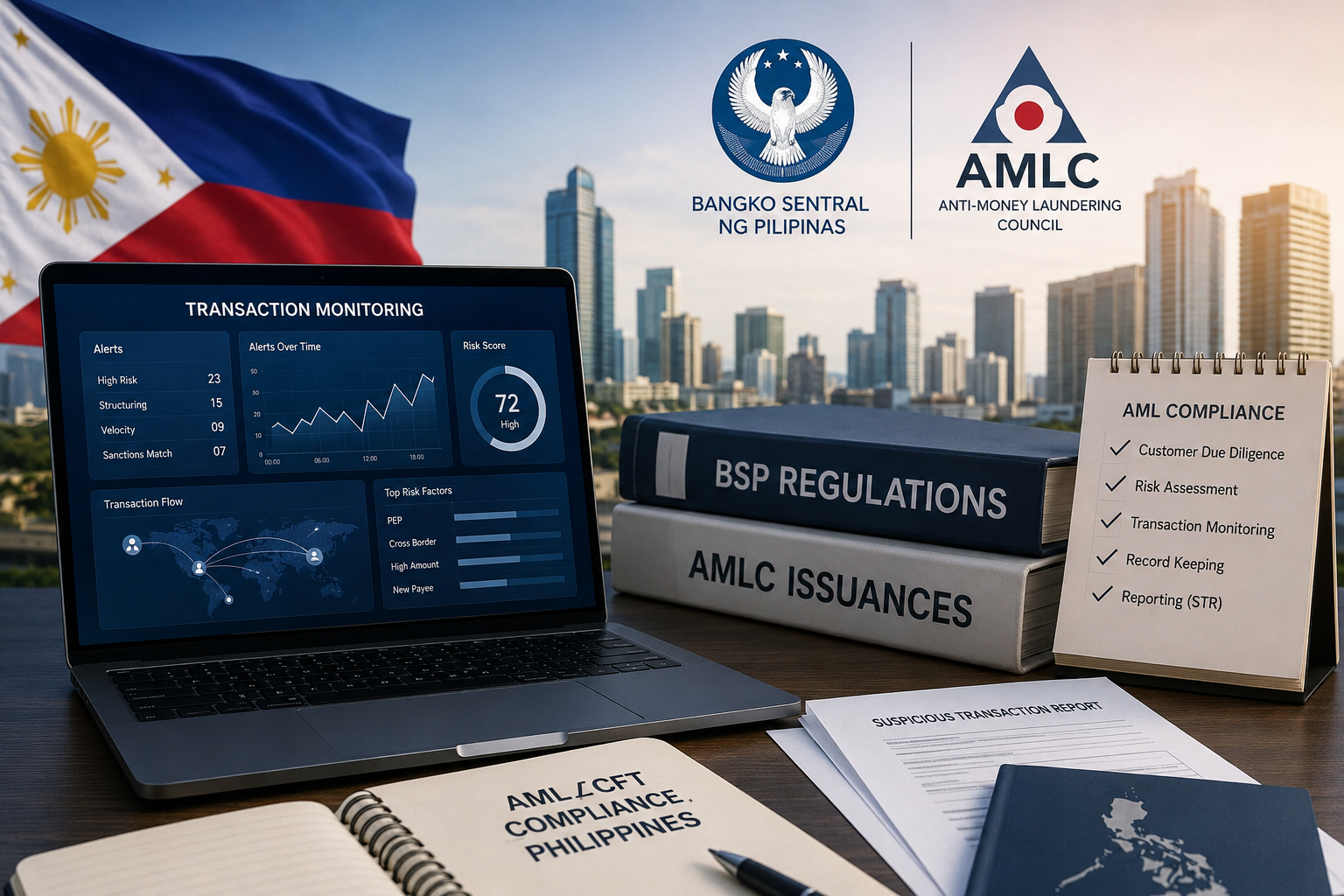
VASP-Specific Transaction Monitoring: BSP Circular 1108
BSP Circular 1108, issued in 2021, established the regulatory framework for Virtual Asset Service Providers — crypto exchanges, custodian wallet providers, and peer-to-peer virtual asset trading platforms. VASPs are classified as covered persons under AMLA and must register with both BSP and AMLC.
The transaction monitoring requirements for VASPs are structurally the same as for other BSP-supervised institutions: automated monitoring system, calibrated thresholds, documented alert investigations, CTR and STR filing. There is no lighter-touch version of these requirements because the institution is dealing in virtual assets rather than fiat currency.
VASP-specific compliance under AMLC also incorporates the FATF Travel Rule — Recommendation 16. BSP has signalled alignment with this requirement, meaning VASPs must collect and transmit originator and beneficiary information for virtual asset transfers above the USD 1,000 equivalent threshold. This is not a future aspiration — it is part of the BSP-supervised VASP compliance framework now.
The monitoring challenge for VASPs is that generic bank TM scenario libraries do not cover the typologies that matter in the virtual asset context. Peer-to-peer volume clustering, rapid stablecoin conversion, mixing and tumbling patterns, and cross-chain transfers all require scenario coverage that a standard bank monitoring ruleset does not include. A VASP that has deployed a bank-oriented monitoring system without building crypto-specific detection logic has a coverage gap that a BSP examination of its VASP activities will find.
For Philippine institutions managing sanctions screening obligations under BSP and AMLC alongside their transaction monitoring programme, the VASP context adds a further dimension — virtual asset transfers require real-time sanctions screening at the point of instruction, not batch processing.
Risk-Based Monitoring in Practice: What BSP Expects
BSP's supervision approach is explicitly risk-based. The monitoring programme must reflect the institution's own customer risk assessment. An institution with a predominantly retail customer base has different monitoring requirements than one serving high-net-worth individuals, corporate treasuries, or remittance corridors into high-risk jurisdictions.
High-risk customer categories in the Philippines context include:
- Politically exposed persons (PEPs) and their relatives and close associates — the Philippines context includes domestic PEPs at national and local government level
- Customers from FATF-listed high-risk and other monitored jurisdictions
- Customers with beneficial ownership structures involving foreign holding entities
- Remittance customers sending to AMLC-designated high-risk corridors, including specific Middle East and US remittance routes
Philippine-specific typologies that monitoring scenarios must cover include e-wallet mule account networks — GCash and Maya are both BSP-supervised e-money platforms with significant retail penetration, and BSP has specifically flagged mule account exploitation as a monitored typology. Authorised push payment scam layering through bank accounts is a growing pattern. Cross-border structuring via remittance corridors to the US and Middle East is a documented Philippines financial crime pattern.
BSP examination practice has consistently identified one category of finding above others: institutions that use vendor-default monitoring thresholds without any documented evidence that those thresholds were reviewed against the institution's specific customer risk profile. A threshold set to vendor defaults is not a risk-based threshold. It is a vendor threshold that may or may not be appropriate for a given institution's risk profile — and the institution cannot demonstrate which without a documented calibration exercise.
Common Transaction Monitoring Examination Findings
Based on BSP examination findings and regulatory guidance since the grey-list period, the following deficiency patterns appear repeatedly.
STR filing delays. The 5-working-day deadline runs from determination. Institutions with investigation backlogs — where alerts sit in a queue without active review — push the determination date later, which compresses the filing window. When the investigation eventually concludes, the STR filing is already late. This is a workflow problem, not a detection problem.
Alert backlog. BSP examiners will note alert queues older than 15 working days. This signals either inadequate compliance staffing relative to alert volume, or threshold miscalibration generating more alerts than the team can process. Examiners will record both problems. Hiring more staff to work an oversized alert queue from miscalibrated thresholds is an expensive partial fix; recalibrating thresholds to produce a manageable, risk-relevant alert population addresses the root cause.
E-money product gaps. Institutions that monitor deposit accounts but have not extended monitoring to their e-money wallet products have a coverage gap that BSP has specifically flagged. If the institution's covered products include e-wallet services, those products must be within the monitoring scope.
STR quality. Since the grey-list period, BSP and AMLC have focused on the quality of STR content, not just filing volume. An STR that is filed within the deadline but contains insufficient information for AMLC to take investigative action is still a finding. The report must contain enough context — transaction history, customer background, the specific facts that triggered suspicion — for AMLC to act on it.
Beneficial ownership monitoring gaps. Corporate accounts where the ultimate beneficial owner changes without triggering a monitoring review represent a structural gap. If a corporate customer's UBO changes, the customer risk profile may have changed materially. A monitoring programme that does not incorporate this trigger into its review logic will miss the shift.
A Practical Checklist for a BSP-Compliant Transaction Monitoring Programme
For compliance officers conducting a gap assessment of their current programme, the following items constitute the minimum floor of BSP compliance:
Automated monitoring system in place — not a manual review process. The system name and version should be documented and available for examiner reference.
Thresholds calibrated to the institution's customer risk assessment, not vendor defaults. Written evidence of calibration reviews, with dates and sign-off from a named responsible officer.
Coverage across all product lines: deposit accounts, remittance products, e-money wallets, and VASP services where applicable. A monitoring programme that covers some products but not others leaves documented gaps for examiners to find.
CTR and STR workflows with investigation trails and filing deadline tracking. The 5-working-day CTR and STR filing deadlines must be tracked systematically, not managed informally.
Annual typology review: do the scenarios in the monitoring system cover current Philippine financial crime patterns? APP scams, e-wallet fraud networks, and crypto layering typologies have become examination-relevant — they should be reflected in active detection scenarios.
When evaluating transaction monitoring software against these requirements, the buyer's guide provides a structured framework covering system functionality, calibration capability, case management, and audit trail requirements.
How FinCense Addresses the BSP and AMLC Framework
FinCense is pre-configured with BSP-aligned typologies, including e-wallet fraud patterns and Philippines remittance corridor scenarios. These are not generic rules relabelled for the Philippine market — they reflect the specific financial crime patterns that BSP and AMLC examination programmes have flagged as priorities.
The CTR and STR filing workflow is built into FinCense case management. The 5-working-day filing deadline is tracked automatically from the determination date, with escalation triggers when deadlines are at risk. Compliance officers do not manage this deadline manually.
VASP scenario coverage is included within the same platform — crypto-specific detection does not require a separate system layered alongside a bank monitoring deployment. The Travel Rule data collection workflow is integrated.
In production deployments across Southeast Asian financial institutions, FinCense has reduced false positive rates by up to 50% compared to legacy rule-based systems. For compliance teams managing alert backlogs that strain staffing capacity, this is not a secondary benefit — it is the operational change that makes risk-based investigation feasible.
Book a demo to see FinCense running against Philippines-specific BSP and AMLC scenarios, including e-wallet typologies, remittance corridor detection, and the CTR/STR workflow with filing deadline tracking.
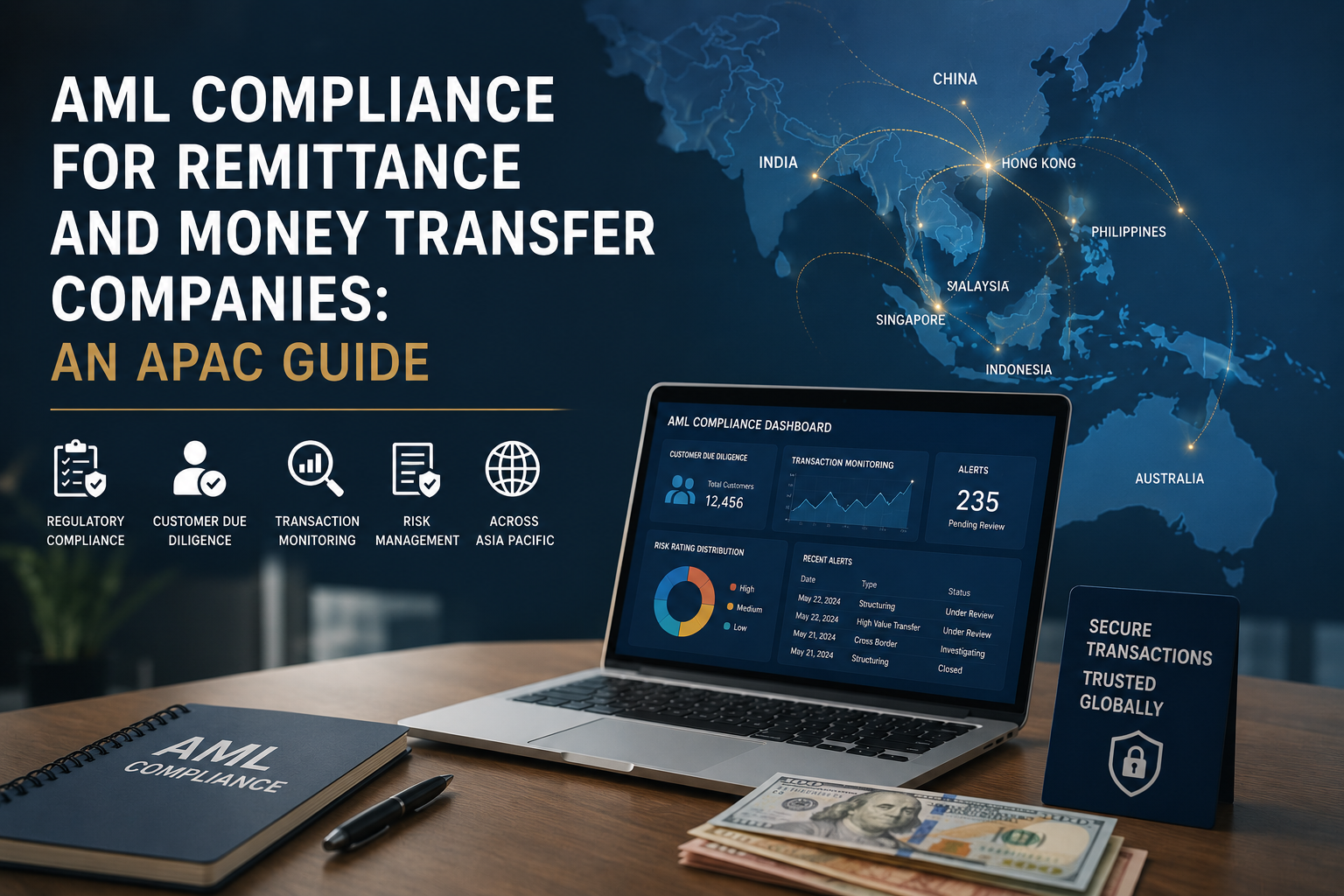
AML Compliance for Remittance and Money Transfer Companies: An APAC Guide
It is a Thursday afternoon. Your firm is processing remittances on the Singapore–Philippines corridor — six thousand transactions before the weekend. You are licensed under MAS as a Major Payment Institution and registered as a Remittance and Transfer Company with the BSP in Manila. MAS published updated PSN02 guidance last month. This morning, the BSP examination schedule landed in your inbox. Two regulators. Two compliance programmes. One compliance team of four people. That is the daily operating reality for most APAC-licensed remittance operators, and it is the starting point for every AML programme design conversation.
This guide covers what money transfer AML compliance APAC-wide actually requires — by jurisdiction, by obligation, and by what good operational execution looks like.
Why Remittance Companies Carry Higher AML Risk
FATF has consistently identified remittance and money transfer as a high-risk sector. Not because remittance operators are bad actors, but because of the transaction patterns that characterise the business.
Remittance is cash-intensive in many corridors. Some jurisdictions allow senders to pay in cash at agent locations with limited identification requirements. High-volume, low-value transactions create conditions where structuring — the practice of breaking amounts to stay below reporting thresholds — is easier to conceal than in lower-volume banking environments. A customer sending MYR 500 twice a week looks almost identical to a customer structuring around MYR 25,000 CTR thresholds.
FATF Recommendation 16 — the Travel Rule — applies specifically to wire transfers. Remittance companies are wire transfer originators. They must collect, transmit, and retain originator and beneficiary information with every qualifying transfer. This is not the same obligation as KYC. It is a data transmission requirement that sits on top of the CDD framework.
The cross-border nature of remittance creates bilateral exposure. A transfer from Singapore to Manila passes through both MAS and BSP oversight. A compliance failure — a missed STR, an inadequate CDD record, a Travel Rule data gap — does not stay in one jurisdiction. Both regulators can examine the same transaction.
The APAC corridors under heaviest examination scrutiny are among the highest-volume remittance corridors in the world: Singapore–Philippines, Malaysia–Bangladesh, Australia–India, and Philippines–Middle East. High volume does not reduce examiner focus. It increases it.
APAC Regulatory Obligations by Jurisdiction
Singapore (MAS)
Cross-border money transfer above SGD 3 million per month requires a Major Payment Institution licence under the Payment Services Act. The MAS PSA AML obligations for payment institutions are set out in PSN02, which covers CDD, ongoing monitoring, and STR and CTR filing requirements.
The FATF Travel Rule applies at SGD 1,500. For every transfer at or above that threshold, the MPS must transmit originator name, account number, and address or national identity number — plus beneficiary name and account number — to the receiving institution with the payment. The obligation to transmit sits with the sender regardless of whether the beneficiary institution can receive the data in structured form.
STR filing must occur within five business days of the determination that the transaction is suspicious. MAS examiners in 2024 specifically cited STR quality — not volume — as an examination focus area. An STR that describes the suspicious transaction in one sentence without analysis of the pattern does not meet the standard.
Australia (AUSTRAC)
All remittance dealers must register with AUSTRAC before commencing operations. Unregistered remittance dealing is a criminal offence under the AML/CTF Act 2006. This is not a technicality — AUSTRAC has prosecuted unlicensed remittance dealing, and its enforcement record includes actions against informal value transfer networks operating in parallel to registered dealers.
Registered remittance dealers carry the same AML/CTF programme obligations as banks under Chapter 16 of the AML/CTF Rules, without the same IT infrastructure to support them. Threshold Transaction Reports apply to cash transactions above AUD 10,000. Suspicious Matter Reports must be filed for qualifying transactions without a fixed deadline, but AUSTRAC expects prompt filing — delays beyond a few days are examined.
Malaysia (BNM)
Remittance operators require a Money Services Business licence under the MSB Act 2011. The AMLATFPUAA framework applies — the same statutory framework as banks — imposing CDD, ongoing monitoring, and STR and CTR obligations.
CTR threshold is MYR 25,000 for cash transactions. STR filing is required within three business days of the determination. BNM's most recent national risk assessment specifically identifies hawala-style informal remittance networks operating alongside licensed MSBs as a risk vector. That finding has translated directly into elevated examination scrutiny for licensed operators, who face more frequent and detailed examinations as regulators attempt to map the boundary between formal and informal channels.
Philippines (BSP)
Remittance operators require a Remittance and Transfer Company licence from the BSP. The AML programme obligations are set by AMLA and BSP Circular 950 — the same framework that governs banks, applied in full to RTCs.
CTR threshold is PHP 500,000. STR filing is required within five business days. The Philippines exited the FATF grey list in January 2023, but exit has not reduced examination pressure — BSP has increased examination frequency for RTCs since 2023, consistent with post-grey-list monitoring by both the BSP and AMLC.
New Zealand (DIA)
Remittance operators are Phase 2 reporting entities under the AML/CFT Act 2009, supervised by the Department of Internal Affairs. The same CDD, ongoing monitoring, and SAR and PTR obligations that apply to banks apply in full to remittance operators. The DIA's supervisory approach includes sector-wide audits and thematic reviews — it does not reserve examination resources only for larger entities.
The FATF Travel Rule in Practice for APAC Remittance Operators
FATF Recommendation 16 requires the originating institution to transmit originator and beneficiary information with every wire transfer above the applicable threshold. Across APAC, the operative thresholds are SGD 1,500 under MAS, AUD 1,000 under AUSTRAC, and USD 1,000 equivalent as the FATF baseline for jurisdictions without a lower domestic threshold.
The data that must travel with the payment: originator name, account number, address or national identity number; beneficiary name and beneficiary account number. These fields must populate the payment message — they cannot be retained on file at the sending institution and supplied only on request.
The operational problem is well-documented. Many beneficiary institutions in the corridors where APAC remittance volumes are highest — particularly in developing-market corridors — do not have systems capable of receiving structured Travel Rule data. The sending institution's obligation does not dissolve because the receiving institution lacks the infrastructure. Compliance requires transmitting the data within whatever message structure the payment uses: MT103 field population for SWIFT transactions, or the equivalent structured fields in ISO 20022 message formats.
Travel Rule technology solutions — TRISA, VerifyVASP, and Sygna Bridge are the most widely deployed in APAC for virtual asset transfers — are increasingly being applied to fiat remittance payment flows as well. For most APAC remittance operators on real-time domestic rails, the Travel Rule data obligation sits inside the payment message design, not in a separate data transmission layer.

Transaction Monitoring Requirements Specific to Remittance
High-volume, low-value transaction environments cannot be monitored with the dollar-threshold rules designed for retail banking. A rule that fires above USD 5,000 will miss the dominant remittance pattern entirely — hundreds of transactions at USD 200 to USD 500 per customer per month — and generate alert noise on the routine flows that constitute most of the business.
For an overview of how automated transaction monitoring works, the underlying detection logic matters more than the threshold level. Remittance monitoring is a typology problem, not a threshold problem.
Velocity monitoring is the primary detection method for mule accounts in remittance networks. The pattern is not a single large transfer — it is twenty transactions in forty-eight hours across multiple corridors from the same account or beneficial owner. A system calibrated only to flag high-value single transactions will not detect this.
Corridor-specific scenario calibration is not optional. The Singapore–Philippines corridor has different fraud typologies from the Malaysia–Bangladesh corridor. Monitoring scenarios applied generically across all corridors without tuning for the specific patterns in each one will produce both false positives on legitimate traffic and false negatives on actual suspicious activity.
Round-number structuring is the simplest pattern and the one most often missed by single-threshold rules. Transactions consistently placed just below the CTR threshold — MYR 24,500, AUD 9,800, PHP 499,000 — are a textbook structuring indicator. A rule with a single threshold at the CTR level will not catch this. The detection logic must look at the cluster of transactions below the threshold, not just the individual transaction value.
Beneficiary account reuse is a mule indicator: multiple unrelated customers sending to the same unfamiliar beneficiary account. This pattern requires a system capable of cross-customer analysis, not just single-customer transaction review. Rules-based systems that process each customer's alerts in isolation cannot detect it.
For remittance operators evaluating their technology choices, the same detection architecture issues apply as those covered in TM for payment companies and e-wallets — the product and customer profiles are different, but the architectural requirements for cross-customer scenario coverage are the same.
What Good Looks Like for a Multi-Jurisdiction Remittance Operator
A compliance officer managing two or three APAC licences simultaneously with a small team is not running a bank compliance programme at reduced scale. The operational structure is different.
A single TM platform across all jurisdictions is operationally necessary, not aspirational. Compliance officers in multi-jurisdiction firms who reconcile alerts from separate system instances — one per market — spend time on logistics that should go into analysis. The same transaction, flagged differently in two systems because the rule calibrations differ, creates reconciliation work that multiplies with volume.
Pre-settlement processing on real-time rails is required where payment is irrevocable on settlement. On PayNow, DuitNow, NPP, and InstaPay, a payment that clears cannot be recalled. Batch monitoring that runs after settlement has already processed the payment before the alert fires. The monitoring must run against the payment instruction before settlement, not the settled record.
Travel Rule data workflow integrated into the payment process eliminates the manual population of originator and beneficiary data as a separate step. When Travel Rule data handling is separated from payment processing and managed by different team members, the data quality degrades and the audit trail becomes inconsistent.
STR and CTR filing workflows built per jurisdiction address the material operational differences between regulatory regimes: different templates, different filing portals, different time windows, different field requirements. A case management system that requires the analyst to manually navigate those differences for each jurisdiction adds material risk. The workflows should enforce the right template for the jurisdiction of the filing, triggered by the currency of the transaction.
Selecting the right platform requires working through a structured evaluation. The Transaction Monitoring Software Buyer's Guide covers the criteria relevant to multi-jurisdiction operators, including how to assess vendor coverage across APAC regulatory regimes.
FinCense for APAC Remittance Operators
FinCense is deployed at remittance and payment operators across APAC — not only at banks. The platform is configured for the transaction patterns, corridor structures, and regulatory filing requirements that remittance operators encounter, not adapted from a banking deployment.
The scenario library includes more than fifty financial crime typologies covering the patterns most prevalent in remittance: mule account networks identified by cross-customer beneficiary account reuse, APP scam indicators in outbound payment flows, velocity structuring across corridors, and cross-border layering patterns. These are pre-built scenarios, not configurations that require the compliance team to write detection logic from scratch.
Pre-settlement processing is available across PayNow, DuitNow, NPP, InstaPay, and FAST — covering the real-time rails in Singapore, Malaysia, Australia, and the Philippines where irrevocable payment risk requires monitoring before settlement, not after.
Multi-jurisdiction STR and CTR filing workflows are built into the case management interface. Filing to AUSTRAC, BNM, AMLC, or MAS FIU from a single case triggers the correct jurisdiction-specific template, with the applicable time window displayed for the analyst at the case level.
In production deployments, FinCense has reduced false positive rates by up to 50% compared to legacy rules-based systems. For a remittance operator managing three hundred thousand transactions per month with a compliance team of four, a 50% reduction in false positive volume is not a performance metric — it is the difference between a workable alert queue and one that structurally cannot be cleared before the next batch arrives.
Book a demo to see FinCense configured for APAC remittance compliance — with corridor-specific scenarios already calibrated and multi-jurisdiction filing workflows built in.
For the full vendor evaluation framework, see the Transaction Monitoring Software Buyer's Guide.
Transaction Monitoring in Malaysia: BNM Requirements and Best Practices
Bank Negara Malaysia shifted from prescriptive to risk-based supervision several years ago. For transaction monitoring, that shift has specific consequences. Institutions that run static threshold-only systems — rules set at go-live and unchanged since — are increasingly out of step with what BNM examiners expect to see.
Malaysia's FATF Mutual Evaluation, conducted in 2021 and published in 2022, rated the country as partially compliant or non-compliant across several technical recommendations, including Recommendation 10 (customer due diligence) and Recommendation 16 (wire transfers). The evaluation flagged weaknesses in ongoing monitoring and STR quality at reporting institutions. BNM's supervisory response has been direct: examinations since 2022 have placed transaction monitoring programmes under considerably more scrutiny than before the assessment.
This article covers what BNM specifically requires from a transaction monitoring programme, the reporting thresholds institutions must meet, what examiners look for in practice, and where FinCense addresses the framework.
For background on Malaysia's full AML/CFT regulatory framework, see our overview of Malaysia's AML/CFT obligations under AMLATFPUAA and the BNM Policy Document.
Malaysia's AML/CFT Regulatory Framework — the TM Foundation
Transaction monitoring in Malaysia sits on two legal instruments.
AMLATFPUAA 2001 (as amended) is the primary legislation. The Anti-Money Laundering, Anti-Terrorism Financing and Proceeds of Unlawful Activities Act 2001 establishes the obligations of Reporting Institutions — who they are, what they must do, and what penalties apply when they fail. The 2014 and 2020 amendments expanded the predicate offence list, brought Designated Non-Financial Businesses and Professions (DNFBPs) into scope, and raised maximum penalties to MYR 3 million per offence.
BNM's AML/CFT/CPF/TFS Policy Document (2023) is the operational standard. This is where BNM translates the Act's obligations into programme requirements — including the specific requirements for transaction monitoring systems, alert investigation processes, and calibration governance. When a BNM examiner cites a deficiency, the reference is almost always to the Policy Document, not to the Act itself.
Reporting Institutions under AMLATFPUAA cover a wide range of entities: licensed banks, Islamic banks, development financial institutions, insurance companies, capital market intermediaries, money services businesses, e-money issuers, digital banks, and — since the Phase 2 expansion in 2020 — lawyers, accountants, and real estate agents.
BNM supervises financial institutions. The Securities Commission supervises capital market intermediaries. The Companies Commission oversees designated company service providers. Each supervisor applies the AMLATFPUAA framework to its regulated population. For BNM-supervised institutions, the Policy Document is the day-to-day compliance standard.
What BNM's Policy Document Requires for Transaction Monitoring
Section 14 of the Policy Document covers ongoing monitoring and record-keeping. The requirements are specific.
Automated systems are mandatory. Institutions must implement an automated transaction monitoring system adequate for the nature, scale, and complexity of their business. Manual review of sampled transactions does not satisfy this requirement. The system must be capable of detecting patterns across the full transaction population, not a sample.
Calibration must reflect the institution's own risk profile. This is the element that static threshold systems most commonly fail on. BNM does not prescribe specific thresholds. It requires that the thresholds and scenarios in use reflect the institution's customer risk assessment — the output of the enterprise-wide risk assessment, not the vendor's default configuration. A rural cooperative bank and a digital bank processing international remittances have materially different customer risk profiles. The same rule library cannot serve both, and BNM's Policy Document makes clear that it is the institution's responsibility to demonstrate that calibration is appropriate to their specific population.
Monitoring must be continuous. BNM's ongoing monitoring language mirrors FATF Recommendation 10 — monitoring must operate across the full course of the customer relationship, not as a periodic batch process that reviews a subset of transactions once a month. For real-time payment channels, this has practical implications: batch processing that catches a transaction two days after settlement is not equivalent to monitoring at the point of transaction.
Every alert must be assessed and documented. BNM expects a documented investigation workflow. Each alert must be assessed, the assessment must be recorded, and the disposition — whether the alert is closed with rationale or escalated to STR review — must be traceable. An alert queue that shows "reviewed" with no supporting investigation record does not satisfy the Policy Document's requirements.
Calibration must be reviewed periodically. At minimum, BNM expects annual calibration reviews. Reviews are also required when the customer base or product profile changes materially — new product launch, significant customer segment growth, entry into a new geographic market. The review and any resulting threshold adjustments must be documented with dated sign-off from a senior compliance officer.
Section 11 of the Policy Document, which covers customer due diligence, is directly relevant to transaction monitoring design. The CDD risk classification assigned to each customer — standard, medium, or high risk — should determine the intensity of monitoring applied to that customer's transactions. An institution that applies identical monitoring rules to all customers regardless of CDD risk classification is not meeting the risk-based requirement.

Reporting Thresholds and STR Obligations
Cash Transaction Reports (CTRs). Transactions in cash or cash equivalents above MYR 25,000 must be reported to BNM's Financial Intelligence and Enforcement Department (FIED) within 3 business days of the transaction.
Suspicious Transaction Reports (STRs). There is no threshold for STR filings. The obligation is triggered by suspicion — when a compliance officer, having reviewed available information, determines that a transaction or pattern of transactions is suspicious. Once that determination is made, the STR must be filed with BNM/FIED within 3 business days.
The 3-business-day clock on STR filings is a common source of examination findings. Where the investigation workflow requires multiple sequential sign-offs before filing, the clock can expire before the report reaches the MLRO. Institutions whose internal escalation processes consistently result in filings on day 3 or later are at risk.
Tipping off prohibition. Institutions must not inform the customer — directly or indirectly — that an STR has been or will be filed. This prohibition extends to staff below compliance officer level and applies during the alert investigation process, not only at the point of filing.
Record retention. All transaction records and CDD documentation must be retained for 6 years from the end of the business relationship. BNM examiners reviewing a programme may request records from any point within that 6-year window. Institutions whose systems do not retain complete alert investigation records for the full retention period will be unable to demonstrate compliance for the period not covered.
Digital Banks and E-Money Issuers — Specific TM Considerations
BNM issued the Digital Bank licensing framework in 2022. Five digital banks have been licensed under that framework. They are subject to the same AMLATFPUAA obligations as conventional licensed banks — including the full Policy Document requirements for transaction monitoring systems, calibration, alert investigation, and reporting.
The assumption that digital banks operate under a lighter compliance perimeter than conventional banks is incorrect. BNM's licensing documentation is explicit: digital banks must meet equivalent standards, adapted for their operating model and customer base.
E-money issuers licensed under the Financial Services Act 2013 have tiered account structures. Tier 1 accounts carry a MYR 5,000 cumulative balance limit and are treated as lower-risk. That lower-risk designation reduces CDD intensity — it does not eliminate transaction monitoring obligations. E-money issuers must monitor for anomalies within the Tier 1 population, including patterns that would not be unusual in isolation but become suspicious in aggregate.
BNM's financial crime risk assessments have specifically identified typologies associated with digital banking and e-wallet channels:
- Mule account layering through e-wallets, where proceeds move through multiple accounts in rapid succession before withdrawal
- Rapid in-out velocity patterns — high-value inflows immediately followed by bulk transfers or withdrawals, with no plausible commercial purpose
- Account takeover followed by bulk transfers, where the transaction pattern changes sharply after a suspected credential compromise
These typologies require specific monitoring rules. Generic monitoring scenarios designed for conventional banking products will not detect them reliably.
BNM has signalled through its 2025 e-money AML/CFT exposure draft that CDD and monitoring requirements for e-money issuers will be tightened if enacted — with specific requirements for transaction monitoring aligned to each institution's customer risk assessment rather than applied at the product level. Institutions that currently apply product-level defaults should treat this as a forward indicator of examination direction.
For BNM's specific KYC and CDD requirements for digital banks and e-money issuers, see our guide to BNM's digital bank and e-money KYC requirements.
Six Criteria for an Effective TM Programme Under BNM
These criteria are derived from BNM's Policy Document requirements and recurring examination findings.
1. Risk-based calibration. Alert thresholds and scenarios must reflect the institution's specific customer risk profile — the output of the enterprise-wide risk assessment, reviewed and updated when the population changes. Vendor defaults are a starting point, not a destination. BNM's examination record shows that institutions running unmodified vendor configurations are routinely cited.
2. Coverage of Malaysian financial crime typologies. BNM's financial crime risk assessments identify specific patterns relevant to the Malaysian market: cross-border trade-based money laundering, corporate account structuring, e-wallet mule networks, and instant payment fraud. These typologies must be in the active rule library, not on a watch list for future implementation.
3. Pre-settlement screening for instant payments. Malaysia's Real-time Retail Payments Platform — RPP, operating as DuitNow — processes irrevocable instant payments. Batch monitoring that reviews DuitNow transactions after settlement cannot intercept a suspicious payment. Pre-settlement evaluation logic, equivalent to what Singapore's PayNow and Australia's NPP require, is necessary for institutions with material DuitNow volumes.
4. Alert quality over alert volume. BNM examination findings have consistently cited alert investigation backlogs — queues with unreviewed alerts older than 30 days — as evidence of inadequate programme maintenance. A system that generates high alert volumes at low accuracy does not demonstrate active monitoring. It demonstrates an overwhelmed compliance function. Reducing false positive rates is not a nice-to-have; it is a programme governance requirement.
5. Explainable alert logic. Compliance analysts must understand why an alert was raised in order to make a quality investigation decision. A model that outputs a suspicion score without an explanation of which behaviours contributed to it puts the analyst in the position of making a filing decision based on a number rather than evidence. BNM examiners reviewing investigation records will ask the analyst what they found and why they made their disposition decision. "The system flagged it" is not an answer.
6. Documented calibration. BNM expects evidence that thresholds are reviewed and adjusted over time. A rule set deployed at system go-live and unchanged for two or three years — with no documentation of reviews, no record of what was considered and rejected, and no sign-off from senior compliance — is a finding in waiting. The documentation requirement exists regardless of whether the thresholds themselves are appropriate.
For a broader overview of how transaction monitoring works and what an effective programme requires, see our introduction to transaction monitoring.
Common BNM Examination Findings in Transaction Monitoring
Based on publicly available supervisory guidance and BNM examination themes, the following findings recur across reporting institutions:
Alert investigation backlogs. Queues with alerts unreviewed for more than 30 days are treated as a red flag. BNM examiners will ask how long the backlog has existed and what steps the compliance function took to address it.
Insufficient typology coverage for digital banking products. Institutions with e-wallet or digital banking products that apply conventional banking monitoring rules without product-specific scenarios are consistently cited for typology gaps.
No evidence of calibration review. Institutions that cannot produce documentation of when thresholds were last reviewed, what data informed the review, and who approved the outcome have a governance failure regardless of whether their thresholds happen to be appropriate.
STR filing delays. Investigation workflows with multiple sequential sign-offs that consistently result in filings on day 3 or later — or that have produced late filings — generate findings. BNM treats the 3-business-day requirement as a firm deadline, not a target.
Inadequate alert disposition documentation. An examiner reviewing a closed alert needs to understand the analyst's rationale. A disposition record that shows the alert was reviewed without documenting what was found, what was considered, and why the decision was made does not meet the Policy Document standard.
How FinCense Addresses the BNM Framework
FinCense is pre-configured with BNM-aligned typologies. The rule library includes DuitNow-specific scenarios — pre-settlement screening logic for instant payments — and e-wallet fraud patterns documented in BNM's financial crime risk assessments.
Alert thresholds are calibrated to each institution's customer risk assessment during implementation. Generic vendor defaults are not applied. The calibration rationale is documented and retained for examination review.
CTR and STR workflows are built into the case management module, with filing deadline tracking. Compliance officers see the filing deadline at the point of alert escalation, not after the 3-business-day window has passed.
In production deployments, FinCense has reduced false positive rates by up to 50% compared to legacy rule-based systems. For a compliance team managing 300 daily alerts, that reduction represents approximately 150 fewer dead-end investigations per day — which directly addresses the backlog problem that BNM examination findings most commonly cite.
Audit trail exports are structured for BNM examination review. Every alert record includes the rule or scenario that triggered it, the investigation timeline, the analyst's documented rationale, and the disposition outcome.
Taking the Next Step
For the complete vendor evaluation framework — including the seven questions to ask any transaction monitoring vendor — see our Transaction Monitoring Software Buyer's Guide.
Book a demo to see FinCense running against BNM-specific Malaysian financial crime scenarios, including DuitNow pre-settlement screening and e-wallet mule detection.

What Is PEP Screening? A Complete Guide for Banks and Fintechs
In 2016, the Monetary Authority of Singapore revoked the banking licences of Falcon Private Bank and BSI Bank — both in the same year. The proximate cause was their handling of 1MDB-linked funds. At the centre of that scandal stood Najib Razak, then Prime Minister of Malaysia and, by every applicable definition, a politically exposed person.
Here is what made 1MDB so instructive: those banks did not fail to identify Najib Razak as a PEP. His status was not hidden. He was the head of government of a sovereign nation. The failure was what came after identification — no meaningful source of wealth verification, no senior management scrutiny calibrated to the risk, and no ongoing monitoring that could have caught the pattern of transfers as they accumulated. USD 4.5 billion moved through the system. The problem was not that PEP screening did not exist. The problem was that PEP screening stopped at the checkbox.
That distinction between identifying a PEP and actually managing the risk that designation carries, is what this guide covers.
What Is a Politically Exposed Person (PEP)?
FATF Recommendation 12 defines a PEP as a natural person who is or has been entrusted with a prominent public function. That definition is broader than most practitioners assume.
There are three categories:
Domestic PEPs hold senior positions within their own country. Government ministers, senior legislators, senior military officers, executives of state-owned enterprises, and senior judiciary members all qualify. A sitting Malaysian minister is a domestic PEP. A Philippine senator is a domestic PEP. A member of the BSP board is a domestic PEP.
Foreign PEPs hold equivalent positions in another country. An Indonesian government official is a foreign PEP from the perspective of a Singapore bank onboarding them as a client.
International organisation PEPs are senior executives of bodies such as the UN, World Bank, and IMF.
Relatives and Close Associates
This category is where most PEP screening programmes fail quietly. FATF Recommendation 12 explicitly extends the elevated risk designation to relatives and close associates (RCAs) — family members and known business associates of a PEP.
The Indonesian government official's spouse is an RCA. A business partner who shares ownership of a company with a Philippine senator is an RCA. An account held by an RCA, with no direct PEP name on it, carries the same risk elevation as the PEP's own account. A screening programme that only looks at the account holder's name will miss this entirely.
How Long Does PEP Status Last?
FATF does not set a sunset period. A former prime minister who left office last year does not automatically cease to be a PEP risk.
MAS and BNM guidance both indicate a risk-based approach with no automatic de-listing. Many APAC jurisdictions require treating former PEPs as high-risk for at least 12 months after leaving office. In practice, the risk-based approach means continuing EDD until the institution can demonstrate — and document — that the elevated risk has materially diminished.
Why PEPs Are High-Risk: The Regulatory Rationale
PEPs have access to state resources, procurement decisions, and regulatory influence. That access creates both the opportunity and, in environments with weak governance, the structural conditions for corruption-linked money laundering.
The 1MDB case demonstrated this precisely. Najib Razak's position as Prime Minister gave him effective control over a sovereign wealth fund. Funds were extracted through a network of transactions routed through accounts at Falcon Private Bank Singapore, BSI Bank Singapore, and 1MDB-linked accounts at multiple Malaysian banks. The mechanism was not sophisticated in isolation — large transfers between entities with opaque ownership, wire patterns inconsistent with stated business purpose, and inadequate documentation of source of funds. What made it possible was the combination of PEP access and institutional failure to apply the monitoring that FATF Recommendation 12 requires.
MAS revoked Falcon's licence in October 2016. BSI's licence was revoked in May of the same year. Both had processed transactions that, under any functioning ongoing monitoring programme, should have generated alerts long before the funds were moved.
FATF Recommendation 12 requires all FATF member jurisdictions to apply enhanced due diligence to PEPs. Across APAC, every major financial regulator has implemented this through binding instruments: more rigorous identification, source of funds and wealth verification, senior management or board approval, and — critically — ongoing monitoring, not just onboarding review.
The PEP Screening Process: Step by Step
Step 1: Identification at onboarding. Screen the customer's name against PEP databases at account opening. This is the minimum. It is also, for many institutions, where the process ends — which is not compliant.
Step 2: Selecting list sources. No single global PEP register exists. Governments do not publish a unified, machine-readable list of their own officials. Commercial PEP databases — World-Check, Dow Jones Risk & Compliance, ComplyAdvantage, and others — aggregate from public sources: government gazettes, parliament records, regulatory filings, and adverse media. The quality of the database determines the quality of the screening. Not all databases are equal on APAC coverage.
Step 3: Fuzzy and phonetic matching. PEP names in APAC are routinely transliterated from Arabic, Mandarin, Malay, Tagalog, or Bahasa Indonesia into Latin script. "Muhammad" has over 30 common English transliterations documented in screening literature. A system doing exact string matching will miss a match on "Mohamed" when the database entry reads "Muhammad." The minimum standard is fuzzy matching with configurable similarity thresholds — the compliance team sets the sensitivity, trading off false positives against false negatives based on the institution's risk appetite.
Step 4: Alias and AKA coverage. A single PEP entry in a quality commercial database may carry 10 to 30 aliases — formal name, preferred name, name in original script, transliterations, common abbreviations. Screening must cover all aliases, not only the primary entry.
Step 5: RCA screening. The institution must screen known family members and business associates in addition to the PEP themselves. This requires a database that explicitly links RCA relationships to PEP entries, and screening logic that applies that linkage at the match stage.
Step 6: Risk scoring. A binary PEP flag — PEP or not PEP — is not sufficient for a risk-based programme. A senior minister in a country with a Corruption Perceptions Index score in the bottom quartile presents materially different risk than a local government official in a high-CPI jurisdiction. Screening output should produce a risk score based on the PEP's role, the jurisdiction's CPI, and the nature of the relationship (direct PEP or RCA) — not just a match indicator.
Enhanced Due Diligence for PEPs: What Regulators Require
The table below summarises EDD requirements for PEPs across the five APAC jurisdictions where Tookitaki clients operate most frequently.
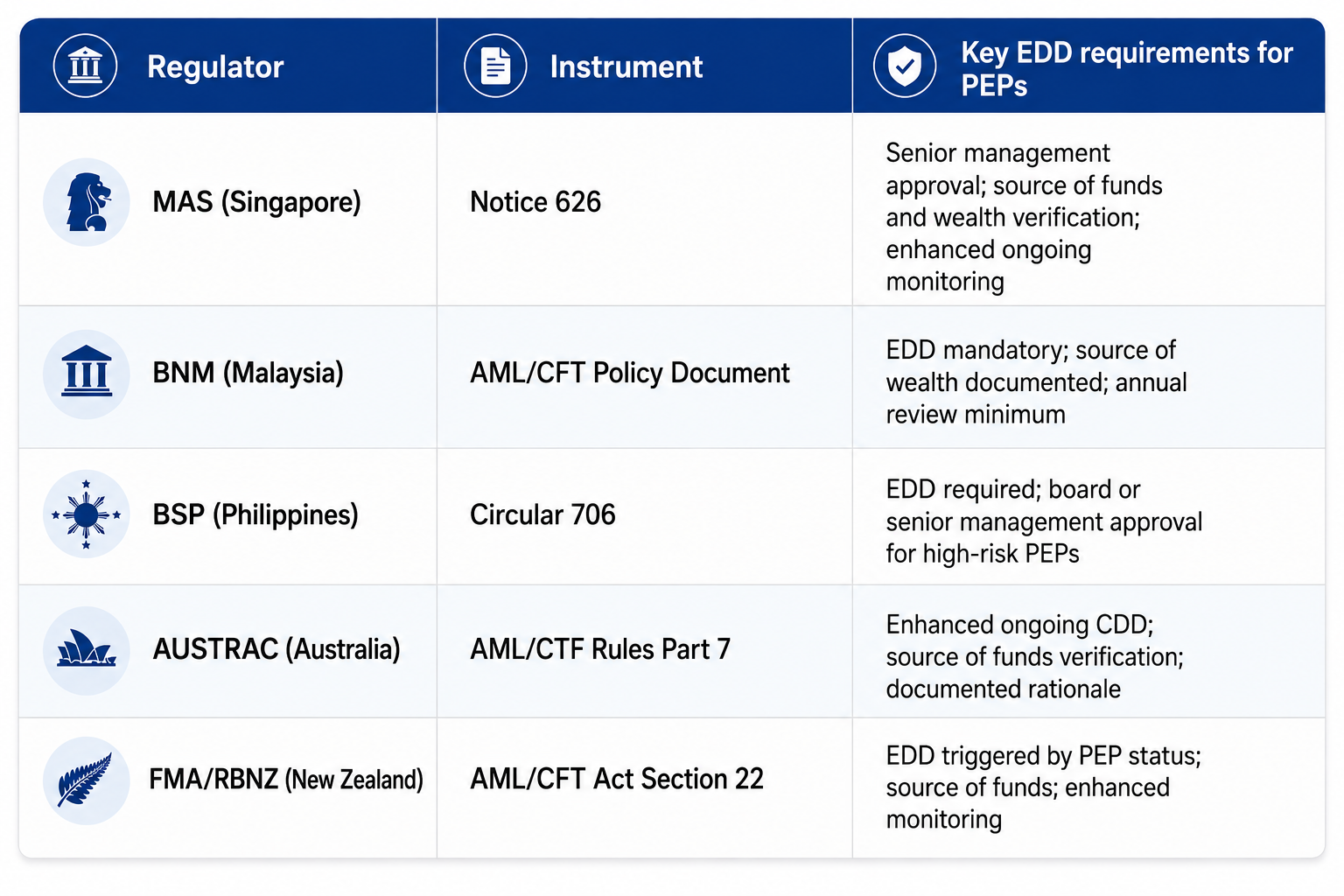
The common thread across all five: source of funds and wealth documentation, senior management or board approval, and enhanced ongoing monitoring. Not just enhanced onboarding. The onboarding review and the ongoing monitoring obligation are distinct requirements, and both are mandatory.
For institutions operating in the Philippines specifically, BSP Circular 706 sits alongside the country's AMLA framework. The sanctions screening obligations in the Philippines carry their own separate requirements that must be addressed in parallel with PEP screening — the two programmes are related but not interchangeable.
Ongoing Monitoring of PEPs: Where Most Programmes Break Down
PEP status is not static. A politician loses office. A state enterprise executive is newly appointed to a board. A businessman is awarded a government contract, making him an RCA of a minister. A company linked to a PEP is nationalised. Every one of those events changes the risk profile of an account, sometimes immediately.
The ongoing monitoring obligation means the institution must catch those changes — not only at annual review, but as close to real-time as the database update frequency permits.
List update frequency matters. Commercial PEP databases update continuously, adding new entries and modifying existing ones as source information changes. A batch re-screening process running on a 30-day cycle will miss PEP status changes that occurred in the intervening period. The institution that processes a transaction for a newly appointed government minister in week two of the month, having last screened at the start of the month, has a gap it cannot explain to an examiner.
Transaction monitoring is the second layer. PEP account status should be an input into the transaction monitoring system, not a separate silo. PEP accounts need calibrated scenarios — elevated sensitivity thresholds for large cash transactions, unusual international wire patterns, structuring activity. Identifying a customer as a PEP at onboarding, then running standard monitoring scenarios against their account, defeats much of the purpose of the classification. For an overview of how transaction monitoring and customer risk profiles interact, see our complete guide to transaction monitoring.
Adverse media screening is mandatory, not optional. MAS and BNM guidance both require ongoing adverse media monitoring as a component of the EDD programme for PEPs. News coverage linking a PEP to corruption allegations, enforcement action, or financial crime investigations is material information that changes the risk assessment — and must be picked up between formal review cycles, not only when the annual review is triggered.
Common Failures in PEP Screening Programmes
Six patterns appear consistently in examiner findings and enforcement actions across APAC.
Screening only at onboarding. The institution ran the check when the account was opened. Nobody re-screened when the PEP database was updated, when the customer's circumstances changed, or at any subsequent interval. This is the most common finding.
No RCA screening. The PEP's spouse holds an account. The PEP's business partner is a beneficial owner of a corporate client. Neither was linked to the PEP entry in the screening logic. The RCA relationship was not in the database configuration or was not applied consistently.
Binary flag without risk scoring. Every PEP received the same treatment — a flag, a notation, and no differentiated response based on role, jurisdiction, or exposure level. A senior minister in a country rated 20 on the CPI was processed the same way as a retired local councillor from a G7 country.
Manual re-screening processes. Someone downloaded the updated database, manually ran names against it, and filed the results in a spreadsheet. At scale, this cannot keep pace with the update frequency of commercial databases and creates an audit trail that examiners will question.
No audit trail. Examiners want to see that every customer was screened, when the screening occurred, against which version of the database, what matches were returned, and what the analyst's disposition decision was for each match. Institutions that cannot produce this log face significant difficulties in examination.
Treating identification as the endpoint. The purpose of identifying a PEP is not to decide whether to accept or reject the relationship — although that is one possible outcome. The purpose is to apply EDD and ongoing monitoring calibrated to the risk. Refusing a relationship without applying the EDD process, or accepting it without doing so, both represent programme failures.
Technology Requirements for Effective PEP Screening
A manual or partially manual PEP screening programme cannot meet the operational requirements of FATF Recommendation 12 at scale. The technology stack must address each component of the process.
Automated database ingestion. The system pulls updated PEP data directly from commercial database providers. No manual upload, no batch delay beyond what the provider's feed supports.
Fuzzy and phonetic matching with configurable thresholds. The compliance team sets the similarity threshold — not a fixed value baked into the system by the vendor. Institutions serving APAC clients need matching logic calibrated for Southeast Asian name transliterations, which present different challenges than Western name matching.
RCA relationship mapping. The match logic applies RCA linkages from the database to customers who are not themselves PEPs, flagging accounts where a beneficial owner, signatory, or counterparty is an RCA of a listed PEP.
Risk scoring output. The screening event produces a risk score, not just a match indicator. The score reflects the PEP's role, the jurisdiction's CPI ranking, and the relationship type (direct PEP, family member, or business associate).
Full audit trail. Every screening event is logged with a timestamp, the database version used, the match score, the analyst's decision, and the rationale documented in the system. This log is the institution's primary defence in an examination or enforcement inquiry.
Integration with transaction monitoring. PEP status feeds into the transaction monitoring configuration. A match on a counterparty in an international wire transfer triggers both a screening alert and a monitoring review. PEP account flags elevate the sensitivity of transaction monitoring scenarios. The two systems operate as components of a single risk management programme, not independent tools producing separate outputs. The Transaction Monitoring Software Buyer's Guide covers the evaluation criteria for the broader platform, including how screening and monitoring integration should be assessed.
PEP Screening in FinCense
FinCense covers PEP screening as part of its integrated AML platform. It is not a standalone screening module bolted to a separate transaction monitoring system — the PEP identification, risk scoring, and monitoring inputs operate together within the same platform.
The system comes pre-configured with APAC-relevant PEP databases, with fuzzy matching calibrated for the transliteration patterns common in Southeast Asian names. Every screening event is logged in a format that MAS, BNM, BSP, and AUSTRAC examiners can follow — timestamp, database version, match score, disposition, rationale.
When a customer's PEP status changes — a new appointment, a newly documented RCA relationship, an adverse media hit — the platform reflects that change in the monitoring configuration, not only in the customer record.
Book a demo to see FinCense's PEP screening running against APAC-specific scenarios.
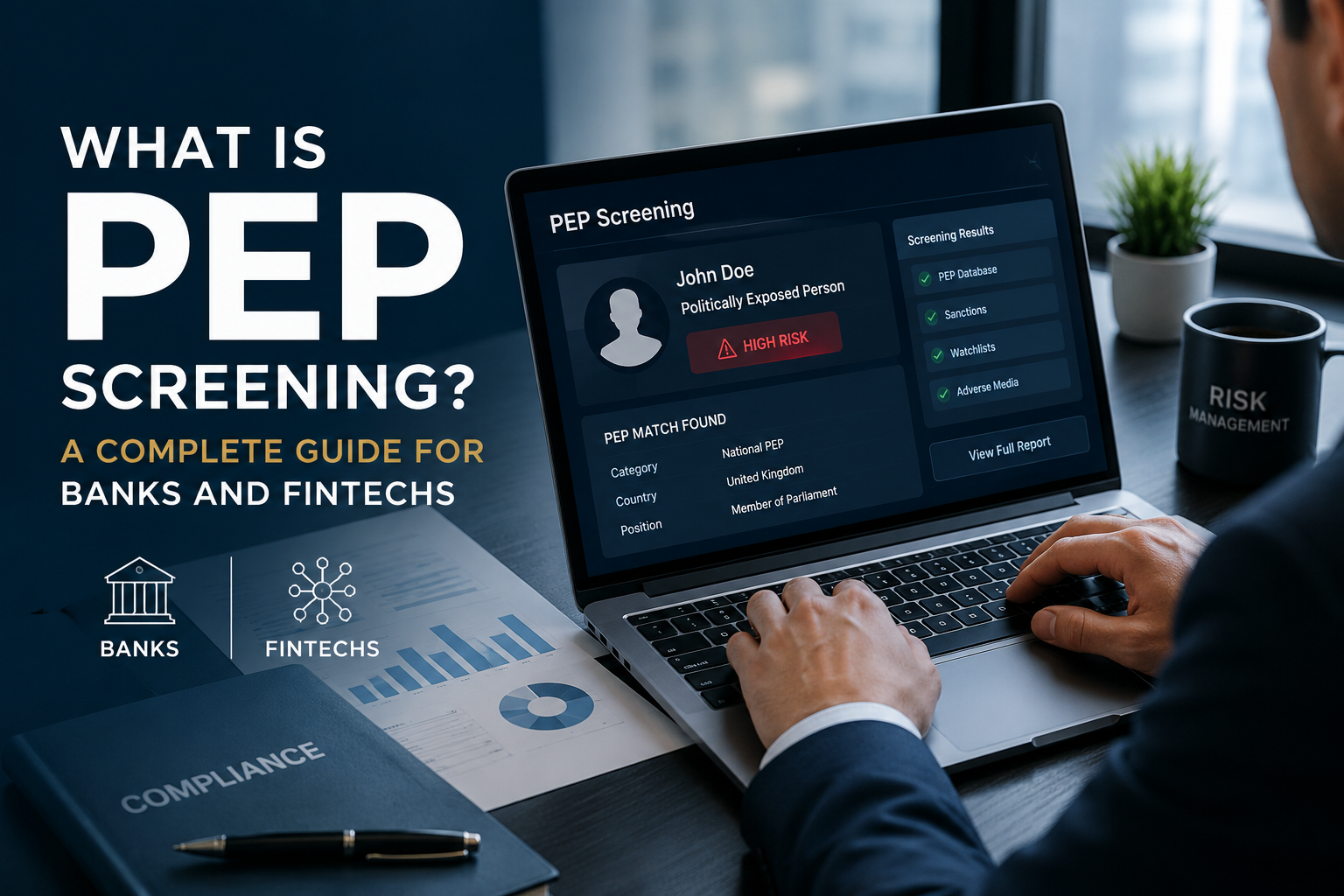
The Fake Trading Empire: Inside Taiwan’s Multi-Million Dollar Investment Scam Machine
In April 2026, Taiwanese authorities dismantled what investigators allege was a highly organised investment fraud operation built to imitate the mechanics of a legitimate trading business.
Victims were reportedly shown convincing trading dashboards, fabricated profits, and professional-looking investment interfaces designed to create the illusion of real market activity. Behind the scenes, investigators believe the operation functioned less like a traditional scam and more like a structured financial enterprise — complete with coordinated recruitment, layered fund movement, mule-account networks, and laundering infrastructure built to move illicit proceeds before detection.
This is what makes the Taiwan case important.
It is not simply another online investment scam. It is a reminder that modern fraud networks are increasingly evolving into industrialised financial ecosystems designed to manufacture trust at scale.
For banks, fintechs, and compliance teams, that changes the challenge entirely.
Inside the Alleged Investment Fraud Operation
According to Taiwanese investigators, the syndicate allegedly used fake investment platforms and fraudulent financial products to convince victims to transfer funds into accounts controlled by the network.
Victims reportedly believed they were participating in legitimate investment opportunities involving high returns and active trading activity. Some were allegedly shown manipulated dashboards and fabricated profit figures designed to create the appearance of successful investments.
That detail is important.
Modern investment scams no longer rely solely on persuasive phone calls or suspicious-looking websites.
Today’s fraud operations increasingly replicate the appearance of legitimate financial services:
- professional interfaces,
- simulated trading activity,
- customer support channels,
- fake account managers,
- and convincing financial narratives.
The result is a scam environment that feels operationally real to victims.
And that realism significantly increases fraud conversion rates.
The Rise of Investment Scams Designed to Mimic Real Financial Platforms
What makes cases like this especially concerning is how closely they now resemble legitimate financial ecosystems.
Fraudsters are no longer simply asking victims to transfer money into unknown accounts.
Instead, they are building:
- fake investment platforms,
- structured onboarding journeys,
- simulated portfolio growth,
- staged withdrawal processes,
- and layered communication strategies.
In many cases, victims may interact with the platform for weeks or months before realising the funds are inaccessible.
This reflects a broader shift in financial crime:
from opportunistic scams → to investment scams engineered to resemble legitimate financial ecosystems.
The objective is not just theft.
It is trust creation.
And once trust is established, victims often continue transferring increasingly larger amounts of money into the system.
Why This Case Matters for Financial Institutions
For compliance teams, the Taiwan investment scam investigation highlights a difficult operational reality.
The financial footprint of investment fraud rarely looks obviously criminal in isolation.
A victim transfer may appear legitimate.
A beneficiary account may initially appear low-risk.
Payment values may remain below traditional thresholds.
But behind those individual transactions often sits a coordinated laundering structure designed to rapidly disperse funds before intervention occurs.
That is where the real challenge begins.
Fraud proceeds are rarely left sitting in a single account.
Instead, they are often:
- fragmented,
- layered,
- redistributed,
- converted across payment channels,
- and moved through multiple intermediary accounts.
By the time institutions identify suspicious activity, the funds may already have travelled across several entities, platforms, or jurisdictions.
The Critical Role of Mule Networks
No large-scale investment scam operates efficiently without money mule infrastructure.
The Taiwan case reinforces how essential mule accounts remain to modern fraud ecosystems.
Once victims transfer funds, the criminal network still faces a major operational challenge:
moving and disguising the proceeds without triggering financial controls.
This is where mule accounts become critical.
These accounts may be:
- recruited through job scams,
- rented through online channels,
- purchased from vulnerable individuals,
- or created using synthetic identities.
Their role is simple:
receive funds, move them quickly, and create distance between victims and the organisers.
For financial institutions, this creates a layered detection problem.
Individual mule transactions may appear relatively small or routine.
But collectively, they can form sophisticated laundering networks capable of moving large volumes of illicit value rapidly across the financial system.

Why Investment Scams Are Becoming Harder to Detect
Historically, many scams relied on urgency and obvious manipulation.
Modern investment fraud is evolving differently.
The Taiwan case highlights several trends making detection increasingly difficult:
1. Longer victim engagement cycles
Fraudsters spend more time building credibility before extracting significant funds.
2. Professional-looking financial interfaces
Fake platforms increasingly resemble legitimate brokerages and fintech applications.
3. Behavioural manipulation over technical compromise
Victims often authorise the transfers themselves, reducing traditional fraud triggers.
4. Distributed fund movement
Instead of large transfers into single accounts, funds may be fragmented across multiple beneficiaries and payment rails.
This combination makes investment scams operationally complex from both a fraud and AML perspective.
The Convergence of Fraud and Money Laundering
One of the biggest mistakes institutions still make is treating fraud and AML as separate problems.
Cases like this show why that distinction no longer reflects reality.
The scam itself is only phase one.
Phase two involves:
- receiving the proceeds,
- layering transactions,
- obscuring ownership,
- and integrating funds into the financial system.
That is fundamentally an AML problem.
In practice, the same criminal network may simultaneously engage in:
- fraud,
- mule recruitment,
- account abuse,
- shell company usage,
- and cross-border fund movement.
This convergence is becoming increasingly common across Asia-Pacific financial crime investigations.
The Hidden Operational Challenge for Banks
What makes these cases particularly difficult for banks is that many customer interactions appear legitimate on the surface.
Victims willingly initiate payments.
Beneficiary accounts may initially show limited risk history.
Transactions may not breach static thresholds.
Traditional rules-based systems often struggle in these environments because the suspicious behaviour only becomes visible when viewed collectively.
For example:
- repeated transfers to newly created beneficiaries,
- clusters of accounts sharing behavioural similarities,
- rapid fund movement after receipt,
- unusual device or IP overlaps,
- and patterns linking accounts across institutions.
These signals are rarely definitive individually.
Together, they form a network.
And increasingly, financial crime detection is becoming a network visibility problem.
Why Static Detection Models Are Falling Behind
Modern fraud networks evolve rapidly.
Static controls often do not.
Investment scam syndicates continuously adapt:
- onboarding tactics,
- payment methods,
- platform design,
- communication styles,
- and laundering behaviour.
This creates operational pressure on compliance teams still relying heavily on:
- static thresholds,
- isolated transaction monitoring,
- manual reviews,
- and fragmented fraud systems.
The problem is not necessarily that institutions lack data.
The problem is that risk signals often remain disconnected.
Understanding how accounts, payments, devices, entities, and behaviours relate to each other is becoming increasingly important in detecting organised financial crime.
Lessons Financial Institutions Should Take from This Case
The Taiwan investment fraud investigation highlights several important lessons for financial institutions.
Fraud is becoming operationally sophisticated
Scam operations increasingly resemble structured financial businesses rather than opportunistic crime.
Payment monitoring alone is not enough
Institutions need visibility into behavioural and network relationships, not just transaction anomalies.
Fraud and AML convergence is accelerating
The same infrastructure enabling scams is often used to move and disguise illicit proceeds.
Mule detection is becoming strategically critical
Mule accounts remain one of the most important operational enablers of organised fraud.
Cross-channel intelligence matters
Risk signals increasingly emerge across onboarding, transactions, devices, counterparties, and behavioural patterns simultaneously.
How Technology Can Help Detect Organised Fraud Ecosystems
Cases like this reinforce why financial institutions are moving toward more intelligence-driven detection approaches.
Traditional rule-based systems remain important, but increasingly they need to be supported by:
- behavioural analytics,
- network intelligence,
- typology-driven detection,
- and cross-functional fraud-AML visibility.
This is especially important in investment scam scenarios because suspicious behaviour rarely appears through a single transaction or isolated alert.
Instead, risk emerges gradually through connected patterns across customers, beneficiaries, accounts, and fund flows.
Platforms such as Tookitaki’s FinCense are designed to help institutions detect these hidden relationships earlier by combining:
- AML and fraud convergence,
- behavioural monitoring,
- network-based intelligence,
- and collaborative typology insights through the AFC Ecosystem.
In scam-driven laundering cases, this allows institutions to move beyond isolated detection and toward identifying broader financial crime ecosystems before they scale further.
The Bigger Picture: Investment Fraud as Organised Financial Crime
The Taiwan case reflects a broader global trend.
Investment scams are no longer isolated cyber incidents run by small groups.
They are increasingly:
- organised,
- scalable,
- cross-border,
- financially sophisticated,
- and deeply connected to laundering infrastructure.
That evolution matters because it changes how institutions must think about financial crime risk.
The challenge is no longer simply stopping fraudulent transactions.
It is understanding how organised criminal systems operate across:
- digital platforms,
- payment rails,
- onboarding systems,
- mule networks,
- and financial ecosystems simultaneously.
Final Thoughts
The alleged investment fraud syndicate uncovered in Taiwan offers another reminder that financial crime is becoming more industrialised, more technologically enabled, and more operationally sophisticated.
What appears outwardly as a simple investment scam may actually involve:
- organised laundering infrastructure,
- coordinated mule activity,
- behavioural manipulation,
- and complex financial movement across multiple channels.
For financial institutions, this creates a difficult but important challenge.
The future of financial crime detection will depend less on identifying isolated suspicious transactions and more on recognising hidden relationships, behavioural coordination, and evolving criminal typologies before they scale into systemic exposure.
The next generation of financial crime will not always look suspicious on the surface. Increasingly, it will look like a legitimate financial business operating in plain sight.

AML Compliance in the Philippines: How Technology Can Help
Anti-money laundering (AML) compliance is a crucial aspect of the financial sector in the Philippines, aimed at preventing and detecting money laundering and terrorist financing activities. Money laundering has been a persistent issue in the Philippines, with its significant economic implications and potential to disrupt financial stability. To combat these illicit activities, the Philippines has implemented a robust regulatory framework, including the Anti-Money Laundering Act (AMLA) and the establishment of the Anti-Money Laundering Council (AMLC). Adhering to AML compliance is not only a legal obligation for financial institutions but also a crucial measure to maintain their integrity and reputation in the global financial landscape.
Tookitaki is a leading provider of innovative AML compliance solutions designed to help businesses in the Philippines and worldwide effectively manage their AML risks and obligations. By leveraging advanced technologies such as machine learning, Tookitaki's solutions enable financial institutions to enhance the efficiency and accuracy of their AML processes, including transaction monitoring, customer due diligence, and risk assessments.
By partnering with Tookitaki, businesses can streamline their AML compliance efforts, reduce operational costs, and ultimately contribute to a safer and more transparent financial ecosystem in the Philippines.
AML Regulations and Enforcement in the Philippines
Overview of the Anti-Money Laundering Act (AMLA)
The Anti-Money Laundering Act (AMLA) is the primary legislation governing AML compliance in the Philippines. Enacted in 2001 and amended several times since then, AMLA aims to prevent and penalize money laundering and terrorist financing activities. The Act defines money laundering offences, outlines reporting and record-keeping requirements, and establishes a framework for freezing and forfeiting assets related to illicit activities. AMLA applies to various entities, including banks, securities dealers, insurance companies, and money service businesses.
Role of the Anti-Money Laundering Council (AMLC) and other regulatory bodies
The Anti-Money Laundering Council (AMLC) is the central authority responsible for implementing and enforcing AMLA in the Philippines. Established under AMLA, the AMLC comprises the Governor of the Bangko Sentral ng Pilipinas, the Commissioner of the Insurance Commission, and the Chairperson of the Securities and Exchange Commission. The AMLC is responsible for monitoring and supervising covered institutions, investigating money laundering and terrorist financing offences, issuing regulations and guidelines, and coordinating with international organizations to combat money laundering.
In addition to the AMLC, other regulatory bodies, such as the Bangko Sentral ng Pilipinas, the Insurance Commission, and the Securities and Exchange Commission, play a crucial role in enforcing AML compliance within their respective sectors.

Key requirements and obligations for financial institutions
Under AMLA and its implementing rules and regulations, financial institutions are required to comply with various AML obligations, including:
- Customer Due Diligence (CDD): Financial institutions must perform CDD measures when establishing business relationships, conducting transactions above a specified threshold, or when there is suspicion of money laundering or terrorist financing.
- Record-keeping: Covered institutions must maintain records of customer identification documents, account files, and transaction records for at least five years.
- Reporting: Financial institutions must submit Suspicious Transaction Reports (STRs) and Covered Transaction Reports (CTRs) to the AMLC for transactions that meet specific criteria or are deemed suspicious.
- Risk Assessment: Institutions must conduct periodic risk assessments to identify, assess, and mitigate money laundering and terrorist financing risks.
- Compliance Program: Financial institutions must establish and maintain an AML compliance program that includes internal policies, procedures, and controls, as well as appointing a designated compliance officer responsible for overseeing the program.
By adhering to these key requirements, financial institutions can effectively manage their AML risks and contribute to the fight against money laundering and terrorist financing in the Philippines.
Challenges Faced by Financial Institutions in the Philippines
High-risk industries and sectors
Financial institutions in the Philippines face unique challenges due to the presence of high-risk industries and sectors within the country. The gaming sector, for instance, has experienced rapid growth in recent years, increasing the potential for money laundering activities. Remittance and money service businesses, which are essential for the millions of overseas Filipino workers sending money back home, are also considered high-risk due to their vulnerability to money laundering and terrorist financing schemes.
Emerging threats and trends in money laundering
The evolving landscape of financial crime presents new challenges for financial institutions in the Philippines. Cybercrime, such as online fraud and phishing attacks, has increased, posing significant risks to the financial sector. Additionally, the growth of digital financial services and cryptocurrencies has created new avenues for money launderers to exploit. Financial institutions must continuously adapt their AML compliance programs to effectively address these emerging threats and trends.
Compliance burden and the cost of non-compliance
Implementing a robust AML compliance program can be resource-intensive and costly for financial institutions, especially for small and medium-sized enterprises. The compliance burden includes hiring and training compliance staff, investing in AML software, and conducting regular audits and assessments. However, the cost of non-compliance can be even more significant, as financial institutions may face substantial fines, reputational damage, and loss of business due to regulatory enforcement actions. Thus, it is crucial for financial institutions in the Philippines to find efficient and cost-effective solutions to meet their AML compliance obligations.
The Role of Technology in Strengthening AML Compliance
The need for advanced technology solutions in AML compliance
As money laundering tactics become more sophisticated and the regulatory environment more complex, financial institutions in the Philippines need advanced technology solutions to strengthen their AML compliance programs. Leveraging technology can help financial institutions automate and streamline compliance processes, improve the accuracy of risk assessments, and enhance their ability to detect and report suspicious activities.
How Tookitaki addresses the challenges faced by financial institutions in the Philippines
Founded in 2015, Tookitaki aims to create safer societies by tackling the root cause of money laundering. As a global leader in financial crime prevention software, the company revolutionises the fight against financial crime by breaking the siloed AML approach and connecting the community through its two distinct platforms: the Anti-Money Laundering (AML) Suite and the Anti-Financial Crime (AFC) Ecosystem. Tookitaki's unique community-based approach empowers financial institutions to effectively detect, prevent, and combat money laundering and related criminal activities, resulting in a sustainable AML program with holistic risk coverage, sharper detection, and fewer false alerts.
Introduction to Tookitaki's AML Suite
The AML Suite is an end-to-end operating system that modernises compliance processes for banks and fintechs. In parallel, the AFC Ecosystem serves as a community of experts dedicated to uncovering hidden money trails that traditional methods cannot detect. Powered by federated machine learning, the AML Suite collaborates with the AFC Ecosystem to ensure that financial institutions stay ahead of the curve in their AML programs.
The AMLS includes several modules such as Transaction Monitoring, Smart Screening, Dynamic Risk Scoring, and Case Manager. These modules work together to provide a comprehensive compliance solution that covers all aspects of AML, including detection, investigation, and reporting.
Tookitaki's AML Suite is a comprehensive solution designed to help financial institutions in Singapore effectively manage their AML compliance requirements. By leveraging advanced technologies, Tookitaki's AML Suite provides cutting-edge tools for transaction monitoring, screening, and customer due diligence.
{{cta-guide}}
Features and benefits of Tookitaki's AML solution
Tookitaki's AML Suite provides numerous benefits for the Philippino financial institutions, including:
- Enhanced AML/CFT Compliance: By aligning with MAS regulations and international standards, Tookitaki's AML Suite helps financial institutions maintain a strong compliance posture and avoid the reputational and financial risks associated with non-compliance.
- Streamlined Processes: The AML Suite's advanced technology automates various compliance tasks, enabling financial institutions to streamline their AML/CFT processes and reduce the burden on their compliance teams.
- Improved Risk Management: Through its cutting-edge transaction monitoring and sanctions screening, Tookitaki's AML Suite allows financial institutions to proactively identify and mitigate potential AML/CFT risks, thereby enhancing their overall risk management capabilities.
- Cost Savings: By automating and streamlining compliance processes, Tookitaki's AML Suite helps financial institutions reduce operational costs and allocate resources more effectively.
- Scalability: The AML Suite is designed to scale with the growth of financial institutions, ensuring that they can continue to maintain robust AML/CFT compliance as their operations expand.
In conclusion, Tookitaki's AML Suite provides an innovative and comprehensive solution for financial institutions looking to enhance their AML/CFT compliance capabilities and adhere to local regulations and international standards. By leveraging Tookitaki's advanced AML solution, financial institutions in the Philippines can effectively address the challenges they face in maintaining compliance and mitigating the risks associated with money laundering.
Learn More: CFT Compliance in Hong Kong
Strengthening AML Compliance in the Philippines: A Path Forward
AML compliance is crucial in the Philippines to protect the financial system's integrity, combat money laundering, and adhere to international standards. Financial institutions face numerous challenges, including high-risk industries, emerging threats, and the costs of non-compliance. As a result, it is essential for businesses to stay vigilant and invest in advanced solutions to strengthen their AML compliance programs.
Tookitaki's AML solution can significantly impact businesses in the Philippines by addressing the unique challenges they face in maintaining compliance. By leveraging advanced technology and analytics, Tookitaki's solution can help financial institutions detect and report suspicious activities more accurately and efficiently. This, in turn, can contribute to a more robust financial ecosystem, promoting trust and stability in the Philippine economy.
To ensure the ongoing success and stability of your business in the Philippines, investing in a cutting-edge AML compliance solution is crucial. We encourage you to explore Tookitaki's AML solution and learn how it can help you strengthen your compliance program, mitigate risks, and adhere to regulatory requirements.
For more information about Tookitaki's AML solution and how it can benefit your business, please book a demo. Our experts are available to answer your questions and provide you with the resources and guidance you need to make an informed decision about your AML compliance strategy.

Digital Banking in Malaysia: How Tookitaki Ensures AML Compliance
Over the past few years, digital banking has experienced rapid growth in Malaysia, transforming the financial landscape in the country. The widespread adoption of smartphones, improved internet connectivity, and changing consumer preferences have driven the demand for convenient and secure digital financial services. This shift towards digital banking has encouraged both established financial institutions and fintech startups to develop innovative products and services that cater to the evolving needs of consumers and businesses.
As digital banking continues to expand, the risk of money laundering and terrorist financing activities also increases. Criminals often exploit digital platforms to launder money, finance terrorism, and carry out other illicit activities. Consequently, it becomes crucial for financial institutions to maintain robust anti-money laundering (AML) and counter-terrorism financing (CFT) compliance programs to mitigate these risks. Ensuring AML compliance protects financial institutions from potential financial losses and reputational damage and helps maintain the financial system's overall integrity.
Tookitaki is a leading provider of innovative AML compliance solutions designed to help financial institutions effectively combat money laundering and terrorist financing. Leveraging advanced analytics, machine learning, and a deep understanding of AML typologies, Tookitaki's Anti-Money Laundering (AML) Suite offers a comprehensive and scalable approach to detecting, preventing, and managing financial crime risks. In this blog, we will explore how Tookitaki's AML Suite can assist Malaysian financial institutions in achieving AML compliance as they navigate the rapidly evolving digital banking landscape.
Overview of Digital Banking in Malaysia
Digital banking in Malaysia has experienced significant growth in recent years due to various factors, such as increased smartphone adoption, improved internet connectivity, and changing consumer preferences. This growth has led established financial institutions and fintech startups to develop innovative products and services to cater to the evolving needs of consumers and businesses.
Bank Negara Malaysia (BNM), the country's central bank, issued the Policy Document on Licensing Framework for Digital Banks in December 2020, marking the beginning of digital banking in Malaysia. According to BNM, digital banks must comply with the requirements under the Financial Services Act 2013 or Islamic Financial Services Act 2013, including standards on anti-money laundering and terrorism financing.
Digital banks in Malaysia aim to serve various segments of the population, such as the bottom 40% income group (B40), micro, small, and medium enterprises (MSMEs). They can offer better accessibility to rural areas and serve gig workers, who may also benefit from these services.
AML Challenges in Digital Banking
Digital banking faces several AML challenges due to the increased risk of financial crime and evolving cybercrime techniques. These challenges include:
Increased risk of money laundering and terrorist financing
The growth of digital payments and banking services has increased the risk of financial crimes, such as money laundering and terrorist financing. As more transactions take place online, criminals may exploit digital channels to launder illicit funds or finance terrorist activities. Financial institutions must be vigilant in detecting and preventing these activities to protect their customers and maintain the financial system's integrity. They must implement robust AML/CFT frameworks and risk mitigants to prevent illicit exploitation of access to their services.
Evolving cybercrime techniques
As digital banking becomes more popular, financial institutions face escalating threats due to technological developments in cybercrime. Cybercriminals constantly adapt their techniques to exploit vulnerabilities in digital banking systems, making it crucial for financial institutions to stay ahead of these threats and invest in advanced cybersecurity measures. Some common tactics include phishing, malware attacks, and social engineering, which can all be used to gain unauthorized access to customer accounts or manipulate transactions. Cybercrime and money laundering are correlated, as the former can be a predicate offence.
Expanding volumes of data
Financial institutions face challenges in handling the volume and breadth of data associated with AML compliance. Harnessing the value of this data is crucial for identifying and mitigating risks, requiring the adoption of advanced technologies and analytics.
Balancing customer experience with compliance
One of the key challenges in digital banking is striking the right balance between providing a seamless customer experience and maintaining robust AML/CFT controls. While customers expect fast, convenient, and secure access to their accounts and services, financial institutions must also ensure they meet regulatory requirements and mitigate risks associated with money laundering and terrorist financing.
To achieve this balance, financial institutions should consider adopting innovative technologies and solutions that enhance their AML/CFT capabilities without compromising the customer experience. This may include using artificial intelligence, machine learning, and data analytics to identify suspicious activities and patterns more effectively and efficiently. By staying proactive in addressing AML/CFT challenges, digital banks can maintain customer trust and contribute to a safer financial ecosystem.
{{cta-ebook}}
Aligning with Malaysia's AML Regulations and International Standards
Adhering to BNM's guidelines
BNM is the central authority responsible for issuing AML/CFT regulations in the country. Digital banks must strictly adhere to these guidelines to maintain their license and operate legally. This includes implementing robust AML/CFT frameworks, customer due diligence measures, risk assessments, and ongoing transaction monitoring. By complying with BNM's guidelines, digital banks can contribute to Malaysia's financial system's overall stability and integrity while protecting themselves from legal and reputational risks.
Complying with FATF recommendations
The Financial Action Task Force (FATF) is an international organization that sets global standards for combating money laundering, terrorist financing, and other related threats. Digital banks in Malaysia must comply with the FATF's 40 Recommendations, which provide a comprehensive and consistent framework for AML/CFT compliance. By aligning with these recommendations, digital banks can demonstrate their commitment to international best practices, enhancing their credibility and reputation among customers, regulators, and other stakeholders.
Supporting global initiatives for AML/CFT
In addition to complying with local and international regulations, digital banks should actively support and participate in global initiatives to combat money laundering and terrorist financing. This may involve collaborating with other financial institutions, regulators, law enforcement agencies, and international organizations to share information, develop best practices, and coordinate efforts to tackle financial crime. By contributing to global AML/CFT initiatives, digital banks can play a vital role in strengthening the resilience of the global financial system and fostering a safer, more transparent environment for digital banking customers.
Tookitaki's Solution for AML Compliance in Digital Banking
Founded in 2015, Tookitaki aims to create safer societies by tackling the root cause of money laundering. As a global leader in financial crime prevention software, the company revolutionises the fight against financial crime by breaking the siloed AML approach and connecting the community through its two distinct platforms: the Anti-Money Laundering (AML) Suite and the Anti-Financial Crime (AFC) Ecosystem. Tookitaki's unique community-based approach empowers financial institutions to effectively detect, prevent, and combat money laundering and related criminal activities, resulting in a sustainable AML program with holistic risk coverage, sharper detection, and fewer false alerts.
The AML Suite is an end-to-end operating system that modernises compliance processes for banks and fintechs. In parallel, the AFC Ecosystem serves as a community of experts dedicated to uncovering hidden money trails that traditional methods cannot detect. Powered by federated machine learning, the AML Suite collaborates with the AFC Ecosystem to ensure that financial institutions stay ahead of the curve in their AML programs.
The AMLS includes several modules such as Transaction Monitoring, Smart Screening, Dynamic Risk Scoring, and Case Manager. These modules work together to provide a comprehensive compliance solution that covers all aspects of AML, including detection, investigation, and reporting.

Advancing Malaysia's Digital Banking Sector: AML Compliance and Tookitaki's Pivotal Role
The digital banking landscape in Malaysia is expected to grow significantly in the coming years, driven by technological advancements, changing consumer preferences, and supportive regulatory frameworks. As the industry evolves, financial institutions must adapt to the dynamic environment by enhancing their digital offerings, improving operational efficiency, and ensuring robust AML/CFT compliance to safeguard their customers and the wider financial system.
Tookitaki will continue to play a crucial role in helping Malaysian digital banks navigate the complexities of AML compliance. By providing cutting-edge AML solutions that leverage advanced technologies, such as artificial intelligence and machine learning, Tookitaki will enable financial institutions to streamline their compliance processes, identify and mitigate risks more effectively, and stay ahead of the ever-changing regulatory landscape.
As the digital banking sector in Malaysia continues to grow, it is more important than ever for financial institutions to prioritize AML/CFT compliance. Don't miss the opportunity to safeguard your business and customers with Tookitaki's innovative AML Suite. Book a demo today to experience firsthand how our comprehensive AML solutions can help your organization navigate the evolving digital banking landscape and achieve regulatory compliance with confidence.

E-wallets in Singapore: How Tookitaki Helps Ensure Secure Onboarding
In recent years, e-wallets have gained significant traction in Singapore, revolutionizing how people make payments and manage their finances. As a convenient, cashless, and efficient mode of payment, e-wallets have transformed the financial landscape, providing users with a seamless experience for both online and offline transactions. The growth of e-wallets in Singapore can be attributed to the country's high smartphone penetration, tech-savvy population, and the government's push towards a cashless society.
With the increasing adoption of e-wallets, secure onboarding of users has become a critical aspect for providers to ensure a safe and trustworthy experience. As e-wallets store sensitive financial information, onboarding must adhere to stringent regulatory requirements, including anti-money laundering (AML) and know-your-customer (KYC) checks. This is where Tookitaki comes into play, offering innovative solutions that enable e-wallet providers to streamline their onboarding processes while maintaining the highest levels of security and compliance.
The E-wallet Landscape in Singapore
The rise of e-wallet usage in Singapore has been nothing short of remarkable. The e-wallet landscape in Singapore has been growing rapidly, with the country aiming to become a cashless society and reduce the use of cheques by 2025. This surge in popularity can be attributed to the country's robust digital infrastructure, supportive government policies, and an increasingly tech-savvy population. As a result, e-wallets have become an integral part of Singapore's drive towards becoming a Smart Nation, with the aim of creating a cashless, digital economy.
These e-wallets offer various capabilities, such as peer-to-peer transfers, bill payments, online shopping, and contactless payments at retail outlets, making them an attractive option for consumers seeking a convenient and efficient payment solution.
Several key players have emerged in the Singapore e-wallet market, offering a range of services and features to cater to the diverse needs of consumers and businesses. Some of the most prominent e-wallet providers include GrabPay, PayLah!, PayAnyone, FavePay, and Alipay. These e-wallets offer various capabilities, such as peer-to-peer transfers, bill payments, online shopping, and contactless payments at retail outlets, making them an attractive option for consumers seeking a convenient and efficient payment solution.
Several factors have contributed to the growth of e-wallets in Singapore.
- Firstly, the high smartphone penetration rate and widespread internet access have provided the necessary infrastructure for e-wallet adoption.
- Secondly, the government's push for a cashless society, through initiatives such as the Unified Point of Sale (UPOS) system and the introduction of the Singapore Quick Response Code (SGQR), has further encouraged the use of e-wallets.
- Thirdly, the growing trend of online shopping and the demand for contactless payments, particularly in the wake of the COVID-19 pandemic, have accelerated the adoption of e-wallets as a preferred mode of payment.
{{cta-guide}}
Money Laundering Risks Related to E-wallets
While e-money and e-wallets offer numerous benefits, they also carry significant money laundering risks. E-wallets, as online storage systems holding users' banking information for payment purposes, have seen significant growth since 2017, leading to a rise in money laundering concerns. The money laundering risk associated with e-money was assessed as medium, and the terrorist financing risk as low, according to the National Risk Assessment (NRA) 2015. However, the NRA 2017 revised the terrorist financing risk to a medium rating. Open-loop prepaid cards, a form of e-money, were recognized as potentially high risk.
Investigations have linked electronic money institutions (EMIs), which can issue pre-paid payment cards or digital wallets, to money laundering, fraud, and other financial crimes. To mitigate these risks, financial institutions are encouraged to develop a rigorous and comprehensive risk management process that addresses the known material risks and accommodates changes in the type and intensity of material risks associated with electronic banking and e-money activities.
Financial regulators worldwide have developed guidance and regulations to mitigate these risks and ensure the safety and security of digital payment systems. Providers of e-money issuance services under the Payment Services Act 2019 are subject to anti-money laundering (AML) and countering financing of terrorism (CFT) risk mitigation measures. These measures aim to address user protection, interoperability, and technology and cyber security risks associated with e-wallets.
Read More: Streamlining Compliance with AML Onboarding Software
The Importance of Secure Onboarding
As the e-wallet landscape in Singapore continues to grow, it becomes increasingly important for e-wallet providers to adhere to strict Anti-Money Laundering (AML) regulatory requirements. These regulations aim to prevent financial crimes such as money laundering, terrorist financing, and fraud associated with digitalising financial services.
E-wallet providers must comply with AML regulations set by the Monetary Authority of Singapore (MAS) and other relevant authorities. Compliance with these regulations helps e-wallet providers identify and manage potential AML risks associated with their services. Some potential AML risks associated with e-wallet usage include the anonymity of digital transactions, the speed of fund transfers, and the cross-border nature of these transactions, which criminals can exploit for money laundering and other illicit activities.
To ensure user trust and security, e-wallet providers must implement secure customer onboarding processes. This typically involves Know Your Customer (KYC) checks, which are essential for verifying the identity of users and assessing the risk they may pose. KYC checks include collecting and verifying user information such as name, date of birth, address, and identification documents. These checks help e-wallet providers to detect and prevent potential financial crimes, thus ensuring a secure and trustworthy environment for their users.
By adhering to AML regulatory requirements and implementing secure onboarding processes, e-wallet providers in Singapore can effectively mitigate risks, protect their customers, and build trust in their services. This, in turn, will contribute to the continued growth and success of the e-wallet landscape in the country.
Tookitaki's Role in Ensuring AML Compliance for E-wallets
Tookitaki is a pioneer in the fight against financial crime, leveraging a unique and innovative approach that transcends traditional solutions. The company's Anti-Money Laundering Suite (AMLS) and Anti-Financial Crime (AFC) Ecosystem work in tandem to address the limitations of siloed systems in combating money laundering.
The AFC Ecosystem is a community-based platform that facilitates sharing of information and best practices in the battle against financial crime. Powering this ecosystem is our Typology Repository, a living database of money laundering techniques and schemes. This repository is enriched by the collective experiences and knowledge of financial institutions, regulatory bodies, and risk consultants worldwide, encompassing a broad range of typologies from traditional methods to emerging trends.
The AMLS is a software solution deployed at financial institutions. It is an end-to-end operating system that modernises compliance processes for banks and fintechs. The AMLS collaborates with the AFC Ecosystem through federated machine learning. This integration allows the AMLS to extract new typologies from the AFC Ecosystem, executing them at the clients' end to ensure that their AML programs remain cutting-edge.
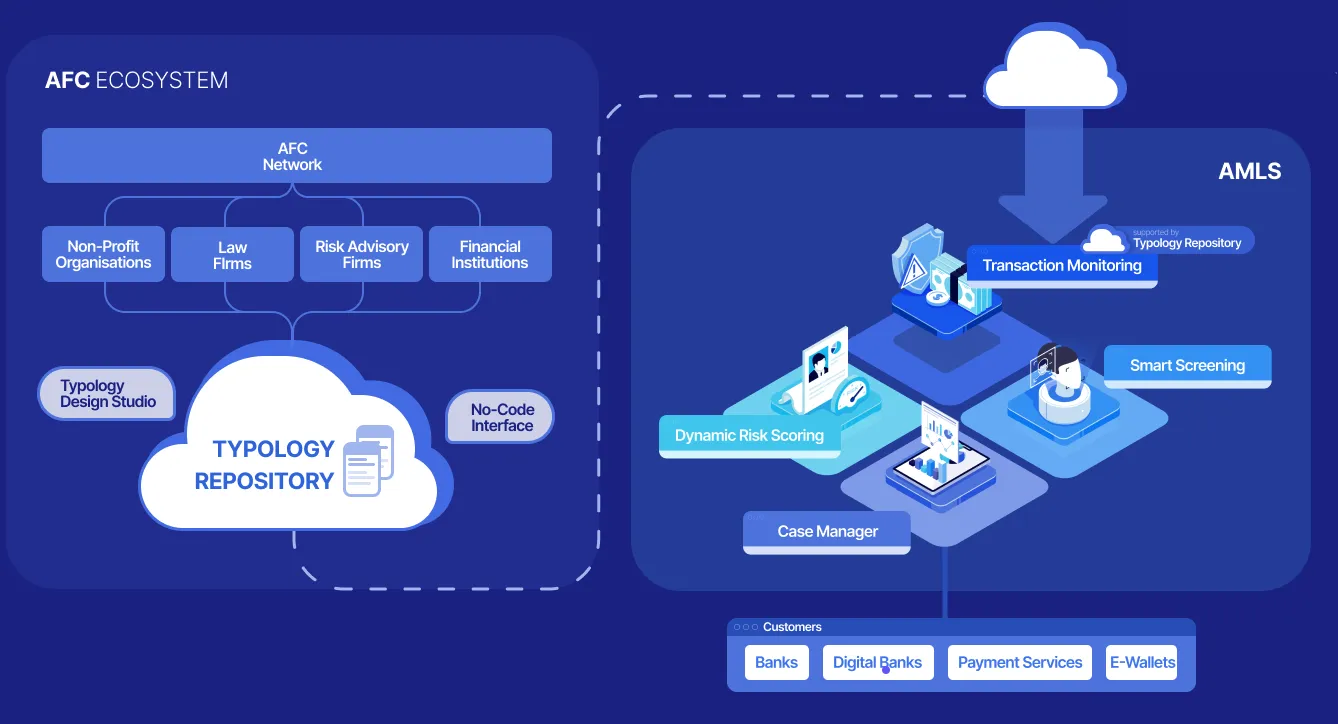
How Tookitaki's technology addresses the compliance challenges of e-wallets
Tookitaki's technology goes beyond traditional rule-based systems by utilizing machine learning algorithms to identify and predict financial crime patterns. This enables e-wallet providers to detect suspicious activities more accurately and effectively while reducing false positives. The technology also automates the KYC process, streamlining the onboarding experience for both the provider and the user.
By implementing Tookitaki's AML compliance solutions, e-wallet providers can enjoy several benefits, including:
- Improved regulatory compliance: Tookitaki's solutions ensure that e-wallet providers remain compliant with AML regulations, reducing the risk of fines and reputational damage.
- Enhanced risk management: The advanced analytics capabilities of Tookitaki's technology help e-wallet providers to identify better and manage potential risks associated with their services.
- Increased operational efficiency: Automating the KYC process and other compliance tasks leads to cost savings and improved operational efficiency.
- Greater customer trust: Secure onboarding processes, coupled with robust AML measures, contribute to building user trust and confidence in the e-wallet provider's services.
Implementing Tookitaki's AMLS positively impacts the onboarding process and user experience for e-wallet providers in several ways:
- Streamlined onboarding: Tookitaki's real-time prospect screening and prospect risk scoring solutions help mitigate AML risks while onboarding new customers, providing a faster and more seamless experience.
- Enhanced security: The AMLS help de-risk business with a 360-degree dynamic risk view of customers. Its integrated transaction monitoring, smart screening, customer risk scoring and case management modules provide fast-growing e-wallets complete control of their AML risks.
- Reduced friction: By minimizing false positives and automating compliance tasks, Tookitaki's solutions help reduce friction in the onboarding process, leading to increased user satisfaction.
Tookitaki plays a crucial role in ensuring secure onboarding for e-wallet providers in Singapore by offering cutting-edge AML compliance solutions. These solutions not only help providers adhere to regulatory requirements but also enhance their risk management capabilities, improve operational efficiency, and foster trust among users.
Securing the Future of E-wallets in Singapore
As the e-wallet market continues to grow in Singapore, the significance of secure onboarding cannot be overstated. It plays a vital role in safeguarding users' personal and financial information while ensuring compliance with AML regulations. To maintain the trust of users and regulators alike, e-wallet providers must prioritize the adoption of advanced AML compliance solutions like Tookitaki's.
Tookitaki's innovative solutions provide enhanced security and compliance measures that help e-wallet providers stay ahead in a competitive market while ensuring a seamless user experience. By implementing Tookitaki's AML compliance technology, e-wallet providers can effectively mitigate risks, streamline their onboarding processes, and foster trust among their users.
Don't miss the opportunity to strengthen your e-wallet's security and compliance measures. Book a demo for Tookitaki’s AML compliance solutions today and experience the difference that cutting-edge technology can make in securing the future of e-wallets in Singapore.

The Future of Digital Banking in the Philippines and Tookitaki's Role
As the digital banking landscape continues to evolve in the Philippines, financial institutions are increasingly adopting modern technology to ensure secure transactions and robust regulatory compliance. In this article, we will discuss the current state of digital banking in the Philippines, the challenges and opportunities in the sector, and how Tookitaki is playing a crucial role in promoting compliance in digital banking through its innovative solutions.
The State of Digital Banking in the Philippines
Growth of digital banking and FinTech sector
Over the past few years, the Philippines has seen rapid growth in digital banking and the FinTech sector. With a growing smartphone penetration rate and increasing internet users, digital financial services are becoming more accessible to the country's population. This has led to a surge in online transactions, mobile banking, and digital wallets, providing consumers with convenient and secure ways to manage their finances.
{{ cta-first }}
Government Initiatives to Promote Digital Banking
The government has also been supportive of the digital banking revolution in the Philippines. The Bangko Sentral ng Pilipinas (BSP), the country's central bank, has introduced several initiatives to encourage digital banking, such as the National Retail Payment System (NRPS) and the Philippine EFT System and Operations Network (PESONet). These platforms aim to create a safe, efficient, and reliable electronic retail payment system, promoting cashless transactions and reducing the reliance on cash.
Consumer Adoption and Behavior
Filipinos are embracing digital banking at an unprecedented rate. According to a 2020 study by the BSP, 51.2% of Filipino adults now own a bank account, and 25.2% of these accounts are digital. The same study reported that 20.1% of adult Filipinos use electronic payments, up from just 1% in 2013. This rapid adoption can be attributed to the growing awareness of the benefits of digital banking, such as convenience, security, and cost savings.
Challenges and Opportunities in the Philippine Digital Banking Landscape
Regulatory hurdles and security concerns
As digital banking grows in popularity, financial institutions face several regulatory challenges. Ensuring compliance with Anti-Money Laundering (AML) and Combating the Financing of Terrorism (CFT) regulations is crucial to maintaining the financial system's integrity. With cybercrime on the rise, digital banks must also implement robust security measures to protect customer data and transactions from fraud and cyberattacks.
Financial inclusion and accessibility
One of the primary objectives of digital banking in the Philippines is to promote financial inclusion, particularly for the unbanked and underbanked population. More than 40% of the adult population in the Philippines remains unbanked, primarily due to rural areas' lack of access to financial services. Digital banking offers an opportunity for these individuals to access financial services, promoting economic growth and reducing poverty.
Digital transformation and integration of legacy systems
Financial institutions in the Philippines face the challenge of integrating digital banking services with their existing legacy systems. This requires significant investment in technology infrastructure, staff training, and process re-engineering. However, the potential benefits of digital transformation, such as improved operational efficiency, cost reduction, and better customer experience, make it a worthwhile endeavour for banks.
{{cta-ebook}}
Role of Tookitaki in Promoting Compliance in Digital Banking
Tookitaki, founded in 2015, is revolutionizing financial crime detection and prevention for banks and fintechs through its two distinct platforms: the Anti-Money Laundering Suite (AMLS) and the Anti-Financial Crime (AFC) Ecosystem. The company's unique community-based approach addresses the silos used by criminals to bypass traditional solutions, resulting in a sustainable AML program with holistic risk coverage, sharper detection, and fewer false alerts.
The AMLS is designed to be a one-stop-shop for financial institutions looking to meet their AML compliance requirements. With the AMLS, financial institutions can reduce the number of false positives, increase the number of true positives, and ultimately improve their overall compliance posture. Our platform is highly configurable, allowing it to be tailored to the specific needs of each financial institution.
About the AFC Ecosystem
The AFC Ecosystem is a separate entity that aims to discover hidden money trails of criminals. The ecosystem is a body of experts covering the entire spectrum of money-laundering, enabling financial partners to uncover money trails not discoverable by today's standards. It is designed to work alongside the AMLS to provide a comprehensive solution for financial institutions.
One of the key features of the AFC ecosystem is the Typology Repository. This is a database of money laundering techniques and schemes that have been identified by financial institutions around the world. Financial institutions can contribute to the repository by sharing their own experiences and knowledge of money laundering. This allows the community of financial institutions to work together to tackle financial crime by sharing information and best practices.
A typology is a specific money laundering technique or scheme. By sharing typologies in the repository, financial institutions can learn about new and emerging threats, and adapt their AML programs accordingly. The repository includes a wide range of typologies, from traditional methods such as shell companies and money mules, to more recent developments such as digital currency and social media-based schemes.
Tookitaki's AMLS and AFC Ecosystem provide financial institutions with a comprehensive solution for detecting and preventing financial crime. By leveraging advanced technologies such as machine learning and community-based approaches, Tookitaki's platforms offer several key benefits that can help financial institutions improve compliance and prevent financial crime.
Supporting the Digital Transformation of Financial Institutions in the Philippines
Tookitaki's innovative AMLS and TRM solutions are well-suited to address the compliance challenges digital banks face in the Philippines. By providing cutting-edge technology and expert guidance, Tookitaki enables financial institutions to streamline their AML/CFT processes, reduce operational costs, and improve their overall risk management.
As more banks in the Philippines embark on their digital transformation journey and challenger banks emerge, Tookitaki's solutions can play a critical role in ensuring that these institutions maintain the highest standards of regulatory compliance while also delivering a seamless and secure banking experience for their customers.
{{cta-casestudy}}
Final Thoughts
The future of digital banking in the Philippines is bright, with significant growth potential and opportunities for financial institutions to expand their services and reach new customers. However, banks must also navigate the challenges of regulatory compliance, security, and digital transformation to ensure the long-term success of their digital banking initiatives.
Tookitaki's unique platforms, the AMLS and the AFC Ecosystem, are well-equipped to support financial institutions in the Philippines as they embrace digital banking and strive to maintain robust compliance standards. By leveraging Tookitaki's cutting-edge technology and first-of-a-kind community based approach, digital banks can enhance their risk management, reduce operational costs, and provide customers with a secure, reliable digital banking experience. Book a demo to learn more about Tookitaki's tailored solutions for digital banks.

The Importance of AML Compliance in Thailand's Financial Industry
Thailand's financial industry plays a crucial role in the country's economy. As the sector continues to grow and evolve, so does the need for effective anti-money laundering (AML) compliance. With increased international trade and the rapid expansion of digital transactions, Thailand has become a target for money launderers looking to exploit the system.
In this article, we will explore the importance of AML compliance in Thailand's financial industry, the challenges faced by financial institutions, the role of technology in AML compliance, and best practices for tackling money laundering. Finally, we will explain how Tookitaki's AML solutions can help financial institutions to ensure regulatory compliance.
Regulatory Framework for AML in Thailand
Key Legislation and Regulators
Anti-Money Laundering Act (AMLA)
Thailand's primary legislation governing AML is the Anti-Money Laundering Act (AMLA), which was first enacted in 1999 and has since been amended multiple times to align with international standards. The AMLA establishes the legal framework for preventing and suppressing money laundering activities and sets out the responsibilities and requirements for reporting entities, including financial institutions.
Bank of Thailand (BOT)
The Bank of Thailand (BOT) is the country's central bank and the main regulator responsible for overseeing the financial sector. The BOT issues guidelines and regulations related to AML compliance for banks and other financial institutions, ensuring they adhere to domestic and international standards.
Office of the Securities and Exchange Commission (SEC)
The Office of the Securities and Exchange Commission (SEC) regulates the capital market in Thailand, including securities companies, asset management companies, and other market participants. The SEC is responsible for implementing and enforcing AML compliance measures in the capital market, working closely with the BOT and other relevant authorities.
AML Requirements for Financial Institutions
Customer Due Diligence (CDD)
Financial institutions in Thailand must perform Customer Due Diligence (CDD) for all customers, including verifying their identity and understanding the nature and purpose of their business relationship. Enhanced Due Diligence (EDD) is required for high-risk customers, such as politically exposed persons (PEPs) and those with complex business structures.
Transaction Monitoring
Financial institutions must monitor customer transactions to detect any unusual or suspicious activities. This includes setting up internal systems to flag potentially high-risk transactions and conducting ongoing monitoring to ensure that customer activities align with their risk profiles.
Reporting Suspicious Activities
In accordance with the AMLA, financial institutions are required to report any suspicious transactions or activities to the Anti-Money Laundering Office (AMLO), Thailand's Financial Intelligence Unit (FIU). This includes transactions that appear to have no apparent lawful purpose, are inconsistent with a customer's known business activities, or involve large sums of money.
Record-Keeping
Financial institutions must maintain records of customer identification documents, account files, and transaction records for a minimum of five years. This is essential for facilitating investigations and prosecutions of money laundering cases, as well as ensuring compliance with AML regulations.
AML Challenges in Thailand's Financial Industry
Money Laundering Risks and Vulnerabilities
Thailand's financial industry faces several money laundering risks and vulnerabilities, including the country's extensive informal economy, cash-intensive industries, and the prevalence of corruption. These factors create opportunities for money launderers to infiltrate the financial system, making it essential for financial institutions to remain vigilant and proactive in their AML efforts.
Technological Advancements and Digital Transactions
The rapid growth of digital transactions in Thailand, driven by fintech innovation and increased internet penetration, has created new avenues for money laundering. Criminals are exploiting digital platforms to conduct illegal activities, such as using cryptocurrencies to facilitate cross-border money transfers. Financial institutions must adapt their AML compliance programs to keep pace with these evolving threats.
International Regulatory Pressure
As a member of the Financial Action Task Force (FATF), Thailand is under increased international scrutiny to ensure that its financial system is not exploited for money laundering or terrorist financing. Failure to maintain robust AML compliance measures can have negative consequences for the country's financial industry, such as reputational damage and reduced access to international markets.
{{cta-guide}}
The Role of Technology in AML Compliance
Automation and Artificial Intelligence
Technological advancements have led to the development of innovative solutions that can help financial institutions streamline their AML compliance efforts. Automation and artificial intelligence (AI) can assist in reducing the workload and increasing the accuracy of CDD and transaction monitoring processes. By leveraging these technologies, financial institutions can more effectively identify suspicious activities and reduce the risk of money laundering.
Data Analytics and Risk Assessment
Data analytics plays a crucial role in AML compliance, allowing financial institutions to better understand and assess the risks associated with their customers and transactions. Advanced data analytics tools can help institutions identify patterns and trends that may indicate money laundering activities, enabling them to take appropriate action and mitigate risks.
Integration with Existing Systems
To maximize the benefits of technology in AML compliance, financial institutions must ensure that their technological solutions can be seamlessly integrated with existing systems and processes. This will enable them to leverage the full potential of these tools and enhance their overall compliance efforts.
Best Practices for Tackling Money Laundering in Thailand's Financial Industry
Adopt a Risk-Based Approach
Financial institutions should adopt a risk-based approach to AML compliance, which involves assessing the money laundering risks associated with their customers, products, and services, and implementing appropriate controls and measures to mitigate these risks. This approach enables institutions to allocate their resources more effectively and focus on areas with the highest risks.
Foster a Culture of Compliance
A strong culture of compliance is essential for the successful implementation of AML measures in financial institutions. This includes ensuring that employees at all levels understand the importance of AML compliance and their role in preventing and detecting money laundering. Providing ongoing training and support can help to reinforce this culture and promote adherence to AML regulations.
Collaborate with Industry Stakeholders and Regulators
Collaboration between financial institutions, regulators, and other industry stakeholders is crucial for tackling money laundering in Thailand's financial industry. By sharing information and best practices and engaging in public-private partnerships, these parties can work together more effectively in combating money laundering and strengthening the financial system's integrity.
Tookitaki's AML Solutions
Founded in 2015, Tookitaki aims to create safer societies by tackling the root cause of money laundering. As a global leader in financial crime prevention software, the company revolutionises the fight against financial crime by breaking the siloed AML approach and connecting the community through its two distinct platforms: the Anti-Money Laundering Suite (AMLS) and the Anti-Financial Crime (AFC) Ecosystem. Tookitaki's unique community-based approach empowers financial institutions to effectively detect, prevent, and combat money laundering and related criminal activities, resulting in a sustainable AML program with holistic risk coverage, sharper detection, and fewer false alerts.
The AMLS is an end-to-end operating system that modernises compliance processes for banks and fintechs. In parallel, the AFC Ecosystem serves as a community of experts dedicated to uncovering hidden money trails that traditional methods cannot detect. Powered by federated machine learning, the AMLS collaborates with the AFC Ecosystem to ensure that financial institutions stay ahead of the curve in their AML programs.
The AMLS includes several modules such as Transaction Monitoring, Smart Screening, Dynamic Risk Scoring, and Case Manager. These modules work together to provide a comprehensive compliance solution that covers all aspects of AML, including detection, investigation, and reporting.
Final Thoughts
As Thailand's financial industry continues to face money laundering risks and challenges, it is more important than ever for financial institutions to maintain robust AML compliance programs. By leveraging technology and adopting best practices, institutions can better protect themselves and the wider financial system from money laundering threats.
Tookitaki's AML solutions can help financial institutions in Thailand enhance their AML compliance efforts by providing advanced technology for transaction monitoring, risk assessment, and screening. These solutions can improve the efficiency and effectiveness of AML processes, helping institutions better identify and mitigate money laundering risks.
Don't miss the opportunity to see how Tookitaki's AML solutions can help your financial institution in Thailand strengthen its AML compliance efforts. Schedule a demo with Tookitaki today and discover the benefits of adopting innovative AML technology.

AML Compliance in Nigeria: How Tookitaki's Innovations Can Help
Nigeria, as Africa's largest economy and one of the most populous countries in the world, faces significant challenges in combating money laundering and financial crimes. Given its strategic position in West Africa and the growing fintech sector, the country has become an attractive target for money launderers and criminal organizations. As a result, AML compliance has become a top priority for regulators, financial institutions, and businesses operating in Nigeria.
Implementing robust AML controls is crucial for financial institutions and businesses in Nigeria to protect their reputation, maintain customer trust, and avoid hefty penalties from regulators. Strong AML systems not only help detect and prevent money laundering activities but also contribute to the financial sector's stability, improve investor confidence, and promote economic growth in the country. Moreover, adherence to international AML standards is vital for Nigerian businesses to participate in global financial markets and attract foreign investments.
Tookitaki, a leading global provider of AML compliance solutions, offers a comprehensive suite of cutting-edge tools designed to help financial institutions in Nigeria effectively combat money laundering and financial crimes. With Tookitaki's innovative solutions, organisations can efficiently navigate the complex regulatory landscape, streamline compliance processes, and stay ahead of emerging threats. In this blog, we will explore the AML regulatory landscape in Nigeria, discuss the challenges faced by financial institutions, and showcase how Tookitaki's solutions can help businesses achieve robust AML compliance.
AML Regulatory Landscape in Nigeria
Overview of AML regulations
Nigeria has implemented a comprehensive legal framework to combat money laundering and terrorist financing. The primary legislation governing AML compliance is the Money Laundering (Prohibition) Act (MLPA), which criminalizes money laundering activities, establishes reporting and record-keeping requirements, and sets forth penalties for non-compliance. The MLPA has been amended several times in 2004, 2011, and most recently, in 2022, to strengthen its provisions and align them with international standards, such as the Financial Action Task Force (FATF) recommendations.
Another critical piece of legislation is the Terrorism (Prevention) Act, which focuses on countering terrorist financing and includes provisions for freezing and seizing assets of designated terrorist organizations. In addition to these laws, financial institutions must also comply with guidelines and directives issued by their respective regulators. Other relevant laws include the Central Bank of Nigeria (CBN) Regulations on Anti-Money Laundering, which was passed in 2022 to align with the provisions of the Money Laundering (Prohibition) Act 2022.

Key regulatory bodies
Several regulatory bodies oversee AML compliance in Nigeria, each focusing on different sectors of the financial industry:
- Central Bank of Nigeria (CBN): The CBN is the primary regulator for banks and non-bank financial institutions. It is responsible for issuing guidelines and directives on AML compliance, conducting examinations, and taking enforcement actions against non-compliant entities.
- Nigerian Financial Intelligence Unit (NFIU): The NFIU is the country's financial intelligence agency, responsible for receiving, analyzing, and disseminating financial intelligence reports to law enforcement agencies and regulators.
- Securities and Exchange Commission (SEC): The SEC oversees the capital market and securities sector and enforces AML compliance among capital market operators, including broker-dealers and investment advisers.
- National Insurance Commission (NAICOM): NAICOM regulates the insurance industry and enforces AML compliance among insurance companies, brokers, and agents.
Recent developments and enforcement actions
In recent years, Nigeria has made significant progress in strengthening its AML regulatory framework and increasing enforcement actions against non-compliant entities. The country has taken steps to address the FATF's concerns and to be removed from the FATF's list of countries with strategic AML/CFT deficiencies.
Enforcement actions by regulators have also increased, with financial institutions facing penalties and sanctions for non-compliance with AML regulations. In recent years, several banks have been fined for failing to adhere to customer due diligence requirements, reporting obligations, and other AML compliance measures.
This heightened regulatory scrutiny highlights the need for financial institutions and businesses in Nigeria to implement robust AML compliance programs and stay up-to-date with evolving regulations and enforcement trends.
Challenges Faced by Financial Institutions in Nigeria
High volume of transactions
Financial institutions in Nigeria face the challenge of handling a high volume of transactions daily. As the largest economy in Africa, Nigeria witnesses significant financial activity, making it difficult for banks and other institutions to monitor and identify suspicious transactions. This increases the risk of money laundering and other financial crimes, placing pressure on compliance teams to detect and prevent illegal activities.
Evolving money laundering techniques
Criminals are constantly developing new money laundering techniques to evade detection, making it challenging for financial institutions to stay ahead. These methods include trade-based money laundering, virtual currencies, and the use of shell companies, among others. As technology advances, so do the ways criminals exploit it, requiring financial institutions to continuously update their knowledge, tools, and systems for achieving holistic risk coverage.
Limited resources and expertise
Financial institutions in Nigeria often have limited resources and expertise in AML compliance. Adequate training and the development of skilled compliance teams are essential in identifying and preventing financial crimes. However, due to financial constraints and the shortage of qualified professionals, many institutions struggle to maintain robust AML controls. This challenge is further compounded by the need to invest in advanced technology and systems to keep pace with the evolving financial landscape.
Complex regulatory environment
The complex regulatory environment in Nigeria presents another challenge for financial institutions. Banks and other financial institutions must navigate a demanding compliance landscape with numerous laws, regulations, and guidelines, as well as multiple regulatory bodies. Ensuring adherence to all relevant regulations and staying up-to-date with the latest changes can be daunting, making it difficult for institutions to maintain full compliance and avoid penalties and sanctions.
Tookitaki's Innovative Solutions for AML Compliance
Tookitaki is a pioneer in the fight against financial crime, leveraging a unique and innovative approach that transcends traditional solutions. The company offers two distinct platforms -- the Anti-Money Laundering Suite (AMLS) and Anti-Financial Crime (AFC) Ecosystem -- that work in tandem to address the limitations of siloed systems in combating money laundering.
The AFC Ecosystem is a community-based platform that facilitates sharing of information and best practices in the battle against financial crime. Powering this ecosystem is a Typology Repository, a living database of money laundering techniques and schemes. This repository is enriched by the collective experiences and knowledge of financial institutions, regulatory bodies, and risk consultants worldwide, encompassing a broad range of typologies from traditional methods to emerging trends.
The AMLS is a software solution deployed at financial institutions. It is an end-to-end operating system that modernises compliance processes for banks and fintechs. The AMLS collaborates with the AFC Ecosystem through federated machine learning. This integration allows the AMLS to extract new typologies from the AFC Ecosystem, executing them at the clients' end to ensure that their AML programs remain cutting-edge.
The AMLS includes Transaction Monitoring, Smart Screening, Dynamic Risk Scoring, and Case Manager modules. These modules work together to provide a comprehensive compliance solution that covers all aspects of AML, including detection, investigation, and reporting.
{{cta-guide}}
Benefits of Adopting Tookitaki's AML Solutions
- Improved efficiency and reduced false positives: Tookitaki's innovative AML solutions use advanced machine learning algorithms to significantly improve the accuracy of detecting suspicious activities. This leads to fewer false positives, enabling compliance teams to focus on genuine high-risk transactions and reducing the time spent on manual investigations.
- Enhanced risk management: By incorporating advanced analytics and real-time capabilities, Tookitaki's AML solutions enable financial institutions to identify and manage risks proactively. This helps institutions better understand their risk exposure and adopt more effective risk mitigation strategies.
- Streamlined regulatory compliance: Tookitaki's AML solutions are designed to meet the stringent requirements of top-tier banks and global regulators. With built-in tools for data management, reporting, and audit trails, these solutions simplify the compliance process and help institutions adhere to the ever-changing regulatory landscape.
- Scalability and adaptability to evolving threats: As money laundering techniques and regulatory requirements continue to evolve, financial institutions need flexible and scalable AML solutions. Tookitaki's AML solutions are designed to adapt to new challenges, allowing institutions to keep pace with emerging threats and maintain robust controls in a dynamic environment.
AML Compliance in Nigeria: Embracing Tookitaki's Solutions
As the AML regulatory landscape in Nigeria continues to evolve, it is crucial for financial institutions to implement robust AML controls. This ensures compliance with both local and international regulations while also protecting the institutions and their customers from financial crime. Tookitaki's cutting-edge AML solutions, powered by advanced machine learning algorithms, help financial institutions in Nigeria overcome various challenges in AML compliance. By enhancing risk management, streamlining compliance processes, and adapting to emerging threats, Tookitaki's solutions play a significant role in safeguarding Nigeria's financial industry.
To experience firsthand how Tookitaki's AML solutions can help your financial institution tackle the complexities of AML compliance in Nigeria, we encourage you to schedule a demo with our team. Discover the benefits of adopting Tookitaki's innovative AML solutions and propel your institution towards a safer and more compliant future.

Typology Tales July 2024: Account Takeover Surveillance
We are pleased to share the latest edition of "Typology Tales" for July 2024. This edition highlights the new typologies that our Anti-Financial Crime (AFC) community has carefully analysed and selected. Our community's collective efforts are crucial in staying ahead of evolving financial crime threats, and we are grateful for your continued participation and contributions.
AFC Community’s Role
Each month, our dedicated AFC community comes together to analyze and evaluate newly created typologies, selecting those that can significantly enhance the ecosystem's ability to prevent and combat financial crime. The typologies chosen for publication are those that offer the most promise in terms of effectiveness and applicability across various scenarios.
Key Highlights from July 2024
These typologies have been meticulously curated to ensure they provide robust and actionable insights, ultimately helping to safeguard the financial ecosystem.
Theme of the Month: Account Takeover Fraud (ATO)

Account takeover fraud (ATO) is a type of cybercrime where unauthorised people access a user's account and use it for harmful purposes. This dangerous activity has increased significantly in recent times, posing a growing threat to both individuals and organisations.
In this edition...
In this edition of Typology Tales, we delve into two typologies that compliance professionals can incorporate into their transaction fraud monitoring systems to proactively prevent account takeover in real time.
Typology 1: Surge in Multi-Party Transactions in Sizeable Values

A pattern of multiple parties making high-value transactions with one entity in a short period of time suggests possible account takeover fraud. This requires a strategic review of transaction behaviours.
How It Works
- The typology monitors transactions involving a single customer who receives or transfers funds with multiple parties within a short time span.
- To identify potential account takeover risks, the typology groups transactions by the unique identifiers of senders and receivers within a specified time frame. By tracking these identifiers over a defined period, it can determine how many different parties have transacted with a particular entity.
- Simultaneously, the typology aggregates the transaction amounts linked to unique senders and receivers.
- It flags any entity that engages in transactions with a large number of different parties and exceeds a cumulative transaction threshold. This signals potential account takeover risks due to unauthorised access and high-value transactions.
Typology 2: Monitoring High-Value Transactions Across Multiple Payment Modes

Financial institutions may implement advanced monitoring to detect high-value transactions between senders and receivers through various modes, aiming to uncover potential account takeover fraud.
How It Works
- To effectively oversee the flow of funds, the typology tracks and aggregates transaction amounts based on the mode of transfer.
- Transaction amounts, including those made through cash or alternative payments, are further aggregated by the unique identifiers of the sender and receiver over a specific period.
- Entities showing high-value transactions across multiple payment modes over specified time frames are potentially flagged as suspicious. This increased activity may indicate that an account has been compromised and is being used to funnel funds illegally.
From the Media: Account Takeover Attacks Overtake Ransomware as Leading Security Concern
Research by cybersecurity firm Abnormal Security highlights that account takeover (ATO) attacks have become a top concern for security leaders. The 2024 State of Cloud Account Takeover Attacks report reveals that 83% of organisations experienced at least one ATO incident in the past year.
Over 75% of security leaders rank ATOs among the top four global cyber threats, with nearly 50% facing more than five incidents annually and around 20% encountering over ten incidents. ATOs are now considered more significant than other threats such as spear phishing and ransomware.
Unite in the Fight Against Financial Crime
Financial crime is a pervasive issue that requires a collective, centralised approach to intelligence gathering. That's why we have created the Anti-Financial Crime (AFC) Ecosystem, a network of experts who work together to share knowledge and develop strategies for combating financial crime.
If you are an AFC expert, we invite you to join our efforts and help us grow the AFC Ecosystem. And if you know any other AFC experts, please refer them to us so we can continue to expand and strengthen our network. Together, we can make a real difference in the fight against financial crime.

Account Takeover Fraud: Monitoring Entities Incorporated Long Back
In the evolving landscape of financial crime, financial institutions need to intensify their scrutiny of transactions from entities with a long history of incorporation but sporadic or recent activity. This increased vigilance aims to detect and thwart potential account takeover fraud within savings accounts, ensuring the safety and integrity of financial systems.
Given below is a typology from Tookitaki's AFC Ecosystem. It details how to ensure your monitoring system triggers alerts transactions from entities with a long history of incorporation
Understanding the Typology
Setting Up Entity Historical Profiles
Financial institutions employ a function known as the "Incorporation Date of the Entity" to track and record the incorporation dates and transaction activities of entities. This function helps identify entities that have been established long ago but have shown recent or sudden transaction activities, which could be indicative of fraud.
Function Configuration and Data Aggregation
- Aggregate Fields: The system aggregates data on 'sender incorporation date' and 'receiver incorporation date.'
- Aggregate Function: Using the collect_set function, the system compiles a unique set of incorporation dates for each sender and receiver, providing a comprehensive historical perspective of each entity's transaction timeline.
- Group By: Transactions are grouped by unique identifiers like 'sender_hashcode' and 'receiver_hashcode,' linking each entity’s transaction history to specific account profiles.
Monitoring and Anomaly Detection
The system continuously monitors the transaction activities of these entities, comparing current transactions against historical data. Entities that have shown no or minimal transaction activities for a significant period since their incorporation are closely watched. A sudden spike in transactions, especially those of significant volume or frequency, triggers an alert. This scrutiny is particularly heightened if the entity's previous activity has been minimal or non-existent for years.

Flagging and Review Process
Transactions involving long-dormant entities resuming activity are flagged as high-risk. These flagged transactions undergo a detailed review to ascertain the legitimacy of the activity and to rule out any potential account takeover or other fraudulent intentions.
Investigative Measures
For flagged transactions, financial institutions conduct thorough investigations involving:
- Background Checks: Verifying the entity's background.
- Transaction Legitimacy: Confirming the legitimacy of the transaction.
- Entity Ownership: Ensuring the entity's ownership and operational status.
Preventative Actions and Customer Interaction
If fraudulent activity is confirmed, financial institutions take immediate steps to:
- Block further transactions.
- Secure the affected accounts.
- Possibly reverse fraudulent transactions.
- Contact entity representatives for further clarification and to ensure all parties are informed of the situation.
Compliance and Reporting Obligations
All suspicious activities are documented and reported in compliance with regulatory requirements. This ensures that the institution remains compliant with anti-fraud regulations and aids in broader efforts to combat financial crime.
{{cta-ebook}}
Enhancement of Monitoring Systems
Based on findings and trends observed from monitoring these entities, financial institutions continually refine their detection algorithms and update their monitoring systems to better identify and prevent potential fraud.
By closely monitoring the activities of entities incorporated long ago but recently active, banks can effectively spot unusual patterns that may indicate fraudulent activities, such as account takeovers. This proactive approach helps safeguard customer assets and maintain the integrity of the financial system.
Final Thoughts
Financial institutions must remain vigilant and proactive in monitoring and analyzing transaction activities, especially those involving historically dormant entities. This typology, sourced from Tookitaki's AFC Ecosystem, highlights the importance of advanced monitoring techniques in detecting potential fraud.
We encourage anti-financial crime professionals to join the AFC Ecosystem to access unique typologies and leverage community-driven insights for enhanced fraud detection and prevention. Together, we can strengthen our defenses against financial crime and protect the integrity of our financial systems.

The Globalization of Fraud: The Rise of Transnational Scams
In an increasingly interconnected world, the borders that once confined criminal activities are rapidly dissolving, aided by the rise of digitalisation and the pervasive reach of online platforms. The stark reality we face today is a landscape where fraudsters exploit digital payment systems to target individuals across the globe, particularly in the Asia-Pacific region. Organised fraud syndicates are not just local threats; they operate on an international scale, executing sophisticated scams that often outpace current preventative measures.
Case Study: A Transnational Crackdown on Job Scams
On 20 March 2024, a significant breakthrough came when the Commercial Affairs Department (CAD) of the Singapore Police Force and the Bukit Aman Commercial Crime Investigation Department of the Royal Malaysia Police joined forces in Kuala Lumpur. This joint operation was the culmination of extensive cross-border investigative efforts aimed at dismantling a formidable job scam syndicate.
Between October 2023 and January 2024, this syndicate deceived over 3,000 individuals, accumulating illicit gains of approximately $45.7 million. These scams primarily targeted Singaporeans, promising lucrative job opportunities that required victims to make upfront payments or divulge sensitive information under the guise of securing employment. The rapid escalation of these scams prompted an intensive collaborative investigation, which eventually led to the arrest of five Malaysians involved in laundering the proceeds from these fraudulent activities.
This operation not only highlights the severity and reach of transnational scams but also underscores the urgent need for global cooperation and shared strategies to combat these crimes effectively.

The Imperative of a Collaborative Approach
As we witness a surge in transnational fraud, the isolation of financial institutions in their silos makes them particularly vulnerable. The complexity and rapid adaptation of fraud strategies require that defences be equally dynamic and interconnected.
Collective Intelligence and Shared Responsibility
To counteract the evolving menace of cross-border fraud effectively, a collaborative approach is indispensable. The AFC Ecosystem initiative represents a commitment to fostering industry-wide cooperation and information sharing. Through this collective intelligence, we aim to establish a robust defence mechanism that not only identifies but also anticipates fraudulent activities, ensuring safe and secure societies. This shared responsibility is vital in creating an impenetrable barrier against the sophisticated mechanisms of modern financial criminals.
Considering the Typology of the AFC Ecosystem
Drawing from the AFC Ecosystem's insights, let's delve into the typology of transnational job scams. This framework is instrumental in understanding how these frauds operate and what measures can be employed to thwart their attempts.
Detailed Analysis of the Typology
Transnational job scams represent a highly organized and rapidly proliferating threat that exploits the aspirations of job seekers worldwide. These scams are not just about deceit regarding employment opportunities but involve intricate financial manipulations that siphon funds across international borders.
Operational Mechanics
- Initial Recruitment: The scam begins with contact through social media or other digital platforms, where victims are lured with high-return, low-effort job offers.
- Deceptive Promises: The roles are advertised as lucrative yet simple enough to attract a wide demographic, from students to the unemployed.
- Financial Prerequisites: Victims are persuaded to make upfront payments or provide personal information as a part of the onboarding process.
- Expeditious Expansion: To maximize profits before any potential crackdown, these operations quickly scale and replicate across various regions.
{{cta-ebook}}
Granular Red Flags and Risk Indicators
To effectively monitor and prevent these scams, it is crucial to recognise the following detailed risk indicators:
- Value: Transactions often involve small amounts that are usually perceived as low-risk by victims, making them less likely to raise immediate alarms.
- Volume: A high frequency of transactions complicates tracking and analysis, as the sheer number of transactions can overwhelm standard monitoring systems.
- Velocity: The rapid succession of payments, coupled with potential chargebacks or cancellations, creates a chaotic financial trail that is difficult to follow.
- Channels: Scammers predominantly use digital payment platforms, online banking, and occasionally cryptocurrencies to maintain anonymity and complicate tracing.
- Anonymity: There is often a mismatch between beneficiary details and the purported employer, signalling a red flag for transactions.
- Recurrence: Victims are frequently solicited for multiple payments under various pretexts, each justified as necessary for job commencement or continuation.
- High-risk Geos: Payments are directed to accounts in high-risk jurisdictions or to those that are otherwise unrelated or suspicious, lacking any logical connection to the job or employer.
- Geographical Inconsistencies: The involved countries often have no direct connection to the alleged job or employer, exploiting the complexities of international law and jurisdictional boundaries.
Harnessing Collective Efforts for Enhanced Security
The fight against transnational fraud is not a battle that can be won in isolation. It requires the concerted efforts of financial institutions, regulatory bodies, law enforcement, and the public. By adopting the typology provided by the AFC Ecosystem and vigilantly monitoring the detailed risk indicators, we can forge a path towards a more secure and resilient financial environment. This collective approach is our best defense against the sophisticated and ever-evolving landscape of global fraud.

Typology Tales: Early Loan Repayments with Mysterious Funding Sources
In the complex landscape of financial operations, early loan repayments might initially appear as positive indicators of financial health and responsibility. However, when these repayments are unexpectedly large or occur well before their due dates, and are accompanied by a lack of transparency about the source of funds, they can signal underlying financial crimes such as money laundering.
This blog delves into a concerning pattern where borrowers rapidly clear their debts without adequately disclosing the origins of their repayment funds, raising significant alarms for money laundering and other illicit financial activities.
Understanding the Typology
Unexpected Early Repayment
The typology begins when a borrower suddenly repays their loan well ahead of the scheduled due date. This action, especially when the repayment amount is significant, is not in line with the borrower’s usual financial behaviour or capability. Such early repayments raise immediate red flags for financial institutions because they deviate from normalized payment patterns typically observed among borrowers.
Lack of Fund Source Transparency
Further complicating the situation is the borrower’s inability to transparently disclose the source of the funds used for the repayment. When pressed for details, the responses may be vague, the documentation inadequate, or the explanations implausible. This obscurity is a critical red flag in anti-money laundering (AML) practices because legitimate funds typically have a traceable origin that the borrower can easily articulate.

Indicators and Risks
Money Laundering Indicator
- Integration of Illicit Funds: Early repayment of loans with funds of unknown origin can serve as a mechanism for criminals to integrate illicit money into the financial system. This gives the money a veneer of legitimacy, as repaid loans on paper appear as bona fide transactions, effectively 'cleaning' the money.
- Masking True Financial Health: By clearing debts prematurely using these questionable funds, the borrower may also be attempting to enhance their financial standing artificially. This can mislead financial institutions about the borrower’s true financial health and risk profile.
Predicate Offences Connection
- Link to Organized Crime and Terrorist Financing: Such repayment patterns may not only be connected to basic money laundering but could also be indicative of more severe financial crimes. For instance, the funds used might originate from organized criminal activities or even terrorist financing, where large sums of money need to be laundered swiftly.
- Systematic Approach to Crime: The frequency and volume of transactions, particularly when linked to high-value loans, suggest a systematic approach to using financial products for criminal ends. This typology often involves a network of actors rather than isolated incidents, pointing to organized efforts to abuse the financial system.
Challenges in Detection and Compliance
Monitoring and Compliance
- Enhanced Due Diligence: Financial institutions must implement enhanced due diligence processes when early loan repayments occur, especially if the source of the funds is unclear or unverifiable. This involves not just verifying the origin of the funds but also assessing the overall transaction context to ensure it aligns with the borrower's known financial activities.
- Continuous Monitoring: It's crucial for institutions to maintain continuous monitoring of accounts that exhibit early repayment patterns. This helps in detecting any recurrent suspicious activities and establishing whether these are part of a larger scheme.
Regulatory Reporting
- Mandatory Reporting Requirements: Institutions are required to report any suspicious activities to regulatory authorities as per AML guidelines. This includes transactions where the source of the funds cannot be reasonably explained, particularly when these involve significant amounts and are linked to early loan repayments.
- Collaboration with Authorities: Effective communication and collaboration with regulatory bodies are vital for addressing potential money laundering incidents. Financial institutions need to be proactive in sharing information and cooperating with investigations to ensure comprehensive oversight.
Investigative Challenges
- Tracing Transaction History: Investigating early repayment cases involves tracing the transaction history to identify the origin of the funds. This can be complex, especially if the funds have been moved through multiple channels or involve international transactions.
- Examining Borrower's Financial Profile: Institutions must scrutinize the borrower’s financial profile, including their income sources, spending habits, and the legitimacy of their financial dealings. This comprehensive evaluation helps in determining the plausibility of their capacity to repay loans early.
These challenges underscore the need for robust systems and processes within financial institutions to effectively monitor, detect, and report unusual loan repayment activities.
{{cta-ebook}}
Strategic Actions and Compliance
- Thorough Investigations: Upon detecting early loan repayments with mysterious funding sources, financial institutions must conduct detailed investigations. These should explore all aspects of the transaction, including the origin of the funds, the transaction pathway, and the relationship between the borrower and any third parties involved.
- Documenting Evidence: It is critical for institutions to meticulously document all findings from their investigations. This documentation not only supports compliance efforts but also aids in potential legal proceedings or regulatory reviews.
- Advanced Monitoring Systems: To effectively manage detection and compliance, institutions should deploy advanced monitoring systems. These systems use machine learning and behavioral analytics to identify patterns that may indicate money laundering or other financial crimes.
- Real-time Data Analysis: Utilizing real-time analytics allows institutions to quickly identify and respond to suspicious activities. This capability is essential for preventing the potential integration of illicit funds into the financial system.
The Role of the AFC Ecosystem
Tookitaki’s AFC Ecosystem offers financial institutions a platform to access a wide range of financial crime typologies, including those involving early loan repayments. This access is crucial for understanding and identifying potential new threats.
The ecosystem fosters a collaborative environment where institutions can share insights, experiences, and best practices. This community-driven approach significantly strengthens individual and collective capacities to combat financial crimes.
We encourage all financial institutions and professionals dedicated to the prevention of financial crime to join the AFC Ecosystem. By becoming part of this dynamic community, you can enhance your operational capabilities, stay updated on the latest developments in financial crime prevention, and contribute to a safer financial environment. Together, we can strengthen our defenses and protect the integrity of the financial system.

Typology Tales: Common Third Party Settling Multiple Customer Loans
In the intricate world of banking and finance, monitoring and preventing financial crime stands as a formidable challenge. This is especially true when it comes to the use of loans—a seemingly straightforward financial instrument that can, unfortunately, be manipulated for illicit purposes such as money laundering and terrorist financing. Today, we delve into a sophisticated typology that has emerged within this realm, where multiple customer loans across diverse banking segments are being repaid by a single, mysterious third party. This peculiar pattern not only sparks curiosity but also raises significant concerns over potential financial crimes.
This blog explores the inner workings of this typology, highlights the red flags it presents, and discusses the comprehensive measures financial institutions must undertake to tackle such deceptive practices. Through the lens of Tookitaki's Anti-Financial Crime (AFC) Ecosystem, we will uncover how collaborative efforts and advanced tools can enhance the detection and prevention capabilities of banks and lending institutions, safeguarding them against the misuse of their systems for washing illicit funds.
Understanding the Typology
Identifying the Common Repayer
Financial institutions have started to notice an unusual pattern: a variety of loans—ranging from commercial to personal—issued to different customers are being repaid by a single third party. This uncommon practice immediately raises red flags for financial crime investigators.
The loans, which serve legitimate purposes such as purchasing vehicles or launching small businesses, suddenly find themselves intertwined in a web of payments not from the borrowers themselves, but from an entity seemingly unrelated to the original financial agreements.

Analysis of Transaction Patterns
Upon closer scrutiny, it becomes apparent that this third party engages in high-volume and high-frequency transactions, systematically repaying loans for multiple, seemingly unrelated customers. This activity stretches across various sub-segments, affecting corporate entities like SMEs, MSMEs, sole proprietorships, partnerships, as well as individuals within the retail banking sphere.
Such patterns suggest a well-orchestrated effort to integrate illicit funds into the legitimate financial system under the guise of routine loan repayments, complicating the tracking and auditing processes that banks typically employ to monitor financial activities.
Mechanics and Risks
Third-Party Repayment Technique
In this typology, the third party acts almost as a financial intermediary, but without the transparency typically associated with such roles. After obtaining loans for legitimate reasons, borrowers quickly transfer the responsibility of repayment to this third party, which then makes regular payments to the financial institution.
This arrangement effectively masks the true origin of the funds used in the repayments. By obscuring the link between the source of the money and its ultimate use, this technique raises suspicions that these funds could be the proceeds of crime, repurposed through the financial system to appear as legitimate.
Predicate Offence Suspicions
The consistent involvement of a common third party in repaying multiple loans, especially when such repayments are substantial and frequent, closely aligns with behaviours often associated with attempts to launder money or finance terrorist operations. The systematic nature of these transactions suggests an organized effort to cleanse illicit funds.
The participation of various seemingly unrelated borrowers indicates that this might not just be an isolated incident but a part of a broader network designed to integrate illicit funds into the legitimate financial system, making it crucial for financial institutions to take notice and act.
Challenges in Monitoring and Detection
Challenges in Tracing the Source
One of the primary difficulties in tackling this typology lies in tracing the origins of the funds used for loan repayments. Since the transactions are conducted by a third party, understanding the relationship between this entity and the original borrowers becomes crucial.
Often, there is little to no clear documentation or legitimate reasons provided for why this third party is involved in the repayment process. Without this clarity, financial institutions struggle to determine the legality of the funds, which could potentially originate from criminal activities.
Monitoring and Regulatory Compliance
Financial institutions must employ enhanced due diligence processes to monitor these transactions effectively. Identifying common third parties involved in loan repayments across different accounts is key to unveiling potential networks of money laundering or terrorist financing.
This requires sophisticated transaction monitoring systems that can analyze patterns across a broader spectrum of accounts and transactions. Additionally, regulatory compliance demands that any suspicious activities detected through these monitoring efforts be reported to the appropriate authorities to ensure that potential financial crimes are investigated and thwarted.
Strategic Actions and Compliance
Investigative and Reporting Obligations
Upon detecting unusual repayment patterns, financial institutions are obligated to conduct thorough investigations to ascertain the legitimacy of the involved funds. This involves delving deeper into the relationship between the third party and the borrowers, analyzing transaction histories, and assessing any possible links to known financial crime operations.
Such investigations are crucial not only for internal risk management but also for compliance with global anti-money laundering (AML) regulations. Institutions must ensure that all suspicious findings are documented and reported to relevant authorities, fostering transparency and aiding in the broader fight against financial crime.
Role of Technology and Analytics
To effectively manage these responsibilities, financial institutions increasingly rely on advanced technology and analytics. Implementing state-of-the-art transaction monitoring systems that utilize machine learning algorithms can help detect complex patterns that human analysts might miss.
{{cta-ebook}}
These systems can analyze vast amounts of data in real time, providing critical alerts that enable timely intervention. Furthermore, ongoing training for compliance personnel on the latest AML tactics and technologies is essential to keep pace with the evolving landscape of financial crime.
The Role of the AFC Ecosystem
The AFC Ecosystem, developed by Tookitaki, serves as an indispensable resource for financial institutions grappling with the complexities of modern financial crimes. It offers a comprehensive platform where members can access advanced tools and unique financial crime typologies, like the one involving third-party loan repayments, which significantly aid in the detection and prevention of money laundering and fraud. By leveraging the collective intelligence and shared resources within this ecosystem, financial institutions can enhance their analytical capabilities and develop more effective strategies against sophisticated criminal operations.
Membership in the AFC Ecosystem not only provides access to innovative technologies but also fosters a collaborative environment where institutions can share experiences and best practices. This community-driven approach is crucial in building a resilient defense against financial crimes, as it allows members to learn from each other’s successes and challenges. Additionally, the ecosystem facilitates ongoing education and support, ensuring that all members are up-to-date with the latest regulatory requirements and technological advancements.
We invite all financial institutions and professionals dedicated to fighting financial crime to join the AFC Ecosystem. By becoming a part of this proactive community, you can leverage a wealth of knowledge and tools that will empower your institution to stay ahead of criminals’ ever-evolving tactics. Together, we can strengthen our defenses, safeguard the integrity of the financial system, and protect our customers from harm. Join us in our commitment to making the financial industry a safer place for everyone.

Typology Tales: Transfer of Ownership of Assets Linked with a Loan
Financial crime remains a significant challenge for financial institutions, continually evolving as criminals exploit sophisticated instruments to launder money and finance illicit activities. Among these instruments, loans represent a particularly vulnerable area due to their inherent complexity and the numerous ways they can be manipulated. As such, banks and lending institutions must continuously enhance their vigilance and adapt their monitoring systems to effectively combat these threats, ensuring the integrity of their operations and the security of their clients' assets.
The Anti-Financial Crime (AFC) Ecosystem plays a crucial role in addressing these challenges by providing access to a wealth of knowledge and resources focused on identifying and preventing financial crimes involving complex financial instruments. In this article, we delve into a specific typology that demonstrates how loans can be used to obscure illicit sources of funds through the involvement of third parties. By exploring this typology, the AFC Ecosystem not only sheds light on the mechanics of such schemes but also empowers financial institutions with the tools and insights necessary to detect and thwart these fraudulent activities effectively.
Understanding the Typology: Loans as a Vehicle for Money Laundering
Scenario Description
- Individuals often obtain loans from financial institutions for ostensibly legitimate purposes such as purchasing a car or starting a business.
- Instead of repaying the loan directly from their personal or business accounts, these individuals arrange for a third party to handle the repayments.
- This third party may not have any visible connection to the borrower, making it challenging for financial institutions to establish a legitimate link between the borrower’s activities and the source of the repayment funds.

Mechanics of Money Laundering Through Loans
- By using a third party to make loan repayments, borrowers can inject illicit funds into the financial system under the guise of legitimate financial activity. This method effectively launders money through the banking system by obscuring the true origin of the funds.
- The repayment process through third parties complicates the tracking and auditing trails that banks typically use to monitor and verify financial transactions. This separation between the borrower and the source of funds makes it exceedingly difficult for financial institutions to detect any wrongdoing.
- As the loan is repaid and the account is closed, the cycle completes with the laundered money appearing as clean capital, now fully integrated into the financial system with diminished links to its original illicit source.
This typology showcases a sophisticated method of using common financial products, like loans, to facilitate money laundering. Financial institutions need to be aware of these schemes and develop targeted strategies to uncover and combat such deceptive practices effectively.
Key Red Flags to Watch Out For
Identification of Red Flags Associated with This Typology
- Loan Repayments Made by Unrelated Third Parties: When repayments on a loan are consistently made by someone other than the borrower, especially if the third party has no apparent legal or familial relationship to the borrower, it raises suspicions that funds may be getting laundered.
- Rapid Transfer of Asset Ownership Following Loan Acquisition: If the collateral or asset secured against a loan changes hands shortly after the loan is disbursed, this could indicate an attempt to obscure the true ownership and source of the funds used in the transaction.
- Closure of the Loan Account Immediately After Ownership Transfer: Quick closure of a loan account following the transfer of the secured asset can suggest that the loan was used as a vehicle for laundering money, rather than for its intended purpose.
- Unusual Transaction Patterns: Significant or recurrent transactions made from a third party to the borrower’s account, particularly when these transactions align with loan repayment schedules, may be an attempt to disguise the origins of illicit funds.
Why These Signs Are Critical for Financial Institutions to Recognize and Investigate
- Recognizing these red flags is crucial because they often indicate sophisticated laundering schemes designed to integrate illicit funds into the legitimate financial system. Such activities not only pose regulatory and reputational risks to financial institutions but also threaten the overall integrity of the financial markets.
- By identifying and investigating these signs, financial institutions can take preemptive steps to mitigate risks, ensure compliance with anti-money laundering regulations, and protect themselves from potential fines and criminal liability. Proactively addressing these red flags also helps maintain the trust of genuine customers and upholds the institution’s reputation in the financial community.
{{cta-ebook}}
Role of the AFC Ecosystem
The AFC Ecosystem developed by Tookitaki stands as a vital resource for financial institutions, providing an array of advanced tools and access to unique financial crime typologies like the sophisticated loan-based money laundering schemes discussed earlier. This comprehensive platform facilitates a deeper understanding of emerging threats and the complex mechanics behind financial crimes, empowering institutions to stay ahead in a continuously evolving security landscape.
By leveraging the AFC Ecosystem, financial institutions can tap into a rich repository of knowledge and cutting-edge technology tailored specifically to detect and prevent a wide array of financial crimes.
To significantly bolster their fraud detection and prevention mechanisms, financial institutions and individuals dedicated to combating financial crime are encouraged to join the AFC Ecosystem. Membership offers not only access to community-driven insights and advanced analytics but also enables participation in collaborative crime prevention strategies that enhance each member's capabilities. By joining the AFC community, institutions and individuals contribute to a collective effort aimed at safeguarding the integrity of the global financial system. Together, we can build a more secure financial environment and stay one step ahead of the criminals.

Fraud and Money Laundering Threats Related to Remittance
Financial fraud remains a formidable challenge for financial institutions worldwide, as criminals continually refine their methods to sidestep detection measures. These institutions must constantly evolve their detection and prevention strategies to keep pace with sophisticated tactics that exploit every loophole available. The dynamic nature of financial crime requires not only state-of-the-art technology but also a proactive approach to monitoring and analysis, ensuring that new patterns of illicit activity are quickly identified and addressed.
One particularly insidious typology gaining traction among fraudsters involves invisible fund flows—complex schemes characterized by numerous small deposits made from the same overseas counterparty into multiple customers' accounts. This method is designed to obfuscate the trail of money, making it difficult for financial institutions to trace the origin and intent of these funds. By focusing on this specific typology, financial institutions can better understand and prepare for the subtleties of such schemes, enhancing their ability to protect their systems and their customers from potential harm.
Understanding the Typology
Nature of Invisible Fund Flows
- Absence of Tangible Trade Activities or Deposits: Invisible fund flows typically occur without any associated trade transactions or clear, tangible deposits. This absence makes the funds difficult to detect using conventional monitoring methods that rely on clear, documentable financial activities as indicators of legitimate transactions.
- Elusiveness to Detection: These transactions are designed to fly under the radar, utilizing methods and amounts that don't typically trigger standard financial surveillance protocols. The stealthy nature of these flows makes them particularly challenging for financial institutions that use traditional detection systems based on predefined patterns of known fraudulent activities.
Challenges in Tracing Invisible Fund Flows
- Minimal Traceability: Invisible fund flows often leave behind very little evidence or traceable data. They might involve minimal transactional records or digital footprints, which complicates efforts to trace their origins or map out their financial paths.
- Swift Remittance Out: After entering the financial system, these funds are quickly transferred out, often within a very short timeframe. This rapid movement is intended to further obscure the trail and minimize the window for detection or intervention by authorities.
- Complexity in Monitoring: The combination of rapid movement and minimal traceability requires financial institutions to deploy more sophisticated, real-time monitoring technologies that can detect anomalies quickly and efficiently before the funds disappear into the ether.
Red Flags to Watch Out For
When monitoring for invisible fund flows, financial institutions should be vigilant for several key indicators that often signal fraudulent activities:
- Unexplained Fund Influx from Dormant Accounts:
- Be alert for any unexpected resurgence in activity within accounts that have been dormant for an extended period, especially when these involve significant sums from overseas sources.
- Such increases can suggest an attempt to use the dormant account as a vehicle for laundering money, introducing illicit funds into the financial system under the guise of revived account activity.
- Unrelated Entity Flags:
- Pay close attention to transactions involving entities that have no apparent business or personal relationship with the account holder, particularly when these transactions are inconsistent with the account’s typical activity.
- Transactions that occur between these unrelated entities with little to no other account activity can often be a method to move funds covertly.
- Complex Transaction Patterns:
- Monitor for funds that are moved through a series of quick, consecutive transfers, which may be designed to obscure the origin and trail of the money.
- Be wary of funds routed through various dormant accounts, as this can be a strategy to fragment the money trail and complicate the tracking process.
These red flags require enhanced surveillance and proactive data analysis to effectively identify and mitigate potential fraud risks associated with invisible fund flows.
Combatting Financial Fraud
Financial institutions must continually adapt and enhance their vigilance to combat the intricate schemes of invisible fund flows that fraudsters utilize to bypass traditional monitoring systems. This requires not only a proactive approach to surveillance but also an evolving understanding of how fraudulent networks operate and innovate. By remaining vigilant, banks and other financial entities can better protect themselves and their customers from the sophisticated tactics employed by criminals looking to exploit the financial system.
The effectiveness of these efforts is significantly bolstered by the integration of advanced analytics and robust monitoring systems capable of identifying and analyzing atypical patterns of behavior that may indicate fraudulent activity. Enhanced due diligence processes are also crucial, ensuring that all transactions, especially those involving high-risk countries or sectors, are scrutinized thoroughly. Together, these tools form a comprehensive defense strategy against the sophisticated and ever-changing landscape of financial fraud, safeguarding the integrity of global financial systems.
Expert Recommendations
To effectively combat invisible fund flows and other sophisticated financial fraud schemes, our financial crime experts offer the following strategic recommendations:
- Advanced Monitoring Systems:
- Deploy sophisticated transaction monitoring systems equipped with the latest technology to detect and analyze complex transaction patterns typical of invisible fund flows.
- Utilize machine learning and artificial intelligence to enhance predictive capabilities and identify subtle anomalies that may indicate fraudulent activities.
- Enhanced Due Diligence:
- Conduct thorough due diligence on all counterparties, with a particular focus on those linked to dormant accounts or entities that have minimal or no clear transactional relationships.
- Regularly update due diligence procedures to reflect new information and changes in the operational profiles of counterparties.
- Collaboration with Industry Partners:
- Foster strong collaboration and open channels of information sharing among financial institutions, regulatory bodies, and other stakeholders in the financial sector.
- Participate in forums and networks that facilitate the exchange of insights on emerging fraud trends and typologies, enhancing collective defensive measures.
How Can the AFC Ecosystem Help?
The AFC Ecosystem serves as a pivotal resource for financial institutions, providing an invaluable tool in the fight against financial crime. By offering access to unique financial crime typologies, the AFC Ecosystem aids in the early detection and prevention of complex fraud schemes and money laundering activities. This platform is designed to enhance the analytical capabilities of its members through advanced analytics, which dissect and understand the mechanics of sophisticated fraud, giving institutions the upper hand in preemptive actions against criminals.
Financial institutions and crime fighters are encouraged to join the AFC Ecosystem to tap into its rich repository of community-driven insights and collaborative expertise. By integrating with the AFC Ecosystem, members can significantly enhance their fraud detection and prevention capabilities, leveraging collective intelligence that makes it considerably harder for fraudsters to succeed. Joining the AFC Ecosystem represents a proactive step towards stronger, more effective fraud prevention strategies that benefit the entire financial community.

Understanding Red Flags in Small Deposits from Overseas Counterparties
Financial institutions continually grapple with the challenge of financial fraud, a dynamic threat that evolves as quickly as the measures put in place to combat it. Fraudsters are constantly developing new methods to circumvent traditional detection systems, making it imperative for banks and other financial entities to remain vigilant and adaptive. Particularly troubling are the sophisticated schemes that involve small, seemingly innocuous deposits from overseas counterparties, which can aggregate into significant fraudulent activity without timely intervention.
In this article, we try to familiarise our readers with a new typology in which numerous small deposits are received from the same overseas counterparty to multiple customers' accounts. Small deposits from overseas sources often fly under the radar, posing a significant risk as they may represent a method of layering within money laundering operations or funding for other illicit activities. Financial institutions must therefore prioritize continuous education and the adoption of advanced detection technologies to effectively identify and respond to these subtle yet potentially high-risk threats.
Understanding the Typology
In this typology, financial institutions witness a pattern where multiple small deposits from the same overseas source are made into the accounts of various customers. This scenario often begins subtly, with each deposit appearing insignificant when viewed in isolation, typically structured to fly under regulatory reporting thresholds. However, the frequency and distribution of these deposits across multiple accounts are strategic, aimed at dispersing the funds in a manner that makes detection more challenging. This repetitive and distributed deposit pattern serves as a complex mechanism to obscure the trail of the funds, which might be derived from illicit activities.
These individually modest deposits, when accumulated, signify a potential remittance-related fraud scheme. The strategy involves using the banking system to legitimize the funds by presenting them as routine and innocuous remittances from abroad. This method is particularly concerning because it exploits the normalcy of small, international transactions typical of genuine remittances, making the detection of fraud more complex. Financial institutions must recognize that the cumulative impact and pattern of these deposits are red flags, indicating an organized effort to launder money or finance other illegal activities. Thus, it's crucial to understand this typology not only as a series of small financial transactions but as a concerted scheme potentially linked to broader criminal operations.
Operational Mechanics of the Typology
Repetitive Deposits
- Multiple small deposits are frequently made, strategically kept below the thresholds that trigger mandatory reporting by financial institutions. This tactic is often employed to avoid drawing attention while the cumulative total of these transactions can be significant.
- These repetitive deposits often originate from the same overseas counterparty and are typically linked to illicit activities, including money laundering and financing of illegal operations. The consistent pattern of these small deposits is a critical red flag that needs careful monitoring and analysis.
Cross-Border Nature
- The deposits originate from an overseas entity or individual, indicating cross-border financial activities. This international aspect is commonly associated with remittance corridors, which are legitimate channels that can be exploited for transferring illicit funds under the guise of regular remittance payments.
- The cross-border nature of these transactions adds layers of complexity to financial monitoring. Jurisdictional differences, varying regulatory standards, and the inherent challenges of international cooperation in tracking these funds make detection and intervention more difficult.
Distributed Across Accounts
- The strategy to disperse these funds across various customer accounts is a deliberate attempt to obscure the origin and flow of money. By splitting the total amount into smaller, less conspicuous deposits, the scheme mimics legitimate transactions, reducing the likelihood of detection.
- This dispersion requires coordination and potentially the collusion of multiple account holders or the use of synthetic identities created for this purpose. The involvement of various accounts often indicates a higher level of organization and a network operating to facilitate these schemes.
Red Flags to Watch Out For
In the context of monitoring for potential remittance-related fraud schemes involving small deposits from overseas, there are several key red flags that financial institutions need to be vigilant about:
Unusual Volume of Incoming Overseas Fund Transfers
- A significant increase in the volume or amount of incoming overseas fund transfers over a short period can be indicative of fraudulent activities. Such spikes, especially when they do not align with the customer's usual financial behavior, should trigger a review.
- Repeated instances where multiple customers receive funds from the same overseas source or through similar remittance channels can signal coordinated illicit activities.
Deviation from Customer Behavior
- Monitoring changes in transaction patterns or volumes compared to historical data is crucial. Any sudden deviation, such as an increase in the frequency or amount of received transfers, should raise concerns.
- Transactions that do not fit the customer's known financial profile, employment status, or historical spending habits warrant further investigation to rule out fraud.
Monitoring Over Specified Timeframes
- Observing the total volume and amount of incoming fund transfers within a single day can help in identifying immediate red flags that might arise from bulk transfer activities designed to push through illicit funds quickly.
- Analyzing transaction data over 7 days or 30 days provides a broader view of the customer's financial activities, helping to identify patterns that might suggest layering or integration stages of money laundering.
- Comparing these timeframes against longer historical benchmarks can highlight inconsistencies and trends that may point to sophisticated fraud schemes.
These red flags are critical components in a robust monitoring system that aims to protect financial institutions from the risks associated with sophisticated fraud typologies. Effective use of advanced analytics and monitoring tools is essential to detect these signs early and take preventative measures accordingly.
Combatting Financial Fraud
The relentless evolution of financial fraud schemes, particularly those involving remittance fraud, necessitates unwavering vigilance from financial institutions. It is imperative that banks and other financial entities maintain a high level of alertness and continuously update their fraud detection and prevention protocols. The stakes are high, as these schemes not only result in significant financial losses but also damage institutional reputation and undermine customer trust. Institutions must be proactive in their approach, staying ahead of fraudsters by anticipating new tactics and adapting their defense mechanisms accordingly.
Advanced analytics and robust monitoring systems play a pivotal role in the effective identification and mitigation of risks associated with remittance fraud typologies. By integrating sophisticated analytical tools, financial institutions can enhance their ability to detect unusual patterns and anomalies that may indicate fraudulent activity. These systems analyze vast amounts of data in real time, applying machine learning and predictive analytics to spot trends that human analysts might miss. Furthermore, continual improvement of these technologies ensures that monitoring efforts keep pace with the increasingly complex nature of financial fraud, providing a critical shield in protecting the integrity of financial systems and safeguarding the assets of customers.
Expert Recommendations
To effectively combat remittance-related financial fraud, experts provide several targeted recommendations:
- Implement advanced monitoring systems that are capable of detecting patterns typical of remittance fraud.
- Utilize analytics software that incorporates machine learning to identify subtle anomalies in transaction patterns across multiple accounts.
- Conduct comprehensive background checks and verification processes for all overseas counterparties to confirm their credibility and legitimacy.
- Regularly update due diligence procedures to reflect changes in the regulatory landscape and emerging threats in international finance.
- Develop and provide ongoing training programs for all financial staff to enhance their ability to spot signs of remittance fraud and other financial crimes.
- Include case studies and examples of typical fraudulent behaviors in training sessions to better prepare staff for real-world scenarios.
Role of the AFC Ecosystem
Tookitaki's Anti-Financial Crime (AFC) Ecosystem serves as an invaluable resource for financial institutions looking to enhance their capabilities in combating financial crimes. The AFC Ecosystem is not just a tool but a collaborative platform that leverages the power of collective intelligence from its diverse membership, including some of the world's leading financial experts, institutions, and technology innovators. This collaboration results in a more dynamic and responsive approach to detecting and preventing financial crimes.
Membership in the AFC Ecosystem provides several distinct advantages:
- Access to Unique Typologies: Members can tap into a vast database of detailed financial crime typologies, including those involving complex remittance fraud schemes. These typologies are continuously updated and refined based on the latest trends and patterns identified across the global financial landscape.
- Aid in Prevention and Detection: The shared knowledge and advanced analytics offered by the AFC Ecosystem empower members to enhance their preventive measures and improve the accuracy of fraud detection. This collective approach ensures that institutions are not only reacting to threats but are staying ahead of potential vulnerabilities.
We encourage all financial institutions and financial crime enthusiasts to consider joining the AFC Ecosystem. By becoming a part of this pioneering community, members gain the tools and support needed to safeguard their operations effectively against the ever-evolving landscape of financial crime. Join us in the fight against financial crime; together, we can enhance our capabilities and protect the integrity of the global financial system.

Typology Tales: Early Loan Repayments Exceeding Declared Client Income
Money laundering is a complex financial crime where illegal funds are made to appear legal, moving through various transactions to hide their illicit origins. As fraudsters continually refine their strategies to outmaneuver detection, the tactics used in money laundering have become increasingly sophisticated. This evolution requires financial institutions to stay alert and adapt their monitoring techniques to catch these advanced schemes.
One such sophisticated method, identified through Tookitaki's Anti-Financial Crime (AFC) Ecosystem, involves early loan repayments that significantly exceed a customer's declared income. This typology is a critical red flag, suggesting that a customer might be attempting to launder money by injecting it into the financial system as seemingly legitimate loan repayments. Understanding and identifying this typology is essential for institutions aiming to prevent and detect money laundering effectively.
Understanding the Typology
How It Works
- Customers initiate early repayments on loans with sums significantly larger than their reported or declared income. This could involve a single substantial payment or a series of payments that, collectively, are out of proportion to the customer's known financial capacity.
- These repayments are characterized by an unusually high sum and frequency of incoming transactions that do not match the customer's established income pattern. The transactions are often completed without a corresponding increase in the customer's income sources, raising suspicions about the origin of the funds used for repayment.
Significance of the Discrepancy
- Indicator of Money Laundering: The stark discrepancy between the customer's declared income and the amount used for early loan repayment is a red flag for potential money laundering activities. It suggests that the customer may be using the loan as a conduit to introduce illicit funds into the financial system, disguising them as legitimate transactions.
- Layering Stage of Money Laundering: This activity typically occurs in the layering phase of money laundering, where launderers attempt to obscure the origin of illicit funds through complex financial transactions. Early loan repayments exceeding customer income can serve as a mechanism to "clean" dirty money by integrating it into the financial system as if it were a legitimate repayment of a loan.
- Necessity for Vigilant Monitoring: Financial institutions must be vigilant in monitoring for such discrepancies. Automated systems and thorough checks are essential to identify and investigate instances where loan repayments do not align with the known financial profile of the customer, serving as an early warning system against potential money laundering schemes.
The Mechanism Explained
The process of laundering money through early loan repayments exceeding declared customer income unfolds in several steps, starting with the initial deposit of funds into the financial system. Firstly, a customer begins by making substantial early repayments on a loan, using amounts that are significantly larger than their declared or known income. This activity typically involves a series of transactions that, due to their size and frequency, do not match the customer's income pattern, raising the first set of red flags for potential illicit activity.

A Growing Concern
This typology has become a growing concern for financial institutions due to its occurrence across a broad spectrum of customer segments and loan types. Whether it’s corporate entities, SMEs, MSMEs, sole proprietors, partnerships, or retail banking customers, this method's applicability across different financial instruments makes it a versatile tool for launderers.
Why It’s Alarming
The versatility and subtlety of this method pose significant challenges for detection and prevention. Its application across various loan products, from mortgages to personal loans, and its occurrence among diverse customer segments, underline the necessity for financial institutions to adapt their monitoring and investigative approaches continually. This typology's ability to blend illicit funds so seamlessly into the financial system underlines the critical need for enhanced vigilance, sophisticated detection systems, and comprehensive understanding and analysis of customer financial behaviors.
Identification and Monitoring Challenges
Financial institutions face significant challenges in identifying typologies like early loan repayments exceeding declared income, primarily due to the high volume and frequency of transactions that can mask these illicit activities. The discrepancy between the transactions and customer income patterns requires sophisticated analytical tools and algorithms to detect anomalies effectively. Additionally, the sheer volume of daily transactions that banks process can make it difficult to pinpoint suspicious activities without generating a substantial number of false positives, complicating the monitoring process.
The importance of vigilantly monitoring these transactions extends beyond the prevention of money laundering, as these activities could potentially be linked to more severe crimes, including terrorism financing. The ability to inject illicit funds into the financial system under the guise of legitimate transactions presents a significant risk, not only to the integrity of the financial institution but also to national and global security. Therefore, the development and implementation of advanced monitoring systems that can accurately identify and flag such typologies are crucial for financial institutions to contribute effectively to the broader fight against financial crimes.
The Role of the AFC Ecosystem
Tookitaki's Anti-Financial Crime (AFC) Ecosystem serves as an indispensable tool for financial institutions committed to identifying and combating sophisticated money laundering typologies, such as early loan repayments that far exceed a customer's declared income. This innovative ecosystem leverages the collective knowledge and experience of its members, enhanced by advanced analytics, to uncover and understand complex patterns of financial crime. Membership in the AFC Ecosystem offers access to a wealth of unique typologies, shedding light on emerging threats and providing actionable insights that significantly improve the effectiveness of fraud prevention and detection efforts.
Financial crime enthusiasts and institutions are strongly encouraged to join the AFC Ecosystem. By doing so, they tap into community-driven insights and employ advanced analytical tools that are essential for staying one step ahead of fraudsters and their continuously evolving tactics. The collaborative nature of the AFC Ecosystem not only broadens the understanding of financial crime mechanisms but also fosters a proactive approach to safeguarding the financial system.

Typology Tales: Multiple Incoming Transfers to a Single Recipient
Financial crimes, encompassing a range of illicit activities from money laundering to terrorism financing, continue to evolve as fraudsters and terrorists exploit the latest technological advancements to mask their operations. According to the United Nations Office on Drugs and Crime, the estimated amount of money laundered globally in one year is 2 - 5% of global GDP, or $800 billion to $2 trillion. This staggering amount underlines the sophistication and scale of financial crimes, pushing regulatory bodies and financial institutions to constantly innovate to stay one step ahead of these illicit activities.
One such innovative method employed by fraudsters involves conducting a flurry of small transactions directed at a single recipient. This pattern is particularly suspicious as it often signifies the layering stage of money laundering, where the origin of illicit funds is obscured through a complex series of transactions. The goal is to stay below reporting thresholds and avoid detection, a technique that has been increasingly observed in the use of digital wallets, prepaid cards, and wire transfers. Such scenarios not only raise red flags for potential money laundering but also, in some cases, point towards financing of terrorism, highlighting the need for vigilant monitoring and advanced analytical tools to detect and prevent these sophisticated schemes.
Understanding the Typology
The Scenario Explained
- In this scenario, a single recipient account becomes the target of a rapid series of small transactions, each varying from as low as $10 to a few hundred dollars.
- These transactions originate from diverse geographic locations and are sent by multiple, seemingly unrelated counterparties.
- This activity pattern deviates significantly from the recipient's historical transaction behavior, marking a sudden and unexplained increase in financial activity.

Why This Raises Red Flags
- Layering Stage of Money Laundering: The described scenario is emblematic of the layering phase in money laundering, where illicit funds are broken down and dispersed through complex, hard-to-trace transactions. This dispersal is intended to obscure the illegal origin of the funds and integrate them back into the economy as legitimate.
- Below Threshold Structuring: By keeping transaction amounts small, fraudsters aim to avoid detection by staying below the threshold that triggers mandatory reporting by financial institutions. Such structuring is a common tactic to evade anti-money laundering (AML) controls.
- Indicative of Broader Schemes: Beyond money laundering, this pattern can also suggest terrorism financing, where small, inconspicuous transactions fund illegal activities without attracting attention. The involvement of unrelated counterparties across different locations further complicates tracing the funds back to their source, making it a sophisticated strategy employed by those looking to finance terrorism or launder money.
This transaction pattern warrants close scrutiny due to its association with advanced financial crime strategies. Financial institutions must employ equally sophisticated detection and analysis tools to identify and investigate such typologies effectively.
Identifying Key Red Flags
In the context of detecting and preventing financial crimes, certain patterns of activity can serve as significant indicators of illicit behavior. The scenario described offers a clear illustration of such red flags:
- Multiple Incoming Transactions: An unusual volume of incoming transactions directed at a single recipient, particularly when these transactions are from various unrelated senders, signals a potential attempt to obscure the movement of funds.
- Structuring of Amounts: Transactions are deliberately kept small, often below a certain threshold, to avoid triggering financial institutions' mandatory reporting requirements. This tactic, known as "smurfing", is a classic hallmark of money laundering efforts.
- Deviation from Historical Transaction Behavior: A sudden and uncharacteristic change in the transaction activity of an account, such as receiving many small payments when the historical pattern shows infrequent or larger transactions, indicates potential money laundering or fraud.
Financial instruments and methods commonly exploited in these schemes include:
- Digital Wallets: The digital nature of these wallets allows for rapid, often international, transactions that can easily be obscured among legitimate transactions.
- Prepaid Cards: These cards can be loaded with money laundered through small transactions and then used like regular debit or credit cards, making the illicit funds more difficult to trace.
- Wire Transfers: Despite being a traditional banking method, wire transfers are still used in layering schemes due to their ability to move funds quickly across borders.
The exploitation of these financial instruments in the described scenario underlines the sophistication of modern financial crimes. It also highlights the importance of financial institutions adopting advanced monitoring and analysis tools to detect and combat such illicit activities effectively.
The Role of the AFC Ecosystem in Detecting and Preventing Such Activities
Tookitaki's Anti-Financial Crime (AFC) Ecosystem stands at the forefront of innovative solutions designed to monitor and combat complex financial crimes, including the sophisticated schemes exemplified by a flurry of small transactions to a single recipient. This comprehensive platform integrates advanced analytics and a broad spectrum of data to provide real-time monitoring and detection capabilities. By focusing on the nuances of transaction behaviors and patterns, the AFC Ecosystem enables financial institutions to identify and scrutinize suspicious activities that deviate from historical norms, ensuring that emerging threats are identified swiftly and accurately.
The strength of the AFC Ecosystem lies in its community-driven approach, which pools insights and data from a wide network of financial crime experts and institutions. This collaborative environment fosters a dynamic exchange of information and strategies, enhancing the collective ability to detect and respond to financial crimes. Advanced analytics play a crucial role in this process, enabling the analysis of vast datasets to identify subtle signs of illicit activity, including the structuring techniques often used in money laundering and terrorism financing. Through the power of this community and the analytical tools at its disposal, the AFC Ecosystem not only uncovers the sophisticated methods employed by criminals but also empowers its members to implement effective countermeasures, safeguarding the integrity of the financial system.
Wrapping Up
Understanding and identifying complex transaction patterns is crucial in the ongoing battle against financial crimes. As criminals continue to employ more sophisticated methods to obscure illicit funds, financial institutions must evolve their strategies to stay one step ahead. The flurry of small, seemingly unrelated transactions to a single recipient is just one example of the innovative tactics used, highlighting the necessity for vigilance and advanced detection capabilities.
To fortify defenses against these sophisticated financial crimes, it is imperative for financial institutions to embrace community-driven approaches and leverage advanced analytics. The AFC Ecosystem, developed by Tookitaki, provides an exemplary framework for this, combining the collective intelligence of a global network of financial crime fighters with state-of-the-art technological solutions. By participating in such ecosystems, financial institutions can access a wealth of shared knowledge and insights, enabling them to detect and prevent financial crimes more effectively.
Therefore, we call upon financial institutions and financial crime enthusiasts alike to join the AFC Ecosystem. Through collaboration and the use of advanced analytical tools, we can enhance our collective ability to protect the financial system from the threats of money laundering, terrorism financing, and other financial crimes.

Battling Authorized Push Payment Scams with the AFC Ecosystem
In recent years, the financial world has seen a sharp rise in Authorized Push Payment (APP) scams, where individuals are tricked into sending money to fraudsters under false pretenses. These scams have not only resulted in significant financial losses for many but have also highlighted vulnerabilities in the current systems designed to protect against financial crime. As these scams become more sophisticated, the need for innovative solutions to combat them has never been more critical.
Enter Tookitaki's Anti-Financial Crime (AFC) Ecosystem, a groundbreaking approach aimed at revolutionizing how financial institutions fight against such deceptive practices. By leveraging collective intelligence and offering comprehensive risk coverage, the AFC Ecosystem empowers banks and fintech companies to stay ahead of financial criminals. This ecosystem stands as a testament to Tookitaki's commitment to redefine the financial landscape by providing advanced solutions for detecting and preventing financial crimes, ensuring a safer financial environment for all.
Understanding Authorized Push Payment (APP) Scams
Authorized Push Payment (APP) scams occur when individuals are deceived into voluntarily sending money to a scammer, often believing they are making a legitimate payment to their bank or another trusted entity. These scams are sophisticated, leveraging social engineering techniques to create a sense of urgency or fear, convincing victims to act quickly. Scammers might pose as bank officials, law enforcement, or representatives from other trusted organizations, crafting believable narratives that prompt immediate financial action from their targets.
The financial impact of APP scams is both staggering and growing. In recent years, these scams have accounted for a significant portion of payment fraud losses worldwide. For instance, in 2022, it was reported that 39% of all payment fraud losses stemmed from APP scams. With losses set to double by 2026, the financial toll on individuals and institutions is not only substantial but also highlights an urgent need for more effective prevention strategies. This alarming trend underscores the critical necessity for innovations in financial crime prevention, such as Tookitaki's AFC Ecosystem, to combat these sophisticated scams.

The Cost of Complacency
The repercussions of APP scams extend far beyond the immediate financial losses experienced by individuals; financial institutions also face substantial consequences. When customers fall victim to such scams, not only do banks incur direct financial losses through reimbursements, but they also suffer significant reputational damage. The trust that customers place in their banks is foundational, and when that trust is breached through scams, restoring it can be a long and arduous process. This reputational damage can lead to a loss of customer confidence, reduced client retention, and difficulty in attracting new business, impacting the institution's financial health and competitive standing in the market.
Recognizing the importance of proactive measures in the battle against financial crime is crucial for mitigating these risks. Financial institutions that invest in advanced detection and prevention strategies, like Tookitaki's AFC Ecosystem, demonstrate a commitment to safeguarding their customers' financial well-being. This proactive stance not only enhances their ability to thwart APP scams and other financial crimes but also strengthens their reputation as secure and trustworthy entities. In today's digital age, where financial crimes are increasingly sophisticated, adopting a forward-thinking approach to financial crime prevention is indispensable for maintaining a strong customer base and ensuring long-term institutional resilience.
The Role of the AFC Ecosystem in Combatting APP Scams
Tookitaki's Anti-Financial Crime (AFC) Ecosystem represents a pioneering approach to combating financial crimes, including APP scams. At its core, this ecosystem utilizes a unique combination of collective intelligence and cutting-edge technology to offer unparalleled risk coverage and fraud detection capabilities. By integrating real-time data analytics, machine learning, and the shared expertise of a global network of financial crime specialists, the AFC Ecosystem delivers a dynamic and proactive defense mechanism against the evolving threat landscape. This innovative approach not only anticipates potential scams but also adapts to new tactics employed by fraudsters, ensuring that financial institutions are always one step ahead in the fight against financial crime.
Central to the AFC Ecosystem's success is its ability to foster collaboration and knowledge sharing among financial institutions, regulators, and other stakeholders. Through this collaborative platform, participants can exchange insights on emerging scam typologies, share best practices for fraud detection and prevention, and collectively enhance their defenses against APP scams and other financial crimes. This shared knowledge base enables the rapid dissemination of critical information, ensuring that all members of the ecosystem are equipped with the latest intelligence to protect their customers and assets effectively. By empowering institutions to work together in this way, Tookitaki's AFC Ecosystem not only amplifies individual efforts but also strengthens the collective ability of the financial community to combat financial crime on a global scale.
Implementing Effective Strategies Against APP Scams
To combat the rising tide of Authorized Push Payment (APP) scams, financial institutions can adopt a multifaceted strategy leveraging Tookitaki's Anti-Financial Crime (AFC) Ecosystem. This approach involves enhancing detection capabilities, understanding and responding to unusual transaction patterns, and applying additional scrutiny to high-risk transactions. Below are best practices for utilizing the AFC Ecosystem effectively.
Monitoring Excessive Amount Transactions
One effective strategy is to monitor transactions involving excessively large amounts of money. Scammers often manipulate victims into transferring large sums, which can be a red flag for potential APP scams. Financial institutions can use the AFC Ecosystem to set thresholds for what constitutes an "excessive amount" based on current fraud trends and customer behavior patterns. Transactions exceeding these thresholds should trigger immediate review and verification processes to confirm their legitimacy.
Watching for Unusual Transaction Patterns
Unusual transaction patterns, such as sudden spikes in activity or transfers to previously unknown accounts, can indicate fraudulent activity. Financial institutions should employ advanced analytics and machine learning tools available through the AFC Ecosystem to identify and flag these anomalies. Continuous learning and adaptation are key, as fraudsters constantly evolve their tactics. Incorporating real-time data and community-shared intelligence into monitoring systems enables institutions to stay ahead of scammers.
Implementing Extra Checks for Urgent, Large Transfers
For transactions marked by urgency and significant value—two characteristics commonly exploited in APP scams—implementing extra verification checks is crucial. This might include multi-factor authentication, direct contact with the customer via a known phone number, or a cooling-off period to give the customer time to consider the transaction further. The AFC Ecosystem can provide insights into effective verification techniques and customer communication strategies that balance security with user experience.
By integrating these strategies and leveraging the collaborative power of the AFC Ecosystem, financial institutions can significantly enhance their defenses against APP scams. The key to success lies in the synergy between technological innovation, shared knowledge, and proactive risk management practices.
{{cta-ebook}}
Beyond APP Scams - A Comprehensive Approach to AFC
The fight against Authorized Push Payment (APP) scams is just one facet of a broader challenge facing today's financial institutions: the need for a holistic Anti-Financial Crime (AFC) strategy. The implementation of the AFC Ecosystem by Tookitaki represents a paradigm shift in how the financial industry approaches crime prevention. By fostering a collaborative environment, the ecosystem allows for a dynamic, collective response to not just APP scams but all forms of financial crime, thereby enhancing the overall resilience of the financial sector.
A comprehensive AFC strategy extends beyond addressing specific types of scams or fraudulent activities. It involves an integrated approach that encompasses the prevention, detection, and investigation of a wide range of financial crimes, leveraging the power of collective intelligence and advanced technological solutions. The ongoing development of the AFC Ecosystem is pivotal in this context, as it continuously evolves to address new challenges and threats. Through machine learning, artificial intelligence, and community-driven insights, the ecosystem adapts to changing patterns of crime, ensuring that financial institutions remain equipped with the most effective tools for safeguarding their operations and their customers.
The importance of combating APP scams underscores the broader imperative of investing in innovative solutions like the AFC Ecosystem. Financial crime not only inflicts immediate financial losses but also erodes trust in the financial system as a whole. By participating in the AFC Ecosystem, financial institutions can benefit from and contribute to a collective defense mechanism, thereby playing a crucial role in shaping the future of financial crime prevention. This collaborative effort is essential for staying ahead of increasingly sophisticated criminals and protecting the integrity of the global financial landscape.

Navigating the Complex World of PEPs with the AFC Ecosystem
Politically Exposed Persons (PEPs) pose significant challenges to anti-money laundering (AML) efforts worldwide. Due to their influential positions and access to substantial resources, they are at a higher risk of engaging in corruption, money laundering, terrorist financing, and bribery. Identifying and monitoring the financial activities of PEPs is crucial for financial institutions to prevent misuse of the financial system.
PEPs include individuals who are or have been entrusted with prominent public functions, as well as their family members and close associates. The risk profile of PEPs is heightened because their position may be exploited to commit financial crimes, including moving illicit funds under the guise of legitimate transactions. For this reason, financial institutions and regulatory bodies emphasize the importance of diligent scrutiny and enhanced due diligence processes when dealing with PEPs.
Understanding PEPs and Their Risks
Definition of a Politically Exposed Person (PEP)
A Politically Exposed Person (PEP) is someone who has been recognized as having a prominent public position, or someone who is closely related to such individuals. This definition includes a wide range of roles, such as government officials, political party leaders, judicial figures, and military officers. The close family members and business associates of these individuals are also classified as PEPs due to their potential access to the power and influence of the primary individual.
The High-Risk Nature of PEPs
PEPs are considered high-risk for engaging in financial crimes due to their position and the influence that comes with it. Their access to vast amounts of money and the ability to move it across borders makes them potential targets for corruption, money laundering, and even terrorist financing. The risks are compounded because PEPs may leverage their status to bypass standard regulatory oversight, making their financial activities less transparent and more susceptible to illicit dealings.
Methods PEPs Use to Evade Detection
To avoid detection, PEPs often employ sophisticated methods that mask their involvement in financial transactions. One common strategy is to reassign the legal ownership of assets to trusted friends or family members, making it difficult to trace the assets back to the PEP. Additionally, PEPs frequently use intermediaries to conduct transactions on their behalf, creating a web of financial moves that are hard to follow. They might also set up complex corporate structures without a clear business purpose, further obscuring the money trail and complicating efforts to identify suspicious activities.

Red Flags in PEP Transactions
In monitoring transactions involving Politically Exposed Persons (PEPs), there are several red flags that financial institutions and regulatory bodies look out for to identify potential illicit activities. These indicators help in the early detection of suspicious behavior that may be related to money laundering, corruption, or other financial crimes.
Frequent Use of Intermediaries
One significant red flag is the frequent use of intermediaries in transactions. When PEPs consistently involve third parties to carry out financial dealings, it can signal an attempt to mask the true origin or destination of funds. This practice makes it challenging to trace transactions back to the PEP, thereby increasing the risk of money laundering.
Complex Corporate Structures
Another red flag is the establishment of complex corporate structures that lack a clear or legitimate business purpose. These structures are often designed to confuse or obfuscate ownership and financial flows, making it difficult for regulators and financial institutions to understand the true nature of the business.
Frequent Changes in Asset Ownership
Lastly, frequent changes in asset ownership, particularly to individuals or entities closely associated with the PEP, can indicate attempts to disguise the true ownership of assets or to launder money. These changes often lack legitimate economic rationale and are intended to complicate the tracking of funds.
Strategies to Mitigate PEP-Related Risks
Financial institutions face the critical task of mitigating risks associated with Politically Exposed Persons (PEPs), a challenge that demands sophisticated strategies and technologies.
Network Analysis
One effective approach is through Network Analysis, which plays a crucial role in unraveling the complex ownership and transaction networks often used by PEPs to conceal illicit activities. By dissecting these intricate linkages between entities and associates, network analysis enables institutions to detect suspicious connections and patterns that might otherwise go unnoticed, enhancing the ability to identify potential risks early on.
Risk Modeling
Another pivotal strategy involves Risk Modeling, where advanced risk models are utilized to pinpoint deviations from normal transaction behavior. This process is vital for monitoring transactions over extended periods, allowing for the identification of anomalies that could indicate money laundering or other fraudulent activities. By analyzing behavior over 30, 60, 90 days, or even longer, risk models provide a nuanced understanding of transaction dynamics, making it easier to spot irregularities that merit further investigation.
Investigative Measures
When red flags are raised, either through network analysis or risk modeling, Investigative Measures come into play. Deeper investigation is triggered to explore the nature of these anomalies, with a focus on understanding the context and the parties involved. Alerts play a crucial role in this phase, serving as timely indicators of suspicious activities that require immediate attention. The agility and depth of these investigative measures are critical in ensuring that potential risks associated with PEPs are comprehensively addressed, safeguarding against the exploitation of financial systems for illicit purposes.
The Role of AFC Ecosystem in Combatting PEP-Related Risks
The Anti-Financial Crime (AFC) Ecosystem represents a groundbreaking approach in the fight against financial crimes, including those involving Politically Exposed Persons (PEPs). This ecosystem is a tech-enabled, invite-only community platform that facilitates a collaborative environment for financial crime experts from various sectors. By sharing insights and new methods or "typologies" of financial crime, the AFC Ecosystem empowers institutions to enhance their defenses against complex schemes, including those executed by PEPs, through collective knowledge and real-time scenario analysis.
Central to the AFC Ecosystem's effectiveness is its ability to aid in the detection and prevention of financial crimes by leveraging community-driven insights and sharing real-world scenarios. This collaborative approach ensures that members can access a vast repository of financial crime patterns, known as "typologies," which are instrumental in preparing for and preventing novel types of financial crime. By integrating these insights into their operations, financial institutions can significantly improve their risk coverage and update their defense mechanisms against the sophisticated methods used by PEPs to evade detection.
The importance of identifying and mitigating risks associated with Politically Exposed Persons (PEPs) cannot be overstated in the ongoing battle against financial crime. PEPs, by virtue of their positions, have the potential to exploit the financial system for illicit purposes, making vigilance and advanced detection strategies essential. Through collaborative efforts and the utilization of cutting-edge tools like the Anti-Financial Crime (AFC) Ecosystem, financial institutions can significantly enhance their capabilities in spotting and preventing the sophisticated schemes employed by PEPs.

Fraud Cases in Malaysia: Understanding and Preventing Fraud
Contents
- Understanding the Rise of Fraud Cases in Malaysia
- Analyzing the Common Types of Fraud in Malaysia
- Key Factors Contributing to the Increase in Fraudulent Activities
- The Impact of Fraud Cases on the Malaysian Economy
- Strategies for Preventing and Detecting Fraud in Malaysia
- The Role of Technology in Addressing Fraudulent Schemes in Malaysia
- How Can the AFC Ecosystem Help Combat Fraud in Malaysia
Fraud cases in Malaysia have seen a significant rise in recent years, posing a grave concern for the nation's financial and economic well-being. Understanding the underlying causes and types of fraudulent activities is crucial in developing effective strategies to prevent and detect such cases. Additionally, the impact of fraud on the Malaysian economy cannot be ignored, further emphasizing the need for immediate and proactive measures to combat this issue. This article delves into the rise of fraud cases in Malaysia, analyzes common types of fraud, explores key factors contributing to the increase in fraudulent activities, discusses the impact on the economy, and outlines strategies for prevention and detection. The role of technology and the AFC ecosystem in addressing fraudulent schemes is also explored.
Understanding the Rise of Fraud Cases in Malaysia
Malaysia has experienced a steep increase in fraud cases over the past decade, with a notable surge in financial fraud, credit card fraud, and investment scams. The rise can be attributed to various factors such as weak regulatory enforcement, inadequate awareness among the public, and evolving modus operandi adopted by fraudsters.
One of the primary reasons for the increase in fraud is the rapid advancement of technology, which has made it easier for criminals to carry out sophisticated scams. The rise of the digital era has provided fraudsters with new avenues to exploit unsuspecting individuals, leading to a surge in cyber fraud.
Another key factor contributing to the rise of fraud cases in Malaysia is the lack of robust regulatory frameworks and enforcement. Inadequate supervision and monitoring of financial institutions allow fraudsters to take advantage of systemic loopholes, leading to an increase in financial fraud.
Furthermore, the socio-economic landscape of Malaysia plays a significant role in the rise of fraud cases. The growing income inequality and financial pressures faced by many individuals create an environment ripe for exploitation by fraudsters. Desperation for quick financial solutions and a lack of financial literacy make individuals more susceptible to falling victim to various fraudulent schemes.
Moreover, the interconnected nature of the global economy has also contributed to the increase in fraud cases in Malaysia. The ease of cross-border financial transactions and the complexity of international regulations provide opportunities for fraudsters to operate across borders, making it challenging for authorities to track and prosecute them effectively.
Analyzing the Common Types of Fraud in Malaysia
There are several common types of fraud prevalent in Malaysia, each posing unique threats to individuals and organizations. The most common types include identity theft, investment scams, insurance fraud, and credit card fraud.
Identity theft has become increasingly rampant, with fraudsters stealing personal information to carry out illicit activities such as fraudulent transactions, accessing financial resources, and even committing criminal acts in the victim's name. This type of fraud not only causes financial harm but can also lead to reputational damage and emotional distress for the victims. In some cases, victims of identity theft may spend months or even years trying to restore their credit and clear their name from fraudulent activities.
Investment scams have also proliferated, targeting unsuspecting individuals promising high returns and guaranteed profits. These scams often exploit the lack of financial literacy and the desire for quick wealth accumulation, leading to significant monetary losses for victims. In recent years, the rise of online investment platforms has provided fraudsters with new avenues to lure in potential victims through sophisticated schemes and false promises of financial success. It is crucial for individuals to exercise caution and conduct thorough research before investing their hard-earned money.
In addition, insurance fraud poses a significant burden on the insurance industry, resulting in increased premiums for policyholders. Fraudulent claims, staged accidents, and exaggerated injuries are some of the tactics employed by individuals seeking to exploit insurance policies. The prevalence of insurance fraud not only impacts the financial stability of insurance companies but also undermines the trust and integrity of the entire insurance system. To combat this issue, insurance providers are implementing stricter verification processes and utilizing advanced technology to detect and prevent fraudulent activities.
Credit card fraud continues to be a pervasive issue, with fraudsters employing various methods such as skimming, phishing, and card cloning to illegally obtain personal and financial information. The advancement of technology has made it easier for cybercriminals to steal credit card details and carry out unauthorized transactions, posing a constant threat to consumers and financial institutions. To mitigate the risk of credit card fraud, individuals are advised to regularly monitor their financial statements, avoid sharing sensitive information online, and report any suspicious activities to their card issuers promptly.
Key Factors Contributing to the Increase in Fraudulent Activities
Several key factors contribute to the increase in fraudulent activities in Malaysia. Firstly, the lack of public awareness and education regarding fraud prevention plays a significant role. Many individuals and businesses remain unaware of the various types of fraud and the strategies employed by fraudsters, making them vulnerable to scams.
Moreover, the economic downturn and financial instability further exacerbate the situation. During challenging times, individuals may be tempted to engage in fraudulent activities as a means of securing financial stability or compensating for their losses.
Furthermore, the growth of the digital economy and the increased reliance on online transactions have created ample opportunities for fraudsters to exploit vulnerable systems and individuals. The lack of robust cybersecurity measures and inadequate protection of personal data have further facilitated the rise of cyber fraud.
Another significant factor contributing to the increase in fraudulent activities is the lack of stringent regulatory oversight and enforcement. Inadequate monitoring and supervision of financial transactions create loopholes that fraudsters can exploit without the fear of being caught. This regulatory leniency allows fraudulent activities to thrive and evolve, posing a greater threat to individuals and businesses.
Additionally, the interconnected nature of global economies has made it easier for fraudsters to operate across borders and jurisdictions, complicating the process of tracking and prosecuting them. The lack of international cooperation and coordination in combating fraud enables perpetrators to evade justice and continue their illicit activities with impunity.
The Impact of Fraud Cases on the Malaysian Economy
The impact of fraud cases on the Malaysian economy is far-reaching and detrimental. Fraud not only results in financial losses for individuals and organizations but also undermines investor confidence, hampers economic growth, and tarnishes the nation's reputation.
Financial losses incurred due to fraud place a significant burden on individuals, businesses, and financial institutions. The diversion of valuable resources towards investigating and resolving fraud cases diverts vital funds away from productive activities, impacting overall economic progress.
Moreover, the erosion of investor confidence has adverse implications for Malaysia's global competitiveness. The perception of rampant fraud and weak regulatory enforcement can deter both foreign and domestic investors, leading to a decline in capital inflows and economic development.
In addition to the immediate financial impact, fraud cases can also have long-term consequences on the Malaysian economy. The loss of trust in the integrity of financial systems and institutions can lead to a reluctance to invest or participate in the economy, hindering innovation and growth.
Furthermore, the negative publicity surrounding high-profile fraud cases can damage Malaysia's reputation on the international stage. This can not only affect foreign direct investment but also impact tourism and trade relationships, creating a ripple effect across various sectors of the economy.
Strategies for Preventing and Detecting Fraud in Malaysia
Preventing and detecting fraud requires a multi-faceted approach involving the collaboration of various stakeholders, including government agencies, financial institutions, and the public.
Malaysia, like many other countries, faces the challenge of fraud in its financial systems. To combat this issue, the following strategies have been identified as crucial in preventing and detecting fraud:
- Enhancing public awareness and education: Educating individuals and businesses about the different types of fraud, their modus operandi, and preventive measures is crucial. Conducting awareness campaigns, seminars, and workshops can help empower individuals to identify and protect themselves against fraudulent activities. By equipping the public with knowledge, they become more vigilant and less susceptible to falling victim to fraudsters.
- Strengthening regulatory frameworks: Implementing robust regulatory frameworks and strengthening supervision of financial institutions can enhance fraud detection and prevention. Regular audits, stricter enforcement, and penalties for non-compliance serve as deterrents to potential fraudsters. By ensuring that financial institutions adhere to strict guidelines and regulations, the risk of fraud can be significantly reduced.
- Encouraging whistleblowing: Creating a culture that encourages individuals to report suspicious activities without fear of retaliation is essential. Establishing whistleblowing mechanisms protects individuals who have information about potential fraud and enables prompt action to be taken. Whistleblowers play a crucial role in exposing fraud and holding perpetrators accountable.
- Promoting digital literacy and cybersecurity: In today's digital age, the risk of cyber fraud has become increasingly prevalent. Providing comprehensive training in digital literacy and cybersecurity is crucial in preventing cyber fraud. Individuals and businesses must be educated on safe online practices, strong password management, and the identification of phishing attempts. By equipping individuals with the necessary skills and knowledge, they can better protect themselves and their financial transactions from cyber fraud.
These strategies, when implemented collectively, can significantly reduce the occurrence of fraud in Malaysia's financial systems. By raising public awareness, strengthening regulations, encouraging whistleblowing, and promoting digital literacy, the country can create a more secure financial environment for its citizens and businesses.
However, it is important to note that fraud prevention and detection is an ongoing effort that requires continuous monitoring, adaptation, and collaboration between all stakeholders. By remaining vigilant and proactive, Malaysia can stay one step ahead in the fight against fraud.
The Role of Technology in Addressing Fraudulent Schemes in Malaysia
While technology has facilitated fraudulent activities, it can also play a vital role in addressing these schemes. Advanced analytics, artificial intelligence, and machine learning algorithms can be leveraged to identify patterns, detect anomalies, and prevent fraudulent transactions.
Financial institutions can adopt technologies such as biometric authentication, multi-factor authentication, and secure encryption protocols to enhance security and protect sensitive information. Continuous monitoring of systems, real-time alerts, and anomaly detection can help identify potential fraud in its early stages.
Collaboration between financial institutions and technology companies is crucial in developing innovative solutions to combat fraud effectively. Sharing best practices, data, and intelligence can enable the creation of a robust and interconnected ecosystem that safeguards financial systems and protects individuals.
Moreover, the implementation of blockchain technology has shown promise in enhancing security and transparency in financial transactions. By utilizing decentralized and immutable ledgers, blockchain can reduce the risk of fraud by providing a secure and tamper-proof record of all transactions. This technology not only increases trust among parties involved but also simplifies the process of verifying transactions, making it harder for fraudsters to manipulate data.
Additionally, the rise of cybersecurity firms specializing in fraud prevention has further bolstered the fight against fraudulent schemes. These firms offer services such as threat intelligence, penetration testing, and security audits to proactively identify vulnerabilities and strengthen defense mechanisms. By staying ahead of emerging threats and continuously improving security measures, financial institutions can better protect themselves and their customers from falling victim to fraud.
How Can the AFC Ecosystem Help Combat Fraud in Malaysia
The AFC (Anti-Financial Crime) ecosystem, comprising various stakeholders, including regulators, financial institutions, and technology providers plays a crucial role in combating fraud in Malaysia.
The AFC ecosystem facilitates information sharing, collaboration, and joint efforts to detect and prevent fraudulent activities. By pooling resources and expertise, stakeholders can gain insights into emerging fraud trends, exchange knowledge on fraud prevention measures, and develop innovative solutions to combat fraud.
Through the AFC ecosystem, financial institutions can establish robust internal controls, implement effective risk management frameworks, and improve fraud detection capabilities. Collaboration with regulators and law enforcement agencies allows timely reporting and investigation of suspicious activities, enhancing the overall effectiveness of fraud prevention efforts.
In conclusion, fraud cases in Malaysia have witnessed a surge, driven by various factors such as weak regulatory enforcement, inadequate awareness, and advancing technology. The common types of fraud, including identity theft, investment scams, insurance fraud, and credit card fraud, pose significant threats to individuals and organizations. The impact of fraud on the Malaysian economy is far-reaching, necessitating proactive strategies for prevention and detection. Technology, when leveraged effectively, can play a pivotal role in addressing fraudulent schemes. Collaboration through the AFC ecosystem further strengthens the fight against fraud in Malaysia, fostering a safer and more secure financial environment for all.

Understanding and Combating Online Payment Fraud in E-commerce
The digital age has ushered in unparalleled convenience and growth in e-commerce, allowing consumers across Asia to shop with just a click. However, this rapid expansion has also opened the floodgates to a significant threat: online payment fraud. Projected losses in the e-commerce sector due to online payment fraud are set to surpass an astonishing ~$10 billion in Asia by 2023, according to Juniper Research. This staggering figure not only highlights the financial impact but also underscores the critical challenge facing businesses and consumers alike.
Online payment fraud refers to illegal transactions carried out by cybercriminals who exploit vulnerabilities in digital payment systems. It encompasses a variety of fraudulent activities, ranging from unauthorized use of stolen credit card information to sophisticated schemes involving malware and phishing attacks. The significance of online payment fraud in the e-commerce industry cannot be overstated, as it directly affects consumer trust, brand reputation, and the bottom line of businesses. It presents a complex battlefront for the e-commerce industry, demanding a proactive and informed approach to safeguard transactions in the digital marketplace.
Understanding Online Payment Fraud
Online payment fraud is a multifaceted menace that continues to evolve as cybercriminals become more sophisticated in their methods. At its core, it involves unauthorized or deceitful transactions made to siphon money from unsuspecting victims or businesses. The common forms of online payment fraud include, but are not limited to, identity theft, account takeover, card testing fraud, and friendly fraud.
Cybercriminals employ a variety of tactics to execute these fraudulent activities. One prevalent method involves using stolen credit card information to carry out unauthorized purchases. Criminals obtain this information through various means such as data breaches, phishing scams, or using skimming devices. Once in possession of the card details, they can make purchases or even sell the information on the dark web.
Another widespread strategy is the deployment of malware or malicious software. Malware can be introduced to users' devices through compromised websites, email attachments, or deceptive apps that appear legitimate. A real-life example of this tactic involves scammers enticing customers to download a malicious app, which then silently infects their device. The malware remains dormant until it activates to perform unauthorized actions, such as accessing the user's bank account to transfer funds to the fraudster's account. This process not only results in financial loss for the user but also exposes sensitive personal and financial information.
The constantly changing nature of online payment fraud tactics necessitates that businesses and consumers remain vigilant and informed. By understanding the mechanics behind these fraudulent activities, stakeholders can better implement measures to detect and prevent online payment fraud, ensuring a safer e-commerce environment for all.
Real-Life Example of Online Payment Fraud
Imagine a scenario where an individual, let's call them Alex, comes across an app online that promises great deals and discounts. The app appears legitimate and enticing, prompting Alex to download it. This sets the stage for a typical online payment fraud scenario involving malicious apps.
- Initial Contact and Download: Alex finds the app either through an online ad or a seemingly genuine email and decides to download it. The app, however, is embedded with malware, unbeknownst to Alex.
- Malware Infection: Once installed, the malware operates silently in the background of Alex's device. It requires no interaction from Alex to activate and can bypass many basic antivirus programs.
- Data Harvesting: The malware begins to gather sensitive information. It can track keystrokes, access files, and even spy on online activities. This includes gathering login credentials to various accounts, including online banking.
- Unauthorized Access: With the acquired credentials, the malware makes its move. It accesses Alex's bank account without his knowledge. This could happen either through direct login or by executing transactions in the background.
- Fraudulent Transactions: Funds are then transferred from Alex's account to the fraudster's accounts. These transactions are often small and discrete initially, to avoid immediate detection.
- Discovery and Aftermath: Alex may only realize the fraud when reviewing bank statements or receiving fraud alerts from the bank. By this time, significant financial damage could have occurred.
Expert Insights on Monitoring and Prevention
Introduction to the AFC Community The Anti-Financial Crime (AFC) Community plays a pivotal role in combating scenarios like the one Alex experienced. It's a collaborative platform comprising financial crime experts, institutions, and regulatory bodies. The AFC Community focuses on sharing insights, trends, and strategies to prevent financial crimes, including online payment fraud.
Strategies for Monitoring Unusual Account Activities Members of the AFC Community recommend vigilance and proactive monitoring to detect and prevent fraud. Key strategies include:
- Monitoring Unusual Spending Patterns or Transaction Volumes: This involves keeping an eye on any significant deviations from a customer's typical spending habits or transaction history. A sudden spike in transaction volume, especially in unfamiliar categories, can be a red flag.
- Mismatched Transaction Volumes: Transactions that do not align with the customer's known financial profile or past behavior should be scrutinized. For instance, a customer whose average transaction is typically small but suddenly makes large purchases may warrant further investigation.
- Irregular Transaction Purposes: Paying attention to the narrative or purpose behind transactions can also reveal anomalies. Transactions that do not fit the user’s usual pattern or seem out of context should be considered potential risks.
Implementing these strategies involves a combination of advanced technology and human oversight. The AFC Community emphasizes the importance of using AI and machine learning for efficient monitoring while also relying on the nuanced understanding that comes from expert analysis. This two-pronged approach ensures a robust defense against sophisticated online payment fraud tactics.
Advanced Fraud Detection Techniques
In the digital age, where online payment fraud tactics continually evolve, advanced fraud detection techniques have become indispensable. The latest technologies and methodologies in this arena leverage artificial intelligence (AI), machine learning (ML), big data analytics, and blockchain to provide real-time, predictive insights into fraudulent activities.
AI and ML algorithms are at the forefront, analyzing vast amounts of transaction data to identify patterns and anomalies indicative of fraud. These systems learn from historical fraud data and user behaviors, improving their detection capabilities over time. Big data analytics further enhances this process by enabling the analysis of unstructured data from various sources, providing a more comprehensive view of potential fraud. Blockchain technology adds an additional layer of security by offering decentralized verification processes that can significantly reduce the instances of identity theft and transaction fraud.
The importance of collective intelligence and shared knowledge cannot be overstated in combating fraud. By pooling insights, data, and trends from across the globe, the AFC Community and similar platforms create a knowledge base far more powerful than any single entity could alone. This collective intelligence approach accelerates the identification of new fraud tactics and the development of countermeasures, making it an essential component of modern fraud prevention strategies.
Joining the AFC Community
The benefits of joining the AFC Community extend to businesses and individuals alike, offering a unique opportunity to contribute to and benefit from a collective defense against financial crimes.
For businesses, membership means access to a wealth of shared knowledge, cutting-edge detection techniques, and the chance to collaborate on prevention strategies. This not only enhances their own security but also contributes to the broader fight against financial crime, protecting the integrity of the financial ecosystem.
Individuals gain awareness and education on recognizing and preventing fraud in their personal and professional lives. They become part of a proactive network, staying informed about the latest fraud trends and safeguarding methods.
Conclusion
The battle against online payment fraud is ongoing and demands vigilance from all parties involved. The projected increase in e-commerce losses to fraud in Asia highlights the urgent need for advanced detection techniques and a unified approach to prevention. The AFC Community exemplifies the power of collective intelligence in this fight, offering resources and collaboration opportunities to significantly bolster defenses against financial crimes.
Stay vigilant against online payment fraud by staying informed about the latest threats and prevention techniques. Consider joining communities like the AFC, where shared knowledge and collaborative efforts make a tangible difference in the fight against financial crime. Together, we can create a safer financial landscape for businesses and consumers alike.

International Anti Money Laundering Laws: AML Around the World
Money laundering is a major global concern that affects economies and societies across the world. To combat this illicit activity, countries around the globe have enacted anti-money laundering (AML) laws that aim to prevent the use of financial systems for illegal purposes.
Overview of Anti Money Laundering (AML) Regulations Worldwide

AML regulations are designed to detect and prevent money laundering activities by identifying and reporting suspicious transactions. These regulations require financial institutions and other key players in the financial system to implement robust AML frameworks and comply with specific reporting obligations.
While the scope and specifics of AML laws vary from country to country, they all share common objectives and principles.
One key aspect of AML regulations is the requirement for customer due diligence (CDD) measures. This involves financial institutions verifying the identity of their customers, assessing their risk profile, and monitoring transactions to ensure they are consistent with the customer's known profile. CDD helps institutions understand the nature of their customers' transactions and detect any unusual or suspicious behavior.
Another important element of AML regulations is the concept of suspicious activity reporting (SAR). Financial institutions are required to report any transactions or activities that they suspect may be linked to money laundering or other illegal activities. These reports are crucial in helping law enforcement agencies investigate and combat financial crimes.
Common Objectives of Anti Money Laundering Laws around the Globe
The primary goal of AML laws is to prevent criminals from disguising the origins of illicit funds and integrating them into the legitimate financial system. By disrupting the flow of illicit money, these laws aim to deter criminal activity, protect the integrity of the financial system, and maintain stability in the global economy.
Furthermore, AML laws also seek to promote transparency, enhance international cooperation, and ensure regulatory compliance by financial institutions.
One key aspect of anti-money laundering laws is the requirement for financial institutions to conduct customer due diligence (CDD) procedures. This involves verifying the identity of customers, assessing their risk profile, and monitoring their transactions to detect any suspicious activities. By implementing robust CDD measures, financial institutions can effectively mitigate the risks associated with money laundering and terrorist financing.
Another important objective of AML laws is to establish a framework for reporting suspicious transactions. Financial institutions are mandated to report any transactions that raise suspicions of money laundering or terrorist financing to the relevant authorities. This reporting mechanism plays a crucial role in facilitating the detection and investigation of illicit financial activities, ultimately contributing to the overall effectiveness of anti-money laundering efforts worldwide.
Key Components of AML Frameworks in Different Countries
Across different countries, AML frameworks typically consist of various components, including customer due diligence (CDD) measures, transaction monitoring systems, record-keeping requirements, and the establishment of reporting entities such as financial intelligence units.
Customer due diligence involves verifying the identity of customers and conducting risk assessments to identify suspicious activities. This process may include verifying the source of funds, understanding the nature of the business relationship, and assessing the level of risk associated with a particular customer. By conducting thorough CDD, financial institutions can mitigate the risks of being unknowingly involved in money laundering activities.
Transaction monitoring systems play a crucial role in detecting potential money laundering activities. These systems use algorithms and rules to analyze transactional data in real-time, flagging any unusual patterns or high-risk activities for further investigation. By continuously monitoring transactions, financial institutions can promptly identify and report suspicious behavior to the relevant authorities.
Record-keeping requirements ensure that financial institutions maintain accurate and comprehensive records of their customers and transactions to facilitate investigations and audits. These records not only help in complying with regulatory obligations but also serve as valuable sources of information for law enforcement agencies during money laundering investigations. Proper documentation of customer interactions, transaction details, and risk assessments is essential for demonstrating regulatory compliance and due diligence.
The establishment of reporting entities, such as financial intelligence units, allows for the collection, analysis, and dissemination of information related to suspicious transactions. Financial intelligence units act as central hubs for receiving and analyzing suspicious transaction reports from reporting entities. By centralizing this information, these units can identify broader trends and patterns of illicit financial activities, enabling more effective enforcement actions and policy decisions in the fight against money laundering.
AML Laws in the US
The United States has one of the most comprehensive and stringent AML regimes in the world. The Financial Crimes Enforcement Network (FinCEN) is the designated authority responsible for combating money laundering and terrorist financing in the United States.
Under the Bank Secrecy Act (BSA) and USA PATRIOT Act, financial institutions in the US are required to implement robust AML programs, conduct customer due diligence, report suspicious activities, and maintain transactional records.
In recent years, the US has also increasingly focused on implementing stricter regulations to prevent money laundering through emerging technologies, such as cryptocurrencies.
Furthermore, the US Department of Justice (DOJ) plays a crucial role in prosecuting money laundering cases and enforcing AML laws. The DOJ works closely with FinCEN and other regulatory agencies to investigate and prosecute individuals and entities involved in illicit financial activities.
Additionally, the US Treasury Department regularly updates its list of specially designated nationals and blocked persons, which includes individuals and entities with whom US citizens and businesses are prohibited from engaging in financial transactions. This list serves as a key tool for financial institutions to screen their customers and ensure compliance with AML regulations.
AML Laws in Singapore
Singapore is known for its strong regulatory environment and commitment to combating money laundering and terrorist financing. The Monetary Authority of Singapore (MAS) is the regulatory authority responsible for overseeing AML efforts in the country.
Singapore's AML framework encompasses robust regulatory requirements for financial institutions, including customer due diligence, record-keeping, and reporting obligations. The MAS also emphasizes the importance of implementing effective internal controls, risk assessments, and training programs to enhance AML compliance.
AML Laws in the Philippines
In the Philippines, the Anti-Money Laundering Act (AMLA) established the framework for combating money laundering in the country. The AMLA mandates the reporting of suspicious transactions and imposes obligations on financial institutions, casinos, and other covered entities to implement preventive measures.
In recent years, the Philippines has strengthened its AML regime by amending the AMLA and enhancing the powers of the Anti-Money Laundering Council (AMLC) to investigate and prosecute money laundering offenses.
AML Laws in Malaysia
Malaysia's AML framework is primarily governed by the Anti-Money Laundering, Anti-Terrorism Financing and Proceeds of Unlawful Activities Act (AMLATFPUAA). The act imposes obligations on financial institutions and other relevant sectors to implement robust AML measures.
The AMLATFPUAA requires designated non-financial businesses and professions, such as lawyers and accountants, to conduct customer due diligence and report suspicious transactions. It also provides for the freezing, seizure, and forfeiture of assets connected to money laundering and terrorism financing activities.
AML Laws in Indonesia
Indonesia's AML regime is guided by the Anti-Money Laundering Law (AML Law) and is administered by the Financial Transaction Reports and Analysis Centre (PPATK). The AML Law imposes reporting obligations, customer due diligence requirements, and record-keeping obligations on financial institutions and designated non-financial businesses and professions.
Indonesia has also enhanced its AML efforts by implementing a risk-based approach, focusing resources on high-risk sectors and conducting regular assessments to identify vulnerabilities and strengthen preventive measures.
AML Laws in Kenya
In Kenya, the Proceeds of Crime and Anti-Money Laundering Act (POCAMLA) provides the legal framework for combating money laundering and terrorism financing. The Act sets out obligations for reporting entities, including financial institutions, money remitters, and casinos.
Kenya's AML regulations require entities to conduct customer due diligence, report suspicious transactions, and maintain transaction records. The Financial Reporting Center (FRC) serves as the central agency responsible for receiving, analyzing, and disseminating financial information related to money laundering and terrorism financing.
AML Laws in South Africa
South Africa's AML regime is regulated by the Financial Intelligence Centre Act (FICA). The Act establishes reporting obligations, customer due diligence requirements, and record-keeping obligations for financial institutions, accountable institutions, and other entities engaged in specified business activities.
The Financial Intelligence Centre (FIC) serves as the central authority responsible for receiving, analyzing, and disseminating financial intelligence pertaining to money laundering and terrorist financing activities. South Africa also collaborates closely with international counterparts to enhance AML efforts.
AML Laws in Nigeria
In Nigeria, the Money Laundering (Prohibition) Act serves as the primary legislation for combating money laundering and terrorist financing. The Act imposes obligations on financial institutions, designated non-financial businesses, and professions.
Nigeria's AML framework includes measures such as customer due diligence, record-keeping, and reporting of suspicious transactions. The Economic and Financial Crimes Commission (EFCC) is responsible for investigating and prosecuting money laundering offenses in the country.
AML Laws in India
India's AML framework is primarily governed by the Prevention of Money Laundering Act (PMLA). The PMLA imposes obligations on reporting entities, including banks and financial institutions, to undertake customer due diligence, maintain transaction records, and report suspicious transactions to the Financial Intelligence Unit (FIU).
India has also expanded the scope of AML regulations to include digital currencies and has taken measures to strengthen international cooperation and information sharing to combat cross-border money laundering.
AML Laws in the UK
The United Kingdom's AML regime is governed by the Proceeds of Crime Act (POCA) and the Money Laundering Regulations. The regulations impose obligations on various sectors, including financial institutions, accountants, lawyers, real estate agents, and casinos.
The National Crime Agency (NCA) serves as the central authority responsible for investigating and preventing money laundering in the UK. The NCA collaborates closely with other domestic and international law enforcement agencies to combat money laundering and uphold the integrity of the financial system.
AML Laws in Europe
Across Europe, AML regulations are harmonized to a significant extent through various European Union (EU) directives and regulations. The EU's AML framework emphasizes risk-based approaches, customer due diligence, and cooperation between financial intelligence units.
EU member states, including Germany, France, Italy, and Spain, have implemented specific AML laws that align with EU directives and regulations while addressing country-specific circumstances.
AML Laws in Australia
Australia's AML regime is governed by the Anti-Money Laundering and Counter-Terrorism Financing Act (AML/CTF Act). The Act imposes obligations on financial institutions, gambling businesses, remittance service providers, and other reporting entities.
Australia's AML framework includes requirements such as customer due diligence, transaction monitoring, record-keeping, and reporting suspicious transactions to the Australian Transaction Reports and Analysis Centre (AUSTRAC).
AML Laws in the Middle East (UAE and Saudi Arabia)
The United Arab Emirates (UAE) and Saudi Arabia have been at the forefront of strengthening AML regulations in the Middle East. Both countries have implemented comprehensive AML laws in line with international standards.
The UAE's AML framework includes reporting obligations, customer due diligence, and the establishment of the Financial Intelligence Unit (FIU). Saudi Arabia's AML regulations cover various sectors, including financial institutions, money transfer businesses, and precious metals dealers.
Best Practices for Enhancing International Cooperation in AML Enforcement
Given the transnational nature of money laundering, effective international cooperation among regulatory authorities and law enforcement agencies is crucial in combating this global issue.
Best practices for enhancing international cooperation include the exchange of information, mutual legal assistance, coordination of investigations, and the establishment of international networks and platforms for sharing intelligence and expertise.
Innovations and Technologies Shaping the Future of AML Compliance
Rapid advances in technology are transforming the landscape of AML compliance. Innovations such as artificial intelligence, machine learning, blockchain, and big data analytics offer new tools and capabilities for detecting and preventing money laundering.
These technologies enable financial institutions to automate compliance processes, enhance transaction monitoring, and analyze vast amounts of data to identify suspicious activities more efficiently.
The Role of Tookitaki's AFC Ecosystem
International anti-money laundering laws play a critical role in safeguarding the integrity of the global financial system. As money laundering techniques continue to evolve, countries across the world must remain vigilant in implementing effective AML frameworks and collaborating internationally to combat this persistent threat.
Pioneered by Tookitaki, the Anti Financial Crime Ecosystem is a tech-enabled, invite-only community platform that enables financial crime experts to share insights and report new methods or “typologies” of financial crime. The platform provides data and decision-making insights, informed by community members, to enable institutions to collectively enhance financial crime defense mechanisms and risks.
The AFC Ecosystem provides a differentiated approach to financial crime that enables industry experts to respond proactively rather than retroactively to prevent financial crime and fraud. At its core, the community is a space for experts to share financial crime scenarios they have encountered, allowing other organizations to prepare and prevent novel types of financial crime.

Unmasking Ponzi Schemes in the Philippines: Aiding an Ongoing Battle
Ponzi schemes are investment scams that lure victims with promises of high returns with little risk. These schemes often target individuals unfamiliar with the complexities of legitimate investments. In this blog, we will discuss the basics of Ponzi schemes, the biggest scams in Philippine history, the emergence of new schemes in 2023, and the legal and regulatory measures in place to combat these fraudulent activities.
Basics of Ponzi Scheme
A Ponzi scheme is a fraudulent investing scam promising high rates of return with little risk to investors. The scheme generates returns for earlier investors with money taken from later investors. This is similar to a pyramid scheme in that both are based on using new investors' funds to pay the earlier backers. For a Ponzi scheme to work, a constant flow of new investments is required. The scheme collapses when it becomes difficult to recruit new investors or when a large number of investors ask to cash out.
The key characteristics of a Ponzi scheme include:
- Promises of high returns with little or no risk: Operators of Ponzi schemes often entice investors with the promise of high financial returns or dividends not available through traditional investments.
- Consistent returns regardless of market conditions: Returns are typically unusually consistent and unnaturally stable over a long period, despite market volatility.
- Secrecy and complex strategies: The operators may explain these consistent returns with vague or sophisticated strategies that are difficult to understand or verify.
- Lack of proper registration: Such schemes may operate without being registered with financial regulatory authorities, making it difficult for investors to verify the legitimacy of the investment.
Understanding these basics is crucial for investors to protect themselves against potential scams and for regulators to identify and act against fraudulent schemes effectively.
Biggest Ponzi Schemes in the Philippines
Aman Futures Group
The Aman Futures Group grabbed headlines in 2012 for defrauding thousands of Filipinos in what is considered one of the biggest Ponzi schemes in Philippine history. Operating primarily in Pagadian City, Zamboanga del Sur, the scheme promised investors incredibly high returns, up to 80% in a matter of weeks. The group's persuasive tactics lured in not just ordinary citizens but also local politicians and police officers. The scheme collapsed when it failed to deliver the promised returns, leading to a financial loss estimated at over PHP 12 billion. The founder, Manuel Amalilio, was eventually arrested in Malaysia, highlighting the challenges of cross-border financial crimes.
Legacy Group Scandal
The Legacy Group scandal, surfacing in 2008, involved a complex network of banks and pre-need companies under the Legacy Group of Companies. It promised Filipino investors and plan holders high-yielding investments and pre-need plans that were unsustainable. The group used money from new investors to pay off earlier investors, typical of a Ponzi scheme. The collapse of the Legacy Group led to the loss of savings and investments for thousands, with an estimated damage of billions of pesos. The scandal underscored the vulnerability of the financial pre-need industry and led to significant regulatory reforms in the Philippines to protect investors.
Kapa-Community Ministry International (KAPA)
KAPA-Community Ministry International, Inc. (KAPA) emerged as one of the most controversial alleged Ponzi schemes in recent Philippine history. Founded by Pastor Joel Apolinario, KAPA promised its members a 30% monthly return on investments for life, a clear red flag for financial regulators. The scheme attracted a massive following, with millions of pesos collected daily from members across the country. The Securities and Exchange Commission (SEC) and the Philippine government, under President Rodrigo Duterte's directive, took aggressive actions against KAPA, leading to the freezing of assets and the filing of criminal charges against its leaders. The KAPA case highlighted the persistent allure of Ponzi schemes and the ongoing battle against fraudulent investment scams in the Philippines.
Ponzi Schemes 2023 in the Philippines
In 2023, the Philippines witnessed a continuation of fraudulent investment schemes, with new operations emerging despite ongoing efforts to combat financial scams. These schemes have become more sophisticated, leveraging social media and digital platforms to reach a broader audience. The promise of high returns with minimal risk remains the common lure for unsuspecting investors.
The Securities and Exchange Commission (SEC) has issued multiple advisories and warnings about entities operating without the necessary licenses and engaging in Ponzi-like activities. These schemes vary in their approach, from offering cryptocurrency investments to traditional investment opportunities, but the underlying mechanism remains the same: using new investors' money to pay earlier investors.
One notable trend is the increasing use of digital currencies and online platforms, making it harder for regulators to track and dismantle these operations. The anonymity provided by the internet adds a layer of complexity to the fight against Ponzi schemes.
The persistence of Ponzi schemes in 2023 underscores the need for continued vigilance by investors and regulatory bodies. It also highlights the importance of financial education as a tool to safeguard the public against these fraudulent schemes.
Legal and Regulatory Measures
The Philippines has taken significant steps to strengthen its legal and regulatory framework to prevent and prosecute Ponzi schemes and other financial frauds. Central to these efforts are the Securities Regulation Code (Republic Act No. 8799) and the Anti-Money Laundering Act (AMLA, as amended by Republic Act No. 10167), which provide the legal basis for the regulation of securities and the prevention of money laundering, often associated with Ponzi schemes.
Securities Regulation Code
The Securities Regulation Code empowers the Securities and Exchange Commission (SEC) to regulate all securities transactions within the Philippines. It is instrumental in ensuring that companies offering investments to the public are properly registered and disclose the necessary financial information. The Code makes it unlawful for anyone to sell or offer for sale any security in the Philippines without a registration statement duly filed with and approved by the SEC. This provision helps prevent fraudulent investment schemes, including Ponzi schemes, from taking root by requiring transparency and accountability from entities seeking public investment.
Anti-Money Laundering Act (AMLA)
The AMLA, further strengthened by its amendments, aims to protect and preserve the integrity and confidentiality of bank accounts while ensuring that the Philippines cannot be used as a money laundering site for the proceeds of any unlawful activity. By requiring financial institutions to report suspicious transactions, the AMLA helps in identifying and tracking the flow of funds related to Ponzi schemes. This is crucial in the early detection and prevention of financial scams, as well as in the prosecution of those behind these schemes.
These legal measures are supported by regulatory guidelines and advisories issued by the SEC, the Bangko Sentral ng Pilipinas (BSP), and other relevant agencies, aimed at educating the public about investment scams and providing a framework for their prevention and prosecution.
The Role of Government Bodies in Combating Ponzi Schemes
Securities and Exchange Commission (SEC)
The SEC plays a pivotal role in the prevention and investigation of Ponzi schemes in the Philippines. It issues cease and desist orders against unauthorized investment schemes, conducts investigations, and files criminal charges against individuals and entities involved in fraudulent activities. The SEC also engages in investor education campaigns to raise awareness about the risks of Ponzi schemes and how to recognize them.
Bangko Sentral ng Pilipinas (BSP)
The BSP, as the central bank of the Philippines, regulates financial institutions and monitors their compliance with banking laws and regulations, including those related to anti-money laundering. The BSP's oversight is crucial in preventing these institutions from being used as conduits for Ponzi scheme operations.
National Bureau of Investigation (NBI) and Philippine National Police (PNP)
The NBI and PNP are instrumental in the enforcement side, conducting raids, making arrests, and gathering evidence for the prosecution of individuals behind Ponzi schemes. Their investigative work is essential in dismantling these fraudulent operations and bringing the perpetrators to justice.
Together, these government bodies form a comprehensive framework for combating Ponzi schemes, from prevention and regulation to investigation and prosecution. Their collaborative efforts are crucial in protecting the Filipino public from falling victim to these scams.
Identifying and Safeguarding against Ponzi Schemes
Awareness and due diligence are essential in identifying and safeguarding against Ponzi schemes. Here are key red flags and best practices for investors:
Red Flags:
- Promises of High Returns with Little or No Risk: Legitimate investments typically have a risk-return trade-off. Be wary of investments that offer guaranteed high returns with minimal risk.
Overly Consistent Returns: Investments that provide regular, positive returns regardless of market conditions should raise suspicion. - Unregistered Investments: Many Ponzi schemes operate without proper registration with regulatory bodies. Verify the registration status of the investment with the SEC.
- Complex Strategies: Be cautious of investments that cannot be easily understood or that rely on overly complex strategies.
- Difficulty Receiving Payments: Delays in receiving payments or difficulty cashing out investments can be indicative of a Ponzi scheme.
Best Practices:
- Research and Verify: Conduct thorough research and verify the legitimacy of the investment and the credentials of the person or entity offering it.
- Seek Independent Advice: Consult with a financial advisor or an expert before making investment decisions.
- Report Suspicious Activities: If you suspect a Ponzi scheme, report it to the SEC or other relevant authorities.
By being vigilant and informed, investors can protect themselves from falling victim to Ponzi schemes.
How can the AFC Ecosystem help you?
The Anti Financial Crime (AFC) Ecosystem, developed by Tookitaki, represents a revolutionary approach to combating financial crime, including Ponzi schemes. This tech-enabled community platform connects financial experts across various sectors, promoting collaboration to enhance the prevention and protection against financial crimes.
Core Functions:
- Collaboration on Financial Crime Scenarios: Members share experiences and scenarios of financial crimes encountered, enabling the community to learn and prepare against novel threats.
- Typology Repository: The platform maintains a living database of financial crime patterns, aiding in the identification and prevention of emerging fraud tactics.
- Typology Design Studio: This tool allows members to simulate and analyze suspicious financial patterns, facilitating proactive measures against potential crimes.
Benefits:
- Proactive Crime Prevention: By enabling industry experts to share knowledge and collaborate, the AFC Ecosystem shifts the focus from reactive to proactive crime prevention.
- Enhanced Risk Assessment: Access to a comprehensive database of financial crime typologies informs better risk assessment analytics, improving decision-making in crime prevention.
The AFC Ecosystem embodies a community-driven approach to financial crime prevention, offering invaluable resources for institutions to safeguard against Ponzi schemes and other fraudulent activities. Its emphasis on collaboration and proactive measures makes it a powerful tool in the fight against financial crime.
In conclusion, the persistent threat of Ponzi schemes in the Philippines underscores the critical need for vigilance, education, and collaboration among investors, regulators, and financial institutions. The devastating impact of these schemes on individuals and the economy at large cannot be overstated, making the fight against financial crime a shared responsibility.
The Anti-Financial Crime (AFC) Ecosystem by Tookitaki presents a groundbreaking opportunity for this collective effort, harnessing the power of technology and community to forge a proactive stance against Ponzi schemes and other forms of financial fraud.
By joining the AFC Ecosystem, anti-financial crime enthusiasts can become part of a dynamic network of experts dedicated to sharing knowledge, strategies, and innovations in financial crime prevention. The ecosystem offers access to a wealth of resources, including the typology repository and design studio, equipping members with the tools needed to stay ahead of financial criminals.
If you are passionate about protecting the integrity of our financial systems and preventing the next Ponzi scheme from taking root, we invite you to become part of the AFC Ecosystem. Your expertise and insights can contribute to a safer financial environment for all. Together, we can make a significant impact in the fight against financial crime. Join us in this vital mission and help shape the future of anti-financial crime efforts in the Philippines and beyond.

Drug Trafficking in the Philippines
Drug trafficking remains one of the most pressing threats to the Philippines, impacting national security, public health, governance, and the economy. With its strategic location and vast maritime borders, the country has become both a transit hub and a consumer market for illegal drugs. Methamphetamine, known locally as “shabu,” dominates the market, alongside marijuana and emerging synthetic drugs.
This blog explores the current state of drug trafficking in the Philippines, its links to money laundering, the root causes, government policies, legal repercussions, societal impacts, and how technology and financial intelligence can help dismantle drug networks.
The Drug Trafficking Landscape in the Philippines
The Philippines’ fight against drug trafficking is a long-standing battle. The country’s archipelagic structure—comprising over 7,000 islands—creates significant enforcement challenges, allowing drug syndicates to exploit remote coastal areas, weak border controls, and hidden shipping routes.
Key Drug Trafficking Trends in the Philippines
- Methamphetamine Dominance: The most widely trafficked and abused drug is methamphetamine, or "shabu," followed by marijuana.
- Rise of Synthetic Drugs: Emerging psychoactive substances are increasingly smuggled into the country.
- International Drug Syndicates: Drug cartels from China, Mexico, and the Golden Triangle (Myanmar, Laos, Thailand) use the Philippines as a distribution point for Southeast Asia.
- Maritime Drug Smuggling: Due to vast coastlines, narcotics are often smuggled via the seas, evading detection.
- Digital Drug Trade: Online transactions and encrypted messaging apps have facilitated the sale of illicit drugs.
{{cta-first}}
Drug Trafficking and Money Laundering: A Dangerous Nexus
The illegal drug trade generates billions in illicit profits, which must be laundered to integrate into the legitimate financial system. In the Philippines, drug trafficking and money laundering are deeply interconnected.
Common Money Laundering Techniques Used by Drug Syndicates
- Casinos & Real Estate: Drug traffickers funnel money through casinos and high-value real estate to disguise illicit funds.
- Shell Companies: Fake businesses are set up to move dirty money under the guise of legitimate trade.
- Hawala & Remittance Systems: Informal money transfer channels enable laundering without detection.
- Cryptocurrency Transactions: Digital assets provide anonymity for drug-related transactions.
- Trade-Based Laundering: Drug syndicates use fake invoices and manipulated trade documents to move large sums of money undetected.

Root Causes: Why Drug Trafficking Persists in the Philippines
Understanding why drug trafficking thrives is key to crafting effective countermeasures. Several factors contribute to the persistence of the drug trade:
1. Socioeconomic Factors
- Widespread Poverty: Economic hardships drive individuals to become drug mules or small-scale traffickers.
- Unemployment: Lack of job opportunities makes the drug trade an attractive alternative.
- Urban Slums & Poor Living Conditions: Drug networks thrive in impoverished communities where enforcement is weak.
2. Governance & Corruption
- Law Enforcement Corruption: Bribes and intimidation tactics prevent authorities from effectively cracking down on operations.
- Judicial System Weaknesses: Case backlogs and legal loopholes allow many traffickers to evade severe punishment.
3. Geographic & Logistical Challenges
- Porous Borders & Vast Coastlines: The country’s layout makes it difficult to monitor drug shipments.
- Remote Areas: Drug syndicates operate in hard-to-reach regions where law enforcement presence is minimal.
Government’s Anti-Drug Policies and Law Enforcement Efforts
The Philippine government has implemented aggressive anti-drug strategies over the years, with varying degrees of success.
1. The “War on Drugs”
- The administration launched an intense crackdown on drug-related crimes, leading to mass arrests but also widespread human rights concerns.
- Impact: While it dismantled street-level drug networks, high-level syndicates adapted, shifting operations online or offshore.
2. Strengthening Law Enforcement & Intelligence Sharing
- Inter-agency collaboration: The Philippine Drug Enforcement Agency (PDEA), National Bureau of Investigation (NBI), and Anti-Money Laundering Council (AMLC) are working together to track drug financing.
- Increased Surveillance: The use of big data, AI, and forensic tools to detect drug trade patterns is on the rise.
3. Rehabilitation & Prevention Programs
- The government has launched rehabilitation programs aimed at reducing demand, but funding and accessibility remain major challenges.
Severe Penalties: The Legal Consequences of Drug Trafficking in the Philippines
The Comprehensive Dangerous Drugs Act of 2002 (Republic Act No. 9165) outlines severe penalties for drug-related offences:
- Life imprisonment to the death penalty (before abolition) for large-scale drug trafficking.
- Fines up to ₱10 million for those convicted of producing, trafficking, or distributing illegal drugs.
- Asset Seizures: Authorities can confiscate properties, vehicles, and bank accounts linked to drug syndicates.
Despite these strict laws, drug syndicates continue to operate, adapting their strategies to evade detection.
How Drug Trafficking Impacts Filipino Society
The repercussions of drug trafficking extend beyond the illicit trade itself. The consequences are far-reaching:
1. Public Health Crisis
- Increased drug addiction rates.
- Rise in HIV/AIDS cases due to drug injection practices.
- Strain on rehabilitation facilities and public healthcare.
2. Social & Economic Instability
- Drug-related violence and gang wars destabilize communities.
- Drug-related crimes discourage foreign investment, harming economic growth.
- Children and teenagers are increasingly recruited into the drug trade.
3. Corruption in Public Institutions
- Drug money influences elections and law enforcement.
- Judges, police officers, and government officials are often bribed to protect cartels.
How Technology Can Help Combat Drug Trafficking
Advancements in AI, machine learning, and big data are revolutionising drug crime detection.
Technological Innovations in the Fight Against Drug Trafficking
- AI-Powered Transaction Monitoring: Detects suspicious financial activities linked to the drug trade.
- Forensic Science: Helps trace drug shipments and dismantle operations.
- Blockchain Analysis: Identifies illicit cryptocurrency transactions used for laundering drug money.
- Global Intelligence Sharing: Law enforcement agencies collaborate via real-time data-sharing platforms.
{{cta-ebook}}
The Role of the AFC Ecosystem in Disrupting Drug Trafficking
Tookitaki’s AFC Ecosystem is a game-changer in the fight against drug trafficking in the Philippines.
How It Works:
✅ Custom Scenarios: Identifies high-risk financial transactions linked to drug syndicates.
✅ AI-Driven Detection: Pinpoints unusual transaction patterns in real-time.
✅ Global Intelligence Sharing: Enables banks and compliance teams to stay ahead of evolving drug money laundering tactics.
By leveraging collective intelligence and advanced compliance tools, the AFC Ecosystem helps financial institutions block the flow of illicit funds, weakening drug syndicates at their core.
Final Thoughts
Drug trafficking in the Philippines remains a multifaceted problem that requires a holistic approach. While law enforcement, legal reforms, and technology are vital, addressing the root causes—such as poverty and corruption—remains crucial for long-term success.
To effectively combat drug trafficking, collaboration between governments, financial institutions, and tech innovators is essential. The AFC Ecosystem presents a cutting-edge solution in the ongoing battle against drug-related financial crimes, disrupting illicit money flows and making it harder for traffickers to thrive.
💡 Stay informed. Stay vigilant. Join the fight against financial crime today.
Guarding Against Account Takeover (ATO): Best Practices
In today's digital age, the threat of Account takeover (ATO) is very real, and businesses and banks are often the primary targets. Imagine being an unsuspecting individual, going about your daily routine, and suddenly, you find yourself targeted by fraudsters posing as bank staff or even state officials. These cunning criminals skillfully manipulate you into revealing sensitive data, and before you know it, they've gained unauthorized access to your online banking, executed stealthy transactions, and siphoned your hard-earned money without raising suspicion. The question is, how can you protect yourself against such a threat?
In an era where technology has made our lives more convenient and connected, it has also opened doors for cybercriminals to exploit vulnerabilities in our digital lives. Account takeover attacks have become increasingly sophisticated, making it essential for individuals to educate themselves on the risks and take proactive measures to safeguard their financial well-being.
Understanding the Anatomy of ATO
Account Take Over typically unfolds in a series of well-coordinated steps, each designed to maximize the fraudsters' chances of success:
1. Impersonation
Fraudsters often begin by posing as legitimate figures, exploiting your trust in authorities, whether they pretend to be bank representatives, government officials, or even law enforcement officers. These individuals are skilled at impersonating trustworthy figures, using tactics such as creating fake websites or sending convincing emails that appear to be from reputable sources. They prey on your faith in these institutions, hoping to trick you into sharing sensitive information without raising suspicion.
2. Social Engineering
Social engineering is a deceptive technique employed by fraudsters to extract login details and personal information from unsuspecting individuals. It involves psychological manipulation and exploiting human vulnerabilities rather than relying solely on technical hacking methods. These cybercriminals are adept at using social engineering tactics to gain unauthorized access to sensitive data.
3. Online Banking Activation
With stolen data in hand, the fraudsters move on to the next phase of their account takeover operation – activating online banking services using the victim's credentials. This step is crucial for them to gain full access to the victim's account and execute their fraudulent activities undetected.
4. Transaction Structuring
To avoid detection and fly under the radar, cunning fraudsters employ a clever tactic of dividing their illicit gains into smaller, less conspicuous amounts. By doing so, they effectively manage to maintain a low profile and stay clear of any suspicion. This strategic approach enables them to evade detection by financial institutions and law enforcement agencies, ensuring that their fraudulent activities remain undetected for as long as possible.

Identifying Red Flags
Awareness is your best defence against ATO. Here are some important red flags to watch out for:
- Multiple Failed Login Attempts: An unusually high number of failed login attempts can be indicative of a brute force attack. This occurs when an attacker systematically tries different combinations of usernames and passwords until they find the correct one, gaining unauthorized access to an account. Brute force attacks are a common method used by cybercriminals to breach accounts and steal sensitive information.
- Account Detail Modifications: Unexplained changes to your email address, phone number, or personal information should raise immediate suspicions. It is crucial to stay vigilant and monitor any modifications made to your account details. Cybercriminals often target individuals by attempting to change their contact information, such as email addresses and phone numbers, to gain unauthorized access to their accounts. These changes are usually made without the account holder's knowledge or consent and serve as a way for fraudsters to take control of the account and carry out their illicit activities undetected.
- Suspicious Transactions: Keep an eye out for unusual financial activities that don't align with your regular behaviour. This could include unexpected withdrawals, payments to unfamiliar recipients, or sudden and significant increases in spending. Remember, staying vigilant and proactive is key to protecting yourself against the threat of account takeover and financial fraud.
- Swift Fund Movements: Rapid transfers and redirected funds can be a sign that something is amiss. In today's fast-paced, interconnected world, where financial transactions can happen with just a few clicks, it is crucial to stay vigilant and monitor any swift fund movements that deviate from your normal banking behaviour. These sudden and high-speed transfers can indicate potential fraudulent activity or unauthorized access to your accounts.
Leveraging Collective Intelligence for Protection
In the face of evolving digital threats like ATO, it's crucial to stay informed and proactive. The global experts at the AFC Ecosystem (Anti-Financial Crime Ecosystem) recommend monitoring the following scenarios:
- Structuring of Significant Transactions: Be wary of significant transactions being split into multiple smaller ones to avoid disclosure thresholds. By splitting large transactions into multiple smaller ones, fraudsters aim to fly under the radar and make their illicit activities less conspicuous.
- High-Value Transactions: Pay attention to a sudden increase in the value and/or volume of transactions by a particular entity within a short period. This can be a clear indication of potential fraudulent activity or money laundering.
- Newly Registered Entities: Entities that are newly registered but engaged in high-value transactions can be a cause for concern. The emergence of newly registered entities engaging in high-value transactions should raise a red flag and prompt further investigation. While it is not uncommon for legitimate businesses to start afresh and engage in significant financial activities, it is important to exercise caution and verify the legitimacy of these entities.
If you are a financial institution, get in touch with our team today to discover how you can harness the strength of our community and shield your business from the ever-growing threat of ATO. Here at the AFCEcosystem, we believe that collective intelligence is the ultimate defence against regulatory risks and the ultimate way to keep your valuable assets safe.
Through the power of collective intelligence, we analyze and share valuable insights on emerging trends, attack techniques, and best practices. By leveraging the expertise of our community, you can proactively identify and mitigate potential risks before they impact your business. Our collaborative approach allows us to pool resources, share information, and collectively strengthen our defenses against ATO and other financial crimes.

Regulatory Risks in Modern AML and Fraud Prevention
In today's complex financial landscape, regulatory compliance stands as a linchpin in maintaining the integrity of Anti-Money Laundering (AML) and fraud prevention efforts. Financial institutions are grappling with a constantly evolving regulatory environment as authorities like the Bangko Sentral ng Pilipinas (BSP), Monetary Authority of Singapore (MAS), Bank Negara Malaysia (BNM), and other ASEAN bodies introduce a stream of new regulations and updates. This dynamic regulatory landscape poses significant challenges to the financial industry, necessitating an in-depth examination of recent developments to understand the shifting sands of compliance requirements and the critical role of collective intelligence in effectively managing these risks through the AFC Ecosystem.
Evolving Regulatory Landscape
The financial industry operates under the purview of several key regulatory authorities in the ASEAN region, including the Bangko Sentral ng Pilipinas (BSP), the Monetary Authority of Singapore (MAS), and the Bank Negara Malaysia (BNM), among others. These regulatory bodies play a pivotal role in shaping the compliance landscape for financial institutions, ensuring that they adhere to stringent AML and fraud prevention guidelines.
Recent times have witnessed a flurry of regulatory changes and updates from these authorities. From the implementation of new AML regulations to the revision of existing guidelines, financial institutions are constantly required to adapt to the evolving regulatory framework. Keeping pace with these changes is paramount for organizations striving to maintain their compliance standards.
The impact of these regulatory shifts reverberates throughout financial institutions. Institutions must allocate substantial resources to stay compliant, both in terms of financial investments and manpower. Failure to do so can result in hefty fines, reputational damage, and legal consequences. As such, understanding the nuances of recent regulatory developments and their implications for the industry is of utmost importance for financial institutions looking to navigate the evolving compliance landscape successfully.
Real-Life AML and Fraud Scenarios
The real-life AML scenarios that financial organizations have encountered range from intricate money laundering schemes facilitated by sophisticated networks to the inadvertent oversight of critical AML procedures. These cases serve as stark reminders of the vulnerabilities inherent in the financial system. Similarly, real fraud scenarios expose the adaptability and cunning of fraudsters who continually devise new methods to exploit vulnerabilities. Whether it's identity theft, payment fraud, or cyberattacks, these fraud cases highlight the need for a robust and proactive approach to compliance and fraud prevention. Learning from these real-life situations is essential for financial institutions to strengthen their defences and protect themselves and their clients from financial crimes.
The Need for Collective Intelligence
The Limitations of Isolated Approaches
In the face of an ever-evolving regulatory landscape in AML and fraud prevention, isolated compliance approaches have demonstrated their shortcomings. Financial institutions that operate in isolation may find it challenging to keep pace with the rapid changes in regulatory requirements across multiple jurisdictions. Compliance teams often grapple with interpreting and implementing complex regulations, which can lead to inconsistencies and potential oversights. Moreover, the dynamic and complex nature of modern financial crimes requires a more comprehensive perspective and collective expertise to identify emerging risks effectively.
Introduction to the AFC Ecosystem and Its Mission
This is where the AFC Ecosystem steps in as a transformative platform built on the principles of collective intelligence and collaboration. The AFC Ecosystem acknowledges that the key to mitigating regulatory risks lies in bringing together the collective expertise of AML and fraud prevention professionals, regulatory bodies, and industry experts. Its mission is clear: to create an environment where the global financial community collaborates, shares insights, and collectively responds to evolving regulatory challenges. By fostering collaboration and providing access to a repository of typologies and best practices, the AFC Ecosystem empowers financial institutions to navigate the complexities of regulatory compliance with confidence.
How Collective Intelligence Mitigates Regulatory Risks
Collective intelligence within the AFC Ecosystem allows for the pooling of knowledge and experience from a diverse range of stakeholders. This collaborative approach enables financial institutions to stay ahead of regulatory changes, adapt to new requirements, and proactively identify potential risks. By sharing insights into AML typologies, fraud patterns, and compliance strategies, members of the AFC Ecosystem strengthen their collective defence against regulatory pitfalls.
This collective intelligence doesn't just benefit individual institutions; it elevates the industry as a whole, enhancing the financial sector's ability to maintain compliance and protect against financial crimes. In the following sections, we will delve deeper into the AFC Ecosystem's role in addressing specific regulatory challenges and how it empowers financial institutions to stay resilient in the face of evolving regulatory risks.
The AFC Ecosystem in Action
AFC Network: Connecting Regulatory Experts
The AFC Network is the lifeblood of the AFC Ecosystem, connecting regulatory experts, AML professionals, and financial institutions across the globe. This collaborative platform facilitates real-time communication and knowledge sharing among members, enabling them to discuss emerging regulatory trends, share experiences, and seek guidance from peers. Experts from different corners of the financial world can engage in meaningful dialogues, exchange insights, and collectively address the challenges posed by evolving AML and fraud regulations. Whether it's discussing the impact of recent regulatory changes, sharing best practices, or seeking advice on specific compliance issues, the AFC Network serves as a dynamic hub for regulatory experts to connect and collaborate.
The Typology Repository: A Valuable Resource for Compliance
At the heart of the AFC Ecosystem lies the Typology Repository, a comprehensive and continually evolving database of regulatory insights and typologies. This repository serves as a valuable resource for financial institutions looking to enhance their compliance efforts. It contains a vast collection of typologies, each designed to address specific money laundering and fraud risks associated with different industries, regions, or transaction types. Members of the AFC Ecosystem can access this repository to gain a deeper understanding of evolving typologies, regulatory expectations, and proven compliance strategies.
The collective intelligence within the repository empowers compliance professionals to make informed decisions, tailor their risk assessments, and implement effective mitigation measures. In the next section, we will explore how the AFC Ecosystem strengthens the financial industry's ability to mitigate regulatory risks through collective intelligence and real-world applications.
-1.webp)
Preparing for the Future of Compliance
In an ever-evolving regulatory landscape, anticipating future changes is crucial for financial institutions. They must keep a watchful eye on regulatory authorities' agendas, trends in global financial regulations, and emerging technologies that could impact compliance requirements. By staying proactive and forward-thinking, institutions can prepare for upcoming regulatory shifts and ensure they are well-positioned to adapt to new compliance challenges.
To navigate the dynamic landscape of regulatory risks, financial institutions should develop robust compliance strategies. This involves continuous monitoring, updating policies and procedures, and investing in cutting-edge compliance tools. It also means fostering a culture of compliance within the organization and providing ongoing training to employees. Staying compliant requires a combination of vigilance, adaptability, and a commitment to best practices.
As a powerful ally in the fight against regulatory risks, the AFC Ecosystem offers financial institutions a unique advantage. By embracing the AFC Ecosystem, institutions can tap into collective intelligence, access a wealth of typological data, and connect with regulatory experts. This collaborative approach empowers them to strengthen their compliance operations, proactively address regulatory changes, and build resilience against future challenges. In the concluding section of this blog, we will emphasize the transformative potential of the AFC Ecosystem and its role in shaping the future of compliance.
The Crucial Role of Collective Intelligence in Mitigating Risks
In conclusion, the modern regulatory landscape in AML and fraud prevention is constantly evolving, driven by regulatory authorities like BSP, MAS, BNM, and others in the ASEAN region. Recent developments have brought about a heightened focus on compliance, making it imperative for financial institutions to adapt. Real-life AML and fraud scenarios illustrate the challenges faced by these institutions and the significant impact of regulatory actions. To effectively manage these evolving risks, there is an urgent need for collective intelligence.
The AFC Ecosystem emerges as the solution, connecting regulatory experts, providing a repository of valuable typological data, and fostering collaboration. As we look to the future of compliance, anticipating regulatory changes, developing dynamic strategies, and embracing the AFC Ecosystem will be instrumental in staying resilient and prepared for what lies ahead. We invite financial institutions and experts to join the AFC Ecosystem's mission, where collective intelligence is the shield against regulatory uncertainties.

The Power of Typologies: Mitigating Regulatory Risks in Finance
In today's ever-evolving regulatory landscape, financial institutions face a relentless stream of challenges and complexities. Regulatory requirements, designed to combat financial crime, continually shift and expand, demanding robust solutions to ensure compliance. Amidst this dynamic environment, typologies emerge as invaluable assets in the arsenal of regulatory risk mitigation. These finely tuned patterns and profiles provide financial organizations with the capability to navigate the regulatory maze effectively. But the story doesn't end there. The AFC Ecosystem, with its mission to transform and elevate compliance operations, plays a pivotal role in ensuring that typologies remain at the forefront of regulatory risk management.
Evolving Regulatory Landscape
The regulatory landscape in the world of anti-money laundering (AML) and fraud detection has undergone a remarkable transformation. Regulatory authorities worldwide have intensified their efforts to combat financial crimes, forcing financial institutions to adapt rapidly. With stringent regulations and heightened scrutiny, staying compliant has become more intricate than ever before. These regulatory changes, often driven by new risk patterns and evolving criminal tactics, necessitate innovative approaches for risk mitigation. Typologies, as adaptable and agile tools, have stepped up to the challenge, offering financial organizations the means to stay ahead of regulatory pitfalls. In this blog, we'll explore the pivotal role that typologies play in mitigating regulatory risks, spotlighting real-world cases where they've proven effective. Moreover, we'll delve into the mission of the AFC Ecosystem—a dynamic platform poised to revolutionize compliance operations and empower institutions to meet global regulatory changes head-on.
The Power of Typologies
Defining Typologies in Compliance
Typologies, in the realm of compliance, are structured models that define various characteristics, behaviors, and patterns associated with illicit financial activities. They provide a systematic framework for identifying and assessing potentially suspicious activities. These models encompass a wide array of financial transactions, relationships, and profiles, enabling organizations to establish red flags for potential risks. Typologies act as a sort of financial detective, creating profiles of potential criminals and their activities to aid in early detection and prevention. Their strength lies in their adaptability to the ever-changing tactics employed by money launderers, fraudsters, and other financial criminals.
An illustration of a typology is given below:

How Typologies Prevent Pitfalls
Typologies play a fundamental role in mitigating regulatory risks by serving as advanced surveillance mechanisms.
- They analyze massive volumes of transaction data, customer profiles, and market trends to pinpoint potential risks.
- By identifying unusual patterns or anomalies, typologies enable early intervention, allowing organizations to report and mitigate suspicious activities promptly.
- This proactive approach not only ensures compliance but also safeguards institutions against regulatory penalties and reputational damage.
- Through typologies, financial institutions can act swiftly and decisively to prevent money laundering, fraud, and other illicit financial activities.
Transforming Compliance with AFC Ecosystem
The AFC (Anti-Financial Crime) Ecosystem represents a paradigm shift in the world of compliance. It is a dynamic and collaborative platform designed to unite financial institutions, regulatory bodies, and experts in the common mission of combating financial crime and mitigating regulatory risks. At its core, the AFC Ecosystem harnesses collective intelligence and shares it across a global network, empowering institutions to tackle complex compliance challenges proactively. This platform is the embodiment of a community-driven approach to compliance.
AFC Network and Collaboration
One of the hallmarks of the AFC Ecosystem is its expansive network of AML (Anti-Money Laundering) professionals, experts, and organizations. Within this network, collaboration thrives as members pool their collective knowledge, insights, and typologies to strengthen the industry's defenses against financial criminals. Through open channels of communication and collaboration, the AFC Network fosters a sense of shared responsibility in safeguarding the financial sector from illicit activities. Collaboration is the cornerstone of effective typology development and regulatory risk mitigation within the AFC Ecosystem.
Typology Repository for Enhanced Compliance
Central to the AFC Ecosystem's capabilities is the Typology Repository, a comprehensive database of typologies contributed by industry experts and organizations. This repository acts as a treasure trove of regulatory intelligence, housing proven typologies designed to detect and prevent a wide range of financial crimes. By tapping into this extensive repository, financial institutions gain access to a wealth of typological knowledge and tools to bolster their compliance operations. The Typology Repository is the linchpin that ensures that organizations are equipped with the latest and most effective typologies, thus enhancing their compliance efforts and regulatory risk mitigation strategies. In the subsequent sections, we will explore real-world examples of how the AFC Ecosystem, in tandem with typologies, has transformed compliance operations and effectively mitigated regulatory risks.
Becoming a Part of the Mission
The mission of the AFC Ecosystem is not limited to a select few; it is a call to action for all AML professionals, financial institutions, and experts across the globe. By becoming a part of this transformative community, you contribute to the collective intelligence needed to combat financial crime and mitigate regulatory risks. Joining the AFC Ecosystem is a commitment to driving change, fostering collaboration, and advancing the state of compliance. Your expertise and insights are invaluable assets in this mission, and your active participation is encouraged.
Staying Prepared for Regulatory Changes
The regulatory landscape is in a constant state of evolution. New compliance requirements and risks emerge regularly. By engaging with the AFC Ecosystem, you position yourself and your organization to stay ahead of these changes. The collective intelligence and typologies shared within the community serve as a proactive defense against unforeseen regulatory pitfalls. Instead of merely reacting to regulatory updates, AFC Ecosystem members are prepared to navigate them confidently. It's a proactive approach to compliance that can save both time and resources while ensuring adherence to the latest standards.
Joining the AFC Community
The AFC Ecosystem is more than a platform; it's a vibrant and dynamic community of like-minded professionals and organizations dedicated to making a difference in the world of compliance. Joining this community means gaining access to a wealth of knowledge, collaborative opportunities, and the shared mission of mitigating regulatory risks. Together, we can transform compliance operations, create more resilient institutions, and build a financial sector that is less vulnerable to illicit activities. In the following sections, we will delve into real-world cases that highlight the significant impact of typologies and the AFC Ecosystem on mitigating regulatory risks. It's time to be a part of this transformative journey.
{{cta-afc}}
The Future of Compliance with AFC Ecosystem
As we conclude our exploration of typologies as regulatory risk mitigators and the pivotal role of the AFC Ecosystem, it's essential to look ahead. The future of compliance is marked by dynamic regulatory changes and evolving financial crime tactics. However, it's also a future brimming with opportunities for innovation, collaboration, and resilience. The AFC Ecosystem, with its community-driven approach and powerful typologies, represents a beacon of hope in this changing landscape.
In the coming years, compliance will not be just a regulatory requirement; it will be a strategic asset. Organizations and professionals that embrace this transformation will find themselves better equipped to navigate regulatory challenges, protect their institutions, and seize strategic opportunities. The AFC Ecosystem's mission is not only to mitigate regulatory risks but also to empower its members to thrive in an ever-evolving financial ecosystem.
Join the AFC Mission
The journey towards a more secure, compliant, and innovative financial sector begins with you. We invite AML professionals, financial institutions, and experts to join the AFC Ecosystem's mission. Your expertise, insights, and collaboration are crucial in driving change and building a resilient global financial system. Together, we can harness the power of typologies and collective intelligence to stay ahead of regulatory risks and create a safer financial future for all. Join the AFC Ecosystem today and be a part of this transformative mission. Together, we can build a brighter future for compliance and financial integrity.

A Community-Driven Approach to Mitigating Regulatory Risks
In the ever-shifting landscape of Anti-Money Laundering (AML) and combating the financing of terrorism (CFT), financial institutions are navigating through a maze of regulations and compliance requirements. The regulatory scene, akin to a constantly evolving storyline, introduces new characters and plot twists, challenging AML professionals to stay one step ahead.
Financial regulatory bodies have been amplifying their efforts to counteract illicit financial activities, setting the stage for a complex narrative. With an increasing number of financial transactions worldwide, the scope and intricacy of regulatory requirements continue to expand. It's a story where the stakes are high, and the protagonists—AML professionals—strive to ensure the integrity of the global financial system.
In the face of these challenges, traditional compliance approaches reveal their limitations. The isolated efforts of individual institutions struggle to keep pace with the evolving storyline of financial regulations. The need for a collaborative and community-driven model becomes apparent—a model that reflects the collective wisdom of industry experts and harnesses the power of shared insights.
Imagine a plot twist where a community of AML professionals, connected through a dynamic platform, collaborates to decipher the intricate storyline of regulatory risks. This is where the efficacy of community-driven compliance models shines. The narrative shifts from isolated struggles to a collective effort—a network of experts collectively weaving the storyline of robust compliance measures.
In this article, we embark on a journey to explore the dynamic narrative of regulatory risks, confront the challenges posed by evolving compliance requirements, and unveil the transformative potential of community-driven compliance models. Let the story of collaborative resilience against financial crimes unfold.
Understanding Community-Driven Compliance
Defining a Community-Driven Model
In the intricate narrative of regulatory risks, a community-driven compliance model emerges as a beacon of collective strength. Picture a scenario where AML professionals, each possessing unique expertise, come together to collaboratively decode the intricate plot of financial regulations. This model is not just a mere collaboration—it's a synergy of collective intelligence, shared insights, and unified efforts working in harmony to address regulatory challenges head-on.
Within this model, the power lies not only in individual expertise but in the amalgamation of diverse perspectives. A community-driven approach taps into the combined knowledge of AML professionals, creating a narrative that transcends the confines of singular viewpoints. As characters in this story, AML professionals contribute to and draw from the collective well of insights, fostering a dynamic and resilient compliance ecosystem.
AFC Ecosystem: A Catalyst for Community-Driven Compliance
Enter the AFC Ecosystem—a pivotal player in this evolving narrative of collaborative compliance. The AFC Ecosystem serves as a catalyst, providing a virtual stage for AML professionals to unite, share, and innovate collectively. Imagine a platform where the characters of our story, representing various financial institutions and regulatory bodies, converge to contribute their unique chapters to the evolving plot.
The features embedded within the AFC Ecosystem make it an ideal breeding ground for collective intelligence. Whether it's the intuitive knowledge-sharing mechanisms or the seamless collaboration tools, the AFC Ecosystem is designed to enhance the synergy of AML professionals. It becomes the backdrop against which the community-driven compliance model flourishes, breaking the silos of traditional approaches and embracing a unified front against regulatory risks.
Regulatory Risks in the Spotlight
Emerging Trends in Regulatory Risks
As the narrative unfolds, the story of regulatory risks takes on a dynamic and ever-changing nature. Picture a vivid tableau where regulatory challenges step into the spotlight, constantly shifting and presenting new complexities. In this act, we delve into the scenes of emerging trends, identifying the currents that financial institutions must navigate to maintain compliance.
The tale of regulatory risks is far from static; it is a living script that introduces challenges such as evolving compliance requirements, technological advancements, and the fluid dynamics of the global financial landscape. Imagine the recent surge in regulatory scrutiny over digital assets or the nuanced intricacies of cross-border transactions. These emerging trends are not abstract concepts; they manifest as formidable adversaries that financial institutions must confront in their quest for compliance.
The Community Advantage in Mitigating Regulatory Risks
In the midst of these emerging trends, the importance of community-driven compliance becomes the focal point. Our narrative introduces a significant turning point—the advantage of a community. Imagine a scenario where AML professionals, armed with diverse expertise and insights, unite as the main characters in the battle against regulatory risks.
Within the community-driven model, collective intelligence becomes the protagonist's shield, providing a strong defense against complex challenges. A united front is better equipped to navigate the intricate landscape of regulatory risks, leveraging the strengths of each individual to reinforce the compliance narrative. This collaborative approach is not just a strategic choice; it becomes a necessity in effectively addressing the nuanced risks that unfold in real time.
AFC Ecosystem in Action
AFC Network: Connecting AML Professionals
The AFC Ecosystem serves as a dynamic stage where the story unfolds, bringing together AML professionals seamlessly connected through the AFC Network. Envision a global network that transcends geographical boundaries, where professionals with diverse expertise converge to collectively address regulatory risks. This goes beyond being just a network; it is a thriving community of protagonists united by a common purpose.
Imagine collaboration channels as the threads that weave this network, seamlessly connecting professionals and fostering a collaborative environment. These channels are not merely conduits; they serve as bridges that enable the exchange of insights, strategies, and real-time updates, empowering the collective effort to proactively navigate complex regulatory landscapes.
Typology Repository: A Living Database of Regulatory Insights
The Typology Repository emerges as a crucial element, a dynamic database that houses the collective intelligence of AML professionals within the AFC Ecosystem. Imagine a vast repository, meticulously organizing regulatory insights contributed by experts from around the world. It is not just a database; it is a valuable source of knowledge, enriched by the diverse typologies that form the foundation of regulatory compliance. These typologies are not fixed; they are the guidelines that financial institutions follow to navigate the intricate regulatory landscape.
Advantages of Community-Driven Compliance
Unveiling the Strengths of Collective Intelligence
As we continue to explore the key aspects of our narrative, it becomes evident that the collaborative force within the AFC Ecosystem brings forth compelling advantages. Picture a collective force known as Collective Intelligence, which empowers AML professionals with enhanced adaptability, much like a protagonist dynamically adjusting to the twists and turns of a plot.
The collaborative approach of the AFC Ecosystem acts as the protagonist's armor, providing a shield against the uncertainties of evolving regulatory changes. This ongoing saga demonstrates that collective intelligence not only recognizes regulatory shifts but also anticipates them, thereby paving the way for proactive risk identification and mitigation.
Turning Compliance into a Strategic Asset
Compliance, often seen as a burden of regulations, transforms into a valuable asset—a surprising twist that reshapes the story. The AFC Ecosystem empowers its community not only to comply with regulations but to embrace compliance as a competitive advantage. Imagine a business landscape where adhering to regulations becomes a strategic maneuver, and compliance measures are not just obligations but strategic moves on the dynamic chessboard of the industry.
As the narrative unfolds, strategic business opportunities naturally arise from the collective insights of the community. The AFC Ecosystem, with its collaborative model, becomes a fertile ground for innovation, providing AML professionals with the opportunity to creatively leverage shared intelligence. Compliance, once a secondary element, now takes center stage, guiding the story towards an era where community-driven insights drive strategic decision-making, turning challenges into opportunities.
Join us in unveiling the transformative power of collective intelligence within the AFC Ecosystem. Together, we navigate regulatory risks, shaping the destiny of AML professionals in a rapidly evolving landscape.

Empowering AML Experts with Typology Design Studio for Compliance
In the intricate world of Anti-Money Laundering (AML) and fraud detection, the regulatory landscape is in a constant state of flux. As financial criminals evolve their tactics, so too must the regulations and strategies designed to thwart them. This ever-changing environment presents a significant challenge for compliance professionals who must navigate a labyrinth of new rules and sophisticated criminal methodologies.
Overview of the Evolving Regulatory Landscape in AML and Fraud Detection
The current regulatory landscape in AML and fraud detection is characterized by its dynamic and complex nature. With the advent of digital banking, cryptocurrencies, and cross-border transactions, regulatory bodies worldwide are continuously updating and introducing new compliance requirements.
These regulations are designed to combat an array of financial crimes, from traditional money laundering schemes to more contemporary fraud tactics involving digital assets. As a result, financial institutions find themselves grappling with the need to stay abreast of these changes, often requiring rapid adaptation and implementation of new compliance strategies.
The Need for Advanced Tools to Meet Complex Compliance Requirements
To effectively meet these evolving compliance demands, financial institutions require tools that are not only sophisticated but also flexible and responsive to change. Traditional methods and systems, which often rely on static rules and historical data, are proving inadequate in the face of modern financial crimes. There is a growing recognition that combating financial crime in today's digital age requires innovative approaches, powered by advanced technology and adaptable methodologies.
Introducing the Typology Design Studio
In response to these challenges, the Typology Design Studio emerges as a groundbreaking tool in the arsenal of AML compliance. This innovative platform is designed to empower AML experts with the ability to create, modify, and implement custom typologies tailored to specific regulatory requirements and emerging financial crime trends.
What is the Typology Design Studio?
The Typology Design Studio is a state-of-the-art solution that enables the development of bespoke typologies. These typologies are sophisticated models that represent specific patterns of financial behavior, both legitimate and suspicious. Unlike traditional rule-based systems, typologies created in the Design Studio are dynamic and can be quickly adapted to reflect changes in the regulatory landscape or the emergence of new financial crime methodologies.
Its Role in Enhancing Regulatory Compliance for AML Experts
The Typology Design Studio plays a crucial role in enhancing regulatory compliance. By providing AML professionals with the tools to develop custom typologies, it ensures that financial institutions can respond swiftly and effectively to new regulations. This proactive approach to compliance not only helps in meeting regulatory requirements but also in staying one step ahead of financial criminals.
Key Features of the Typology Design Studio
The Typology Design Studio boasts several key features that make it an indispensable tool for AML experts. These include a user-friendly interface that allows for the intuitive creation and modification of typologies, a threshold-free approach that focuses on behavioral patterns rather than static rules, and robust privacy protection mechanisms that ensure sensitive financial data remains secure.
In the following sections, we will delve deeper into how the Typology Design Studio addresses specific regulatory requirements, its threshold-free approach, and its role in fostering collaboration within the AFC Ecosystem.
Custom Typologies: Addressing Specific Regulatory Requirements
In the realm of AML compliance, the ability to swiftly adapt to regulatory changes is not just an advantage; it's a necessity. Custom typologies, a cornerstone feature of the Typology Design Studio, are instrumental in achieving this adaptability. They represent a significant leap forward from traditional, one-size-fits-all compliance solutions.
Illustration of a Typology
The Concept of Custom Typologies in AML Compliance
Custom typologies are tailored behavioral models designed to detect specific patterns of financial activity that may indicate money laundering or fraud. Unlike standard rule-based systems, these typologies are crafted to align with the unique needs, risks, and regulatory requirements of each financial institution. They are dynamic, allowing for continuous refinement and adjustment in response to evolving criminal tactics and regulatory landscapes. This bespoke approach ensures that compliance strategies are not only effective but also highly relevant to the specific operational context of the institution.
Benefits of Using Custom Typologies for Regulatory Adherence
- Enhanced Precision and Relevance: Custom typologies are designed with the specific regulatory environment and risk profile of an institution in mind, leading to more precise and relevant monitoring.
- Flexibility and Scalability: As regulations evolve, custom typologies can be quickly adjusted, ensuring that compliance strategies remain up-to-date and effective.
- Reduced False Positives: By focusing on specific behavioral patterns, custom typologies can more accurately distinguish between legitimate and suspicious activities, reducing the burden of false positives on compliance teams.
- Proactive Risk Management: Custom typologies allow institutions to anticipate and prepare for regulatory changes, positioning them as proactive rather than reactive in their compliance efforts.
In summary, custom typologies represent a transformative approach in AML compliance, offering a tailored, flexible, and effective solution for meeting the complex and ever-changing regulatory requirements faced by financial institutions.
Threshold-Free Approach and Privacy Protection
The Typology Design Studio's innovative approach to AML compliance transcends traditional methods, introducing a threshold-free approach that significantly enhances detection accuracy while upholding the highest standards of privacy protection.
Explaining the Threshold-Free Approach in Typology Design
In conventional AML systems, thresholds are predefined limits or criteria that, when met or exceeded, trigger alerts for potential suspicious activities. However, this method often results in a high volume of false positives and can miss nuanced or evolving types of financial crime.
The threshold-free approach, on the other hand, focuses on behavioral patterns and anomalies rather than static numerical thresholds. This method allows for the identification of suspicious activities based on the context and relational patterns of transactions, rather than solely on transaction amounts or frequencies.
How This Approach Aids in More Accurate Detection and Compliance
- Contextual Analysis: By analyzing the broader context of transactions, the threshold-free approach can uncover complex money laundering schemes that might not trigger traditional threshold-based alerts.
- Adaptability to Emerging Trends: This approach is inherently more flexible, allowing institutions to quickly adapt their monitoring systems to new types of financial crime and regulatory changes.
- Reduction in False Positives: By focusing on patterns and behaviours, the system can more accurately differentiate between legitimate transactions and those that warrant further investigation, thereby reducing the workload associated with investigating false alerts.
Ensuring Privacy Protection in the Design and Application of Typologies
- Data Anonymization: The Typology Design Studio ensures that all personal and sensitive data is anonymized in the process of typology creation and application. This means that identifiable information is removed or altered to prevent the tracing back to an individual.
- Secure Data Handling: The platform employs advanced security measures to protect data integrity and confidentiality, ensuring that all information is handled in compliance with global data protection regulations.
- Non-Invasive Monitoring: The focus on behavioral patterns, rather than personal data, ensures that monitoring is non-invasive, respecting customer privacy while effectively identifying potential risks.
In summary, the threshold-free approach combined with stringent privacy protection measures positions the Typology Design Studio as a cutting-edge tool in AML compliance. It offers a more accurate, flexible, and privacy-conscious alternative to traditional, threshold-based systems, aligning with the evolving needs of modern financial institutions.
Fostering Collaboration in the AFC Ecosystem
The Typology Design Studio, a pivotal component of the AFC Ecosystem, plays a crucial role in fostering collaboration among compliance experts, financial institutions, and regulatory bodies. This collaborative environment is essential for developing innovative and effective AML strategies.
The Role of Typology Design Studio in Promoting Collaborative Efforts
The Typology Design Studio serves as a collaborative platform where AML experts can share insights, typologies, and best practices. This sharing of knowledge and resources enables institutions to benefit from a collective intelligence, far greater than what any single entity could achieve alone.
- Shared Development of Typologies: Experts from various institutions can co-create and refine typologies, pooling their expertise to address complex regulatory challenges.
- Knowledge Exchange: The platform facilitates the exchange of insights and experiences, allowing members to learn from each other’s successes and challenges.
- Standardization of Best Practices: By collaborating, institutions can work towards standardizing best practices in AML compliance, ensuring a unified approach to combating financial crime.
The Impact of Collaboration on Enhancing AML Compliance and Innovation
- Enhanced Compliance Efficiency: Collaboration leads to the sharing of best practices and innovative solutions, significantly enhancing the efficiency and effectiveness of AML compliance efforts.
- Innovation in AML Strategies: The collective brainstorming and problem-solving fostered by the platform drive innovation in AML strategies, leading to the development of more sophisticated and effective typologies.
- Adaptability to Regulatory Changes: Collaborative efforts ensure that institutions can quickly adapt to regulatory changes, as they benefit from a shared understanding and rapid dissemination of information.
In conclusion, the Typology Design Studio within the AFC Ecosystem is not just a tool for creating custom typologies; it's a catalyst for collaboration, innovation, and enhanced compliance. By bringing together the collective expertise and experiences of its members, the platform plays a vital role in advancing the fight against financial crime.
{{cta-afc}}
The Future of AML Compliance with Advanced Tools like Typology Design Studio
Looking ahead, the future of AML compliance seems poised for further transformation. Tools like the Typology Design Studio represent the next wave of innovation in financial security – one that leverages advanced technology, collaborative intelligence, and adaptive strategies to stay ahead of increasingly sophisticated financial crimes. As regulatory landscapes continue to evolve and financial transactions become more complex, the need for such advanced tools will only grow more pronounced.
For AML professionals, enthusiasts, and institutions, this is an invitation to be part of a pioneering movement. By joining the AFC Ecosystem and utilizing the Typology Design Studio, you can contribute to, and benefit from, a collective effort to redefine the standards of AML compliance. Whether it's through developing new typologies, sharing insights, or collaborating on innovative solutions, your participation can make a significant impact in the ongoing battle against financial crime.
Typologies: Your Shield Against Regulatory Pitfalls
In today's rapidly changing financial world, the landscape of transactions is evolving at an unprecedented pace. With the advent of digital currencies, online banking, and globalized financial markets, the volume and complexity of transactions have skyrocketed. This evolution, while bringing numerous advantages, has also ushered in a plethora of regulatory challenges. Financial institutions and regulators are constantly grappling with the task of ensuring that these transactions are compliant, transparent, and free from illicit activities.
However, as we navigate this intricate web of modern financial transactions, we find that traditional systems, particularly rule-based ones, are increasingly falling short. These systems, which once stood as the bedrock of financial monitoring, are now struggling to keep up with the sheer volume and intricacy of today's transactions. Their design, rooted in a time when transactions were simpler and fewer, often leads to a high number of false positives and misses genuinely suspicious activities. The rigidity of rule-based systems, where predefined rules trigger alerts, lacks the flexibility needed to understand the nuances and patterns of contemporary financial behaviours.
In essence, while the world of finance has undergone a metamorphosis, adapting to the digital age and global connectivity, our traditional systems remain anchored in the past. This disparity not only hampers effective monitoring but also exposes institutions to potential regulatory pitfalls and reputational risks. As we delve deeper into this topic, we'll explore how a new approach, centered around typologies, offers a promising solution to these challenges.
The Shortcomings of Rule-Based Systems
Rule-based systems, as the name suggests, operate based on a predefined set of rules. These systems trigger alerts or actions when specific conditions, as outlined by these rules, are met. Historically, such systems have been the backbone of many financial monitoring processes, offering a structured approach to detect anomalies or suspicious activities. However, their design is inherently rigid. They lack the adaptability to understand the context or the evolving nature of transactions. This rigidity often results in two major issues: a high number of false positives, where legitimate transactions are flagged, and false negatives, where genuinely suspicious activities go unnoticed.
Real-World Examples Showcasing the Pitfalls of Relying Solely on Rule-Based Systems
- High-Volume Transactions: A rule might flag all transactions above a certain threshold, say $10,000, as suspicious. However, for a large corporation, such transactions might be routine. This results in numerous false positives, burdening compliance teams with unnecessary reviews.
- Emerging Digital Currencies: Traditional systems might not have rules tailored for transactions involving cryptocurrencies. As a result, potentially illicit activities involving digital currencies might go undetected.
- Cross-Border Transactions: A rule-based system might flag all international transactions from certain high-risk countries. However, with globalization, businesses often have legitimate reasons for such transactions, leading to false alarms.
{{cta-afc}}
The Challenges Posed by the Growing Complexity of Financial Transactions
The financial world is no longer limited to traditional banking and straightforward transactions. Today, we have a plethora of financial instruments, digital wallets, peer-to-peer lending platforms, and more. Each of these brings its own set of complexities. For instance:
- Diverse Transaction Channels: With the rise of online banking, mobile wallets, and fintech platforms, transactions can originate from various channels, each with its unique patterns and behaviors.
- Sophisticated Money Laundering Schemes: Criminals are employing more intricate methods to launder money, often using a series of small transactions to fly under the radar of rule-based systems.
- Globalized Financial Landscape: Money can now flow across borders with ease, involving multiple currencies, intermediaries, and regulations. This global nature adds layers of complexity that traditional rule-based systems are ill-equipped to handle.
Typologies: The Evolutionary Response to Regulatory Challenges
In the face of evolving financial threats and the limitations of rule-based systems, the financial sector has turned to typologies as an advanced solution. But what exactly are typologies? At their core, typologies are behavioural patterns or models that represent specific types of financial activities, both legitimate and suspicious. Unlike rigid rules, typologies are dynamic, adapting to the ever-changing landscape of financial behaviours. They play a pivotal role in Anti-Money Laundering (AML) and fraud detection by capturing the essence of transactional behaviours, allowing institutions to identify and understand complex financial patterns that might indicate illicit activities.
Practical AML and Fraud Examples Illustrating the Effectiveness of Typologies
- Layering in Money Laundering: One common money laundering technique is 'layering,' where illicit funds are moved through various accounts to obscure their origin. While individual transactions might not trigger any rule, a typology can recognize the pattern of rapid, circular movements of money, flagging it for review.
- Bust-Out Fraud: In this scheme, fraudsters build a good credit history with a bank, only to max out their credit and disappear. A typology can identify the sudden spike in credit usage following a period of responsible behavior, signaling potential fraud.
- Trade-Based Money Laundering: Here, trade transactions are manipulated to disguise the movement of money. While each trade might seem legitimate, a typology can detect inconsistencies in trade values, quantities, or frequencies that don't align with typical business activities.
The Flexibility and Accuracy Offered by Typologies in Navigating Regulatory Challenges
Typologies bring a level of sophistication to financial monitoring that traditional systems can't match. Their strengths lie in:
- Adaptability: As financial behaviors evolve, typologies can be refined and updated, ensuring they remain relevant and effective.
- Reduced False Positives: By understanding the context and nuances of transactions, typologies can drastically reduce the number of false alarms, streamlining the compliance process.
- Holistic View: Instead of looking at transactions in isolation, typologies consider the broader pattern, offering a more comprehensive view of financial activities.
In essence, typologies represent the next frontier in financial monitoring, providing the tools needed to navigate the complex regulatory challenges of today's financial world with precision and agility.
Privacy-Protected Nature of Typologies
At the heart of typologies lies a unique design that focuses on patterns rather than raw data. These patterns are abstract representations of transactional behaviors, capturing the essence without holding onto specific details. This design ensures that while the core information is retained, individual specifics that could compromise privacy are not. It's akin to understanding the rhythm of a song without knowing the lyrics.
How Typologies Ensure Data Privacy and Security
- No Personal Identifiable Information (PII): Typologies are constructed without storing any PII. This means that while they can identify suspicious patterns, they don't hold onto names, account numbers, or other sensitive details.
- Encryption and Anonymization: Any data that contributes to the formation of a typology is encrypted and anonymized, ensuring that even if there's a breach, the data remains unintelligible.
- Regulatory Compliance: Typologies are designed keeping in mind global data protection regulations. Their structure inherently complies with guidelines that prioritize user privacy, such as the GDPR.
The Distinction Between Raw Data and Typological Patterns
Raw data is like the detailed script of a play, containing every line, direction, and nuance. In contrast, a typology is like a summary or a review of that play. It gives you the gist, the overarching theme, and the patterns without delving into specific dialogues. This distinction is crucial in understanding the non-invasive nature of typologies:
- Data Minimization: Typologies operate on the principle of data minimization, capturing only what's necessary and discarding the rest.
- Focus on Patterns, Not Details: While raw data might tell you that "John transferred $5000 to Jane," a typology would only note a "high-value transfer between two entities," keeping the identities anonymous.
- Enhanced Privacy without Compromising Efficiency: The beauty of typologies lies in their ability to protect user privacy without hampering their primary function – detecting suspicious activities.
In conclusion, typologies represent a paradigm shift in how we approach financial monitoring. They offer a robust solution that not only addresses the challenges of modern financial systems but does so while placing user privacy at the forefront.
Promoting Collaboration with Typologies in Tookitaki's AFC Ecosystem
Typologies, with their pattern-centric approach, serve as a common language in the financial world. They encapsulate complex financial behaviors into understandable models, making it easier for different entities to discuss, share, and collaborate on AML/CFT initiatives. By focusing on patterns rather than specifics, typologies eliminate barriers, allowing for open dialogue without the risk of data breaches or privacy concerns.
How the AFC Ecosystem Leverages Typologies for Enhanced Collaboration Among Stakeholders
- Unified Database - The Typology Repository: The AFC Ecosystem's Typology Repository acts as a central hub where institutions, regulatory bodies, and experts can contribute and access a vast array of typologies. This repository promotes collaborative learning and sharing, ensuring that all stakeholders benefit from collective knowledge.
- AFC Network's Role: The AFC Network, a global consortium of subject matter experts, actively contributes to and refines the typologies in the repository. This continuous feedback loop ensures that the typologies remain relevant and up-to-date.
Illustration of a Typology

Final Thoughts
In the ever-evolving landscape of financial transactions, typologies have emerged as a beacon of clarity. They address the inherent limitations of traditional rule-based systems, offering a dynamic and flexible approach to detect and prevent financial crimes. By encapsulating complex financial behaviours into understandable patterns, typologies provide institutions with a robust tool to navigate the intricate maze of regulatory challenges, ensuring compliance while enhancing detection capabilities.
To financial institutions worldwide: The challenges posed by modern financial systems are multifaceted, and the stakes have never been higher. Embracing typologies is not just a strategic move; it's a necessity. By integrating typologies into your AML and fraud detection frameworks, you arm yourself with a shield that is both resilient and adaptive. It's an invitation to be part of a collaborative effort, to learn from global experiences, and to fortify your defences against the ever-growing threats of financial crimes.
As we look to the horizon, the future of AML and fraud detection is promising. The integration of typologies signifies a shift from reactive measures to proactive strategies. With the collective knowledge of global experts, the power of collaboration, and the precision of typologies, we are poised to usher in an era where financial institutions are not just compliant but are vanguards in the fight against financial crime. The journey ahead is collaborative, and typologies are the compass guiding us towards a safer financial world.

Collaborative AML/CFT Defense via the AFC Ecosystem
In the intricate world of financial transactions, the battle against money laundering and terrorist financing (AML/CFT) has perpetually evolved, presenting a labyrinth of challenges that intertwine with the dynamic nature of financial crime. The current AML/CFT landscape is not only being shaped by the traditional methods of illicit money flows but is also being constantly disrupted by innovative criminal tactics that leverage technological advancements.
In an era where data is synonymous with power, collaborative analytics and data pooling emerge as potent weapons in dismantling the fortresses built by financial criminals. Collaborative analytics refers to the collective effort of various entities to analyze data patterns, identify anomalies, and derive actionable insights to mitigate financial crime. On the other hand, data pooling is the practice of aggregating data from diverse sources, providing a richer, more holistic view of transaction patterns, thereby enhancing the ability to detect anomalous activities. Together, they forge a robust mechanism that amplifies the capability to discern, understand, and counteract illicit financial flows.
No institution, regardless of its size or capability, can single-handedly navigate the treacherous waters of financial crime. It is through the amalgamation of experiences, insights, and data from various global entities that the financial sector can construct a formidable defence against the nefarious undertakings of money launderers and terrorist financiers. The collective vigilance not only enhances the detection capabilities but also fortifies preventive measures, ensuring a more secure and resilient financial ecosystem.
The Rising Tide of Financial Crime: A Call for Collective Action
As the financial landscape becomes increasingly digitized and globalized, the specter of financial crime looms larger, casting a shadow over the integrity and stability of financial institutions worldwide. The nefarious networks of money launderers and financiers of terrorism have adeptly adapted to the digital age, crafting intricate schemes that often blur the lines between legitimate and illicit transactions.
Unmasking the Evolving Face of Financial Crime
The emerging financial crime typologies and techniques are as varied as they are innovative. From exploiting digital currencies and leveraging online platforms for layering transactions to utilizing trade-based money laundering schemes, criminals have demonstrated an astute ability to navigate the digital financial realm.
The advent of technologies such as blockchain, while heralded for its security features, has also been manipulated to obfuscate illicit financial flows through decentralized finance platforms and cryptocurrencies. These evolving techniques not only challenge the traditional approaches to AML/CFT but also necessitate a reevaluation and adaptation of existing preventive frameworks.
Unifying Forces: The Indispensable Need for Collaborative AML/CFT
In the face of such sophisticated and pervasive financial crime, a unified, collaborative approach in AML/CFT is not merely beneficial but utterly indispensable. The multifaceted nature of modern financial crime transcends borders, sectors, and individual institutional capabilities.
A siloed approach to AML/CFT is not only ineffective but also perilously myopic in the face of global financial crime networks. A unified strategy, which amalgamates the knowledge, expertise, and data from a myriad of entities across the globe, provides a more holistic, robust, and adaptive defense mechanism against the ever-evolving tactics of financial criminals.
Case Studies on the Impact of Collaborative Efforts
Exploring case studies from various sectors can shed light on the tangible impact of collaborative efforts in mitigating risks and combating illicit activities. For instance, the collaboration among various countries in the European Union, through platforms like Europol, has enabled the dismantling of numerous money laundering networks by pooling resources, intelligence, and expertise.
Similarly, in the healthcare sector, collaborative efforts among pharmaceutical companies, researchers, and governments have been pivotal in addressing challenges, such as the rapid development of COVID-19 vaccines. These instances underscore the potential of collaborative efforts in not only addressing but also preemptively mitigating risks and challenges through shared knowledge, resources, and coordinated action.
{{cta('c58820a4-5956-48cf-8428-778df8290f94','justifycenter')}}
Unveiling the Potential of Collaborative Analytics in AML/CFT
In the intricate and covert world of financial crime, the ability to discern patterns, predict trends, and preemptively mitigate risks is paramount. Collaborative analytics emerges as a beacon in this endeavor, illuminating the obscured pathways through which illicit funds traverse. It not only enhances the visibility of transactional flows but also amplifies the collective capability to thwart financial criminals in their tracks.
Collaborative Analytics: A Symbiotic Approach to AML/CFT
Collaborative analytics can be defined as a synergistic approach wherein multiple entities share analytical resources, insights, and data to enhance their collective ability to analyze, understand, and act upon shared challenges. In the context of AML/CFT, collaborative analytics plays a pivotal role by enabling financial institutions, regulatory bodies, and other stakeholders to pool their analytical capabilities and data to identify, understand, and mitigate money laundering and terrorist financing risks more effectively. It transcends the limitations of individual capabilities, providing a more comprehensive, nuanced, and adaptive understanding of financial crime patterns and trends.
Steering the Ship with Data: The Impact of Data-Driven Decisions in AML/CFT
The impact of data-driven decisions in identifying and mitigating risks cannot be overstated. In the realm of AML/CFT, data-driven decisions enable institutions to move from a reactive stance to a more proactive, predictive approach in managing financial crime risks. By leveraging data analytics, institutions can identify emerging risks, discern patterns, and predict potential future trends in money laundering and terrorist financing activities.
This not only enhances their ability to mitigate risks but also enables them to allocate resources more effectively, streamline compliance processes, and enhance their overall AML/CFT framework. The integration of collaborative analytics further amplifies this impact by providing a richer, more diverse dataset from which to derive insights and inform decision-making.
Data Pooling: A Synchronized Approach to Enriching AML Typologies
In the ceaseless battle against financial crime, data stands as both a shield and a sword, enabling entities to defend against and counteract illicit financial activities. Data pooling, in this context, emerges as a potent strategy, allowing for a synchronized, collective approach towards understanding and mitigating the multifaceted challenges posed by money laundering and terrorist financing.
Diving into Data Pooling: A Crucial Ally in AML/CFT
Data pooling involves the aggregation of data from various sources, creating a consolidated reservoir of information that can be analyzed to derive more comprehensive and accurate insights. In the realm of AML/CFT, data pooling becomes particularly relevant as it allows for a more holistic view of transactional patterns, enabling entities to identify and understand complex money laundering schemes that may span across multiple institutions and jurisdictions.
By amalgamating data from various entities, data pooling enhances the collective ability to discern anomalies, identify emerging trends, and develop more effective strategies to combat financial crime.
Federated Database: A Beacon in Detecting and Preventing Financial Crime
A federated database in AML/CFT serves as a centralized repository that amalgamates typologies, patterns, and insights from various entities, enhancing the collective capability to detect and prevent financial crime. This database does not merely serve as a storage facility for data but acts as a dynamic, evolving entity that continually enriches its data through continuous inputs from various stakeholders.
In the context of AML/CFT, a federated database facilitates the sharing of knowledge and insights among financial institutions, regulatory bodies, and other stakeholders, ensuring that the collective understanding of financial crime is continually updated, refined, and enhanced. This, in turn, fortifies the collective defenses against financial crime, ensuring that strategies and actions are informed by the most current, comprehensive, and accurate data available.
The AFC Ecosystem and Collaborative AML/CFT Initiatives
In the intricate maze of global financial transactions, the AFC Ecosystem stands out as a lighthouse, guiding the collective efforts of various stakeholders in navigating through the murky waters of financial crime. It not only illuminates the obscured pathways of illicit financial flows but also serves as a conduit for knowledge, expertise, and data, fortifying the collective defenses against the multifaceted threats of money laundering and terrorist financing.
Navigating Through the AFC Ecosystem: A Confluence of Knowledge and Technology
The AFC Ecosystem is a community-based platform that serves as a nexus for the sharing of information, experiences, and best practices in the battle against financial crime. It is powered by the Typology Repository, a living database that is continually enriched by the collective experiences and knowledge of a global network of financial institutions, regulatory bodies, and risk consultants.
The AFC Ecosystem not only provides a repository of money laundering techniques and schemes but also facilitates a collaborative environment where stakeholders can share, validate, and integrate typologies, ensuring that the collective understanding of financial crime is continually updated, refined, and enhanced.
Pillars of Strength: The AFC Network and Typology Repository
The AFC Network and Typology Repository serve as the foundational pillars of the AFC Ecosystem, each playing a pivotal role in enhancing the collective capability to combat financial crime. The AFC Network is a global network of subject matter experts who contribute the latest typologies, ensuring that the Ecosystem is continually updated with the most current knowledge and insights in the field of AML/CFT.
On the other hand, the Typology Repository is the largest federated database of money laundering patterns, contributed and validated by experts, providing a ready-to-use, exhaustive database from which typologies can be searched and integrated into Anti Money Laundering Solutions (AMLS) with a single click, ensuring that stakeholders have access to a comprehensive, up-to-date repository of financial crime typologies.
Fostering Unity in Diversity: The AFC Ecosystem’s Collaborative Environment
The AFC Ecosystem fosters a collaborative environment among financial institutions, regulatory bodies, and experts, facilitating the sharing of knowledge, insights, and best practices in a secure, privacy-protected manner. Members of the network can easily create and share their typologies using a user-friendly interface, without compromising any customer information.
This collaborative environment not only enhances the collective understanding of financial crime but also fortifies the collective defences against it, ensuring that stakeholders are equipped with the knowledge, insights, and tools necessary to effectively combat financial crime. Through this collaborative approach, the AFC Ecosystem ensures that the battle against financial crime is not fought in isolation but is a unified, collective effort that leverages the diverse expertise, experiences, and knowledge of various stakeholders.
Integrating Collaborative Analytics and Data Pooling into the AFC Ecosystem
In the intricate web of financial transactions, the integration of collaborative analytics and data pooling into the AFC Ecosystem emerges as a strategic move, amplifying its capabilities in unmasking and mitigating the risks associated with Anti-Money Laundering and Counter-Terrorist Financing (AML/CFT). This integration not only enhances the depth and breadth of the AFC Ecosystem’s Typology Repository but also fortifies the collective capabilities of its network in identifying, understanding, and mitigating financial crime.
Enhancing Collaborative Analytics within the AFC Network
Collaborative analytics within the AFC Network can be envisioned as a synergistic effort where experts from various domains converge to analyze, interpret, and derive insights from shared data. Strategies to enhance this include establishing a structured framework for data sharing and analytics, facilitating regular knowledge-sharing sessions, and leveraging advanced analytical tools and technologies.
Furthermore, creating a feedback loop within the network to continually refine and enhance analytical models and methodologies, and establishing a mechanism for recognizing and rewarding contributions can also amplify collaborative analytics within the AFC Network.
Enhancing the Typology Repository through Data Pooling
Data pooling from global contributors can significantly augment the Typology Repository, transforming it into a global tapestry of knowledge that reflects the collective experiences, insights, and expertise of various stakeholders. This involves not only pooling data related to known typologies and patterns of financial crime but also integrating insights, experiences, and case studies from various contributors, thereby ensuring that the repository is a comprehensive, dynamic entity that is continually enriched and updated.
Furthermore, establishing mechanisms for validating, verifying, and integrating contributed data, and creating a structured framework for categorizing and organizing pooled data can enhance the utility and efficacy of the Typology Repository.
Ensuring Data Privacy and Security in Collaborative Efforts
Ensuring data privacy and security is paramount in facilitating collaborative efforts within the AFC Ecosystem. This involves implementing robust data protection protocols, ensuring that shared data is anonymized and does not contain any Personally Identifiable Information (PII) or sensitive client information. Furthermore, establishing clear guidelines regarding data sharing, access, and usage, and implementing advanced encryption technologies to safeguard data during transmission and storage can fortify data privacy and security within the AFC Ecosystem.
Additionally, regular audits, assessments, and updates of data security protocols, and ensuring compliance with global data protection regulations, further strengthen the fortress of data privacy and security within the collaborative environment.
Future Prospects: Navigating the Path Ahead with Collaborative AML/CFT Initiatives
Embarking on a journey towards a future where collaborative initiatives shape the trajectory of Anti-Money Laundering and Counter-Terrorist Financing (AML/CFT) efforts, the AFC Ecosystem stands poised to navigate through uncharted territories. The integration of collaborative analytics and data pooling not only fortifies the present capabilities of the AFC Ecosystem but also sows the seeds for a future where collective efforts, shared knowledge, and unified strategies bolster the global defences against financial crime.
We call upon institutions, experts, regulatory bodies, and stakeholders across the spectrum to contribute to the AFC Ecosystem, to be part of a global network that stands united in the battle against financial crime. Your insights, experiences, knowledge, and expertise can significantly enhance the Typology Repository, ensuring that it is a dynamic, comprehensive, and up-to-date resource that reflects the collective wisdom, experiences, and expertise of the global community. Your contributions can amplify the impact, reach, and efficacy of the AFC Ecosystem, paving the path towards a future where collective efforts shape the trajectory of AML/CFT initiatives globally.

Data Privacy and Security: How AFC Ecosystem Protects Sensitive Info
In an era where data stands as the linchpin of strategic decision-making and customer engagement, the financial sector finds itself navigating the turbulent waters of data privacy and security. As transactions digitize and customer data multiplies, it cascades into an invaluable treasure trove, luring nefarious entities into a perpetual game of cyber pursuit. High-profile data breaches have punctuated the news cycles, each incident sending reverberations through the sector, unraveling trust, staining reputations, and summoning stringent regulations into play.
Amidst the smog of these cybersecurity threats, emerges the AFC Ecosystem—a solution armed with the intent to safeguard sensitive information and fortify the digital walls of financial institutions. Designed to swim adeptly against the tidal waves of cyber-attacks and data vulnerabilities, the AFC Ecosystem doesn’t just respond to threats but anticipates them, ensuring that data protection is not a reactionary measure but an intrinsic, proactive practice.
As we dive deeper into the mechanics of data privacy and the arsenal within the AFC Ecosystem, we explore not only the technology that shields information but also the philosophy that deems data protection an indispensable pillar, holding aloft the edifice of modern financial operations.
The Rising Tide of Data Breaches
Notable Breaches: A Cautionary Tale
The financial sector, being a reservoir of sensitive data, has frequently found itself in the crosshairs of cybercriminals, exemplified by a slew of notorious data breaches. Instances like the infamous Equifax data breach of 2017, where the personal information of 147 million people was exposed, or the JPMorgan Chase breach in 2014, affecting 76 million households, stand as solemn reminders of the cataclysmic impacts cyberattacks can unleash.
Impact and Repercussions: A Domino Effect
The aftermath of such breaches isn’t merely confined to immediate financial loss. Institutions suffer a multifaceted impact spanning reputational damage, loss of customer trust, regulatory fines, and the subsequent costs of implementing remedial measures. For individuals ensnared in these breaches, the ramifications can be lifelong, including identity theft, financial fraud, and the perpetual anxiety of personal information being perpetually vulnerable.
Unraveling the True Worth of Data
In today’s digital economy, data has transmuted into a currency, invaluable and integral to both operational strategy and customer relationship management for financial institutions. Beyond its transactional value, data holds the blueprint of individual financial behaviors, preferences, and histories—making it a lustrous target for malicious actors. Data is not merely a collection of numbers and details but represents the digital identity of users, safeguarding it isn’t just about preserving bytes but about protecting the financial dignity and security of individuals in the interconnected realms of digital finance.
As we dissect these incidents and understand the sheer value and vulnerability of data, it begets a pivotal question: How can institutions armor themselves amidst this omnipresent cyber threat, ensuring not only the safety of data but the sustenance of trust, regulatory compliance, and operational integrity? This exploration nudges us towards the robust capabilities of the AFC Ecosystem in creating a fortress that shields sensitive data from the pervasive threats that loom in the digital shadows.
Regulatory Framework for Data Protection
A Mosaic of Data Protection Laws
Navigating through the complex tapestry of global data protection laws, we encounter two monumental regulations that have significantly influenced global data protection norms:
- General Data Protection Regulation (GDPR): Enforced by the European Union, GDPR places stringent guidelines on data handling, prioritizing consumer consent and ensuring that data protection is not an adjunct, but integral to organizational operations.
- California Consumer Privacy Act (CCPA): A U.S.-based regulation with a consumer-centric approach, the CCPA empowers California residents with rights over their personal data, such as the ability to access, delete, or opt-out of the sale of their information.
These regulatory behemoths, among numerous others globally, underscore a universal momentum towards a more secure and transparent digital landscape, wielding both protective and punitive powers to safeguard consumer data.
Navigating Global Variations: A Daunting Voyage
However, as we sail through the sea of global finance, the journey to ensure uniform compliance becomes intrinsically complicated. Different regions, even countries within those regions, paint a varied picture of regulatory requirements. From the PDPA in Singapore to LGPD in Brazil, organizations are tasked with navigating a labyrinth of compliance needs, each with its own unique stipulations, compliance requirements, and punitive implications. Ensuring adherence to each while maintaining a seamless operational flow across borders presents an intricate challenge for global financial entities.
The Challenges in Crafting Universal Compliance
In this mélange of regulatory directives, the challenge for financial institutions isn’t merely about compliance—it’s about synthesizing a strategy that encompasses all these varying norms without encumbering operational agility. The multitudinous aspects of ensuring privacy, from data minimization and purpose limitation to securing explicit consent and ensuring data portability, must be seamlessly woven into the operational fabric of organizations. And herein lies the complexity: crafting a data protection strategy that is as flexible and dynamic as the regulatory landscape itself, ensuring that compliance is not siloed but symbiotically intertwined with organizational processes and customer experiences.
{{cta-ebook}}
Focusing on Privacy by Design
In the pulsating heart of the digital age, where data is tantamount to currency, instituting robust data privacy right from the product's developmental phase is pivotal. "Privacy by Design" is not merely a principle but a commitment to interweave privacy into the very essence of a product. This involves:
- Integrating Privacy from Inception: Including stringent data protection mechanisms at every stage of product development, rather than bolting them on as afterthoughts.
- Minimizing Data Interaction: Employing data minimization strategies to ensure that only absolutely necessary data is interacted with, reducing the potential risk vectors.
- Layered Security: Utilizing a multi-layered security approach that secures data at various levels and through different means, ensuring comprehensive protection.
Privacy Protected: Ensuring Confidentiality in the Typology Repository
In the era of financial digitization, where sensitive information forms the crux of operations, establishing a repository that is devoid of Personally Identifiable Information (PII) and client-sensitive data is paramount. The typology repository within the AFC Ecosystem embodies this principle, rendering it a paragon of privacy protection.
No PII or Client Sensitive Information
- Guarding Personal Data: The repository is meticulously crafted to exclude any form of PII, ensuring that individual privacy remains inviolate. There is a steadfast exclusion of any data that could potentially be traced back to an individual, such as names, addresses, or account numbers.
- Shielding Client Data: Protecting client-sensitive information is woven into the fabric of the repository’s architecture. Client-related data, which could reveal crucial insights about business operations, strategies, or internal processes, is meticulously omitted.
Exclusive Focus on Typologies Parameters
- Parameter-centric Design: The repository hones in on typology parameters, which are essentially the defining characteristics and behaviors indicative of certain financial crime patterns or risky activities. It encapsulates knowledge extracted from various patterns, behaviors, and trends associated with financial crimes, devoid of specifics that could compromise user privacy.
- Adherence to Regulatory Compliance: By confining the repository to typologies parameters, it adheres strictly to varied data protection regulations, including GDPR and CCPA, ensuring that compliance is inherent and integral.
Absence of Hard-Coded Threshold Values
- Dynamic and Adaptive: Sidestepping the inclusion of hard-coded threshold values, the repository is dynamic and adaptable, not fixed or rigid in its operations or findings.
- Mitigating Bias and Inaccuracy: This absence of specific threshold values ensures that analyses and insights derived are not influenced by predetermined limits, thereby reducing the potential for bias and enhancing the accuracy of detection.
Final Thoughts
The AFC Ecosystem’s typology repository, therefore, emerges as a fortress of privacy, where typologies are stripped of PII and sensitive details, ensuring a robust, compliant, and secure environment. It champions a novel approach to privacy, safeguarding user and client data while simultaneously providing pivotal insights and analytics, unpinned by pre-set thresholds, and solely concentrated on deciphering and detecting illicit financial patterns and behaviors. This ensures the AFC Ecosystem is not only a technological tool but a guardian of data, fortifying the financial landscape against both breaches and biases.

Regulatory Evolution and the AFC Ecosystem's Proactive Approach
The landscape of financial regulations is in a state of perpetual flux, constantly evolving in response to global economic shifts, emerging financial innovations, and lessons learned from past crises. Institutions grapple with the arduous task of staying updated, as adapting to these myriad regulatory changes demands not just resources but specialized expertise, often leading to operational complexities and financial challenges.
Enter technology, a beacon in this dynamic scenario, providing tools and solutions designed to seamlessly navigate the intricate maze of regulations. Prominent among these technological marvels is the AFC Ecosystem, which has been meticulously crafted to offer institutions a proactive approach to compliance. Through its advanced features and adaptability, the AFC Ecosystem has emerged as a pivotal ally for institutions, ensuring they remain not just compliant but also ahead of the curve in this ever-shifting regulatory environment.
The Continuous Shift in Financial Regulations
The financial sector has witnessed a myriad of regulatory shifts throughout its history, shaped largely by the evolving economic environment and lessons learned from past missteps. Notable among these changes are the Basel Accords, which emerged in the late 1980s with the aim of fortifying global financial stability. These regulations have undergone several iterations over the years to address the complexities of the modern financial world.
Additionally, significant regulations like the Sarbanes-Oxley Act of 2002 and the Dodd-Frank Wall Street Reform and Consumer Protection Act of 2010 in the U.S. were instituted as direct responses to corporate malfeasance and financial crises, with the objective of improving transparency, accountability, and consumer protection.
In more recent times, the catalysts behind regulatory changes have been even more diverse. Technological advancements, such as the rise of cryptocurrencies and open banking, have prompted authorities worldwide to frame guidelines that ensure both consumer protection and financial system integrity.
Global events, particularly the COVID-19 pandemic, ushered in an era of rapid digital transformation in financial services, prompting regulators to refine and update frameworks accordingly. This juxtaposition of historical lessons and modern challenges underscores the dynamic nature of financial regulations and the importance of adaptability in the sector.
The Challenges Institutions Face
Financial institutions find themselves navigating a maze when it comes to the ever-evolving landscape of regulations. One of the predominant hurdles they encounter is the sheer time and resources required to understand, adapt to, and implement these regulatory changes. Often, these amendments necessitate major overhauls of existing systems, procedures, and workflows.
To effectively manage such transitions, institutions need specialized expertise, which might involve additional costs in terms of training or hiring specialized personnel. This is especially pronounced for institutions operating in multiple jurisdictions, where the regulatory environment can differ significantly, demanding a nuanced approach.
However, the costs of understanding and implementing these changes pale in comparison to the consequences of non-compliance. Financial institutions that fail to adhere to regulatory standards face severe repercussions. This can manifest in the form of heavy fines that can run into millions or even billions of dollars, depending on the severity of the breach. Beyond the immediate financial implications, non-compliance can result in reputational damage.
In an era where trust plays a pivotal role in customer relationships, any tarnish on an institution's reputation can have long-lasting impacts, leading to loss of clientele and decreased investor confidence. Moreover, operational risks intensify, as non-compliance might expose institutions to vulnerabilities like fraud, money laundering, or cyber threats. Thus, for financial institutions, keeping abreast of regulatory changes isn't just a matter of adherence; it's a crucial aspect of their sustained success and survival.
{{cta-afc}}
Traditional Responses to Regulatory Changes
Historically, as new regulatory guidelines emerged, financial institutions typically responded by initiating manual adjustments to their existing frameworks. This often involved intensive labor to update policies, revise standard operating procedures, and modify operational workflows. Teams of experts would delve into regulatory documents, deciphering their implications, and subsequently amending internal policies to ensure alignment. This approach, while diligent, was time-consuming and could sometimes lag behind the swift pace of regulatory change.
Such reactive approaches, where institutions waited for regulatory changes to manifest before responding, were fraught with limitations. For one, they failed to anticipate future shifts, always placing institutions one step behind. This reactionary stance also made it challenging to preemptively address potential compliance gaps.
Moreover, because changes were addressed piecemeal and often in haste, it inadvertently led to inefficiencies. Systems patched multiple times became less streamlined and more prone to errors or vulnerabilities. Furthermore, as regulations became more intricate and numerous, the associated costs of these manual updates surged. Institutions found themselves allocating significant resources – both in terms of manpower and finances – to maintain compliance, yet often still grappled with uncertainties and inefficiencies. In essence, the traditional methods, though well-intentioned, lacked the agility and foresight required to adeptly manoeuvre the dynamic world of financial regulations.
The AFC Ecosystem: Designed for Adaptability
In the face of these evolving regulatory challenges, the AFC Ecosystem emerges as a beacon of adaptability. At its very core, this system is designed with the flexibility to accommodate the ebb and flow of regulatory demands. Unlike traditional systems that often require extensive manual interventions, the AFC Ecosystem is driven by cutting-edge technology that prioritizes seamless adaptability.
Its architecture is not just about meeting current regulatory requirements but is built with an eye to the future. Powered by advanced machine learning algorithms, the AFC Ecosystem can rapidly assimilate new rules and guidelines, ensuring that financial institutions remain compliant without missing a beat. Moreover, its modular design allows for swift integration of new features or tools as the regulatory landscape evolves.
The result? A compliance framework that not only addresses today's challenges but is primed to handle those of tomorrow, offering financial institutions a robust and dynamic shield against the uncertainties of an ever-shifting regulatory horizon.
Proactive Compliance with the AFC Ecosystem
In an age where mere reaction to regulatory changes isn't enough, the AFC Ecosystem takes the lead with its proactive stance on compliance.
- Real-time Updates and Flexibility: In the digital era, the speed of adaptation is crucial. The AFC Ecosystem stands out with its ability to accommodate real-time updates, ensuring that institutions are always aligned with the latest requirements. This agility is further enhanced by the system's flexible configuration, allowing for swift customization based on specific regulatory changes.
- Harnessing Federated Learning for Global Insights: As regulations evolve worldwide, understanding global trends becomes imperative. Through federated learning, the AFC Ecosystem facilitates a community-driven approach, where insights from various institutions are pooled together. This shared knowledge offers a broader perspective on global regulatory shifts, empowering institutions to anticipate and adapt to changes not just in their local jurisdictions but on an international scale.
By embedding these proactive features into its core, the AFC Ecosystem transforms compliance from a challenging chore into a strategic advantage, equipping institutions with the tools they need to navigate the intricate maze of global financial regulations confidently.
Embracing the Future with Confidence
The financial landscape is ever-evolving, presenting both challenges and opportunities. At the forefront of navigating these complexities is the AFC Ecosystem, ensuring that financial institutions are not just keeping pace but consistently staying a step ahead. Its proactive design, rooted in advanced technologies like AI and federated learning, offers a predictive approach that anticipates changes and adapts accordingly, reducing the scramble often associated with regulatory updates.
However, to truly capitalize on these advancements, there's a need for a paradigm shift within financial institutions—a change in mindset. Traditionally, compliance has been viewed as a reactive process, a box to be checked off in response to regulatory demands. The AFC Ecosystem encourages a transformation in this perspective, urging institutions to view compliance as an ongoing strategy, a proactive preparation. By doing so, institutions not only mitigate risks but also harness the power of foresight, positioning themselves as leaders in a dynamic financial world.
In essence, the future of financial compliance and regulation is one of continuous change. But with tools like the AFC Ecosystem, institutions can face that future with confidence, knowing they are equipped to turn challenges into advantages.
Final Thoughts
In the intricate tapestry of the modern financial world, regulatory shifts are both inevitable and complex. The challenge for financial institutions lies not just in meeting these regulatory demands, but in preemptively positioning themselves to navigate, adapt, and thrive amidst these changes. Having a forward-looking compliance tool, like the AFC Ecosystem, is not just a luxury—it's a necessity for institutions wishing to safeguard their operations and reputation. This ecosystem goes beyond traditional reactive measures, offering a dynamic and proactive approach that recognizes the evolving landscape.
But understanding the benefits is just the first step. The real journey begins when institutions take proactive measures to integrate such solutions into their frameworks. Thus, we encourage our readers to delve deeper, to explore how the AFC Ecosystem can become the cornerstone of their compliance strategy, and to envision a future where regulatory changes are not roadblocks, but signposts guiding the way to greater success and security.

The Future of Anti-Financial Crime: Predictions & AFC Ecosystem’s Role
In the ever-evolving world of finance, financial crimes have emerged as a chameleon entity, constantly changing and adapting to the environment. From rudimentary scams in the early days of banking to sophisticated cyber-attacks in the digital age, financial crimes have kept pace with the rapid advancements in technology and the financial sector itself. Today, with the globalization of financial markets and the rise of digital currencies, the face of financial crime has morphed once again, presenting challenges that are more intricate and elusive than ever before.
Such a dynamic landscape demands not just reactive measures but a proactive approach. It's no longer about merely responding to financial crimes after they occur; it's about anticipating them, understanding potential future threats, and putting mechanisms in place to prevent them. As financial criminals leverage cutting-edge technologies and ingenious tactics, the onus is on financial institutions and regulatory bodies to stay a step ahead.
Ensuring the safety of assets, maintaining customer trust, and upholding the integrity of the global financial system hinges on the relentless pursuit of advanced anti-financial crime measures. The stakes are high, and the race against financial criminals is one we cannot afford to lose.
A Look Back: The Evolution of Financial Crimes
The history of financial crimes is as old as the history of money itself. As financial systems evolved, so did the methods to exploit them. Let's trace this journey to understand how past experiences have informed today's protective measures.
Historical Perspective on Financial Crimes: Techniques and Technologies
- Pre-Modern Era: Before the advent of modern banking systems, financial crimes were predominantly direct, involving thefts, embezzlement, or fraudulent misrepresentations. These were times when a counterfeited coin or tampered weights could sway trade deals and economies.
- Birth of Modern Banking: With the rise of modern banking in the 18th and 19th centuries, bank robberies, forgery, and fraud began to surface. Criminals like Charles Ponzi, whose infamous scheme gave name to 'Ponzi schemes,' exploited trust and lack of oversight in nascent banking systems.
- Twentieth Century: The rise of electronic and then digital banking presented new opportunities for financial criminals. Credit card fraud, wire fraud, and insider trading became prevalent. The 1980s saw a surge in money laundering, especially with the rise of drug cartels.
- The Digital Age: The late 20th and early 21st centuries experienced an explosion of online financial activities, leading to new forms of cybercrime. Phishing, identity theft, ransomware attacks, and cryptocurrency scams became commonplace. This era marked a shift from physical to virtual crimes, leveraging sophisticated technologies and exploiting digital vulnerabilities.
How Reactions to These Crimes Shaped Current Measures
Over the years, reactions to financial crimes have often been a mix of regulatory changes, technological advancements, and shifts in public perception:
- Regulatory Responses: Each wave of financial crimes led to new regulations and oversight mechanisms. The Bank Secrecy Act (1970) aimed to prevent money laundering, while the Sarbanes-Oxley Act (2002) responded to corporate fraud scandals.
- Technological Countermeasures: With cybercrimes on the rise, financial institutions began investing heavily in cybersecurity. Encryption, multi-factor authentication, and AI-driven fraud detection systems became standard.
- Shift in Public Perception: As people became more aware of financial crimes, there was an increasing demand for transparency and security. Financial literacy campaigns and public advisories educated individuals about potential risks and self-protection measures.
In sum, our journey through the history of financial crimes demonstrates a consistent pattern: every significant advancement or shift in financial systems inadvertently creates vulnerabilities. However, by learning from past mistakes and adapting, we have continually strived to fortify our financial landscapes.
{{cta-ebook}}
Predictions for Anti-Financial Crime in the Future
The world of financial crime, always dynamic and adaptive, is poised to undergo substantial transformations in the near future. Here's a look at some predictions about the future landscape of anti-financial crime measures and the challenges they'll address.
AI and Machine Learning as Primary Tools
As financial crimes grow in complexity, human-led methods alone will be insufficient. AI and Machine Learning will step in as invaluable tools, sifting through massive datasets in real time to detect anomalous patterns. These technologies will also predict future threats based on past and emerging patterns, allowing institutions to be proactive rather than merely reactive.
The Rise of Decentralized Finance and the Challenges It Brings
Decentralized finance (DeFi) is already disrupting the traditional financial landscape, offering peer-to-peer financial solutions without intermediaries like banks. However, its decentralized nature poses unique challenges, especially regarding oversight and regulation. Financial crimes in the DeFi space could be harder to trace and might require entirely new detection methodologies.
Global Collaborations for Sharing Intelligence
No single entity can combat financial crime alone. Global collaborations will become the norm, with institutions, governments, and agencies sharing intelligence to fight common threats. These collaborations might even transcend traditional political alliances, focusing purely on the shared goal of financial security.
Real-time Detection and Auto-response Mechanisms
The future will demand more than just timely detection; it will require immediate action. Advanced systems will not only identify potential threats in real time but also deploy auto-responses to neutralize them. This could involve freezing transactions, alerting stakeholders, or even deploying countermeasures against cyber-attacks.
The Challenge of Quantum Computing and Advanced Cryptographic Crimes
While quantum computing promises breakthroughs in various fields, it also presents challenges for financial security. Quantum computers could potentially break current cryptographic methods, leading to unprecedented vulnerabilities. The future will see a race between developing quantum-resistant cryptographic techniques and the potential misuse of quantum computing power by malicious actors.
The AFC Ecosystem: Bridging Present and Future
The landscape of financial crimes, teeming with constant evolution and innovation, demands a holistic and forward-thinking solution. Enter the AFC Ecosystem—a state-of-the-art response not just to the challenges of today, but also a bridge to tackling the uncertainties of tomorrow.
A Brief Recap of the AFC Ecosystem
At its core, the AFC Ecosystem is a powerhouse amalgamation of modern technologies, vast data repositories, and collaborative networks. It focuses on enhancing the ability of financial institutions to detect, prevent, and respond to financial crimes. By leveraging AI-driven analytics, real-time monitoring, and community-driven insights, it offers a comprehensive solution for a wide range of financial threats.
Aligning with the Predicted Future Challenges and Tools
- Embracing AI and Machine Learning: The AFC Ecosystem doesn't just incorporate AI and machine learning—it's built around them. As the world anticipates these technologies to be at the forefront of anti-financial crime measures, the AFC Ecosystem is already there, utilizing these tools to discern patterns, make predictions, and offer proactive solutions.
- Addressing Decentralized Finance: With the ascent of DeFi platforms, new challenges in oversight and transparency arise. The AFC Ecosystem is designed with adaptability in mind, ready to navigate the unique challenges posed by decentralized financial systems and ensure that they remain secure and compliant.
- Championing Global Collaboration: The AFC Ecosystem isn't just a tool; it's a network. It fosters a community of financial experts, institutions, and regulators. This collaborative approach echoes the predicted future emphasis on global intelligence-sharing, positioning the AFC Ecosystem as a forerunner in this domain.
- Prioritizing Real-time Actions: The ecosystem understands the importance of immediacy. Its capabilities in real-time detection are complemented by automated response mechanisms, ensuring that threats are not just identified but also neutralized swiftly.
- Preparing for Quantum Computing Challenges: While the full ramifications of quantum computing on financial security are still unfolding, the AFC Ecosystem is designed with future adaptability in mind. As the quantum realm becomes more accessible, the ecosystem will evolve, ensuring that its protective measures remain robust and relevant.
In essence, the AFC Ecosystem is not just a response to today's challenges but a proactive preparation for tomorrow's uncertainties. It embodies the philosophy of not just keeping pace with the evolving world of financial crimes but staying a step ahead, ensuring a safer financial landscape for all.
Embracing the Future with the AFC Ecosystem
The world of finance, while filled with opportunities, is also fraught with challenges that morph with every technological leap and societal shift. As we've delved into the trajectory of financial crimes and envisioned the landscape of tomorrow, one fact remains evident: proactive, forward-thinking is not just commendable, but crucial. In the race against financial criminals, being reactionary can be costly, both in terms of finances and reputation.
The AFC Ecosystem, as we've illuminated, is a beacon in this evolving environment. It doesn't merely respond to the current landscape—it anticipates, prepares, and empowers. For financial institutions looking towards the horizon, the AFC Ecosystem offers a dynamic shield and a strategic tool, rolled into one. It's a testament to what can be achieved when innovation meets insight.
But it's more than just a protective measure; it's a strategic ally. By harnessing the myriad capabilities of the AFC Ecosystem, institutions not only bolster their defences but also carve a niche for themselves as forward-thinking pioneers in a rapidly evolving industry.
So, as we stand on the cusp of the future, the question isn't merely about how to protect oneself—it's about how to lead. And for those institutions looking to lead, the path forward is illuminated by the capabilities and promise of the AFC Ecosystem.
It's time to not just anticipate the future but to embrace and shape it. Explore what the AFC Ecosystem can offer, and let's forge ahead, crafting a safer, more secure financial world together. Dive in, discover, and be a part of the future with the AFC Ecosystem.

Financial Security in the Digital Age: The Role of the AFC Ecosystem
In the last decade, the financial services industry has undergone a seismic shift, thanks largely to digital technologies. From online banking and digital payments to blockchain and robo-advisors, technology has revolutionized how we manage and think about money. Financial institutions are no longer just brick-and-mortar establishments; they're digital platforms that operate 24/7, serving customers across the globe.
However, this transformation has a darker side. The very features that make digital financial services so convenient—accessibility, speed, and anonymity—also make them attractive targets for criminals. Financial crime has evolved in this digital landscape, adopting sophisticated techniques like identity theft, cryptocurrency laundering, and advanced cyberattacks. These aren't the challenges of yesterday; they are the emergent threats of a hyper-connected world.
With billions of dollars at stake and the trust of consumers hanging in the balance, there's an urgent need for financial institutions to beef up their security measures. The traditional methods—while effective in the past—are proving to be inadequate for the challenges posed by the rapidly changing digital ecosystem. Financial institutions need tools that are not just robust but also agile, scalable, and capable of learning from ever-evolving threats.
This is where the Anti-Financial Crime (AFC) Ecosystem comes into play. Designed to meet the challenges of modern financial security head-on, the AFC Ecosystem offers an intelligent, community-driven approach to detect, analyze, and prevent financial crimes in real-time. By leveraging advanced machine learning algorithms, federated learning, and a network of financial institutions and experts, the AFC Ecosystem provides a comprehensive solution that goes beyond traditional security measures.
The Digital Transformation of Financial Services
The transformation from traditional to digital financial services has been nothing short of remarkable. Digitalization has democratized access to financial resources, enabling people from all walks of life to engage in banking activities from the comfort of their homes—or even from their mobile phones while on the go. Consumers can now check account balances, transfer funds, pay bills, and even invest in complex financial instruments with just a few taps or clicks.
The benefits go beyond mere convenience. Digital financial services have ushered in a new level of efficiency and transparency. For example, blockchain technology has the potential to make transactions more secure and transparent than ever before. Robo-advisors can manage investment portfolios with a level of complexity that would take a human financial advisor much longer to achieve. Artificial Intelligence and machine learning are helping banks and financial institutions to automate processes, reducing errors and improving customer service.
However, the digital shift is a double-edged sword. While it brings a multitude of benefits, it also exposes both financial institutions and consumers to a new range of threats and vulnerabilities. As financial services become more digital and interconnected, the attack surface for financial crimes expands accordingly. Cybercriminals are taking advantage of these opportunities with increasingly sophisticated methods of attack.
Consider, for example, the rise of phishing schemes that specifically target online banking users, or advanced ransomware attacks that lock financial institutions out of their own systems. Then there are insider threats, where malicious or negligent employees compromise the system from within. The opportunities for financial crime have multiplied in the digital age, requiring an equally sophisticated response.
Old Solutions for New Problems: Why Traditional Approaches Fall Short
Traditional approaches to financial security have often relied on rule-based systems that are programmed to identify specific types of suspicious activity based on pre-set conditions or triggers. For instance, a simple rule might flag transactions above a certain monetary value for further investigation. While such systems have their merits, they are fundamentally limited in scope and flexibility. They are excellent for catching the types of financial crimes they were designed to detect but are often blind to new, more sophisticated methods.
In the era of digital financial services, where transactions happen in milliseconds and patterns of criminal behavior are constantly evolving, rule-based systems find themselves increasingly outmatched. They struggle to analyze large volumes of complex, multi-dimensional data in real-time. Additionally, rule-based systems are prone to generating a high number of false positives, which necessitate time-consuming manual reviews and undermine the efficiency of compliance operations.
Even more problematic is the issue of scalability and adaptability. Traditional systems were designed for a different scale and a different pace. The explosion of digital transactions means that the sheer volume of data to be analyzed has grown exponentially. Manually updating rule-based systems to adapt to new types of financial crimes or changes in regulatory requirements is both time-consuming and prone to error.
Furthermore, the digital environment is not just bigger; it's also more complex. Financial transactions now flow through a multitude of platforms, apps, and devices, each with its own specific security considerations. Traditional approaches are often siloed and lack the cross-platform visibility required to detect coordinated attacks that take place across multiple channels.
{{cta-ebook}}
Enter the AFC Ecosystem: A Brief Overview
What is the AFC Ecosystem?
The AFC Ecosystem (Anti-Financial Crime Ecosystem) is a cutting-edge platform designed to provide a holistic, adaptable, and highly effective approach to combating financial crimes in the digital age. Utilizing advanced technologies like Artificial Intelligence (AI), Machine Learning (ML), and Federated Learning, the ecosystem is engineered to go beyond mere rule-based systems. It offers a set of dynamic features that includes real-time data analytics, community-based learning, and a repository of financial crime typologies that evolves with the changing landscape of financial crime.
How Does It Differ from Traditional Approaches?
The AFC Ecosystem represents a paradigm shift in the way financial institutions approach security and compliance. Unlike traditional rule-based systems that are rigid and reactive, the AFC Ecosystem is both adaptive and proactive.
Dynamic Learning: Traditional systems rely on static rules that need manual updating. In contrast, the AFC Ecosystem employs machine learning algorithms that adapt to new types of financial crimes as they emerge, without requiring constant manual intervention.
- Community-Based Intelligence: The ecosystem fosters collaboration among financial institutions, sharing anonymized insights and strategies for combating financial crime. This collective intelligence makes the system smarter and more effective over time.
- Comprehensive Typology Repository: Unlike traditional systems that may only identify known forms of suspicious activities, the AFC Ecosystem's typology repository provides a richer, constantly updated landscape of financial crime typologies. This repository is informed by both the community and machine learning models, enabling a more comprehensive view of potential risks.
- Scalability and Flexibility: While traditional systems struggle with the volume and complexity of digital financial transactions, the AFC Ecosystem is built for scale. It can analyze vast amounts of data in real-time, offering insights that are both immediate and deeply informative.
By addressing the limitations of traditional systems, the AFC Ecosystem offers financial institutions a robust, intelligent, and scalable solution to the complex challenges posed by financial crime in the digital era.
-1.webp)
Features of the AFC Ecosystem Tailored for Digital Security
The AFC Ecosystem is not a one-size-fits-all solution; rather, it's a highly flexible and adaptable platform built specifically to tackle the unique challenges of securing financial transactions in a digital landscape. Here are some of the key features that set it apart:
Federated Learning for Community-Based Insights
One of the most unique aspects of the AFC Ecosystem is its use of Federated Learning. This allows financial institutions to collaborate by sharing anonymized data insights about financial crimes. By learning collectively, the AFC Ecosystem becomes smarter, better, and more effective with each transaction, benefiting not just a single institution but the entire network of participants.
Compliance Assurance in a Digital Landscape
Regulatory compliance is a moving target, especially as digital transactions become more complex. The AFC Ecosystem simplifies this complexity by ensuring that financial institutions remain compliant with local, national, and international laws and standards. It offers a detailed audit trail and automatically updates its compliance features to adhere to new regulations, giving institutions peace of mind in an otherwise complex regulatory environment.
These features collectively make the AFC Ecosystem a forward-thinking solution for financial institutions looking to secure their operations in the digital age. By focusing on adaptability, real-time responses, community-based learning, and compliance assurance, the AFC Ecosystem stands out as a comprehensive solution for digital financial security.
The Future is Secure: A Look Ahead
As we navigate the complex landscape of digital finance, the AFC Ecosystem is not a static solution but an evolving platform aimed at meeting the challenges of tomorrow. With ongoing development guided by real-world data and emerging threats, the AFC Ecosystem is positioned to be a dynamic force in shaping the future of financial security. Here's what you can expect:
Ongoing Development
The AFC Ecosystem is backed by a dedicated team of engineers, data scientists, and financial experts who continuously refine its features. With each upgrade, the system becomes smarter, more secure, and more responsive. New functionalities are regularly added to adapt to emerging types of financial crimes and to meet the evolving requirements of compliance frameworks.
A Community-Driven Approach
The power of the AFC Ecosystem lies not just in its sophisticated algorithms but also in its community-driven approach. As more financial institutions join the network, the shared learning amplifies. This collective wisdom not only accelerates the pace of innovation but also fortifies the security measures of each participating institution.
Embracing the Future, Securely
In an era where the only constant is change, financial institutions need a partner that can adapt and evolve. The AFC Ecosystem offers not just a solution for today's challenges but a roadmap for navigating future uncertainties. As we move deeper into the digital age, the importance of robust, adaptable financial security systems will only grow. The AFC Ecosystem stands ready to meet these challenges, providing financial institutions with the tools they need to secure a future that is not just profitable, but also safe.
If you're as committed to financial security in this digital age as we are, we invite you to experience the capabilities of the AFC Ecosystem firsthand. Reach out to book a demo or to gather more information on how this platform can tailor its vast functionalities to meet the unique needs of your financial institution. The risks of inaction are too great and the benefits of the AFC Ecosystem too compelling to delay any longer. Take the first step towards fortifying your financial security for the digital age.
.webp)
Financial Institutions and AFC Ecosystem: A Partnership for the Future
In recent years, the financial services sector has undergone a radical transformation. Driven by technological advancements, customer expectations, and a shift towards a more digital environment, the industry is constantly evolving. These changes have opened new doors and created fresh opportunities, but they have also given rise to an array of challenges, particularly in the areas of compliance and financial crimes.
The complexity of modern financial crimes is staggering, from sophisticated money laundering schemes to cyber fraud tactics that exploit digital vulnerabilities. The days when traditional, rule-based compliance systems could effectively keep up with these threats are long gone. Financial institutions now find themselves navigating a labyrinthine set of regulations that change rapidly and are often subject to local jurisdictional nuances.
In this landscape, a new platform is emerging that promises to not just address these challenges but also transform the way financial institutions approach compliance: the AFC Ecosystem. This groundbreaking platform serves as a forward-looking solution designed to evolve alongside the fast-paced dynamics of financial services, ensuring that compliance is not a stumbling block but a stepping stone to growth and security.
Through this article, we'll delve deeper into why the AFC Ecosystem is not just a tool for today but a partnership that financial institutions can count on for the future.
The New Age of Financial Services
Digital transformation has become more than just a buzzword; it's a fundamental shift that's reshaping the very foundation of the financial services industry. Gone are the days of long queues at the bank and cumbersome paper processes. Today's financial landscape is agile, digital, and customer-centric, leveraging cutting-edge technologies like Artificial Intelligence, Blockchain, and Cloud Computing to deliver services that are more efficient, secure, and aligned with modern consumer demands.
Customer expectations have evolved dramatically as well. With the proliferation of smartphones and ubiquitous internet access, consumers now expect their financial services providers to offer seamless, 24/7 digital experiences. Whether it's making instant payments, trading stocks in real-time, or applying for a loan with a few taps on a mobile device, the modern customer is looking for speed, convenience, and above all, security.
This sea change in customer behaviour has necessitated an overhaul of traditional banking and financial systems, forcing institutions to adapt or risk becoming obsolete. While these changes have been overwhelmingly positive in terms of efficiency and customer engagement, they also present new vulnerabilities and complexities, especially when it comes to compliance and financial crime prevention.
In this evolving scenario, the AFC Ecosystem stands as a beacon for how financial institutions can embrace change without sacrificing integrity or security. But how exactly does it achieve this? Let's dive in to find out.
{{cta-ebook}}
Current Compliance Challenges for Financial Institutions
Navigating the labyrinthine world of compliance is becoming increasingly complex for financial institutions. With a web of regulations that change frequently and differ from jurisdiction to jurisdiction, staying ahead of the compliance curve is a resource-intensive task. Regulatory bodies are demanding more transparency, reporting, and due diligence than ever before, requirements that are compounded by the rapid pace of digital transformation within the sector.
In addition to this, there's the ever-increasing sophistication of financial crimes to consider. Advances in technology, while generally positive, have also empowered criminals with new tools and techniques to evade detection. From complex money laundering schemes that exploit digital currencies to advanced phishing attacks and identity theft, financial criminals are deploying an array of methods that are progressively harder to detect and prevent. This escalates the stakes for financial institutions, as failing to catch these illicit activities can result not only in financial losses but also in severe reputational damage and hefty regulatory fines.
Such challenges have turned compliance from a check-the-box obligation to a significant burden, requiring specialized personnel, advanced analytics, and constant vigilance. Often, it feels like a race against time where financial institutions are not just keeping up with regulatory requirements but also with the criminals who are always one step ahead.
It is in this challenging environment that the AFC Ecosystem comes into play, offering a transformative solution that addresses these problems head-on. With its combination of advanced technology and community-based intelligence, the AFC Ecosystem serves as a cornerstone for the next generation of compliance and financial crime prevention.
The AFC Ecosystem: A Symbiotic Relationship
The AFC Ecosystem isn't just another compliance tool; it is a revolutionary approach to fighting financial crime and navigating the complex regulatory landscape. Designed with financial institutions in mind, the AFC Ecosystem offers a symbiotic relationship where both parties stand to gain significant advantages.
Core Features:
- Community of Experts: One of the standout features is the creation of a community network that consists of financial institutions, regulatory bodies, and risk consultants. This network thrives on shared intelligence and collective action, thereby amplifying the expertise available to each individual institution.
- Typology Repository: The Ecosystem includes an extensive database of money laundering techniques and financial crime schemes. This repository is continuously updated, ensuring financial institutions have access to the most current information.
- Federated Knowledgebase: This allows for real-time sharing of knowledge, insights, and best practices across the community, all while maintaining data privacy and security.
- Advanced Analytics and AI: The system employs machine learning algorithms to analyze complex data sets, making detection more accurate and reducing false positives.
Catering to Financial Institution Challenges:
- Managing Complexity: The AFC Ecosystem simplifies the convoluted process of staying compliant by providing a single platform where institutions can access standardized and updated information, as well as real-time insights.
- Reducing Costs: Through automation and shared intelligence, the AFC Ecosystem substantially reduces the manpower and resources required to maintain a robust compliance program.
- Adapting to Changes: With its constant updates and community-driven insights, the system allows for real-time adaptability to regulatory changes, ensuring that financial institutions are always ahead of the curve.
- Fighting Advanced Financial Crimes: By employing cutting-edge machine learning algorithms and leveraging collective intelligence, the AFC Ecosystem significantly boosts the capacity to detect advanced and evolving financial crime techniques.
- Strategic Compliance: Instead of treating compliance as a burden, the AFC Ecosystem enables institutions to turn it into a strategic advantage. Being compliant can open doors to new business opportunities and markets, a crucial competitive advantage in today's financial landscape.
In essence, the AFC Ecosystem functions as a shared space where financial institutions can benefit from pooled resources and collective intelligence. It's a win-win, resolving many of the pressing challenges that financial institutions face today while setting the stage for a safer, more secure financial industry in the future.
Why Financial Institutions Need to Partner with the AFC Ecosystem
In a rapidly changing financial landscape marked by evolving regulations, increasing complexity of financial crimes, and escalating compliance costs, it has become imperative for financial institutions to seek innovative solutions. The AFC Ecosystem stands out as an essential partner for multiple reasons, among which scalability, flexibility, ease of integration, and community-based learning are particularly noteworthy.
Scalability
As financial institutions grow, so do their challenges. One of the key advantages of the AFC Ecosystem is its innate ability to scale alongside your business. Whether you are a small fintech start-up or a global banking conglomerate, the system adjusts its capabilities to meet your specific needs. This scalability ensures that you're never overpaying for functionalities you don't use, nor are you ever under-equipped to handle the challenges that come with growth.
Flexibility
Regulations change, and financial crime schemes evolve, making flexibility a key requirement for any compliance solution. The AFC Ecosystem is built to adapt swiftly to changes in regulatory environments or criminal tactics. Its Typology Repository and Federated Knowledge Base are continually updated, ensuring that you are not locked into outdated compliance strategies.
Ease of Integration
The AFC Ecosystem is designed with interoperability in mind. It easily integrates with existing compliance and IT infrastructures, thereby minimizing the operational disruptions that often accompany the implementation of new systems. This smooth integration ensures a quicker transition and a faster ROI.
Community-Based Learning and Shared Intelligence
Perhaps the most groundbreaking feature of the AFC Ecosystem is its community-driven approach to fighting financial crime. By participating in a network that includes other financial institutions, regulatory agencies, and industry experts, you tap into a hive of collective intelligence. This results in accelerated learning and enables real-time sharing of vital information and best practices, all while maintaining the integrity and privacy of your data.
When these benefits are taken in aggregate, it becomes clear why the AFC Ecosystem is not just a compliance tool but a comprehensive solution for financial institutions. It enables them to stay ahead of compliance issues while also leveraging the community's collective intelligence to develop proactive strategies for combating financial crime. In a world where agility and collaboration are key, partnering with the AFC Ecosystem is a strategic move for any forward-thinking financial institution.
A Partnership for a Secure and Compliant Future: The Way Forward
In this new era of financial services, where compliance and risk management are at the forefront of operational priorities, the AFC Ecosystem emerges as more than just a solution—it's a strategic partner. For financial institutions, this partnership brings a unique blend of scalability, flexibility, and collaborative intelligence that are critical for navigating today's complex landscape. At the same time, the AFC Ecosystem thrives on the shared knowledge and collective expertise of its network participants, creating a cycle of continuous improvement and adaptability.
In summary, a partnership with the AFC Ecosystem is not just about fulfilling compliance requirements; it's about embracing a future-proof strategy for fighting financial crime and managing risks effectively. As we move forward in an increasingly digital and interconnected world, aligning with the AFC Ecosystem can provide financial institutions the strategic edge they need for a more secure and compliant future.

Beyond Compliance: The Strategic Advantages of Using the AFC Ecosystem
In the traditional business landscape, compliance has often been viewed as a necessary but burdensome cost center—a set of regulations and protocols that organizations must adhere to, often reluctantly. This conventional wisdom casts compliance as a series of checkboxes to be ticked off, viewed more as an obstacle to business agility rather than an enabler of trust and operational excellence.
However, we are witnessing a paradigm shift in how businesses perceive compliance. Increasingly, forward-thinking organizations are recognizing that a robust compliance function can actually be a strategic advantage. This new perspective sees compliance not merely as a way to avoid penalties but as an avenue to build stronger customer relationships, foster trust, and even gain a competitive edge.
Enter Tookitaki's Anti-Financial Crime (AFC) Ecosystem—a groundbreaking solution designed not just to help financial institutions meet regulatory requirements but to excel beyond them. This technology-enabled, community-driven platform elevates the compliance function from a cost center to a source of competitive advantage. Stay tuned as we delve deeper into how the AFC Ecosystem extends its benefits far beyond the realm of mere compliance.
In this blog, we will explore how compliance, with the help of advanced tools like the AFC Ecosystem, can transition from being a grudging necessity to becoming a powerful asset in the strategic arsenal of modern businesses.
The Compliance Quagmire
Navigating the labyrinthine maze of compliance requirements is no small feat for financial institutions in today's complex and fast-paced business environment. The challenges come in multiple dimensions:
- Complexity: Financial institutions must adhere to a myriad of rules and regulations, often across multiple jurisdictions. This involves intricate procedures, exhaustive documentation, and often, specialized knowledge in areas like Anti-Money Laundering (AML) and Counter-Terrorist Financing (CFT) among others. The complexity is heightened further by the various products and services offered, each with its own compliance landscape.
- Cost: Staying compliant is not just labor-intensive but also a financial burden. Financial institutions must often invest in specialized personnel, ongoing training programs, and sophisticated technology platforms designed to help them stay ahead of the compliance curve. All of this translates to substantial operational expenses, making compliance appear as a financial sinkhole rather than an investment.
- Constant Regulatory Changes: To make matters worse, the regulatory landscape is not static. Authorities frequently update guidelines and introduce new regulations to address emerging risks and challenges. This fluid environment makes it difficult for institutions to maintain a stable compliance program, leading to reactive rather than proactive compliance management.
Given these challenges, it's not surprising that many organizations see compliance as a necessary but burdensome part of doing business. It becomes a reactive function—an emergency brake to be used only when absolutely necessary—rather than a proactive, strategic function that can actually steer the organization toward safer and more rewarding ventures.
Such a perspective, however, is limiting and outdated. The challenges are real, but they also represent opportunities for financial institutions to differentiate themselves in a crowded marketplace. For organizations willing to take a progressive view, modern compliance tools like Tookitaki's AFC Ecosystem offer a pathway to turn compliance from a perennial challenge into a strategic advantage.
{{cta-ebook}}
Shifting from Cost-Centric to Value-Centric Compliance
The traditional paradigm often pigeonholes compliance as a cost center—a necessary but burdensome part of doing business that absorbs resources without generating revenue. This perspective, though understandable given the complexities involved, is a limited way to approach compliance. A shift in mindset is critical for leveraging compliance as a competitive edge.
In a modern, interconnected, and rapidly evolving financial landscape, compliance can, and should, be seen as a value center. What does this mean? Simply put, a value-centric approach to compliance involves viewing it not merely as a set of rules to be followed, but as a strategic function that informs decision-making, minimizes risk, and can even open new business avenues.
- Strategic Risk Management: A sophisticated compliance system enables a financial institution to have a deeper understanding of the risks associated with different types of transactions, partners, and business models. This knowledge can guide better decision-making and risk management, reducing costs associated with fines and reputational damage.
- Customer Trust: In a world where news of data breaches and financial scandals can spread like wildfire, being a trusted institution can differentiate you from competitors. Demonstrable commitment to compliance can elevate a brand's image, turning compliance into a unique selling proposition.
- Business Agility: When a compliance system is flexible and adaptable, financial institutions can more quickly take advantage of new opportunities. They can enter new markets or launch new products with the confidence that they can meet the associated regulatory requirements efficiently.
Modern technology platforms like Tookitaki's AFC Ecosystem embody this value-centric approach. By combining cutting-edge technology with a community-driven model, it not only keeps financial institutions ahead of the regulatory curve but also equips them with insights and best practices from a diverse network of experts. The AFC Ecosystem ensures comprehensive risk coverage, scalability, and significantly reduced operational costs. In essence, it turns compliance into not just a defensive play but a strategic advantage, aligning it closely with business goals and revenue generation.
So, it's time for organizations to reevaluate their compliance strategies and shift from a cost-centric to a value-centric model. After all, in today's complex financial ecosystem, compliance isn't just about avoiding fines—it's about creating value.

The AFC Ecosystem: Not Just for Compliance
While compliance remains at the heart of Tookitaki's AFC Ecosystem, it offers a multifaceted array of benefits that go far beyond merely ticking off regulatory checkboxes. It addresses a broader scope of challenges, thereby enhancing an institution's strategic capabilities. Here's how the AFC Ecosystem contributes more than just compliance.
Risk Management
In the traditional sense, compliance is often viewed as a reactive measure to prevent violations. The AFC Ecosystem flips this narrative by offering a proactive, holistic approach to risk management. By leveraging a Federated Knowledge Base and a comprehensive Typology Repository, it provides a 360-degree view of the entire risk landscape. Financial institutions can identify new risk parameters, spot emerging trends in financial crime, and tailor their operational models accordingly. The end result is a much more dynamic, real-time approach to risk mitigation.
Customer Trust
In today's digital age, trust is an invaluable commodity. Customers are increasingly concerned about how their data is being used and protected. The transparency and robustness offered by the AFC Ecosystem's community-driven model build customer confidence. Knowing that your institution is part of a proactive network committed to combating financial crime can serve as a significant trust signal to both existing and potential customers. Thus, compliance, when handled correctly, becomes a marketing point that sets you apart in a crowded marketplace.
Market Differentiation
While it's tempting to view compliance as a uniform requirement that levels the playing field, the reality is far different. How an institution manages compliance can be a strong differentiator in the market. Institutions that leverage the AFC Ecosystem's adaptive and collaborative capabilities can enter new markets more confidently and roll out innovative financial products more quickly. It's a key selling point to say, "We not only meet the industry standards, but we also actively contribute to setting them."
By extending its utility beyond compliance, Tookitaki's AFC Ecosystem serves as a multi-tool in a financial institution's toolkit. It's not just about avoiding penalties or meeting minimum requirements; it's about enriching the institution's entire operational framework. In doing so, the AFC Ecosystem allows financial institutions to transform what has historically been viewed as a burdensome obligation into a strategic asset with tangible benefits.
Networking & Collaboration
Another remarkable aspect of the AFC Ecosystem is its ability to foster a vibrant community of professionals and institutions. This is not just about compliance; it's about building a collaborative network that serves as a strategic asset for every member involved. Here’s how networking within the AFC Ecosystem can yield significant dividends for your business.
A Community of Experts at Your Fingertips
One of the primary draws of the AFC Ecosystem is its ability to bring together a diverse group of stakeholders—from financial institutions and regulatory bodies to risk consultants and technology partners. By joining this unique network, you gain access to an invaluable pool of expertise. Think of it as a specialized professional conference that's always in session, where you can glean insights from the leading minds in anti-financial crime.
From Networking to Business Insights
Imagine having a problem you're struggling to solve, and then discovering that someone in your network has already solved a similar issue successfully. The AFC Ecosystem makes this type of knowledge-sharing routine. It allows you to tap into a collective intelligence where strategies, challenges, and best practices are openly discussed. The insights gained here can dramatically shorten the learning curve for new regulatory adaptations and can inspire innovative solutions to age-old problems.
Opportunities Beyond Compliance
The shared intelligence within the AFC Ecosystem doesn’t just pertain to compliance issues. It offers insights into market trends, customer behavior, and technological advancements. These can be leveraged for product development, entering new markets, or refining your business strategies. In a way, your participation in this network can act as a lens, focusing scattered information into actionable business insights.
Networking as a Strategic Asset
Traditionally, compliance functions operate in silos, isolated from the rest of the business. The AFC Ecosystem breaks down these barriers by integrating compliance with networking. Relationships formed within this community can lead to strategic partnerships, joint ventures, or even mergers and acquisitions. The networking aspect of the AFC Ecosystem isn't a side feature—it's a core component that could open doors you never even knew existed.
In summary, the AFC Ecosystem’s networking and collaborative features transform compliance from a solitary endeavor into a community-driven initiative. By being a part of this forward-thinking network, financial institutions can elevate their compliance operations from a mandatory obligation to a strategic advantage, enriched with collective wisdom and collaborative opportunities.
Speed & Adaptability
In the ever-changing landscape of financial services, agility isn't just a perk—it's a necessity. The speed at which regulations change can be dizzying, and failing to adapt quickly can result in severe penalties or lost opportunities. In this context, the AFC Ecosystem stands out as an exceptionally adaptable tool. But its benefits go beyond mere compliance; they extend to providing a significant competitive edge in the marketplace.
Quick Adaptation to Regulatory Changes
The AFC Ecosystem is designed to be as dynamic as the regulatory landscape itself. With features like a continuously updated Typology Repository and Federated Knowledge Base, it allows financial institutions to swiftly adapt to new compliance regulations. Instead of months of analysis and development, new compliance scenarios can be onboarded in significantly reduced time frames, allowing your business to stay ahead of the curve.
Real-Time Insights for Real-Time Decisions
Through its community-based approach, the AFC Ecosystem provides real-time insights derived from a wide array of financial institutions. This makes it easier to identify emerging risks and take corrective actions instantly. In a world where lagging behind can result in missed opportunities or regulatory repercussions, the value of real-time information cannot be overstated.
Agility as a Competitive Advantage
In today's fast-paced financial world, the quicker a firm can adapt to changes, the more competitive it becomes. The AFC Ecosystem not only enables rapid responses to regulatory alterations but also provides the insights needed to seize new market opportunities. It gives financial institutions the agility to pivot their strategies effectively, thereby gaining a head start over competitors still tangled in the web of old-school compliance methods.
Leveraging Technology for Proactive Responses
The AFC Ecosystem employs cutting-edge technology like Federated Learning, AI, and machine learning algorithms to offer proactive rather than reactive solutions. This empowers institutions to not just respond to changes but to anticipate them, a crucial factor that sets market leaders apart from followers.
Unlocking New Business Avenues
While the primary function of compliance solutions like the AFC Ecosystem is to mitigate risks and ensure adherence to regulations, its agile and dynamic capabilities offer a unique advantage that often goes unnoticed—accelerating time-to-market for new products and services. This is a game-changer in an industry where speed and innovation are critical to remaining competitive.
Speedy Compliance Clearance as a Launchpad for Innovation
With traditional compliance systems, rolling out a new financial product or entering a different market segment could mean months—or even years—of preparation, review, and approval. The bureaucratic layers can be both cumbersome and costly. However, with an agile compliance function like the AFC Ecosystem, the red tape can be slashed substantially. It streamlines the vetting process for new product launches, ensuring you can take your innovations to market faster than ever before.
Scenario 1: Entering the Crypto Space
Consider the burgeoning field of cryptocurrencies, a market full of potential but also rife with regulatory landmines. Utilizing the AFC Ecosystem's extensive, up-to-date Typology Repository, a financial institution could quickly identify the typologies relevant to crypto transactions. This can expedite risk assessments, due diligence, and, ultimately, regulatory approval, allowing the institution to move into this high-reward sector far more quickly than would otherwise be possible.
Scenario 2: Expanding into Emerging Markets
Emerging markets offer incredible opportunities for financial institutions, but they also present unique compliance challenges. Regulatory landscapes can be extremely volatile, with frequent changes that can stymie even the most well-planned entry strategies. Here, the AFC Ecosystem's community-based insights and rapid adaptability can be invaluable. Access to shared experiences, risks, and typologies specific to these markets can significantly cut down research time, enabling quicker and safer market entry.
Scenario 3: Introducing New Financial Products
In the competitive world of fintech, being first-to-market with a new app or financial product can provide a significant advantage. The AFC Ecosystem's streamlined compliance functions enable organizations to assess the viability and regulatory requirements of new products swiftly, reducing the time from concept to market launch.
In summary, an agile compliance function isn't just about avoiding risks and penalties—it's a catalyst for innovation and market leadership. By reducing the time required for compliance vetting, the AFC Ecosystem frees financial institutions to focus on what they do best: innovating, expanding, and providing exceptional services to their clients.
Final Thoughts
Compliance, often viewed as a cumbersome cost center, is ripe for a reevaluation in the face of modern challenges and opportunities. This blog has aimed to shift that perspective, illustrating how compliance can indeed become a strategic asset when approached correctly. Rather than merely acting as a guardrail that keeps your business from veering into the regulatory abyss, a well-designed compliance function can serve as a launchpad for innovation, differentiation, and rapid market expansion.
The AFC Ecosystem stands as a compelling example of this paradigm shift. It offers a dynamic, agile approach to compliance that not only addresses the traditional concerns of risk management and regulatory adherence but also brings a multitude of strategic advantages. From facilitating invaluable networking and collaboration with field experts to enabling rapid adaptability in a fluctuating market, the AFC Ecosystem provides a comprehensive solution that goes well beyond the basic checkboxes of compliance.
In an industry where the only constant is change, the speed and agility afforded by the AFC Ecosystem can set you apart from the competition, offering a faster route to market for new products and a smoother entry into emerging markets. So, if you've been viewing compliance as nothing more than a necessary burden, it may be time to reconsider.
The future of compliance is strategic, and with tools like the AFC Ecosystem, you can elevate your operations from mere compliance to a robust strategy for business growth and market leadership. We encourage you to explore how the AFC Ecosystem can bring not just compliance but also competitive advantages to your financial institution.

The Technology Behind Tookitaki's AFC Ecosystem: A Deep Dive
In an age marked by the rapid pace of technological advancement and globalization, financial crime has emerged as a multi-faceted and increasingly complex problem. From money laundering schemes that cloak illicit funds within layers of legitimate transactions to sophisticated frauds that exploit the digital vulnerabilities of modern banking, financial institutions face a daunting array of threats that evolve almost as quickly as the technologies designed to stop them. The situation has further been aggravated by the digital transformation of the financial sector, which has expanded the avenues through which criminals can exploit the system.
As financial crime becomes more intricate, traditional rule-based approaches to compliance and monitoring are falling short. The old systems, often isolated silos of data, are unable to adapt swiftly to the constantly shifting regulatory landscape and emerging typologies of financial crime. Moreover, these systems face severe limitations in scalability, speed, and accuracy.
Recognizing the limitations of existing solutions and the dire need for innovation, Tookitaki has pioneered the Anti-Financial Crime (AFC) Ecosystem—an advanced platform designed to bring the fight against financial crime into the 21st century. With a focus on community collaboration, the AFC Ecosystem combines state-of-the-art technology with collective expertise to create a holistic, adaptive, and extremely effective compliance solution. It moves beyond the reactive and isolated approaches of the past, towards a proactive, unified, and intelligent model that is better suited to tackle the complex challenges posed by modern financial systems.
The Growing Challenges of Financial Crime
The Escalating Risks: Statistics and Trends
Financial crime is not just a persistent issue; it's an escalating one. According to a report from the United Nations Office on Drugs and Crime, it is estimated that the amount of money laundered globally in one year is 2-5% of global GDP, or $800 billion to $2 trillion in current U.S. dollars. Moreover, cybercrime costs are predicted to reach $10.5 trillion annually by 2025, a threefold increase from the 2015 figures. These astronomical numbers underline the enormous scale and gravity of the problem.
But it's not just the volume of financial crime that's concerning; it's also its complexity. Criminal networks are increasingly leveraging sophisticated technologies like artificial intelligence and blockchain to conceal their activities, making it harder for authorities to detect and trace illicit transactions.
The Burden on Financial Institutions: Operational Challenges and Compliance Costs
Financial institutions find themselves at the forefront of this battle, saddled with the dual responsibilities of not only safeguarding customers' assets but also ensuring rigorous compliance with a growing and ever-changing set of regulations. In the U.S. alone, regulatory compliance costs the financial services sector upwards of $270 billion every year.
One of the biggest operational challenges is the integration and updating of Anti-Money Laundering (AML) systems. Traditional rule-based systems are inadequate in handling the dynamic changes in regulations and typologies of financial crime, requiring constant manual updates and tuning. This process is not only cumbersome but also prone to errors, exposing institutions to regulatory risks.
Major banks report taking up to nine months to onboard new compliance scenarios—time during which they are vulnerable to emerging threats. Additionally, this protracted process comes with a high cost. For instance, threshold tuning—a critical part of implementing new scenarios—alone can require significant manpower and financial resources. For burgeoning fintech companies eager to disrupt the market with new products, this operational bottleneck can severely stymie growth and innovation.
Limitations of Traditional Approaches
The Pitfalls of Rule-Based Systems
Traditional approaches to combating financial crime have predominantly relied on rule-based systems. These systems operate on predefined sets of rules that identify suspicious activities based on certain criteria, such as large transactions over a specific threshold, multiple small transactions within a short period, or transactions to high-risk geographical locations.
While straightforward and relatively easy to implement, rule-based systems come with a host of limitations. First, they are highly susceptible to false positives and negatives. Given their rigid criteria, they may flag innocuous transactions as suspicious while missing activities that don't fit within their predefined rules but are nonetheless illicit.
Secondly, these systems operate in isolation due to data privacy and security regulations, making it difficult to share information and insights between different departments within the same organization, let alone with other organizations. This lack of data sharing hampers the collective understanding of evolving financial crime tactics, creating vulnerabilities.
The Need for Speed: Adapting to a Changing Regulatory Landscape
In the current era, financial crime is not stagnant; it's an evolving menace that adapts to countermeasures swiftly. This requires financial institutions to be equally agile in adapting to new forms of financial crime as well as to changing regulatory landscapes. However, the monolithic and inflexible architecture of traditional rule-based systems makes them slow to adapt to these changes.
New rules and updates don't just need to be coded into the system; they also need to undergo extensive testing before they can go live. This whole process is both time-consuming and resource-intensive. For instance, major banks report taking up to nine months to implement new compliance scenarios, making them vulnerable to new and emerging threats during this period.
Given this backdrop, there's a growing recognition that traditional methods are inadequate for the challenges of today's fast-paced and complex financial environment. What's needed is an approach that can adapt quickly to changing regulatory norms and emerging threats—an approach that Tookitaki's AFC Ecosystem aims to offer.
Tookitaki's AFC Ecosystem: A Revolutionary Approach
In a world where financial crime is becoming increasingly complex and adaptive, the need for a robust, agile, and community-driven approach has never been more acute. Enter Tookitaki's Anti-Financial Crime (AFC) Ecosystem—a platform designed to address these challenges head-on by marrying advanced technology with the collective intelligence of a network of experts.

Core Components: AFC Network and Typology Repository
The AFC Ecosystem comprises two main pillars: the AFC Network and the Typology Repository. These components work in tandem to create a comprehensive and dynamic system that evolves with the ever-changing landscape of financial crime.
AFC Network
Purpose and Participants
The AFC Network serves as a hub for professionals across various sectors, including financial institutions, risk advisory firms, law firms, and international NGOs, all united by a common goal: combating financial crime. This broad array of expertise provides a rich well of resources and knowledge for identifying and understanding new and emerging threats.
How it Fosters Collaboration
The AFC Network encourages the sharing of intelligence, best practices, and typologies related to money laundering, fraud, and other forms of financial crime. This shared intelligence allows for more effective targeting of resources, enhances the resiliency of financial crime programs, and keeps all network members abreast of the latest developments in the field. The collaborative nature of the AFC Network addresses one of the key shortcomings of traditional methods—the inability to share insights across organizations due to regulatory constraints and data privacy concerns.
Typology Repository
Based on Federated Learning
The Typology Repository is not just a database; it's an intelligent platform based on federated learning, which enables the sharing of information in a secure and privacy-preserving manner. Federated learning allows for the aggregation of insights from various organizations without directly sharing sensitive or personally identifiable information (PII), overcoming a significant hurdle in traditional financial crime-fighting methods.
Key Functionalities Offered to AFC Network Members
Members of the AFC Network have access to a variety of functionalities within the Typology Repository. These include Typology Design Studio, Federated Insights Card and Federated Knowledge Base.
By combining the collaborative capabilities of the AFC Network with the advanced technological solutions housed in the Typology Repository, Tookitaki's AFC Ecosystem represents a paradigm shift in the fight against financial crime.
The Tech Behind the AFC Ecosystem
Understanding the technology that powers Tookitaki's AFC Ecosystem is crucial for appreciating its revolutionary impact on the financial industry. The ecosystem is built on state-of-the-art tech components that not only offer solutions for today's challenges but are also designed to evolve with the emerging threats of tomorrow. Below, we delve into the technology of the three primary components of the system: Typology Design Studio, Federated Insights Card, and Federated Knowledge Base.
Typology Design Studio
Features and How It Enables Professionals to Create and Review Typologies
The Typology Design Studio is a unique workspace that allows financial crime experts to construct and validate typologies. It offers a no-code, drag-and-drop interface, making it user-friendly and efficient. Users can configure properties for entities and both transactional and non-transactional aspects. Moreover, it includes standardized programmatic tokens that encapsulate the modus operandi of financial crimes without sharing any Personally Identifiable Information (PII).
One standout feature is the in-built review workflow. It ensures that typologies are critically reviewed for accuracy and completeness before they go live, offering an extra layer of quality control. This collaborative review process aligns perfectly with the AFC Ecosystem's overarching mission of fostering community-based insight.
Federated Insights Card
What It Is and How It's Generated
Once a typology is approved through the Typology Design Studio, a Federated Insights Card is automatically generated. These cards are essentially programmatic digitizations of financial crime risks. They serve as structured intelligence assets that capture the essence of each typology, encapsulating key information in a digestible format.
Its Role in Decision-Making
The Federated Insights Cards play a vital role in decision-making by allowing financial institutions to quickly understand the risks associated with different typologies. They can be downloaded and disseminated across various channels, making it easier for AFC Network members to integrate these insights into their risk assessments and decision-making processes. This functionality replaces the traditional, cumbersome methods of sharing paper-based or electronic reports, significantly speeding up the reaction time to emerging threats.
Federated Knowledge Base
Description and Key Features
The Federated Knowledge Base is essentially a library of these Federated Insights Cards. It stands as the largest community-curated database of financial crime patterns and typologies. Each card in this database has been reviewed and approved by experts in the AFC Network, ensuring a high level of credibility and relevance.
How Smart Select and Smart Discover Work
Navigating such a vast repository could be daunting, but the Federated Knowledge Base makes this easy with features like Smart Select and Smart Discover.
- Smart Select: A free search field that scans the database to provide the most relevant matches based on the user input. This feature eliminates the need to manually sift through endless records, offering a quick and efficient way to find pertinent information.
- Smart Discover: This feature allows users to add multiple filters to their search, narrowing down the results to the most relevant Insights Cards. Users can filter based on criteria such as type of financial crime, geographic location, or financial products involved, making it easier to find tailored insights.
By integrating these tech components seamlessly, Tookitaki's AFC Ecosystem provides an agile, collaborative, and intelligent solution to combating financial crime. It represents a new era in which technology and community-driven insights coalesce to create a safer and more secure financial landscape.
{{cta-ebook}}
Case Study: A Leading Fintech in Singapore
The increasing complexity of financial crimes and the rapid evolution of regulatory landscapes present unique challenges for fintech companies. In this case study, we'll explore how a leading fintech company in Singapore leveraged Tookitaki's AFC Ecosystem to navigate these challenges successfully.
Background and Challenges
In the fast-paced, highly competitive digital banking environment of Singapore, our client, a next-generation digital bank, aiming for a swift yet compliant launch. The challenges were manifold:
- Meeting the stringent requirements set forth by the Monetary Authority of Singapore (MAS).
- Adapting to changing local and international regulations.
- Establishing typologies based on local rules and conditions.
The hurdles were not just about compliance but also about achieving these goals in a time-efficient manner to maintain a competitive edge.
How AFC Ecosystem Provided Solutions
The fintech company turned to Tookitaki's AFC Ecosystem for a community-driven, agile solution to their compliance woes. The system offered:
- Access to the Federated Knowledge Base: An expansive, continuously updated repository of financial crime typologies and risk factors.
- Relevant Typologies for MAS Compliance: By tapping into the AFC Network and Typology Repository, the digital bank could identify the typologies most relevant to MAS regulations.
- Expert-Validated Typologies: The typologies they employed were not just compliant but had been validated by a network of AML experts, making their implementation smoother and more credible during model validation.
- Quick Implementation: The fintech firm successfully deployed over 20 typologies, encompassing various financial products like savings accounts, lending, payment, and SME banking.
Results and Benefits Achieved
The advantages were immediately apparent:
- 100% Risk Coverage: By leveraging expert-validated typologies, the digital bank could confidently state they had full coverage of known financial crime risks as per MAS regulations.
- ~50% Reduction in Time to Onboard New Scenarios: With the help of the AFC Ecosystem, the time to implement new compliance scenarios was cut in half, significantly speeding up their journey to full compliance and market readiness.
By integrating the AFC Ecosystem into its compliance strategy, the fintech firm not only met but exceeded regulatory expectations, positioning itself as a leader in risk management and compliance. This case study serves as a compelling testament to the tangible benefits of adopting Tookitaki's revolutionary approach to fighting financial crime.
Final Thoughts
The financial industry is at a critical juncture. With financial crimes becoming increasingly sophisticated and regulatory landscapes continuously evolving, traditional methods of compliance are no longer sufficient. The challenges are not just regulatory but are fundamentally about protecting the integrity and safety of the financial ecosystem. As we've seen, no single institution can effectively tackle these problems in isolation.
This is why the community-driven approach pioneered by Tookitaki's AFC Ecosystem is so revolutionary. By fostering a sense of shared responsibility and collective intelligence, the AFC Ecosystem enables financial institutions to not only keep up with the challenges but also to turn compliance into a strategic advantage. The ecosystem's robust functionalities, ranging from the AFC Network to the Typology Repository, enable rapid, scalable, and cost-effective solutions for Anti-Money Laundering (AML) and Countering the Financing of Terrorism (CFT).
In a world where criminals are constantly evolving their tactics, a static defence is no defence at all. The AFC Ecosystem offers a dynamic, community-driven shield against financial crimes. It provides a platform where expertise is shared, challenges are collectively addressed, and solutions are jointly developed. By democratizing insights and fostering collaboration, Tookitaki is not merely keeping up with the criminals; it's staying one step ahead.
We encourage all financial institutions, from established banks to emerging fintech companies, to join the AFC Ecosystem. Together, we can build a safer, more secure financial environment for everyone involved. By embracing this revolutionary approach, financial institutions are not just fulfilling regulatory requirements; they are actively contributing to a safer and more secure financial future for all. Join us in this endeavour and be part of the solution.
Global Collaboration in AML: The Community Aspect of the AFC Ecosystem
In an increasingly interconnected world, the specter of global financial crimes looms larger than ever. With the proliferation of digital transactions, borderless banking, and rapid technological advancements, malign actors have found newer, more sophisticated avenues to exploit the financial system. These illicit activities, whether they manifest as money laundering, fraud, or terror financing, have vast, often devastating implications – not just for individual institutions, but for entire economies and the global financial landscape at large.
Yet, as daunting as these threats are, they underscore an essential truth: no institution or nation can tackle them in isolation. Just as financial crimes have transcended borders, our response to them must be equally expansive.
There's an urgent, unequivocal need for international cooperation – a collective, unified front that pools resources, shares intelligence, and collaborates on strategies. By doing so, we don't just bolster our individual defenses but fortify the global financial infrastructure against these looming threats. This idea of international cooperation, as we shall see, forms the cornerstone of the modern approach to combating financial crimes.
The Fragmented State of Traditional AML Efforts
Historically, Anti-Money Laundering (AML) efforts have been characterized by a patchwork of regional or institution-specific strategies, each tailored to meet local regulatory standards and address indigenous financial crime patterns. While such a localized approach was rooted in valid concerns and regional peculiarities, it inadvertently bred a fragmented landscape. Financial institutions, even those operating globally, often found themselves navigating a maze of differing regulatory requirements, each with its own nuances, rules, and compliance guidelines.
This siloed approach brought with it a slew of challenges:
- Inconsistency in Detection and Reporting: Disparate AML systems often led to varying thresholds for suspicious activity detection and reporting, creating loopholes that could be exploited by criminals to launder money across regions.
- Limited Information Sharing: With each institution or region operating in its own bubble, there was little to no cross-border sharing of intelligence or insights. This hindered the broader understanding of global money laundering trends and patterns.
- Operational Inefficiencies: Financial institutions with a global presence had to grapple with multiple, often conflicting, AML protocols. This not only escalated operational costs but also introduced inefficiencies in monitoring and enforcement.
- Reactive, Not Proactive, Approaches: Given the regional focus, many AML systems were tailored to address known, localized threats, making them largely reactive. The ability to proactively identify and mitigate new, emergent threats — especially those that spanned across regions — was significantly curtailed.
- Barriers to Innovation: The lack of a unified, collaborative approach meant that innovations and advancements in one region or institution rarely benefitted the broader AML community.
The ramifications of such a disjointed approach became increasingly evident as financial crimes grew in complexity and scope. It became clear that for AML efforts to be genuinely effective, they couldn't remain confined within regional or institutional boundaries. The need for a more unified, collaborative global approach was never more pressing.
Introducing the AFC Ecosystem
In the vast landscape of AML solutions, Tookitaki's Anti-Financial Crime (AFC) Ecosystem emerges as a beacon of innovation and collaboration. Unlike traditional systems that often operate in isolation, the AFC Ecosystem is founded on the belief that the most effective way to counteract global financial crime is through collective intelligence and shared insights.
What is the AFC Ecosystem?
Tookitaki's AFC Ecosystem is a holistic, community-driven platform designed to bolster the financial industry's defences against money laundering and associated crimes. It leverages advanced technology and the power of a global community to provide an adaptive, proactive solution tailored to address both current and emergent financial crime threats.
The Power of Community Collaboration
At the heart of the AFC Ecosystem is its core principle of community collaboration. Here's why this principle is transformative:
- Shared Intelligence: Financial institutions, regulatory bodies, risk consultants, and other stakeholders actively contribute to and benefit from the pooled knowledge. This shared intelligence offers a panoramic view of financial crime trends, enabling members to stay ahead of the curve.
- Unified Efforts: Instead of isolated attempts to combat money laundering, the AFC Ecosystem facilitates a synchronized, global effort. By harnessing the combined expertise of its community, the ecosystem ensures a cohesive response to threats, irrespective of their origin or target.
- Continuous Evolution: Financial crime methodologies are ever-evolving. The AFC Ecosystem, with its collaborative approach, ensures that its strategies and tools are continually refined based on collective experiences and insights. This dynamic evolution makes it a formidable adversary to financial criminals.
By intertwining advanced technology with the strength of a global community, Tookitaki's AFC Ecosystem is not just a tool but a movement. It embodies the realization that in the fight against financial crime, unity is strength. The collaborative ethos of the ecosystem signals a new dawn in AML efforts, where global collaboration isn't just an ideal but an operational reality.
The Community Pillar of the AFC Ecosystem
In today's globally connected financial landscape, combating financial crimes requires not just advanced tools but also a deep-rooted sense of community. The AFC Ecosystem, designed by Tookitaki, recognizes this imperative and places its community at the forefront. This community pillar not only sets the ecosystem apart but also amplifies its impact in ways previously unimagined.
Global Network of Professionals
At its core, the AFC Ecosystem is built upon a vast, interconnected web of professionals spanning the globe. This network includes:
- Financial institutions, from established banks to dynamic fintech startups.
- Regulatory bodies that shape and oversee compliance standards.
- Risk consultants who bring specialized expertise to the table.
- And many other stakeholders, all united by a common goal: to curb financial crimes.
This diverse assembly ensures a rich repository of experiences, insights, and expertise, facilitating a 360-degree view of global AML challenges and solutions.
A Collaborative Approach
Collaboration isn't just encouraged within the AFC Ecosystem—it's intrinsic. Members actively share knowledge, discuss emerging threats, validate typologies, and jointly devise strategies. This ethos of open collaboration ensures that insights aren't siloed but are disseminated quickly and effectively, empowering every member with the collective intelligence of the community.
Bridging Regional AML Gaps
While financial crimes may be global, AML initiatives have often been constrained by regional boundaries. The AFC Ecosystem challenges this norm. By fostering international collaboration, it ensures that regional initiatives aren't isolated endeavours but are part of a cohesive global strategy. This approach helps in recognizing patterns, sharing solutions that work in one region with others, and ensuring that no region is left vulnerable due to a lack of information or expertise.
In essence, the community pillar of the AFC Ecosystem redefines the way the world approaches AML—shifting from isolated efforts to a united front, and in doing so, magnifying the impact manifold.
Advantages of a Collaborative Approach
The fight against financial crimes is akin to a global chess match, where adversaries are constantly evolving their tactics. In such a dynamic environment, isolated efforts can only go so far. A collaborative approach, as embodied by Tookitaki's AFC Ecosystem, offers a strategic advantage that is both expansive and effective. Let's delve into the myriad benefits of this approach.
Unified Response to Evolving Financial Crime Techniques
Financial crimes don't respect borders, and their methods and tactics are in a state of perpetual evolution. When institutions collaborate:
They can pool their observations about emerging threats, creating a more comprehensive picture.
Unified strategies can be devised to counter new techniques, ensuring that criminals don't find easy loopholes across regions.
Sharing of Expertise and Resources
Different institutions, regions, and regulators bring unique perspectives and resources to the table. Collaborative efforts lead to:
- A melting pot of expertise where best practices from one region can inform strategies in another.
- Resources, be it advanced detection tools or specialized personnel, can be shared or jointly developed, amplifying the impact while optimizing costs.
Cultivating a Culture of Continuous Learning and Adaptation
No single entity has all the answers. A community-driven approach ensures:
- A continuous flow of fresh insights and perspectives.
- Institutions remain agile, adapting to new threats or regulatory changes by learning from others within the community.
- The collective knowledge of the community becomes a formidable asset, ensuring that every member is always several steps ahead in their AML strategies.
Enhancing Trust and Relationships Among Different Financial Entities and Regulators
Trust is a cornerstone in the financial sector. When institutions and regulators collaborate, it fosters:
- Improved communication channels, ensuring that all stakeholders are aligned in their objectives and approaches.
- A sense of shared responsibility and mutual respect, where each entity recognizes the value others bring to the table.
- Regulators can gain a better understanding of the challenges faced by institutions, leading to more informed and effective regulatory frameworks.
In summary, the advantages of a collaborative approach in AML stretch far beyond just improved detection and prevention. It reshapes the very fabric of the financial community, ensuring a more cohesive, informed, and proactive stance against financial crimes. In this new paradigm, every member benefits from the collective strength and intelligence of the entire community, forging a shield that is as resilient as it is dynamic.
{{cta-whitepaper}}
Looking Ahead: The Future of Collaborative AML Initiatives
The landscape of financial crimes is in constant flux, morphing in response to the ever-evolving financial industry, technological advancements, and geopolitical shifts. As the battleground changes, so must the strategies we deploy. The community-driven model of AML, as seen in Tookitaki's AFC Ecosystem, presents a modern and holistic approach that can evolve in tandem with these changes. But what does the future hold for such collaborative endeavours?
Adapting to the Changing Landscape of Financial Crimes
- Machine Learning & AI Synergy: As financial criminals leverage technology, AML initiatives will also capitalize on the collective power of AI and machine learning. By pooling datasets (while maintaining data privacy), these systems can derive even more accurate and predictive models, recognizing patterns beyond the scope of a single institution's data.
- Real-time Information Sharing: The future might see more instantaneous sharing of alerts or suspicious patterns, allowing for a real-time response to emerging threats, further diminishing the window of opportunity for illicit actors.
- Harmonizing Regulatory Frameworks: As the community-driven model grows, we might see a push towards more standardized regulatory requirements across borders, making collaboration even more seamless and effective.
A Call for Universal Participation
Collaborative AML isn't just a strategy; it's a vision for a safer global financial future. For this vision to be fully realized:
- More financial institutions, big or small, should recognize the inherent benefits and join such global initiatives.
- Existing members should actively advocate for the system, sharing their success stories to encourage participation.
- Regulators across the globe can play a pivotal role by incentivizing and even mandating such collaborative efforts, recognizing their efficacy in creating a more secure financial landscape.
In essence, while the journey has begun with community-driven AML initiatives like the AFC Ecosystem, the path ahead is long but promising. By remaining adaptive, innovative, and inclusive, such collaborations can pave the way for a financial world where integrity and security are the cornerstones.

How Tookitaki's AFC Ecosystem is Transforming AML Operations
The financial sector has witnessed an increasingly intricate landscape of financial crimes in recent years. As technologies evolve and global transactions become more sophisticated, so do the methods employed by those wishing to exploit the system for illicit gains. Cyber-attacks, digital frauds, and complex cross-border money laundering schemes are just a few illustrations of the challenges the modern financial industry faces daily.
Such a backdrop demands more than just vigilance; it necessitates innovation. Traditional approaches, which rely primarily on static rule-based systems, are proving to be inadequate. These systems often lag, unable to adapt swiftly to the novel techniques devised by financial criminals.
Furthermore, as regulations around financial transactions tighten globally, there's a pressing need for a dynamic and effective solution to combat money laundering. This isn't just about safeguarding businesses; it's about preserving the integrity of the entire financial system and protecting innocent individuals from the repercussions of financial crimes.
The Traditional Challenges
At the very heart of the finance sector's struggles with money laundering is the continued reliance on antiquated AML systems. While foundational and once groundbreaking, these traditional mechanisms have shown certain glaring limitations in today's digital era.
First and foremost, traditional AML systems are predominantly rule-based. While they function on predefined rules set by human operators, they often fail to detect newer, complex illicit activity patterns. Criminals constantly devise innovative ways to launder money, and these rule-based systems find it challenging to adapt to such evolving strategies in real time.
Moreover, these systems frequently churn out false positives. For financial institutions, this translates to countless hours spent on investigating legitimate transactions, draining resources and diverting attention from genuine threats. This high rate of false alarms stretches the compliance teams thin and leads to significant operational costs.
Another fundamental flaw is the siloed approach that most traditional AML systems employ. Financial institutions, for various reasons including regulatory restrictions and competitive concerns, have been wary of sharing insights and data with one another. This lack of collaboration means each institution is left to grapple with financial crimes in isolation. Consequently, when a new money laundering technique emerges and is identified by one institution, others remain unaware and vulnerable to the same threat.
The Implications
The implications of this siloed approach are manifold. For one, it reduces the collective efficacy of the financial system in detecting and preventing money laundering. Additionally, it creates an environment where criminals can exploit the lack of communication between institutions, using the same illicit techniques in multiple places before getting caught, if at all.
In essence, while traditional AML systems have served a purpose, it's evident that they are not equipped to address the evolving challenges of the modern financial landscape. A more holistic, adaptable, and collaborative approach is imperative for the industry's future safety and integrity.
{{cta-ebook}}
Introduction to Tookitaki's AFC Ecosystem
In the vast and intricate world of finance, Tookitaki has emerged as a beacon of innovation and adaptability. Rooted in its core mission of fostering safe and secure societies, Tookitaki understands that the battle against financial crime requires an amalgamation of the latest technology and collective expertise.
Tookitaki, a name now synonymous with cutting-edge solutions in the financial sector, is not just another tech company. It's a vision-driven entity committed to revolutionizing the approach toward financial crimes. By consistently pushing the boundaries of traditional solutions, Tookitaki aims to be at the forefront of a more collaborative and efficient future for financial institutions.
Enter the Anti-Financial Crime (AFC) Ecosystem.
The AFC Ecosystem is Tookitaki's brainchild, designed as an answer to the numerous challenges that financial institutions face in the realm of anti-money laundering. But what truly sets the AFC Ecosystem apart is its essence as a collaborative platform. This isn't just a system; it's a community. A community where professionals and AFC experts congregate to unravel and expose the convoluted trails of money laundering and fraud.
This Ecosystem offers two primary components:
- AFC Network: A global nexus of seasoned professionals, comprising individuals from financial institutions, law firms, risk advisory agencies, and international NGOs. Their combined expertise becomes a formidable force against financial crime.
- Typology Repository: A state-of-the-art infrastructure housing an extensive database of money laundering and fraud typologies. Based on actual red flags from the real world, these typologies are contributed and verified by seasoned experts, ensuring authenticity and relevance.
In essence, Tookitaki's AFC Ecosystem is more than just a tool—it's a movement. A movement toward collaborative intelligence, shared expertise, and a united front against the shadows of financial crime.
Key Components of the AFC Ecosystem
The beauty of Tookitaki's AFC Ecosystem lies in its overarching vision and meticulously crafted components, each playing a pivotal role in the collective fight against financial crime. Let's delve deeper into the building blocks of this transformative platform:
AFC Network: The Global Hub of Professionals
- Its Collaborative Approach: In a domain as dynamic as financial crime, collaboration is the key. The AFC Network fosters a culture of shared intelligence, enabling professionals from across the globe to converge, exchange, and innovate. This synergy amplifies individual expertise, making the collective much more powerful than isolated entities.
- The Diversity and Depth of Expertise: By gathering experts from diverse backgrounds, be it financial institutions, regulatory bodies, or risk consultants, the network ensures a holistic perspective on the challenges and solutions in the financial crime space.
Typology Repository: The Heart of the Ecosystem
- Explanation of Federated Learning: At its core, the Typology Repository is driven by federated learning – a method that enables data training across multiple devices or servers while keeping the data localized. This ensures privacy and security, all while harnessing collective intelligence.
- Real-world Red Flags and Their Importance: Real-world scenarios are the backbone of the Typology Repository. The system ensures accuracy, relevance, and timeliness by focusing on genuine red flags, enabling professionals to act on actionable insights rather than theoretical possibilities.
The core components of the Typology Repository are: Typology Design Studio, Federated Insights Card and Federated Knowledge Base.
Typology Design Studio: The Workspace for FinCrime Professionals
- User-Friendly Design: The Typology Design Studio stands out with its intuitive, no-code interface, enabling professionals to design and map financial crime scenarios with ease. Its drag-and-drop functionality ensures that expertise, not technical know-how, remains at the forefront.
- Privacy-Centric Design: In an era where data privacy is paramount, the Typology Design Studio's commitment to anonymizing personally identifiable information (PII) while encapsulating the modus operandi of crimes ensures that the focus remains on crime patterns, not individuals.
Federated Insights Card: The Digitized Intelligence
Think of it as the DNA of a financial crime typology. Every approved typology is automatically converted into a Federated Insights Card, providing structured, actionable intelligence for institutions. This digital avatar of crime patterns serves as a quick reference, enabling rapid decision-making in dynamic situations.
Federated Knowledge Base: The Community-Curated Database.
Here lies the power of collective wisdom. The Federated Knowledge Base houses a plethora of Federated Insights Cards, creating the world's largest community-driven library of financial crime patterns.
- Smart Select and Smart Discover Features: Navigating such a vast repository is made effortless through Smart Select, a free search field providing precise matches based on input. Meanwhile, Smart Discover adds an intuitive layer, allowing users to apply multiple filters, leading them directly to relevant insights cards.
Each component of the AFC Ecosystem, while powerful on its own, gains exponential strength when functioning within the collective. Together, they represent Tookitaki's commitment to redefining the future of anti-money laundering operations.
Benefits of Using the AFC Ecosystem
As financial crime methodologies continue to evolve, institutions need solutions that are not just responsive but are proactive and ahead of the curve. Tookitaki's AFC Ecosystem offers a suite of benefits that address both the current challenges and future threats in the realm of financial crime. Here's a closer look at the tangible advantages of integrating this ecosystem into your operations:
Comprehensive Risk Coverage
The multifaceted nature of the AFC Ecosystem ensures that institutions are shielded from a vast array of financial risks. From traditional money laundering patterns to newer, more intricate schemes, the system's real-world red flag repository ensures that threats are identified and neutralized in real-time, offering unparalleled risk mitigation.
Scalability and Agility in Response
The dynamic nature of the financial industry, especially in the digital age, demands solutions that can easily scale and adapt. With the AFC Ecosystem, financial institutions are not bogged down by cumbersome legacy systems. Instead, they can swiftly respond to regulatory changes, emerging threats, and evolving business needs, ensuring that their anti-money laundering measures are always a step ahead.
Cost-effective Compliance
One of the main challenges of traditional AML systems is the significant resource and financial investment they demand. The AFC Ecosystem turns this on its head by leveraging technology and community-driven insights. This drastically reduces the manual effort required for compliance, leading to tangible cost savings without compromising on efficacy. Institutions can now channel these savings into other growth-driving initiatives.
Community-driven Insights and Collaboration
The proverb "it takes a village" rings particularly true in the fight against financial crime. The AFC Ecosystem embraces this ethos wholeheartedly. The platform taps into collective intelligence by fostering a collaborative environment where experts from diverse domains share their insights. This enriches the quality of detection and prevention methodologies and ensures that institutions benefit from a continually updated knowledge base, built on shared experiences and expertise.
In essence, the AFC Ecosystem doesn't just provide tools; it offers a holistic approach to anti-money laundering. By intertwining cutting-edge technology with the wisdom of a global community, it promises a future where financial institutions can operate confidently, knowing they are protected against the multifarious threats of financial crime.
Case Study: The Real-world Impact
The theoretical benefits of any system, while promising on paper, are truly validated only when applied in the real world. To elucidate the transformative potential of the AFC Ecosystem, let's delve into a real-world application: a leading fintech company's venture in Singapore's bustling digital banking sector.
The Scenario
In the heart of Singapore, where digital banking innovations were sweeping across the financial landscape, a next-gen fintech company aspired to carve a niche for itself. This burgeoning enterprise was eager to introduce its digital banking solutions, but the road to actualization was riddled with challenges.
Challenges Encountered
- Regulatory Compliance: Launching in compliance with the stringent regulations set by the Monetary Authority of Singapore (MAS) was paramount. The evolving nature of these regulations necessitated a dynamic solution, which traditional systems could not provide.
- Typology Definition: The fintech needed to precisely define typologies based on local rules, a cumbersome task demanding expertise and time.
- Implementation Speed: In the fast-paced digital realm, time is of the essence. Any delay in setting up robust AML controls would equate to missed opportunities.
The AFC Ecosystem's Intervention
Leveraging Tookitaki's AFC Ecosystem, the fintech company found solutions tailored to its challenges:
- Access to Federated Knowledgebase: This provided a vast reservoir of typologies, enabling the company to identify and implement those critical for MAS compliance swiftly.
- Expert-Validated Typologies: The fintech could rest assured of the accuracy and relevance of the typologies, as they were curated and validated by seasoned AML experts.
- Rapid Implementation: With the ecosystem's tools at their disposal, the fintech managed to deploy over 20 typologies, spanning products like savings accounts, lending, payments, and SME banking, all in record time.
Tangible Outcomes
- Complete Risk Coverage: The fintech achieved an impressive 100% risk coverage, fortifying itself against potential financial threats.
- Swift Onboarding: Thanks to the AFC Ecosystem, there was a marked 50% reduction in the time taken to onboard new scenarios, accelerating their go-to-market strategy.
In conclusion, this case underscores the AFC Ecosystem's tangible potential in transforming the financial crime compliance landscape. By addressing specific challenges with tailored solutions, Tookitaki ensured that the fintech could seamlessly integrate into Singapore's digital banking sector, fortified against risks and compliant with regulations. The fintech's journey stands testament to the AFC Ecosystem's promise of delivering both efficiency and efficacy in the battle against financial crime.
Looking Forward: The Future of AML Operations with AFC Ecosystem
The rapid evolution of financial crime and money laundering schemes demands a dynamic, future-ready approach. Here's how Tookitaki's AFC Ecosystem is paving the way for the next generation of AML operations:
Setting the Pace for AML Operations
With its advanced technological underpinnings and community-driven approach, the AFC Ecosystem presents a paradigm shift in how financial institutions approach AML operations. Its proactive and adaptive nature ensures that organizations are not merely reacting to threats but are anticipating and mitigating them.
Collaboration: The Key to Global Resilience
As financial crimes become increasingly sophisticated and globalized, tackling them in isolation is no longer viable. The AFC Ecosystem emphasizes the power of collective intelligence. By fostering collaboration across diverse stakeholders, it harnesses the collective expertise and insights of the global community, ensuring that institutions are always several steps ahead of potential threats.
A Glimpse into the Future
While the AFC Ecosystem is already transformative, its potential for growth and enhancement is vast. We can anticipate:
- Integration with Advanced AI and Machine Learning: This will further refine the detection of suspicious patterns, reduce false positives, and enhance predictive capabilities.
- Expanded Global Network: As more entities join the ecosystem, the depth and breadth of its intelligence will grow exponentially.
- Continuous Feature Upgrades: Features like Smart Select and Smart Discover may be augmented with more advanced search and filter capabilities, ensuring ease of use and greater accuracy.
Final Thoughts
In the ever-evolving financial crime landscape, standing still is not an option. Traditional AML operations, though foundational, are no longer sufficient in the face of sophisticated global threats. Tookitaki's AFC Ecosystem represents a bold step into the future of AML operations. By intertwining advanced technology with the power of collective intelligence, it offers a proactive and adaptive solution.
For institutions keen on ensuring a safer financial landscape and safeguarding their operations from the nuanced threats of tomorrow, embracing the AFC Ecosystem isn't just an option—it's an imperative. The call to action is clear as we look to the future: Let's come together, innovate, and forge a united front against financial crime. Join the revolution, and be part of creating a more secure financial world for everyone.
The Power of Information Sharing: An In-Depth Look at AFC Ecosystem
In an increasingly interconnected world, combating financial crimes such as money laundering has become an international endeavour. At the heart of this fight is the pivotal role of information sharing – a force multiplier in detecting, preventing, and disrupting these illicit activities.
This blog post delves into the transformative power of information sharing in the fight against financial crime and takes a closer look at how Tookitaki's Anti-Financial Crime (AFC) Ecosystem is revolutionizing this crucial aspect of anti-money laundering efforts. Information sharing isn't just a strategy; it is the linchpin in a robust and comprehensive approach to eradicating the sophisticated networks of money laundering.
Join us as we explore how enhancing the culture of collaboration and information sharing through tools like Tookitaki's AFC Ecosystem can amplify our capacity to detect and dismantle financial crime networks. The battle against money laundering is no longer an individual fight, but a collective one, and it's time we embrace this new paradigm.
Information Sharing in Anti-Money Laundering (AML)
Information sharing is the backbone of effective anti-money laundering (AML) operations. Its role in AML efforts cannot be overstated; it allows for the early detection of potential threats, the prompt reporting of suspicious activities, and the disruption of illicit financial networks.
Here's how information sharing enhances AML initiatives:
- Threat Detection: Sharing information helps institutions identify patterns and trends in money laundering schemes, enabling the early detection of potential threats.
- Operational Efficiency: Information sharing can significantly reduce the duplication of work among various institutions, thereby improving operational efficiency.
- Network Disruption: By sharing information, organizations can jointly understand and disrupt the operations of intricate, cross-border financial crime networks.
Current practices in information sharing often involve ad hoc communication between organizations, usually following a suspicious activity report. However, there are notable limitations:
- Data Privacy Concerns: Privacy laws and regulations often limit the scope of information sharing, especially across jurisdictions.
- Lack of Standardization: There are often differences in the way organizations record and report data, which can lead to inefficiencies and misunderstandings.
- Delayed Communication: Information is often shared reactively, rather than proactively, limiting its potential to preempt financial crimes.
These challenges highlight the need for a more structured, efficient, and secure information-sharing model in our AML efforts. This is where Tookitaki's AFC Ecosystem comes into play.
{{cta-ebook}}
The Need for Enhanced Information Sharing in AML
As the financial landscape continues to evolve, so too does the sophistication and complexity of money laundering schemes. Traditional methods of information sharing, often fragmented and reactive, are insufficient to deal with today's complex financial crimes. Herein lie some critical gaps and challenges:
- Information Silos: Many organizations operate in silos, hindering the free flow of crucial information. This lack of comprehensive visibility can result in overlooked patterns and undetected illicit activities.
- Data Security and Privacy: Protecting sensitive data is a legitimate concern when sharing information. The need to maintain data privacy while sharing critical information presents a significant challenge.
- Reactivity: Traditional methods of information sharing are often reactive, occurring after suspicious activity has been detected. A more proactive approach could enhance early detection and prevention of financial crimes.
These challenges underscore the urgent need for a more efficient and comprehensive platform for AML information sharing that facilitates seamless, secure, and proactive sharing of critical insights. A solution that not only aids in breaking down informational silos but also respects and safeguards data privacy.
This is precisely the need that Tookitaki's AFC Ecosystem is designed to meet. Its innovative features and robust capabilities aim to enhance information-sharing practices in the AML landscape, ushering in a new era of collaborative efforts in fighting financial crimes.
Tookitaki's AFC Ecosystem: A Platform for Collaborative Information Sharing
Tookitaki's Anti-Financial Crime (AFC) Ecosystem is a ground-breaking solution that has been carefully designed to revolutionize information-sharing practices in Anti-Money Laundering (AML). With the AFC Ecosystem, the idea of collaborative information sharing becomes a reality, bringing together key stakeholders from various sectors to effectively combat financial crimes.
Here's how Tookitaki's AFC Ecosystem enables collaborative information sharing:
- Typology Repository: This feature provides a shared platform where global risk consultants and financial institutions can contribute and access typologies - descriptions of money laundering behaviours. The repository encourages open and continuous collaboration, promoting proactive detection and prevention of financial crimes.
- AFC Network: This feature encourages collaborative knowledge sharing among its member organizations. It helps break down information silos by enabling member institutions to share anonymized patterns and behaviours of financial crimes while ensuring complete data privacy and security.
In essence, Tookitaki's AFC Ecosystem is more than just a platform - it's a community. A community of vigilant and proactive organizations sharing information and insights to strengthen collective efforts against financial crime. Through collaborative information sharing, we can enhance our abilities to detect, prevent, and combat financial crimes, making our financial systems safer and more trustworthy.
The Power of Information Sharing in the AFC Ecosystem
The advanced features of Tookitaki's AFC Ecosystem transform the way information is shared, significantly amplifying the efficacy of AML efforts.
- Real-time Information Sharing: The AFC Ecosystem ensures real-time sharing of typologies and patterns among participating organizations. This immediacy allows for the rapid detection and flagging of suspicious activities, substantially reducing the time taken to respond to potential threats.
- Collaborative Learning: The AFC Network facilitates collaborative learning, enabling member institutions to learn from each other's experiences and insights. This collective intelligence further enriches the typology repository, leading to more accurate and comprehensive detection of financial crimes.
These features underscore the power of community-based information sharing and collaborative learning in the AFC Ecosystem, empowering institutions to stay one step ahead of financial criminals.
Advantages of AFC Ecosystem's Approach to Information Sharing
Tookitaki's AFC Ecosystem has transformed the traditional landscape of information sharing in AML with its cutting-edge, community-oriented approach. The advantages of this innovative platform are manifold:
- Collaborative Intelligence: The Ecosystem facilitates shared learning across institutions, which significantly amplifies the breadth and depth of information available to each participant. The result is a highly efficient, collective defense against emerging threats in real time.
- Data Privacy: With its secure platform, AFC Ecosystem ensures that sensitive data is protected. While sharing typologies, the source organization's identity remains anonymous, eliminating any potential reputational risk and fostering a safer environment for knowledge exchange.
- Continuous Improvement: The AFC Ecosystem learns continuously, becoming more effective over time. As more institutions join and contribute their insights, the typology repository grows more robust, enhancing detection accuracy and risk prediction capabilities.
- Enhanced Regulatory Compliance: By utilizing a platform that promotes dynamic information sharing and collaboration, institutions demonstrate to regulators their commitment to implementing innovative solutions in AML compliance, potentially leading to fewer regulatory concerns.
Through its innovative approach to information sharing, the AFC Ecosystem is poised to revolutionize the fight against financial crime. Its capabilities clearly outshine traditional methods, making it an essential tool in the modern AML toolkit.
Powering the Future of AML Through Information Sharing
In an era where financial crimes grow in complexity, the power of information sharing in the fight against money laundering cannot be overstated. By collaborating, institutions can outpace these evolving threats and strengthen their defences.
Tookitaki's AFC Ecosystem stands at the forefront of this revolution, providing a platform that fosters collaborative intelligence, secures data privacy, enables swift responses, and fosters continuous improvement. Its strategic approach to information sharing sets a new standard in AML efforts, advancing beyond the limitations of traditional methods. As a result, institutions can enhance their compliance measures, proactively tackle emerging risks, and make substantial strides in safeguarding global financial integrity.
This innovative tool offers unparalleled opportunities for organizations to amplify their AML efforts. Thus, the call to action for institutions is clear: leverage the power of collaborative information sharing with Tookitaki's AFC Ecosystem. Join us in shaping a resilient future, free from the burdens of financial crime. Your proactive step today will contribute significantly to a more secure global financial landscape tomorrow.

AFC Ecosystem: A Vital Platform in Mitigating Financial Crime Risks
The complex and interconnected world of finance is not without its risks. Foremost among these are the persistent and ever-evolving threats of financial crimes, including money laundering, terrorist financing, fraud, and corruption. The impact of these financial crimes goes beyond monetary loss, affecting societal structures, economies, and the global financial ecosystem. Therefore, mitigating financial crime risks has taken centre stage as a priority for financial institutions, governments, and regulatory bodies worldwide.
In this blog post, we will delve into the world of financial crime risks, exploring the current landscape, the challenges faced in risk mitigation, and the pressing need for advanced, technology-driven solutions. We will also introduce you to Tookitaki's Anti-Financial Crime (AFC) Ecosystem - a groundbreaking platform that is redefining the approach towards mitigating financial crime risks. Join us as we discuss how this innovative system can be a vital tool in the fight against financial crime, helping organizations navigate the stormy seas of financial risks with confidence and precision.
The State of Financial Crime
Financial crime is a complex, multifaceted issue that extends across borders and industries. It manifests in various forms such as money laundering, bribery, fraud, embezzlement, and terrorist financing. The scale of these crimes is staggering, with the United Nations Office on Drugs and Crime estimating that the amount of money laundered globally in one year is 2-5% of global GDP, or $800 billion - $2 trillion in current US dollars.
Key Financial Crime Risks
The challenges institutions face are significant, with the threat of financial crime at the forefront of these risks. The major ones include:
- Money Laundering: It is a process by which criminals disguise the illegal origins of their wealth and protect their asset bases to avoid suspicion of law enforcement agencies and prevent leaving a trail of incriminating evidence.
- Fraud: This risk involves using deceitful tactics for personal or financial gain. Types of fraud can range from credit card and insurance fraud to sophisticated Ponzi schemes.
- Terrorist Financing: This involves the solicitation, collection, or provision of funds with the intention of using them to support terrorist acts.
- Cybercrime: With the digital age, cybercrime has skyrocketed. It includes crimes such as hacking, identity theft, and phishing scams that use deceptive emails and websites to trick users into revealing personal information.
- Corruption and Bribery: It involves offering, giving, receiving, or soliciting something of value as a means to influence the actions of an individual or organization in a position of power.
Understanding these risks and taking proactive measures to mitigate them are crucial for financial institutions to safeguard their operations and reputation and to contribute to global efforts against financial crime.
Challenges in Mitigating Financial Crime Risks
Mitigating financial crime risks is not a straightforward task. Traditional methods for combating these crimes are often reactive rather than proactive and struggle to keep pace with the sophistication of financial crime schemes. This section explores the key challenges in mitigating these risks:
- Complexity and Sophistication of Financial Crime: Criminals are increasingly using sophisticated methods and technologies to carry out their illicit activities, making detection and prevention more challenging. This complexity is compounded by the increasing speed, volume, and global nature of financial transactions.
- Outdated and Siloed Systems: Many organizations rely on outdated technology and siloed systems to detect and prevent financial crime. These systems often generate a high number of false positives, resulting in inefficient processes and wasted resources.
- Regulatory Compliance: Financial institutions face a complex and often changing regulatory environment. Keeping up with these changes and ensuring compliance can be a significant challenge.
- Data Privacy and Security: As financial institutions leverage data to detect and prevent financial crime, they must also ensure that they are protecting customer data and complying with data privacy regulations.
Case Studies
- Case Study 1: The infamous case of Danske Bank's Estonian branch, where over $230 billion of suspicious transactions were found between 2007 and 2015, underscores the limitations of traditional detection methods. Despite red flags, these transactions slipped through the cracks due to outdated systems and lack of adequate controls.
- Case Study 2: The case of the Panama Papers, a leak of over 11.5 million documents detailing information about more than 214,000 offshore companies, is another example. Traditional systems could not track these complex structures used to hide illicit funds, showing the need for more effective and sophisticated risk management solutions.
{{cta-ebook}}
The Need for New Approaches
As financial crime continues to evolve, so must our strategies and tools to combat it. There is an increasing consensus that a more community-based and comprehensive approach is needed to effectively mitigate financial crime risks. This section discusses the reasons for this paradigm shift.
Embracing a Community-Based Approach
The age-old saying, "It takes a thief to catch a thief," can be aptly applied to the fight against financial crime. Criminals network and collaborate, so combating them should also involve the formation of a unified front. Financial institutions, regulatory bodies, law enforcement, and even other industries need to work together, sharing knowledge, trends, and typologies to create an interconnected defence.
A community-based approach allows for a wider perspective on the crime landscape. It can spot trends and risks that may not be evident at the individual organizational level. When one institution encounters a new form of financial crime, sharing this information helps others to prepare and defend against it.
Comprehensive Approach: Technology, People, and Process
While collaboration is vital, it must be underpinned by effective technology and regulatory processes and skilled personnel. A comprehensive approach to mitigating financial crime risks should involve:
- Technology: Leveraging advanced technologies like machine learning and artificial intelligence can help analyze large volumes of data more accurately and efficiently, identify patterns, and detect suspicious activity.
- People: Skilled professionals who can interpret data, understand the context, and make informed decisions are crucial. Continuous training and upskilling are important to keep abreast of evolving financial crime typologies.
- Process: Streamlined and well-defined processes ensure that the technology and people work effectively together. These processes should be regularly updated based on new insights and evolving risk scenarios.
By combining a community-based approach with a comprehensive strategy involving technology, people, and process, we can more effectively mitigate the risks posed by financial crime.
Introducing the AFC Ecosystem
In our quest to mitigate financial crime risks, we are introduced to Tookitaki's Anti-Financial Crime (AFC) Ecosystem. This innovative solution offers a unique approach to combating financial crimes by embracing the community-based approach mentioned earlier and combining it with state-of-the-art technology.
A Community-Centric Approach
At the core of the AFC Ecosystem is the community, bringing together various stakeholders, including financial institutions, NGOs, law firms, and risk consultants. This community-driven approach allows for a broad-based defence against financial crimes, taking into account different perspectives and experiences. It facilitates the sharing of information, trends, and typologies, creating a collective knowledge base to combat financial crimes more effectively.
Innovative Components of the AFC Ecosystem
The AFC Ecosystem is made up of two primary components: the Typology Repository and the AFC Network.
- Typology Repository: This is a comprehensive database of money laundering and other financial crime typologies. It provides an invaluable resource for understanding the various methods criminals use to launder money and commit financial fraud.
- AFC Network: This platform facilitates the sharing of information and experiences among the community members. The network enables institutions to share typologies and trends in a secure environment, allowing all members to benefit from the collective knowledge and stay abreast of emerging financial crime risks.
These components make the AFC Ecosystem a powerful platform in the fight against financial crimes. It offers a proactive approach to risk mitigation, enabling members to stay ahead of the criminals.
Stepping into the Future of Risk Mitigation with AFC Ecosystem
As we navigate the multifaceted landscape of financial crime, it becomes increasingly clear that the traditional methods of risk mitigation are no longer sufficient. Institutions need a proactive, collaborative, and future-ready approach – the exact solution that the AFC Ecosystem provides.
We've delved into the prevalent financial crime risks, the limitations of current risk mitigation methods, and the need for innovative approaches. We explored how the AFC Ecosystem, with its community-based approach, a vast repository of typologies, and commitment to shared learning, revolutionizes the fight against financial crime.
The AFC Ecosystem is a holistic platform designed to adapt and evolve with the changing face of financial crime. It is a testament to the power of collaboration, the potential of technology, and the necessity of proactive risk mitigation in our world today.
As we step into the future of financial crime risk mitigation, the AFC Ecosystem stands as a beacon, guiding institutions towards a safer and more secure future. We invite all anti-financial crime enthusiasts and experts to explore the AFC Ecosystem, witness its transformative potential, and join our community in the battle against financial crime.
For more information on the AFC Ecosystem, please get in touch with us. The future of financial crime risk mitigation is here – let's embrace it together.
Reimagining Anti-Money Laundering Efforts with the AFC Ecosystem
As we navigate through the evolving landscape of financial crimes, one thing is clear: there's an urgent need to reimagine our approach to Anti-Money Laundering (AML). Today, money laundering tactics are growing in sophistication, spurred by technological advancements and the increasingly global nature of financial transactions. This blog post will delve into why traditional AML strategies, while effective to an extent, are in dire need of a revamp in the face of these rapidly shifting dynamics. We'll discuss why it's time to shift our gaze to more advanced, adaptive solutions.
In particular, we'll explore how Tookitaki's Anti-Financial Crime (AFC) Ecosystem is reshaping the AML landscape by bringing a much-needed dose of adaptability, intelligence, and comprehensiveness to the table. This ecosystem holds the promise of not just responding to, but proactively anticipating, emerging trends in money laundering. The ultimate goal? To stay one step ahead of financial criminals and safeguard the integrity of our financial systems. It's a complex challenge, but as we'll outline in this post, it's one that Tookitaki's AFC Ecosystem is uniquely equipped to tackle.
The Ever-Evolving Landscape of Money Laundering
Across the globe, money laundering activities are becoming increasingly complex and sophisticated. To understand the scope of the challenge, we need to grasp how this landscape is evolving, not just from a technological perspective but also in terms of the tactics employed by money launderers.
New Depths of Complexity
The Internet and digital technologies have opened up a Pandora's box of possibilities for money launderers. Cryptocurrencies, online gaming, trade-based laundering, and the misuse of digital payment platforms are just a few ways in which criminals are exploiting the digital world to mask their illegal activities.
For instance, the notorious case of the 'Panama Papers' shed light on how money can be concealed through complex networks of shell companies. Similarly, the 'Danske Bank' scandal highlighted how prestigious financial institutions could be exploited for funneling illicit funds.
Emerging Techniques
Money launderers are not just going digital; they're also employing innovative techniques to sidestep regulations. New methods such as 'Cuckoo Smurfing', where illicit funds are broken down into multiple small transactions to evade detection, or 'Mirror Trading', where stocks are bought and sold simultaneously in different markets to obscure money trails, exemplify how creative these criminals can get.
These examples underscore the need for a dynamic and adaptive approach to AML, one that can keep up with - and even stay ahead of - these evolving threats. The next section will highlight why traditional AML approaches fall short and why a reinvention is necessary.
The Need for Reinvention in AML Efforts
Traditional methods of combating money laundering, while having their merits, are increasingly struggling to keep pace with the evolving threats. Let's discuss some of these gaps and why we must consider a new approach to AML.
Limitations of Traditional Methods
Traditional AML methods primarily rely on rule-based systems and static models. These methods, while effective in identifying known money laundering typologies, are limited in their capacity to detect new patterns and techniques. Furthermore, these systems often generate a high number of false positives, resulting in wasted time and resources for financial institutions.
Also, many of these systems operate in isolation, unable to benefit from the insights and patterns that can emerge from a broader, collective analysis of data. This siloed approach prevents institutions from understanding the full extent of money laundering networks, which often span multiple institutions and jurisdictions.
Calling for a New Approach
The dynamic and increasingly sophisticated nature of money laundering calls for a paradigm shift in our approach. We need an AML strategy that is comprehensive, capable of identifying evolving money laundering typologies, reduces false positives, and promotes collaboration and information sharing.
Such a system should employ advanced technology like machine learning to learn from patterns, continually improve its detection abilities, and adapt to new trends. It should be able to connect the dots across disparate data points, providing a holistic view of potential threats.
It is against this backdrop that Tookitaki's Anti-Financial Crime (AFC) Ecosystem emerges as a revolutionary solution. The next sections will delve into the specifics of this groundbreaking tool and how it's reimagining AML efforts.
Introducing Tookitaki's AFC Ecosystem
As the need for a more proactive and dynamic approach to AML becomes apparent, Tookitaki's Anti-Financial Crime (AFC) Ecosystem presents a transformative solution. Designed with the complexities of the modern financial landscape in mind, this ecosystem introduces innovative tools and resources that significantly enhance the ability to detect, prevent, and manage financial crimes.
Components of the AFC Ecosystem
The AFC Ecosystem comprises of two core components that work synergistically to create a formidable defence against money laundering:
- Typology Repository: This is a continually updated database of money laundering typologies. It enables the system to learn from historical and current data, effectively identifying and adapting to new trends and techniques money launderers use. This learning-based approach significantly improves detection capabilities and reduces the number of false positives.
- AFC Network: This collaborative platform facilitates secure and privacy-compliant information sharing between participating institutions. It enables a collective defense against money laundering, allowing organizations to understand and act upon shared threats. The network provides a holistic view of financial crime activities, making it difficult for criminals to exploit gaps between different institutions and jurisdictions.
The AFC Ecosystem reflects a transformative approach to AML - one that is learning-based, collaborative, and adaptive to changing criminal behaviors. The upcoming sections will delve into the features and benefits of this ecosystem, demonstrating how it's reimagining the fight against money laundering.
Tookitaki's AFC Ecosystem: Embracing the Future of AML
In today's rapidly evolving landscape of financial crime, the key to success lies in staying one step ahead. Tookitaki's AFC Ecosystem is purpose-built to embrace the future of AML, offering innovative solutions that readily adapt to changing trends and techniques in money laundering.
Future-Proof Compliance
The AFC Ecosystem supports future-proof compliance. Its Typology Repository, a knowledge base of money laundering behaviours and methods, is continuously updated. This repository becomes a powerful resource for understanding the latest trends in money laundering, helping institutions stay abreast of new threats and comply with changing regulatory standards.
Proactive Collaboration
The AFC Network also plays a pivotal role in preparing for the future. By facilitating secure, real-time information sharing, it fosters a proactive, collaborative approach to AML. This network is not just about sharing information but also about building a collective defence against financial crime.
By equipping financial institutions with the ability to adapt, learn, and collaborate, Tookitaki's AFC Ecosystem is paving the way for the future of anti-money laundering. With its innovative approach, the AFC Ecosystem promises a dynamic, effective, and sustainable solution to the evolving challenges of AML compliance.
{{cta-ebook}}
A New Era in AML: Embracing the AFC Ecosystem
As we reach the end of our discussion, the critical role of Tookitaki's AFC Ecosystem in the reimagined landscape of Anti-Money Laundering efforts is evident. By integrating adaptive intelligence with future-proof compliance strategies and proactive collaboration, the AFC Ecosystem heralds a new paradigm in AML. It addresses the gaps in current AML methods and prepares us for the dynamic and unpredictable future of financial crimes.
For those of us in financial institutions, regulatory bodies, and risk management, adopting systems like the AFC Ecosystem is not just about enhancing our AML efforts. It's about being part of a larger, collective defence against financial crime. It's about protecting our economies, our institutions, and, ultimately, our society.
If this discussion has sparked your interest in the AFC Ecosystem, we encourage you to explore it further. Learn how it can be integrated into your current systems, understand its features in more depth, and discover how it can transform your AML efforts. For more information or a demonstration of the AFC Ecosystem, don't hesitate to get in touch. Let's embrace this new era in AML together.
The Role of Tookitaki's AFC Ecosystem in Creating a Culture of Compliance
In a world where financial transactions are becoming increasingly complex and international, the importance of a solid compliance culture within financial institutions can't be overstated. This blog will delve into the critical role of a robust compliance culture in combating financial crimes such as money laundering and how innovative platforms like Tookitaki's Anti-Financial Crime (AFC) Ecosystem can help foster such a culture.
Within a financial institution, a culture of compliance goes beyond ticking off regulatory checkboxes. It is a mindset of shared attitudes that values ethical conduct and commitment to adhere to rules, regulations, and best practices to prevent financial crime. It is about creating an environment where every decision is weighed with compliance in mind, and every action is taken, knowing full well the broader consequences of non-compliance.
In the upcoming sections, we will take a closer look at the current state of compliance culture, why a strong compliance culture is necessary, and how Tookitaki's AFC Ecosystem can make a significant impact.
Understanding Compliance Culture
At its core, a compliance culture is the establishment and embedding of norms and values within an organization that prioritize adherence to laws, regulations, standards, and ethical practices. These norms and values guide all decisions and actions within the organization, from the highest levels of management down to the individual employees.
A strong compliance culture is a non-negotiable prerequisite in the fight against financial crimes, such as money laundering or fraud. This is because financial transactions often involve multiple steps, intermediaries, and jurisdictions. Each of these steps presents an opportunity for oversight or negligence, which in turn can open the door to illegal activities. Thus, every individual within the chain of a financial transaction needs to be committed to the highest standards of compliance.
The Importance of Compliance Culture
A robust compliance culture forms the first line of defence against financial crime. With a strong culture of compliance, organizations can identify potential threats and prevent them from escalating into significant issues. A diligent approach to compliance helps foster trust with stakeholders, including clients, employees, and regulators, thereby protecting the organization's reputation and promoting long-term success.
Consequences of a Weak Compliance Culture
In contrast, a weak compliance culture can have severe ramifications. Non-compliance can result in substantial legal penalties, damage to reputation, loss of business, and decreased customer trust. In some cases, it could even lead to the revocation of the institution's license to operate.
For instance, the financial institutions implicated in the Panama Papers leak in 2016 suffered massive reputational damage and faced significant legal penalties. In many of these cases, a weak culture of compliance, characterized by a lack of oversight and a willingness to overlook suspicious activity, was a contributing factor.
In conclusion, an effective compliance culture is not just about avoiding penalties. It is about safeguarding the financial system's integrity, ensuring the trust of customers and partners, and fostering a working environment that prioritizes ethical conduct and due diligence.
{{cta-afc}}
AML Compliance Culture: A Closer Look
Anti-Money Laundering (AML) compliance culture is a specific facet of a financial institution's overall compliance culture. It refers to the institution's collective attitude, behaviours, and understanding regarding preventing money laundering activities.
Despite the importance of AML compliance culture, the reality in many financial institutions is less than ideal. While regulatory authorities worldwide have increased their scrutiny and tightened the rules, several issues persist within organizations.
Prevalent Issues and Shortcomings
- Compliance Fatigue: One of the most significant issues facing financial institutions is 'compliance fatigue'. This is characterized by a decrease in vigilance over time due to the constant strain of keeping up with evolving regulations, continuous training requirements, and routine tasks. Compliance fatigue can lead to oversights and mistakes, increasing the risk of money laundering activities going undetected.
- Fragmented Approach: Many institutions still tackle AML compliance in a compartmentalized manner, often dividing the responsibility across various departments. This can lead to communication gaps, inconsistent practices, and difficulty in creating a unified compliance culture.
- Lack of Adequate Training: While most financial institutions provide training to their employees, the quality, depth, and frequency of this training can vary significantly. Inadequate or infrequent training can result in a lack of understanding and adherence to AML policies.
- Check-the-Box Mentality: There's a prevalent "check-the-box" mentality, where compliance is seen as a list of tasks to be completed rather than an integral part of the organization's operations. This viewpoint limits the compliance program's effectiveness as it does not promote understanding or engagement.
- Resource Limitations: Compliance is often seen as a cost centre, leading to limited resources allocated to it. The lack of adequate resources hampers the institution's ability to maintain a robust AML compliance culture.
Addressing these issues is critical for financial institutions to effectively fight against money laundering and demonstrate their commitment to upholding the integrity of the global financial system.
The Benefits of a Strong AML Compliance Culture
A robust Anti-Money Laundering (AML) compliance culture is not just a regulatory requirement, but a crucial competitive advantage for financial institutions. Here's why:
- Risk Mitigation: A robust compliance culture minimizes the risk of regulatory breaches, which can lead to hefty fines, reputational damage, and loss of business.
- Reputational Protection: Compliance failures can cause substantial reputational harm. A strong compliance culture helps maintain a positive reputation in the market, leading to increased client trust and loyalty.
- Operational Efficiency: A compliance-conscious workforce can help identify and rectify potential issues before they escalate, leading to increased operational efficiency.
- Positive Employee Engagement: Employees who understand the importance of compliance feel more engaged and committed to their roles, leading to better performance and lower staff turnover.
Impactful Case Studies
- Standard Chartered Bank: In 2019, Standard Chartered Bank was fined $1.1 billion by US and UK authorities for AML breaches and sanctions violations. An internal investigation revealed that a lack of a strong compliance culture and failure to maintain appropriate controls were key contributors to the breaches.
- Danske Bank: Danske Bank faced a €200 billion money laundering scandal involving its Estonian branch in 2018. A subsequent investigation pointed to significant shortcomings in the bank's compliance culture and AML controls, highlighting the critical need for a robust compliance culture.
These cases underscore the immense costs associated with compliance failures and the importance of embedding a strong AML compliance culture within financial institutions.
Tookitaki's AFC Ecosystem: A Catalyst for Compliance Culture
Tookitaki's Anti-Financial Crime (AFC) Ecosystem, a community-driven platform, plays an instrumental role in fostering a compliance culture. It does this by promoting information sharing, facilitating access to global best practices, and providing actionable insights to stay ahead of financial crimes.
Understanding the AFC Ecosystem
At the heart of the AFC Ecosystem are two key components:
- Typology Repository: A vast, federated database of money laundering patterns, enriched by experts worldwide. It keeps financial institutions updated with emerging trends and allows them to integrate these typologies into their AML systems swiftly and efficiently, enhancing their compliance efforts.
- AFC Network: A global network of subject matter experts, who contribute to and validate the typologies in the repository. This community collaboration ensures the database's accuracy and relevance.
A visual representation of a typology is given below:
.webp)
Key Features and Benefits
The AFC Ecosystem's features align perfectly with fostering a strong compliance culture. Here's how:
- Access to Global Best Practices: AFC's community-based platform provides access to global anti-money laundering best practices, helping institutions learn from collective experiences and drive compliance.
- Regular Updates: The Typology Repository keeps institutions abreast with the latest money laundering techniques, enabling proactive risk management.
- User-Friendly Interface: The easy-to-use platform facilitates the seamless creation and sharing of typologies, encouraging a proactive approach towards compliance.
- Data Privacy: The platform only operates on patterns and does not store any customer data, promoting compliance with privacy regulations.
By leveraging Tookitaki's AFC Ecosystem, financial institutions can stay compliant and cultivate a robust culture of compliance, an invaluable asset in the fight against financial crime.
The Role of the AFC Ecosystem in Cultivating Compliance
The AFC Ecosystem plays an invaluable role in fostering a compliance culture within financial institutions. It does so by introducing an environment that encourages proactive participation in combating financial crimes and providing tools that enable institutions to maintain pace with evolving trends.
Facilitating a Proactive Compliance Culture
The AFC Ecosystem fundamentally encourages active engagement. The platform's typology repository, which relies on the input and expertise of a network of financial crime professionals, promotes a proactive culture. In this collaborative environment, compliance is not just seen as a regulatory requirement but as a shared responsibility towards safeguarding the financial system.
Enabling Responsive Compliance Strategies
One of the significant challenges in cultivating a compliance culture is staying updated with the continuously evolving tactics of money launderers. The AFC Ecosystem addresses this problem head-on. The constant updating of the typology repository ensures that financial institutions are always aware of the latest tactics money launderers use. This access to knowledge allows them to be responsive, adjusting their compliance strategies as needed.
Envisioning a Future of Compliance Culture: The Role of AFC Ecosystem
To bring about meaningful change in the fight against financial crime, cultivating a robust compliance culture within financial institutions is an undeniable necessity. Compliance must extend beyond a mere regulatory requirement, transforming into a shared responsibility and an integral part of the institutional fabric.
Tookitaki's AFC Ecosystem plays a pivotal role in this transformation. Providing a collaborative and responsive platform fosters a proactive compliance culture that stays one step ahead of evolving financial crime trends. The AFC Ecosystem's robust typology repository and interactive AFC Network are at the core of this culture, empowering institutions to harmonize their strategies and actively prevent financial crime.
For financial institutions seeking to bolster their fight against financial crime, Tookitaki's AFC Ecosystem presents a valuable platform. Its emphasis on knowledge-sharing and collaborative engagement is the way forward for fostering a proactive, robust compliance culture. The fight against financial crime is a shared responsibility, and each financial institution has the power to make a significant impact. We invite all institutions, large or small, to explore the AFC Ecosystem and join us in creating a proactive culture of compliance. Together, we can strengthen the financial system's resilience against the global threat of money laundering. Let's create a safer financial future.

Bridging Global AML Efforts with Tookitaki's AFC Ecosystem
As the world grapples with an increasingly complex financial landscape, one threat continues to persist on a global scale: money laundering. From small-scale fraud to significant operations linked to organized crime, money laundering poses a grave threat to the integrity of financial systems, economic stability, and even national security across nations.
One of the critical aspects to effectively combating this menace is global collaboration. Geographical borders do not constrain money laundering. It is an insidious crime that seeps through global economies, linking remote corners of the world in a web of illicit financial activities. Therefore, fighting against money laundering isolated within national boundaries can never fully succeed; it requires an integrated, international approach.
In this blog, we'll explore global collaboration's vital role in anti-money laundering efforts, examine the barriers to effective international cooperation, and introduce how Tookitaki's Anti-Financial Crime (AFC) Ecosystem is designed to bridge these gaps. By fostering worldwide collaboration, the AFC Ecosystem helps form a united front against money laundering, bolstering global efforts to secure our economies and societies. Let's delve into how we can reinforce the fight against money laundering with a robust global alliance.
The Global Challenge of Money Laundering
A Growing Global Threat
Money laundering is a pervasive issue of global proportions. According to the United Nations Office on Drugs and Crime (UNODC), the estimated amount of money laundered globally in a year is 2 - 5% of global GDP, or between $800 billion - $2 trillion. These staggering figures underscore the severity of the problem we face.
Notable Cases and Common Methods
Notable money laundering cases from recent years highlight the audacious nature of this crime. Cases such as the 'Panama Papers' scandal, where over 11.5 million leaked documents detailed financial and attorney-client information, revealed the global nature of money laundering and tax evasion. Other significant cases include the 'Danske Bank scandal' involving about €200bn of suspicious transactions and the '1MDB scandal' in Malaysia, which witnessed an alleged misappropriation of $4.5 billion.
Money launderers are continuously inventing new ways to conceal their illicit proceeds, but some of the most common methods include:
- Trade-based laundering: Over or under-invoicing of goods and services to move money across borders.
- Shell companies and trusts: These entities can obscure the true owners of money, making it difficult to trace illicit funds.
- Digital currencies: Cryptocurrencies can provide a degree of anonymity to users, making them attractive for money laundering.
- Smurfing: Large transactions are broken down into many small transactions to evade detection.
Threats to Economic Stability and Security
The impact of money laundering extends beyond the financial sector. It poses significant threats to global economic stability and security:
- Undermines economic growth: Illicit financial flows can distort market perceptions, discourage foreign investment, and fuel economic inequality.
- Destabilizes financial institutions: Money laundering can lead to unpredictable changes in money demand and unexpected losses, jeopardizing financial stability.
- Threat to national security: By financing terrorism, organized crime, and corruption, money laundering can pose a direct threat to a nation's security.
- Socio-political repercussions: Money laundering can erode public trust in financial institutions and government, undermining the rule of law and democratic institutions.
Given these dire consequences, the importance of a united, global front in the fight against money laundering cannot be overstated.
The Need for Global Collaboration in Anti-Money Laundering Efforts
The Imperative of International Cooperation
The transnational nature of money laundering necessitates a robust global response. Money launderers often exploit differences in national laws, enforcement capabilities, and the varied transparency levels between countries. By coordinating efforts across borders, we can bridge these gaps and deliver a powerful blow to this illicit activity. International cooperation in anti-money laundering (AML) efforts can take several forms, including sharing intelligence and best practices, mutual legal assistance, joint investigations, and harmonising legal frameworks.
Successful Instances of International Cooperation
Success stories of international cooperation provide a roadmap for enhancing our collective anti-money laundering response. One notable example is the Financial Action Task Force (FATF), an inter-governmental body established to set standards and promote effective implementation of legal, regulatory, and operational measures for combating money laundering, terrorist financing, and other related threats to the integrity of the international financial system.
The FATF's 'Forty Recommendations' and 'Nine Special Recommendations' have provided a comprehensive framework for nations to fortify their AML capabilities. This has led to significant legislative and regulatory changes worldwide and has fostered improved cross-border cooperation.
Another example is the Egmont Group, a united body of 166 Financial Intelligence Units (FIUs). The members of the Egmont Group provide a platform for the secure exchange of expertise and financial intelligence to combat money laundering and terrorist financing. This international network enables the swift and effective sharing of information, aiding in investigating and prosecuting sophisticated international money laundering schemes.
While these instances illustrate the significant strides we've made in fostering global collaboration, more can be done to combat money laundering effectively. This is where innovative platforms like Tookitaki's Anti-Financial Crime (AFC) Ecosystem can play a pivotal role.
{{cta-ebook}}
Barriers to Effective Global Collaboration
Despite the demonstrated need for, and success of, global cooperation, several obstacles continue to limit its effectiveness in combating money laundering.
Data Privacy Issues
One of the most significant barriers is data privacy regulations. Countries have different standards and regulations for protecting personal information, which can create challenges when sharing financial intelligence across borders. For instance, the European Union's General Data Protection Regulation (GDPR) imposes strict controls on transferring personal data from the EU.
Differing Regulatory Standards
In addition to data privacy, differing regulatory standards and frameworks across countries can also hinder collaboration. For example, some countries may lack the necessary laws for freezing or confiscating illicit assets. Others may have financial secrecy laws that prevent the disclosure of account holder information. These discrepancies can create safe havens for money launderers, challenging international cooperation.
Communication Gaps
Finally, communication gaps and language barriers can hinder effective information sharing and cooperation. The complexity and urgency of money laundering investigations require swift and clear communication, which these obstacles can hamper.
Overcoming the Barriers
Tackling these challenges requires a multifaceted approach. Firstly, global standards for data protection that still allow for necessary information sharing need to be developed. Regulatory bodies such as the FATF can play a key role in facilitating dialogue around this issue.
Secondly, harmonising AML regulations to the highest international standards can ensure that there are no weak links in the global fight against money laundering. Countries should be encouraged and assisted in aligning their regulations with global standards, particularly in asset freezing and confiscation areas.
Finally, improving communication channels and using technology to overcome language barriers can significantly enhance international cooperation. For instance, secure online platforms that allow for real-time translation could be used to facilitate better communication between countries.
Innovative platforms, like Tookitaki's AFC Ecosystem, can be crucial in addressing these challenges, enhancing global AML efforts, and fostering more effective international cooperation.
Tookitaki's AFC Ecosystem: Bridging the Global Gap
In the fight against global money laundering, Tookitaki's Anti-Financial Crime (AFC) Ecosystem offers a powerful platform for facilitating international cooperation and enhancing the efficacy of AML efforts.
The AFC Ecosystem is a community-based platform where financial institutions, regulatory bodies, risk consultants, and other AML professionals worldwide share information and best practices. The Ecosystem has two core components that synergistically function to bolster anti-money laundering efforts on a global scale.
Typology Repository and AFC Network
Firstly, the Typology Repository is a living, ever-expanding database of money laundering techniques and schemes. The repository, enriched by the collective experiences and knowledge of its global network of experts, provides a comprehensive resource for understanding and identifying a wide range of money laundering activities, including emerging trends.
Secondly, the AFC Network is a global community of subject matter experts who contribute their insights to the Typology Repository. These experts validate typologies, ensuring that the database remains accurate, relevant, and ahead of the curve in the fast-paced world of financial crime.
Features Facilitating International Cooperation
The AFC Ecosystem's features are designed with privacy protection in mind. The system operates on patterns rather than personal data, ensuring compliance with varying data privacy regulations across jurisdictions. Also, the 'No Code' rule creation UI and automatic conversion to risk indicators make it easier for different users to create and share typologies. The system's user-friendly interface and privacy-protective design encourage cross-border collaboration and information sharing.
The Future of Global Anti-Money Laundering Efforts with Tookitaki's AFC Ecosystem
With Tookitaki's AFC Ecosystem, the future of global AML efforts appears more collaborative and effective. By facilitating the seamless exchange of information, the AFC Ecosystem bridges the gap between different jurisdictions, helping to overcome barriers like differing regulatory standards and communication challenges.
Tookitaki's AFC Ecosystem invites global anti-financial crime enthusiasts, NGOs, financial institutions, and risk consultants to join its platform. By harnessing the power of global collaboration and advanced technology, we can fortify our defenses against money laundering and build a safer, more secure global financial system. Explore the AFC Ecosystem today and become part of this essential fight against financial crime.
Unifying the Fight: A Global Stand Against Money Laundering
In conclusion, money laundering is a pervasive global issue that demands a united front. The complex, ever-evolving nature of money laundering schemes transcends borders and jurisdictions, necessitating international cooperation in our battle against this menace. The exchange of information, experiences, and best practices is crucial in staying a step ahead of perpetrators and ensuring the stability and security of the world's financial systems.
Tookitaki's AFC Ecosystem stands at the forefront of this collective effort, offering a platform that amplifies the power of global collaboration in combating money laundering. By consolidating a wealth of knowledge in its Typology Repository and nurturing a vibrant global network of experts, Tookitaki's AFC Ecosystem ensures that anti-money laundering efforts remain responsive, dynamic, and effective.
The future of anti-money laundering strategies will undoubtedly rely on strong global partnerships and innovative technology. As we navigate this future, Tookitaki's AFC Ecosystem promises to be an essential ally, bridging the gap between diverse jurisdictions and creating a unified global response to money laundering. Now, more than ever, it's time to join the ranks and bolster our collective defenses. Explore Tookitaki's AFC Ecosystem today and be part of the solution in the global fight against financial crime.

Tackling Money Laundering in South Africa: A Comprehensive Approach
As the global financial landscape becomes more interconnected and complex, money laundering has emerged as a major issue that continues to pose significant challenges to economies worldwide. With its dynamic economy and robust financial sector, South Africa is not immune to this problem. Money laundering in the country has seen an uptick in recent years, driven by technological advancements, cross-border transactions, and a diversified criminal landscape.
Money laundering, in essence, is a process where 'dirty money' derived from illicit activities is transformed into 'clean money,' giving it the appearance of having been obtained from legitimate sources. Apart from fueling other illegal activities, this crime has substantial negative impacts on the economy. It distorts economic data, fuels corruption, compromises governance, and hampers the nation's overall development.
In order to effectively tackle this pervasive problem, a comprehensive approach is required. Such an approach does not solely focus on one aspect of the issue. Still, it seeks to address it from multiple fronts - strengthening legal frameworks, leveraging technology, fostering international cooperation, and raising public awareness about the perils of money laundering.
This blog will delve into the current state of money laundering in South Africa, explore the essence of a comprehensive approach, and discuss how innovative solutions like Tookitaki's Anti-Financial Crime (AFC) Ecosystem can play a crucial role in this fight against money laundering. The need of the hour is a coordinated, comprehensive strategy, and it is time South Africa steps up its game in the fight against financial crime.
The State of Money Laundering in South Africa
The Current Situation and Prominent Cases
With its robust economy and complex financial systems, South Africa has unfortunately become a fertile ground for money laundering activities. Criminals exploit various sectors such as banking, real estate, and trade to launder money, taking advantage of the intricacies involved in these sectors to obscure the illicit origins of funds.
Prominent cases such as the infamous Gupta family scandal, where billions of rands were allegedly laundered, have highlighted the severity of the problem. In another case, South African banks were found to have facilitated transactions linked to the "Mozambique hidden debts" scandal, involving approximately $2 billion.
Prevalent Methods of Money Laundering
Criminals employ a variety of methods to launder money in South Africa:
- Trade-Based Money Laundering: This involves over or under-invoicing of goods and services, multiple invoicing, and over or under-shipment of goods, among other methods.
- Digital Money Laundering: The use of cryptocurrencies, online gaming, and digital payment systems can obscure the origin of illicit funds.
- Real Estate Money Laundering: Purchasing property with illicit funds and then selling it allows criminals to legitimize the money.
{{cta-afc}}
The Impact of Money Laundering
Money laundering poses serious threats to South Africa's economy and society:
- Economic Impact: It distorts the economy, discourages foreign investment, and leads to unsustainable economic growth. The funds laundered could be used for productive economic activities rather than being stashed away or moved out of the country.
- Social Impact: Money laundering fuels other crimes and corruption, leading to social instability. It undermines the rule of law and erodes public trust in institutions.
- Impact on Governance: When illicit funds infiltrate the political sphere, they can compromise governance, undermine democracy, and contribute to policy distortion.
In the face of such a pervasive problem, it becomes clear that a comprehensive approach is needed to combat money laundering in South Africa effectively. This includes enhancing legal frameworks, leveraging technology, promoting international cooperation, and raising public awareness.
A Comprehensive Approach to Tackling Money Laundering
In the fight against money laundering, a siloed or narrow approach can be ineffective due to the complex, multifaceted nature of the crime. A holistic, multi-pronged strategy that addresses all aspects of the problem is needed. This is where a comprehensive approach comes in. Working on multiple fronts simultaneously can significantly enhance our capacity to tackle this pervasive issue.
Here are the key elements that constitute a comprehensive approach:
- Legal Framework: Robust legal measures are the backbone of any effective anti-money laundering strategy. South Africa needs to continually update and enforce its legislation to counter money laundering, taking into account evolving tactics and new forms of illicit finance. Legal measures should extend to rigorous oversight and regulation of financial institutions and non-financial businesses and high penalties for non-compliance.
- Technology: Technology has a crucial role to play in detecting, preventing, and disrupting money laundering. Advanced analytical tools can sift through vast amounts of data to identify suspicious patterns that human investigators might miss. Machine learning and AI can enhance the efficiency and accuracy of these tools, enabling real-time detection of suspicious activities.
- International Cooperation: Money laundering is often transnational in nature, making international cooperation indispensable. Countries need to share intelligence, harmonize their regulatory frameworks, and assist each other in investigations and prosecutions. Regional bodies and global platforms can facilitate such cooperation.
- Public Awareness: Public awareness is another important element. The more the general public understands money laundering, the less likely they are to unwittingly facilitate it. Awareness campaigns can inform people about how money laundering works, the signs to look for, and the channels to report suspicious activities.
Challenges to Implementing a Comprehensive Approach
While the importance of a comprehensive approach is evident, implementing it in South Africa is not without challenges. Some of the major obstacles include:
- Insufficient Regulatory Compliance: Despite having robust anti-money laundering laws, compliance can be a challenge. Financial institutions and other entities may lack the necessary resources or expertise to comply with these regulations fully.
- Technological Limitations: While technology can be a powerful tool in the fight against money laundering, its potential is often underutilized due to a lack of technical expertise, resources, or understanding of its benefits.
- International Cooperation Issues: Achieving effective international cooperation can be complicated by jurisdictional issues, differing legal frameworks, and lack of trust or established channels for sharing information.
- Public Apathy: Public awareness of money laundering and its detrimental effects can be low, leading to apathy or lack of vigilance.
Tookitaki's AFC Ecosystem: An Integral Part of a Comprehensive Approach
In the face of the multifaceted challenges posed by money laundering, innovative solutions like Tookitaki's Anti-Financial Crime (AFC) Ecosystem have emerged as crucial tools to support a comprehensive approach. The AFC Ecosystem is a community-based platform designed to facilitate information sharing and the application of best practices in combating financial crime.
The AFC Network and Typology Repository
The AFC Ecosystem comprises two main components: the AFC Network and the Typology Repository. The AFC Network is a global assembly of subject matter experts who contribute the latest typologies, while the Typology Repository is a vast, federated database of money laundering patterns contributed and validated by experts.
The Typology Repository, operating solely on patterns and not storing any data, ensures complete privacy protection. It is a readily accessible and exhaustive database that allows members of the network to search for typologies and integrate them into their anti-money laundering systems with a single click.
A typology representation is shown below.

Features and Benefits
Some of the key features of the AFC Ecosystem include:
- A no-code, drag-and-drop rule creation UI within the Typology Developer Studio
- Regular updates with the latest emerging trends in money laundering
- Ability to categorize and manage typologies under various categories for easy search and download
- Privacy protection with no storage of customer personally identifiable information or client-sensitive data
The adoption of the AFC Ecosystem can greatly enhance the fight against money laundering in South Africa. By joining a community of experts, institutions can stay ahead of the latest developments in financial crime. The sharing of knowledge and best practices can help uncover hidden risks, and the advanced technological tools can make compliance a strategic advantage, opening up new business opportunities.
Tookitaki's AFC Ecosystem and Its Potential Impact in South Africa
Given South Africa's challenges in combating money laundering, the AFC Ecosystem by Tookitaki can offer a much-needed solution that caters to the country's specific issues. Here's how:
- Addressing Compliance Hurdles: The AFC Ecosystem’s Typology Repository and Developer Studio can help South African institutions better understand, adapt to, and comply with local and international regulatory standards. The 'No Code' drag-and-drop rule creation interface simplifies the process of implementing and managing complex regulatory rules, which can help institutions meet compliance requirements more effectively.
- Enhancing Technology Utilization: The AFC Ecosystem collaborates with Tookitaki's Anti-Money Laundering Suite that leverages advanced technology to detect and prevent financial crimes. By adopting this system, South African institutions can access a cutting-edge tool that can significantly enhance their anti-money laundering efforts. The constant updating of the Typology Repository ensures that the technology remains responsive to the evolving tactics of money launderers.
- Facilitating International Cooperation: The AFC Network provides a platform for international cooperation, with a community of experts from around the globe sharing their knowledge and experiences. This global connectivity can help South African institutions better understand international trends and collaborate on cross-border investigations.
- Boosting Public Awareness: The extensive knowledge base available through the AFC Ecosystem can also serve as a resource for public awareness initiatives. By educating the public on the various typologies of money laundering, South African institutions can help increase public vigilance and reporting.
In conclusion, Tookitaki's AFC Ecosystem has the potential to provide a major boost to South Africa's efforts to combat money laundering. By facilitating information sharing, offering advanced technological tools, and connecting South African institutions to a global network of experts, it can play a crucial role in a comprehensive approach to tackling this pervasive issue.
Stepping Up the Fight: A Call to Action
As we have seen, money laundering significantly threatens South Africa's economy and societal stability. Addressing this problem requires a comprehensive approach that combines effective legislation, technological innovation, international cooperation, and public awareness. Unfortunately, implementing such an approach has proven to be a complex challenge due to various barriers.
This is where Tookitaki's AFC Ecosystem come in. With its global network of experts and vast typology repository, the AFC Ecosystem can empower South African institutions to stay ahead of financial criminals. By facilitating effective information sharing, the system can help to uncover hidden risks and update compliance processes with the latest trends in money laundering.
The potential positive impact of adopting this system is significant. It can help to strengthen the country's defences against money laundering, contribute to economic stability, and help South Africa to meet its international obligations in the fight against financial crime. Additionally, by turning compliance into a strategic advantage, it can open up new business opportunities and enhance the competitiveness of South African institutions.
We thus call on all anti-financial crime experts, regulatory bodies, financial institutions, and risk consultants in South Africa to explore the potential of Tookitaki's AFC Ecosystem. By joining this community-based platform, we can strengthen our collective capacity to combat money laundering and ensure a safer, more secure financial environment for all. The fight against money laundering is a shared responsibility – let's step up to this challenge together.

Illicit Financial Flows in Nigeria: The Case for Information Sharing
Illicit financial flows (IFFs) significantly threaten the economic stability and development of countries worldwide. Nigeria, Africa's largest economy, is no exception. IFFs in the form of money laundering, tax evasion, and other illicit activities continue to plague the nation, resulting in considerable economic loss and negatively affecting its development trajectory.
Addressing illicit financial flows is imperative for Nigeria. By confronting this issue head-on, the country can secure its economic future, promote sustainable development, and ensure the well-being of its people. The importance of this cannot be overstated. The fight against IFFs in Nigeria is not just about economics but about securing a just and equitable future for all Nigerians.
This blog aims to delve into the current state of IFFs in Nigeria, focusing on their impact on the economy and society at large. We will also explore the power of information sharing in combating these flows and its crucial role in disrupting the chains of illicit finance. This includes a discussion on the current barriers to effective information sharing within the country and potential ways to overcome these challenges.
We will further introduce Tookitaki's Anti-Financial Crime (AFC) Ecosystem, an innovative platform that leverages information sharing to combat financial crime. This ecosystem holds the potential to be a game-changer in the fight against IFFs in Nigeria.
The Current State of Illicit Financial Flows in Nigeria
Illicit financial flows in Nigeria are a deep-rooted issue characterised by a complex network of activities. From corruption and tax evasion to money laundering and illegal trade, these flows are diverse and pervasive, permeating different sectors of the Nigerian economy.
Prominent cases in recent years underscore the magnitude of the problem. For instance, the infamous 'Malabu Scandal' involving the illicit transfer of billions of dollars under the guise of oil block allocations has shed light on the depth of corruption and illegal financial activities in the oil sector. Similarly, there have been alarming instances of high-ranking officials siphoning public funds for personal gain, illustrating the scale of corruption within governmental institutions.
The methods of facilitating these illicit flows are equally diverse and complex. Tactics include trade misinvoicing, where trade transactions are deliberately misreported to evade taxes or smuggle money, and anonymous shell companies, which obscure the true owners of assets and facilitate illicit transfers of funds.
These illicit financial flows severely impact Nigeria's economy and society. Economically, IFFs drain the country of vital resources needed for development. It is estimated that billions of dollars are lost annually to illicit flows, money that could be invested in infrastructure, healthcare, education, and other crucial sectors. This loss of revenue also exacerbates fiscal deficits and hampers the government's ability to provide public services.
From a societal perspective, illicit financial flows contribute to increasing inequality and social unrest. They also erode trust in institutions, perpetuate cycles of poverty and hinder progress towards achieving the United Nations' Sustainable Development Goals (SDGs).
Understanding the current state of IFFs in Nigeria is the first step in devising effective strategies to combat them. This necessitates recognising the problem's scale and acknowledging its multifaceted nature and the various sectors it affects.
The Power of Information Sharing
Information sharing is a critical tool in the fight against illicit financial flows. It enables the identification of emerging trends, red flags, and common methodologies used in illicit activities. When utilized effectively, information sharing can disrupt these illicit flows by exposing vulnerabilities, leading to the development of more robust safeguards and systems.
The role of information sharing in combating illicit financial flows can be broken down into several key areas:
- Detection: Information sharing between financial institutions, regulatory bodies, and law enforcement can lead to early detection of illicit activities. Shared information can reveal patterns and anomalies that might indicate illicit financial flows, facilitating timely intervention.
- Prevention: By sharing information about known methods and schemes to facilitate illicit financial flows, institutions can take proactive measures to prevent such activities from occurring within their operations.
- Prosecution: Shared information can support the prosecution of illicit activities by providing evidence of wrongdoing. This could deter future illicit activities by increasing the risk of detection and punishment.
Many successful instances of information sharing aid the fight against illicit financial flows globally. In the European Union, for example, each member state's Financial Intelligence Units (FIUs) share information about suspicious transactions and activities. This has led to significant successes in detecting and preventing illicit financial flows across borders. Similarly, the United States Financial Crimes Enforcement Network (FinCEN employs a robust information-sharing mechanism, enabling financial institutions to share data about potential illicit activities. These shared data points have resulted in successful investigations and prosecutions of illicit financial activities.
In both these examples, the power of information sharing has been leveraged to combat illicit financial flows, providing tangible proof of its effectiveness. It is a testament to the vital role of information sharing in detecting, preventing, and prosecuting illicit financial activities. As such, it stands as a cornerstone strategy in the fight against illicit financial flows in Nigeria and beyond.
{{cta-afc}}
Barriers to Effective Information Sharing in Nigeria
Information sharing, though powerful, is not without its challenges in Nigeria. Several barriers currently hinder the effectiveness of this tool in combating illicit financial flows.
- Legal and Regulatory Hurdles: In Nigeria, strict confidentiality laws and regulations often restrict the sharing of financial information between institutions. Overcoming this requires the development of a legislative framework that allows for controlled information sharing while ensuring data protection and customer privacy.
- Lack of Technology Infrastructure: The successful implementation of information sharing also relies heavily on technology infrastructure. Nigeria faces challenges in this area due to inadequate technological infrastructure and a lack of standardized protocols for secure data exchange.
- Lack of Trust: Trust among financial institutions, regulators, and law enforcement agencies is crucial for effective information sharing. Unfortunately, a history of institutional corruption and a lack of transparency have undermined trust in Nigeria, making institutions hesitant to share information.
Overcoming these barriers is a significant step towards harnessing the full power of information sharing in Nigeria's fight against illicit financial flows.
Tookitaki's AFC Ecosystem: A Game-Changer
In the face of these challenges, innovative solutions like Tookitaki's Anti-Financial Crime (AFC) Ecosystem can be instrumental. This community-based platform has been designed to streamline and simplify information sharing in the battle against financial crime, making it a potential game-changer in Nigeria's fight against illicit financial flows.
The AFC Ecosystem consists of two main components: the AFC Network and the Typology Repository. The AFC Network is a global community of subject matter experts who actively contribute to the latest typologies of financial crime. This network facilitates the exchange of knowledge and experiences among financial institutions, regulatory bodies, risk consultants, and more. It allows for a collective effort against financial crime, enhancing the ability to stay ahead of emerging trends.
The Typology Repository, on the other hand, is the largest federated database of money laundering patterns. It is regularly updated with emerging trends and serves as an exhaustive, ready-to-use database that can be easily integrated into Anti-Money Laundering Systems (AMLS). Importantly, this database operates solely on patterns, not storing any data, thus ensuring full privacy protection.
A typology representation is shown below.

Key features of the AFC Ecosystem include:
- Typology Database: This ready-to-use database is regularly updated with emerging trends, breaking down silos with its federated structure.
- Typology Developer Studio: This 'No Code' interface allows for easy rule creation and automatic conversion to risk indicators or rules.
- Typology Management: This feature allows for easy search, download, editing, and reconfiguring of typology parameters.
- Privacy Protection: The ecosystem only contains the typologies parameters, not any customer Personally Identifiable Information (PII) or client-sensitive information.
The benefits of the AFC Ecosystem are manifold. It allows members to stay ahead of the game with access to a broad range of money laundering techniques and schemes. It also assists in uncovering hidden risks and transforms compliance into a strategic advantage, opening up new business opportunities.
By fostering a collaborative approach, Tookitaki's AFC Ecosystem can greatly enhance the efficacy of information sharing, making it a valuable tool in Nigeria's fight against illicit financial flows.
How Tookitaki's AFC Ecosystem Can Address Illicit Financial Flows in Nigeria
Tookitaki's AFC Ecosystem can significantly help Nigeria in combating illicit financial flows by leveraging its unique features and robust framework.
- Enhancing Detection and Prevention Capabilities: The continuously updated Typology Repository provides an extensive database of money laundering patterns, helping to identify and respond to emerging trends. In combination with Tookitaki's Anti-Money Laundering Suite, the repository facilitates early detection and proactive prevention of illicit activities, a vital need in Nigeria's fight against illicit financial flows.
- Promoting Collaboration: The AFC Network promotes global collaboration among experts, providing a platform for sharing experiences and best practices. This collaborative approach could be instrumental in enhancing Nigeria's capacity to combat illicit financial flows.
- Fostering Trust and Compliance: The transparent and secure nature of the AFC Ecosystem fosters trust among its users. It ensures that sensitive data is protected, adhering to global standards for privacy protection, which can help instil confidence in the system and enhance compliance.
Together, Tookitaki's AML Suite and AFC Ecosystem provide a comprehensive and proactive solution to Nigeria's issues with illicit financial flows. By facilitating information sharing, enhancing detection capabilities, promoting collaboration, and fostering trust, they can serve as powerful tools in Nigeria's arsenal against illicit financial flows.
Harnessing Information Sharing: A Way Forward for Nigeria
In conclusion, information sharing stands as an indispensable tool in the fight against illicit financial flows. As explored throughout this blog, its power lies in enhancing detection, prevention, and prosecution of financial crimes, contributing significantly to the disruption of illicit financial activities. However, the effectiveness of information sharing in Nigeria faces numerous challenges, ranging from legal barriers to a lack of technology infrastructure.
Tookitaki's Anti-Financial Crime (AFC) Ecosystem presents an innovative platform in this landscape. Fostering global collaboration, offering an extensive database of money laundering patterns, and providing a secure and user-friendly platform can greatly enhance Nigeria's capacity to combat illicit financial flows. The adoption of such comprehensive and proactive tools can lead to significant positive impacts, not just in disrupting financial crime but also in fostering economic growth and stability.
We call upon anti-financial crime experts, financial institutions, and regulatory bodies in Nigeria to explore the AFC Ecosystem and join the global community in this fight. Let's harness the power of information sharing, leverage innovative solutions, and pave the way for a robust and resilient financial ecosystem in Nigeria. Together, we can make a difference in the fight against illicit financial flows.

Money Laundering in South Africa: The Power of Information Sharing
Money laundering, the process by which criminals disguise the illegal origins of their wealth and protect their asset bases, poses a significant risk to the economic and political stability of countries and their social fabric. This clandestine act continues to evolve, with perpetrators adopting increasingly sophisticated methods to bypass traditional detection measures. In this blog, we delve into the state of money laundering in South Africa, exploring the importance of and barriers to effective information sharing in this context and how modern solutions like Tookitaki's Anti-Financial Crime (AFC) Ecosystem can facilitate this process to curb the tide of financial crime.
According to the Global Financial Integrity report, South Africa loses approximately $10 billion per year due to illicit outflows, a substantial portion of which can be attributed to money laundering. Additionally, the country is ranked 70th out of 180 on the Corruption Perceptions Index by Transparency International, which suggests a significant prevalence of corruption and financial crime.
Money laundering in South Africa is not just an economic concern but has widespread societal implications. It can destabilize the financial system, exacerbate income inequality, and undermine social and political institutions. Addressing money laundering is not merely a financial imperative; it's a moral and social one too. In order to tackle this pressing issue effectively, the need for robust and cutting-edge solutions cannot be overstated. This blog aims to shed light on these aspects, focusing on the potential of information sharing in strengthening anti-money laundering efforts and how Tookitaki's AFC Ecosystem can serve as a crucial tool in this fight. Stay with us as we navigate this complex landscape, exploring the challenges and solutions at hand.
The Current State of Money Laundering in South Africa
The reality of money laundering in South Africa is a somber tale that warrants our undivided attention. This illicit activity remains a persistent issue, leaving lasting effects on the nation's economic integrity and social stability.
South Africa has seen numerous high-profile cases demonstrating this problem's extent. One case that made international headlines involved the notorious Gupta family, who were accused of siphoning billions of Rand from state coffers, exploiting public resources, and employing complex money laundering schemes to mask their activities. These allegations, though not isolated incidents, exemplify the far-reaching tentacles of money laundering and its intersection with systemic corruption in the country.
The methods employed in money laundering are increasingly sophisticated and multi-layered, making them hard to detect and even harder to prosecute. Common tactics include trade-based laundering, where trade transactions are manipulated to disguise the movement of money; layering, where illicit funds are concealed through complex layers of financial transactions; and the misuse of digital currencies, a recent trend that capitalizes on the anonymity of these platforms.
The impact of money laundering extends far beyond the financial realm. From an economic perspective, money laundering can distort market competition, compromise financial institutions, and deter foreign investment, which can stifle economic growth and development. The World Bank has warned that these activities could even lead to a country's financial crisis if left unchecked.
In a societal context, money laundering facilitates and perpetuates crime and corruption. Providing a safe haven for the proceeds of crime incentivises criminal behaviour, which undermines public trust in institutions, exacerbates social inequality, and hampers the nation's progress towards its developmental goals.
Furthermore, the ramifications of money laundering aren't confined within South Africa's borders. Given the interconnected nature of the global financial system, money laundering threatens regional and international financial stability, creating a domino effect that can impact economies worldwide.
{{cta-afc}}
The Power of Information Sharing
In the face of growing financial crime, particularly money laundering, the role of information sharing cannot be underestimated. A comprehensive and transparent exchange of information can bridge gaps in understanding, identify new patterns, and expedite the detection of illicit activities.
At its core, information sharing in the context of anti-money laundering (AML) involves the exchange of data among various stakeholders. This can include financial institutions, regulatory bodies, law enforcement agencies, and even across different countries. The type of information shared could range from suspicious activity reports, typologies or methods used in money laundering to trends and new schemes being observed.
The primary goal is to enhance collective knowledge and leverage it for proactive risk mitigation. It can help identify new threats, anticipate criminal shifts in methodology, and contribute to the overall efficacy of AML efforts. By combining insights, institutions can stay one step ahead, preventing rather than just detecting illicit financial activity. This is not just beneficial at an individual level, it significantly strengthens the broader financial system, making it more resilient to criminal threats.
An example of successful information sharing can be seen in the European Union. The 5th Anti-Money Laundering Directive of the EU mandates financial institutions to share data related to suspicious transactions across member states. The goal is to foster a united front against financial crime across the continent.
Barriers to Effective Information Sharing in South Africa
Despite the proven benefits of information sharing in the battle against money laundering, several barriers in South Africa hinder its effective implementation.
- Firstly, privacy laws and concerns around data protection can sometimes inhibit the seamless exchange of information. Banks and other financial institutions are rightfully cautious about sharing customer data due to regulations such as the Protection of Personal Information Act (POPIA), which places stringent controls on the processing and disseminating personal information.
- Secondly, there's a technical challenge. Financial institutions often operate on different technological platforms, making sharing and interpreting data across these disparate systems difficult. This lack of standardization and interoperability impedes the efficient exchange of critical anti-money laundering information.
- Lastly, there are organizational and jurisdictional silos. Financial institutions, regulatory bodies, and law enforcement agencies often operate in silos, which can create a fragmented approach to tackling money laundering. Moreover, cross-border information sharing is challenging due to differences in laws, regulations, and protocols across countries.
Overcoming these barriers requires a multi-faceted approach. Legal clarity around data privacy laws, specifically in the context of AML activities, can reassure institutions about the legality and security of information sharing. Technological solutions can help address interoperability issues. Adopting standard data formats and protocols and investing in shared digital platforms can significantly improve the ease and speed of data exchange.
Introducing Tookitaki's AFC Ecosystem
In our quest to overcome the barriers to effective information sharing, an innovative solution has been making strides in this field: Tookitaki's Anti-Financial Crime (AFC) Ecosystem.
What is Tookitaki's AFC Ecosystem?
Tookitaki's AFC Ecosystem is a community-based platform designed to facilitate seamless information sharing in the fight against financial crime. It provides an interactive and collaborative space for financial institutions, regulatory bodies, and risk consultants worldwide to share their knowledge and experiences.
The Typology Repository and AFC Network
At the heart of this ecosystem lie two main components: the AFC Network and the Typology Repository. The AFC Network is a global network of subject matter experts who contribute the latest typologies—essentially, methods used in financial crime. These experts provide real-time insights into emerging trends and patterns, enhancing the community's collective intelligence.
The Typology Repository, on the other hand, serves as a vast federated database of money laundering patterns. This exhaustive, ready-to-use database is contributed to and validated by experts from around the globe, encompassing a broad range of typologies from traditional methods to emerging trends.
A pictorial representation of a typology is shown below.

Features and Benefits of Tookitaki's AFC Ecosystem
The AFC Ecosystem offers a range of features designed to facilitate the creation, sharing, and use of typologies.
- The Typology Database, part of the Typology Repository, is a readily accessible source of rules and typologies. It's regularly updated with emerging trends, breaking down informational silos with its federated structure.
- The Typology Developer Studio provides a 'No Code' drag and drop interface for rule creation, decoupling rules from threshold values, and automatically converting them to risk indicators or rules.
- Further, the ecosystem allows for efficient management of typologies. Users can categorize typologies under various themes like business lines or geography for easy search and download. Parameters of typologies can be edited and reconfigured based on individual needs.
- Importantly, the AFC Ecosystem is privacy-protected. It only contains typology parameters and doesn't store any personally identifiable information (PII) or sensitive client data.
The benefits of using Tookitaki's AFC Ecosystem are substantial. By fostering an expert community and providing access to a vast, regularly updated typology database, it empowers institutions to stay ahead of emerging financial crime trends. The result is enhanced risk detection, robust compliance, and the ability to turn these into a strategic advantage in the business landscape.
Tookitaki's AFC Ecosystem is not just a technological solution; it's a community-driven initiative geared towards strengthening the global fight against financial crime. By enhancing the power of information sharing, it opens up new opportunities for collaborative, proactive, and effective AML efforts.
How Tookitaki's AFC Ecosystem Can Help South Africa
Given the current state of money laundering in South Africa and the associated challenges, Tookitaki's AFC Ecosystem presents a highly relevant solution. This community-based platform has the potential to address South Africa's specific money laundering issues in a number of ways.
- Addressing Data Privacy and Technical Challenges: Tookitaki's AFC Ecosystem has been designed with a focus on privacy protection. Its operations rest on patterns and typologies, not personal or sensitive data. This means that South African financial institutions can leverage its database without compromising on customer confidentiality or infringing upon the stringent requirements of the POPIA.
- Breaking Down Silos: The AFC Ecosystem helps break down organizational and jurisdictional silos, one of the key barriers to effective information sharing in South Africa. By facilitating interactions among a global network of experts, it encourages a unified approach to combating money laundering. The ecosystem provides a space where various stakeholders - financial institutions, regulators, law enforcement, and more - can connect and collaborate.
- Staying Ahead of Emerging Threats: South Africa, like any other country, faces the challenge of keeping up with the evolving tactics of money launderers. The AFC Ecosystem can prove instrumental in this respect. Its Typology Repository is regularly updated with emerging trends and methods, equipping users with the knowledge they need to stay one step ahead.
By enhancing the accessibility and usability of shared information, the AFC Ecosystem can significantly strengthen South Africa's defences against money laundering. As more South African entities participate in this global community, the region's collective intelligence against financial crime will grow stronger, contributing to safer financial systems and more secure society.
Leveraging Information Sharing for a Financially Secure Future
The battle against money laundering is a global challenge that requires our collective effort and intelligence to overcome. A crucial part of this fight lies in information sharing - the ability to pool knowledge on illicit financial behaviours, methodologies, and trends. With this knowledge, we can react to money laundering activities and proactively prevent them. South Africa, grappling with significant money laundering concerns, stands to benefit immensely from enhancing information-sharing mechanisms. In this context, innovative solutions like Tookitaki's Anti-Financial Crime (AFC) Ecosystem present a significant opportunity.
By fostering a global network of experts and providing a comprehensive, ever-evolving database of typologies, the AFC Ecosystem can help South African institutions stay one step ahead of financial criminals. It offers the ability to circumnavigate barriers of data privacy and technical challenges while breaking down informational and organizational silos. As more South African stakeholders join this ecosystem, we expect to see a growth in collective intelligence and a strengthening of the country's defences against financial crime. This, in turn, will contribute to a more secure financial system and a safer society.
We invite all anti-financial crime experts, risk consultants, regulators, and financial institutions to explore the potential of Tookitaki's AFC Ecosystem. Join us in this global, collaborative initiative to stay ahead of financial crime trends, uncover hidden risks, and turn compliance from a necessity to a strategic advantage.

The Role of AFC Ecosystem in Combating Money Laundering in Thailand
In the global financial landscape, money laundering has consistently been a formidable adversary, creating an opaque layer that shrouds illicit activities and undermines the integrity of financial institutions. Thailand's financial institutions have not been exempt from this pervasive issue, grappling with the complexities and ramifications of money laundering incidents. As these institutions strive to uphold their commitment to transparency and ethical financial practices, the urgency to adopt innovative strategies in the fight against money laundering has never been more critical.
Navigating the turbulent waters of financial crime demands a collaborative approach that transcends individual institutions' boundaries. This is where the Anti-Financial Crime (AFC) Ecosystem comes into play. The AFC Ecosystem is a dynamic, community-based platform that facilitates sharing information and best practices in combating financial crime. This powerful platform, enriched by the collective experiences and knowledge of financial institutions, regulatory bodies, and risk consultants worldwide, houses a living database of money laundering techniques and schemes - the Typology Repository.
The AFC Ecosystem plays a pivotal role in enhancing the resilience of Thailand's financial institutions against money laundering. Promoting a collaborative approach and leveraging advanced technologies, it fosters a climate of knowledge-sharing and collective learning. With the AFC Ecosystem, financial institutions can draw from a vast pool of insights, ensuring their anti-money laundering (AML) programs are always ahead of the curve. By continually adapting to emerging trends and threats, the AFC Ecosystem serves as a vigilant guardian, fortifying Thailand's financial institutions in their ongoing fight against money laundering.
The State of Money Laundering in Thailand
Overview of Money Laundering Situation in Thailand
Thailand, like many countries worldwide, faces a significant challenge in combating money laundering. As a growing financial hub in Southeast Asia, the country's financial system is an attractive target for criminal organizations and individuals looking to launder illicit funds. Money laundering activities in Thailand are sophisticated and varied, encompassing everything from traditional methods like structuring and trade-based laundering to more modern techniques involving digital currencies and online platforms.
Thailand's government and financial institutions have made significant strides in bolstering their Anti-Money Laundering (AML) capabilities. However, the constantly evolving nature of money laundering techniques requires a proactive and dynamic approach to prevention.
Impact of Money Laundering on Thailand's Financial Institutions
The impact of money laundering on Thailand's financial institutions is multifaceted and significant. Firstly, financial institutions that unwittingly facilitate money laundering face severe regulatory penalties, which can be financially crippling. In addition to regulatory fines, these institutions may suffer reputational damage, which can lead to customer trust and business loss.
Secondly, money laundering can distort economic growth and financial stability. Large scale money laundering can create asset bubbles, lead to misallocation of resources, and fuel economic instability.
Lastly, money laundering poses a significant risk to the integrity of Thailand's financial institutions. It undermines their role as trusted stewards of customer funds and can erode public trust in the financial system. This is particularly concerning as trust is critical to any successful financial system. For these reasons, combating money laundering is a top priority for Thailand's financial institutions.
Understanding the AFC Ecosystem
Delving into the AFC Ecosystem
The Anti-Financial Crime (AFC) Ecosystem is a revolutionary approach to combatting financial crime, designed to foster collaboration and knowledge sharing across a network of stakeholders. It is not just a technology or a tool, but a vibrant community that brings together financial institutions, regulatory bodies, and risk consultants. The AFC Ecosystem aims to create a unified front against financial crime, leveraging shared experiences and insights to develop effective prevention strategies and techniques.
The Typology Repository, a living database of money laundering techniques and schemes, anchors the AFC Ecosystem. This repository, continually enriched by the contributions of community members, provides an invaluable resource for keeping abreast of both traditional and emerging money laundering methods.
A graphical representation of a typology within the Typology Repository is shown below.

Key Components of the AFC Ecosystem
- Community of AML Experts: The AFC Ecosystem is made up of a community of experienced AML professionals. These professionals collaborate and share insights, contributing to the development of effective AML strategies.
- Typology Repository: The heart of the AFC Ecosystem is the Typology Repository. This living database holds a wealth of information on money laundering techniques and schemes. The repository is continually enriched by the collective experiences and knowledge of the community, ensuring it remains current and relevant.
- Federated Machine Learning: The AFC Ecosystem utilizes federated machine learning to ensure the confidential sharing of insights. This innovative approach allows the AFC Ecosystem to extract new typologies from the community while preserving the privacy and security of member data.
How AFC Ecosystem Helps Combat Money Laundering
The Role of the AFC Ecosystem in Detecting and Preventing Money Laundering
The AFC Ecosystem plays a vital role in detecting and preventing money laundering, providing an advanced and collaborative platform for knowledge sharing and best practices. With its Typology Repository at the core, the AFC Ecosystem harnesses the collective experiences and expertise of financial institutions, regulatory bodies, and risk consultants globally. This collaborative approach helps unearth both conventional and emerging money laundering tactics, strengthening AML defences across the board.
The AFC Ecosystem also leverages federated machine learning, which allows for exchanging typologies without sharing sensitive data. This capability enhances participating organisations' detection and prediction capabilities, allowing them to stay ahead of evolving financial crime threats and adapt their AML programs accordingly.
Key Features and Benefits of Tookitaki's AFC Ecosystem
Tookitaki's AFC Ecosystem offers several key features and benefits that address the challenges in Thailand's financial crime landscape:
- Enhanced Detection Accuracy: The AFC Ecosystem helps financial institutions improve their detection accuracy and maintain robust AML programs by providing access to up-to-date typologies.
- Reduction in False Alerts: The AFC Ecosystem's insights, combined with Tookitaki's innovative technology, minimize false positives and allow financial institutions to focus on high-risk cases, reducing operational burden.
- Adaptive Learning: Federated machine learning enables the integration of Tookitaki's AMLS with the AFC Ecosystem, ensuring that AML programs remain adaptive and up-to-date with emerging trends and regulatory changes.
- Streamlined Compliance Processes: The AFC Ecosystem supports the modernization of compliance processes, resulting in faster response times and better alignment with evolving regulations.
- Improved Collaboration: The community-based approach fosters collaboration and knowledge sharing among financial institutions, regulatory bodies, and risk consultants, creating a cooperative environment in the fight against financial crime.
{{cta-afc}}
The Path Forward: Strengthening Defences Against Money Laundering
In conclusion, the AFC Ecosystem's role in combating money laundering is instrumental. By harnessing collective knowledge, fostering collaboration, and leveraging advanced technologies, the AFC Ecosystem empowers financial institutions with a dynamic, proactive, and evolving approach to their AML strategies. It has become a critical tool in the fight against money laundering in Thailand and globally.
Tookitaki's innovative solutions, including its Anti-Money Laundering Suite (AMLS), add significant value to the AFC Ecosystem. By integrating with the AFC Ecosystem, Tookitaki's AMLS can extract and execute new typologies at the client's end, ensuring that their AML defences remain at the cutting edge of the fight against financial crime.
For financial institutions in Thailand grappling with money laundering, it's time to consider Tookitaki's solutions. By integrating Tookitaki's AMLS and joining the AFC Ecosystem, these institutions can strengthen their defences against financial crime, ensure regulatory compliance, and secure their reputation in the financial landscape. Reach out to Tookitaki today and take the first step towards a more secure financial future.

Role of AFC Ecosystem in Protecting Malaysia's Financial System
As a global financial hub and rapidly growing economy, Malaysia has faced its share of financial crime challenges. Money laundering, terrorist financing, and other financial crimes have been a constant threat to the stability and integrity of the country's financial system. High-profile scandals such as 1MDB have also brought international attention to the need for robust financial crime prevention measures in Malaysia.
Protecting Malaysia's financial system and economy from financial crime is of paramount importance. Effective prevention and detection of financial crimes safeguard the nation's financial stability and reputation, attract foreign investments, and promote sustainable economic growth. It is crucial for financial institutions to have strong compliance programs in place that can effectively identify, monitor, and manage financial crime risks.
Tookitaki's AFC Ecosystem is a comprehensive and advanced platform designed to help financial institutions in Malaysia effectively combat financial crimes. By leveraging a community-based approach, Tookitaki's AFC Ecosystem enables financial institutions to efficiently detect and prevent financial crimes, streamline compliance processes, and reduce overall risk exposure. In this blog, we will explore the role of Tookitaki's AFC Ecosystem in protecting Malaysia's financial system and economy and how it can contribute to a safer and more secure financial landscape.
Malaysia's Regulatory Landscape for Financial Crime Prevention
Key regulations and agencies in Malaysia
In Malaysia, the main regulatory body overseeing the financial system is Bank Negara Malaysia (BNM), which acts as the country's central bank and regulator. The Anti-Money Laundering, Anti-Terrorism Financing and Proceeds of Unlawful Activities Act 2001 (AMLA) is the primary piece of AML/CFT legislation in Malaysia, defining the offences of money laundering and terrorism financing and outlining measures that financial institutions must take to detect and prevent these criminal activities. The National Anti-Financial Crime Centre (NAFCC) Act, which came into force on January 2, 2020, introduced a statutory definition of financial crime in Malaysia. The NAFCC is responsible for coordinating efforts to combat financial crime in the country.
In addition to the legislative framework, Malaysia's regulatory landscape is shaped by various megatrends and the need for collaboration among regulators and financial institutions. This includes fostering a better understanding of the risks posed by financial crimes and adopting innovative approaches to combat them.
Anti-Money Laundering and Counter Financing of Terrorism (AML/CFT) measures
Malaysia's regulatory landscape for financial crime prevention is constantly evolving to address the growing challenges posed by financial crimes such as money laundering, fraud, and corruption. To effectively combat money laundering and terrorism financing, Malaysia has adopted various AML/CFT measures as outlined in the AMLA. Some of these measures include customer due diligence (CDD), ongoing monitoring, record-keeping, and reporting of suspicious transactions to the relevant authorities. Financial institutions must also conduct risk assessments and implement appropriate internal controls and compliance programs to mitigate the identified risks.
{{cta-afc}}
Compliance requirements for financial institutions
Financial institutions in Malaysia must comply with a range of regulatory requirements to prevent financial crimes. Some of these requirements include:
- Implementing effective AML/CFT programs that include risk assessments, internal controls, and compliance policies and procedures.
- Conducting customer due diligence (CDD) to establish and verify customer identities and monitor ongoing relationships.
- Regularly screening customers against sanctions lists and reporting any matches to BNM.
- Monitoring transactions and activities to detect and report suspicious transactions to the relevant authorities.
- Maintaining adequate records of customer information, transactions, and compliance activities for a specified period.
Failure to comply with these requirements can result in severe penalties, reputational damage, and increased regulatory scrutiny for financial institutions.
Understanding Tookitaki's AFC Ecosystem
Tookitaki's Anti-Financial Crime (AFC) Ecosystem is a community-driven platform that fosters collaboration, knowledge sharing, and the development of innovative strategies to combat financial crimes in Malaysia. The AFC Ecosystem brings together financial institutions, regulatory bodies, and risk consultants, creating a collective knowledge base to stay ahead of emerging threats and improve the overall effectiveness of anti-financial crime efforts.
Features of Tookitaki's AFC Ecosystem
- Typology Repository: At the heart of the AFC Ecosystem is the Typology Repository, a living database of financial crime techniques and schemes. This repository is continuously updated with the latest insights from the ecosystem's participants, ensuring that financial institutions have access to current and relevant data. A graphical representation of a typology is shown below.
- Federated Machine Learning: Tookitaki utilizes federated machine learning to bridge the gap between the AFC Ecosystem and its proprietary Anti-Money Laundering Suite (AMLS) deployed at financial institutions. This innovative approach allows the AMLS to access the latest typologies from the AFC Ecosystem and execute them locally without sharing sensitive data, ensuring data privacy and security.
- Collaboration and Knowledge Sharing: The AFC Ecosystem promotes collaboration and knowledge sharing among its participants. Financial institutions can contribute their experiences and insights, helping to shape the development of more effective anti-financial crime strategies.
Addressing Financial Crimes in Malaysia
- Enhanced Detection and Prevention: By implementing Tookitaki's AFC Ecosystem, financial institutions gain access to the latest typologies and schemes, enabling them to identify and prevent financial crimes effectively. This access results in improved detection accuracy and a more robust anti-financial crime program. The proactive approach helps organizations avoid emerging threats and maintain compliance with regulatory requirements.
- Adaptation to Emerging Threats: The AFC Ecosystem's adaptive learning capabilities allow financial institutions to stay ahead of evolving criminal methodologies and emerging threats. This proactive approach enables organizations to respond to new challenges and maintain compliance with regulatory requirements.
- Reduction in False Alerts: Tookitaki's advanced technology, combined with insights from the AFC Ecosystem, helps minimize false positives, allowing financial institutions to focus their resources on high-risk cases. Reducing false alerts leads to more efficient compliance processes and lowers operational costs. Moreover, the use of federated machine learning enables organizations to access updated information without sharing sensitive data, ensuring data privacy and security.
- Strengthening Malaysia's Financial System: The AFC Ecosystem fosters a collaborative environment, promoting knowledge sharing and best practices among financial institutions, regulatory bodies, and risk consultants. This collaborative approach enables the development of more effective anti-financial crime strategies and allows organizations to learn from one another's experiences. By participating in the AFC Ecosystem, financial institutions can contribute to and benefit from the collective knowledge of industry experts, strengthening their own anti-financial crime efforts and contributing to a more secure financial system in Malaysia..
In summary, Tookitaki's AFC Ecosystem is crucial in addressing financial crimes in Malaysia. Financial institutions can better detect and prevent financial crimes by fostering collaboration, leveraging advanced technology, and staying ahead of emerging threats, contributing to a more secure and robust financial system.
Securing Malaysia's Financial Future with Tookitaki's AFC Ecosystem
Tookitaki's AFC Ecosystem plays a crucial role in protecting Malaysia's financial system and economy from financial crime risks. The platform in collaboration with Tookitaki's advanced technology helps financial institutions enhance their detection and prevention capabilities, streamline compliance processes, and foster collaboration among stakeholders. As a result, adopting Tookitaki's AFC Ecosystem can significantly contribute to a more resilient and secure financial landscape in Malaysia.
Financial institutions in Malaysia should consider being part of Tookitaki's AFC Ecosystem to bolster their financial crime prevention efforts. Embracing innovative approaches not only improves their ability to detect and prevent financial crime but also keeps them in line with the evolving regulatory landscape and industry best practices. We encourage financial institutions in Malaysia to explore the benefits of Tookitaki's AFC Ecosystem and consider how it can support their financial crime prevention strategies.
For more information on Tookitaki's AFC Ecosystem and how it can support your organization's financial crime prevention efforts, please get in touch with us. Our team of experts is available to answer your questions and discuss how our solutions can help protect your business and contribute to a safer financial landscape in Malaysia.

How the AFC Ecosystem Enhances AML/CFT Efforts for Thai Businesses
As one of Southeast Asia's largest economies, Thailand has been facing significant challenges in combating money laundering and terrorist financing activities. With its rapidly growing financial sector and increasing adoption of digital payment systems, the country has become a potential target for financial criminals. Thai authorities have implemented several regulatory measures in response to these challenges, including the establishment of the Anti-Money Laundering Office (AMLO) and enacting the Anti-Money Laundering Act (AMLA) and the Counter-Terrorist Financing Act (CFTA). Despite these efforts, financial institutions in Thailand continue to face complex and evolving threats that require advanced solutions to mitigate risks effectively.
In order to protect their reputation, maintain customer trust, and avoid hefty fines or legal consequences, it is essential for Thai financial institutions to have robust AML/CFT measures in place. Effective AML/CFT strategies help institutions comply with local and international regulations and contribute to the global fight against financial crime. Furthermore, strong AML/CFT measures enable financial institutions to understand their customers better and manage risks, thereby facilitating sustainable growth and promoting a stable financial environment.
Tookitaki's Anti-Financial Crime (AFC) Ecosystem is an innovative, comprehensive platform designed to help financial institutions enhance their AML/CFT efforts. By leveraging expert insights and industry collaboration, Tookitaki's AFC Ecosystem offers Thai financial institutions a powerful method to stay ahead of evolving threats and bolster their AML/CFT strategies.
Understanding the AML/CFT Hurdles in Thailand's Financial Sector
Thailand's financial sector has been grappling with various AML/CFT challenges that pose significant risks to the stability and integrity of the country's economy. This section aims to shed light on the unique hurdles that Thai financial institutions face in their ongoing fight against financial crime.
- Diverse and Evolving Threats: Thailand's geographical location, along with its thriving economy, attracts a wide range of financial criminals, including drug traffickers, human smugglers, and terrorist financiers. This diversity of threats requires financial institutions to be agile and adaptive in their AML/CFT efforts.
- High Cash Usage: Despite the growing adoption of digital payment methods, cash remains the dominant mode of transaction in Thailand. The extensive use of cash in the economy makes it more challenging for financial institutions to track and monitor suspicious activities.
- Informal Financial Channels: Thailand is known for its informal financial channels, such as hawala, which money launderers and terrorist financiers can exploit to move funds without detection. These parallel systems can circumvent traditional AML/CFT controls, complicating efforts to combat financial crime.
- Technological Advancements: The rapid adoption of digital banking and payment technologies, including e-wallets and cryptocurrencies, introduces new vulnerabilities that financial criminals can exploit. Financial institutions must stay updated with the latest technological developments and implement robust measures to address the associated risks.
- Regulatory Complexity: Thai authorities have been working to enhance their AML/CFT framework to comply with international standards. During 2019-2022, the Anti-Money Laundering Office (AMLO) issued new regulations and guidelines for reporting entities (REs) to enforce the law more strictly. Thai financial institutions must comply with a multitude of local and international AML/CFT regulations, such as the AMLA, CFTA, and FATF recommendations. Navigating this complex regulatory landscape can be challenging and resource-intensive for financial institutions.
- Limited Access to AML/CFT Expertise: Although the Thai government has made efforts to strengthen AML/CFT competencies, the country still faces a shortage of skilled professionals in this field. Financial institutions may struggle to find and retain the right talent to manage AML/CFT risks effectively.
- Compliance with FATF Recommendations: Thailand is expected to comply with the FATF 40 Recommendations to strengthen its AML/CFT system. The country has faced assessment by the Asia/Pacific Group on Money Laundering (APG) to determine its level of compliance and effectiveness.
By understanding these unique challenges, Thai financial institutions can develop tailored strategies to bolster their AML/CFT efforts and contribute to the global fight against financial crime.
How a Community-based approach can address AML/CFT challenges
A community-based approach to addressing AML/CFT challenges involves collaboration among various stakeholders, including financial institutions, regulators, law enforcement agencies, and other entities in the financial system. This approach aims to enhance the effectiveness of AML/CFT measures and promote financial transparency. While the provided web search results do not specifically discuss a community-based approach, we can infer some benefits of this approach by analyzing the available information:
- Flexibility and adaptability: A community-based approach fosters flexibility and adaptability to the dynamic financial inclusion agenda and the growing understanding of FATF standards that impact financial inclusion and exclusion.
- Promoting innovative solutions: Encouraging collaboration among stakeholders can lead to adopting innovative technology-based solutions that improve AML/CFT measures. This can help both industry and government overcome the challenges associated with the cost-benefit analysis of adopting new technologies for AML/CFT purposes.
- Sharing information and best practices: A community-based approach facilitates information sharing among stakeholders, enabling them to stay updated on emerging AML/CFT trends and challenges. This can help financial institutions adopt more effective strategies to combat financial crime.
- Risk-based supervision: By working together, financial intelligence units, regulators, and other supervisors can better assess risks in the sectors they oversee and adapt their resources accordingly. This enables a more targeted and efficient use of resources in combating money laundering and terrorist financing.
- Strengthening the risk-based approach: In a community-based approach, stakeholders can collaborate to strengthen risk-based AML/CFT measures, such as utilizing adverse media screening to enhance due diligence on ultimate beneficial owners (UBOs).
In summary, a community-based approach can address AML/CFT challenges by fostering collaboration, promoting innovative solutions, sharing information and best practices, implementing risk-based supervision, and strengthening risk-based measures.
{{cta-afc}}
Regulatory Compliance and Tookitaki's AFC Ecosystem
Tookitaki is a global leader in financial crime prevention, dedicated to building a safer and more secure world through innovative technology, strategic collaboration, and a distinctive community-based approach. Since its inception in 2015, it has been on a mission to transform the battle against financial crime by dismantling siloed AML approaches and uniting the community through its groundbreaking Anti-Money Laundering Suite (AMLS) and AFC Ecosystem.
The AFC Ecosystem is a community-based platform that facilitates sharing of information and best practices in the battle against financial crime. Powering this ecosystem is our Typology Repository, a living database of money laundering techniques and schemes. This repository is enriched by the collective experiences and knowledge of financial institutions, regulatory bodies, and risk consultants worldwide, encompassing a broad range of typologies from traditional methods to emerging trends.
The AFC Ecosystem is comprised of carefully vetted and experienced AML experts. Each member undergoes a thorough selection process to ensure that they have the knowledge, skills, and background required to contribute effectively to the community.
AMLS collaborates with the AFC Ecosystem through federated machine learning. This integration allows the AMLS to extract new typologies from the AFC Ecosystem, executing them at the clients' end to ensure that their AML programs remain cutting-edge. The AMLS is designed to be flexible and customizable, allowing you to adapt the system to your specific needs while benefiting from the collective knowledge of the AFC Ecosystem.
Instead of sharing sensitive data, federated learning allows the AMLS to access the latest typologies from the AFC Ecosystem and execute them locally at the client's end. This unique integration enables financial institutions to stay ahead of the curve and maintain cutting-edge AML programs while preserving data privacy and security.
The AFC Ecosystem's members play a crucial role in uncovering hidden money trails that traditional methods may not detect. The AFC Ecosystem board carefully reviews new scenario suggestions from the members. Only approved scenarios are incorporated into the ecosystem, ensuring that financial institutions that are part of the network benefit from the most effective strategies without worrying about inadequate coverage.
The AFC Ecosystem: Components and Benefits
Typology Repository
The Typology Repository is a core component of Tookitaki's AFC Ecosystem. It is a comprehensive, up-to-date, and dynamic library of financial crime typologies that help financial institutions understand and detect various types of money laundering, terrorist financing, and other illicit activities. The repository consists of risk indicators, red flags, and money laundering patterns that have been identified through extensive research and real-world case studies.
The Typology Repository offers several advantages to Thai financial institutions. By providing a detailed understanding of various financial crime typologies, it enables institutions to better detect and prevent suspicious activities. This leads to a more effective and efficient transaction monitoring process and reduces the risk of regulatory penalties. Additionally, the repository is continuously updated to reflect emerging trends and typologies, ensuring that financial institutions stay ahead of the evolving threat landscape.
No-Code Typology Design Studio
The No-Code Typology Design Studio is another key component of Tookitaki's AFC Ecosystem. This innovative feature allows financial institutions to create, test, and deploy custom typologies without the need for coding or extensive technical expertise. The intuitive drag-and-drop interface enables users to design and implement their typologies based on their unique risk profiles and business requirements.
The No-Code Typology Design Studio offers significant advantages to Thai financial institutions. By enabling the creation of customized typologies, institutions can tailor their AML/CFT efforts to address specific risks and threats unique to their business. This leads to more accurate detection and prevention of financial crimes and improved regulatory compliance. Furthermore, the user-friendly design of the studio allows for rapid implementation and adaptation, which is crucial in an ever-changing regulatory environment.
Privacy-protected shared industry platform
Tookitaki's AFC Ecosystem also features a privacy-protected shared industry platform, which facilitates collaboration among financial institutions. This platform allows institutions to securely share anonymized data related to financial crime typologies, risk indicators, and detection techniques. This collective intelligence enables the identification of new and emerging threats and the development of best practices to combat financial crime.
The privacy-protected shared industry platform offers substantial benefits to Thai financial institutions. By fostering collaboration and information sharing, institutions can better understand the financial crime landscape and develop more effective AML/CFT strategies. The platform also promotes industry-wide resilience against financial crime and reduces the overall compliance burden by streamlining detection and prevention efforts. Additionally, the privacy-protection mechanisms ensure that sensitive data remains secure and compliant with data protection regulations.
Navigating the Changing Landscape of Financial Crime in Thailand
As Thailand continues strengthening its financial sector, the financial crime landscape constantly evolves. New technologies, increased globalization, and emerging typologies present both challenges and opportunities for Thai financial institutions. To stay ahead of these trends and maintain compliance with local and international regulations, it is crucial for institutions to adopt advanced AML/CFT solutions that are flexible and adaptable.
Tookitaki's AFC Ecosystem is poised to play a pivotal role in combating financial crime in Thailand. By offering a comprehensive and dynamic suite of tools and features, the AFC Ecosystem empowers financial institutions to detect and prevent money laundering, terrorist financing, and other illicit activities more effectively. As financial crime threats continue to evolve, Tookitaki's AFC Ecosystem will remain at the forefront of innovation, ensuring that Thai financial institutions are well-equipped to manage and mitigate risk.
To maintain a robust and resilient financial sector, it is essential for Thai financial institutions to embrace innovative AML/CFT solutions like Tookitaki's AFC Ecosystem. By adopting this cutting-edge technology, institutions can enhance their compliance efforts and contribute to the broader fight against financial crime. It is time for Thai financial institutions to take a proactive approach to combating financial crime and securing their future by investing in Tookitaki's AFC Ecosystem. Contact us to learn more about the AFC Ecosystem and how it can help build robust financial crime compliance programs.

The Role of AFC Ecosystem in Fighting Money Laundering in Singapore
Singapore has faced increasing money laundering challenges in recent years due to its thriving financial sector and strong global connectivity. As a leading financial hub, Singapore's commitment to combating money laundering is vital to maintain its reputation and the stability of its financial industry. In this article, we will discuss the role of Tookitaki's Anti-Financial Crime (AFC) Ecosystem in addressing the money laundering challenges faced by Singapore's financial institutions. We will also explore the significance of the AFC Ecosystem in combating money laundering and enhancing compliance with Singapore's regulatory landscape.
Singapore's Regulatory Landscape
Regulatory bodies overseeing AML efforts in Singapore
The primary regulatory bodies responsible for overseeing anti-money laundering (AML) efforts in Singapore are the Monetary Authority of Singapore (MAS) and the Commercial Affairs Department (CAD) of the Singapore Police Force. These bodies work together to develop and enforce AML regulations and policies, ensuring that financial institutions in Singapore remain vigilant and proactive in identifying and mitigating money laundering risks.
AML laws and regulations applicable to financial institutions
Financial institutions in Singapore are subject to various AML laws and regulations, including the MAS Notice 626 on AML and Countering the Financing of Terrorism (CFT), the Corruption, Drug Trafficking, and Other Serious Crimes (Confiscation of Benefits) Act (CDSA), and the Terrorism (Suppression of Financing) Act (TSFA). These laws and regulations require financial institutions to implement robust AML/CFT programs, conduct customer due diligence, and report suspicious transactions to the relevant authorities.
The importance of staying ahead of the curve in AML compliance
With the rapid evolution of financial technology and the increasing sophistication of money laundering techniques, it is essential for financial institutions in Singapore to stay ahead of the curve in AML compliance. Implementing innovative solutions like Tookitaki's AFC Ecosystem can help institutions better identify and mitigate money laundering risks while ensuring compliance with the evolving regulatory landscape.
{{cta-afc}}
Tookitaki and the AFC Ecosystem
Tookitaki is a global leader in financial crime prevention, dedicated to building a safer and more secure world through innovative technology, strategic collaboration, and a distinctive community-based approach. Since its inception in 2015, it has been on a mission to transform the battle against financial crime by dismantling siloed AML approaches and uniting the community through its groundbreaking Anti-Money Laundering Suite (AMLS) and AFC Ecosystem.
The AFC Ecosystem is a community-based platform that facilitates sharing of information and best practices in the battle against financial crime. Powering this ecosystem is our Typology Repository, a living database of money laundering techniques and schemes. This repository is enriched by the collective experiences and knowledge of financial institutions, regulatory bodies, and risk consultants worldwide, encompassing a broad range of typologies from traditional methods to emerging trends.
The AFC Ecosystem is comprised of carefully vetted and experienced AML experts. Each member undergoes a thorough selection process to ensure that they have the knowledge, skills, and background required to contribute effectively to the community.
How the AFC Ecosystem Enhances Tookitaki's AMLS
AMLS collaborates with the AFC Ecosystem through federated machine learning. This integration allows the AMLS to extract new typologies from the AFC Ecosystem, executing them at the clients' end to ensure that their AML programs remain cutting-edge. The AMLS is designed to be flexible and customizable, allowing you to adapt the system to your specific needs while benefiting from the collective knowledge of the AFC Ecosystem.
Instead of sharing sensitive data, federated learning allows the AMLS to access the latest typologies from the AFC Ecosystem and execute them locally at the client's end. This unique integration enables financial institutions to stay ahead of the curve and maintain cutting-edge AML programs while preserving data privacy and security.
The AFC Ecosystem's members play a crucial role in uncovering hidden money trails that traditional methods may not detect. The AFC Ecosystem board carefully reviews new scenario suggestions from the members. Only approved scenarios are incorporated into the ecosystem, ensuring that financial institutions that are part of the network benefit from the most effective strategies without worrying about inadequate coverage.

Benefits of the AFC Ecosystem
Improved accuracy and efficiency in AML detection
By leveraging the collective expertise of the AFC Ecosystem, Tookitaki's AMLS can significantly improve the accuracy and efficiency of AML detection. This enhanced capability allows financial institutions in Singapore to identify and mitigate money laundering risks more effectively, ultimately strengthening their AML programs.
Reduced false positives and enhanced risk management
Integrating the AFC Ecosystem into Tookitaki's AMLS helps reduce false positives and enhance risk management. By tapping into the knowledge and experience of the AFC Ecosystem's experts, Tookitaki's AMLS can more accurately identify genuine money laundering risks, enabling financial institutions to focus their resources on the most significant threats.
Streamlined compliance with Singapore's AML regulations
As financial institutions in Singapore face an evolving regulatory landscape, the integration of the AFC Ecosystem into Tookitaki's AMLS can help streamline compliance with the country's AML regulations. By staying ahead of the curve in AML compliance, financial institutions can minimize the risk of regulatory penalties and protect their reputation in the market.
Greater adaptability to emerging threats and trends
The AFC Ecosystem's collaborative approach and the use of federated machine learning enable Tookitaki's AMLS to adapt more quickly to emerging threats and trends in money laundering. This adaptability ensures that financial institutions in Singapore remain vigilant and proactive in their efforts to combat financial crime.
Final Thoughts
The importance of a strong AML program in Singapore cannot be overstated, given the country's status as a leading financial hub and its commitment to maintaining the integrity of its financial system. The AFC Ecosystem plays a pivotal role in enhancing Tookitaki's AMLS, enabling financial institutions in Singapore to stay ahead of the curve in their AML programs.
By integrating the AFC Ecosystem into their AML efforts, financial institutions can benefit from improved accuracy and efficiency in AML detection, reduced false positives, enhanced risk management, streamlined regulatory compliance, and greater adaptability to emerging threats and trends. To learn more about how Tookitaki's AMLS and the AFC Ecosystem can help your organization combat money laundering and ensure compliance with Singapore's AML regulations, book a demo today.

The Different Types of Money Laundering Techniques Used in Thailand
Money laundering is a critical issue in Thailand, posing significant challenges to the country's financial stability, integrity, and reputation. As a major regional hub for trade, finance, and tourism, Thailand is particularly susceptible to money laundering activities, which often involve organized crime, drug trafficking, and other illicit activities.
Understanding the various money laundering techniques used in Thailand is crucial for financial institutions, regulators, and law enforcement agencies in their efforts to combat financial crime. By staying informed about the latest methods employed by criminals, these stakeholders can better develop and implement effective anti-money laundering (AML) measures, thereby safeguarding the integrity of the country's financial system and mitigating the risk of financial crime.
This article aims to provide an overview of the different types of money laundering techniques commonly used in Thailand. It aims to raise awareness about these methods and emphasize the importance of staying vigilant against financial crime. Additionally, this blog will introduce Tookitaki's Anti-Financial Crime (AFC) Ecosystem, an innovative solution that can help financial institutions in Thailand strengthen their AML programs and effectively combat money laundering activities.
Common Money Laundering Techniques in Thailand
Money laundering techniques in Thailand are varied and complex, evolving over time to keep up with the ever-changing financial landscape. Some common techniques include trade-based money laundering (TBML), cash smuggling, real estate transactions, shell companies and nominee structures, cryptocurrency and digital assets, and hawala and alternative remittance systems.
Trade-based money laundering (TBML)
Trade-based money laundering (TBML) is a prevalent technique in Thailand, involving the manipulation of trade transactions to move illicit funds across borders. Criminals exploit the complexity of international trade, using methods such as over- and under-invoicing, multiple invoicing, and misrepresentation of goods to disguise the origin and movement of their illicit proceeds.
Cash smuggling
Cash smuggling, also known as bulk cash smuggling, is a common method used by criminals to move large amounts of cash across borders undetected. This technique involves physically transporting cash, often through the use of cash couriers or hidden compartments in vehicles, to evade the scrutiny of customs and financial institutions.
Real estate transactions
Real estate transactions are often used as a means to launder money in Thailand. Criminals purchase property with illicit funds, effectively integrating these proceeds into the legitimate financial system. In some cases, criminals may use intermediaries or shell companies to conceal their identities and the true source of their funds.
Shell companies and nominee structures
Shell companies and nominee structures are popular methods used by money launderers in Thailand. These entities have no real business operations but are used to hold assets and facilitate transactions that obscure the true ownership of funds. Nominee directors and shareholders can be employed to further distance the actual beneficial owner from the company and its financial dealings.
Cryptocurrency and digital assets
As cryptocurrencies and digital assets become more widespread, these financial instruments have increasingly been exploited for money laundering purposes in Thailand. Criminals can use digital currencies to move and store funds anonymously, making it difficult for authorities to trace the origins and beneficiaries of transactions.
Hawala and alternative remittance systems
Hawala and alternative remittance systems are informal money transfer networks outside the traditional banking system. While these systems can provide essential financial services in some regions, they are also vulnerable to exploitation by money launderers. In Thailand, criminals may use hawala networks to transfer funds across borders without detection, taking advantage of these systems' lack of regulation and oversight.
{{cta-afc}}
An Overview of Thailand's AML Regulatory Regime
Thailand's Anti-Money Laundering Office (AMLO) is the key agency responsible for enforcing anti-money laundering and counter-terrorism financing laws. The country's legal framework primarily consists of the Anti-Money Laundering Act B.E. 2542 (1999) (AMLA), which has been amended over time to address evolving money laundering practices.
The Financial Action Task Force (FATF) has reported that Thailand has made good progress in addressing technical compliance deficiencies, improving its ratings on recommendations 13, 16, 19, and 20 from Partially Compliant to Largely Compliant. However, there are ongoing investigations into Thai banks for anti-money laundering, as highlighted by the FinCEN Files, which revealed transactions covering combined amounts of $41.31 million in four Thai banks.
Challenges in Combating Money Laundering in Thailand
Evolving Money Laundering Techniques
Criminals constantly adapt and refine their money laundering techniques to avoid detection and stay ahead of law enforcement efforts. This makes it difficult for authorities to keep up with the latest methods and trends, and it requires continuous monitoring and updating of measures to combat money laundering activities effectively.
Regulatory and Legal Framework
While Thailand has made progress in addressing technical compliance deficiencies, the country's regulatory and legal framework needs to be continuously improved to comply with international standards. This includes issuing new regulations and guidelines with specific and complex requirements for reporting entities to comply with, ensuring strict law enforcement.
Cross-border and Regional Complexities
Thailand's geographical location in the heart of Southeast Asia presents challenges in combating money laundering. The country shares borders with several other nations, making it vulnerable to cross-border criminal activities. Transnational organized crime, including narcotics trafficking, is a significant source of money laundering in Thailand, and the country must collaborate with its neighbours to effectively tackle this issue.
Technological Advancements and Emerging Risks
As technology advances, new risks and opportunities for money laundering emerge. Digital currencies and online financial platforms can be exploited by criminals for illicit purposes, making it challenging for law enforcement agencies and financial institutions to detect and prevent money laundering activities. Authorities must adapt to these technological advancements, develop innovative solutions to address emerging risks and maintain the financial system's integrity.
Tookitaki's AFC Ecosystem: Addressing Money Laundering in Thailand
Tookitaki's Anti-Financial Crime (AFC) Ecosystem is a community-based platform that brings together financial institutions, regulatory bodies, and risk consultants to share information, best practices, and experiences in the fight against financial crime. At the heart of the AFC Ecosystem is the Typology Repository, a database of money laundering techniques and schemes continuously updated to encompass a broad range of typologies, from traditional methods to emerging trends.
A graphical representation of a typology within the Typology Repository is shown below.

Key Features and Benefits of Tookitaki's AFC Ecosystem
Tookitaki's AFC Ecosystem offers several key features and benefits that address the challenges in Thailand's financial crime landscape:
- Comprehensive Typology Repository: The AFC Ecosystem's Typology Repository ensures that financial institutions have access to the latest money laundering techniques and schemes, enabling them to identify better and address risks.
- Enhanced Detection Accuracy: The AFC Ecosystem helps financial institutions improve their detection accuracy and maintain robust AML programs by providing access to up-to-date typologies.
- Reduction in False Alerts: The AFC Ecosystem's insights, combined with Tookitaki's innovative technology, minimize false positives and allow financial institutions to focus on high-risk cases, reducing operational burden.
- Adaptive Learning: Federated machine learning enables the integration of Tookitaki's AMLS with the AFC Ecosystem, ensuring that AML programs remain adaptive and up-to-date with emerging trends and regulatory changes.
- Streamlined Compliance Processes: The AFC Ecosystem supports the modernization of compliance processes, resulting in faster response times and better alignment with evolving regulations.
- Improved Collaboration: The community-based approach fosters collaboration and knowledge sharing among financial institutions, regulatory bodies, and risk consultants, creating a cooperative environment in the fight against financial crime.
How Tookitaki's AFC Ecosystem Addresses the Challenges in Thailand's Financial Crime Landscape
Tookitaki's AFC Ecosystem is well-suited to address the challenges in Thailand's financial crime landscape, including evolving money laundering techniques, regulatory and legal framework changes, cross-border complexities, and emerging risks due to technological advancements.
- Evolving Money Laundering Techniques: The AFC Ecosystem's Typology Repository keeps financial institutions informed about emerging money laundering techniques, enabling them to adapt their AML programs accordingly.
- Cross-border and Regional Complexities: The community-based approach allows for knowledge sharing and collaboration between institutions in Thailand and those in other countries, fostering a more comprehensive understanding of cross-border and regional money laundering risks.
- Technological Advancements and Emerging Risks: The integration of Tookitaki's AMLS with the AFC Ecosystem through federated machine learning ensures that AML programs remain adaptive and responsive to emerging risks and technological advancements.
In short, Tookitaki's AFC Ecosystem offers a powerful solution to the challenges faced by Thailand in the fight against money laundering. By fostering collaboration, providing access to up-to-date typologies, and leveraging innovative technology, the AFC Ecosystem empowers financial institutions to effectively detect, prevent, and combat money laundering and related criminal activities.
Empowering AML Programs: Why Financial Institutions in Thailand Should Explore Tookitaki's Offerings
In conclusion, staying informed about money laundering techniques is crucial for financial institutions in Thailand to combat financial crime effectively. As money laundering techniques evolve, financial institutions must adapt their AML programs to maintain compliance and protect their businesses from potential risks.
Tookitaki's AFC Ecosystem is a game-changer in the battle against money laundering in Thailand. By fostering collaboration, providing access to an up-to-date Typology Repository, and leveraging innovative technology, the AFC Ecosystem empowers financial institutions to effectively detect, prevent, and combat money laundering and related criminal activities. This innovative solution addresses the unique challenges faced by Thailand's financial crime landscape and helps institutions stay ahead of the curve.
Financial institutions in Thailand should consider exploring Tookitaki's offerings to strengthen their AML programs. By adopting Tookitaki's AFC Ecosystem and AMLS, institutions can benefit from enhanced detection accuracy, reduced false alerts, streamlined compliance processes, and improved collaboration in the fight against financial crime. By embracing Tookitaki's innovative approach, financial institutions can ensure they have the most advanced tools and knowledge at their disposal to effectively detect, prevent, and combat money laundering in Thailand.

Fighting Drug Trafficking with a Community-based Approach
Drug trafficking and money laundering are serious global issues with significant economic and social consequences. The United Nations Office on Drugs and Crime (UNODC) estimates that the illegal drug trade generates over $320 billion annually, making it one of the largest illicit industries in the world. Drug trafficking is often closely linked to money laundering, as the illegal proceeds must be laundered to conceal their origin and integrate them into the legitimate financial system.
To combat these crimes, traditional approaches have often focused on strict regulatory compliance and the use of rigid rules-based systems. However, such approaches have limitations, are siloed, and are often ineffective in detecting new or evolving threats. Instead, community-based approaches that foster collaboration and collective intelligence have proven to be more effective in identifying and combating these crimes.
This post will explore the importance of community-based approaches in fighting drug trafficking and money laundering and highlight the role of Tookitaki's Anti-Financial Crime (AFC) Ecosystem in supporting these efforts.
Understanding Drug Trafficking
Drug trafficking is a global illicit trade involving the cultivation, manufacture, distribution, and sale of substances that are subject to drug prohibition laws. The United Nations Office on Drugs and Crime (UNODC) is monitoring global illicit drug markets to gain a comprehensive understanding of their dynamics. Trafficking routes are also used to transport other illicit products, and drug trafficking is often associated with other forms of crime, such as money laundering or corruption.
Drug trafficking organisations have a structure similar to that of legitimate business organisations. They can be divided into four types: family-based, hierarchical, market-oriented, and network-oriented. Drug trafficking is a crime that can involve serious violence, and substance use disorders are common among sex trafficking victims, who may be lured, coerced, or controlled by drugs or alcohol.
Some key statistics on global drug trafficking
It is important to note that drug trafficking statistics are difficult to obtain, as illegal activities are often concealed and underreported. Nevertheless, the following statistics can provide insight into the global drug trade and its impact on individuals and societies.
- According to a report by the United Nations Office on Drugs and Crime (UNODC), the estimated number of illegal drug users worldwide in 2020 was almost 275 million people, while over 36 million people suffered from drug use disorders.
- At current levels, world heroin consumption (340 tons) and seizures represent an annual flow of 430-450 tons of heroin into the global heroin market.
- The global market in cocaine is valued at between $94 billion and $143 billion, making it the second largest drug market after that of cannabis (valued at between $183 billion and $287 billion).
- Afghanistan remains the most significant drug trafficking country, being the biggest producer of opium worldwide, the source of 90% of the world's illicit opium and heroin.
- The majority (84.9%) of traffickers were male with an average age of 36.3, and roughly 70% of all offenders were U.S. citizens, and almost half (49.4%) had little or no prior criminal history.
Drug Trafficking and Money Laundering
Drug trafficking and money laundering are closely linked criminal activities, with drug traffickers often using the financial system to launder their illegal profits. The global trade in illicit drugs is estimated to be worth around $400 billion annually. Drug profits moving through the financial system are estimated to be as high as $100 billion per year.
Drug traffickers often use various methods to move narcotics, including bulk cash smuggling, and rely on multiple money laundering methods. Drug trafficking organizations communicate with money laundering organizations to receive large quantities of cash to be laundered.
To combat drug trafficking and money laundering, law enforcement agencies use multiple collaborative and information-sharing mechanisms, including task forces, to investigate and prosecute drug and other crimes. Virtually all countries have implemented criminalisation and regulations aimed at deterring money laundering and facilitating the detection of criminal activity.
The Importance of a Community-based Approach to Fighting Drug Trafficking
Traditional approaches to fighting drug trafficking and money laundering, such as relying solely on law enforcement agencies, are insufficient to address the scale and complexity of these crimes. Criminal networks involved in drug trafficking and money laundering often operate across borders and use sophisticated techniques to evade detection and prosecution. To effectively combat these crimes, a community-based approach that involves various stakeholders, including local law enforcement agencies, private sector organizations, and civil society groups, is crucial.
One of the key benefits of a community-based approach is increased information sharing and collaboration. By involving a diverse set of stakeholders, different perspectives and expertise can be brought to the table, leading to a more comprehensive and nuanced understanding of the problem. This, in turn, can lead to more effective strategies and interventions.
Moreover, community-based approaches can help build trust and legitimacy with affected communities, especially those historically marginalised or mistrustful of law enforcement. By involving these communities in decision-making and leveraging their knowledge and resources, law enforcement agencies can improve their ability to prevent and respond to drug trafficking and money laundering activities. Ultimately, a community-based approach to fighting drug trafficking and money laundering can lead to more effective, sustainable, and equitable outcomes.
{{cta-afc}}
Tookitaki's AFC Ecosystem
Tookitaki is a pioneer in the fight against financial crime, leveraging a unique and innovative approach that transcends traditional solutions. The company's Anti-Money Laundering Suite (AMLS) and Anti-Financial Crime (AFC) Ecosystem work in tandem to address the limitations of siloed systems in combating money laundering.
The AFC Ecosystem is a community-based platform that facilitates sharing of information and best practices in the battle against financial crime. Powering this ecosystem is a Typology Repository, a living database of money laundering techniques and schemes. This repository is enriched by the collective experiences and knowledge of financial institutions, regulatory bodies, and risk consultants worldwide, encompassing a broad range of typologies from traditional methods to emerging trends.

The AMLS is a software solution deployed at financial institutions. It is an end-to-end operating system that modernises compliance processes for banks and fintechs. AMLS collaborates with the AFC Ecosystem through federated machine learning. This integration allows the AMLS to extract new typologies from the AFC Ecosystem, executing them at the clients' end to ensure that their AML programs remain cutting-edge. The use of federated machine learning allows multiple institutions to collaborate and share information while maintaining data privacy and confidentiality. The system can learn from the collective intelligence of multiple organisations, making it more effective in detecting and preventing financial crimes.
The AFC Ecosystem's collective intelligence approach can help organisations identify and track criminal networks involved in drug trafficking and money laundering. By sharing information and collaborating, institutions can build a more comprehensive understanding of these networks and their activities, making it easier to identify and prosecute those involved.
From Traditional to Innovative: The Future of Fighting Drug Trafficking and Money Laundering
In conclusion, drug trafficking and money laundering remain significant global issues that require urgent attention. Traditional approaches to combatting these crimes are no longer sufficient, and financial institutions need to consider implementing community-based approaches. This requires increased collaboration, information sharing, and the use of innovative technologies.
Tookitaki's AFC Ecosystem and AMLS provide a promising solution, utilising cutting-edge technologies and collective intelligence to improve the detection and prevention of financial crimes. By adopting such innovative approaches, financial institutions can play a crucial role in the fight against drug trafficking and money laundering. We urge financial institutions to learn more about these solutions and take action towards implementing them.

Fighting Money Mules with Tookitaki’s Community-Based Approach
Money laundering is a global problem that affects all countries and industries, including financial institutions. One of the methods used to launder money is through the use of money mules. Money mules are individuals who are recruited by fraudsters to move stolen money between bank accounts, often across international borders. These individuals, often unwittingly, enable the transfer of money from victims of fraud to the perpetrators. The use of money mules is a growing problem, with the number of cases reported to authorities increasing year on year.
According to a media report, 1,239 scammers and money mules below 30 were arrested in Singapore between 2019 and 2021.
The impact of money mule activities on financial institutions can be severe, including reputational damage, financial losses, and even regulatory fines. Thus, it is crucial for financial institutions to have robust anti-money laundering (AML) compliance programmes in place to prevent and detect money mule activities. Tookitaki's community-based approach to AML compliance provides an innovative and effective solution to combat money mules.
Understanding Money Mules
Money mules are individuals who criminal organisations recruit to move money obtained through illegal means. They are often unaware that they are participating in a money laundering scheme, believing that they are simply receiving and transferring funds for someone else. Common methods used by money mules to launder money include:
- Depositing funds into personal bank accounts and then transferring them to other accounts
- Using online payment services to transfer funds to different accounts
- Transporting cash across borders
- Using digital currencies to transfer funds
Money mules can be anyone, including college students, senior citizens, and even professionals. However, they are often recruited from vulnerable populations, such as those with financial difficulties or those seeking employment opportunities.
The impact of money mule activities on financial institutions and the economy can be severe. Money mules can be used to facilitate a wide range of criminal activities, including drug trafficking, terrorism financing, and human trafficking. The use of money mules can make it difficult for law enforcement agencies to track the origins of illicit funds, making it challenging to hold criminals accountable.
To effectively combat money mule activities, financial institutions must have robust AML compliance programmes in place. Traditional AML compliance methods, such as transaction monitoring and Know Your Customer (KYC) checks, can be useful in detecting money mule activities. However, these methods alone may not be enough.
{{cta-afc}}
Traditional Approaches to Combating Money Mules
Financial institutions have traditionally relied on manual methods to detect and prevent money mule activities. These methods include:
- Transaction Monitoring: Banks and financial institutions monitor transactions for any unusual patterns or amounts that may indicate money laundering or money mule activities. However, these systems are rule-based and often rely on pre-defined scenarios, making them vulnerable to false positives or negatives.
- Know Your Customer (KYC): KYC is a method that involves verifying the identity of customers and assessing their risk profile. However, KYC checks can be incomplete or inaccurate, allowing money mules to go undetected.
- Employee Training: Financial institutions provide training to employees to identify and report suspicious activities. However, employees may not always have the necessary knowledge or resources to identify and report money mule activities.
The Importance of a Community-Based Approach
A community-based approach to fighting financial crimes involves sharing information and intelligence between financial institutions, regulators, law enforcement agencies and other relevant stakeholders. This enables financial institutions to detect and prevent money mule activities more effectively.
The community-based approach involves the following key elements:
- Education and awareness: Educating the public about the risks associated with money mules is critical to reducing their use. Financial institutions can work with law enforcement agencies and other stakeholders to raise awareness of the dangers of becoming involved in money mule activity.
- Collaboration: Collaboration between financial institutions, law enforcement agencies, and other stakeholders is essential to the success of any AML compliance programme. These organisations can identify and disrupt money mule activity by sharing information and working together.
- Technology: Technology plays a critical role in AML compliance. By leveraging advanced analytics on top of insights derived from the community, financial institutions can identify patterns of suspicious activity and detect potential money mule activity.
Tookitaki's AFC Ecosystem
Tookitaki is a pioneer in the fight against financial crime, leveraging a unique and innovative approach that transcends traditional solutions. The company's Anti-Money Laundering Suite (AMLS) and Anti-Financial Crime (AFC) Ecosystem work in tandem to address the limitations of siloed systems in combating money laundering.
The AFC Ecosystem is a community-based platform that facilitates sharing of information and best practices in the battle against financial crime. Powering this ecosystem is a Typology Repository, a living database of money laundering techniques and schemes. This repository is enriched by the collective experiences and knowledge of financial institutions, regulatory bodies, and risk consultants worldwide, encompassing a broad range of typologies from traditional methods to emerging trends.
The AMLS is a software solution deployed at financial institutions. It is an end-to-end operating system that modernises compliance processes for banks and fintechs. AMLS collaborates with the AFC Ecosystem through federated machine learning. This integration allows the AMLS to extract new typologies from the AFC Ecosystem, executing them at the clients' end to ensure that their AML programs remain cutting-edge.

Additionally, Tookitaki leverages federated machine learning to bridge the gap between the AFC Ecosystem and the AMLS deployed at financial institutions. Instead of sharing sensitive data, federated learning allows the AMLS to access the latest typologies from the AFC Ecosystem and execute them locally at the client's end. This unique integration enables financial institutions to stay ahead of the curve and maintain cutting-edge AML programs while preserving data privacy and security.
In summary, Tookitaki's AMLS and AFC Ecosystem stand out from traditional AML solutions by fostering a collaborative community approach and harnessing the power of federated machine learning, ensuring that financial institutions have access to the most advanced tools and knowledge to effectively detect, prevent, and combat money laundering and related criminal activities.
The Benefits of Tookitaki’s Community-Based Approach
Tookitaki's community-based approach significantly enhances the overall effectiveness and efficiency of a financial institution's AML program in several ways:
- Comprehensive Typology Repository: By fostering collaboration between financial institutions, regulatory bodies, and risk consultants, Tookitaki's AFC Ecosystem creates a collective knowledge base through a Typology Repository. This living database contains up-to-date money laundering techniques and schemes, which enables financial institutions to stay informed about emerging trends and threats.
- Enhanced Detection Accuracy: Financial institutions can better identify suspicious activities and potential money laundering risks with access to the latest typologies and schemes. This leads to improved detection accuracy and a more robust AML program.
- Reduction in False Alerts: Tookitaki's innovative technology, combined with the insights from the AFC Ecosystem, helps to minimize false positives. By accurately identifying suspicious activities, financial institutions can focus their resources on high-risk cases and reduce the operational burden of false alerts.
- Adaptive Learning: Federated machine learning enables Tookitaki's AMLS to continuously learn from the AFC Ecosystem, ensuring that the AML program remains adaptive and up-to-date with the latest trends and regulatory changes.
- Streamlined Compliance Processes: Tookitaki's AMLS modernizes compliance processes, making them more efficient and effective. This results in faster response times and allows financial institutions to maintain compliance with evolving regulations.
- Improved Collaboration: The community-based approach encourages knowledge sharing and best practices among financial institutions, regulatory bodies, and risk consultants, fostering a cooperative environment in the fight against financial crime.
Protect Your Financial Institution from Money Mule Activities
Money mules are a significant threat to financial institutions and the economy as a whole. Traditional AML compliance methods have fallen short in detecting and preventing money-mule activities, but technology is changing the game. Tookitaki's AFC Ecosystem provides a community-based approach to AML compliance that is highly effective in combating money mules and other financial crime techniques.
Financial institutions must take proactive measures to prevent money mule activities and join Tookitaki's AFC Ecosystem to protect themselves and their customers. Learn more about Tookitaki's community-based approach to AML compliance and join the fight against money mules today.

Smurfing in Money Laundering and How Tookitaki Can Mitigate It
Money laundering is a serious problem that has plagued the financial industry for decades. According to a report by the United Nations Office on Drugs and Crime (UNODC), the estimated amount of money laundered globally in one year is 2-5% of global GDP, or $800 billion - $2 trillion. To combat this problem, financial institutions (FIs) use a variety of methods, but criminals continue to find new ways to launder money. This blog will focus on a common money laundering technique, smurfing, and how Tookitaki's AFC Ecosystem can mitigate it.
Understanding Smurfing: A Common Money Laundering Technique
Smurfing, also known as structuring, is a technique used by criminals to evade detection by breaking up large sums of money into smaller amounts. The name comes from the use of "smurfs" or individuals who deposit these smaller amounts into various bank accounts to avoid arousing suspicion. Smurfing often involves the use of multiple bank accounts, credit cards, or shell companies to evade detection and scrutiny
The following are some examples of how smurfing works:
- A criminal might divide a large sum of money into smaller amounts and deposit them into multiple bank accounts.
- A criminal might use multiple individuals to deposit small amounts of money into different bank accounts.
- A criminal might use prepaid debit cards to make multiple small transactions.
While smurfing itself is not illegal, it is mostly used to facilitate other criminal activities such as tax evasion, terrorism financing, and drug trafficking. The consequences of smurfing for financial institutions can be severe. Banks that fail to detect smurfing transactions can face regulatory fines and reputational damage. Furthermore, money laundering can facilitate other criminal activities, such as drug trafficking and terrorism.
The Three Stages of Smurfing are:
Placement: This is when the smurfs introduce the dirty money into the financial system using techniques such as structured deposits or small amounts of cash to avoid detection.
Layering: The smurfs try to distance the money from its criminal origins by moving it through a series of transactions using shell companies or offshore accounts to make it more difficult to trace the funds.
Integration: The smurfs attempt to legitimise the funds by investing them in legitimate businesses or assets.
Smurfing and Its Impact on Industries
Smurfing can impact any industry where large sums of cash are exchanged such as financial institutions and the real estate market. In the banking sector, smurfing can be used to launder money obtained through criminal activity, making it difficult for banks to track the origins of the funds and raising the risk of fraud and other financial crimes. In the real estate market, smurfing can be used to purchase property anonymously or to avoid paying taxes on the sale. Smurfing can seriously impact organisations and reporting entities targeted by criminals for money laundering purposes, leading to increased scrutiny from regulators, heavy fines or even the loss of licenses.
{{cta-afc}}
How Tookitaki's AFC Ecosystem Can Help Detect Money Laundering Techniques
Tookitaki is a pioneer in the fight against financial crime, leveraging a unique and innovative approach that transcends traditional solutions. The company's Anti-Money Laundering Suite (AMLS) and Anti-Financial Crime (AFC) Ecosystem work in tandem to address the limitations of siloed systems in combating money laundering.
The AFC Ecosystem is a community-based platform that facilitates the sharing of information and best practices in the battle against financial crime. Powering this ecosystem is the Typology Repository, a living database of money laundering techniques and schemes. This repository is enriched by the collective experiences and knowledge of financial institutions, regulatory bodies, and risk consultants worldwide, encompassing a broad range of typologies, including smurfing and many other money laundering techniques.
An illustration of a typology within Tookitaki's AFC Ecosystem is given below:

The AMLS, a software solution deployed at financial institutions, collaborates with the AFC Ecosystem through federated machine learning. This integration allows the AMLS to extract new typologies from the AFC Ecosystem, executing them at the clients' end to ensure that their transaction monitoring remains cutting-edge.
Join Tookitaki's AFC Ecosystem
Techniques such as smurfing can be difficult to detect and prevent without the right tools and technology. Tookitaki's AFC Ecosystem and AMLS combined can help financial institutions combat smurfing and other money laundering techniques effectively. Tookitaki's AML solutions can help financial institutions to detect and prevent smurfing by providing typology-powered transaction monitoring, risk-based approach and better customer risk profiling. We encourage financial institutions to join Tookitaki's AFC Ecosystem and understand its potential in fighting financial crimes.

Money Laundering in Brazil: Role of AFC Ecosystem for AML Compliance
Money laundering is the process of disguising the proceeds of illegal activity as legitimate funds, making it difficult for authorities to trace the source of the funds. It significantly impacts society, enabling criminal activity, funding terrorism, and eroding the integrity of financial systems. Money laundering is a critical issue in Brazil, and preventing money laundering is essential for businesses and governments to maintain transparency and security in the financial system.
Innovative approaches such as Tookitaki's Anti-Financial Crime (AFC) Ecosystem, which uses a community-based approach to detect and prevent money laundering activities, have emerged to address this problem across the globe. This article will explore how Tookitaki's AFC Ecosystem can help financial institutions in Brazil achieve AML compliance and prevent money laundering.
AML Compliance in Brazil
Money laundering is a major issue in Brazil, with the country being a significant source of illicit proceeds. Brazil has made progress in the fight against money laundering, terrorism financing, and corruption in recent years. The country has implemented strict Anti-Money Laundering (AML) regulations and laws to combat money laundering and other financial crimes.
Non-compliance with these regulations can result in significant penalties and fines, including suspending or revoking a financial institution's license. However, businesses in Brazil face several challenges in achieving AML compliance due to the complexity of the regulations and the need for more resources and expertise.
{{cta-afc}}
Tookitaki's AFC Ecosystem
Tookitaki's AFC ecosystem is a platform designed to help financial institutions detect and prevent financial crime while improving compliance. The ecosystem is a body of experts covering the entire spectrum of money laundering, enabling financial partners to uncover money trails not discoverable by today's standards. It is designed to work alongside Tookitaki's Anti-Money Laundering Suite (AMLS) to provide a comprehensive solution for financial institutions.
One of the key features of the AFC ecosystem is the Typology Repository. This is a database of money laundering techniques and schemes that financial institutions worldwide have identified. Financial institutions can contribute to the repository by sharing their money laundering experiences and knowledge. This allows the community of financial institutions to work together to tackle financial crime by sharing information and best practices.
A typology is a specific money laundering technique or scheme. By sharing typologies in the repository, financial institutions can learn about new and emerging threats and adapt their AML programs accordingly. The repository includes many typologies, from traditional methods such as shell companies and money mules to more recent developments such as digital currency and social media-based schemes.
An illustration of a typology is given below:

The AFC ecosystem also includes a 'no code' user interface, allowing financial institutions to create and share typologies easily. This means that even non-technical staff can contribute to the repository, making it a more collaborative and effective tool for the community.
How Tookitaki’s AMLS and AFC Ecosystem Help Financial Institutions Improve Compliance
Tookitaki's AMLS and AFC Ecosystem provide financial institutions with a comprehensive solution for detecting and preventing financial crime. By leveraging advanced technologies such as machine learning and community-based approaches, these platforms offer several key benefits that can help financial institutions improve compliance, prevent financial crime, and stay ahead of criminals.
These include:
- Sharper Detection: Tookitaki's proprietary machine learning models are designed to detect patterns and anomalies that may indicate financial crime, allowing institutions to uncover hidden money trails.
- Improved Collaboration: The AFC ecosystem provides a platform for financial institutions to share knowledge on common money laundering techniques and typologies via the Typology Repository, making detecting and preventing such activities easier.
- Better Compliance: Tookitaki's AMLS and AFC platforms are designed to help meet regulatory compliance requirements and avoid penalties or fines.
- Increased Efficiency: Automating manual tasks associated with AML detection results in increased efficiency and cost savings for financial institutions.
Overall, Tookitaki's AMLS and AFC platforms allow financial institutions to protect themselves against financial crime while satisfying their compliance requirements efficiently.
Final Thoughts
The future of AML compliance in Brazil relies heavily on the role of technology in preventing financial crime. Tookitaki's AFC Ecosystem offers a comprehensive and innovative solution to help financial institutions in Brazil achieve AML compliance and prevent money laundering. Financial institutions can improve compliance and prevent financial crime by using advanced technologies and community-based approaches. Therefore, financial institutions and AML experts are encouraged to join Tookitaki's AFC ecosystem to collaborate and fight financial crime.

Consequences of Money Laundering: Impact on the Economy
Money laundering is a widespread issue that goes beyond being just a legal problem – it significantly affects the overall economy. In this article, we'll explore what are the consequences of money laundering, looking at both the legal troubles and the economic fallout.
Legal Consequences of Money Laundering
Criminal Penalties
Money laundering isn't just a financial misbehaviour; it's a serious violation that triggers severe legal consequences. Those found guilty may confront substantial fines, imprisonment, or a combination of both. The intent behind these penalties is clear: to discourage illicit financial activities and uphold the integrity of financial systems. By imposing significant consequences, authorities aim to create a strong deterrent against engaging in money laundering activities. The primary types of criminal penalties for money laundering include:
1. Monetary Fines:
Individuals or entities convicted of money laundering often face substantial fines. These fines serve as a financial deterrent, imposing a significant economic burden on the offenders. The monetary penalties are typically proportionate to the scale of the illicit financial transactions and aim to strip away the economic gains derived from money laundering activities.
2. Imprisonment:
Conviction for money laundering can lead to lengthy prison sentences. The duration of imprisonment varies based on factors such as the amount of money involved, the level of sophistication in the money laundering scheme, and the individual's criminal history. Imprisonment acts as a direct and personal consequence for those involved in money laundering, serving as a punitive measure to deter both current and potential offenders.
3. Probation and Supervision:
In some cases, individuals convicted of money laundering may be placed on probation or under supervision. This involves strict monitoring of their activities and adherence to certain conditions set by the court, ensuring compliance with legal requirements and preventing a recurrence of criminal behavior.
4. Global Sanctions:
Money laundering is often associated with international criminal networks. In addition to local penalties, individuals or entities engaging in cross-border money laundering activities may face global sanctions, including restrictions on international travel and financial transactions.
International Sanctions
Globally, the fight against money laundering is a coordinated effort led by organizations like the Financial Action Task Force (FATF). These entities establish international standards, fostering a collective effort to combat money laundering on a global scale. Non-compliance with these standards can result in sanctions for countries, leading to their isolation from the global financial community. The international community's strict stance emphasizes the importance of a united front in combating the cross-border nature of money laundering.
The FATF issues a set of recommendations that outline comprehensive measures for combating money laundering and terrorist financing. These recommendations cover areas such as customer due diligence, reporting of suspicious transactions, international cooperation, and the criminalization of money laundering. Countries are assessed on their adherence to these recommendations through a mutual evaluation process.
Countries undergo periodic mutual evaluations conducted by the FATF and its regional bodies. These evaluations assess a country's legal and regulatory framework, enforcement mechanisms, and the effectiveness of its AML/CFT measures. Non-compliance with the FATF's standards may lead to a country being placed on the FATF's "grey" or "black" list, triggering international sanctions.
In addition to the FATF, there are regional bodies that work towards the implementation of AML standards in specific geographic areas. These bodies may include the Eurasian Group (EAG), the Asia/Pacific Group on Money Laundering (APG), and the Caribbean Financial Action Task Force (CFATF). Regional cooperation enhances the effectiveness of AML efforts tailored to the specific challenges of each region.
The World Bank and the International Monetary Fund (IMF) are also instrumental in supporting countries' efforts to strengthen their AML frameworks. They provide technical assistance, training, and financial support to enhance the capacity of countries to combat money laundering and terrorist financing.
The UNODC contributes to global AML efforts by providing guidance, promoting best practices, and facilitating international cooperation. It plays a key role in supporting countries in the implementation of the United Nations Convention against Transnational Organized Crime (UNTOC) and its protocols.
Asset Forfeiture
A further legal consequence of money laundering involves the potential forfeiture of assets acquired through illicit means. Governments possess the authority to seize properties, funds, or other assets linked to money laundering activities. This strategy aims to disrupt the financial incentives driving such criminal enterprises, hitting perpetrators where it hurts the most – their ill-gotten gains. Asset forfeiture serves as a powerful tool in dismantling the economic foundations of money laundering, acting as a deterrent by dismantling the financial infrastructure supporting illegal activities.
Economic Consequences of Money Laundering
Loss of Investor Confidence
Money laundering exerts a corrosive influence on the bedrock of financial systems: investor confidence. The trust that investors place in these systems is integral to their smooth functioning. When money laundering activities come to light or even if there's a perceived lack of transparency and integrity, investors become wary. This wariness translates into tangible actions, often leading to a significant withdrawal of investments. As investors pull out, capital markets experience a decline, introducing instability and unpredictability. This loss of confidence not only impacts individual investors but also has broader implications for the overall health of financial markets.
Increased Costs for Businesses
The ripple effects of money laundering extend into the corporate realm, placing a burden on businesses. The implementation of anti-money laundering (AML) regulations necessitates substantial investments in robust systems and processes. Companies must adopt and maintain sophisticated tools to monitor and detect suspicious financial activities effectively. These compliance and due diligence measures, while crucial for financial integrity, come at a considerable cost. The financial burden incurred by businesses can be significant, including expenses related to technology, personnel training, and ongoing monitoring. This increased financial strain can hinder overall business efficiency, diverting resources that could otherwise be allocated for growth and innovation.
Furthermore, the heightened scrutiny and compliance requirements may lead to delays in business transactions and partnerships, impacting the agility and competitiveness of enterprises. The economic consequences of money laundering and financial crime are not confined to legal penalties; they impact the broader business landscape, affecting the cost structures and operational dynamics of companies across various industries.
Negative Consequences of Money Laundering on a Nation
1. Poor Economy:
Money laundering is a catalyst for economic instability, creating an environment steeped in financial dishonesty. As illicit funds infiltrate legitimate channels, the economic landscape becomes distorted. The trust that underpins economic transactions erodes, undermining the effectiveness of economic policies. This, in turn, hampers the nation's ability to foster sustainable economic growth, leaving it vulnerable to unpredictable fluctuations.
2. Economic Disparity:
Illicit financial activities widen the chasm of economic inequality within a nation. The proceeds of money laundering often accrue to a select few, exacerbating the divide between the affluent and the broader population. This growing economic disparity not only stifles social mobility but also threatens the very foundations of a fair and equitable society.
3. Increased Funding for Terror Activities:
Laundered money frequently becomes the lifeblood of criminal organizations and terrorist networks. By providing an illicit source of funding, money laundering directly contributes to the escalation of terror activities. The unchecked flow of funds into the hands of those with malicious intent poses a severe threat to national security, jeopardizing the safety and well-being of the nation's citizens.
4. Lower Tax Collection:
Money laundering drains the finances of the nation by depriving governments of legitimate tax revenue. The diversion of funds into illicit channels reduces the taxable base, limiting the resources available for public services and infrastructure development. This impedes a nation's capacity to invest in education, healthcare, and essential infrastructure, perpetuating a cycle of underdevelopment that affects the entire population.
Impact on the Economy
Money laundering has significant negative impacts on the economy, affecting both individual nations and the global financial system. Here are some key ways in which money laundering can harm the economy:
1. Undermining Financial Stability:
Money laundering can compromise the integrity and stability of financial institutions. Illicit funds entering the financial system can distort market mechanisms, leading to economic imbalances and crises.
2. Distorted Economic Activities:
Money laundering often involves illegal activities such as drug trafficking, corruption, and organized crime. These activities can distort the normal functioning of markets, affecting competition, pricing, and resource allocation.
3. Reduced Tax Revenues:
Money laundering allows individuals and businesses to conceal their true income, leading to a reduction in tax revenues. This loss of government income can hinder the ability to fund public services and infrastructure projects.
4. Weakened Rule of Law:
Money laundering undermines the rule of law by promoting a culture of impunity. When individuals and organizations believe they can launder money without consequence, it erodes the legal and regulatory frameworks necessary for a healthy business environment.
5. Negative Impact on Reputation:
Countries that are perceived as lax in their efforts to combat money laundering may suffer reputational damage. This can deter foreign investment and harm international trade relationships.
6. Inequality and Social Consequences:
Illicit funds generated through money laundering often come from illegal activities that exploit or harm communities. The perpetuation of these activities can lead to increased social inequality and contribute to social unrest.
7. Increased Compliance Costs:
Financial institutions and businesses must implement anti-money laundering (AML) measures to comply with regulations. The costs associated with these compliance efforts, including due diligence and monitoring, can be substantial and may impact the cost of financial services.
8. Global Economic Impact:
Money laundering is often a transnational crime, with illicit funds flowing across borders. This can lead to a globalized impact, affecting multiple economies. Efforts to combat money laundering require international cooperation and coordination.
9. Resource Diversion:
Law enforcement and regulatory agencies spend significant resources investigating and combating money laundering. These resources could otherwise be directed towards more productive and beneficial uses, such as addressing other forms of crime or investing in public services.
10. Erosion of Trust in Financial Institutions:
Money laundering scandals can erode public trust in financial institutions and the broader financial system. Loss of confidence can lead to a decrease in the use of banking services and, in extreme cases, trigger financial panics.
Impact on Society
The impact of money laundering on society extends beyond its economic consequences, influencing various aspects of social life. Here are some ways in which money laundering affects society:
1. Corruption and Governance:
Money laundering often involves corruption at various levels of government and private institutions. This corruption erodes public trust in the effectiveness and fairness of governance, contributing to a sense of injustice and disillusionment among citizens.
2. Social Inequality:
The proceeds of money laundering are often derived from illegal activities that exploit or harm vulnerable communities. As illicit funds flow through the financial system, they contribute to social inequality by perpetuating crimes that disproportionately affect marginalized groups.
3. Criminal Empowerment:
Money laundering supports criminal enterprises, empowering organized crime groups and enabling them to expand their influence. This can lead to increased violence, drug abuse, and other social problems associated with criminal activities.
4. Undermining Social Institutions:
Money laundering weakens the rule of law and undermines the functioning of social institutions. When institutions meant to protect the public interest are compromised, society becomes more susceptible to various forms of exploitation.
5. Public Health Risks:
Money laundering is often linked to illicit activities such as drug trafficking. The proceeds from these activities can have direct public health consequences, contributing to the spread of illegal substances and associated health problems.
6. Erosion of Social Trust:
The exposure of money laundering scandals and the perception that financial institutions are involved in facilitating illicit activities can erode public trust. This erosion of trust extends beyond the financial sector, impacting societal perceptions of fairness, justice, and ethical conduct.
7. Impact on Communities:
Money laundering activities may have a direct impact on local communities where illegal activities take place. These communities may suffer from increased crime, environmental degradation, and other negative consequences associated with illicit enterprises.
8. Educational and Professional Opportunities:
Money laundering can divert resources away from educational and professional opportunities for individuals within affected communities. As funds are siphoned off through illicit channels, there may be fewer resources available for education, job training, and community development.
9. Psychological Impact:
The prevalence of money laundering and the associated criminal activities can create a sense of insecurity and fear within society. This psychological impact may manifest in increased stress, anxiety, and a diminished sense of well-being for individuals and communities.
10. International Relationships:
Countries that are perceived as being vulnerable to money laundering may face strained diplomatic and trade relationships. International partners may be reluctant to engage in business or cooperate with jurisdictions that are seen as facilitating illicit financial activities.
Role of Financial Institutions
The role of financial institutions in combating money laundering is central to preserving the integrity of the financial system and safeguarding against illicit activities. These institutions act as the frontline defenders, employing various strategies to prevent and detect money laundering effectively.
1. Implementation of Robust AML Measures:
Financial institutions are tasked with implementing and maintaining robust Anti-Money Laundering (AML) measures. This involves developing and deploying advanced technologies and systems capable of monitoring transactions in real time. Automated tools analyze patterns, flagging any unusual or suspicious activities that may indicate potential money laundering.
2. Customer Due Diligence (CDD):
Financial institutions conduct thorough Customer Due Diligence (CDD) to scrutinize and verify the identities of their clients. This process helps in assessing the legitimacy of financial transactions and identifying any irregularities that might indicate illicit activities.
3. Transaction Monitoring:
Continuous transaction monitoring is a critical aspect of AML efforts. Financial institutions closely track the flow of funds, looking for anomalies or patterns that deviate from the norm. Unusual large transactions, rapid movement of funds, or transactions to high-risk jurisdictions are scrutinized to identify potential money laundering activities.
4. Suspicious Activity Reporting:
Financial institutions play a vital role in reporting suspicious activities to regulatory authorities. When red flags are identified through their monitoring systems or customer interactions, institutions are obligated to file Suspicious Activity Reports (SARs). This reporting mechanism is crucial for alerting authorities to potential money laundering activities.
5. Cooperation with Regulatory Bodies:
Financial institutions collaborate closely with regulatory bodies to ensure adherence to evolving AML regulations. This involves not only implementing the required measures but also staying informed about the latest developments in money laundering tactics. Such cooperation facilitates a dynamic response to emerging threats and fosters a more resilient defense against illicit financial activities.
Join the Fight Against Financial Crimes
Tookitaki's collaborative effort and community-based approach to AML have emerged as an effective solution to combat financial crimes. Anti-financial crime experts can join Tookitaki's AFC Ecosystem and share their insights to enhance AML programs. The platform provides a collaborative environment where experts can contribute to community-based AML efforts, ultimately benefiting the global fight against financial crimes. Join Tookitaki's AFC Ecosystem today and be part of the solution in combating money laundering.

How to Prevent Money Laundering in UAE with a Community-Based Approach
Money laundering is a global problem that affects the financial industry and the economy of countries around the world. It is a serious criminal offense that involves the transfer of illegally obtained funds through legitimate channels. Like any other countries, the United Arab Emirates (UAE) is affected by money laundering activities. In this blog, we will discuss money laundering in the UAE and how Tookitaki's community-based approach can help prevent it.
What is Money Laundering?
Money laundering is the process of disguising the proceeds of illegal activity as legitimate funds. It is often associated with organized crime, drug trafficking, human trafficking, terrorism financing, and other criminal activities. Money launderers use a variety of techniques to conceal the origin and ownership of the illegally obtained funds, making it difficult for law enforcement agencies to detect and prosecute them.
Money laundering involves three stages: placement, layering, and integration. In the placement stage, the launderer introduces the illegal funds into the financial system. In the layering stage, the launderer moves the funds through a series of transactions to obscure their origin and ownership. In the integration stage, the launderer reintroduces the funds into the legitimate economy.
Money Laundering in the UAE
The UAE is a major financial center in the Middle East and attracts significant foreign investment, making it vulnerable to money laundering activities. The country has taken several steps to combat money laundering, including enacting laws and regulations to prevent and detect it.
The UAE's financial regulatory authority, the Central Bank of the UAE, has issued guidelines for financial institutions to detect and prevent money laundering. The guidelines require financial institutions to implement anti-money laundering (AML) and know-your-customer (KYC) policies, conduct customer due diligence, and report suspicious transactions to the authorities.
In addition to the regulatory framework, the UAE has established a Financial Intelligence Unit (FIU) to receive, analyze, and disseminate suspicious transaction reports. The FIU works closely with law enforcement agencies to investigate and prosecute money laundering activities.
{{cta-afc}}
Tookitaki's Community-Based Approach to AML
Tookitaki is a Singapore-based fintech company that provides AML and fraud detection solutions to financial institutions. The company's community-based approach to AML is designed to enhance the effectiveness of AML programs by leveraging the collective intelligence of the financial community. The company's Anti-Money Laundering Suite (AMLS) and Anti-Financial Crime (AFC) Ecosystem work together to address the shortcomings of siloed systems in the fight against money laundering.
Tooktiaki’s approach starts with our AFC ecosystem which is a community-based platform to share information and best practices in the fight against financial crime. The AFC ecosystem is powered through our Typology Repository which is a live database of money laundering techniques and schemes called typologies. These typologies are contributed by financial institutions, regulatory bodies, risk consultants, etc around the world by sharing their own experiences and knowledge of money laundering. The repository includes a wide range of typologies, from traditional methods such as shell companies and money mules, to more recent developments such as digital currency and social media-based schemes.
A typology from the repository is pictured below:
The AMLS, on the other hand, is a software deployed at financial institutions, which collaborates with the AFC Ecosystem through federated machine learning. The AMLS extracts the new typologies from the AFC Ecosystem and executes the typologies at the customers' end, ensuring that their AML programs stay ahead of the curve.
Tookitaki's community-based approach to AML is particularly effective in the UAE, where financial institutions operate in a highly interconnected environment. By collaborating and sharing information, financial institutions can enhance the effectiveness of their AML programs and prevent money laundering activities. The AFC Ecosystem offers the following benefits:
Expert Networking: Join a community of financial institutions, regulatory bodies, and risk consultants who share knowledge and experiences to combat financial crime.
Stay Ahead of Trends: Access the latest money laundering techniques and schemes, updated regularly, in the Typology Repository.
Uncover Hidden Risks: The community-based platform provides access to information and best practices to help financial institutions find previously unknown risks.
Make Compliance a Strategic Advantage: Stay ahead of the curve with up-to-date information on financial crime, and turn compliance into a competitive advantage.
Final Thoughts
Tookitaki's community-based approach to AML is a powerful tool that can help prevent money laundering activities in the UAE. By creating a network of financial institutions that share information and collaborate to detect and prevent money laundering activities, Tookitaki's solution enhances the effectiveness of AML programs and makes it more difficult for money launderers to operate in the country.
As the UAE continues to develop as a major financial center in the Middle East, it is essential that financial institutions embrace the future of financial crime prevention with Tookitaki's AFC Ecosystem and book a demo for AMLS.

Future of Financial Crime Prevention in Indonesia: Tookitaki's Vision
The fight against financial crime is an ongoing battle, and one that is becoming increasingly complex as criminals adapt to new technologies and regulatory environments. In Indonesia, financial institutions are under increasing pressure to comply with stringent regulations and ensure they are doing everything possible to prevent financial crime. That's where Tookitaki comes in - a trailblazer in the fight against financial crime with a unique approach that sets it apart from traditional solutions. In this blog, we will explore Tookitaki's vision for the future of financial crime prevention in Indonesia and how their Anti-Financial Crime (AFC) Ecosystem is helping financial institutions stay ahead of the curve in the fight against financial crime.
AML Compliance in Indonesia
Having a history of being in the Financial Action Task Force (FATF) blacklist, Indonesia has steadily improved its approach to anti-money laundering (AML) and counter-terrorist financing (CTF). The country hopes to become a full member of the FATF with various laws and regulations in place.
FATF Membership Status
As of February 2023, Indonesia has completed the stage of mutual evaluation review as a requirement for full FATF membership, and the FATF discussed and adopted the mutual evaluation report of Indonesia. The mutual evaluation concluded that Indonesia has a strong legal, regulatory and institutional framework, resulting in robust technical compliance in a number of areas.
There are various laws and regulations in place to combat money laundering and terrorist financing, such as Law No. 3 of 2011, Law No. 5 of 2018, Law No. 8 of 2010, and Law No. 9 of 2013. The Bank of Indonesia has also issued specific regulations, including Regulation No. 14/27/PBI/2012 for Commercial Banks to implement Anti-Money Laundering and Combating the Financing of Terrorism Programs, as well as Regulation No. 19/10/PBI/2017 which outlines the "Anti-Money Laundering and Prevention of Terrorism Financing for Non-Bank Payment System Service Provider and Non-Bank Currency Exchange Service" Procedure. Additionally, strict guidelines exist for the implementation of Know Your Customer (KYC) standards.
Complex challenges, such as increased digitalization of services, growing amounts of data, and a surge in regulatory pressure, accentuate the pressure on financial institutions to implement effective AML compliance systems. Non-compliance with AML regulations in Indonesia can result in fines of between IDR10 billion and IDR100 billion and prison sentences of up to 20 years.
Read More: A Guide to AML in Indonesia
Traditional Solutions and Their Limitations
Traditional solutions for financial crime prevention, such as rules-based platforms, have been the norm for decades. However, these systems have limitations that have hindered their effectiveness in combating money laundering. One of the main limitations is their siloed nature, which makes it difficult for institutions to have a comprehensive view of their transactions and customers. This lack of visibility makes it challenging to detect and prevent financial crimes, as it can result in false alerts or missed risks.
Furthermore, traditional solutions often lack collaboration capabilities, which prevents financial institutions from sharing information and best practices to stay ahead of evolving threats. This can also result in a reactive approach to financial crime prevention, rather than a proactive one.
Finally, rules-based platforms are limited by their reliance on predefined rules, which can lead to high false positive rates and inefficiencies. This means that financial institutions have to allocate significant resources to investigate these alerts, which can result in an increase in operational costs.
{{cta-afc}}
Tookitaki's AFC Ecosystem
Tookitaki's AFC Ecosystem is a unique and innovative approach to fighting financial crime. Unlike traditional solutions that rely on siloed systems and rules-based approaches, the AFC Ecosystem is a community-based platform that leverages the knowledge and experience of financial institutions, regulatory bodies, and risk consultants from around the world.
At the heart of the AFC Ecosystem is the Typology Repository, a live database of money laundering techniques and schemes contributed by the community. These typologies cover a wide range of methods, from traditional techniques such as shell companies and money mules to more modern schemes like digital currency and social media-based fraud.
The Typology Repository serves as a valuable resource for financial institutions looking to stay ahead of the curve in the fight against financial crime. By drawing on the collective knowledge and experience of the community, institutions can access a wealth of information and best practices that can help them identify and prevent new and emerging threats.
A typology from the repository is pictured below:

The community-based approach of the AFC Ecosystem offers several key benefits over traditional solutions. By fostering collaboration and knowledge-sharing among institutions, the platform encourages a more holistic and effective approach to financial crime prevention. This approach also helps to break down silos and create a more integrated approach to risk management, reducing the potential for blind spots and gaps in coverage.
Overall, Tookitaki's AFC Ecosystem represents a significant step forward in the fight against financial crime, offering a collaborative and innovative approach that helps institutions stay ahead of the curve and protect against emerging threats.
How the AFC Ecosystem Helps in Fighting Financial Crime
The community-based approach of the AFC Ecosystem provides several benefits to financial institutions. Firstly, it allows for a more comprehensive view of the financial crime landscape, enabling financial institutions to identify and mitigate risks more effectively. Secondly, the community-based approach encourages collaboration and the sharing of best practices, which can help institutions uncover previously unknown risks.
The AFC Ecosystem is closely integrated with Tookitaki's Anti-Money Laundering Suite (AMLS), which is deployed at financial institutions. The AMLS extracts new typologies from the AFC Ecosystem and executes them at the customer's end, ensuring that their AML programs stay ahead of the curve.
This federated machine learning approach has several advantages over traditional rules-based systems. Firstly, it minimizes the number of false alerts generated by the AML program, reducing the workload for compliance teams. Secondly, it allows for a more dynamic and adaptive approach to AML, as the AMLS is constantly learning from the new typologies added to the Typology Repository.
Moving Forward: Embracing the Future of Financial Crime Prevention
By leveraging the collective knowledge and experience of the AFC community, financial institutions can stay ahead of evolving threats and regulatory changes. The connection between the AFC Ecosystem and AMLS ensures that financial institutions can extract the latest typologies and execute them at their end, keeping their AML programs ahead of the curve.
We urge financial institutions in Indonesia to embrace the future of financial crime prevention with Tookitaki's AFC Ecosystem and book a demo for AMLS. With its community-based approach, federated machine learning, and comprehensive suite of solutions, Tookitaki is the future of financial crime prevention. Contact us today to learn more.

The Role of the AFC Ecosystem in Protecting Taiwan's Financial System
In today’s global economy, protecting a country’s financial system and economy from financial crimes is of utmost importance. Taiwan is no exception, as it faces various types of financial crimes that pose a significant risk to its financial system and economy. In this blog, we will discuss the role of the AFC Ecosystem in helping financial institutions in Taiwan protect themselves from financial crimes and comply with regulations.
Overview of Financial Crimes in Taiwan
Financial crimes such as money laundering, terrorism financing, fraud, and corruption can have a severe impact on Taiwan’s financial system and economy. These crimes can destabilize financial institutions, damage investor confidence, and ultimately affect the overall economy. According to the Financial Supervisory Commission, Taiwan has seen a rise in money laundering cases in recent years, emphasizing the need for robust measures in combating money laundering and other financial crimes.
Regulatory Environment
To combat financial crimes, Taiwan has established a strong regulatory environment that includes the Anti-Money Laundering Act, Counter-Terrorism Financing Act, and other relevant laws and regulations. These laws and regulations require financial institutions to establish and implement effective internal controls and risk management systems to prevent and detect financial crimes. Financial institutions must also report any suspicious transactions to the relevant authorities.
Challenges and Risks
Despite the robust regulatory environment, financial institutions in Taiwan face several challenges and risks when it comes to preventing financial crimes. These challenges include increasing regulatory complexity, evolving criminal tactics, and the need for efficient and effective compliance programs. Financial institutions must adapt to these challenges while maintaining the confidentiality of their client’s information.
The Role of the AFC Ecosystem
The Anti-Financial Crime (AFC) Ecosystem is a platform developed by Tookitaki to aid in the fight against financial crime. It is designed to work alongside Tookitaki's Anti-Money Laundering Suite (AMLS) to provide a comprehensive solution for financial institutions.
One of the key features of the AFC ecosystem is the Typology Repository. This is a database of money laundering techniques and schemes that have been identified by financial institutions around the world. Financial institutions can contribute to the repository by sharing their own experiences and knowledge of money laundering. This allows the community of financial institutions to work together to tackle financial crime by sharing information and best practices.
A typology is a specific money laundering technique or scheme. By sharing typologies in the repository, financial institutions can learn about new and emerging threats, and adapt their AML programs accordingly. The repository includes a wide range of typologies, from traditional methods such as shell companies and money mules, to more recent developments such as digital currency and social media-based schemes.
The AFC ecosystem also includes a 'no code' user interface, which allows financial institutions to easily create and share typologies. This means that even non-technical staff can contribute to the repository, making it a more collaborative and effective tool for the community.
Additionally, the ecosystem includes powerful analytics and visualization tools that help financial institutions to understand and analyze the data in the repository. This allows them to identify patterns and trends in money laundering activity, and to develop more effective strategies for detection and prevention.
Benefits of Tookitaki's AMLS and AFC platforms
Using Tookitaki's AMLS and AFC platforms has several benefits for financial institutions in Taiwan. They provide financial institutions with a comprehensive solution for detecting and preventing financial crime. By leveraging advanced technologies such as machine learning and community-based approaches, Tookitaki's platforms offer several key benefits that can help financial institutions improve compliance and reduce reputational and financial risks.
- Sharper Detection: Tookitaki's proprietary machine learning models are designed to detect patterns and anomalies that may indicate financial crime. This allows financial institutions to uncover hidden money trails and stay ahead of criminals.
- Improved Collaboration: The AFC ecosystem provides a platform for financial institutions to share knowledge and collaborate on fighting financial crime. The Typology Repository, for example, allows institutions to share information on common money-laundering techniques and typologies, making it easier to detect and prevent such activities.
- Better Compliance: Tookitaki's AMLS and AFC platforms are designed to help financial institutions meet regulatory compliance requirements. The platforms provide the necessary tools and automation to support compliance with AML regulations and help financial institutions avoid penalties and fines.
- Increased Efficiency: Tookitaki's AMLS and AFC platforms are designed to automate many of the manual tasks associated with AML and financial crime detection, resulting in increased efficiency and cost savings for financial institutions.
Towards a Brighter Future for Taiwan’s Financial System and Economy
The role of Tookitaki’s AFC Ecosystem and AMLS in protecting Taiwan’s financial system and economy from financial crimes is critical. The platforms provide financial institutions with the necessary information, insights and tools to detect, prevent and report financial crimes and comply with regulatory requirements.
Using our solutions not only reduces the risk of financial crimes but also enhances the efficiency and effectiveness of compliance programs. We would encourage financial institutions in Taiwan to request a demo of our solutions and take advantage of our powerful tools to protect themselves, their clients, and the economy as a whole.

Integrating AFC Intelligence into AML Software: The Tookitaki Benefit
The Financial Action Task Force (FATF) emphasizes the importance of information sharing among financial institutions to combat money laundering and terrorism financing. In its report titled Stocktake on Data Pooling, Collaborative Analytics and Data Protection, the international agency, noted that with technological advances financial institutions can analyse large amounts of structured and unstructured data and identify patterns and trends more effectively. In July 2022, the FATF released another report into data sharing between private institutions with the goal of helping jurisdictions.
“A single financial institution has only a partial view of transactions and sees one small piece of what is often a large, complex puzzle. Criminals exploit this information gap by using multiple financial institutions within or across jurisdictions to layer their illicit financial flows. As a result, it is increasingly difficult for individual financial institutions to detect these illicit activities,” says the FATF.
Recently, there has been an increased emphasis on data and information-sharing approaches among regulators and financial institutions in FATF member countries. In this context, Tookitaki, a leading provider of AML compliance solutions, pioneered an approach of integrating Anti-Financial Crime (AFC) intelligence into AML software to enhance the detection and prevention of financial crimes. This blog will discuss why integrating AFC intelligence into AML software is crucial and how Tookitaki delivers this technology to its clients.
Benefits of Integrating AFC Intelligence into AML Software
Integrating AFC intelligence into AML software can provide numerous benefits for financial institutions, including improved accuracy in detecting suspicious activity, faster and more efficient detection and investigation, improved compliance with regulatory requirements, and enhanced risk management.
Improved accuracy in detecting suspicious activity
Integrating AFC intelligence into AML software can improve the accuracy of detecting suspicious activity by providing advanced analytics capabilities, such as machine learning and artificial intelligence, to identify patterns and anomalies in transaction data. This can help financial institutions better detect and prevent financial crimes, such as money laundering and terrorist financing.
Faster and more efficient detection and investigation
By leveraging AFC intelligence, financial institutions can streamline their detection and investigation processes, reducing the time and resources required to identify and investigate suspicious activity. This can enable them to respond more quickly to potential threats and better manage risk.
Improved compliance with regulatory requirements
Integrating AFC intelligence into AML software can help financial institutions meet regulatory requirements and stay up to date with evolving AML/CFT regulations. This is particularly important given the increasing regulatory scrutiny and the ever-evolving nature of financial crimes.
Enhanced risk management
Integrating AFC intelligence can improve a financial institution's risk management capabilities by providing real-time monitoring and alerting, enabling them to identify and respond to potential threats in a timely manner. This can help mitigate financial crime risk and protect the institution's reputation.
Overall, integrating AFC intelligence into AML software is an important step towards building a more effective and robust AML/CFT program. It can help financial institutions stay ahead of the ever-evolving threat landscape and ensure they meet regulatory requirements while managing risk effectively.
{{cta-afc}}
Challenges of Integrating AFC Intelligence into AML Software
While integrating AFC intelligence into AML software offers significant benefits for financial institutions, it also presents a number of challenges that must be addressed. Data privacy, technology limitations, and competition between financial institutions are common challenges associated with inter-organizational information sharing.
In addition to those challenges, data quality and availability are critical considerations when integrating AFC intelligence into AML software. Accurate and up-to-date data is essential for effective AML compliance, and many financial institutions struggle with managing the large volume of data required for such efforts. Moreover, ensuring the scalability and flexibility of the solution is important, particularly as financial institutions expand their operations and enter new markets.
Addressing these challenges requires careful planning and execution. Financial institutions should work closely with their technology partners to ensure that their AFC intelligence tools are properly integrated into their AML software and that data quality and availability are maintained. Additionally, institutions should carefully monitor their AFC systems to ensure that they generate accurate alerts and reduce false positives. Integrating AFC intelligence into AML software can deliver significant benefits for financial institutions with the right approach.
How Tookitaki Delivers AFC Intelligence
Tookitaki, founded in 2015, is revolutionizing financial crime detection and prevention for banks and fintechs through our Anti-Money Laundering Suite (AMLS) and Anti-Financial Crime (AFC) Ecosystem. Our unique community-based approach addresses the silos used by criminals to bypass traditional solutions, resulting in a sustainable AML program with holistic risk coverage, sharper detection, and fewer false alerts.
The AFC Ecosystem is designed to work alongside AMLS to provide a comprehensive solution for financial institutions. One of the key features of the AFC Ecosystem is the Typology Repository, which contains a vast collection of typologies and scenarios of known financial crimes. These typologies have been developed by a team of experts who have extensive experience in AML compliance and financial crimes. By leveraging the Typology Repository, organizations can identify potential financial crimes based on known patterns and scenarios and take proactive measures to prevent them.
A typology is a specific money laundering technique or scheme. By sharing typologies in the repository, financial institutions can learn about new and emerging threats, and adapt their AML programs accordingly. The repository includes a wide range of typologies, from traditional methods such as shell companies and money mules, to more recent developments such as digital currency and social media-based schemes. Financial institutions can contribute to the repository by sharing their own experiences and knowledge of money laundering. This allows the community of financial institutions to work together to tackle financial crime by sharing information and best practices.
The AFC ecosystem also includes a 'no code' user interface, allowing financial institutions to easily create and share typologies. This means that even non-technical staff can contribute to the repository, making it a more collaborative and effective tool for the community. Additionally, the ecosystem includes powerful analytics and visualization tools that help financial institutions to understand and analyze the data in the repository. This allows them to identify patterns and trends in money laundering activity and develop more effective detection and prevention strategies.
Benefits of Tookitaki’s AFC Ecosystem and AMLS
Tookitaki's AMLS and AFC Ecosystem offer financial institutions a comprehensive solution for detecting and preventing financial crime, delivering a range of benefits that can improve compliance and prevent financial crime. These platforms provide sharper detection capabilities, improved collaboration through the AFC ecosystem, better compliance support, and increased efficiency through automation.
Specifically, Tookitaki's proprietary technology can help financial institutions detect patterns and anomalies indicative of financial crime, providing the ability to uncover hidden money trails and stay ahead of criminals. The AFC ecosystem offers a platform for institutions to share knowledge and collaborate on fighting financial crime. The Typology Repository enables sharing of information on common money-laundering techniques and typologies, making detecting and preventing such activities easier.
Tookitaki's AMLS and AFC platforms also support regulatory compliance with the necessary tools and automation to help financial institutions meet AML regulations and avoid penalties and fines. Additionally, the platforms automate many of the manual tasks associated with AML and financial crime detection, resulting in increased efficiency and cost savings for financial institutions.
Join Tookitaki's AFC Ecosystem and See a Demo of AFC-Integrated AML Software
Tookitaki's AFC Ecosystem offers financial institutions a comprehensive solution to tackle financial crime, with features such as the Typology Repository that allows institutions to share information on common money-laundering techniques and typologies, and proactively detect financial crime patterns leveraging AMLS.
Financial institutions are encouraged to join Tookitaki's AFC Ecosystem and consider a demo of our AMLS software that integrates AFC intelligence. By leveraging advanced technologies and community-based approaches, financial institutions can improve their compliance and prevent financial crime, ultimately protecting themselves and their customers from the negative impact of financial crime.

Central Banking Honours Tookitaki as Top AML Technology Partner
On November 13, 2023, the financial technology world came together in Mexico City. They gathered to honour the innovators at the Seventh Annual FinTech & RegTech Global Awards hosted by Central Banking. One of the celebrated names was Tookitaki. It was named the Anti-Money Laundering (AML) Technology Partner of the Year. This award shows that Tookitaki is a leader in fighting financial crime.
Tookitaki’s Recognition: Transforming Financial Crime Prevention
The Anti-Money Laundering Technology Partner award celebrates Tookitaki’s groundbreaking approach to financial crime prevention. Leveraging advanced artificial intelligence (AI) and machine learning (ML), Tookitaki’s solutions go beyond traditional methods, providing unmatched adaptability and efficiency in detecting and preventing illicit financial activities. This accolade underscores Tookitaki's pivotal role in empowering financial institutions with tools that proactively anticipate and mitigate financial crimes.
Tookitaki’s Anti-Financial Crime (AFC) Ecosystem, a community-driven, collaborative platform, is at the heart of this innovation. By pooling knowledge and typologies from global financial crime experts, Tookitaki enables institutions to stay ahead of evolving threats. Additionally, the FinCense platform, its end-to-end operating system for AML and fraud management, integrates AI-driven capabilities to enhance compliance, streamline operations, and deliver real-time insights.
.webp)
Tookitaki: The Trust Layer for Financial Services
Tookitaki’s recognition as the Anti-Money Laundering (AML) Technology Partner of the Year underscores its role as a foundational trust layer for financial institutions. By addressing the complexities of financial crime with precision and innovation, Tookitaki empowers organisations to build trust, ensure compliance, and protect their customers in an ever-evolving threat landscape.
Combating Money Laundering to Build Institutional Trust
Tookitaki’s solutions deliver 100% coverage against emerging money laundering threats, leveraging insights from a global network of financial crime experts. This approach ensures institutions stay ahead of sophisticated criminal activities while maintaining robust defences tailored to their unique needs.
Integrated Protection for Comprehensive Coverage
Through an all-in-one solution combining seamless screening, customer due diligence (CDD), and real-time transaction monitoring, Tookitaki simplifies the complex web of AML processes. By streamlining these critical components, financial institutions can effectively safeguard their operations and enhance customer confidence.
Streamlined Investigations and Regulatory Alignment
Tookitaki also excels in enabling smooth and efficient investigations, providing actionable insights and automated workflows for case management. The platform’s comprehensive reporting tools help organisations fully align with regulatory standards, minimising compliance risks and enhancing institutional accountability.
With its innovative technology and community-driven approach, Tookitaki continues to redefine financial crime prevention, making trust the cornerstone of financial services worldwide.
As financial crime becomes increasingly sophisticated, Tookitaki remains a beacon of technological excellence and collaboration. This award not only validates its transformative solutions but also inspires a future where financial integrity is a shared global priority. By fostering trust, efficiency, and resilience, Tookitaki continues to lead the charge in the fight against financial crime.

Tookitaki Wins Regulation Asia Awards for Excellence 2024
We are thrilled to announce that Tookitaki has been named the winner in the Fraud & Financial Crime category for Best Transaction Monitoring Solution at the Regulation Asia Awards for Excellence 2024! This recognition underlines Tookitaki's commitment to advancing financial crime prevention and celebrates our relentless innovation in Anti-Money Laundering (AML) and fraud detection technologies.
Tookitaki was also highly commended in the following categories:
- Best KYC & Onboarding Solution
- Best PEPs & Sanctions Screening Solution
- Best Anti-fraud Solution
The Regulation Asia Awards, now in its seventh year, remains one of the most coveted accolades in the industry, with over 190 submissions evaluated rigorously by a panel of esteemed judges. This year, Tookitaki's FinCense Transaction Monitoring stood out for its unmatched performance, accuracy, and scalability.

FinCense Transaction Monitoring: A Revolutionary Solution for AML and Fraud Prevention
FinCense Transaction Monitoring by Tookitaki is designed to address the increasingly complex landscape of financial crime with precision, adaptability, and speed. Built as part of Tookitaki’s broader Anti-Financial Crime (AFC) Ecosystem, FinCense leverages a blend of advanced AI and collective intelligence from global financial crime experts to deliver industry-leading transaction monitoring capabilities. Here’s how it transforms anti-money laundering (AML) and fraud prevention:
Key Features and Benefits
1. Comprehensive Risk Coverage
- 100% Risk Coverage: Unlike many industry-standard solutions with 50-60% coverage, FinCense ensures 100% risk detection. This is achieved through integration with the AFC Ecosystem, which continuously updates with insights from a global network of AML and fraud specialists. This collective intelligence allows FinCense to recognize and respond to emerging risks instantly.
- Community-Driven Protection: By tapping into the AFC Ecosystem, FinCense ensures clients have access to the latest financial crime typologies and prevention strategies. This community-powered model helps financial institutions stay ahead of new threats and regulatory demands.
2. Real-Time Detection and Accuracy
- Up to 90% False Positive Reduction: FinCense’s AI detection engine automatically calibrates thresholds for accuracy, reducing false positives significantly and allowing compliance teams to focus on high-quality alerts.
- Real-Time Monitoring: Through machine learning models, FinCense can analyze vast amounts of transactional data in real time. Suspicious patterns are flagged instantly, ensuring timely intervention and reduced risk exposure.
3. Built-in Sandbox for Scenario Testing
- On-the-Go Scenario Testing: Financial institutions can test new financial crime scenarios on live data within the built-in sandbox, eliminating the need for a separate testing environment. This agility allows teams to configure and adapt to new crime patterns swiftly.
- Automated Scenario Management: The sandbox includes an automated testing and threshold-tuning process, significantly reducing manual effort. With a maker-checker review mechanism, teams can implement changes quickly, allowing for rapid response to emerging threats.
4. Seamless Scalability and High Throughput
- Handles Billions of Transactions: FinCense is engineered to support high transaction volumes, with a throughput capability of up to 200 transactions per second, compared to an industry average of 50 TPS. This ensures robust performance as financial institutions grow and transaction volumes increase.
- Adaptable Infrastructure: The platform’s architecture allows it to scale horizontally, making it suitable for financial institutions of all sizes, from traditional banks to high-growth fintech firms.
5. Enhanced Fraud and AML Coverage
- Out-of-the-Box Scenarios: FinCense comes equipped with pre-built scenarios to detect a wide range of fraud and AML issues, from account takeover and impostor fraud to complex AML tactics like money mules and shell company transactions.
- Unified Detection Across AML and Fraud: This comprehensive approach ensures that all types of suspicious behavior are monitored within a single platform, reducing operational silos and improving the accuracy and efficiency of investigations.
6. AI-Enhanced Detection Engine
- Adaptive Learning: FinCense’s AI models continuously learn from transaction data, improving over time without manual adjustments. This keeps the monitoring system effective, with minimal maintenance required from compliance teams.
- Federated Learning Approach: The AI engine benefits from federated learning across institutions, allowing FinCense to adapt to fraud patterns seen across different organizations while preserving data privacy.
7. Integration with Case Management
- Comprehensive Case Management: FinCense integrates seamlessly with Tookitaki’s Case Manager, providing a centralized hub for managing alerts, tracking cases, and generating SAR/STR/CTR reports that comply with local regulations.
- Workflow Automation: Automation within the case management workflow cuts investigation time by up to 50%, freeing up resources for higher-priority cases and enabling faster response to financial crime.
How FinCense Stands Out
- Community-Powered Intelligence: FinCense stands out in the market for its community-driven intelligence model, harnessing insights from a network of experts through the AFC Ecosystem. This collective approach keeps the platform updated with cutting-edge insights and techniques that enhance detection capabilities across institutions.
- Regulatory Compliance Made Easier: With its accurate detection and streamlined alert management, FinCense simplifies regulatory compliance. The automated reporting tools align with local AML regulations, making it easier for institutions to stay compliant.
- Transparent and Explainable AI: FinCense is designed with transparency, allowing institutions and regulators to understand the rationale behind each alert. This explainability builds trust and improves the regulatory validation process.
- Rapid Deployment: The platform can be deployed quickly—within four weeks—making it a practical choice for financial institutions needing fast, impactful compliance solutions.
Tookitaki’s FinCense Transaction Monitoring is a holistic, AI-powered solution that goes beyond traditional AML and fraud monitoring systems. It empowers financial institutions with the tools to detect and prevent financial crimes effectively, ensuring they remain compliant while optimizing operational efficiency. With FinCense, Tookitaki continues to push the boundaries of what’s possible in financial crime prevention, solidifying its place as a trusted partner in the financial industry.
What This Win Means for Our Clients
For financial institutions, this award validates Tookitaki’s position as a leader in financial crime prevention. With Tookitaki's award-winning solution, clients can confidently navigate complex regulatory environments while ensuring unparalleled compliance and fraud protection.
We thank Regulation Asia for this honour and remain committed to empowering financial institutions with smarter, AI-powered solutions to create a safer financial ecosystem.
To learn more about FinCense and our cutting-edge solutions, please book a meeting with our experts.

Tookitaki Wins Big at International Business Magazine Awards 2024
Tookitaki is delighted to announce that we have been honoured at the International Business Magazine Awards 2024, winning two distinguished categories: Best Anti-Financial Crime Platform for Fintech Firms 2024 Singapore and Leading Financial Crime Prevention for Banks and Fintechs 2024 Singapore. This recognition is a testament to our relentless pursuit of excellence and innovation in the fight against financial crime.
A Testament to Our Mission
Winning these prestigious awards goes beyond adding another feather to our cap. It embodies Tookitaki's core mission: forging safer societies by revolutionising the way financial institutions combat financial crimes. Our commitment to this vision drives us to develop and refine cutting-edge solutions that ensure the financial industry remains resilient and compliant in the face of evolving threats.
About the FinCense Platform
At the heart of our success is the FinCense platform, a comprehensive solution designed to cover all aspects of Anti-Money Laundering (AML) and fraud prevention. FinCense encompasses modules for name screening, Know Your Customer (KYC)/Customer Due Diligence (CDD), transaction monitoring, and more. This robust platform ensures our clients not only comply with regulatory requirements but also significantly reduce the risk of breaches and penalties. With its scalable architecture, FinCense is tailored to meet the growing needs of leading financial institutions, offering reduced total cost of ownership while maintaining industry-leading standards in compliance and fraud prevention.
The AFC Ecosystem: A Collaborative Approach
Our pioneering Anti-Financial Crime (AFC) Ecosystem is a cornerstone of Tookitaki’s innovative approach. By fostering collaboration among industry experts, the AFC Ecosystem enables a collective intelligence model that enhances the detection and prevention of financial crime. This typology-centric strategy replaces outdated systems, providing scalable, intuitive solutions that dramatically reduce the time-to-market for new security measures.
Celebrating Innovation and Commitment
The International Business Magazine Awards recognize extraordinary achievements across various sectors, including banking, finance, and technology. Winning these awards celebrates Tookitaki's innovative spirit and unwavering commitment to creating a safer, more compliant financial landscape. Our efforts are not just about meeting the current standards but about setting new ones, ensuring that financial institutions can navigate the complex regulatory environment confidently and efficiently.
About the International Business Magazine Awards
The International Business Magazine Awards celebrate outstanding accomplishments in banking, finance, investments, insurance, energy, healthcare, education, logistics, corporate, and technology sectors. These awards honour the exceptional talents and groundbreaking developments that drive progress in these fields. With a global clientele spanning the Middle East, Africa, America, Asia, and Europe, the awards are synonymous with excellence and industry leadership.
Looking Ahead
As we reflect on this achievement, we remain steadfast in our mission to redefine financial crime prevention. With our visionary approach, innovative technology, and collaborative ethos, Tookitaki is poised to continue leading the charge in safeguarding the financial industry. We look forward to further advancements and accolades as we work towards a future where financial crimes are effectively countered, and financial institutions can operate with greater security and compliance.

Pioneering Anti-Financial Crime Tech: Tookitaki Wins SBR Awards 2014
We are thrilled to announce that Tookitaki has been honored with the prestigious 'Technology' category award at the Singapore Business Review (SBR) National Business Awards 2024. This recognition is a testament to our relentless pursuit of excellence and innovation in the technology sector, specificially in the domain of anti-financial crime solutions.
Tookitaki's Commitment to Innovation
At Tookitaki, our dedication extends beyond mere compliance solutions; we aim to transform the financial landscape with sophisticated, cutting-edge technologies. Our commitment to innovation is embodied in our flagship platforms, FinCense and the Anti-Financial Crime (AFC) Ecosystem. These platforms are not just tools but powerful allies in the fight against financial crime.
FinCense leverages modern data engineering and machine learning to provide dynamic and proactive solutions that anticipate and prevent financial misdeeds before they can inflict harm. This technology ensures that our clients are always one step ahead, equipped with the tools needed to navigate the complexities of today’s financial systems.
The AFC Ecosystem complements FinCense by offering a collaborative environment where financial experts across the globe can unite to strengthen their defenses against financial crimes. This ecosystem serves as a hub for sharing innovative crime patterns and scenarios, which continuously enhances the collective intelligence of all its members.
By integrating these insights with our technologies, Tookitaki ensures that our solutions offer the most comprehensive risk coverage and adapt to new threats with unmatched speed and efficiency. Through these initiatives, Tookitaki is not only protecting individual institutions but also fortifying the global financial infrastructure against potential vulnerabilities.
Details of the SBR National Business Awards 2024
The SBR National Business Awards, established in 2016, honors local and homegrown companies for their outstanding contributions to Singapore’s economic growth. The 2024 awards ceremony was attended by industry leaders and innovators. The awards were judged by a panel of respected industry leaders, including top executives from major financial and consulting firms.
Tookitaki's Vision and Future Prospects
Looking ahead, Tookitaki aims to solidify its position as a leader in the AML and anti-fraud software market, with ambitious plans to expand our impact and reach. We are committed to continuous innovation and excellence, ensuring our technologies remain on the cutting edge of the financial crime prevention sector.
This award from the Singapore Business Review is not just a recognition of our past achievements but also a beacon guiding us towards future endeavors. We invite you to join us on this exciting journey as we continue to innovate and lead in the fight against financial crime. Explore our solutions and see how Tookitaki is making the financial world a safer place.

Tookitaki: Leading the Charge in AML Transaction Monitoring Solutions
In the dynamic and complex realm of anti-money laundering (AML) compliance, financial institutions are continually seeking innovative solutions to enhance their transaction monitoring capabilities. The recent AML Transaction Monitoring Solutions, 2023: Market and Vendor Landscape research report by Chartis has highlighted Tookitaki as a standout performer in this crucial sector. Achieving a prestigious 5-star rating in 'Data and Systems Integrations' and excelling across several critical parameters, Tookitaki has been recognized as a Category Leader in AML Transaction Monitoring Solutions, marking a significant milestone in its journey towards redefining financial crime prevention.
A New Era in AML Transaction Monitoring
Setting New Standards
Tookitaki's recognition comes amidst a rigorous evaluation of 25 leading AML transaction monitoring solution providers. Standing tall among its peers, Tookitaki has been acclaimed for its superior capabilities in 'Risk Typology Modelling', 'Analytical Modeling', 'Model Quality and Validation', and 'Workflow Automation'. These accolades underscore the company's commitment to excellence and innovation in the fight against financial crime.
Excellence in Data and Systems Integrations
Tookitaki's 5-star rating in 'Data and Systems Integrations' is a testament to its seamless and efficient approach to integrating complex data sources and systems. This capability is crucial for financial institutions looking to streamline their AML processes and ensure comprehensive risk coverage.
Beyond Compliance: A Holistic Approach to Risk Management
The Evolving Landscape of AML Strategies
The AML domain is witnessing a paradigm shift, with financial institutions now treating anti-financial crime strategies as integral to their operational risk programs. This broader perspective encompasses not just compliance and regulatory risks but also counterparty, reputational, and ethical risks. Tookitaki's cutting-edge solutions cater to this evolving need, enabling banks to adopt a more integrated and proactive approach to managing financial crime risk.
Preparing for the Convergence of Risk and Monitoring
As the industry moves towards a convergence of risk assessment/intelligence and core transaction monitoring systems, Tookitaki's innovative platform positions it as an essential partner for forward-thinking financial institutions. By leveraging advanced analytics and automation, Tookitaki helps banks identify and mitigate risks more effectively, paving the way for a more resilient and ethical financial ecosystem.
Tookitaki's commitment to leveraging cutting-edge technology, including sophisticated machine learning capabilities and a transparent AI framework, has set a new standard in the fight against financial crime. Its FinCense platform, empowered by the expansive Anti-Financial Crime (AFC) Ecosystem, anticipates rather than just detects financial crime, providing unparalleled risk coverage and superior technical performance.
Embracing Innovation for Operational Excellence
Tookitaki's achievements in the Chartis 2023 Market and Vendor Landscape research report illuminate its role as a key player in the financial crime prevention domain. By continuously innovating and refining its AML transaction monitoring solutions, Tookitaki not only sets new industry standards but also empowers financial institutions to navigate the complexities of modern financial crime with confidence and agility.
In an era where financial crime poses ever-evolving challenges, Tookitaki's recognition as a Category Leader in AML Transaction Monitoring Solutions marks a significant step forward in the collective effort to safeguard the integrity of the global financial system.
Tookitaki Named Among Top Innovators in Regulatory Technology
In an ever-changing landscape of regulations and technological advances, Tookitaki has once again proven its mettle by securing a spot in the prestigious RegTech100 2024 list. This annual list, curated by RegTech Analyst, shines a spotlight on the industry's most innovative and disruptive players who are at the forefront of helping financial institutions adapt to the challenges of a dynamic regulatory environment.
Despite economic uncertainties, rising AI adoption, and high-profile compliance fines, the RegTech sector remains resilient and is on a robust growth trajectory. Research by Fortune Business Insights predicts that the sector will surge from $12.82 billion in 2023 to a staggering $60.77 billion by 2030, growing at a remarkable CAGR of 24.9%.
The competition for inclusion in this year's RegTech100 was fierce, with a diverse array of companies vying for recognition. A panel of esteemed analysts and industry experts meticulously evaluated a long list of nearly 1,400 businesses to identify the true trailblazers in compliance, risk management, and innovation within financial services in 2024. This accolade highlights Tookitaki's dedication to delivering cutting-edge regulatory and operational solutions in the ever-evolving financial landscape.
.webp)
Tookitaki's presence in the RegTech100 2024 list reaffirms its commitment to reshaping the future of regulatory technology. As financial institutions grapple with the complexities of compliance and the growing influence of AI, Tookitaki stands out as a leader in providing solutions that not only free up compliance staff for higher-level tasks but also scale, adapt, and implement efficiently.
The company's innovative approach continues to make waves in information security, compliance, risk management, and fraud prevention, offering a glimpse into the future of regulatory technology.

Tookitaki Recognized as Top 100 Risk Technology Provider in the World
Tookitaki, a leading risk and compliance technology provider, has recently been recognized as one of the top 100 risk technology providers in the world. This prestigious recognition comes from Chartis RiskTech100®, the most comprehensive independent study of major players in the risk and compliance technology market.
With its clear and accurate analysis, RiskTech100® is the go-to place for understanding the ever-evolving landscape of risk technology. In a world where financial firms have an increasing number of options for risk technology, it is noteworthy that Tookitaki was able to get featured in benchmarking study like the RiskTech100® ranking.
This report not only highlights the diversity of options available but also showcases the innovation and expertise of companies like Tookitaki that are making a significant impact in this space. As the technology landscape continues to change, Tookitaki is at the forefront, offering cutting-edge solutions that shape the future of risk technology.
Download the Chartis RiskTech100® 2024 report.

Rewriting the Rules of AML Compliance: Tookitaki Named Best Regtech
In a world where financial crime can siphon off an estimated 2-5% of global GDP, Tookitaki emerges as a beacon of innovation. It has won the Global Fintech Awards 2023 in the Best Regtech Startup category, underscoring the strategic importance of its offerings.
The win was announced on September 5, 2023, at a gala ceremony at the Jio World Centre, Mumbai. Instituted under the Global Fintech Fest 2023 (GFF 2023), the Global Fintech Awards recognise and celebrate outstanding accomplishments of individuals and entities in the fintech ecosystem around the globe. The awards were given in three categories, divided into 15 subcategories.
Breaking Down the Innovation
At the heart of Tookitaki's mission lies the vision to build safer societies by transforming the way financial institutions combat money laundering. Its unique AFC Ecosystem brings together industry experts to tackle financial crime collaboratively. With a typology-based approach that replaces outdated rules, this platform facilitates intuitive and scalable solutions. Typology Design Studio, a drag-and-drop interface, allows users to easily create new typologies.
The Federated Insights Card ensures secure information sharing, while the Federated Knowledge Base serves as a treasure trove of typologies. This community-driven model offers multifold benefits: breaking down silos, providing exhaustive AML risk coverage, enhancing scalability, and slashing time-to-market by 50%-60%. Furthermore, it unlocks hidden risks and fosters collaboration within the industry.
The Power of AMLS Transaction Monitoring
Tookitaki's AMLS Transaction Monitoring system seamlessly integrates with the AFC Ecosystem, leveraging a community-driven compliance model. Powered by federated learning, it ensures financial institutions always stay ahead of money laundering scenarios. Key features include the AML Grammar Parser, automated threshold tuning, automated scenario testing, and a powerful detection engine. This innovative system leads to a faster time to market, a significant reduction in threshold tuning effort, improved detection accuracy, and reduced false positives. Ultimately, it slashes the total cost of ownership for AML compliance.
Meeting Regulatory Challenges with Ease
Tookitaki's solution helps financial institutions respond effectively to evolving regulatory requirements. With the AFC Ecosystem, it creates an industry-wide community of financial crime experts, facilitating the sharing of regulatory changes and emerging threats. The AMLS Transaction Monitoring system seamlessly incorporates these changes, reducing the time to comply by 50%-60%. This agility is critical in an era of fast-changing regulations.
Boosting Efficiencies and Business Agility
Tookitaki's solution democratizes financial crime insights, making them accessible to anyone. It enhances scalability, supports cost-effectiveness, and empowers financial institutions to launch new products and enter new markets effortlessly. With access to a vast repository of typologies, a no-code Typology Design Studio, and flexible typology management, it offers a competitive edge in an ever-evolving industry. Moreover, it reduces manual effort, improves detection accuracy, and streamlines the compliance process.
Scalability and Consistency
Designed for scalability, Tookitaki's solutions are tailored to serve a large number of customers and geographies consistently. Its decentralized, federated learning model makes typologies accessible globally. Multiple deployment models and integration options ensure a seamless experience. The system also supports typologies across the globe and GoAML-compliant reporting in approximately 60 countries. The self-learning mechanism further reduces the maintenance effort, making it a truly global solution.
Tookitaki's victory at the Global Fintech Awards 2023 is not just a recognition of its innovative solutions but also a testament to its dedication to creating a safer, compliant, and efficient financial landscape.

Tookitaki Makes Its Mark: Featured in Forbes Asia 100 to Watch List
In a world where innovation is driving the transformation of industries, startups are emerging as pioneers of change. One such groundbreaking company is Tookitaki, a regulatory technology startup that has been catching the attention of industry leaders and experts alike.
The latest feather in Tookitaki's cap? Securing a spot in the prestigious Forbes Asia 100 to Watch 2023 list, a recognition of the startup's dedication to reshaping the landscape of financial crime prevention.
Tookitaki is on a mission to revolutionize the financial services sector with its AI-powered platforms. Focused primarily on banks and fintech companies, our technology is designed to identify and prevent money laundering, a pressing issue in the global financial ecosystem. By analyzing vast amounts of data, Tookitaki's platforms meticulously flag suspicious transactions, high-risk clients, and other telltale signs of potential financial crime.
Empowering Financial Security: The Tookitaki Advantage
At the heart of Tookitaki's journey lies its groundbreaking Anti-Money Laundering Suite (AMLS) and the Anti-Financial Crime (AFC) Ecosystem. These pillars exemplify Tookitaki's commitment to equipping financial institutions with cutting-edge tools for detecting and preventing financial crimes. The AMLS serves as an end-to-end operating system, reimagining the compliance processes for banks and fintech entities.
By offering comprehensive risk coverage, unmatched detection accuracy, and a remarkable reduction in false alerts, AMLS is changing the game in the world of regulatory technology. With modules like Transaction Monitoring, Smart Screening, Dynamic Risk Scoring, and Case Manager, AMLS empowers institutions with sharper detection capabilities, more efficient customer due diligence, and centralised AML operations.
A Holistic Approach to Financial Crime Detection
What truly sets Tookitaki apart is its AFC Ecosystem, a visionary community of experts working together to uncover hidden money trails that traditional methods overlook. Powered by federated machine learning, this ecosystem collaborates seamlessly with AMLS, ensuring financial institutions stay at the forefront of their AML programs.
Tookitaki's AFC Ecosystem stands as a testament to the power of collective intelligence. Anchored by the Typology Repository—a dynamic database of money laundering techniques—the AFC Ecosystem leverages the collective experiences of financial institutions, regulatory bodies, and risk consultants worldwide. This collaborative approach equips financial institutions with a 360-degree view of money laundering typologies, allowing them to detect emerging threats and adapt their AML programs proactively.
The 'no code' user interface empowers both technical and non-technical staff to contribute, fostering a truly inclusive and effective community platform. Meanwhile, the seamless integration of AMLS with the AFC Ecosystem enhances transaction monitoring and customer risk profiling. By embracing this holistic approach, Tookitaki is reshaping how the financial industry combats financial crimes, reinforcing trust and compliance while fostering innovation in an ever-evolving landscape.
Our Commitment: Top-Grade Compliance for All
The recognition from Forbes Asia comes as a testament to Tookitaki's commitment to innovation and impact. This year's Forbes Asia 100 to Watch list shines a spotlight on small companies and startups that are disrupting markets, leveraging cutting-edge technologies, and catering to underserved needs. Tookitaki's inclusion in this esteemed list showcases its dedication to harnessing AI for good and its pivotal role in reshaping the financial industry's approach to compliance and security.
Emerging from the dynamic and diverse landscape of the Asia-Pacific region, this year's Forbes Asia 100 to Watch list is a testament to the spirit of innovation that drives startups. From eco-friendly initiatives to revolutionary AI applications, these companies are making their mark across various sectors. Led by Singapore, which contributed 20 companies, and followed closely by Hong Kong and mainland China, the list celebrates the visionaries and disruptors shaping the future.
Tookitaki's journey is fueled by its commitment to revolutionize the financial services realm and its dedication to making a lasting impact. The recognition from Forbes Asia is a stepping stone in the startup's mission to enhance financial security, compliance, and innovation.
About the Forbes Asia 100 to Watch Methodology
The Forbes Asia 100 to Watch list is a celebration of emerging stars in the Asia-Pacific region. Companies are selected through a rigorous evaluation process that assesses their positive impact on their industries or regions, revenue growth, funding attractiveness, innovative business models, and compelling narratives. Headquartered in the Asia-Pacific region, privately owned startups with annual revenue of no more than $50 million and total funding of no more than $100 million are considered for this prestigious recognition. Forbes Asia's commitment to identifying and celebrating these promising companies reflects its dedication to showcasing the region's innovation and transformative potential.
Here is the full Forbes Asia 100 to Watch 2023 List

Making Financial World Safer: Tookitaki Wins Regtech of the Year Award
We are thrilled to announce that Tookitaki has been recognized as the winner of the Regtech of the Year award at the prestigious Asia Fintech Awards 2023. This remarkable achievement underscores our commitment to revolutionizing the fight against financial crime and upholding the integrity of the global financial system.

At Tookitaki, we have always been dedicated to building a safer and more secure world through innovative technology, strategic collaboration, and a unique community-based approach. Since our inception in 2015, we have been on a mission to transform the landscape of financial crime prevention, and this award is a testament to the incredible strides we have made in achieving that goal.
Our cutting-edge Anti-Money Laundering Suite (AMLS) and Anti-Financial Crime (AFC) Ecosystem have paved the way for a new era of financial crime prevention. The AMLS, an end-to-end operating system, modernizes compliance processes for banks and fintechs, offering comprehensive risk coverage, enhanced detection accuracy, and a substantial reduction in false alerts. On the other hand, the AFC Ecosystem is a dynamic community of experts united in the battle against financial crime. Powered by federated machine learning, the AMLS collaborates seamlessly with the AFC Ecosystem to ensure financial institutions stay at the forefront of their AML programs.
What sets us apart is our community-based approach, which empowers financial institutions to effectively detect, prevent, and combat money laundering and related criminal activities. This approach has enabled us to serve renowned banks and digital banks, making a significant impact in the fight against financial crime across various industries.
Our commitment to innovation and excellence has earned us the prestigious Regtech of the Year award, and as we continue to expand our global presence, we are dedicated to providing our partners with the best solutions and services to stay ahead in the battle against financial crime.
The Asia FinTech Awards, organised by FinTech Intel, received a record number of entries this year. The judges debated and deliberated to select 19 winners, which were revealed at the Hilton Singapore Orchard on 24 August.

We extend our heartfelt gratitude to the organisers of Asia Fintech Awards for recognizing our efforts, and we are immensely proud of the incredible team at Tookitaki who have worked tirelessly to achieve this remarkable feat. This award further motivates us to continue our mission of building a safer and more secure world for all.
Thank you to all our partners, clients, and supporters who have been an integral part of this journey. Together, we will continue to make a lasting impact in the fight against financial crime.

Tookitaki Named Among Singapore’s Fastest Growing Companies
Tookitaki is proud to announce that it has been included in Singapore's Fastest Growing Companies 2023 list curated by the Straits Times and Statista. This is a testament to the hard work and dedication of the entire Tookitaki team, who have worked tirelessly to drive innovation and growth within Singapore’s FinTech ecosystem.
Singapore's Fastest Growing Companies is a list of 100 local businesses that achieved markedly high revenue growth between 2018 and 2021. From a list of more than 2,000 potentials companies in Singapore, Statista examined the officially stated revenue data of more than 600 public companies in Singapore. In the next step, certain high-profile companies that met the aforementioned criteria were added to the list.
The calculation of growth rates was based on the revenue figures submitted by the companies. The result is a list of companies ranked by compound annual growth rate, which is calculated by taking into account revenue growth over the three-year period.

One of the key drivers of Tookitaki's success is its focus on innovation. The company is constantly pushing the boundaries of what is possible in the RegTech industry, and its efforts have been recognized by industry experts and regulators alike. Tookitaki's innovative solutions have helped financial institutions around the world to improve the speed, accuracy, and effectiveness of their efforts in combating money laundering.
Another key factor in Tookitaki's success is its commitment to customer service. The company's customer-centric approach has helped it to build strong relationships with its clients, many of whom have been with Tookitaki for several years. Tookitaki's customer-focused approach has also enabled it to gain a deep understanding of its clients' needs, which has helped the company to develop solutions that are tailored to meet their specific requirements.
The company's flagship product, the Anti-Money Laundering Suite (AMLS), is a powerful tool that enables financial institutions to detect, investigate, and prevent financial crime. The AMLS uses cutting-edge technologies such as artificial intelligence and machine learning to provide a comprehensive and robust solution to financial crime compliance.
In addition, Tookitaki pioneered the launch of AFC Ecosystem as a separate entity that aims to discover hidden money trails of criminals. The ecosystem is a body of experts covering the entire spectrum of money-laundering, enabling financial partners to uncover money trails not discoverable by today's standards. We are dedicated to providing our partners with the best solutions and services to stay at the forefront of the fight against financial crime.
Tookitaki's inclusion in Singapore's Fastest Growing Companies 2023 list is a testament to the company's hard work, dedication, and commitment to innovation. Tookitaki's innovative solutions, customer-centric approach, and leadership have helped it to become a leading player in the FinTech industry, and the company is poised for even greater success in the future.

Tookitaki named in RegTech100 2022 list
Tookitaki is pleased to announce that it has entered the prestigious RegTech100 list for the second consecutive year.
This is yet another recognition for Tookitaki for its efforts to revolutionise financial crime detection and prevention for banks and Fintechs.
Tookitaki is a game changer in the RegTech (regulatory technology) space with its unique way of improving risk coverage by democratising AML insights through a privacy protected federated learning framework powered by an ecosystem of AML experts.
The brand has worked with some of Asia's leading FinTechs and banks, confirming the trustworthiness of its products. It has the backing of some of the world's top investors, and it has been recognised for its innovation by organisations such as the World Economic Forum.
To know more about our company and its solutions, speak to one of our experts today.
The new RegTech100 list for 2022 is launched on 7th December 2021. Now in its fifth edition, the list recognises the world’s most innovative technology solution providers that offer products and services in the areas of compliance, risk management, information security and financial crime.
Financial institutions have been dealing with a growing wave of regulatory changes and rule updates brought on by remote working and increasing use of digital channels after Covid-19, and the RegTech industry has seen rapid growth in the last two years. As a result, RegTech spending by banks and other highly regulated institutions is projected to exceed $130bn by 2025.
Read More: 5 Key Insights on RegTech Adoption
Tookitaki was chosen from a longlist of approximately 1,200 companies compiled by RegTech Analyst, a professional research agency, by a panel of analysts and industry experts.The finalists were recognised for their innovative use of technology to solve a significant industry problem, or to generate efficiency improvements across the compliance function.
"Banks and other financial institutions are investing substantially in AI capabilities to automate extremely laborious regulatory duties, enhance digital onboarding procedures, and check for fraudulent behaviour," said RegTech Analyst director of research Mariyan Dimitrov.
The RegTech100 list helps them filter through all the vendors in the market by highlighting the leading companies in sectors such as identity verification, risk management, communications monitoring, information security and financial crime prevention.”
Here's the full list of the RegTech100.

Tookitaki named as Rising Star in Chartis RiskTech100 report
Tookitaki is delighted to announce that it has been named as one of the Rising Stars in the latest RiskTech100® report released by Chartis Research, a leading provider of research and analysis on the global market for risk technology (RiskTech).
The Rising Star category recognises a selection of RiskTech vendors that, in the opinion of Chartis analysts, are companies to watch due to their innovative approaches.
Tookitaki has been recognised for its enterprise software solutions that create sustainable compliance programmes for financial institutions. Its analytics platform and suite of machine learning-enabled applications are built on a distributed computing framework. Tookitaki’s leading-edge solutions increase the efficiency and effectiveness of AML process workflows, while its core machine-learning platform provides detailed model management and audit capabilities.
Tookitaki solutions are revolutionizing the way financial institutions manage anti-money laundering (AML) risk. As a rising star in the risk technology industry, Tookitaki's innovative approach has caught the attention of Chartis Research. Their enterprise software solutions have proven to be highly effective in creating sustainable compliance programs for financial institutions.
By leveraging its analytics platform and machine learning-enabled applications, Tookitaki is able to increase the efficiency and effectiveness of AML process workflows. Additionally, their core machine-learning platform provides detailed model management and audit capabilities, ensuring that financial institutions are equipped with the necessary tools to mitigate AML risk. With their cutting-edge solutions, Tookitaki is helping financial institutions stay ahead of the game and safeguard their reputation.
The RiskTech100® report includes a ranking of the top 100 players in risk technology, and an overview of some of Chartis’ main research themes for the year.
The companies in RiskTech100® are drawn from a range of risk technology areas and meet the needs of financial and non-financial organisations. The rankings are based on solutions, industry segments and success factors such as functionality, core technology, strategy, customer satisfaction, market presence and innovation.
Read More: A Guide to De-risking AML
Want to find out more about our award-winning solution that can save your business’ reputation?
To discuss how your business can benefit, contact Tookitaki today. Our team of experts are on hand to answer all your questions.

Tookitaki Got Selected for FinTech Program: Asia meets Tokyo
Tookitaki has been listed among 8 Fintech startups in Asia for FinTech Program: Asia meets Tokyo, an accelerator launched by the Tokyo Metropolitan Government (TMG).
We have been selected for our anti-money laundering (AML) solution having a unique machine learning model that automatically selects risk indicators from ever-changing customer behavior and detects suspicious transactions without using personal information or setting specific thresholds.
Tookitaki has developed a Typology Repository Management (TRM) solution, which provides a new way of detecting money laundering through collective intelligence and continuous learning. TRM complements Tookitaki’s automated machine learning approach, which builds detection models based on historical learnings and nuances within the given universe of data.
As part of the “Global Financial City: Tokyo” Vision, which looks to make Japan’s capital into a global financial center by promoting the FinTech industry, TMG launched the Tokyo Metropolitan Accelerator Program and was inviting participants between November 27 and December 14 2020. The program also aims to enable business matching by providing Tokyo companies with the opportunity to familiarize themselves with technologies possessed by foreign companies.
The initiative received applications from 52 companies from nine different countries in Asia.
As part of the program, Tookitaki will pitch its business plans, receive mentoring and take part in other business matching activities.
The pitching program was streamed online from January 18 until January 25.
For more details, please visit the TMG website.

Tookitaki Wins 2020 WITSA Digital Innovation Award
Tookitaki has won the 2020 Digital Innovation Award from the World Information Technology and Services Alliance (WITSA) as part of the industry body's Global ICT Excellence Awards. Nominated by Singapore's SGTech, Tookitaki won the recognition for its advanced, machine learning-powered, end-to-end AML/CFT analytics platform that detects, investigates and reports financial crimes, leveraging a comprehensive library of money laundering patterns.
Tookitaki has developed the Anti-Money Laundering Suite (AMLS), which combines the efficiency gains and effectiveness of Artificial Intelligence, to address today's daunting financial crime challenges. It is the first AI-based end-to-end AML compliance platform to be deployed in a production environment and can be adapted to suit the AML/CFT needs of various financial institutions.
Tookitaki's approach is novel as it does not depend on pre-defined rules or fixed thresholds. Instead, it learns from our proprietary engine, titled Typology Repository Management (TRM) and uses a semi-supervised learning approach to identify complex money laundering techniques and detect suspicious cases faster and with high accuracy. TRM can be scaled to include any type of typologies across products, locations, techniques and predicate offence.
AMLS also features an Automated Model Management Framework that provides consistent model performance, scale and cost efficiency over time. While building AMLS, Tookitaki broke the jinx that machine learning is a Blackbox and needs superior skill sets to understand. Its patent-pending explainability framework explains the model and every outcome for business users and regulators.
The award was announced on the second day of the 2020 TECHFEST Live! x ROAD-TO-WCIT Malaysia hybrid event. From about 130 submissions, twelve private and public sector organizations from four different continents were selected to receive the 2020 WITSA Global ICT Excellence Awards, including the special WITSA Chairman’s Awards. WITSA is the leading recognized voice of the global ICT industry, whose members from over 80 countries and economies represent more than 90% of the world’s ICT market. The WITSA Awards recognize the entities that made the most significant contributions to mankind in 2020.
The WITSA Global ICT Excellence Awards is one of WITSA’s most popular programs. Started 20 years ago, at the 2000 World Congress on IT in Taipei, WITSA has – as the leading recognized international voice of the global ICT industry – utilized its unprecedented reach into the ICT industry in over 80 countries.
More details can be found in the official press release.

How Tookitaki Secured World Economic Forum Technology Pioneer Title
Tookitaki, a trailblazer in regulatory compliance, has recently garnered global recognition for its innovative work in the field. The company was honoured with the prestigious title of "Technology Pioneer" by the World Economic Forum (WEF) for its cutting-edge Anti-Money Laundering Suite (AMLS). This accolade distinguishes early to growth-stage companies that are making significant strides in the design, development, and deployment of new technologies and innovations, with the potential to leave a lasting impact on business and society.
Tookitaki's Anti-Money Laundering Suite (AMLS)
At the heart of Tookitaki's groundbreaking work lies its Anti-Money Laundering Suite (AMLS), an end-to-end, machine learning-powered solution. AMLS enhances operational efficiency, mitigates the risk of money laundering, and reduces the cost of compliance. The solution has already proven its efficacy during a pilot project with United Overseas Bank (UOB), where it demonstrated a substantial reduction in false alerts and improved detection of true suspicious cases through its advanced algorithms.
Overcoming Challenges of Traditional AML Solutions
Traditional AML solutions, primarily rules-based, face several challenges in effectively detecting and preventing money laundering. These solutions employ a unidimensional detection logic, which often fails to identify sophisticated money laundering operations, consequently exposing financial institutions to reputational and financial risks. Moreover, traditional systems cannot keep pace with the rapidly evolving tactics employed by criminal organizations, which operate beyond static, predefined transactional actions. Additionally, these systems generate numerous false alerts and struggle to scale with new policies, resulting in inefficiencies and compliance backlogs.
AMLS Advantages in AML/CFT Programs
Tookitaki's AMLS offers a transformative approach to Anti-Money Laundering and Combating the Financing of Terrorism (AML/CFT) programs. By leveraging machine learning, the solution drastically improves the overall functioning of AML/CFT programs, delivering increased effectiveness and efficiency. Specifically, AMLS has been shown to reduce false alerts by 40% and boost suspicious transaction reports (STRs) by 5% for transaction monitoring. The solution achieves a 50-60% reduction in false alerts across individuals and corporations for name screening.
Benefits of Tookitaki's AMLS
Tookitaki's AMLS effectively addresses the shortcomings of traditional AML solutions, offering several key benefits:
- Improved risk coverage: The solution identifies new STRs, enhancing overall risk management.
- Reduced false positives: AMLS streamlines the alerts disposition process, minimizing false alerts.
- Better regulatory compliance: The solution provides detailed explanations for every alert, ensuring transparency and adherence to regulatory requirements.
- Integrated AML view: AMLS delivers actionable analytics across key components of transaction monitoring and name screening.
- Seamless integration: The solution complements and integrates effortlessly with existing AML systems.
Tookitaki's Participation in WEF Events
Following its selection as a Technology Pioneer, Tookitaki CEO Abhishek Chatterjee received an invitation to participate in the WEF Annual Meeting of the New Champions, also known as "Summer Davos," held in Dalian, China, from July 1-3. Many Pioneers, including Tookitaki, will also attend the Annual Meeting in Davos in January 2020 and continue to contribute to Forum initiatives over the next two years.
"Tookitaki is extremely delighted and honored to be acknowledged as a pioneer by the World Economic Forum," said Chatterjee. "This rare feat confirms the robustness and uniqueness of our technology in building a better compliant world. Money laundering is a crime of momentous concern across the globe due to its growing size and complexity, while the current detection techniques seriously lag behind. Our future-proof solution can aptly address money laundering, and we look forward to contributing to the Forum dialogues on this challenge."
"We're excited to welcome Tookitaki to this year's innovative class of technology pioneers," says Fulvia Montresor, Head of Technology Pioneers at the WEF. "Tookitaki and its fellow pioneers are leaders in using novel technologies to transform their industries. We see great potential for these next-generation companies to shape solutions to global challenges and improve society for years to come."
Selection Process and Past Recipients
The Technology Pioneers were selected by a committee comprising more than 59 academics, entrepreneurs, venture capitalists, and corporate executives. The committee based its decisions on innovation, potential impact, and leadership criteria. Past recipients of the prestigious title include prominent companies such as Airbnb, Google, Kickstarter, Mozilla, Palantir Technologies, Spotify, TransferWise, Twitter, and Wikimedia.
Conclusion
Tookitaki's recognition as a WEF Technology Pioneer highlights the impact and innovation of its Anti-Money Laundering Suite (AMLS) in the fight against financial crime. By harnessing the power of machine learning, Tookitaki's AMLS offers a transformative approach to AML compliance, providing financial institutions with improved risk management, streamlined compliance processes, and more accurate detection of suspicious activities. To learn more about Tookitaki's groundbreaking solutions and their potential to revolutionize the financial industry, consider booking a demo for Tookitaki's AML solutions today.

Tookitaki AMLS Wins SBR Technology Excellence Award 2019
Tookitaki's Anti-Money Laundering Suite (AMLS), an end-to-end machine learning-powered transaction monitoring and names screening solution, has bagged the inaugural Singapore Business Review Technology Excellence Award 2019 in the category 'AI - Banking'.
Introduced by Singapore Business Review in 2019, the Technology Excellence Awards laud Singapore companies for "exceptional contributions in pursuit of technological innovation". The awards honour the best of the best first-rate firms from across different industries with the most innovative technology initiatives that made an impact on their business, according to Singapore Business Review.

AMLS, a product of Tookitaki’s matchless R&D effort, helps financial institutions transform anti-money laundering compliance by providing cost reduction, improved productivity of compliance personnel, and enhanced regulatory compliance. The solution is a paradigm shift from existing rules-based systems as it was created with a design philosophy of providing maximum detection coverage and the lowest number of false alerts while being fully scalable and transparent. The proven platform reduces false positive alerts by 40-60% and increases the detection of new suspicious cases by 5%.
The solution's unmatched capability to detect unknown ‘true’ cases to mitigate risk, smart typology repository to update detection scenarios automatically and intelligent grouping alerts for speedy and efficient alerts disposition have made it truly revolutionary in the compliance industry, enabling it to win the award.

Held at Conrad Centennial Singapore on 30 May, the awards ceremony was attended by about 150 corporate leaders. Award nominees were deliberated by an elite panel that includes Cheang Wai Keat, Head of Advisory, Ernst & Young LLP; Darwin Thio, Director, Cybersecurity & Technology Services, Nexia TS; Daryl Pereira, Head of Cybersecurity, KPMG; Evelyn Lim, Executive Director, Tax Advisory, BDO LLP; and Jonathan Kok, Co-Head of Technology, Media & Communications Industry Group, RHTLaw Taylor Wessing LLP.
Singapore Business Review award announcement.
