

Fraud at Digital Speed: Rethinking Protection Solutions for Malaysian Banks
.svg)
Fraud is no longer a slow-moving threat. It unfolds in seconds across digital channels.
Malaysia’s financial ecosystem is undergoing rapid digital transformation. Real-time payments, mobile banking, digital wallets, and online onboarding have made financial services more accessible than ever. Customers expect seamless experiences, instant transfers, and frictionless transactions.
However, the same technologies that enable convenience also create new opportunities for fraud. Criminal networks are leveraging automation, social engineering, and coordinated mule accounts to move funds quickly through financial systems. Once funds are transferred, recovery becomes increasingly difficult.
For Malaysian banks and financial institutions, fraud protection is no longer just about detection. It is about prevention, speed, and intelligence.
This is why modern fraud protection solutions are becoming essential. These platforms combine artificial intelligence, behavioural analytics, and real-time monitoring to detect suspicious activity and prevent fraud before financial losses occur.

The Expanding Fraud Landscape in Malaysia
Fraud risks in Malaysia have grown alongside digital banking adoption. As more customers rely on online channels, criminals are adapting their techniques to exploit vulnerabilities.
Financial institutions today face a range of fraud typologies, including:
- Authorised push payment scams
- Account takeover attacks
- Phishing and social engineering fraud
- Mule account networks
- Investment and impersonation scams
- Identity theft and synthetic identities
- Cross-border fraud schemes
These threats are not isolated incidents. They often involve coordinated networks operating across multiple institutions.
For example, funds obtained through scams may be transferred across several mule accounts before being withdrawn or moved offshore. This layered approach makes detection more challenging.
Fraud protection solutions must therefore operate across the entire transaction lifecycle.
Why Traditional Fraud Detection Systems Are No Longer Effective
Traditional fraud detection systems rely heavily on rules and thresholds. These systems flag suspicious activity based on conditions such as:
- Large transaction amounts
- New beneficiary additions
- Rapid account activity
- Transfers to high-risk locations
While these rules provide baseline detection, fraudsters have learned to circumvent them.
Modern fraud schemes often involve:
- Transactions structured below thresholds
- Multiple smaller transfers
- Rapid fund movement through different channels
- Use of legitimate-looking accounts
- Social engineering that bypasses traditional controls
Legacy systems often generate large volumes of alerts, many of which are false positives. Investigators must manually review these alerts, increasing operational workload.
This creates two major risks:
- Genuine fraud cases may be overlooked
- Investigations become slower and less efficient
Modern fraud protection solutions address these limitations through intelligent analytics and automation.
What Defines Modern Fraud Protection Solutions
Modern fraud protection solutions combine multiple detection techniques to identify suspicious activity more effectively.
These platforms move beyond static rules and incorporate behavioural analysis, artificial intelligence, and network detection.
Behavioural Analytics
Behavioural monitoring tracks customer activity patterns over time. Instead of evaluating transactions in isolation, systems analyse behaviour such as:
- Login patterns
- Transaction frequency
- Device usage
- Geographic behaviour
- Beneficiary changes
When behaviour deviates from established patterns, the system flags potential risk.
This approach improves early detection of fraud.
Machine Learning Detection
Machine learning models analyse large volumes of transaction data to identify suspicious patterns.
These models:
- Adapt to evolving fraud techniques
- Improve detection accuracy
- Reduce false positives
- Identify subtle anomalies
Machine learning enables dynamic fraud detection that evolves with emerging threats.
Network Analytics
Fraud often involves networks of accounts rather than individual actors.
Modern fraud protection solutions analyse relationships between:
- Accounts
- Devices
- Customers
- Transactions
- Beneficiaries
This helps detect coordinated fraud operations and mule account networks.
Real-Time Transaction Monitoring
Fraud prevention requires real-time detection. Once funds move, recovery becomes difficult.
Modern solutions assign risk scores instantly and flag suspicious transactions before completion.
Real-time monitoring allows institutions to:
- Block suspicious transactions
- Trigger additional authentication
- Escalate high-risk activity
This proactive approach reduces financial losses.

The Convergence of Fraud and AML Monitoring
Fraud and money laundering risks are closely linked. Fraud generates illicit proceeds that must be laundered.
Criminal networks often move stolen funds through mule accounts to disguise their origin.
Traditional systems treat fraud detection and AML monitoring separately. This creates visibility gaps.
Modern fraud protection solutions integrate fraud detection with AML monitoring. This unified approach provides a holistic view of financial crime risk.
By combining fraud and AML intelligence, institutions can detect suspicious activity earlier.
Reducing False Positives with Intelligent Detection
False positives remain a major challenge for financial institutions.
Legacy systems generate large numbers of alerts, many of which are legitimate transactions.
Investigators must review each alert manually, increasing workload and slowing response times.
Modern fraud protection solutions reduce false positives through:
- Behavioural analytics
- AI-driven risk scoring
- Multi-factor detection models
- Contextual transaction analysis
These techniques improve alert quality and investigation efficiency.
Enhancing Investigator Workflows
Fraud detection is only the first step. Investigators must analyse alerts, review transaction histories, and document findings.
Modern fraud protection solutions integrate:
- Alert management
- Case management
- Investigation dashboards
- Reporting workflows
This ensures alerts move seamlessly through the compliance lifecycle.
Investigators can analyse suspicious activity and escalate cases efficiently.
Real-Time Protection in Digital Payment Environments
Malaysia’s payment ecosystem increasingly relies on real-time transactions.
Instant transfers improve customer experience but reduce the window for fraud detection.
Fraud protection solutions must therefore operate in real time.
Modern platforms evaluate:
- Transaction context
- Customer behaviour
- Device signals
- Risk indicators
Suspicious transactions can be blocked or flagged immediately.
This real-time capability is critical for preventing fraud.
The Role of Artificial Intelligence in Fraud Protection
Artificial intelligence is transforming fraud detection.
AI-powered fraud protection solutions can:
- Analyse millions of transactions
- Detect emerging fraud patterns
- Prioritise alerts
- Assist investigators with insights
AI also supports automation in investigation workflows.
This reduces manual workload and improves efficiency.
How Tookitaki FinCense Delivers Fraud Protection
Tookitaki’s FinCense platform provides an AI-native fraud protection solution designed for modern financial institutions.
FinCense integrates fraud detection with AML monitoring through a unified FRAML approach. This enables institutions to identify suspicious behaviour across the financial crime lifecycle.
The platform leverages intelligence from the AFC Ecosystem, allowing institutions to stay ahead of emerging fraud typologies.
Through AI-driven detection and alert prioritisation, FinCense improves alert accuracy and reduces false positives.
FinCense also integrates fraud detection with case management and reporting workflows. Investigators can review alerts, analyse transactions, and escalate cases within a single platform.
This unified architecture acts as a Trust Layer that strengthens fraud prevention and compliance.
Enterprise-Grade Infrastructure for Fraud Protection
Fraud protection solutions must handle high transaction volumes and sensitive data.
Modern platforms provide:
- Secure cloud infrastructure
- Real-time processing capabilities
- Scalable architecture
- Data protection controls
These capabilities ensure reliable fraud detection in large institutions.
Strategic Importance of Fraud Protection Solutions
Fraud protection solutions are now critical for financial institutions.
They help organisations:
- Prevent financial losses
- Protect customers
- Improve compliance
- Reduce operational workload
- Strengthen trust
As digital banking grows, fraud protection becomes a strategic priority.
The Future of Fraud Protection in Malaysia
Fraud protection solutions will continue evolving with new technologies.
Key trends include:
- AI-driven fraud detection
- Real-time monitoring
- Behavioural biometrics
- Integrated fraud and AML platforms
- Collaborative intelligence sharing
Financial institutions will increasingly adopt unified fraud prevention platforms.
These platforms will provide end-to-end visibility into financial crime risk.
Conclusion
Fraud is evolving at digital speed. Malaysian financial institutions must adopt modern fraud protection solutions to stay ahead of emerging threats.
AI-powered platforms combine behavioural analytics, real-time monitoring, and intelligent workflows to detect and prevent fraud more effectively.
Tookitaki’s FinCense strengthens this approach by providing a unified fraud protection platform that integrates detection, investigation, and reporting.
As Malaysia’s financial ecosystem continues to evolve, real-time fraud protection will become essential for maintaining trust, security, and compliance.
Experience the most intelligent AML and fraud prevention platform
Experience the most intelligent AML and fraud prevention platform
Experience the most intelligent AML and fraud prevention platform
Top AML Scenarios in ASEAN
The Role of AML Software in Compliance
The Role of AML Software in Compliance
Talk to an Expert
Our Thought Leadership Guides

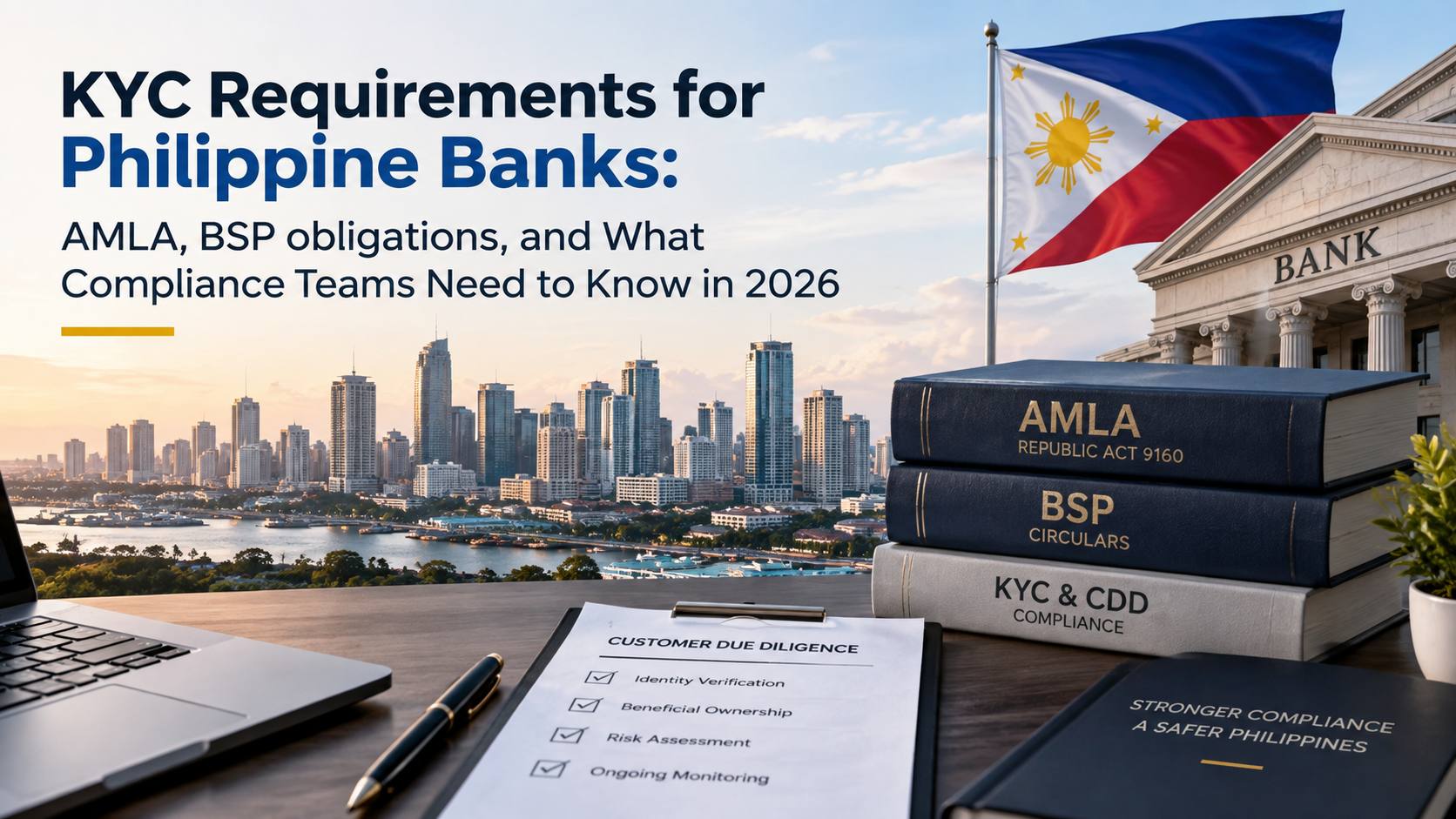
KYC Requirements for Philippine Banks: AMLA, BSP obligations, and What Compliance Teams Need to Know in 2026
The Philippines was removed from the FATF list of jurisdictions under increased monitoring in February 2025. This guide explains current AMLA and BSP KYC/CDD requirements for banks, including beneficial ownership, digital onboarding, reporting and record retention.

KYC Requirements for Philippine Banks: AMLA, BSP obligations, and What Compliance Teams Need to Know in 2026
The Philippines was removed from the FATF list of jurisdictions under increased monitoring in February 2025. This guide explains current AMLA and BSP KYC/CDD requirements for banks, including beneficial ownership, digital onboarding, reporting and record retention.