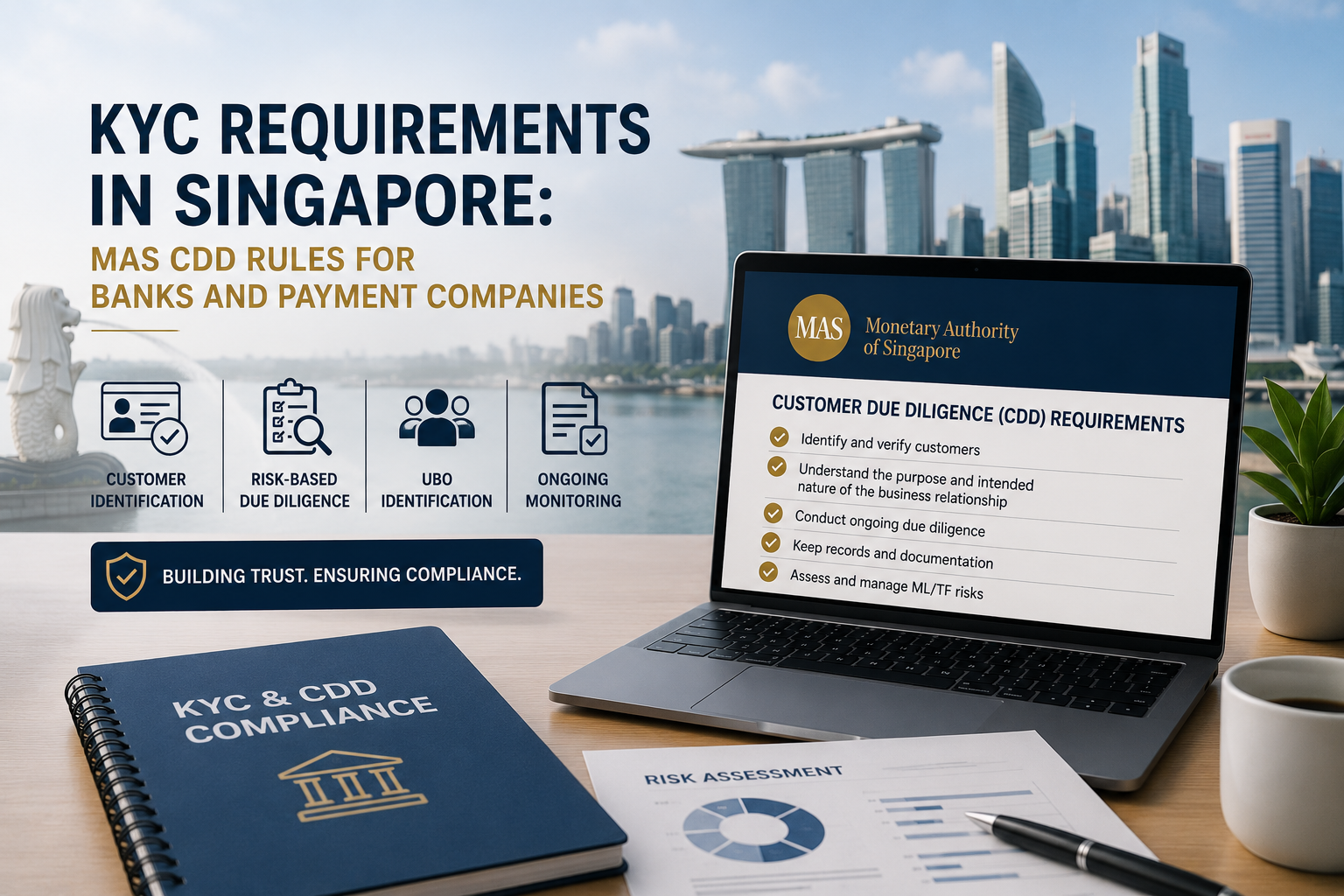
AML Compliance in Malaysia: A Complete Guide to BNM Requirements and AMLATFPUAA
.svg)
Picture a compliance officer at a Malaysian licensed bank three weeks out from a BNM AML/CFT examination. She has read AMLATFPUAA. She knows the Act was amended in 2014 and again in 2020. What she needs now is not another legislative summary. She needs to know what BNM's examiners will actually open on their laptops when they arrive — which files, which logs, which policy documents — and where programmes at institutions like hers most commonly fall short.
That is what this guide covers.
The legislative history of AMLATFPUAA and its impact on Malaysia's financial sector is covered in our [overview of AMLA and its impact on the Malaysian financial landscape](/compliance-hub/understanding-amla-impact-on-malaysia-financial-landscape). This article focuses on the operational layer: the ongoing compliance obligations that BNM-supervised institutions must meet, the specific thresholds and timelines that govern reporting, and the recurring examination gaps that BNM has identified in practice.

The Regulatory Framework in Brief
Two instruments govern AML/CFT compliance for BNM-supervised institutions in Malaysia.
AMLATFPUAA 2001 is the primary legislation. The 2014 amendment expanded the list of predicate offences and brought Designated Non-Financial Businesses and Professions (DNFBPs) into the compliance perimeter. The 2020 amendment strengthened beneficial ownership requirements and raised maximum penalties to MYR 3 million per offence, or 5 years imprisonment, or both. For financial institutions, the penalties can run per transaction or per day of non-compliance — which changes the risk calculus considerably.
BNM's AML/CFT and TF Policy Document (2023) is where the day-to-day compliance standards sit. The Policy Document translates AMLATFPUAA's obligations into specific programme requirements: who must be screened, how, at what intervals, and with what documentation. BNM's Financial Intelligence and Enforcement Department (FIED) is the enforcement arm that reviews STR filings and leads enforcement action.
When a BNM examiner cites a deficiency, the reference is almost always to the Policy Document, not to the Act itself. Knowing the Act is necessary; knowing the Policy Document is what keeps a programme compliant.
Who Must Comply: Reporting Institutions Under AMLATFPUAA
AMLATFPUAA defines "Reporting Institutions" across three categories, each carrying distinct obligations.
Category 1 covers licensed banks, Islamic banks, and development financial institutions. These institutions carry the fullest set of AML/CFT obligations under the Policy Document, including mandatory enterprise-wide risk assessments and comprehensive transaction monitoring programmes.
Category 2 covers money service businesses (MSBs), remittance operators, and e-money issuers. The obligations are materially equivalent to Category 1 for CDD and reporting, but the Policy Document recognises that the risk typologies differ — particularly for remittance operators processing high-frequency, lower-value cross-border transfers.
Category 3 covers DNFBPs: lawyers, accountants, and real estate agents, brought in under the 2014 amendment. DNFBP obligations are threshold-triggered — they apply when a transaction reaches a defined cash value or when the DNFBP is facilitating a category of activity specified in the Act.
The DNFBP category matters for banks because banks deal with these professionals as customers. When a law firm holds a client account at your institution, BNM expects you to recognise that relationship as carrying elevated risk — and to apply the CDD standards appropriate to it.
Customer Due Diligence: Three Tiers, Different Standards
BNM's AML/CFT Policy Document sets three CDD tiers. Which tier applies depends on the risk profile of the customer and the nature of the business relationship — not on an institution's convenience.
Standard CDD
Standard CDD applies to all new customers unless simplified CDD conditions are met. It requires identification and verification of the customer, documentation of the purpose and intended nature of the business relationship, and a customer risk assessment at onboarding. Verification must be based on independent and reliable sources — a customer self-certifying their identity is not sufficient.
For individual customers, verification typically involves government-issued identification. For corporate customers, it extends to directors, authorised signatories, and ultimate beneficial owners (UBOs).
Simplified CDD
Simplified CDD is available for customers assessed as low-risk: listed companies on a regulated exchange, government entities, and FIs supervised by BNM or an equivalent foreign regulator. Under simplified CDD, identification is still required but the depth of verification can be reduced, and ongoing monitoring can operate at lower intensity.
The Policy Document is explicit that simplified CDD is a risk-based determination — not a category exemption. An institution cannot apply simplified CDD to a listed company without first concluding that the specific company and the specific transaction type present low money laundering risk.
Enhanced Due Diligence
Enhanced Due Diligence (EDD) is mandatory for four customer categories:
- Politically Exposed Persons (PEPs) — domestic and foreign
- Customers from FATF-identified jurisdictions with strategic AML/CFT deficiencies
- Corporate customers with complex or non-transparent ownership structures
- Customers engaged in cash-intensive businesses
EDD requirements under the Policy Document are specific. For PEPs, the institution must verify source of funds and source of wealth — not just identify the customer's occupation. Senior management approval is required before establishing or continuing a relationship with a PEP. The approval must be documented, with a named approver. Periodic review of PEP relationships is mandatory at least every 2 years.
For all EDD customers, monitoring intensity must be increased. What "increased" means in practice is calibrated monitoring rules, not a generic note in the file that the customer is high-risk.
Beneficial ownership threshold: BNM sets the threshold for identifying UBOs at 25% ownership or control — consistent with the FATF standard. Institutions must trace ownership to natural persons. Nominee structures, trusts, and multi-layer corporate arrangements are not a legitimate stopping point. If your CDD file shows a holding company as the UBO rather than the individuals who own it, the file is incomplete.
For institutions operating digital onboarding channels, the BNM eKYC Policy Document sets out the technical requirements that must be met for remote CDD to carry the same assurance as face-to-face verification. The specifics for digital banks and e-money issuers are covered in our eKYC Malaysia guide.
Ongoing Monitoring Requirements
Onboarding CDD is not a one-time event. BNM's Policy Document requires institutions to monitor the business relationship throughout its duration — which means monitoring transactions for consistency with the customer's risk profile, stated purpose, and expected transaction patterns.
When Re-KYC Is Required
The Policy Document specifies triggers that require re-assessment of a customer's KYC data:
- A material change in the customer's circumstances (change in business activity, change in ownership structure, change in country of domicile)
- A change in the customer's risk rating — either triggered by a system alert or a periodic review
- Reactivation of a dormant account (inactive for 12 months or more)
- Scheduled periodic review for high-risk customers — at minimum every 2 years
The 12-month dormancy trigger and the 2-year PEP review cycle are not recommendations. They are requirements. BNM examiners check whether these cycles are documented and whether the reviews are substantive — not whether a checkbox was ticked.
Transaction Monitoring Calibration
BNM's examination findings have repeatedly cited one gap above others: institutions running transaction monitoring with default threshold settings that have not been calibrated to the institution's own customer risk profile.
Default thresholds — those that come with a monitoring system out of the box — are designed to be functional across a broad range of institutions. They are not designed to reflect the specific risk profile of your customer book. A licensed bank whose retail clients are primarily salaried employees in Klang Valley has a different expected transaction pattern than an MSB processing remittances to Southeast Asian labour markets. Their monitoring should look different.
BNM expects institutions to document why their thresholds are set where they are, when they were last reviewed, and who approved the current calibration. If the answer is "these are the system defaults," that is a finding waiting to be written.
To understand what an effective transaction monitoring programme should look like — and what to evaluate when selecting or upgrading a system — see our Transaction Monitoring Software Buyer's Guide and What Is Transaction Monitoring.

Reporting Obligations: Timelines and Thresholds
BNM-supervised institutions have two primary reporting obligations to FIED. Both have defined timelines that examination teams check.
Cash Threshold Reports (CTRs)
Any cash transaction — or series of related cash transactions — of MYR 25,000 or above must be reported to FIED via the goAML system (Malaysia adopted the UNODC goAML platform in 2020). The filing deadline is 3 business days from the date of the transaction.
CTR filing is largely mechanical for institutions with core banking systems capable of automated flagging. Where BNM has found gaps is in the manual detection of structured transactions — multiple sub-MYR 25,000 cash deposits by the same customer within a short period, designed to stay below the CTR threshold. Structuring is a predicate offence under AMLATFPUAA. Failing to detect it is a monitoring failure, not just a reporting failure.
Suspicious Transaction Reports (STRs)
An STR must be filed when a staff member or system alert produces grounds to suspect that a transaction involves the proceeds of a scheduled offence or is connected to terrorist financing. The deadline is 3 working days from the point at which suspicion is formed — not from when the transaction occurred.
That distinction matters. If a transaction alerts in your monitoring system on Monday and a compliance analyst forms a reasonable suspicion on Wednesday, the STR clock started on Wednesday, not Monday.
BNM examination findings have identified a specific quality gap in STR filings: reports submitted without an adequate documented basis for suspicion. An STR that records "transaction appeared unusual" without specifying what pattern triggered the suspicion, what investigation was conducted, and why the analyst concluded suspicion was warranted, does not meet the standard. The goAML system requires structured data fields to be completed — but the narrative quality of what goes into those fields is what BNM examiners assess.
The internal pathway matters too. Institutions must have a documented process for staff to escalate concerns to the MLRO via an Internal Suspicious Transaction Report (ISTR). Frontline staff who identify red flags and have no clear escalation route — or who fear that escalating will reflect poorly on them — are a systemic gap. BNM expects staff training to address this directly.
AML/CFT Programme Governance
A compliant AML/CFT programme is not a set of policies in a folder. BNM's Policy Document specifies the governance structure that must be in place.
Board-approved compliance programme. The institution's AML/CFT programme must be documented, formally approved by the Board of Directors, and reviewed at minimum annually. A programme that exists only in the compliance officer's head — or that was last updated before the 2020 AMLATFPUAA amendments — is non-compliant.
Designated Compliance Officer (DCO). The DCO must sit at senior management level and must have direct access to the Board or Board Audit Committee when escalation is required. BNM examiners specifically check whether the DCO has the seniority and independence to escalate concerns without internal obstruction. An institution where the MLRO reports upward through the business line whose clients they are monitoring has a structural governance problem.
Independent AML/CFT audit. The audit function — whether internal or conducted by a qualified external party — must assess the AML/CFT programme at least once per year. The scope must cover policy adequacy, operational effectiveness, and staff training outcomes. An audit that confirms the policies exist but does not test whether they work is not what BNM requires.
Staff training. Training must be documented, with records of attendance and assessment results. BNM examiners have cited institutions where training records were incomplete or where training had not been updated to reflect regulatory changes — including the goAML transition and the 2020 AMLATFPUAA amendments.
Common BNM Examination Gaps
Based on publicly available BNM guidance and supervisory feedback, five gaps recur across examinations of Malaysian institutions.
Outdated customer risk assessments. Customers onboarded years ago under different risk criteria and never re-assessed — even when their transaction patterns have materially changed.
Incomplete beneficial ownership documentation for corporate customers. Files that identify a corporate structure but stop at the holding company level, without tracing to the natural persons who ultimately control it.
STRs filed without documented analytical basis. The filing exists, but the rationale is absent. This satisfies neither the spirit nor the operational requirement of the obligation.
Default monitoring thresholds. System thresholds not calibrated to the institution's specific customer risk profile — and no documentation that the calibration question was ever asked.
Inadequate scrutiny of DNFBPs as customers. Banks treating law firm client accounts or real estate agent trust accounts the same as ordinary business accounts, without recognising the elevated risk profile those relationships carry under AMLATFPUAA.
Malaysia's FATF Context: Why Examination Intensity Has Increased
Malaysia's FATF Mutual Evaluation in 2023 assessed both technical compliance and effectiveness — two different standards. Technical compliance measures whether the laws and regulations are in place. Effectiveness measures whether they work.
Malaysia's technical compliance ratings were largely Compliant or Largely Compliant. Its effectiveness ratings were lower — particularly for the transparency of corporate beneficial ownership, where the evaluation found that beneficial ownership information was not always available to competent authorities in a timely way.
For BNM-supervised institutions, the practical effect is this: BNM is under pressure to demonstrate that AML controls are operationally effective, not just formally present. Examination intensity has increased since 2023. The scrutiny on beneficial ownership documentation, on monitoring calibration, and on STR quality is not coincidental. These are the areas the FATF evaluation identified as weakest, and they are the areas BNM examiners are examining most carefully.
Preparing for What Examiners Actually Review
The compliance officer three weeks out from her BNM examination should be checking seven things:
- Are customer risk assessments current — specifically for dormant accounts and for customers whose transaction patterns have changed?
- Do all corporate customer files trace beneficial ownership to natural persons at the 25% threshold?
- Are monitoring thresholds documented with a calibration rationale — and reviewed within the last 12 months?
- Do STR files contain a structured basis for suspicion, not just a transaction reference?
- Is the DCO's seniority and Board access documented?
- Was the AML/CFT audit conducted in the past year, and did its scope include operational testing?
- Are staff training records complete and current for all frontline and compliance staff?
These are not abstract compliance questions. They are the specific items that BNM examinations have produced findings on. Getting them right before the examination is considerably easier than explaining gaps during it.
If you want to see how Tookitaki's platform supports CDD, transaction monitoring calibration, and STR quality management for BNM-supervised institutions, book a demo. Or download our Malaysia AML compliance checklist for a full pre-examination review framework tailored to AMLATFPUAA and the BNM AML/CFT Policy Document. For institutions evaluating or upgrading their monitoring systems, the Transaction Monitoring Software Buyer's Guide covers what to look for and what to ask vendors about calibration and alert management. If you're new to the foundations of KYC and CDD, our What Is KYC guide provides the conceptual grounding the Policy Document assumes you have.
Experience the most intelligent AML and fraud prevention platform
Experience the most intelligent AML and fraud prevention platform
Experience the most intelligent AML and fraud prevention platform
Top AML Scenarios in ASEAN
The Role of AML Software in Compliance
The Role of AML Software in Compliance