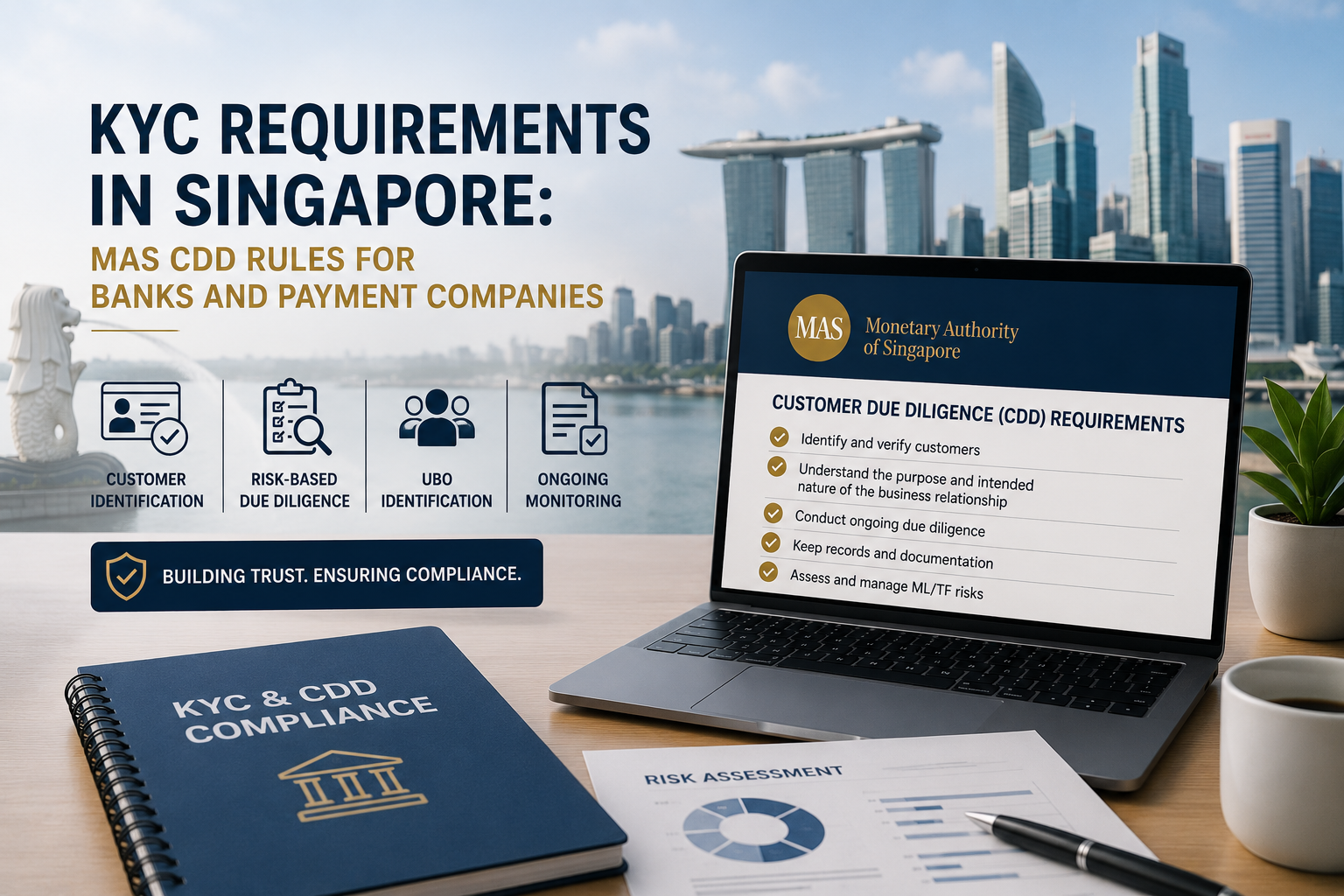
PEP Screening Software for Banks in Singapore: Staying Ahead of Risk with Smarter Workflows
.svg)
PEPs don’t carry a sign on their backs—but for banks, spotting one before a scandal breaks is everything.
Singapore’s rise as a global financial hub has come with heightened regulatory scrutiny around Politically Exposed Persons (PEPs). With MAS tightening expectations and the FATF pushing for robust controls, banks in Singapore can no longer afford to rely on static screening. They need software that evolves with customer profiles, watchlist changes, and compliance expectations—in real time.
This blog breaks down how PEP screening software is transforming in Singapore, what banks should look for, and why Tookitaki’s AI-powered approach stands apart.

What Is a PEP and Why It Matters
A Politically Exposed Person (PEP) refers to an individual who holds a prominent public position, or is closely associated with someone who does—such as heads of state, senior politicians, judicial officials, military leaders, or their immediate family members and close associates. Due to their influence and access to public funds, PEPs pose a heightened risk of involvement in bribery, corruption, and money laundering.
While not all PEPs are bad actors, the risks associated with their transactions demand extra vigilance. Regulators like MAS and FATF recommend enhanced due diligence (EDD) for these individuals, including proactive screening and continuous monitoring throughout the customer lifecycle.
In short: failing to identify a PEP relationship in time could mean reputational damage, regulatory penalties, and even a loss of banking licence.
The Compliance Challenge in Singapore
Singapore’s regulatory expectations have grown stricter over the years. MAS has made it clear that screening should go beyond one-time onboarding. Banks are expected to identify PEP relationships not just at the point of entry but across the entire duration of the customer relationship.
Several challenges make this difficult:
- High volumes of customer data to screen continuously.
- Frequent changes in customer profiles, e.g., new employment, marital status, or residence.
- Evolving watchlists with updated PEP information from global sources.
- Manual or delayed re-screening processes that can miss critical changes.
- False positives that waste compliance teams’ time.
To meet these demands, Singapore banks need PEP screening software that’s smarter, faster, and built for ongoing change.
Key Features of a Modern PEP Screening Solution
1. Continuous Monitoring, Not One-Time Checks
Modern compliance means never taking your eye off the ball. Static, once-at-onboarding screening is no longer enough. The best PEP screening software today enables continuous monitoring—tracking changes in both customer profiles and watchlists, triggering automated re-screening when needed.
2. Delta Screening Capabilities
Delta screening refers to the practice of screening only the deltas—the changes—rather than re-processing the entire database each time.
- When a customer updates their address or job title, the system should re-screen that profile.
- When a watchlist is updated with new names or aliases, only impacted customers are re-screened.
This targeted, intelligent approach reduces processing time, improves accuracy, and ensures compliance in near real time.
3. Trigger-Based Workflows
Effective PEP screening software incorporates three key triggers:
- Customer Onboarding: New customers are screened across global and regional watchlists.
- Customer Profile Changes: KYC updates (e.g., name, job title, residency) automatically trigger re-screening.
- Watchlist Updates: When new names or categories are added to lists, relevant customer profiles are flagged and re-evaluated.
This triad ensures that no material change goes unnoticed.
4. Granular Risk Categorisation
Not all PEPs present the same level of risk. Sophisticated solutions can classify PEPs as Domestic, Foreign, or International Organisation PEPs, and further distinguish between primary and secondary associations. This enables more tailored risk assessments and avoids blanket de-risking.
5. AI-Powered Name Matching and Fuzzy Logic
Due to transliterations, nicknames, and data inconsistencies, exact-match screening is prone to failure. Leading tools employ fuzzy matching powered by AI, which can catch near-matches without flooding teams with irrelevant alerts.
6. Audit Trails and Case Management Integration
Every alert and screening decision must be traceable. The best systems integrate directly with case management modules, enabling investigators to drill down, annotate, and close cases efficiently, while maintaining clear audit trails for regulators.
The Cost of Getting It Wrong
Regulators around the world have handed out billions in penalties to banks for PEP screening failures. Even in Singapore, where regulatory enforcement is more targeted, MAS has issued heavy penalties and public reprimands for AML control failures, especially in cases involving foreign PEPs and money laundering through shell firms.
Here are a few consequences of subpar PEP screening:
- Regulatory fines and enforcement action
- Increased scrutiny during inspections
- Reputational damage and customer distrust
- Loss of banking licences or correspondent banking relationships
For a global hub like Singapore, where cross-border relationships are essential, proactive compliance is not optional—it’s strategic.
How Tookitaki Helps Banks in Singapore Stay Compliant
Tookitaki’s FinCense platform is built for exactly this challenge. Here’s how its PEP screening module raises the bar:
✅ Continuous Delta Screening
Tookitaki combines watchlist delta screening (for list changes) and customer delta screening (for profile updates). This ensures that:
- Screening happens only when necessary, saving time and resources.
- Alerts are contextual and prioritised, reducing false positives.
- The system automatically re-evaluates profiles without manual intervention.
✅ Real-Time Triggering at All Key Touchpoints
Whether it's onboarding, customer updates, or watchlist additions, Tookitaki's screening engine fires in real time—keeping compliance teams ahead of evolving risks.
✅ Scenario-Based Screening Intelligence
Tookitaki's AFC Ecosystem provides a library of risk scenarios contributed by compliance experts globally. These scenarios act as intelligence blueprints, enhancing the screening engine’s ability to flag real risk, not just name similarity.
✅ Seamless Case Management and Reporting
Integrated case management lets investigators trace, review, and report every screening outcome with ease—ensuring internal consistency and regulatory alignment.

PEP Screening in the MAS Playbook
The Monetary Authority of Singapore (MAS) expects financial institutions to implement risk-based screening practices for identifying PEPs. Some of its key expectations include:
- Enhanced Due Diligence: Particularly for high-risk foreign PEPs.
- Ongoing Monitoring: Regular updates to customer risk profiles, including re-screening upon any material change.
- Independent Audit and Validation: Institutions should regularly test and validate their screening systems.
MAS has also signalled a move towards more data-driven supervision, meaning banks must be able to demonstrate how their systems make decisions—and how alerts are resolved.
Tookitaki’s transparent, auditable approach aligns directly with these expectations.
What to Look for in a PEP Screening Vendor
When evaluating PEP screening software in Singapore, banks should ask the following:
- Does the software support real-time, trigger-based workflows?
- Can it conduct delta screening for both customers and watchlists?
- Is the system integrated with case management and regulatory reporting?
- Does it provide granular PEP classification and risk scoring?
- Can it adapt to changing regulations and global watchlists with ease?
Tookitaki answers “yes” to each of these, with deployments across multiple APAC markets and strong validation from partners and clients.
The Future of PEP Screening: Real-Time, Intelligent, Adaptive
As Singapore continues to lead the region in digital finance and cross-border banking, compliance demands will only intensify. PEP screening must move from being a reactive, periodic function to a real-time, dynamic control—one that protects not just against risk, but against irrelevance.
Tookitaki’s vision of collaborative compliance—where real-world intelligence is constantly fed into smarter systems—offers a blueprint for this future. Screening software must not only keep pace with regulatory change, but also help institutions anticipate it.
Final Thoughts
For banks in Singapore, PEP screening isn’t just about ticking regulatory boxes. It’s about upholding trust in a fast-moving, high-stakes environment. With global PEP networks expanding and compliance expectations tightening, only software that is real-time, intelligent, and audit-ready can help banks stay compliant and competitive.
Tookitaki offers just that—an industry-leading AML platform that turns screening into a strategic advantage.
Experience the most intelligent AML and fraud prevention platform
Experience the most intelligent AML and fraud prevention platform
Experience the most intelligent AML and fraud prevention platform
Top AML Scenarios in ASEAN
The Role of AML Software in Compliance
The Role of AML Software in Compliance