

What Makes the Best Transaction Monitoring Software Actually Work
.svg)
The best transaction monitoring software is not the one that generates the most alerts, but the one that helps banks make the right decisions consistently.
Introduction
Search for the best transaction monitoring software and you will find countless lists, rankings, and comparison tables. Most focus on features, checkboxes, or vendor claims. Very few explain what actually determines whether a transaction monitoring system works inside a real bank.
In practice, transaction monitoring software operates under constant pressure. It must analyse vast volumes of transactions, adapt to changing behaviour, support human judgement, and stand up to regulatory scrutiny, all without disrupting customers or overwhelming compliance teams.
This blog looks beyond marketing language to answer a more important question. What actually makes transaction monitoring software effective in real banking environments, and how can financial institutions identify solutions that deliver lasting value rather than short term compliance comfort.

Why “Best” Is Often the Wrong Starting Point
The idea of a single best transaction monitoring software is misleading.
Banks differ in size, customer profiles, products, payment rails, and risk exposure. What works for one institution may fail for another. The real question is not which software is best in general, but which software performs best under real operational conditions.
Strong transaction monitoring software is defined less by feature breadth and more by how it behaves when faced with:
- High transaction volumes
- Evolving typologies
- Scam driven activity
- False positive pressure
- Regulatory review
Understanding these conditions helps separate truly effective platforms from those that look impressive only in demos.
What Transaction Monitoring Software Is Expected to Do
At its core, transaction monitoring software exists to identify unusual or suspicious activity that may indicate money laundering, fraud related laundering, or other financial crime.
In practice, this involves several continuous tasks.
Analysing transaction behaviour
The software reviews transaction patterns across accounts, channels, and time periods to detect anomalies.
Applying risk context
Effective systems consider customer risk profiles, product usage, and geographic exposure rather than treating all transactions equally.
Generating alerts
When activity deviates from expected behaviour, the software produces alerts for review.
Supporting investigations
Investigators rely on transaction monitoring software to provide context, evidence, and traceability.
Maintaining audit readiness
All decisions must be explainable and defensible months or years later.
The best transaction monitoring software performs all of these tasks without overwhelming teams or compromising customer experience.
Why Many Transaction Monitoring Systems Struggle
Despite heavy investment, many institutions remain dissatisfied with their transaction monitoring outcomes. Several challenges are common.
Alert overload
Systems designed to be conservative often generate excessive alerts. Analysts spend most of their time clearing benign activity, leaving less capacity for genuine risk.
Static detection logic
Rules that do not evolve quickly become predictable. Criminals adjust behaviour to stay below thresholds.
Limited behavioural insight
Monitoring that focuses only on transaction amounts or frequencies misses more subtle behavioural shifts.
Fragmented context
When systems cannot see across products or channels, patterns remain hidden.
Poor explainability
If analysts cannot understand why an alert was triggered, tuning and trust suffer.
These issues do not mean transaction monitoring is broken. They mean the approach needs to evolve.
What Actually Makes Transaction Monitoring Software Effective
The best transaction monitoring software shares several defining characteristics.
1. Behaviour driven detection
Rather than relying solely on static thresholds, effective platforms understand normal customer behaviour and flag meaningful deviations.
This includes changes in:
- Transaction velocity
- Counterparty patterns
- Channel usage
- Timing and sequencing
Behaviour driven detection reduces noise and surfaces risk earlier.
2. Risk based prioritisation
Not all alerts deserve equal attention. The best systems prioritise alerts based on customer risk, transaction context, and typology relevance.
This allows teams to focus effort where it matters most.
3. Strong contextual intelligence
Transaction monitoring does not happen in isolation. Effective software brings together:
- Customer risk information
- Historical behaviour
- Network relationships
- Related alerts and cases
Context transforms alerts from raw signals into actionable insights.
4. Explainable alert logic
Regulators and auditors expect clear reasoning behind decisions. Analysts need the same clarity to work effectively.
Best in class transaction monitoring software makes it easy to see:
- Why an alert was triggered
- Which indicators contributed most
- How behaviour differed from the baseline
Explainability builds trust and improves tuning.
5. Operational scalability
Transaction volumes fluctuate. Scam waves and seasonal spikes can dramatically increase activity.
Effective platforms maintain performance and accuracy at scale without degrading investigation quality.
6. Integrated investigation workflows
When detection and investigation tools are tightly integrated, analysts spend less time navigating systems and more time analysing risk.
This improves consistency and defensibility.
Australia Specific Considerations for Transaction Monitoring
Transaction monitoring software used in Australia must contend with several local realities.
Real time payments
The New Payments Platform has reduced the window for intervention. Monitoring must operate fast enough to detect and respond to risk before funds are gone.
Scam driven activity
Many suspicious transactions involve victims rather than criminals. Monitoring systems must detect patterns associated with scams and mule activity without penalising genuine customers.
Regulatory expectations
AUSTRAC expects risk based monitoring, clear documentation, and consistent outcomes. Software must support these expectations operationally.
Diverse institution sizes
Community owned banks and regional institutions face the same regulatory expectations as large banks, but with leaner teams. Efficiency matters.
How Banks Should Evaluate Transaction Monitoring Software
Rather than relying on rankings or vendor claims, institutions should evaluate software using practical criteria.
Does it reduce false positives
Ask for evidence, not promises.
Can analysts explain alerts easily
If reasoning is unclear, effectiveness will decline over time.
Does it adapt to new typologies
Static systems age quickly.
How well does it integrate
Monitoring should not exist in isolation from onboarding, case management, and reporting.
Is it regulator ready
Auditability and traceability are non negotiable.
The best transaction monitoring software supports the people who use it, rather than forcing teams to work around its limitations.
The Role of AI in Modern Transaction Monitoring
AI plays an important role in improving transaction monitoring outcomes, but only when applied thoughtfully.
Effective uses of AI include:
- Detecting subtle behavioural shifts
- Identifying complex transaction networks
- Prioritising alerts intelligently
- Assisting analysts with context and summaries
AI should enhance transparency and judgement, not obscure decision making. Black box models without explainability introduce new risks.

Common Myths About Transaction Monitoring Software
Several misconceptions continue to influence buying decisions.
More alerts mean better coverage
In reality, more alerts often mean more noise.
Rules alone are sufficient
Rules are necessary but insufficient on their own.
One size fits all
Monitoring must reflect institutional context and risk profile.
Technology alone solves compliance
Strong governance and skilled teams remain essential.
Understanding these myths helps institutions make better choices.
How Strong Transaction Monitoring Improves Overall Compliance
Effective transaction monitoring does more than detect suspicious activity.
It:
- Improves investigation consistency
- Strengthens regulatory confidence
- Reduces operational fatigue
- Enhances customer experience by minimising unnecessary friction
- Provides intelligence that feeds broader financial crime controls
This makes transaction monitoring a foundational capability, not just a compliance requirement.
Where Tookitaki Fits Into the Transaction Monitoring Landscape
Tookitaki approaches transaction monitoring as an intelligence driven capability rather than a rule heavy alert generator.
Through the FinCense platform, institutions can:
- Apply behaviour based monitoring
- Leverage evolving typologies
- Reduce false positives
- Support explainable investigations
- Align monitoring with real risk
This approach supports Australian institutions, including community owned banks such as Regional Australia Bank, in strengthening monitoring effectiveness without overburdening teams.
The Future of Transaction Monitoring Software
Transaction monitoring continues to evolve as payments become faster and crime more adaptive.
Key trends include:
- Greater emphasis on behavioural intelligence
- Stronger integration with fraud detection
- Increased use of AI assisted analysis
- Continuous model evolution
- More focus on operational outcomes rather than alert volume
Institutions that invest in adaptable, explainable platforms will be better positioned to manage future risk.
Conclusion
The best transaction monitoring software is not defined by how many features it offers or how many alerts it produces. It is defined by how effectively it helps banks detect genuine risk, support analysts, and meet regulatory expectations under real world conditions.
In an environment shaped by real time payments, evolving scams, and heightened scrutiny, transaction monitoring must be intelligent, adaptable, and explainable.
Banks that understand what truly makes transaction monitoring software work, and choose platforms accordingly, are better equipped to protect customers, operate efficiently, and maintain trust.
Because in transaction monitoring, effectiveness is not measured by noise.
It is measured by outcomes.
Experience the most intelligent AML and fraud prevention platform
Experience the most intelligent AML and fraud prevention platform
Experience the most intelligent AML and fraud prevention platform
Top AML Scenarios in ASEAN
The Role of AML Software in Compliance
The Role of AML Software in Compliance
Talk to an Expert
Our Thought Leadership Guides

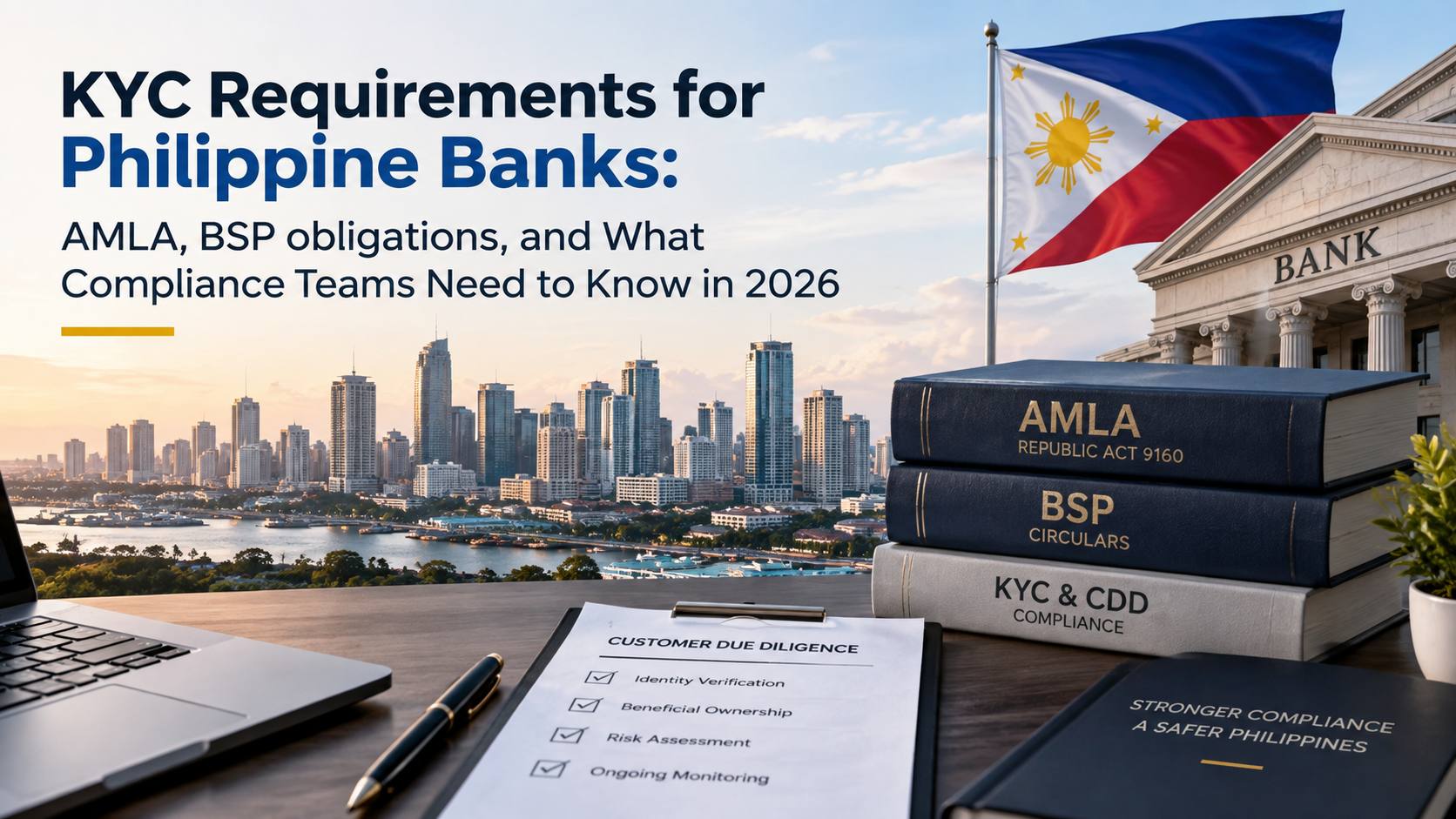
KYC Requirements for Philippine Banks: AMLA, BSP obligations, and What Compliance Teams Need to Know in 2026
The Philippines was removed from the FATF list of jurisdictions under increased monitoring in February 2025. This guide explains current AMLA and BSP KYC/CDD requirements for banks, including beneficial ownership, digital onboarding, reporting and record retention.
KYC Requirements for Philippine Banks: AMLA, BSP obligations, and What Compliance Teams Need to Know in 2026
The Philippines was removed from the FATF list of jurisdictions under increased monitoring in February 2025. This guide explains current AMLA and BSP KYC/CDD requirements for banks, including beneficial ownership, digital onboarding, reporting and record retention.