Introduction
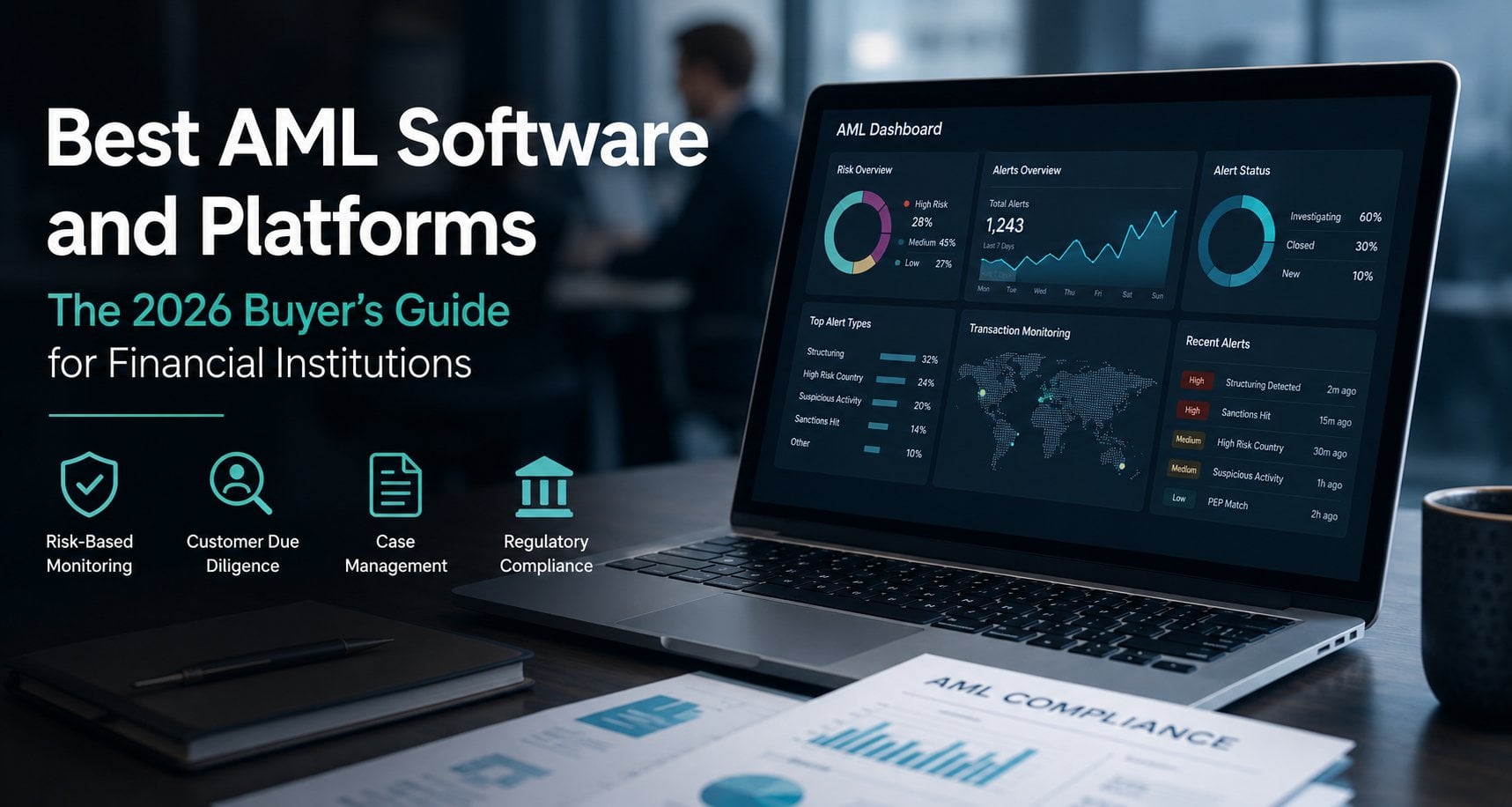
In today’s rapidly evolving financial landscape, money laundering threats continue to rise, making Anti-Money Laundering (AML) platforms essential for financial institutions. As regulatory scrutiny intensifies, businesses must leverage AI-powered AML solutions to detect suspicious activities, ensure compliance, and prevent financial crime.
An AML platform is more than just a compliance tool—it serves as a real-time defence system that enhances fraud detection, risk management, and regulatory reporting.
In this guide, we will explore:
- What an AML platform is and why it’s critical
- Key features of an effective AML platform
- The top AML software providers leading the industry
- How Tookitaki’s AI-driven AML platform revolutionizes compliance
Let’s dive into the best AML solutions available today and how they help institutions combat financial crime effectively.

What is an AML Platform?
An AML platform is a comprehensive compliance solution designed to help businesses:
- Monitor financial transactions in real-time
- Detect and prevent money laundering activities
- Ensure compliance with AML/CFT regulations
- Minimize false positives and operational inefficiencies
Modern AML platforms use artificial intelligence (AI), machine learning, and automation to strengthen fraud detection and compliance measures.
{{cta-first}}
Key Features of an AML Platform
- Real-Time Transaction Monitoring – Identifies high-risk transactions and prevents illicit activities.
- Customer Due Diligence (CDD) & Know Your Customer (KYC) – Automates identity verification and risk profiling.
- Sanctions & Watchlist Screening – Ensures compliance by cross-checking transactions against global regulatory databases.
- Suspicious Activity Reporting (SARs) – Automates the reporting process for regulatory bodies.
- AI-Driven Risk Scoring – Uses machine learning models to detect anomalies and minimize false positives.
As financial criminals evolve their tactics, investing in an intelligent, AI-powered AML platform is crucial for staying ahead of compliance risks.
How to Choose the Best AML Platform for Your Business
Selecting the right AML platform involves evaluating key criteria to ensure it meets compliance and risk management needs.
1. Compliance with Global & Local Regulations
An AML platform must adhere to AML/CFT regulations, including:
- Financial Action Task Force (FATF) recommendations
- FinCEN (USA) and EU AML directives
- Local regulatory frameworks (e.g., MAS, BNM, SAMA, RBI)
2. AI-Powered Fraud Detection & Automation
Traditional rule-based AML systems struggle to detect sophisticated laundering schemes. AI-driven AML platforms offer:
- Predictive analytics to detect suspicious activities
- Automated workflows for case management and regulatory reporting
- Real-time risk scoring for dynamic fraud prevention
3. Seamless Integration & Scalability
A modern AML platform must:
- Integrate with existing banking systems and payment networks
- Scale effortlessly to handle increasing transaction volumes
- Offer cloud-based and on-premise deployment options
4. User-Friendly Dashboard & Case Management
A well-designed AML platform should:
- Enable compliance teams to manage alerts efficiently
- Streamline investigation processes
- Provide clear audit trails for regulatory reporting
5. Continuous Updates & Strong Customer Support
AML regulations and financial crime patterns evolve frequently. Ensure your AML provider offers:
- Regular software updates to align with new regulations
- Dedicated support and expert guidance for implementation
Top AML Software Vendors
Here are the leading AML platforms providing cutting-edge financial crime prevention solutions:
1. Tookitaki – The Most Intelligent AML Platform
Best for AI-driven AML compliance and global intelligence sharing
Tookitaki’s FinCense platform offers a next-generation approach to financial crime detection, featuring:
- Real-time transaction monitoring with AI-powered anomaly detection
- Dynamic risk-based approach for fraud and AML compliance
- Automated case management and seamless regulatory reporting
- Federated learning models for continuous AML intelligence sharing
Tookitaki is revolutionizing AML compliance by integrating collaborative intelligence and machine learning, making financial crime prevention smarter and more efficient.
2. ComplyAdvantage
Best for real-time AML screening and risk monitoring
ComplyAdvantage leverages AI-driven data insights to:
- Monitor transactions against global AML watchlists
- Offer automated risk-based customer screening
- Provide real-time fraud detection
3. NICE Actimize
Best for financial crime risk management and AML reporting
NICE Actimize’s AML platform specializes in:
- Entity-centric risk assessment
- AI-powered suspicious transaction detection
- Comprehensive AML case management tools
4. Feedzai
Best for AI-powered fraud detection
Feedzai provides:
- Machine learning models to prevent financial crime
- Real-time transaction fraud monitoring
- Behavioural analytics for high-risk customers
5. Salv
Best for AML investigations and risk intelligence
Salv focuses on:
- Cross-border intelligence sharing
- Advanced fraud detection tools
- Real-time AML monitoring and alerts
Why Tookitaki is the Best AML Platform
As financial crime tactics become more sophisticated, Tookitaki’s AI-powered AML platform provides the most advanced and efficient compliance solutions.
Key Benefits of Tookitaki’s AML Platform
- AI-Powered Detection – Real-time identification of suspicious transactions.
- ✔ Dynamic Risk Scoring – Adaptive fraud models that improve accuracy.
- ✔ Automated Compliance Workflows – Reduces manual processes for compliance teams.
- ✔ Federated Learning – Continuously updates to detect emerging financial crime threats.
- ✔ Seamless Integration – Works with existing banking and payment infrastructures.
With Tookitaki, financial institutions gain a future-ready AML solution that enhances compliance, reduces risk, and prevents financial crime effectively.
{{cta-whitepaper}}
Conclusion: Strengthen AML Compliance with Tookitaki
As regulatory demands intensify, financial institutions must embrace AI-driven AML platforms to stay ahead of financial criminals.
Tookitaki’s FinCense platform offers:
- AI-powered transaction monitoring for enhanced fraud detection
- Real-time compliance automation to streamline AML workflows
- Advanced risk intelligence to detect evolving money laundering schemes
Looking for the best AML platform? Explore Tookitaki today and transform your compliance strategy!
Experience the most intelligent AML and fraud prevention platform
Top AML Scenarios in ASEAN
The Role of AML Software in Compliance
The Role of AML Software in Compliance

We’ve received your details and our team will be in touch shortly.
Ready to Streamline Your Anti-Financial Crime Compliance?
Our Thought Leadership Guides
What Makes the Best Transaction Monitoring Software Actually Work
The best transaction monitoring software is not the one that generates the most alerts, but the one that helps banks make the right decisions consistently.
Introduction
Search for the best transaction monitoring software and you will find countless lists, rankings, and comparison tables. Most focus on features, checkboxes, or vendor claims. Very few explain what actually determines whether a transaction monitoring system works inside a real bank.
In practice, transaction monitoring software operates under constant pressure. It must analyse vast volumes of transactions, adapt to changing behaviour, support human judgement, and stand up to regulatory scrutiny, all without disrupting customers or overwhelming compliance teams.
This blog looks beyond marketing language to answer a more important question. What actually makes transaction monitoring software effective in real banking environments, and how can financial institutions identify solutions that deliver lasting value rather than short term compliance comfort.

Why “Best” Is Often the Wrong Starting Point
The idea of a single best transaction monitoring software is misleading.
Banks differ in size, customer profiles, products, payment rails, and risk exposure. What works for one institution may fail for another. The real question is not which software is best in general, but which software performs best under real operational conditions.
Strong transaction monitoring software is defined less by feature breadth and more by how it behaves when faced with:
- High transaction volumes
- Evolving typologies
- Scam driven activity
- False positive pressure
- Regulatory review
Understanding these conditions helps separate truly effective platforms from those that look impressive only in demos.
What Transaction Monitoring Software Is Expected to Do
At its core, transaction monitoring software exists to identify unusual or suspicious activity that may indicate money laundering, fraud related laundering, or other financial crime.
In practice, this involves several continuous tasks.
Analysing transaction behaviour
The software reviews transaction patterns across accounts, channels, and time periods to detect anomalies.
Applying risk context
Effective systems consider customer risk profiles, product usage, and geographic exposure rather than treating all transactions equally.
Generating alerts
When activity deviates from expected behaviour, the software produces alerts for review.
Supporting investigations
Investigators rely on transaction monitoring software to provide context, evidence, and traceability.
Maintaining audit readiness
All decisions must be explainable and defensible months or years later.
The best transaction monitoring software performs all of these tasks without overwhelming teams or compromising customer experience.
Why Many Transaction Monitoring Systems Struggle
Despite heavy investment, many institutions remain dissatisfied with their transaction monitoring outcomes. Several challenges are common.
Alert overload
Systems designed to be conservative often generate excessive alerts. Analysts spend most of their time clearing benign activity, leaving less capacity for genuine risk.
Static detection logic
Rules that do not evolve quickly become predictable. Criminals adjust behaviour to stay below thresholds.
Limited behavioural insight
Monitoring that focuses only on transaction amounts or frequencies misses more subtle behavioural shifts.
Fragmented context
When systems cannot see across products or channels, patterns remain hidden.
Poor explainability
If analysts cannot understand why an alert was triggered, tuning and trust suffer.
These issues do not mean transaction monitoring is broken. They mean the approach needs to evolve.
What Actually Makes Transaction Monitoring Software Effective
The best transaction monitoring software shares several defining characteristics.
1. Behaviour driven detection
Rather than relying solely on static thresholds, effective platforms understand normal customer behaviour and flag meaningful deviations.
This includes changes in:
- Transaction velocity
- Counterparty patterns
- Channel usage
- Timing and sequencing
Behaviour driven detection reduces noise and surfaces risk earlier.
2. Risk based prioritisation
Not all alerts deserve equal attention. The best systems prioritise alerts based on customer risk, transaction context, and typology relevance.
This allows teams to focus effort where it matters most.
3. Strong contextual intelligence
Transaction monitoring does not happen in isolation. Effective software brings together:
- Customer risk information
- Historical behaviour
- Network relationships
- Related alerts and cases
Context transforms alerts from raw signals into actionable insights.
4. Explainable alert logic
Regulators and auditors expect clear reasoning behind decisions. Analysts need the same clarity to work effectively.
Best in class transaction monitoring software makes it easy to see:
- Why an alert was triggered
- Which indicators contributed most
- How behaviour differed from the baseline
Explainability builds trust and improves tuning.
5. Operational scalability
Transaction volumes fluctuate. Scam waves and seasonal spikes can dramatically increase activity.
Effective platforms maintain performance and accuracy at scale without degrading investigation quality.
6. Integrated investigation workflows
When detection and investigation tools are tightly integrated, analysts spend less time navigating systems and more time analysing risk.
This improves consistency and defensibility.
Australia Specific Considerations for Transaction Monitoring
Transaction monitoring software used in Australia must contend with several local realities.
Real time payments
The New Payments Platform has reduced the window for intervention. Monitoring must operate fast enough to detect and respond to risk before funds are gone.
Scam driven activity
Many suspicious transactions involve victims rather than criminals. Monitoring systems must detect patterns associated with scams and mule activity without penalising genuine customers.
Regulatory expectations
AUSTRAC expects risk based monitoring, clear documentation, and consistent outcomes. Software must support these expectations operationally.
Diverse institution sizes
Community owned banks and regional institutions face the same regulatory expectations as large banks, but with leaner teams. Efficiency matters.
How Banks Should Evaluate Transaction Monitoring Software
Rather than relying on rankings or vendor claims, institutions should evaluate software using practical criteria.
Does it reduce false positives
Ask for evidence, not promises.
Can analysts explain alerts easily
If reasoning is unclear, effectiveness will decline over time.
Does it adapt to new typologies
Static systems age quickly.
How well does it integrate
Monitoring should not exist in isolation from onboarding, case management, and reporting.
Is it regulator ready
Auditability and traceability are non negotiable.
The best transaction monitoring software supports the people who use it, rather than forcing teams to work around its limitations.
The Role of AI in Modern Transaction Monitoring
AI plays an important role in improving transaction monitoring outcomes, but only when applied thoughtfully.
Effective uses of AI include:
- Detecting subtle behavioural shifts
- Identifying complex transaction networks
- Prioritising alerts intelligently
- Assisting analysts with context and summaries
AI should enhance transparency and judgement, not obscure decision making. Black box models without explainability introduce new risks.

Common Myths About Transaction Monitoring Software
Several misconceptions continue to influence buying decisions.
More alerts mean better coverage
In reality, more alerts often mean more noise.
Rules alone are sufficient
Rules are necessary but insufficient on their own.
One size fits all
Monitoring must reflect institutional context and risk profile.
Technology alone solves compliance
Strong governance and skilled teams remain essential.
Understanding these myths helps institutions make better choices.
How Strong Transaction Monitoring Improves Overall Compliance
Effective transaction monitoring does more than detect suspicious activity.
It:
- Improves investigation consistency
- Strengthens regulatory confidence
- Reduces operational fatigue
- Enhances customer experience by minimising unnecessary friction
- Provides intelligence that feeds broader financial crime controls
This makes transaction monitoring a foundational capability, not just a compliance requirement.
Where Tookitaki Fits Into the Transaction Monitoring Landscape
Tookitaki approaches transaction monitoring as an intelligence driven capability rather than a rule heavy alert generator.
Through the FinCense platform, institutions can:
- Apply behaviour based monitoring
- Leverage evolving typologies
- Reduce false positives
- Support explainable investigations
- Align monitoring with real risk
This approach supports Australian institutions, including community owned banks such as Regional Australia Bank, in strengthening monitoring effectiveness without overburdening teams.
The Future of Transaction Monitoring Software
Transaction monitoring continues to evolve as payments become faster and crime more adaptive.
Key trends include:
- Greater emphasis on behavioural intelligence
- Stronger integration with fraud detection
- Increased use of AI assisted analysis
- Continuous model evolution
- More focus on operational outcomes rather than alert volume
Institutions that invest in adaptable, explainable platforms will be better positioned to manage future risk.
Conclusion
The best transaction monitoring software is not defined by how many features it offers or how many alerts it produces. It is defined by how effectively it helps banks detect genuine risk, support analysts, and meet regulatory expectations under real world conditions.
In an environment shaped by real time payments, evolving scams, and heightened scrutiny, transaction monitoring must be intelligent, adaptable, and explainable.
Banks that understand what truly makes transaction monitoring software work, and choose platforms accordingly, are better equipped to protect customers, operate efficiently, and maintain trust.
Because in transaction monitoring, effectiveness is not measured by noise.
It is measured by outcomes.

The Complete AML Software Guide for Banks and Financial Institutions
AML software is no longer just a compliance requirement. It is a core system that determines how effectively banks detect risk, protect customers, and operate with confidence.
Introduction
Anti money laundering compliance has changed dramatically over the past decade. What was once a largely rules driven, reactive process is now a complex, intelligence led discipline shaped by real time payments, evolving criminal behaviour, and increasing regulatory expectations.
At the centre of this shift sits AML software.
For banks, credit unions, fintechs, and regulated financial institutions, AML software is no longer just a monitoring tool. It is the engine that connects customer risk assessment, transaction monitoring, investigations, regulatory reporting, and governance into a single operational framework.
This guide explains what AML software actually does in modern financial institutions, how it is used day to day, where legacy systems fall short, and what organisations should look for when evaluating modern AML platforms. It is written for compliance leaders, operations teams, and decision makers who want clarity rather than marketing language.

What Is AML Software in Practice
At a high level, AML software helps financial institutions identify, assess, and manage money laundering and related financial crime risks. But that definition only scratches the surface.
In practice, AML software performs five interconnected functions.
1. Customer risk assessment
AML software evaluates customer risk based on factors such as profile characteristics, geographic exposure, product usage, and known risk indicators. This risk assessment influences how closely a customer is monitored over time.
2. Transaction monitoring
The software continuously analyses transactions to identify unusual or suspicious activity. This includes detecting behavioural anomalies, velocity changes, structuring patterns, and potential laundering techniques.
3. Alert generation and prioritisation
When suspicious behaviour is detected, AML software generates alerts and prioritises them based on risk. High quality systems focus on alert relevance, not volume.
4. Investigation and case management
AML software provides tools for investigators to review alerts, analyse context, document findings, and make defensible decisions.
5. Regulatory reporting and auditability
The system supports the preparation of suspicious matter reports and maintains audit trails that demonstrate compliance to regulators.
AML software is therefore not a single module. It is an ecosystem that supports the entire AML lifecycle.
How AML Software Is Used Inside Banks
Understanding how AML software is used day to day helps explain why its quality matters so much.
Continuous monitoring
AML software runs constantly in the background, analysing millions of transactions and behavioural signals. It must operate reliably at scale without disrupting customer activity.
Analyst driven decision making
Alerts generated by AML software are reviewed by analysts who rely on the system to provide context, evidence, and clarity. The software shapes how quickly and accurately decisions can be made.
Ongoing risk management
Customer risk is not static. AML software updates risk profiles as behaviour changes, ensuring that monitoring remains proportionate.
Governance and oversight
Compliance leaders use AML software to track alert volumes, investigation outcomes, reporting timelines, and control effectiveness.
When AML software performs well, teams work with focus and confidence. When it performs poorly, inefficiency and risk multiply quickly.
Why Legacy AML Software Struggles Today
Many institutions still operate AML platforms designed for a very different risk environment. These systems struggle for several reasons.
Static rules
Legacy systems rely heavily on fixed thresholds. Criminals adapt quickly to these rules, reducing their effectiveness.
High false positives
Broad rules generate large volumes of alerts that are ultimately benign. This overwhelms teams and obscures real risk.
Limited behavioural intelligence
Older systems focus on transactions in isolation rather than understanding customer behaviour over time.
Fragmented workflows
Detection, investigation, and reporting often sit in separate tools, forcing analysts to piece together context manually.
Poor explainability
When systems cannot clearly explain why an alert was triggered, tuning becomes difficult and audit exposure increases.
As payments become faster and crime more sophisticated, these limitations become more pronounced.
What Modern AML Software Does Differently
Modern AML software platforms are built to address the realities of today’s financial crime landscape.
Behaviour driven detection
Instead of relying solely on rules, modern AML software analyses how customers normally behave and flags meaningful deviations.
Risk based alerting
Alerts are prioritised based on risk, allowing teams to focus on what matters most.
Integrated case management
Detection and investigation sit within a unified workflow, reducing friction and improving consistency.
Explainable analytics
Risk scores and alerts are transparent, with clear reasoning that supports regulatory scrutiny.
Scalability and performance
Modern platforms handle high transaction volumes and real time payments without degradation.
These capabilities do not eliminate the need for human judgement. They support it.

Core Components of Effective AML Software
While implementations vary, strong AML software typically includes the following components.
Customer risk engine
Establishes and updates risk profiles that influence monitoring intensity.
Transaction monitoring engine
Analyses activity across channels and products.
Alert management
Organises and prioritises alerts for efficient review.
Case management
Provides structured workflows, evidence capture, and decision documentation.
Reporting and audit layer
Supports regulatory reporting and maintains complete audit trails.
The strength of an AML platform depends on how well these components work together.
Regulatory Expectations and AML Software
Regulators do not mandate specific technologies, but they do expect outcomes that AML software must support.
Financial institutions are expected to demonstrate:
- A risk based approach to monitoring
- Clear reasoning behind decisions
- Timely escalation and reporting
- Consistent investigation quality
- Strong governance and auditability
AML software is the primary mechanism through which these expectations are met in practice.
How to Evaluate AML Software
Selecting AML software is a strategic decision with long term implications. Institutions should evaluate platforms across several dimensions.
1. Detection quality
Does the software surface meaningful risk or generate noise.
2. Explainability
Can analysts and auditors understand why alerts were triggered.
3. Operational efficiency
Does the system reduce manual effort and investigation time.
4. Scalability
Can it handle growth in customers, transactions, and complexity.
5. Integration
Does it connect smoothly with existing systems and data sources.
6. Governance
Does it support oversight, reporting, and regulatory interaction.
Evaluations should focus on real operational outcomes, not feature lists.
Common Mistakes Institutions Make
Several mistakes frequently undermine AML software investments.
Treating AML software as a compliance checkbox
This leads to minimal implementations that fail under real pressure.
Over customising rules
Excessive customisation increases complexity and maintenance burden.
Ignoring investigator experience
If analysts struggle to use the system, effectiveness drops quickly.
Failing to revisit models
AML software must evolve continuously as risk changes.
Avoiding these mistakes requires both technology and governance discipline.
The Role of AI in Modern AML Software
AI plays an increasingly important role in AML software, but its value depends on how it is applied.
Effective uses of AI include:
- Detecting subtle behavioural anomalies
- Identifying complex networks
- Supporting alert prioritisation
- Assisting investigators with context and summaries
AI should enhance transparency and control, not replace them. Explainability remains critical.
How AML Software Supports Operational Resilience
AML systems are now considered critical operational infrastructure.
Strong AML software contributes to resilience by:
- Reducing manual dependency
- Supporting consistent processes
- Handling volume spikes during scam waves
- Providing clear evidence during regulatory reviews
This aligns AML more closely with enterprise risk and operational stability.
Where Tookitaki Fits in the AML Software Landscape
Tookitaki approaches AML software as an intelligence driven, end to end platform rather than a collection of disconnected tools.
Through its FinCense platform, institutions can:
- Apply behaviour based detection
- Reduce false positives
- Support consistent investigations
- Maintain clear explainability
- Evolve typologies continuously
This approach supports institutions of varying sizes, including community owned banks such as Regional Australia Bank, in building AML programs that are effective, scalable, and defensible.
The Future of AML Software
AML software continues to evolve as financial crime changes.
Key directions include:
- Greater use of behavioural intelligence
- Stronger integration across fraud and AML
- Increased use of AI assisted investigations
- More emphasis on explainability and governance
- Continuous adaptation rather than periodic upgrades
Institutions that view AML software as a strategic capability rather than a static system will be better positioned for the future.
Conclusion
AML software sits at the heart of modern financial crime prevention. It shapes how risk is detected, how decisions are made, and how institutions demonstrate compliance.
As financial crime grows more complex and regulators demand greater clarity, the quality of AML software becomes a defining factor in a bank’s ability to operate safely and efficiently.
The most effective AML platforms do not simply generate alerts. They provide intelligence, structure, and confidence across the entire compliance lifecycle.
For banks and financial institutions, investing in the right AML software is not just about meeting regulatory expectations. It is about building a resilient, trusted, and future ready organisation.

Building a Stronger Defence: How an Anti-Fraud System Protects Singapore’s Financial Institutions
Fraud is evolving fast—and your defences need to evolve faster.
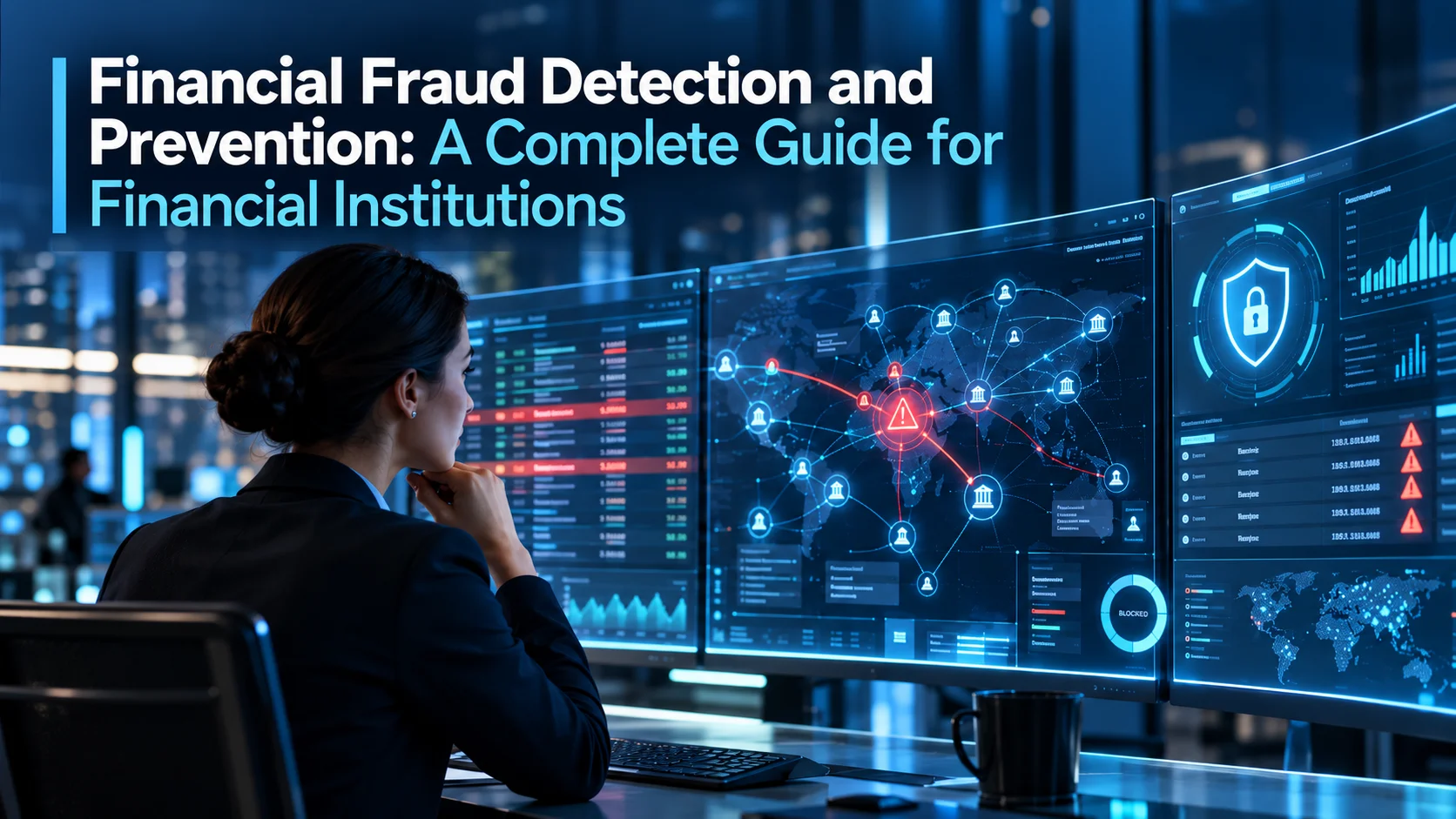
Singapore’s financial sector, long considered a benchmark for trust and security, is facing a new wave of fraud threats. As scammers become more coordinated, tech-savvy, and cross-border in nature, the old ways of fighting fraud no longer suffice. It’s time to talk about the real solution: a modern Anti-Fraud System.
In this blog, we explore what makes an effective anti-fraud system, how it works, and why it’s essential for financial institutions operating in Singapore.

What is an Anti-Fraud System?
An anti-fraud system is a set of technologies, processes, and intelligence models that work together to detect and prevent fraudulent activities in real time. It goes beyond basic rule-based monitoring and includes:
- Behavioural analytics
- Machine learning and anomaly detection
- Real-time alerts and case management
- Integration with external risk databases
This system forms the first line of defence for banks, fintechs, and payment platforms—helping them identify fraud before it causes financial loss or reputational damage.
The Fraud Landscape in Singapore: Why This Matters
Singapore’s position as a global financial hub makes it an attractive target for fraudsters. According to the latest police reports:
- Over S$1.3 billion was lost to scams between 2021 and 2024
- Investment scams, phishing, and business email compromise (BEC) are among the top fraud types
- Mule accounts and cross-border remittance laundering continue to rise
This changing landscape demands real-time protection. Relying solely on manual reviews or post-fraud investigations can leave institutions exposed.
Core Features of a Modern Anti-Fraud System
An effective anti-fraud solution is not just a dashboard with alerts. It’s a layered, intelligent system designed to evolve with the threat. Here are its key components:
1. Real-Time Transaction Monitoring
Detect suspicious patterns as they happen—such as unusual velocity, destination mismatches, or abnormal timings.
2. Behavioural Analytics
Understand baseline customer behaviours and flag deviations, even if the transaction appears normal on the surface.
3. Multi-Channel Integration
Monitor fraud signals across payments, digital banking, mobile apps, ATMs, and even offline touchpoints.
4. Risk Scoring and Decision Engines
Assign dynamic risk scores based on real-time data, and automate low-risk approvals or high-risk interventions.
5. Case Management Workflows
Enable investigation teams to prioritise, narrate, and report fraud cases efficiently within a unified system.
6. Continuous Learning via AI
Use feedback loops to improve detection models and adapt to new fraud techniques over time.
Key Fraud Types a Strong System Should Catch
- Account Takeover (ATO): Where fraudsters use stolen credentials or biometrics to hijack accounts
- Authorised Push Payment Fraud (APP): Victims are socially engineered into sending money willingly
- Synthetic Identity Fraud: Fake profiles created with a mix of real and false data to open accounts
- Money Mule Activity: Rapid in-and-out fund movement across multiple accounts, often linked to scams
- Payment Diversion & Invoice Fraud: Common in B2B transactions and cross-border settlements
Compliance and Fraud: Two Sides of the Same Coin
While AML and fraud prevention often sit in different departments, modern anti-fraud systems blur the lines. For example:
- A mule account used in a scam can also be part of a money laundering ring
- Layering via utility payments may signal both laundering and unauthorised funds
Singapore’s regulators—including MAS and the Commercial Affairs Department—expect institutions to implement robust controls across both fraud and AML risk. That means your system should support integrated oversight.
Challenges Faced by Financial Institutions
Implementing a strong anti-fraud system is not without its hurdles:
- High false positives overwhelm investigation teams
- Siloed systems between fraud, compliance, and customer experience teams
- Lack of localised threat data, especially for emerging typologies
- Legacy infrastructure that can't scale with real-time needs
To solve these challenges, the solution must be both intelligent and adaptable.
How Tookitaki Helps: A Next-Gen Anti-Fraud System for Singapore
Tookitaki’s FinCense platform is a purpose-built compliance suite that brings AML and fraud detection under one roof. For anti-fraud operations, it offers:
- Real-time monitoring across all payment types
- Federated learning to learn from shared risk signals across banks without sharing sensitive data
- Scenario-based typologies curated from the AFC Ecosystem to cover mule networks, scam layering, and synthetic identities
- AI-powered Smart Disposition Engine that reduces investigation time and false alerts
Singapore institutions already using Tookitaki report:
- 3.5x analyst productivity improvement
- 72% reduction in false positives
- Faster detection of new scam types through community-driven scenarios

Five Best Practices to Strengthen Your Anti-Fraud System
- Localise Detection Models: Use region-specific typologies and scam techniques
- Integrate AML and Fraud: Build a shared layer of intelligence
- Automate Where Possible: Focus your analysts on complex cases
- Use Explainable AI: Ensure regulators and investigators can audit decisions
- Collaborate with Ecosystems: Tap into shared intelligence from peers and industry networks
Final Thoughts: Smarter, Not Just Faster
In the race against fraud, speed matters. But intelligence matters more.
A modern anti-fraud system helps Singapore’s financial institutions move from reactive to proactive. It doesn’t just flag suspicious transactions—it understands context, learns from patterns, and works collaboratively across departments.
The result? Stronger trust. Lower losses. And a future-proof defence.

What Makes the Best Transaction Monitoring Software Actually Work
The best transaction monitoring software is not the one that generates the most alerts, but the one that helps banks make the right decisions consistently.
Introduction
Search for the best transaction monitoring software and you will find countless lists, rankings, and comparison tables. Most focus on features, checkboxes, or vendor claims. Very few explain what actually determines whether a transaction monitoring system works inside a real bank.
In practice, transaction monitoring software operates under constant pressure. It must analyse vast volumes of transactions, adapt to changing behaviour, support human judgement, and stand up to regulatory scrutiny, all without disrupting customers or overwhelming compliance teams.
This blog looks beyond marketing language to answer a more important question. What actually makes transaction monitoring software effective in real banking environments, and how can financial institutions identify solutions that deliver lasting value rather than short term compliance comfort.

Why “Best” Is Often the Wrong Starting Point
The idea of a single best transaction monitoring software is misleading.
Banks differ in size, customer profiles, products, payment rails, and risk exposure. What works for one institution may fail for another. The real question is not which software is best in general, but which software performs best under real operational conditions.
Strong transaction monitoring software is defined less by feature breadth and more by how it behaves when faced with:
- High transaction volumes
- Evolving typologies
- Scam driven activity
- False positive pressure
- Regulatory review
Understanding these conditions helps separate truly effective platforms from those that look impressive only in demos.
What Transaction Monitoring Software Is Expected to Do
At its core, transaction monitoring software exists to identify unusual or suspicious activity that may indicate money laundering, fraud related laundering, or other financial crime.
In practice, this involves several continuous tasks.
Analysing transaction behaviour
The software reviews transaction patterns across accounts, channels, and time periods to detect anomalies.
Applying risk context
Effective systems consider customer risk profiles, product usage, and geographic exposure rather than treating all transactions equally.
Generating alerts
When activity deviates from expected behaviour, the software produces alerts for review.
Supporting investigations
Investigators rely on transaction monitoring software to provide context, evidence, and traceability.
Maintaining audit readiness
All decisions must be explainable and defensible months or years later.
The best transaction monitoring software performs all of these tasks without overwhelming teams or compromising customer experience.
Why Many Transaction Monitoring Systems Struggle
Despite heavy investment, many institutions remain dissatisfied with their transaction monitoring outcomes. Several challenges are common.
Alert overload
Systems designed to be conservative often generate excessive alerts. Analysts spend most of their time clearing benign activity, leaving less capacity for genuine risk.
Static detection logic
Rules that do not evolve quickly become predictable. Criminals adjust behaviour to stay below thresholds.
Limited behavioural insight
Monitoring that focuses only on transaction amounts or frequencies misses more subtle behavioural shifts.
Fragmented context
When systems cannot see across products or channels, patterns remain hidden.
Poor explainability
If analysts cannot understand why an alert was triggered, tuning and trust suffer.
These issues do not mean transaction monitoring is broken. They mean the approach needs to evolve.
What Actually Makes Transaction Monitoring Software Effective
The best transaction monitoring software shares several defining characteristics.
1. Behaviour driven detection
Rather than relying solely on static thresholds, effective platforms understand normal customer behaviour and flag meaningful deviations.
This includes changes in:
- Transaction velocity
- Counterparty patterns
- Channel usage
- Timing and sequencing
Behaviour driven detection reduces noise and surfaces risk earlier.
2. Risk based prioritisation
Not all alerts deserve equal attention. The best systems prioritise alerts based on customer risk, transaction context, and typology relevance.
This allows teams to focus effort where it matters most.
3. Strong contextual intelligence
Transaction monitoring does not happen in isolation. Effective software brings together:
- Customer risk information
- Historical behaviour
- Network relationships
- Related alerts and cases
Context transforms alerts from raw signals into actionable insights.
4. Explainable alert logic
Regulators and auditors expect clear reasoning behind decisions. Analysts need the same clarity to work effectively.
Best in class transaction monitoring software makes it easy to see:
- Why an alert was triggered
- Which indicators contributed most
- How behaviour differed from the baseline
Explainability builds trust and improves tuning.
5. Operational scalability
Transaction volumes fluctuate. Scam waves and seasonal spikes can dramatically increase activity.
Effective platforms maintain performance and accuracy at scale without degrading investigation quality.
6. Integrated investigation workflows
When detection and investigation tools are tightly integrated, analysts spend less time navigating systems and more time analysing risk.
This improves consistency and defensibility.
Australia Specific Considerations for Transaction Monitoring
Transaction monitoring software used in Australia must contend with several local realities.
Real time payments
The New Payments Platform has reduced the window for intervention. Monitoring must operate fast enough to detect and respond to risk before funds are gone.
Scam driven activity
Many suspicious transactions involve victims rather than criminals. Monitoring systems must detect patterns associated with scams and mule activity without penalising genuine customers.
Regulatory expectations
AUSTRAC expects risk based monitoring, clear documentation, and consistent outcomes. Software must support these expectations operationally.
Diverse institution sizes
Community owned banks and regional institutions face the same regulatory expectations as large banks, but with leaner teams. Efficiency matters.
How Banks Should Evaluate Transaction Monitoring Software
Rather than relying on rankings or vendor claims, institutions should evaluate software using practical criteria.
Does it reduce false positives
Ask for evidence, not promises.
Can analysts explain alerts easily
If reasoning is unclear, effectiveness will decline over time.
Does it adapt to new typologies
Static systems age quickly.
How well does it integrate
Monitoring should not exist in isolation from onboarding, case management, and reporting.
Is it regulator ready
Auditability and traceability are non negotiable.
The best transaction monitoring software supports the people who use it, rather than forcing teams to work around its limitations.
The Role of AI in Modern Transaction Monitoring
AI plays an important role in improving transaction monitoring outcomes, but only when applied thoughtfully.
Effective uses of AI include:
- Detecting subtle behavioural shifts
- Identifying complex transaction networks
- Prioritising alerts intelligently
- Assisting analysts with context and summaries
AI should enhance transparency and judgement, not obscure decision making. Black box models without explainability introduce new risks.

Common Myths About Transaction Monitoring Software
Several misconceptions continue to influence buying decisions.
More alerts mean better coverage
In reality, more alerts often mean more noise.
Rules alone are sufficient
Rules are necessary but insufficient on their own.
One size fits all
Monitoring must reflect institutional context and risk profile.
Technology alone solves compliance
Strong governance and skilled teams remain essential.
Understanding these myths helps institutions make better choices.
How Strong Transaction Monitoring Improves Overall Compliance
Effective transaction monitoring does more than detect suspicious activity.
It:
- Improves investigation consistency
- Strengthens regulatory confidence
- Reduces operational fatigue
- Enhances customer experience by minimising unnecessary friction
- Provides intelligence that feeds broader financial crime controls
This makes transaction monitoring a foundational capability, not just a compliance requirement.
Where Tookitaki Fits Into the Transaction Monitoring Landscape
Tookitaki approaches transaction monitoring as an intelligence driven capability rather than a rule heavy alert generator.
Through the FinCense platform, institutions can:
- Apply behaviour based monitoring
- Leverage evolving typologies
- Reduce false positives
- Support explainable investigations
- Align monitoring with real risk
This approach supports Australian institutions, including community owned banks such as Regional Australia Bank, in strengthening monitoring effectiveness without overburdening teams.
The Future of Transaction Monitoring Software
Transaction monitoring continues to evolve as payments become faster and crime more adaptive.
Key trends include:
- Greater emphasis on behavioural intelligence
- Stronger integration with fraud detection
- Increased use of AI assisted analysis
- Continuous model evolution
- More focus on operational outcomes rather than alert volume
Institutions that invest in adaptable, explainable platforms will be better positioned to manage future risk.
Conclusion
The best transaction monitoring software is not defined by how many features it offers or how many alerts it produces. It is defined by how effectively it helps banks detect genuine risk, support analysts, and meet regulatory expectations under real world conditions.
In an environment shaped by real time payments, evolving scams, and heightened scrutiny, transaction monitoring must be intelligent, adaptable, and explainable.
Banks that understand what truly makes transaction monitoring software work, and choose platforms accordingly, are better equipped to protect customers, operate efficiently, and maintain trust.
Because in transaction monitoring, effectiveness is not measured by noise.
It is measured by outcomes.

The Complete AML Software Guide for Banks and Financial Institutions
AML software is no longer just a compliance requirement. It is a core system that determines how effectively banks detect risk, protect customers, and operate with confidence.
Introduction
Anti money laundering compliance has changed dramatically over the past decade. What was once a largely rules driven, reactive process is now a complex, intelligence led discipline shaped by real time payments, evolving criminal behaviour, and increasing regulatory expectations.
At the centre of this shift sits AML software.
For banks, credit unions, fintechs, and regulated financial institutions, AML software is no longer just a monitoring tool. It is the engine that connects customer risk assessment, transaction monitoring, investigations, regulatory reporting, and governance into a single operational framework.
This guide explains what AML software actually does in modern financial institutions, how it is used day to day, where legacy systems fall short, and what organisations should look for when evaluating modern AML platforms. It is written for compliance leaders, operations teams, and decision makers who want clarity rather than marketing language.

What Is AML Software in Practice
At a high level, AML software helps financial institutions identify, assess, and manage money laundering and related financial crime risks. But that definition only scratches the surface.
In practice, AML software performs five interconnected functions.
1. Customer risk assessment
AML software evaluates customer risk based on factors such as profile characteristics, geographic exposure, product usage, and known risk indicators. This risk assessment influences how closely a customer is monitored over time.
2. Transaction monitoring
The software continuously analyses transactions to identify unusual or suspicious activity. This includes detecting behavioural anomalies, velocity changes, structuring patterns, and potential laundering techniques.
3. Alert generation and prioritisation
When suspicious behaviour is detected, AML software generates alerts and prioritises them based on risk. High quality systems focus on alert relevance, not volume.
4. Investigation and case management
AML software provides tools for investigators to review alerts, analyse context, document findings, and make defensible decisions.
5. Regulatory reporting and auditability
The system supports the preparation of suspicious matter reports and maintains audit trails that demonstrate compliance to regulators.
AML software is therefore not a single module. It is an ecosystem that supports the entire AML lifecycle.
How AML Software Is Used Inside Banks
Understanding how AML software is used day to day helps explain why its quality matters so much.
Continuous monitoring
AML software runs constantly in the background, analysing millions of transactions and behavioural signals. It must operate reliably at scale without disrupting customer activity.
Analyst driven decision making
Alerts generated by AML software are reviewed by analysts who rely on the system to provide context, evidence, and clarity. The software shapes how quickly and accurately decisions can be made.
Ongoing risk management
Customer risk is not static. AML software updates risk profiles as behaviour changes, ensuring that monitoring remains proportionate.
Governance and oversight
Compliance leaders use AML software to track alert volumes, investigation outcomes, reporting timelines, and control effectiveness.
When AML software performs well, teams work with focus and confidence. When it performs poorly, inefficiency and risk multiply quickly.
Why Legacy AML Software Struggles Today
Many institutions still operate AML platforms designed for a very different risk environment. These systems struggle for several reasons.
Static rules
Legacy systems rely heavily on fixed thresholds. Criminals adapt quickly to these rules, reducing their effectiveness.
High false positives
Broad rules generate large volumes of alerts that are ultimately benign. This overwhelms teams and obscures real risk.
Limited behavioural intelligence
Older systems focus on transactions in isolation rather than understanding customer behaviour over time.
Fragmented workflows
Detection, investigation, and reporting often sit in separate tools, forcing analysts to piece together context manually.
Poor explainability
When systems cannot clearly explain why an alert was triggered, tuning becomes difficult and audit exposure increases.
As payments become faster and crime more sophisticated, these limitations become more pronounced.
What Modern AML Software Does Differently
Modern AML software platforms are built to address the realities of today’s financial crime landscape.
Behaviour driven detection
Instead of relying solely on rules, modern AML software analyses how customers normally behave and flags meaningful deviations.
Risk based alerting
Alerts are prioritised based on risk, allowing teams to focus on what matters most.
Integrated case management
Detection and investigation sit within a unified workflow, reducing friction and improving consistency.
Explainable analytics
Risk scores and alerts are transparent, with clear reasoning that supports regulatory scrutiny.
Scalability and performance
Modern platforms handle high transaction volumes and real time payments without degradation.
These capabilities do not eliminate the need for human judgement. They support it.

Core Components of Effective AML Software
While implementations vary, strong AML software typically includes the following components.
Customer risk engine
Establishes and updates risk profiles that influence monitoring intensity.
Transaction monitoring engine
Analyses activity across channels and products.
Alert management
Organises and prioritises alerts for efficient review.
Case management
Provides structured workflows, evidence capture, and decision documentation.
Reporting and audit layer
Supports regulatory reporting and maintains complete audit trails.
The strength of an AML platform depends on how well these components work together.
Regulatory Expectations and AML Software
Regulators do not mandate specific technologies, but they do expect outcomes that AML software must support.
Financial institutions are expected to demonstrate:
- A risk based approach to monitoring
- Clear reasoning behind decisions
- Timely escalation and reporting
- Consistent investigation quality
- Strong governance and auditability
AML software is the primary mechanism through which these expectations are met in practice.
How to Evaluate AML Software
Selecting AML software is a strategic decision with long term implications. Institutions should evaluate platforms across several dimensions.
1. Detection quality
Does the software surface meaningful risk or generate noise.
2. Explainability
Can analysts and auditors understand why alerts were triggered.
3. Operational efficiency
Does the system reduce manual effort and investigation time.
4. Scalability
Can it handle growth in customers, transactions, and complexity.
5. Integration
Does it connect smoothly with existing systems and data sources.
6. Governance
Does it support oversight, reporting, and regulatory interaction.
Evaluations should focus on real operational outcomes, not feature lists.
Common Mistakes Institutions Make
Several mistakes frequently undermine AML software investments.
Treating AML software as a compliance checkbox
This leads to minimal implementations that fail under real pressure.
Over customising rules
Excessive customisation increases complexity and maintenance burden.
Ignoring investigator experience
If analysts struggle to use the system, effectiveness drops quickly.
Failing to revisit models
AML software must evolve continuously as risk changes.
Avoiding these mistakes requires both technology and governance discipline.
The Role of AI in Modern AML Software
AI plays an increasingly important role in AML software, but its value depends on how it is applied.
Effective uses of AI include:
- Detecting subtle behavioural anomalies
- Identifying complex networks
- Supporting alert prioritisation
- Assisting investigators with context and summaries
AI should enhance transparency and control, not replace them. Explainability remains critical.
How AML Software Supports Operational Resilience
AML systems are now considered critical operational infrastructure.
Strong AML software contributes to resilience by:
- Reducing manual dependency
- Supporting consistent processes
- Handling volume spikes during scam waves
- Providing clear evidence during regulatory reviews
This aligns AML more closely with enterprise risk and operational stability.
Where Tookitaki Fits in the AML Software Landscape
Tookitaki approaches AML software as an intelligence driven, end to end platform rather than a collection of disconnected tools.
Through its FinCense platform, institutions can:
- Apply behaviour based detection
- Reduce false positives
- Support consistent investigations
- Maintain clear explainability
- Evolve typologies continuously
This approach supports institutions of varying sizes, including community owned banks such as Regional Australia Bank, in building AML programs that are effective, scalable, and defensible.
The Future of AML Software
AML software continues to evolve as financial crime changes.
Key directions include:
- Greater use of behavioural intelligence
- Stronger integration across fraud and AML
- Increased use of AI assisted investigations
- More emphasis on explainability and governance
- Continuous adaptation rather than periodic upgrades
Institutions that view AML software as a strategic capability rather than a static system will be better positioned for the future.
Conclusion
AML software sits at the heart of modern financial crime prevention. It shapes how risk is detected, how decisions are made, and how institutions demonstrate compliance.
As financial crime grows more complex and regulators demand greater clarity, the quality of AML software becomes a defining factor in a bank’s ability to operate safely and efficiently.
The most effective AML platforms do not simply generate alerts. They provide intelligence, structure, and confidence across the entire compliance lifecycle.
For banks and financial institutions, investing in the right AML software is not just about meeting regulatory expectations. It is about building a resilient, trusted, and future ready organisation.

Building a Stronger Defence: How an Anti-Fraud System Protects Singapore’s Financial Institutions
Fraud is evolving fast—and your defences need to evolve faster.
Singapore’s financial sector, long considered a benchmark for trust and security, is facing a new wave of fraud threats. As scammers become more coordinated, tech-savvy, and cross-border in nature, the old ways of fighting fraud no longer suffice. It’s time to talk about the real solution: a modern Anti-Fraud System.
In this blog, we explore what makes an effective anti-fraud system, how it works, and why it’s essential for financial institutions operating in Singapore.

What is an Anti-Fraud System?
An anti-fraud system is a set of technologies, processes, and intelligence models that work together to detect and prevent fraudulent activities in real time. It goes beyond basic rule-based monitoring and includes:
- Behavioural analytics
- Machine learning and anomaly detection
- Real-time alerts and case management
- Integration with external risk databases
This system forms the first line of defence for banks, fintechs, and payment platforms—helping them identify fraud before it causes financial loss or reputational damage.
The Fraud Landscape in Singapore: Why This Matters
Singapore’s position as a global financial hub makes it an attractive target for fraudsters. According to the latest police reports:
- Over S$1.3 billion was lost to scams between 2021 and 2024
- Investment scams, phishing, and business email compromise (BEC) are among the top fraud types
- Mule accounts and cross-border remittance laundering continue to rise
This changing landscape demands real-time protection. Relying solely on manual reviews or post-fraud investigations can leave institutions exposed.
Core Features of a Modern Anti-Fraud System
An effective anti-fraud solution is not just a dashboard with alerts. It’s a layered, intelligent system designed to evolve with the threat. Here are its key components:
1. Real-Time Transaction Monitoring
Detect suspicious patterns as they happen—such as unusual velocity, destination mismatches, or abnormal timings.
2. Behavioural Analytics
Understand baseline customer behaviours and flag deviations, even if the transaction appears normal on the surface.
3. Multi-Channel Integration
Monitor fraud signals across payments, digital banking, mobile apps, ATMs, and even offline touchpoints.
4. Risk Scoring and Decision Engines
Assign dynamic risk scores based on real-time data, and automate low-risk approvals or high-risk interventions.
5. Case Management Workflows
Enable investigation teams to prioritise, narrate, and report fraud cases efficiently within a unified system.
6. Continuous Learning via AI
Use feedback loops to improve detection models and adapt to new fraud techniques over time.
Key Fraud Types a Strong System Should Catch
- Account Takeover (ATO): Where fraudsters use stolen credentials or biometrics to hijack accounts
- Authorised Push Payment Fraud (APP): Victims are socially engineered into sending money willingly
- Synthetic Identity Fraud: Fake profiles created with a mix of real and false data to open accounts
- Money Mule Activity: Rapid in-and-out fund movement across multiple accounts, often linked to scams
- Payment Diversion & Invoice Fraud: Common in B2B transactions and cross-border settlements
Compliance and Fraud: Two Sides of the Same Coin
While AML and fraud prevention often sit in different departments, modern anti-fraud systems blur the lines. For example:
- A mule account used in a scam can also be part of a money laundering ring
- Layering via utility payments may signal both laundering and unauthorised funds
Singapore’s regulators—including MAS and the Commercial Affairs Department—expect institutions to implement robust controls across both fraud and AML risk. That means your system should support integrated oversight.
Challenges Faced by Financial Institutions
Implementing a strong anti-fraud system is not without its hurdles:
- High false positives overwhelm investigation teams
- Siloed systems between fraud, compliance, and customer experience teams
- Lack of localised threat data, especially for emerging typologies
- Legacy infrastructure that can't scale with real-time needs
To solve these challenges, the solution must be both intelligent and adaptable.
How Tookitaki Helps: A Next-Gen Anti-Fraud System for Singapore
Tookitaki’s FinCense platform is a purpose-built compliance suite that brings AML and fraud detection under one roof. For anti-fraud operations, it offers:
- Real-time monitoring across all payment types
- Federated learning to learn from shared risk signals across banks without sharing sensitive data
- Scenario-based typologies curated from the AFC Ecosystem to cover mule networks, scam layering, and synthetic identities
- AI-powered Smart Disposition Engine that reduces investigation time and false alerts
Singapore institutions already using Tookitaki report:
- 3.5x analyst productivity improvement
- 72% reduction in false positives
- Faster detection of new scam types through community-driven scenarios

Five Best Practices to Strengthen Your Anti-Fraud System
- Localise Detection Models: Use region-specific typologies and scam techniques
- Integrate AML and Fraud: Build a shared layer of intelligence
- Automate Where Possible: Focus your analysts on complex cases
- Use Explainable AI: Ensure regulators and investigators can audit decisions
- Collaborate with Ecosystems: Tap into shared intelligence from peers and industry networks
Final Thoughts: Smarter, Not Just Faster
In the race against fraud, speed matters. But intelligence matters more.
A modern anti-fraud system helps Singapore’s financial institutions move from reactive to proactive. It doesn’t just flag suspicious transactions—it understands context, learns from patterns, and works collaboratively across departments.
The result? Stronger trust. Lower losses. And a future-proof defence.