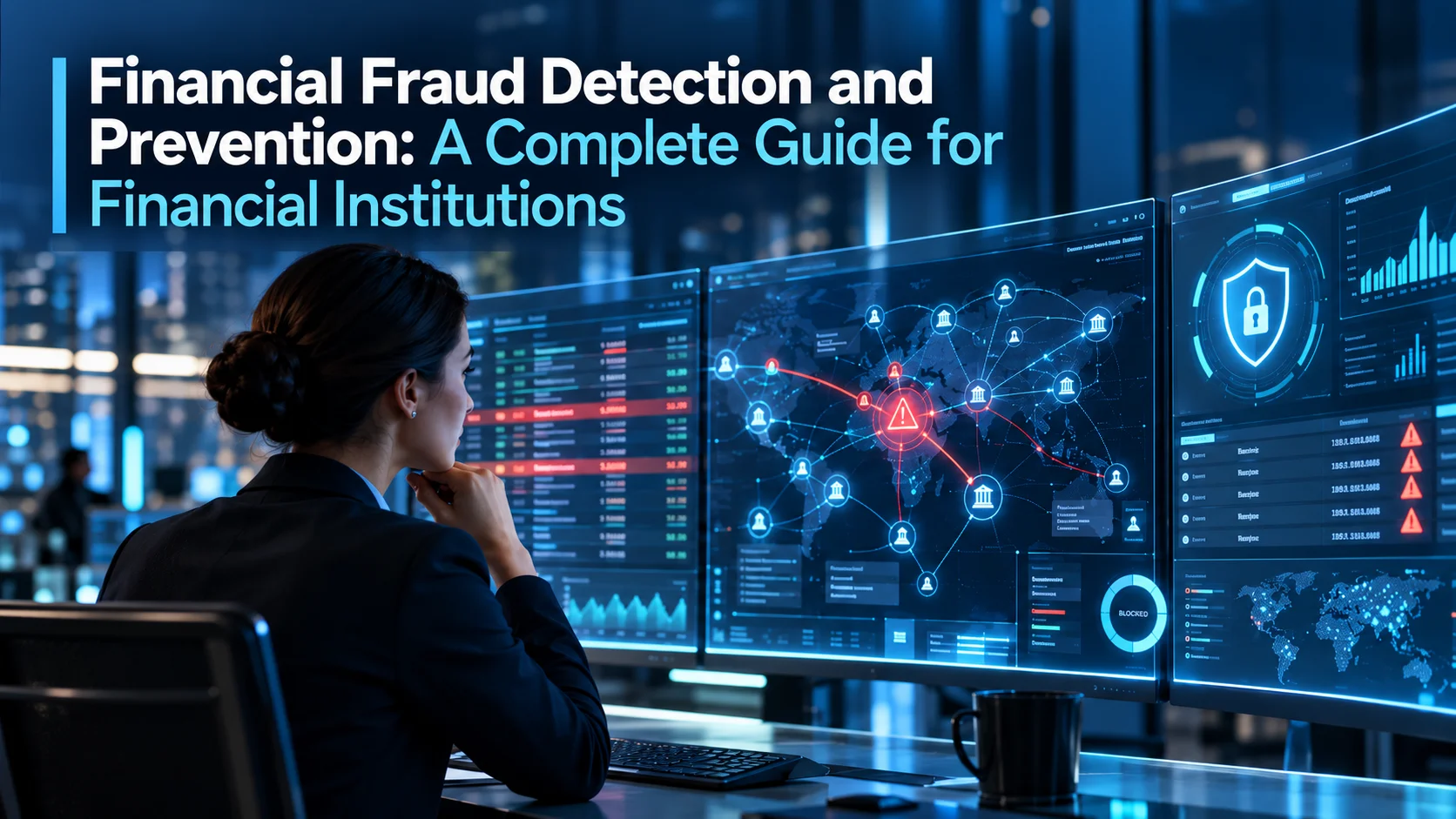
Beyond Compliance: What Defines an Industry Leading AML Solution in Singapore’s Financial Sector
.svg)
Financial crime is evolving faster than ever.
From cross-border money laundering networks to real-time payment scams and synthetic identity fraud, criminal organisations are using technology and global financial connectivity to exploit weaknesses in the banking system.
For financial institutions in Singapore, this creates a critical challenge. Traditional compliance systems were designed for a slower, simpler financial environment. Today’s risk landscape demands something more advanced.
Banks and fintechs increasingly recognise that preventing financial crime requires more than meeting regulatory obligations. It requires technology capable of detecting complex transaction patterns, adapting to new typologies, and helping investigators respond faster.
This is where an industry leading AML solution becomes essential.
Rather than relying on static rules and manual processes, modern AML platforms combine advanced analytics, artificial intelligence, and collaborative intelligence to deliver stronger detection and more efficient investigations.
For Singapore’s financial institutions, choosing the right AML solution can make the difference between reactive compliance and proactive financial crime prevention.

Why AML Technology Matters More Than Ever
Singapore is one of the world’s most connected financial hubs.
The country’s financial ecosystem includes global banks, digital payment providers, remittance networks, fintech platforms, and international trade flows. While this connectivity drives economic growth, it also creates opportunities for financial crime.
Money laundering networks often exploit international banking corridors and digital payment channels to move illicit funds quickly across borders.
Common risks facing financial institutions today include:
- Cross-border money laundering through layered transfers
- Mule account networks used to move scam proceeds
- Shell companies used to disguise beneficial ownership
- Trade-based money laundering through false invoicing
- Real-time payment fraud exploiting instant settlement systems
As transaction volumes grow, compliance teams face enormous operational pressure.
Manual investigations, fragmented data sources, and outdated monitoring systems make it difficult to detect sophisticated criminal behaviour.
Industry leading AML solutions address these challenges by transforming how financial institutions monitor, detect, and investigate suspicious activity.
What Makes an AML Solution Industry Leading?
Not all AML systems are created equal.
Legacy monitoring tools often rely on simple rule thresholds and generate high volumes of alerts that investigators must review manually. This approach leads to operational inefficiencies and high false positive rates.
An industry leading AML solution combines multiple capabilities to improve both detection accuracy and investigative efficiency.
Key characteristics include:
Intelligent Transaction Monitoring
Advanced AML platforms use behavioural analytics and typology-based monitoring to detect suspicious transaction patterns.
Instead of focusing only on individual transactions, these systems analyse sequences of activity across accounts, channels, and jurisdictions.
This enables institutions to detect complex money laundering schemes such as layering networks or mule account structures.
Artificial Intelligence and Machine Learning
Machine learning models analyse historical transaction data to identify patterns associated with financial crime.
These models can uncover hidden relationships between accounts and transactions that may not be visible through traditional rule-based monitoring.
Over time, AI helps monitoring systems adapt to new financial crime techniques while reducing false alerts.
Risk Based Monitoring Frameworks
Modern AML platforms support risk based compliance programmes.
This means monitoring systems prioritise higher risk scenarios based on factors such as customer risk profiles, geographic exposure, transaction behaviour, and typology indicators.
Risk based monitoring improves detection efficiency and ensures resources are focused where risk is highest.
Integrated Case Management
Financial crime investigations often require analysts to gather information from multiple systems.
Industry leading AML solutions provide integrated case management tools that consolidate alerts, customer data, transaction history, and investigation notes in a single environment.
This allows investigators to understand suspicious activity faster and document their findings for regulatory reporting.
Real Time Monitoring Capabilities
With the rise of instant payment networks, suspicious transactions can move through the financial system within seconds.
Modern AML platforms increasingly incorporate real time monitoring capabilities to identify suspicious activity as it occurs.
This allows institutions to intervene earlier and prevent financial crime before funds disappear across multiple jurisdictions.
Challenges With Traditional AML Systems
Many financial institutions still rely on legacy AML infrastructure.
These systems were originally designed when transaction volumes were lower and financial crime techniques were less sophisticated.
As digital banking expanded, several limitations became apparent.
One challenge is high false positive rates. Simple rule thresholds often generate large numbers of alerts that ultimately prove to be benign.
Another challenge is limited visibility across systems. Transaction data, customer profiles, and external intelligence sources may reside in separate platforms.
Investigators must manually gather information to understand suspicious behaviour.
Legacy systems also struggle with scenario updates. Implementing new typologies often requires complex rule changes that take months to deploy.
As a result, monitoring frameworks can lag behind emerging financial crime trends.
Industry leading AML solutions address these limitations by introducing more flexible, intelligence driven monitoring approaches.
The Importance of Typology Based Monitoring
Financial crime does not happen randomly. It follows patterns.
Transaction monitoring typologies describe the behavioural patterns associated with specific financial crime techniques.
Examples include:
- Rapid pass through transactions in mule accounts
- Structured deposits designed to avoid reporting thresholds
- Cross border layering using multiple intermediary accounts
- Shell company transactions used to conceal beneficial ownership
Industry leading AML platforms incorporate typology libraries based on real financial crime cases.
These typologies translate expert knowledge into detection scenarios that monitoring systems can automatically identify.
By combining typology intelligence with machine learning analytics, institutions can detect suspicious behaviour more effectively.

Regulatory Expectations in Singapore
The Monetary Authority of Singapore expects financial institutions to maintain robust AML programmes supported by effective technology.
Key regulatory expectations include:
- Risk based monitoring frameworks
- Continuous review and calibration of detection scenarios
- Effective governance over monitoring systems
- Strong investigative documentation and audit trails
- Timely reporting of suspicious activity
An industry leading AML solution helps institutions meet these expectations by providing advanced detection tools and comprehensive investigative workflows.
More importantly, it enables institutions to demonstrate that their monitoring frameworks evolve alongside emerging financial crime risks.
The Role of Collaboration in Financial Crime Detection
Financial crime networks rarely operate within a single institution.
Criminal organisations often move funds across multiple banks and payment platforms.
This makes collaborative intelligence increasingly important.
Industry leading AML solutions are beginning to incorporate federated intelligence models where insights from multiple institutions contribute to stronger detection capabilities.
By sharing anonymised intelligence about financial crime patterns, institutions can identify emerging typologies earlier and strengthen their monitoring frameworks.
This collaborative approach helps the entire financial ecosystem respond more effectively to evolving threats.
Tookitaki’s Approach to Industry Leading AML Technology
Tookitaki’s FinCense platform represents a modern approach to financial crime prevention.
The platform combines advanced analytics, machine learning, and collaborative intelligence to help financial institutions detect suspicious activity more effectively.
Key capabilities include:
Typology Driven Detection
FinCense incorporates monitoring scenarios derived from real financial crime cases contributed by industry experts.
These typologies allow institutions to detect behavioural patterns associated with complex money laundering schemes.
Artificial Intelligence Powered Analytics
Machine learning models enhance detection accuracy by analysing transaction patterns across large datasets.
AI helps identify hidden relationships between accounts and reduces false positive alerts.
End to End Compliance Workflows
The platform integrates transaction monitoring, alert management, investigation tools, and regulatory reporting within a single environment.
This enables investigators to manage cases more efficiently while maintaining complete audit trails.
Continuous Intelligence Updates
Through collaborative intelligence frameworks, FinCense continuously evolves as new financial crime typologies emerge.
This ensures institutions remain prepared for changing risk landscapes.
The Future of AML Technology
Financial crime techniques will continue to evolve as criminals exploit new technologies and financial channels.
Future AML solutions will likely incorporate several emerging capabilities.
Artificial intelligence will play an even greater role in identifying complex transaction patterns and predicting suspicious behaviour.
Network analytics will help investigators understand relationships between accounts and entities involved in financial crime schemes.
Real time monitoring will become increasingly important as instant payment systems expand globally.
And collaborative intelligence models will allow financial institutions to share insights about emerging threats.
Institutions that invest in modern AML platforms today will be better prepared for the challenges of tomorrow’s financial crime landscape.
Conclusion
Financial crime is becoming more sophisticated, global, and technology driven.
Traditional compliance tools are no longer sufficient to detect complex money laundering networks operating across digital financial ecosystems.
An industry leading AML solution provides the advanced capabilities financial institutions need to stay ahead of evolving threats.
By combining artificial intelligence, typology driven monitoring, risk based detection, and integrated investigation tools, modern AML platforms enable institutions to strengthen their financial crime defences.
For Singapore’s banks and fintechs, adopting advanced AML technology is not just about meeting regulatory expectations.
It is about protecting the integrity of the financial system and maintaining trust in one of the world’s most important financial centres.
Experience the most intelligent AML and fraud prevention platform
Experience the most intelligent AML and fraud prevention platform
Experience the most intelligent AML and fraud prevention platform
Top AML Scenarios in ASEAN
The Role of AML Software in Compliance
The Role of AML Software in Compliance