

The Penthouse Syndicate: Inside Australia’s $100M Mortgage Fraud Scandal
.svg)
In early 2026, investigators in New South Wales uncovered a fraud network that had quietly infiltrated Australia’s mortgage system.
At the centre of the investigation was a criminal group known as the Penthouse Syndicate, accused of orchestrating fraudulent home loans worth more than AUD 100 million across multiple banks.
The scheme allegedly relied on falsified financial documents, insider assistance, and a network of intermediaries to push fraudulent mortgage applications through the banking system. What initially appeared to be routine lending activity soon revealed something more troubling: a coordinated effort to manipulate Australia’s property financing system.
For investigators, the case exposed a new reality. Criminal networks were no longer simply laundering illicit cash through property purchases. Instead, they were learning how to exploit the financial system itself to generate the funds needed to acquire those assets.
The Penthouse Syndicate investigation illustrates how modern financial crime is evolving — blending fraud, insider manipulation, and property financing into a powerful laundering mechanism.

How the Mortgage Fraud Scheme Worked
The investigation began when banks identified unusual patterns across multiple mortgage applications.
Several borrowers appeared to share similar financial profiles, documentation structures, and broker connections. As investigators examined the applications more closely, they began uncovering signs of a coordinated scheme.
Authorities allege that members of the syndicate submitted home-loan applications supported by falsified financial records, inflated income statements, and fabricated employment details. These applications were allegedly routed through brokers and intermediaries who facilitated their submission across multiple banks.
Because the loans were processed through legitimate lending channels, the transactions initially appeared routine within the financial system.
Once approved, the mortgage funds were used to acquire residential properties in and around Sydney.
What appeared to be ordinary property purchases were, investigators believe, the result of carefully engineered financial deception.
The Role of Insiders in the Lending Ecosystem
One of the most alarming aspects of the case was the alleged involvement of insiders within the financial ecosystem.
Authorities claim the syndicate recruited individuals with knowledge of banking processes to help prepare and submit loan applications that could pass through internal verification systems.
Mortgage brokers and financial intermediaries allegedly played key roles in structuring loan applications, while insiders with lending expertise helped ensure the documents met approval requirements.
This insider access significantly increased the success rate of the fraud.
Instead of attempting to bypass financial institutions from the outside, the network allegedly operated within the lending ecosystem itself.
The result was a scheme capable of securing large volumes of mortgage approvals before raising red flags.
Property as the Laundering Endpoint
Mortgage fraud is often treated purely as a financial crime against lenders.
But the Penthouse Syndicate investigation highlights how it can also become a powerful money-laundering mechanism.
Once fraudulent loans are approved, the funds enter the financial system as legitimate bank lending.
These funds can then be used to purchase property, refinance assets, or move through multiple financial channels. Over time, ownership of real estate creates a veneer of legitimacy around the underlying funds.
In effect, fraudulent credit is converted into tangible assets.
For criminal networks, this creates a powerful pathway for integrating illicit proceeds into the legitimate economy.
Why Property Markets Attract Financial Crime
Real estate markets have long been attractive to financial criminals.
Property transactions typically involve large financial amounts, allowing significant volumes of funds to be moved through a single transaction. In major cities like Sydney, a single property purchase can represent millions of dollars in value.
At the same time, property transactions often involve multiple intermediaries, including brokers, agents, lawyers, and lenders. Each layer introduces potential gaps in verification and oversight.
When fraud networks exploit these vulnerabilities, property markets can become effective vehicles for financial crime.
The Penthouse Syndicate case demonstrates how criminals can leverage these dynamics to manipulate lending systems and move illicit funds through property assets.
Warning Signs Financial Institutions Should Monitor
Cases like this provide valuable insights into the red flags that financial institutions should monitor within lending portfolios.
Repeated intermediaries
Loan applications linked to the same brokers or facilitators appearing across multiple suspicious cases.
Borrower profiles inconsistent with loan size
Applicants whose income, employment history, or financial behaviour does not align with the value of the loan requested.
Document irregularities
Financial records or employment documents that show patterns of similarity across multiple loan applications.
Clusters of property acquisitions
Borrowers with similar profiles acquiring properties within short timeframes.
Rapid refinancing or asset transfers
Properties refinanced or transferred soon after acquisition without a clear economic rationale.
Detecting these signals requires the ability to analyse relationships across customers, transactions, and intermediaries.

A Changing Landscape for Financial Crime
The Penthouse Syndicate investigation highlights a broader shift in how organised crime operates.
Criminal networks are increasingly targeting legitimate financial infrastructure. Instead of relying solely on traditional laundering channels, they are exploiting financial products such as loans, mortgages, and digital payment platforms.
As financial systems become faster and more interconnected, these schemes can scale rapidly.
This makes early detection essential.
Financial institutions need the ability to detect hidden connections between borrowers, intermediaries, and financial activity before fraud networks expand.
How Technology Can Help Detect Complex Fraud Networks
Modern financial crime schemes are too sophisticated to be detected through static rules alone.
Advanced financial crime platforms now combine artificial intelligence, behavioural analytics, and network analysis to uncover hidden patterns within financial activity.
By analysing relationships between customers, transactions, and intermediaries, these systems can identify emerging fraud networks long before they scale.
Platforms such as Tookitaki’s FinCense bring these capabilities together within a unified financial crime detection framework.
FinCense leverages AI-driven analytics and collaborative intelligence from the AFC Ecosystem to help financial institutions identify emerging financial crime patterns. By combining behavioural analysis, transaction monitoring, and shared typologies from financial crime experts, the platform enables banks to detect complex fraud networks earlier and reduce investigative workloads.
In cases like mortgage fraud and property-linked laundering, this capability can be critical in identifying coordinated schemes before they grow into large-scale financial crimes.
Final Thoughts
The Penthouse Syndicate investigation offers a revealing look into the future of financial crime.
Instead of simply laundering illicit funds through property purchases, criminal networks are learning how to manipulate the financial system itself to generate the money needed to acquire those assets.
Mortgage systems, lending platforms, and property markets can all become part of this process.
For financial institutions, the challenge is no longer limited to detecting suspicious transactions.
It is about understanding how complex networks of borrowers, intermediaries, and financial activity can combine to create large-scale fraud and laundering schemes.
As the Penthouse Syndicate case demonstrates, the next generation of financial crime will not hide within individual transactions.
It will hide within the systems designed to finance growth.
Experience the most intelligent AML and fraud prevention platform
Experience the most intelligent AML and fraud prevention platform
Experience the most intelligent AML and fraud prevention platform
Top AML Scenarios in ASEAN
The Role of AML Software in Compliance
Talk to an Expert
Our Thought Leadership Guides

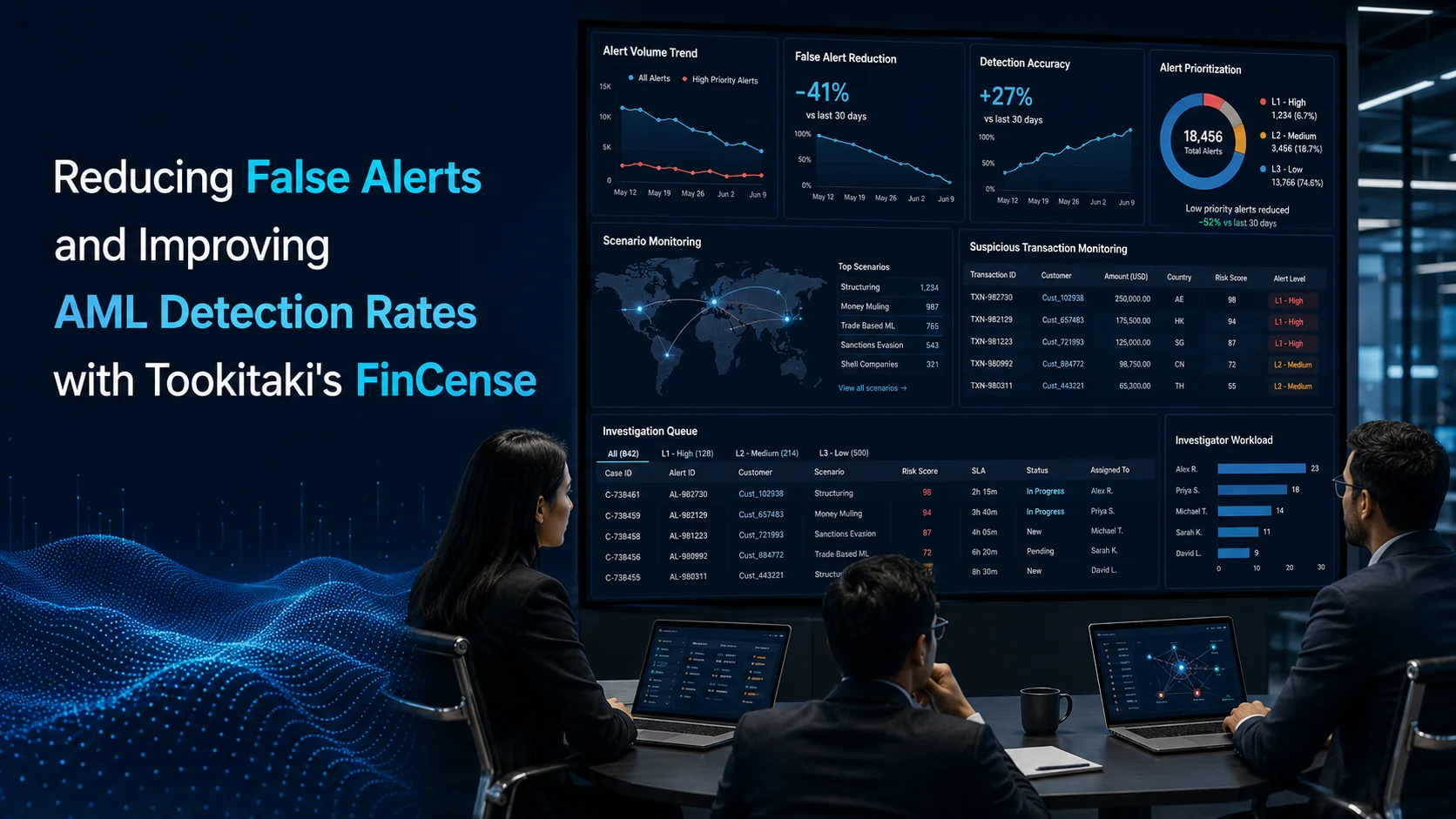
Reducing False Alerts and Improving AML Detection Rates with Tookitaki's FinCense
False positives overwhelm AML compliance teams while genuine financial crime goes undetected. Tookitaki addresses this two ways: an Alert Prioritization AI Agent that works on top of any legacy system, and FinCense Transaction Monitoring with scenario-based detection and automated threshold tuning.
AML Compliance for Digital Banks in Malaysia: Meeting BNM's Requirements with FinCense
Malaysia's digital banks face BNM's 2023 AML/CFT Policy Document, FATF's updated recommendations, and mounting pressure on eKYC and transaction monitoring standards. Here is how FinCense addresses these requirements.


Living Under the STR Clock: The Growing Pressure on AML Investigators
AML investigators face increasing pressure to make Suspicious Transaction Report decisions under tight timelines and growing alert volumes. Explore the challenges behind STR reporting and the shift toward intelligence-led investigations.

