How to Choose the Right Fraud Protection Partner in Singapore: The 2026 Guide
.svg)
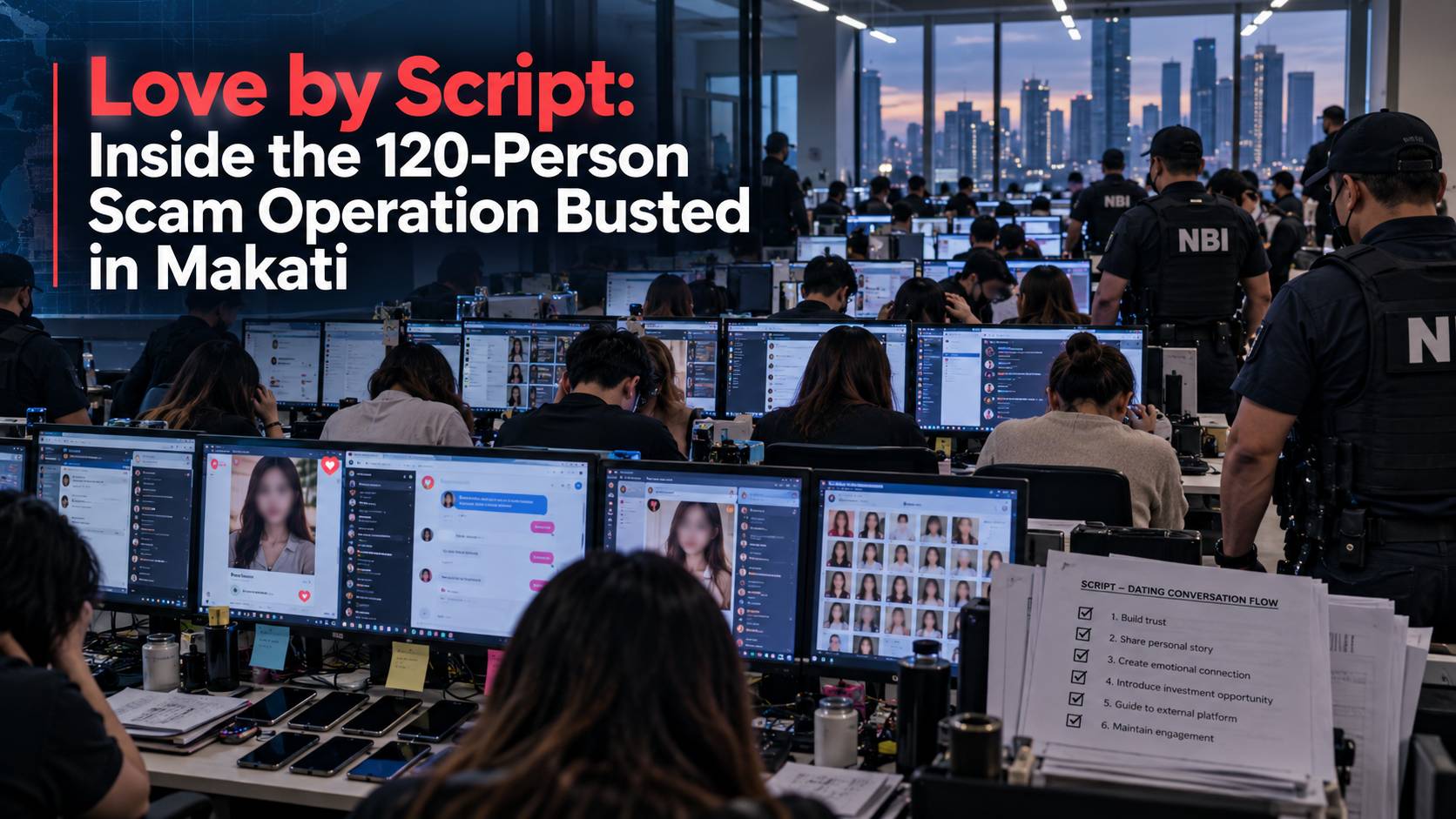
Singapore has become a target for regional and global fraud syndicates. Scams cost victims in Singapore $913.1 million in 2025 alone and fraud typologies continue to evolve rapidly across digital banking platforms, real-time payment systems, and investment apps.
Common fraud tactics targeting Singapore institutions in 2026 include:
- Deepfake impersonation of executives to authorise fraudulent payments
- Mule networks laundering scam proceeds through retail accounts
- Social engineering via SMS, messaging apps, and phishing sites
- Abuse of fintech payment rails for layering illicit funds
- QR-enabled payment fraud using fake invoices and utility bills
For banks, fintechs, and payment service licensees, choosing the right fraud protection partner — one whose capabilities align to Singapore's specific regulatory requirements and threat environment — matters more than any individual product feature.

What MAS Now Requires from Singapore Financial Institutions
The regulatory framework for fraud prevention in Singapore has sharpened significantly. Any fraud protection partner you select must be able to support compliance with these specific MAS obligations. For payment institutions, it is also important to understand how the Payment Services Act shapes AML obligations in Singapore.
MAS Shared Responsibility Framework (SRF). Implemented in 2024, the SRF establishes defined liability between financial institutions, telcos, and consumers when phishing scams result in losses. Where a bank fails to implement required anti-scam controls — transaction anomaly detection, customer notification for suspicious activity, outbound payment friction for high-risk transactions — it bears greater financial liability for customer losses. The SRF creates a direct consequence for gaps in fraud detection capability.
MAS Notice PSN01 anti-scam controls. Applicable to major payment institutions and payment service licensees, PSN01 requires real-time transaction monitoring capable of detecting anomalous outbound payment behaviour, mule account indicators, and patterns associated with authorised push payment scams. Batch processing is not compatible with the intent of these controls for PayNow and FAST transactions. For a deeper look at MAS transaction monitoring expectations and best practices for Singapore financial institutions, read our guide on transaction monitoring in Singapore.
MAS Technology Risk Management (TRM) Guidelines. The TRM Guidelines set expectations for the effectiveness of technology-based monitoring systems. Fraud detection systems must be subject to regular effectiveness reviews, with documented evidence of scenario performance, false positive rates, and calibration adjustments. The same explainability requirements that apply to AML monitoring under MAS Notice 626 apply to fraud detection systems under the TRM framework — decisions must be auditable.
Kill switch requirements. MAS requires institutions to provide customers with the ability to quickly self-restrict PayNow and digital banking access. The fraud detection platform must support the operational workflows that make this control effective, including real-time account status updates and integration with customer-facing channels.
STR filing for fraud-linked proceeds. Where fraud proceeds are identified moving through an account, the institution has both a fraud reporting obligation to MAS and an STR filing obligation under MAS Notice 626. Platforms that treat fraud and AML as separate systems create a reporting gap that MAS examiners specifically look for.
Core Features of an Effective Fraud Protection Platform
To be effective in Singapore's regulatory environment, a fraud protection platform must offer the following capabilities.
1. Real-Time Transaction Monitoring
With real-time payment rails, fraud can occur and complete within seconds. The platform must provide pre-settlement detection for PayNow and FAST transactions — flagging suspicious transfers before funds are released, not after. Capabilities to look for:
- Anomalous transfer pattern detection
- Monitoring of high-risk transaction destinations
- Suspicious frequency and amount spike identification
2. Behavioural Analytics
Every customer has a pattern. The platform should build a behavioural profile for each customer and flag deviations that signal fraud — login from a new location or device, transfers to previously unseen beneficiaries, unusual time-of-day activity. Static thresholds cannot replicate this without generating unsustainable false positive volumes.
3. AI-Powered Detection Models
Static rules are easy to bypass. AI models that continuously learn from past transactions can detect fraud types that rules alone would miss. What this delivers:
- Lower false positive rates
- Adaptability to new and emerging scam techniques
- Dynamic risk scoring across multiple factors simultaneously
4. Cross-Channel Visibility
Fraudsters exploit gaps between systems. An effective platform connects signals across digital banking, payment cards, contact centres, and third-party apps — providing a 360-degree view of customer activity and risk that channel-specific tools cannot produce.
5. Smart Case Management
Alerts must flow into a case management environment where investigators access customer data, transaction history, and risk scores in one place, with full audit trails, task assignment, and escalation workflows. The quality of case management directly affects STR narrative quality and examination outcomes under MAS review.
6. Unified AML and Fraud Signals
The most damaging financial crime in Singapore moves across both fraud and AML typologies simultaneously — scam proceeds structured through mule accounts, synthetic identities used for both card fraud and KYC evasion, authorised push payment abuse layered into complex remittance patterns. Platforms that maintain separate fraud and AML data layers cannot detect these cross-typology flows.
A unified interface that surfaces both fraud signals and AML indicators on the same transaction, account, and entity view gives investigators the complete picture — and closes the gap between systems that financial crime networks exploit. This is also where STR filing for fraud-linked proceeds becomes seamless rather than a manual handoff between teams. For more on why AML and fraud convergence matters, see our FRAML guide.
7. Rules and Machine Learning Hybrid
The best systems combine rules for known risks and machine learning for unknown threats. Rules provide coverage for well-documented typologies; ML provides adaptability as new scam techniques emerge. This hybrid approach delivers both precision and flexibility without overburdening compliance teams.
8. Explainable Risk Scoring
MAS expects auditability and transparency in monitoring systems under both the TRM Guidelines and Notice 626. The platform must show why a transaction was flagged — the specific inputs that drove the risk score — so investigators can document their reasoning and regulators can examine the decision logic.

Key Challenges Faced by Financial Institutions in Singapore
Even with fraud systems in place, many institutions continue to struggle with:
High false positives. Excessive alert volumes make it harder to identify real threats and slow down investigation response times — a particular risk when STR filing deadlines are tight.
Siloed systems. Fraud signals trapped in channel-specific or departmental platforms limit cross-typology visibility and create the gaps that financial crime networks target.
Lack of local typology awareness. Many platforms are built for global markets and miss Singapore-specific scam patterns — QR code abuse, CPF-related phishing, investment scam flows through local payment rails.
Manual investigations. Slow, manual case handling creates backlogs and increases the risk of delayed or poor-quality STR filing, which MAS examiners assess specifically.
Generic platforms without MAS alignment. Fraud platforms designed for other regulatory environments do not come pre-configured for Singapore's PSN01 controls, SRF documentation requirements, or MAS Notice 626 STR workflow expectations.
How Tookitaki's FinCense Addresses Singapore's Fraud and Compliance Environment
FinCense is purpose-built for the regulatory environment Singapore financial institutions operate in — combining real-time fraud detection with MAS Notice 626-aligned AML compliance in a single platform, without requiring separate systems for each obligation.
Scenario-based fraud detection. Instead of relying on generic rule libraries, FinCense detects based on validated real-world fraud scenarios sourced through Tookitaki's Anti Financial Crime (AFC) Ecosystem — a shared intelligence network through which financial institutions across APAC contribute and receive anonymised typology intelligence. Singapore-specific scenarios include cross-border mule account layering, QR code-enabled laundering via fintechs, and deepfake impersonation of corporate executives for payment diversion.
Modular AI agents. FinCense uses a modular agentic AI framework where each agent specialises in a core function — real-time detection, alert prioritisation, case investigation, and report generation. This structure allows for faster processing and targeted model improvements without disrupting the wider platform.
AI copilot for investigators. FinMate assists fraud investigation teams by highlighting high-risk transactions, summarising red flags, suggesting likely fraud typologies, and auto-generating investigation notes. This reduces investigation time, improves STR narrative quality, and brings consistency to case handling across teams.
Unified fraud and AML case management. FinCense manages both fraud and AML investigations from a single case management environment with shared transaction data and entity context. An analyst working a fraud case sees the AML risk indicators on the same account. STR filing for fraud-linked proceeds is supported by the same case record — eliminating the handoff between teams that separate systems require and directly addressing MAS examiners' expectations for integrated fraud and AML reporting.
Simulation and model tuning. Before deploying new fraud detection rules or AI models, compliance teams can simulate impact, adjust thresholds, and optimise performance — without risking alert fatigue in production. This directly supports the calibration review documentation that MAS TRM Guidelines require.
Banks and payment platforms using FinCense have reported over 50% reduction in false positives, 3x faster investigation workflows, higher STR acceptance rates, and stronger audit performance during MAS reviews.
How to Evaluate Your Fraud Protection Partner
Use this checklist when assessing vendors for Singapore's regulatory environment:
- Can it detect fraud in real time on PayNow and FAST rails — pre-settlement?
- Does it include AI models trained on Singapore-specific and APAC fraud typologies?
- Is there cross-channel monitoring with a unified investigation dashboard?
- Does it support unified AML and fraud signals from a single data layer?
- Are decisions explainable and documented to MAS TRM and Notice 626 standards?
- Does it support MAS-aligned STR filing, including GoAML-compatible outputs?
- Can it simulate new detection logic before going live?
- What is the implementation methodology — does it start from your risk profile or from default rules?
If your current platform cannot address most of these requirements, it is worth assessing whether it was designed for Singapore's regulatory environment or adapted to it after the fact.
To see how FinCense is deployed in Singapore financial institutions and how it addresses MAS fraud and AML requirements specifically, book a demo with our Singapore compliance team.
Experience the most intelligent AML and fraud prevention platform
Experience the most intelligent AML and fraud prevention platform
Experience the most intelligent AML and fraud prevention platform
Top AML Scenarios in ASEAN
The Role of AML Software in Compliance
The Role of AML Software in Compliance