

The Luffy Group Case: Fake Officials, Stolen ATM Cards, and the AML Trail Banks Cannot Ignore
.svg)
A scam does not always begin with a suspicious online transfer.
Sometimes, it begins with someone pretending to be a police officer.
In June 2026, Philippine authorities arrested Japanese national Inoue Hideharu, who was identified by the Bureau of Immigration (BI) as a reported high-ranking member and manager of the so-called “Luffy Group”, a Japanese criminal syndicate linked to crimes in Japan. The arrest was carried out by the BI’s Fugitive Search Unit in coordination with the Japanese government, the Philippine National Police–Interpol Group (PNP-Interpol Group), and the Presidential Anti-Organized Crime Commission (PAOCC).
According to the Organized Crime and Corruption Reporting Project (OCCRP), the Luffy Group is accused of running large-scale fraud operations targeting Japanese citizens. The group allegedly impersonated Japanese police officers and finance ministry officials, gained access to victims’ homes, swapped their ATM cards with counterfeit cards, and later used the stolen cards to withdraw money.
For financial institutions, this case is a reminder that scam risk does not stop when the victim is deceived.
Once stolen access becomes cash withdrawals, mule activity, rapid transfers, or cross-border movement, the issue is no longer only:
Who stole the card?
It becomes:
Where did the money go next?
That is where fraud becomes an anti-money laundering (AML) risk.

The Scam: Official Impersonation, Card Swapping, and Cash-Out
The Luffy Group case shows how organised fraud can combine several risk layers at once:
- official impersonation
- social engineering
- physical access to victims
- stolen ATM cards
- unauthorised withdrawals
- possible cross-border coordination
The alleged method was not purely digital. It relied on trust.
Victims were reportedly approached by individuals posing as law enforcement or finance officials. The scammers allegedly created a situation where victims believed their bank accounts or funds were under investigation. Once that trust was established, members of the syndicate reportedly gained access to the victims’ homes, swapped their ATM cards, and later used the stolen cards to withdraw money.
This is important because the suspicious activity may not begin with a strange online transfer.
It may begin with what looks like normal ATM usage.
A card is used.
Cash is withdrawn.
The transaction may fall within allowed limits.
The account holder may not immediately realise the card has been replaced.
By the time the victim reports the fraud, the money may already have moved.
Why This Is More Than a Card Fraud Case
For banks, stolen ATM card activity is often viewed through a fraud lens. That is understandable. The immediate issue is unauthorised access and customer loss.
But when the activity is connected to an organised syndicate, the risk can extend beyond the first withdrawal.
The stolen funds may be:
- withdrawn in cash
- handed to local facilitators
- deposited into mule accounts
- split across multiple accounts
- moved through remittance channels
- converted into other assets
- sent across borders
- used to fund further criminal operations
This is where the AML challenge begins.
A bank may detect the unauthorised withdrawal. But the wider laundering trail may sit elsewhere: in receiving accounts, cash deposits, mule networks, remittance flows, or accounts showing sudden activity inconsistent with their normal behaviour.
In cross-border syndicate cases, the victim, organiser, cash-out location, mule account, and final beneficiary may all sit in different jurisdictions.
That makes single-account monitoring insufficient.
Financial institutions need to connect the dots across customers, accounts, counterparties, devices, locations, withdrawal behaviour, and transaction velocity.
How the Money Trail Can Move
A stolen ATM card is only the beginning of the money movement chain.
A possible laundering flow may look like this:
1. Trust is created through impersonation
The victim is contacted by scammers posing as trusted officials. In the Luffy Group case, the syndicate allegedly impersonated Japanese police officers and finance ministry officials to gain victims’ trust.
2. Card access is captured
The victim’s ATM card is allegedly swapped with a counterfeit card. This gives the fraudsters access to the victim’s funds while delaying detection.
3. Funds are withdrawn quickly
The stolen card is used to withdraw money. These withdrawals may happen rapidly, across multiple attempts, or at locations inconsistent with the customer’s usual behaviour.
4. Cash enters the laundering network
The cash may be handed to runners, deposited into mule accounts, or combined with other illicit funds.
5. Proceeds are layered
The money may then be split, transferred, withdrawn again, or routed through unrelated accounts to obscure its source.
6. Funds move across borders
Where syndicates operate internationally, proceeds may be remitted, converted, or moved through informal channels to reach organisers or beneficiaries in another jurisdiction.
This is why financial institutions cannot treat scam-linked withdrawals as isolated fraud events.
They must follow the post-fraud money trail.
Key AML Red Flags for Financial Institutions
The Luffy Group case points to several red flags that banks and financial institutions should monitor.
Customer-Level Red Flags
- Sudden ATM withdrawals that are unusual for the customer
- Multiple withdrawals within a short period
- Rapid balance depletion after previously stable account behaviour
- ATM activity in a location inconsistent with the customer’s profile
- High-risk activity involving elderly or vulnerable customers
- Unusual card usage after a period of inactivity
- Failed withdrawal attempts followed by successful withdrawals
Account and Transaction Red Flags
- Repeated withdrawals near daily limits
- Cash withdrawals followed by deposits into unrelated accounts
- Sudden inflows from multiple individuals with no clear relationship
- Rapid inward and outward movement of funds
- Short holding periods before cash-out
- Transactions inconsistent with the customer’s income, occupation, or normal pattern
- New beneficiaries added shortly after suspicious account activity
Network-Level Red Flags
- Multiple accounts linked by common phone numbers, devices, addresses, or beneficiaries
- Several customers withdrawing funds at the same ATM or branch cluster
- Shared counterparties across unrelated accounts
- Mule-like accounts receiving funds from multiple victims
- Funds moving from victim accounts to common receiving accounts
- Cross-border remittance activity following suspicious withdrawals
The key is not just to detect the first withdrawal.
It is to identify whether that withdrawal connects to a larger laundering network.

Why Cross-Border Fraud Syndicates Are Hard to Detect
The Luffy Group case also shows why modern fraud syndicates are difficult for financial institutions to track.
The victims may be in one country.
The organisers may operate from another.
The cash-out may happen through local facilitators.
The proceeds may then move through multiple accounts or remittance channels.
OCCRP reported that parts of the Luffy Group operation were allegedly run from the Philippines and that police warned other members may still be active in the country. The Bureau of Immigration said Inoue was taken into BI custody and would remain there pending deportation proceedings.
For compliance teams, this creates a major detection challenge.
Traditional monitoring may flag a suspicious withdrawal or transfer. But organised syndicates often rely on fragmentation. They use multiple accounts, fast cash-out, and cross-border movement to make the trail harder to follow.
That means fraud and AML teams need to work from the same intelligence.
A fraud alert should not end at customer reimbursement.
An AML investigation should not begin only after funds reach a mule account.
The two need to connect earlier.
What Financial Institutions Should Do
Financial institutions should treat scam-linked card theft as part of a broader financial crime lifecycle.
This requires stronger alignment between fraud monitoring, AML transaction monitoring, customer risk scoring, and case investigation.
Key actions include:
- Monitor unusual ATM withdrawals in relation to customer history, age, location, and account behaviour.
- Connect stolen card alerts with downstream mule account activity.
- Detect rapid cash-out patterns across ATM locations, accounts, and time windows.
- Identify accounts receiving funds from multiple unrelated customers.
- Track sudden changes in account behaviour following suspected scam exposure.
- Use network analytics to connect victims, receiving accounts, devices, beneficiaries, and locations.
- Prioritise cases involving vulnerable customers, cross-border links, and repeated suspicious patterns.
- Share intelligence between fraud and AML teams so scam proceeds can be traced beyond the first loss event.
The objective is simple:
Do not stop at the fraud event.
Follow the money movement that comes after it.
How Tookitaki Helps
Tookitaki’s FinCense platform helps financial institutions detect, investigate, and respond to complex fraud and AML risks through a unified financial crime prevention approach.
In scam-linked cases involving stolen ATM cards, mule accounts, and cross-border laundering risk, FinCense can help institutions:
- detect unusual withdrawal and cash-out behaviour
- identify rapid fund movement after suspected fraud events
- uncover mule accounts receiving funds from unrelated victims
- connect fraud signals with AML transaction monitoring
- detect activity inconsistent with customer profile or historical behaviour
- map network relationships across accounts, counterparties, devices, and beneficiaries
- prioritise high-risk alerts for investigation
- support faster case review through intelligent alert management and investigation workflows
The AFC Ecosystem leveraged by FinCense also enables financial institutions to stay aligned with emerging typologies across markets. As scam methods evolve, institutions can use scenario intelligence to identify new laundering patterns, including impersonation scams, stolen credential misuse, mule account movement, and cross-border cash-out networks.
Conclusion
The Luffy Group case is not just about impersonation.
It is not just about stolen ATM cards.
It is a reminder that modern scam operations can turn social engineering into financial crime exposure very quickly.
A fake official can gain trust.
A stolen card can trigger withdrawals.
Withdrawn cash can enter mule networks.
Mule networks can move funds across borders.
And by the time the full trail is visible, the proceeds may already be gone.
For banks and financial institutions, the lesson is clear:
Scam detection must not stop at the point of fraud. It must follow the money.
Experience the most intelligent AML and fraud prevention platform
Experience the most intelligent AML and fraud prevention platform
Experience the most intelligent AML and fraud prevention platform
Top AML Scenarios in ASEAN
The Role of AML Software in Compliance
The Role of AML Software in Compliance
Talk to an Expert
Our Thought Leadership Guides


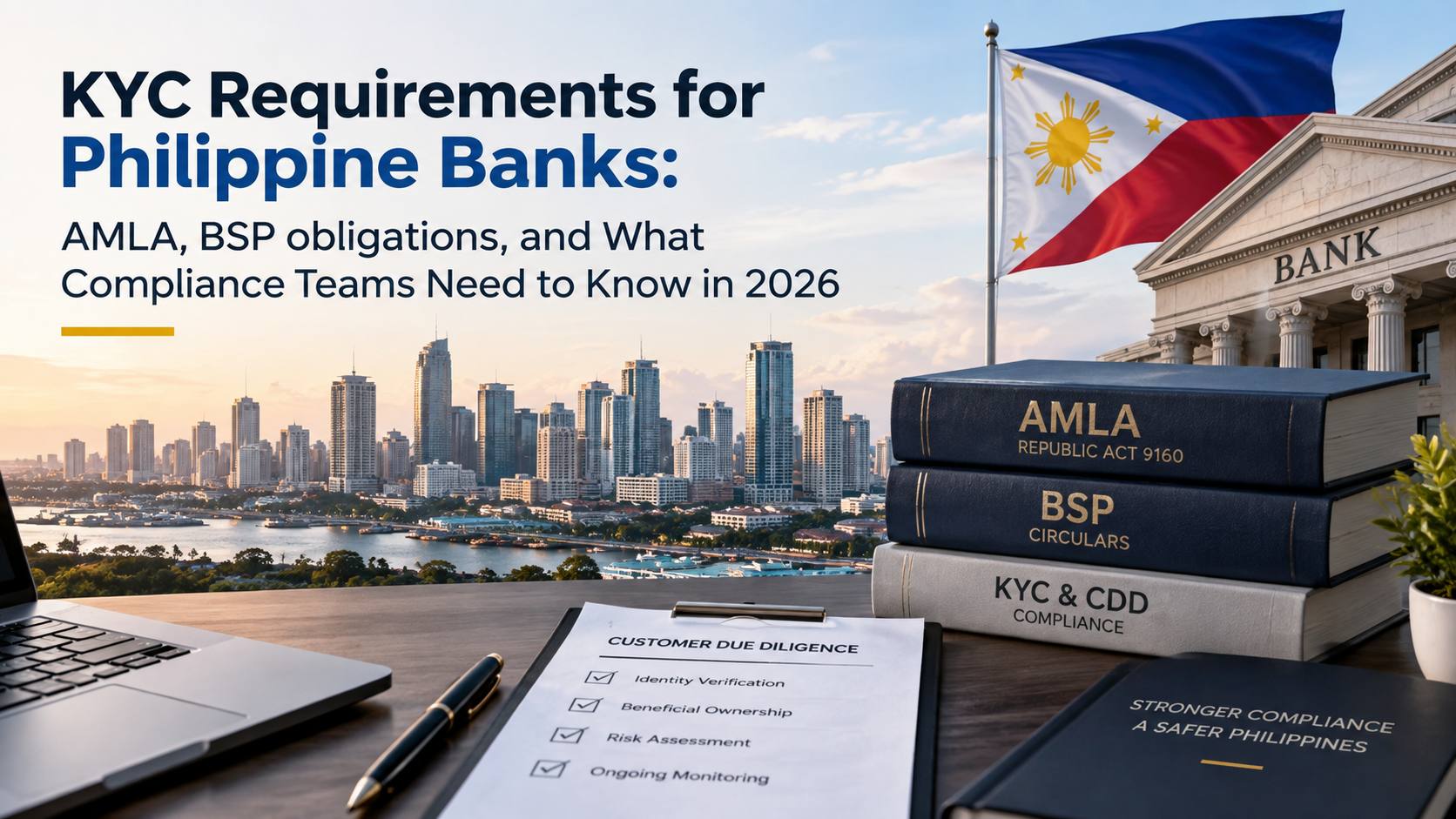
KYC Requirements for Philippine Banks: AMLA, BSP obligations, and What Compliance Teams Need to Know in 2026
The Philippines was removed from the FATF list of jurisdictions under increased monitoring in February 2025. This guide explains current AMLA and BSP KYC/CDD requirements for banks, including beneficial ownership, digital onboarding, reporting and record retention.
KYC Requirements for Philippine Banks: AMLA, BSP obligations, and What Compliance Teams Need to Know in 2026
The Philippines was removed from the FATF list of jurisdictions under increased monitoring in February 2025. This guide explains current AMLA and BSP KYC/CDD requirements for banks, including beneficial ownership, digital onboarding, reporting and record retention.