Blog

Benefits of Tookitaki’s AML Solution for Singapore Financial Firms

Site Logo
Tookitaki
19 May 2023
read
7 min

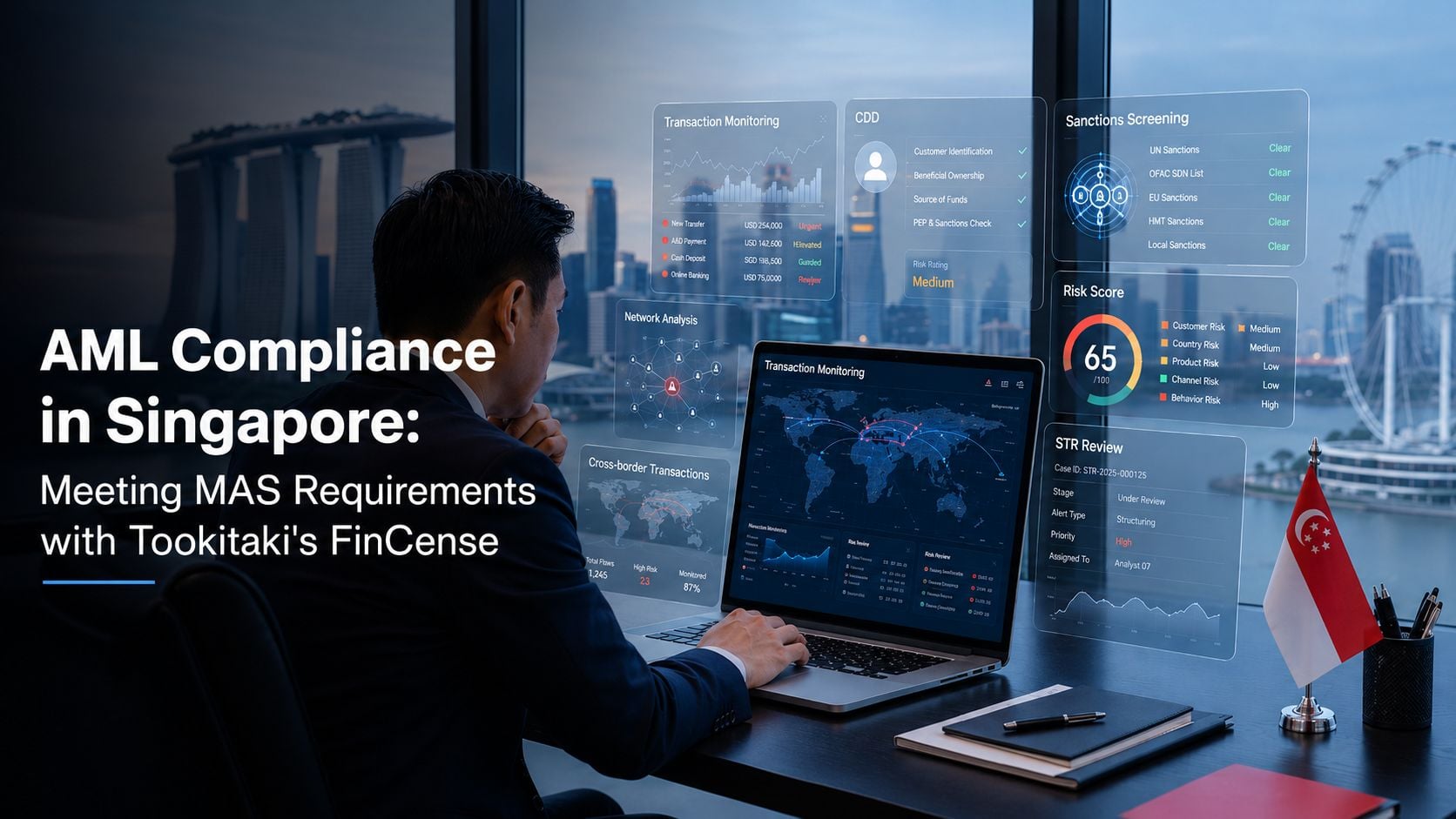
As one of the world's premier financial hubs, Singapore is not immune to the global problem of money laundering. Despite stringent anti-money laundering (AML) regulations, illicit funds continue to flow through financial systems, casting a shadow over the integrity and security of the nation's financial institutions. The sophistication of these illicit activities often outpaces traditional detection methods, necessitating advanced solutions to combat this financial crime effectively. Money laundering erodes trust in financial institutions and threatens Singapore's reputation as a safe and transparent place to do business.

Enter Tookitaki, a leader in the realm of AML compliance software whose mission is to make regulatory compliance seamless and effective. Tookitaki has developed an innovative end-to-end AML compliance solution designed specifically to address the complex and evolving landscape of money laundering. Using advanced technologies, Tookitaki's AML solution empowers financial institutions to detect suspicious activities more precisely, reduce false positives, and ensure stringent regulatory compliance. This blog will delve into the many advantages of Tookitaki’s end-to-end AML compliance solution for Singaporean financial institutions, illustrating how this state-of-the-art solution transforms the fight against money laundering in the region.

Overview of AML Compliance in Singapore

Regulatory Landscape for Financial Institutions

Singapore is known for its robust and comprehensive regulatory framework, primarily overseen by the Monetary Authority of Singapore (MAS). The country's strong commitment to maintaining its reputation as a secure financial hub has led to strict anti-money laundering (AML) and countering the financing of terrorism (CFT) rules and regulations.

All financial institutions operating in Singapore are expected to comply with these regulations, which involve conducting customer due diligence, maintaining accurate records, and reporting suspicious transactions promptly. Financial institutions are also expected to have robust internal policies, procedures, and controls in place to mitigate money laundering and terrorist financing risks. Non-compliance can lead to severe penalties, including substantial fines and loss of business licenses.

AML Compliance Challenges for Singaporean Financial Institutions

Tookitaki’s End-to-End AML Compliance Solution

Tookitaki is a pioneer in the fight against financial crime, leveraging a unique and innovative approach that transcends traditional solutions. The company's Anti-Money Laundering (AML) Suite and Anti-Financial Crime (AFC) Ecosystem work in tandem to address the limitations of siloed systems in combating money laundering. The AFC Ecosystem is a community-based platform that facilitates sharing of information and best practices in the battle against financial crime. 

The AMLS is a software solution deployed at financial institutions. It is an end-to-end operating system that modernises compliance processes for banks and fintechs. The AMLS collaborates with the AFC Ecosystem through federated machine learning. This integration allows the AMLS to extract new typologies from the AFC Ecosystem, executing them at the clients' end to ensure that their AML programs remain cutting-edge.

Tookitaki AMLS and AFC Ecosystem


How Tookitaki’s Solution Differs from Traditional AML Compliance Solutions

Tookitaki's AMLS and AFC Ecosystem differ from traditional AML solutions in two key ways: a unique community-based approach and the innovative use of federated machine learning.Traditional AML solutions often operate in silos, relying on each financial institution's data and expertise to detect and prevent financial crimes. Tookitaki, on the other hand, brings together a community of financial institutions, regulatory bodies, and risk consultants in its AFC Ecosystem, creating a collective knowledge base and promoting collaboration in the fight against financial crime.

This community-based approach allows Tookitaki to develop a comprehensive Typology Repository, a living database of money laundering techniques and schemes that is continuously updated with the latest information from the AFC Ecosystem. This ensures that Tookitaki's clients can access the most current and relevant data to combat money laundering effectively.

Additionally, Tookitaki leverages federated machine learning to bridge the gap between the AFC Ecosystem and the AMLS deployed at financial institutions. Instead of sharing sensitive data, federated learning allows the AMLS to access the latest typologies from the AFC Ecosystem and execute them locally at the client's end. This unique integration enables financial institutions to stay ahead of the curve and maintain cutting-edge AML programs while preserving data privacy and security.

Advantages of Tookitaki’s End-to-End AML Compliance Solution

Efficiency in Identifying Suspicious Transactions

Tookitaki’s end-to-end AML solution greatly enhances the efficiency of identifying suspicious transactions. By leveraging sophisticated machine learning algorithms, the system can analyze vast amounts of transaction data and identify complex patterns and anomalies that may indicate illicit activity. The ability to process and analyze large datasets at high speed enables financial institutions to rapidly detect potential money laundering threats and take appropriate action, giving them a crucial edge in the battle against financial crime.

High-quality Alerts and Improved Accuracy

One of the greatest advantages of Tookitaki’s solution is its ability to significantly reduce false positives, a common issue with traditional AML systems that often leads to unnecessary investigations and drains resources. By using advanced machine learning techniques, Tookitaki’s system improves alerts' accuracy, ensuring compliance teams focus their efforts on genuine risks. This saves valuable time and resources and improves the effectiveness of AML operations.

Enhanced Regulatory Compliance and Risk Management

Tookitaki’s solution aids financial institutions in maintaining robust AML compliance. Its comprehensive approach, which encompasses transaction monitoring, customer risk rating, sanctions screening, and more, ensures that all aspects of AML compliance are covered. Furthermore, the system's machine learning capabilities allow it to adapt to changing regulations and emerging laundering tactics, thereby ensuring that institutions remain compliant amidst evolving regulatory landscapes.

Additionally, Tookitaki’s solution enhances risk management by providing clear, actionable insights into potential risk areas. Its advanced analytics capabilities offer a holistic view of an institution's risk profile, enabling the development of more effective risk management strategies and better decision-making. Ultimately, this can contribute to improved institutional reputation, customer trust, and peace of mind for stakeholders knowing that their institution is well-protected against financial crime.

Case Study: Deploying AMLS for Streamlined Transaction Monitoring in a Next-Gen Digital Bank, Singapore

The Challenge

A next-gen digital bank launching its services in Singapore met with a significant roadblock - timely compliance with the Monetary Authority of Singapore's (MAS) regulations, specifically Anti-Money Laundering (AML) requirements. The task entailed speedy onboarding of new transaction monitoring scenarios and adapting to the ever-changing regulatory landscape and AML patterns.

The Solution

The digital bank took a proactive approach by deploying Tookitaki's Anti-Money Laundering Suite (AMLS) for Transaction Monitoring. This platform enabled building a robust transaction monitoring solution tailored to the bank's needs.

The AMLS was set up to monitor more than 20 typologies, including but not limited to Current Account Savings Account (CASA), lending, payment, and Small and Medium-sized Enterprise (SME) banking. A crucial aspect of the solution was the provision of a streamlined system for investigation and reporting.

The Results

The AMLS Transaction Monitoring platform deployment resulted in comprehensive risk coverage, ensuring 100% compliance with MAS's AML requirements. The new system proved to be extremely efficient, reducing the time to onboard new scenarios by approximately 50%. Moreover, the centralization of case management facilitated faster and more effective investigations, providing an all-around solution to the bank's initial challenges.

How Tookitaki’s Solution Meets the Unique Needs of Singaporean Financial Institutions

Tookitaki understands that each financial institution has its unique needs and challenges. For Singaporean financial institutions, the city-state's status as a major global financial hub presents specific challenges, such as a high volume of cross-border transactions and an elevated risk of exposure to international financial crime.

Tookitaki's solution is designed to tackle these challenges head-on. Its ability to process and analyse vast amounts of data suits institutions handling a high volume of transactions. Moreover, its robust risk rating system and adaptive learning capabilities enable it to identify evolving trends in money laundering, effectively mitigating the risk of exposure to international financial crime.

Additionally, Tookitaki's solution is scalable and flexible, meaning it can be adapted to fit institutions of different sizes and types, from large multinational banks to smaller local banks and non-bank financial institutions. This versatility makes Tookitaki's solution a highly effective tool for a broad range of Singaporean financial institutions.

{{cta-guide}}

Harnessing the Power of Tookitaki's AML Solution: A Final Review and Way Forward

Tookitaki's end-to-end AML Compliance Solution offers a dynamic and robust approach to mitigating the risk of money laundering for financial institutions in Singapore. Its ability to efficiently identify suspicious transactions, reduce false positives, and enhance regulatory compliance and risk management, positions it as an indispensable tool in the modern financial landscape. Customised to align with Singaporean regulations and uniquely tailored to address the challenges faced by Singaporean financial institutions, Tookitaki's solution is a game-changer in the fight against financial crime.

The journey to robust, efficient, and effective AML compliance begins with a single step - embracing innovative solutions. Financial institutions in Singapore are urged to consider the vast benefits of integrating Tookitaki's AML compliance solution into their risk management strategies. Embarking on this transformative journey with Tookitaki not only enhances the integrity and resilience of your institution but also contributes significantly to the broader goal of safeguarding Singapore's financial system. Connect with the Tookitaki team today to learn more about how this cutting-edge solution can revolutionise your approach to AML compliance.

Talk to an Expert

Ready to Streamline Your Anti-Financial Crime Compliance?

Our Thought Leadership Guides

Blogs
18 Dec 2025
6 min
read

Beyond the Ratings: What FATF’s December 2025 Review Means for Malaysia’s AML Playbook

When the Financial Action Task Force publishes a Mutual Evaluation Report, it is not simply assessing the existence of laws and controls. It is examining whether those measures are producing real, demonstrable outcomes across the financial system.

The FATF Mutual Evaluation Report on Malaysia, published in December 2025, sends a clear signal in this regard. Beyond the headline ratings, the evaluation focuses on how effectively money laundering and terrorist financing risks are understood, prioritised, and mitigated in practice.

For banks, fintechs, and compliance teams operating in Malaysia, the real value of the report lies in these signals. They indicate where supervisory scrutiny is likely to intensify and where institutions are expected to demonstrate stronger alignment between risk understanding and operational controls.

Talk to an Expert

What a FATF Mutual Evaluation Is Really Testing

A FATF Mutual Evaluation assesses two interconnected dimensions.

The first is technical compliance, which looks at whether the legal and institutional framework aligns with FATF Recommendations.

The second, and increasingly decisive, dimension is effectiveness. This examines whether authorities and reporting entities are achieving intended outcomes, including timely detection, meaningful disruption of illicit financial activity, and effective use of financial intelligence.

In recent evaluation cycles, FATF has made it clear that strong frameworks alone are insufficient. Supervisors are looking for evidence that risks are properly understood and that controls are proportionate, targeted, and working as intended. Malaysia’s December 2025 evaluation reflects this emphasis throughout.

Why Malaysia’s Evaluation Carries Regional Significance

Malaysia plays a central role in Southeast Asia’s financial system. It supports significant volumes of cross-border trade, remittance flows, and correspondent banking activity, alongside a rapidly growing digital payments and fintech ecosystem.

This positioning increases exposure to complex and evolving money laundering risks. FATF’s evaluation recognises Malaysia’s progress in strengthening its framework, while also highlighting the need for continued focus on risk-based implementation as financial crime becomes more cross-border, more technology-driven, and more fragmented.

For financial institutions, this reinforces the expectation that controls must evolve alongside the risk landscape, not lag behind it.

Key Signals Emerging from the December 2025 Evaluation

Effectiveness Takes Precedence Over Formal Compliance

One of the strongest signals from the evaluation is the emphasis on demonstrable effectiveness.

Institutions are expected to show that:

  • Higher-risk activities are identified and prioritised
  • Detection mechanisms are capable of identifying complex and layered activity
  • Alerts, investigations, and reporting are aligned with real risk exposure
  • Financial intelligence leads to meaningful outcomes

Controls that exist but do not clearly contribute to these outcomes are unlikely to meet supervisory expectations.

Risk Understanding Must Drive Control Design

The evaluation reinforces that a risk-based approach must extend beyond documentation and enterprise risk assessments.

Financial institutions are expected to:

  • Clearly articulate their understanding of inherent and residual risks
  • Translate that understanding into targeted monitoring scenarios
  • Adjust controls as new products, delivery channels, and typologies emerge

Generic or static monitoring frameworks risk being viewed as insufficiently aligned with actual exposure.

Ongoing Focus on Cross-Border and Predicate Offence Risks

Consistent with Malaysia’s role as a regional financial hub, the evaluation places continued emphasis on cross-border risks.

These include exposure to:

  • Trade-based money laundering
  • Proceeds linked to organised crime and corruption
  • Cross-border remittances and correspondent banking relationships

FATF’s focus here signals that institutions must demonstrate not just transaction monitoring coverage, but the ability to interpret cross-border activity in context and identify suspicious patterns that span multiple channels.

Expanding Attention on Non-Bank and Digital Channels

While banks remain central to Malaysia’s AML framework, the evaluation highlights increasing supervisory attention on:

  • Payment institutions
  • Digital platforms
  • Designated non-financial businesses and professions

As risks shift across the financial ecosystem, regulators expect banks and fintechs to understand how their exposures interact with activity outside traditional banking channels.

Practical Implications for Malaysian Financial Institutions

For compliance teams, the December 2025 evaluation translates into several operational realities.

Supervisory Engagement Will Be More Outcome-Focused

Regulators are likely to probe:

  • Whether monitoring scenarios reflect current risk assessments
  • How detection logic has evolved over time
  • What evidence demonstrates that controls are effective

Institutions that cannot clearly explain how their controls address specific risks may face increased scrutiny.

Alert Volumes Will Be Scrutinised for Quality

High alert volumes are no longer viewed as evidence of strong controls.

Supervisors are increasingly focused on:

  • The relevance of alerts generated
  • The quality of investigations
  • The timeliness and usefulness of suspicious transaction reporting

This places pressure on institutions to improve signal quality while managing operational efficiency.

Static Monitoring Frameworks Will Be Challenged

The pace at which money laundering typologies evolve continues to accelerate.

Institutions that rely on:

  • Infrequent scenario reviews
  • Manual rule tuning
  • Disconnected monitoring systems

may struggle to demonstrate timely adaptation to emerging risks highlighted through national risk assessments or supervisory feedback.

ChatGPT Image Dec 18, 2025, 11_10_16 AM

Common Execution Gaps Highlighted Through FATF Evaluations

Across jurisdictions, FATF evaluations frequently expose similar challenges.

Fragmented Monitoring Approaches

Siloed AML and fraud systems limit the ability to see end-to-end money flows and behavioural patterns.

Slow Adaptation to Emerging Typologies

Scenario libraries can lag behind real-world risk evolution, particularly without access to shared intelligence.

Operational Strain from False Positives

Excessive alert volumes reduce investigator effectiveness and dilute regulatory reporting quality.

Explainability and Governance Limitations

Institutions must be able to explain why controls behave as they do. Opaque or poorly governed models raise supervisory concerns.

What FATF Is Signalling About the Next Phase

While not always stated explicitly, the evaluation reflects expectations that institutions will continue to mature their AML capabilities.

Supervisors are looking for evidence of:

  • Continuous improvement
  • Learning over time
  • Strong governance over model changes
  • Clear auditability and explainability

This represents a shift from compliance as a static obligation to compliance as an evolving capability.

Translating Supervisory Expectations into Practice

To meet these expectations, many institutions are adopting modern AML approaches built around scenario-led detection, continuous refinement, and strong governance.

Such approaches enable compliance teams to:

  • Respond more quickly to emerging risks
  • Improve detection quality while managing noise
  • Maintain transparency and regulatory confidence

Platforms that combine shared intelligence, explainable analytics, and unified monitoring across AML and fraud domains align closely with the direction signalled by recent FATF evaluations. Solutions such as Tookitaki’s FinCense illustrate how technology can support these outcomes while maintaining auditability and supervisory trust.

From Compliance to Confidence

The FATF Mutual Evaluation of Malaysia should be viewed as more than a formal assessment. It is a forward-looking signal.

Institutions that treat it purely as a compliance exercise may meet minimum standards. Those that use it as a reference point for strengthening risk understanding and control effectiveness are better positioned for sustained supervisory confidence.

Final Reflection

FATF evaluations increasingly focus on whether systems work in practice, not just whether they exist.

For Malaysian banks and fintechs, the December 2025 review reinforces a clear message. The institutions best prepared for the next supervisory cycle will be those that can demonstrate strong risk understanding, effective controls, and the ability to adapt as threats evolve.

Beyond the Ratings: What FATF’s December 2025 Review Means for Malaysia’s AML Playbook
Blogs
16 Dec 2025
6 min
read

RBNZ vs ASB: Why New Zealand’s AML Expectations Just Changed

In December 2025, the Reserve Bank of New Zealand sent one of its clearest signals yet to the financial sector. By filing civil proceedings against ASB Bank for breaches of the AML/CFT Act, the regulator made it clear that compliance in name alone is no longer sufficient. What matters now is whether anti-money laundering controls actually work in practice.

This was not a case about proven money laundering or terrorism financing. It was about operational effectiveness, timeliness, and accountability. For banks and financial institutions across New Zealand, that distinction is significant.

The action marks a turning point in how AML compliance will be assessed going forward. It reflects a shift from reviewing policies and frameworks to testing whether institutions can demonstrate real-world outcomes under scrutiny.

Talk to an Expert

What Happened and Why It Matters

The Reserve Bank’s filing outlines multiple failures by ASB to meet core obligations under the AML/CFT Act. These included shortcomings in maintaining an effective AML programme, carrying out ongoing customer due diligence, applying enhanced due diligence when required, and reporting suspicious activity within mandated timeframes.

ASB admitted liability across all causes of action and cooperated with the regulator. The Reserve Bank also clarified that it was not alleging ASB knowingly facilitated money laundering or terrorism financing.

This clarification is important. The case is not about intent or criminal involvement. It is about whether an institution’s AML framework operated effectively and consistently over time.

For the wider market, this is a regulatory signal rather than an isolated enforcement action.

What the Reserve Bank Is Really Signalling

Read carefully, the Reserve Bank’s message goes beyond one bank. It reflects a broader recalibration of supervisory expectations.

First, AML effectiveness is now central. Regulators are no longer satisfied with documented programmes alone. Institutions must show that controls detect risk, escalate appropriately, and lead to timely action.

Second, speed matters. Delays in suspicious transaction reporting, extended remediation timelines, and slow responses to emerging risks are viewed as material failures, not operational inconveniences.

Third, governance and accountability are under the spotlight. AML effectiveness is not just a technology issue. It reflects resourcing decisions, prioritisation, escalation pathways, and senior oversight.

This mirrors developments in other comparable jurisdictions, including Australia, Singapore, and the United Kingdom, where regulators are increasingly outcome-focused.

Why This Is a Critical Moment for New Zealand’s Financial System

New Zealand’s AML regime has matured significantly over the past decade. Financial institutions have invested heavily in frameworks, teams, and tools. Yet the RBNZ action highlights a persistent gap between programme design and day-to-day execution.

This matters for several reasons.

Public confidence in the financial system depends not only on preventing crime, but on the belief that institutions can detect and respond to risk quickly and effectively.

From an international perspective, New Zealand’s reputation as a well-regulated financial centre supports correspondent banking relationships and cross-border trust. Supervisory actions like this are closely observed beyond domestic borders.

For compliance teams, the message is clear. Supervisory reviews will increasingly test how AML frameworks perform under real-world conditions, not how well they are documented.

Common AML Gaps Brought to Light

While the specifics of each institution differ, the issues raised by the Reserve Bank are widely recognised across the industry.

One common challenge is fragmented visibility. Customer risk data, transaction monitoring outputs, and historical alerts often sit in separate systems. This makes it difficult to build a unified view of risk or spot patterns over time.

Another challenge is static monitoring logic. Rule-based thresholds that are rarely reviewed struggle to keep pace with evolving typologies, particularly in an environment shaped by real-time payments and digital channels.

Ongoing customer due diligence also remains difficult to operationalise at scale. While onboarding checks are often robust, keeping customer risk profiles current requires continuous recalibration based on behaviour, exposure, and external intelligence.

Finally, reporting delays are frequently driven by workflow inefficiencies. Manual reviews, alert backlogs, and inconsistent escalation criteria can all slow the path from detection to reporting.

Individually, these issues may appear manageable. Together, they undermine AML effectiveness.

Why Traditional AML Models Are Under Strain

Many of these gaps stem from legacy AML operating models.

Traditional architectures rely heavily on static rules, manual investigations, and institution-specific intelligence. This approach struggles in an environment where financial crime is increasingly fast-moving, cross-border, and digitally enabled.

Compliance teams face persistent pressure. Alert volumes remain high, false positives consume investigator capacity, and regulatory expectations continue to rise. When resources are stretched, timeliness becomes harder to maintain.

Explainability is another challenge. Regulators expect institutions to articulate why decisions were made, not just that actions occurred. Systems that operate as black boxes make this difficult.

The result is a growing disconnect between regulatory expectations and operational reality.

The Shift Toward Effectiveness-Led AML

The RBNZ action reflects a broader move toward effectiveness-led AML supervision.

Under this approach, success is measured by outcomes rather than intent. Regulators are asking:

  • Are risks identified early or only after escalation?
  • Are enhanced due diligence triggers applied consistently?
  • Are suspicious activities reported promptly and with sufficient context?
  • Can institutions clearly explain and evidence their decisions?

Answering these questions requires more than incremental improvements. It requires a rethinking of how AML intelligence is sourced, applied, and validated.

ChatGPT Image Dec 16, 2025, 12_04_39 PM

Rethinking AML for the New Zealand Context

Modernising AML does not mean abandoning regulatory principles. It means strengthening how those principles are executed.

One important shift is toward scenario-driven detection. Instead of relying solely on generic thresholds, institutions increasingly use typologies grounded in real-world crime patterns. This aligns monitoring logic more closely with how financial crime actually occurs.

Another shift is toward continuous risk recalibration. Customer risk is not static. Systems that update risk profiles dynamically support more effective ongoing due diligence and reduce downstream escalation issues.

Collaboration also plays a growing role. Financial crime does not respect institutional boundaries. Access to shared intelligence helps institutions stay ahead of emerging threats rather than reacting in isolation.

Finally, transparency matters. Regulators expect clear, auditable logic that explains how risks are assessed and decisions are made.

Where Technology Can Support Better Outcomes

Technology alone does not solve AML challenges, but the right architecture can materially improve effectiveness.

Modern AML platforms increasingly support end-to-end workflows, covering onboarding, screening, transaction monitoring, risk scoring, investigation, and reporting within a connected environment.

Advanced analytics and machine learning can help reduce false positives while improving detection quality, when applied carefully and transparently.

Equally important is the ability to incorporate new intelligence quickly. Systems that can ingest updated typologies without lengthy redevelopment cycles are better suited to evolving risk landscapes.

How Tookitaki Supports This Evolution

Within this shifting environment, Tookitaki supports institutions as they move toward more effective AML outcomes.

FinCense, Tookitaki’s end-to-end compliance platform, is designed to support the full AML lifecycle, from real-time onboarding and screening to transaction monitoring, dynamic risk scoring, investigation, and reporting.

A distinguishing element is its connection to the AFC Ecosystem. This is a collaborative intelligence network where compliance professionals contribute, validate, and refine real-world scenarios based on emerging risks. These scenarios are continuously updated, allowing institutions to benefit from collective insights rather than relying solely on internal discovery.

For New Zealand institutions, this approach supports regulatory priorities around effectiveness, timeliness, and explainability. It strengthens detection quality while maintaining transparency and governance.

Importantly, technology is positioned as an enabler of better outcomes, not a substitute for oversight or accountability.

What Compliance Leaders in New Zealand Should Be Asking Now

In light of the RBNZ action, there are several questions worth asking internally.

  • Can we evidence the effectiveness of our AML controls, not just their existence?
  • How quickly do alerts move from detection to suspicious transaction reporting?
  • Are enhanced due diligence triggers dynamic or static?
  • Do we regularly test monitoring logic against emerging typologies?
  • Could we confidently explain our AML decisions to the regulator tomorrow?

These questions are not about fault-finding. They are about readiness.

Looking Ahead

The Reserve Bank’s action against ASB marks a clear shift in New Zealand’s AML supervisory landscape. Effectiveness, timeliness, and accountability are now firmly in focus.

For financial institutions, this is both a challenge and an opportunity. Those that proactively strengthen their AML operating models will be better positioned to meet regulatory expectations and build long-term trust.

Ultimately, the lesson extends beyond one case. AML compliance in New Zealand is entering a new phase, one where outcomes matter as much as intent. Institutions that adapt early will define the next standard for financial crime prevention in the market.

RBNZ vs ASB: Why New Zealand’s AML Expectations Just Changed
Blogs
12 Dec 2025
7 min
read

AFASA Explained: What the Philippines’ New Anti-Scam Law Really Means for Banks, Fintechs, and Consumers

If there is one thing everyone in the financial industry felt in the last few years, it was the speed at which scams evolved. Fraudsters became smarter, attacks became faster, and stolen funds moved through dozens of accounts in seconds. Consumers were losing life savings. Banks and fintechs were overwhelmed. And regulators had to act.

This is the backdrop behind the Anti-Financial Account Scamming Act (AFASA), Republic Act No. 12010 — the Philippines’ most robust anti-scam law to date. AFASA reshapes how financial institutions detect fraud, protect accounts, coordinate with one another, and respond to disputes.

But while many have written about the law, most explanations feel overly legalistic or too high-level. What institutions really need is a practical, human-friendly breakdown of what AFASA truly means in day-to-day operations.

This blog does exactly that.

Talk to an Expert

What Is AFASA? A Simple Explanation

AFASA exists for a clear purpose: to protect consumers from rapidly evolving digital fraud. The law recognises that as more Filipinos use e-wallets, online banking, and instant payments, scammers have gained more opportunities to exploit vulnerabilities.

Under AFASA, the term financial account is broad. It includes:

  • Bank deposit accounts
  • Credit card and investment accounts
  • E-wallets
  • Any account used to access financial products and services

The law focuses on three main categories of offences:

1. Money Muling

This covers the buying, selling, renting, lending, recruiting, or using of financial accounts to receive or move illicit funds. Many young people and jobseekers were unknowingly lured into mule networks — something AFASA squarely targets.

2. Social Engineering Schemes

From phishing to impersonation, scammers have mastered psychological manipulation. AFASA penalises the use of deception to obtain sensitive information or access accounts.

3. Digital Fraud and Account Tampering

This includes unauthorised transfers, synthetic identities, hacking incidents, and scams executed through electronic communication channels.

In short: AFASA criminalises both the scammer and the infrastructure used for the scam — the accounts, the networks, and the people recruited into them.

Why AFASA Became Necessary

Scams in the Philippines reached a point where traditional fraud rules, old operational processes, and siloed detection systems were not enough.

Scam Trend 1: Social engineering became hyper-personal

Fraudsters learned to sound like bank agents, government officers, delivery riders, HR recruiters — even loved ones. OTP harvesting and remote access scams became common.

Scam Trend 2: Real-time payments made fraud instant

InstaPay and other instant channels made moving money convenient — but also made stolen funds disappear before anyone could react.

Scam Trend 3: Mule networks became organised

Criminal groups built structured pipelines of mule accounts, often recruiting vulnerable populations such as students, OFWs, and low-income households.

Scam Trend 4: E-wallet adoption outpaced awareness

A fast-growing digital economy meant millions of first-time digital users were exposed to sophisticated scams they were not prepared for.

AFASA was designed to break this cycle and create a safer digital financial environment.

New Responsibilities for Banks and Fintechs Under AFASA

AFASA introduces significant changes to how institutions must protect accounts. It is not just a compliance exercise — it demands real operational transformation.

These responsibilities are further detailed in new BSP circulars that accompany the law.

1. Stronger IT Risk Controls

Financial institutions must now implement advanced fraud and cybersecurity controls such as:

  • Device fingerprinting
  • Geolocation monitoring
  • Bot detection
  • Blacklist screening for devices, merchants, and IPs

These measures allow institutions to understand who is accessing accounts, how, and from where — giving them the tools to detect anomalies before fraud occurs.

2. Mandatory Fraud Management Systems (FMS)

Both financial institutions and clearing switch operators (including InstaPay and PESONet) must operate real-time systems that:

  • Flag suspicious activity
  • Block disputed or high-risk transactions
  • Detect behavioural anomalies

This ensures that fraud monitoring is consistent across the payment ecosystem — not just within individual institutions.

3. Prohibition on unsolicited clickable links

Institutions can no longer send clickable links or QR codes to customers unless explicitly initiated by the customer. This directly tackles phishing attacks that relied on spoofed messages.

4. Continuous customer awareness

Banks and fintechs must actively educate customers about:

  • Cyber hygiene
  • Secure account practices
  • Fraud patterns and red flags
  • How to report incidents quickly

Customer education is no longer optional — it is a formally recognised part of fraud prevention.

5. Shared accountability framework

AFASA moves away from the old “blame the victim” mentality. Fraud prevention is now a shared responsibility across:

  • Financial institutions
  • Account owners
  • Third-party service providers

This model recognises that no single party can combat fraud alone.

The Heart of AFASA: Temporary Holding of Funds & Coordinated Verification

Among all the changes introduced by AFASA, this is the one that represents a true paradigm shift.

Previously, once stolen funds were transferred out, recovery was almost impossible. Banks had little authority to stop or hold the movement of funds.

AFASA changes that.

Temporary Holding of Funds

Financial institutions now have the authority — and obligation — to temporarily hold disputed funds for up to 30 days. This includes both the initial hold and any permitted extension. The purpose is simple:
freeze the money before it disappears.

Triggers for Temporary Holding

A hold can be initiated through:

  • A victim’s complaint
  • A suspicious transaction flagged by the institution’s FMS
  • A request from another financial institution

This ensures that action can be taken proactively or reactively depending on the scenario.

Coordinated Verification Process

Once funds are held, institutions must immediately begin a coordinated process that involves:

  • The originating institution
  • Receiving institutions
  • Clearing entities
  • The account owners involved

This process validates whether the transaction was legitimate or fraudulent. It creates a formal, structured, and time-bound mechanism for investigation.

Detailed Transaction Logs Are Now Mandatory

Institutions must maintain comprehensive transaction logs — including device information, authentication events, IP addresses, timestamps, password changes, and more. Logs must be retained for at least five years.

This gives investigators the ability to reconstruct transactions and understand the full context of a disputed transfer.

An Industry-Wide Protocol Must Be Built

AFASA requires the entire industry to co-develop a unified protocol for handling disputed funds and verification. This ensures consistency, promotes collaboration, and reduces delays during investigations.

This is one of the most forward-thinking aspects of the law — and one that will significantly raise the standard of scam response in the country.

BSP’s Expanded Powers Through CAPO

AFASA also strengthens regulatory oversight.

BSP’s Consumer Account Protection Office (CAPO) now has the authority to:

  • Conduct inquiries into financial accounts suspected of involvement in fraud
  • Access financial account information required to investigate prohibited acts
  • Coordinate with law enforcement agencies

Crucially, during these inquiries, bank secrecy laws and the Data Privacy Act do not apply.

This is a major shift that reflects the urgency of combating digital fraud.

Crucially, during these inquiries, bank secrecy laws and the Data Privacy Act do not apply.

This is a major shift that reflects the urgency of combating digital fraud.

ChatGPT Image Dec 11, 2025, 04_47_15 PM

Penalties Under AFASA

AFASA imposes serious penalties to deter both scammers and enablers:

1. Criminal penalties for money muling

Anyone who knowingly participates in using, recruiting, or providing accounts for illicit transfers is liable to face imprisonment and fines.

2. Liability for failing to protect funds

Institutions may be held accountable if they fail to properly execute a temporary hold when a dispute is raised.

3. Penalties for improper holding

Institutions that hold funds without valid reason may also face sanctions.

4. Penalties for malicious reporting

Consumers or individuals who intentionally file false reports may also be punished.

5. Administrative sanctions

Financial institutions that fail to comply with AFASA requirements may be penalised by BSP.

The penalties underscore the seriousness with which the government views scam prevention.

What AFASA Means for Banks and Fintechs: The Practical Reality

Here’s what changes on the ground:

1. Fraud detection becomes real-time — not after-the-fact

Institutions need modern systems that can flag abnormal behaviour within seconds.

2. Dispute response becomes faster

Timeframes are tight, and institutions need streamlined internal workflows.

3. Collaboration is no longer optional

Banks, e-wallets, payment operators, and regulators must work as one system.

4. Operational pressure increases

Fraud teams must handle verification, logging, documentation, and communication under strict timelines.

5. Liability is higher

Institutions may be held responsible for lapses in protection, detection, or response.

6. Technology uplift becomes non-negotiable

Legacy systems will struggle to meet AFASA’s requirements — particularly around logging, behavioural analytics, and real-time detection.

How Tookitaki Helps Institutions Align With AFASA

AFASA sets a higher bar for fraud prevention. Tookitaki’s role as the Trust Layer to Fight Financial Crime helps institutions strengthen their AFASA readiness with intelligent, real-time, and collaborative capabilities.

1. Early detection of money mule networks

Through the AFC Ecosystem’s collective intelligence, institutions can detect mule-like patterns sooner and prevent illicit transactions before they spread across the system.

2. Real-time monitoring aligned with AFASA needs

FinCense’s advanced transaction monitoring engine flags suspicious activity instantly — helping institutions support temporary holding procedures and respond within required timelines.

3. Deep behavioural intelligence and comprehensive logs

Tookitaki provides the contextual understanding needed to trace disputed transfers, reconstruct transaction paths, and support investigative workflows.

4. Agentic AI to accelerate investigations

FinMate, the AI investigation copilot, streamlines case analysis, surfaces insights quickly, and reduces investigation workload — especially crucial when time-sensitive AFASA processes are triggered.

5. Federated learning for privacy-preserving model improvement

Institutions can enhance detection models without sharing raw data, aligning with AFASA’s broader emphasis on secure and responsible handling of financial information.

Together, these capabilities enable banks and fintechs to strengthen fraud defences, modernise their operations, and protect financial accounts with confidence.

Looking Ahead: AFASA’s Long-Term Impact

AFASA is not a one-time regulatory update — it is a structural shift in how the Philippine financial ecosystem handles scams.

Expect to see:

  • More real-time fraud rules and guidance
  • Industry-wide technical standards for dispute management
  • Higher expectations for digital onboarding and authentication
  • Increased coordination between banks, fintechs, and regulators
  • Greater focus on intelligence-sharing and network-level detection

Most importantly, AFASA lays the foundation for a safer, more trusted digital economy — one where consumers have confidence that institutions and regulators can protect them from fast-evolving threats.

Conclusion

AFASA represents a turning point in the Philippines’ fight against financial scams. It transforms how institutions detect fraud, protect accounts, collaborate with others, and support customers. For banks and fintechs, the message is clear: the era of passive fraud response is over.

The institutions that will thrive under AFASA are those that embrace real-time intelligence, strengthen operational resilience, and adopt technology that enables them to stay ahead of criminal innovation.

The Philippines has taken a bold step toward a safer financial system — and now, it’s time for the industry to match that ambition.

AFASA Explained: What the Philippines’ New Anti-Scam Law Really Means for Banks, Fintechs, and Consumers