

Stop It Before It Happens: Why Real Time Fraud Prevention Is Becoming Essential for Banks in Singapore
.svg)
Fraud moves fast. Faster than investigations. Faster than manual reviews. Sometimes faster than banks can react.
In Singapore’s instant payment ecosystem, funds can be transferred, withdrawn, and layered across accounts within seconds. Once the money moves, recovery becomes extremely difficult. This is why financial institutions are shifting from fraud detection to real time fraud prevention.
Instead of identifying fraud after the transaction is complete, real time prevention systems analyse behaviour instantly and stop suspicious activity before funds leave the institution.
For banks and fintechs in Singapore, this shift is no longer optional. It is becoming a critical requirement to protect customers, reduce losses, and maintain regulatory confidence.

What Is Real Time Fraud Prevention?
Real time fraud prevention refers to the ability to detect and stop suspicious transactions before they are completed.
Traditional fraud systems operate after the transaction settles. Alerts are generated later, investigators review them, and recovery efforts begin. By then, funds often move across multiple accounts.
Real time fraud prevention changes this approach. Systems analyse transactions instantly using behavioural analytics, risk scoring, and typology-based detection. If the activity appears suspicious, the transaction can be:
- Blocked
- Delayed
- Flagged for step-up authentication
- Escalated for manual review
- Routed for additional checks
This proactive model prevents fraud instead of simply detecting it.
Why Real Time Fraud Prevention Matters in Singapore
Singapore’s financial ecosystem is highly digitised and interconnected. Customers expect instant payments, seamless onboarding, and frictionless banking experiences.
However, these capabilities also create opportunities for fraud.
Common fraud risks include:
- Account takeover fraud
- Social engineering scams
- Mule account networks
- Instant payment fraud
- Cross-border scam transfers
- Synthetic identity fraud
These schemes rely on speed. Fraudsters attempt to move funds quickly before detection.
Real time fraud prevention helps banks intervene immediately and stop suspicious activity before funds disappear.
Detection vs Prevention: The Critical Difference
Fraud detection identifies suspicious activity after it occurs. Fraud prevention stops it before completion.
This distinction has major operational implications.
Detection-based systems generate alerts that require investigation. Prevention-based systems intervene instantly.
With detection:
- Funds may already be withdrawn
- Recovery becomes difficult
- Customer losses increase
- Investigations take longer
With prevention:
- Suspicious transactions are blocked
- Funds remain protected
- Customer impact is reduced
- Investigative workload decreases
Real time fraud prevention reduces both financial and operational risk.
How Real Time Fraud Prevention Works
Real time fraud prevention systems evaluate multiple signals simultaneously.
These signals include:
Transaction behaviour
Customer risk profile
Device and channel data
Transaction velocity
Geographic indicators
Network relationships
Historical behaviour patterns
These signals feed into risk scoring models that determine whether a transaction should proceed.
If risk exceeds thresholds, the system intervenes automatically.
This entire process occurs within milliseconds.
Key Capabilities of Real Time Fraud Prevention Systems
Behavioural Analytics
Behavioural analytics examines how customers normally transact.
If behaviour changes suddenly, systems detect anomalies.
Examples include:
- Unusual transfer amounts
- New beneficiaries
- Rapid transaction sequences
- Sudden geographic changes
Behavioural analytics improves detection accuracy while reducing false positives.
Velocity Monitoring
Fraud often involves rapid transactions.
Velocity monitoring identifies:
- Multiple transfers in short timeframes
- Rapid withdrawals after deposits
- Fast movement across accounts
These patterns indicate potential fraud or laundering activity.
Network Risk Detection
Fraud networks often use multiple linked accounts.
Network analytics identify:
- Shared beneficiaries
- Mule account structures
- Circular transaction flows
- Linked customer behaviour
This helps detect organised fraud schemes.
Real Time Risk Scoring
Real time risk scoring evaluates transaction risk instantly.
Risk scores are calculated using:
- Customer risk rating
- Transaction behaviour
- Historical activity
- Typology indicators
High risk transactions trigger intervention.
Step-Up Authentication
Instead of blocking transactions immediately, systems may require additional verification.
Examples include:
- One-time passcodes
- Biometric verification
- Confirmation prompts
- Out-of-band authentication
This reduces friction for legitimate customers.

Challenges in Implementing Real Time Fraud Prevention
While real time prevention offers clear benefits, implementation can be complex.
Financial institutions must address several challenges.
Latency requirements are strict. Systems must evaluate transactions in milliseconds.
False positives must be minimised. Excessive blocking disrupts customer experience.
Integration with payment systems is required. Real time decisions must occur within transaction flows.
Scalability is critical. Banks must handle high transaction volumes without delays.
Modern AI-driven platforms address these challenges.
The Convergence of Fraud and AML Monitoring
Fraud and money laundering are increasingly connected.
Fraud proceeds are often laundered immediately through mule accounts and layered transactions.
Real time fraud prevention systems therefore play a dual role:
Stopping fraud
Preventing laundering of fraud proceeds
Integrated fraud and AML platforms provide stronger protection.
By combining transaction monitoring, typology detection, and network analytics, institutions can detect both fraud and laundering behaviour.
How Tookitaki FinCense Enables Real Time Fraud Prevention
Tookitaki FinCense is designed to support real time fraud prevention through an AI-native, typology-driven detection architecture.
The platform analyses transactions in real time using behavioural analytics, customer risk scoring, and collaborative intelligence derived from the AFC Ecosystem. This allows institutions to identify suspicious patterns instantly.
FinCense incorporates typology-driven detection models built from real financial crime scenarios. These typologies enable the platform to detect complex fraud behaviour such as mule account activity, rapid pass-through transactions, and coordinated fraud networks.
Machine learning models enhance detection accuracy by identifying anomalies and reducing false positives. Real time risk scoring ensures high-risk transactions are flagged or blocked before completion.
FinCense also integrates seamlessly with case management workflows, allowing investigators to review flagged transactions and escalate suspicious activity efficiently. This creates an end-to-end fraud prevention framework that combines detection, prevention, and investigation within a single platform.
By combining real time analytics, collaborative intelligence, and AI-driven risk scoring, FinCense enables banks to move from reactive detection to proactive fraud prevention.
Benefits of Real Time Fraud Prevention
Financial institutions adopting real time fraud prevention experience several benefits.
Reduced financial losses
Fraud is stopped before funds leave accounts.
Improved customer trust
Customers feel protected from scams.
Lower operational burden
Fewer alerts require investigation.
Faster response to threats
New fraud patterns are detected quickly.
Stronger regulatory confidence
Institutions demonstrate proactive controls.
These benefits make real time prevention a strategic investment.
The Future of Real Time Fraud Prevention
Fraud techniques continue to evolve.
Future fraud prevention systems will incorporate:
AI-driven predictive analytics
Cross-channel behavioural monitoring
Device intelligence integration
Collaborative intelligence sharing
Adaptive typology detection
Real time prevention will become standard across banking systems.
Institutions that adopt these capabilities early will be better prepared for emerging risks.
Conclusion
Fraud today moves at digital speed.
Detecting suspicious activity after transactions settle is no longer sufficient. Real time fraud prevention allows financial institutions to stop fraud before funds move across networks.
By combining behavioural analytics, network detection, and AI-driven risk scoring, modern platforms enable proactive fraud defence.
For banks in Singapore, real time fraud prevention is becoming essential. It protects customers, reduces losses, and strengthens trust in the financial system.
As fraud continues to evolve, institutions that invest in real time prevention will stay one step ahead.
FAQs: Real Time Fraud Prevention
What is real time fraud prevention?
Real time fraud prevention detects and stops suspicious transactions before they are completed. Systems analyse behaviour instantly and block high-risk activity.
Why is real time fraud prevention important for banks?
Fraudsters move funds quickly. Real time prevention allows banks to stop suspicious transactions before money leaves accounts.
How does real time fraud prevention work?
Systems analyse transaction behaviour, customer risk, and network relationships instantly. High-risk transactions are blocked or flagged.
What technologies enable real time fraud prevention?
Key technologies include AI, machine learning, behavioural analytics, network analytics, and real time risk scoring.
What is the difference between fraud detection and fraud prevention?
Detection identifies suspicious activity after transactions occur. Prevention stops transactions before completion.
Can real time fraud prevention reduce false positives?
Yes. AI-driven models prioritise high-risk activity and reduce unnecessary alerts.
How does Tookitaki support real time fraud prevention?
Tookitaki FinCense uses AI-driven typology detection, real time analytics, and collaborative intelligence to identify and stop fraud instantly.
Experience the most intelligent AML and fraud prevention platform
Experience the most intelligent AML and fraud prevention platform
Experience the most intelligent AML and fraud prevention platform
Top AML Scenarios in ASEAN
The Role of AML Software in Compliance
The Role of AML Software in Compliance
Talk to an Expert
Our Thought Leadership Guides


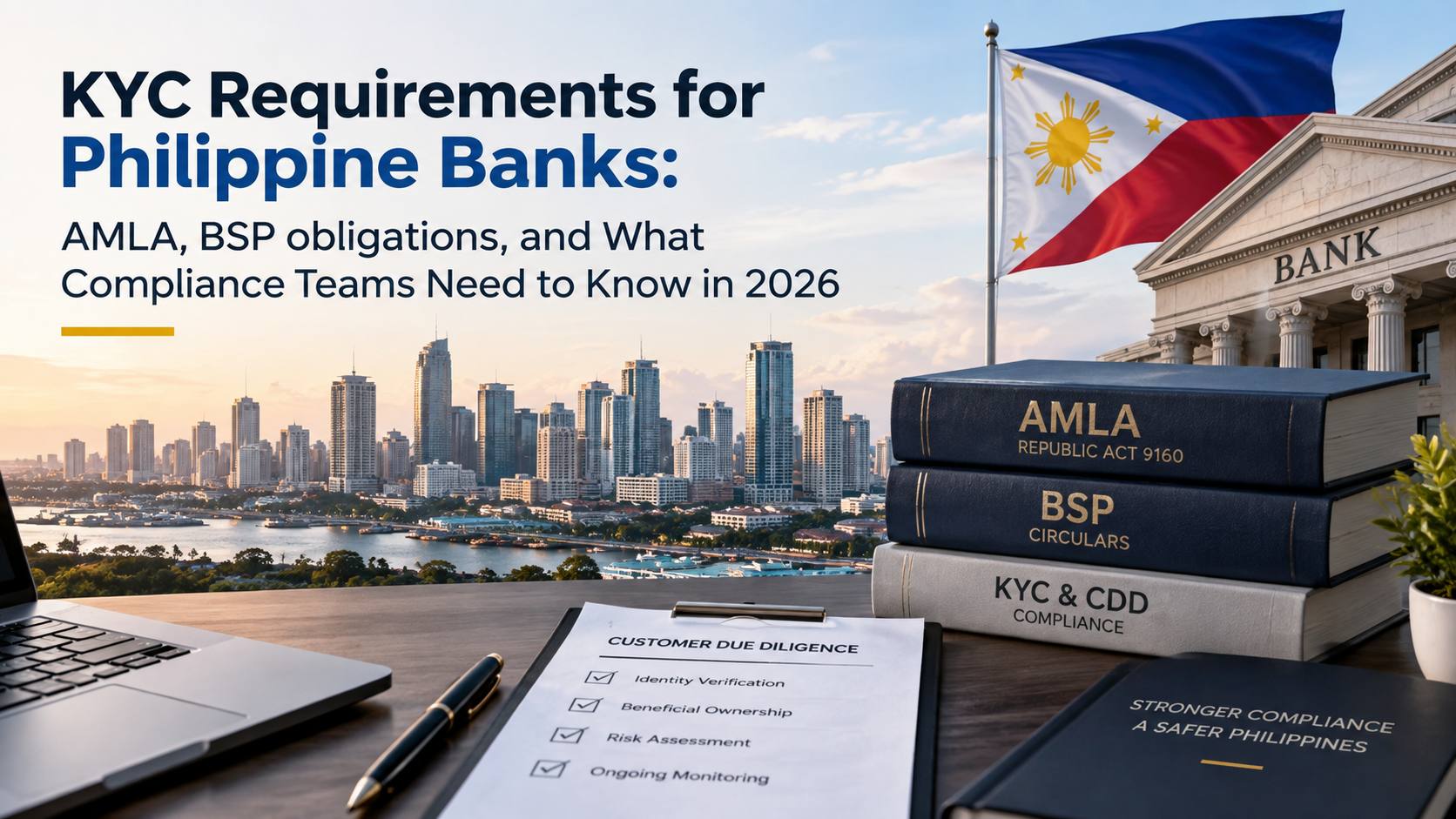
KYC Requirements for Philippine Banks: AMLA, BSP obligations, and What Compliance Teams Need to Know in 2026
The Philippines was removed from the FATF list of jurisdictions under increased monitoring in February 2025. This guide explains current AMLA and BSP KYC/CDD requirements for banks, including beneficial ownership, digital onboarding, reporting and record retention.
KYC Requirements for Philippine Banks: AMLA, BSP obligations, and What Compliance Teams Need to Know in 2026
The Philippines was removed from the FATF list of jurisdictions under increased monitoring in February 2025. This guide explains current AMLA and BSP KYC/CDD requirements for banks, including beneficial ownership, digital onboarding, reporting and record retention.