

From Alert to Filing: Why STR/SAR Reporting Software Is Critical for Modern AML Compliance
.svg)
Detecting suspicious activity is important. Reporting it correctly is what regulators actually measure.
Introduction
Every AML alert eventually leads to a decision.
Investigate further. Close as false positive. Or escalate and report.
For financial institutions, the final step in this process carries significant regulatory weight. Suspicious Transaction Reports and Suspicious Activity Reports form the backbone of financial crime intelligence shared with regulators and law enforcement.
In Australia, this responsibility requires institutions to identify suspicious behaviour, document findings, and submit accurate reports within defined timelines. The challenge is not just identifying risk. It is ensuring that reporting is consistent, complete, and defensible.
Manual reporting processes create bottlenecks. Investigators compile information from multiple systems. Narrative writing becomes inconsistent. Approval workflows slow down submissions. Documentation gaps increase compliance risk.
This is where STR/SAR reporting software becomes essential.
Modern reporting platforms streamline the transition from investigation to regulatory filing, ensuring accuracy, consistency, and auditability across the reporting lifecycle.
What Is STR/SAR Reporting Software
STR/SAR reporting software is a specialised platform that helps financial institutions prepare, review, approve, and submit suspicious activity reports to regulators.
The software typically supports:
- Case-to-report conversion
- Structured data capture
- Narrative generation support
- Approval workflows
- Audit trail management
- Submission tracking
The goal is to reduce manual effort while ensuring regulatory compliance.
Why Manual Reporting Creates Risk
Many institutions still rely on manual reporting processes.
Investigators often:
- Copy information from multiple systems
- Draft narratives manually
- Track approvals through emails
- Maintain records in spreadsheets
- Submit reports using separate tools
These processes introduce several risks.
Inconsistent narratives
Different investigators may describe similar scenarios differently.
Missing information
Manual data collection increases the risk of incomplete reports.
Delayed submissions
Approval bottlenecks slow down reporting timelines.
Limited auditability
Tracking reporting decisions becomes difficult.
STR/SAR reporting software addresses these challenges through automation and structured workflows.
Key Capabilities of STR/SAR Reporting Software
Automated Case-to-Report Conversion
Modern platforms allow investigators to convert cases directly into STR or SAR reports.
This eliminates manual data transfer and ensures consistency.
The system automatically pulls:
- Customer details
- Transaction data
- Risk indicators
- Investigation notes
This accelerates report preparation.
Structured Data Capture
Regulatory reports require specific data fields.
STR/SAR reporting software provides structured templates that ensure all required information is captured.
This improves:
- Data completeness
- Report accuracy
- Submission consistency
Narrative Assistance
Writing clear and concise narratives is one of the most time-consuming tasks in reporting.
Modern reporting platforms support narrative creation by:
- Suggesting structured formats
- Highlighting key facts
- Summarising case information
This helps investigators produce higher-quality reports.
Workflow and Approval Management
STR/SAR reporting often requires multiple levels of review.
Reporting software enables:
- Automated approval workflows
- Role-based access controls
- Review tracking
- Escalation management
This ensures governance and accountability.
Audit Trails and Documentation
Regulators expect institutions to demonstrate how reporting decisions were made.
Reporting platforms maintain:
- Complete audit trails
- Report version history
- Approval logs
- Investigation documentation
This supports regulatory reviews and internal audits.
Improving Reporting Efficiency
STR/SAR reporting software significantly reduces manual effort.
Benefits include:
- Faster report preparation
- Reduced administrative work
- Improved consistency
- Better collaboration between teams
This allows investigators to focus on analysis rather than documentation.
Supporting Regulatory Timelines
Financial institutions must submit suspicious activity reports within specific timeframes.
Delays may increase regulatory risk.
Reporting software helps institutions:
- Track reporting deadlines
- Prioritise urgent cases
- Monitor submission status
- Maintain reporting logs
Automation helps ensure timelines are met consistently.
Integration with AML Workflows
STR/SAR reporting software works best when integrated with detection and investigation systems.
Integration allows:
- Automatic population of report data
- Seamless case escalation
- Unified documentation
- Faster decision-making
This creates a continuous workflow from alert to report submission.
Enhancing Report Quality
High-quality reports are valuable for regulators and law enforcement.
STR/SAR reporting software improves quality by:
- Standardising report structure
- Highlighting key risk indicators
- Ensuring consistent narratives
- Eliminating duplicate information
Better reports improve regulatory confidence.

Where Tookitaki Fits
Tookitaki’s FinCense platform integrates STR and SAR reporting within its end-to-end AML workflow.
The platform enables:
- Seamless conversion of investigation cases into regulatory reports
- Automated population of customer and transaction details
- Structured narrative generation through Smart Disposition
- Configurable approval workflows
- Complete audit trail and documentation
By connecting detection, investigation, and reporting within a single platform, FinCense reduces manual effort and improves reporting accuracy.
The Shift Toward Automated Reporting
As alert volumes increase, manual reporting processes become unsustainable.
Financial institutions are moving toward automated reporting frameworks that:
- Reduce investigator workload
- Improve report quality
- Ensure regulatory consistency
- Accelerate submission timelines
STR/SAR reporting software plays a central role in this transformation.
Future of STR/SAR Reporting
Reporting workflows will continue to evolve with technology.
Future capabilities may include:
- AI-assisted narrative generation
- Real-time reporting triggers
- Automated regulatory format mapping
- Advanced analytics on reporting trends
These innovations will further streamline reporting processes.
Conclusion
Suspicious activity reporting is one of the most critical components of AML compliance.
Financial institutions must ensure that reports are accurate, complete, and submitted on time.
STR/SAR reporting software transforms manual reporting processes into structured, automated workflows that improve efficiency and reduce compliance risk.
By integrating detection, investigation, and reporting, modern platforms help institutions manage reporting obligations at scale while maintaining regulatory confidence.
In today’s compliance environment, reporting is not just an administrative step. It is a core capability that defines AML effectiveness.
Experience the most intelligent AML and fraud prevention platform
Experience the most intelligent AML and fraud prevention platform
Experience the most intelligent AML and fraud prevention platform
Top AML Scenarios in ASEAN
The Role of AML Software in Compliance
The Role of AML Software in Compliance
Talk to an Expert
Our Thought Leadership Guides


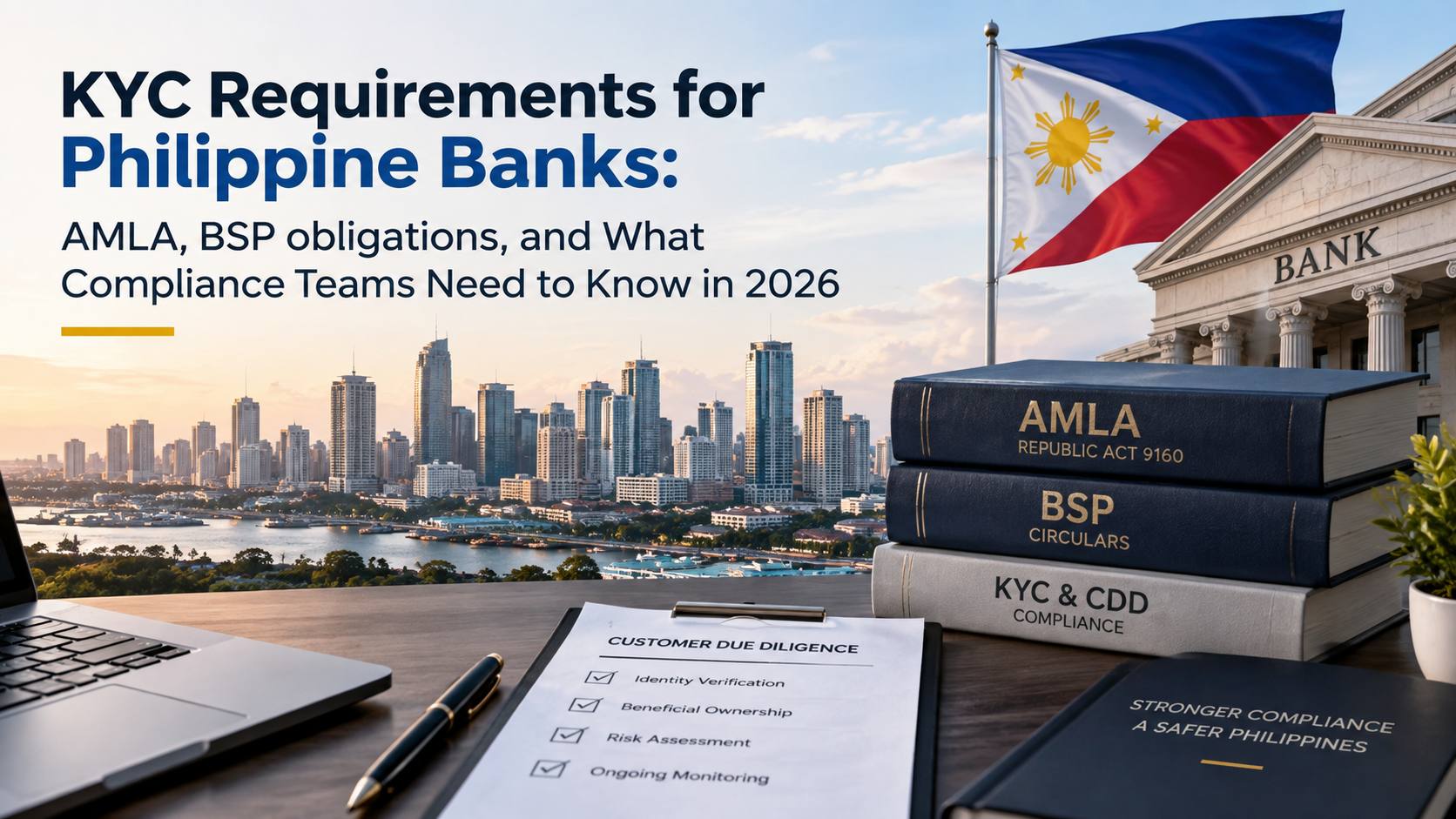
KYC Requirements for Philippine Banks: AMLA, BSP obligations, and What Compliance Teams Need to Know in 2026
The Philippines was removed from the FATF list of jurisdictions under increased monitoring in February 2025. This guide explains current AMLA and BSP KYC/CDD requirements for banks, including beneficial ownership, digital onboarding, reporting and record retention.
KYC Requirements for Philippine Banks: AMLA, BSP obligations, and What Compliance Teams Need to Know in 2026
The Philippines was removed from the FATF list of jurisdictions under increased monitoring in February 2025. This guide explains current AMLA and BSP KYC/CDD requirements for banks, including beneficial ownership, digital onboarding, reporting and record retention.