

Building a Stronger Defence: How an Anti-Fraud System Protects Singapore’s Financial Institutions
.svg)
Fraud is evolving fast—and your defences need to evolve faster.
Singapore’s financial sector, long considered a benchmark for trust and security, is facing a new wave of fraud threats. As scammers become more coordinated, tech-savvy, and cross-border in nature, the old ways of fighting fraud no longer suffice. It’s time to talk about the real solution: a modern Anti-Fraud System.
In this blog, we explore what makes an effective anti-fraud system, how it works, and why it’s essential for financial institutions operating in Singapore.

What is an Anti-Fraud System?
An anti-fraud system is a set of technologies, processes, and intelligence models that work together to detect and prevent fraudulent activities in real time. It goes beyond basic rule-based monitoring and includes:
- Behavioural analytics
- Machine learning and anomaly detection
- Real-time alerts and case management
- Integration with external risk databases
This system forms the first line of defence for banks, fintechs, and payment platforms—helping them identify fraud before it causes financial loss or reputational damage.
The Fraud Landscape in Singapore: Why This Matters
Singapore’s position as a global financial hub makes it an attractive target for fraudsters. According to the latest police reports:
- Over S$1.3 billion was lost to scams between 2021 and 2024
- Investment scams, phishing, and business email compromise (BEC) are among the top fraud types
- Mule accounts and cross-border remittance laundering continue to rise
This changing landscape demands real-time protection. Relying solely on manual reviews or post-fraud investigations can leave institutions exposed.
Core Features of a Modern Anti-Fraud System
An effective anti-fraud solution is not just a dashboard with alerts. It’s a layered, intelligent system designed to evolve with the threat. Here are its key components:
1. Real-Time Transaction Monitoring
Detect suspicious patterns as they happen—such as unusual velocity, destination mismatches, or abnormal timings.
2. Behavioural Analytics
Understand baseline customer behaviours and flag deviations, even if the transaction appears normal on the surface.
3. Multi-Channel Integration
Monitor fraud signals across payments, digital banking, mobile apps, ATMs, and even offline touchpoints.
4. Risk Scoring and Decision Engines
Assign dynamic risk scores based on real-time data, and automate low-risk approvals or high-risk interventions.
5. Case Management Workflows
Enable investigation teams to prioritise, narrate, and report fraud cases efficiently within a unified system.
6. Continuous Learning via AI
Use feedback loops to improve detection models and adapt to new fraud techniques over time.
Key Fraud Types a Strong System Should Catch
- Account Takeover (ATO): Where fraudsters use stolen credentials or biometrics to hijack accounts
- Authorised Push Payment Fraud (APP): Victims are socially engineered into sending money willingly
- Synthetic Identity Fraud: Fake profiles created with a mix of real and false data to open accounts
- Money Mule Activity: Rapid in-and-out fund movement across multiple accounts, often linked to scams
- Payment Diversion & Invoice Fraud: Common in B2B transactions and cross-border settlements
Compliance and Fraud: Two Sides of the Same Coin
While AML and fraud prevention often sit in different departments, modern anti-fraud systems blur the lines. For example:
- A mule account used in a scam can also be part of a money laundering ring
- Layering via utility payments may signal both laundering and unauthorised funds
Singapore’s regulators—including MAS and the Commercial Affairs Department—expect institutions to implement robust controls across both fraud and AML risk. That means your system should support integrated oversight.
Challenges Faced by Financial Institutions
Implementing a strong anti-fraud system is not without its hurdles:
- High false positives overwhelm investigation teams
- Siloed systems between fraud, compliance, and customer experience teams
- Lack of localised threat data, especially for emerging typologies
- Legacy infrastructure that can't scale with real-time needs
To solve these challenges, the solution must be both intelligent and adaptable.
How Tookitaki Helps: A Next-Gen Anti-Fraud System for Singapore
Tookitaki’s FinCense platform is a purpose-built compliance suite that brings AML and fraud detection under one roof. For anti-fraud operations, it offers:
- Real-time monitoring across all payment types
- Federated learning to learn from shared risk signals across banks without sharing sensitive data
- Scenario-based typologies curated from the AFC Ecosystem to cover mule networks, scam layering, and synthetic identities
- AI-powered Smart Disposition Engine that reduces investigation time and false alerts
Singapore institutions already using Tookitaki report:
- 3.5x analyst productivity improvement
- 72% reduction in false positives
- Faster detection of new scam types through community-driven scenarios

Five Best Practices to Strengthen Your Anti-Fraud System
- Localise Detection Models: Use region-specific typologies and scam techniques
- Integrate AML and Fraud: Build a shared layer of intelligence
- Automate Where Possible: Focus your analysts on complex cases
- Use Explainable AI: Ensure regulators and investigators can audit decisions
- Collaborate with Ecosystems: Tap into shared intelligence from peers and industry networks
Final Thoughts: Smarter, Not Just Faster
In the race against fraud, speed matters. But intelligence matters more.
A modern anti-fraud system helps Singapore’s financial institutions move from reactive to proactive. It doesn’t just flag suspicious transactions—it understands context, learns from patterns, and works collaboratively across departments.
The result? Stronger trust. Lower losses. And a future-proof defence.
Experience the most intelligent AML and fraud prevention platform
Experience the most intelligent AML and fraud prevention platform
Experience the most intelligent AML and fraud prevention platform
Top AML Scenarios in ASEAN
The Role of AML Software in Compliance
The Role of AML Software in Compliance
Talk to an Expert
Our Thought Leadership Guides


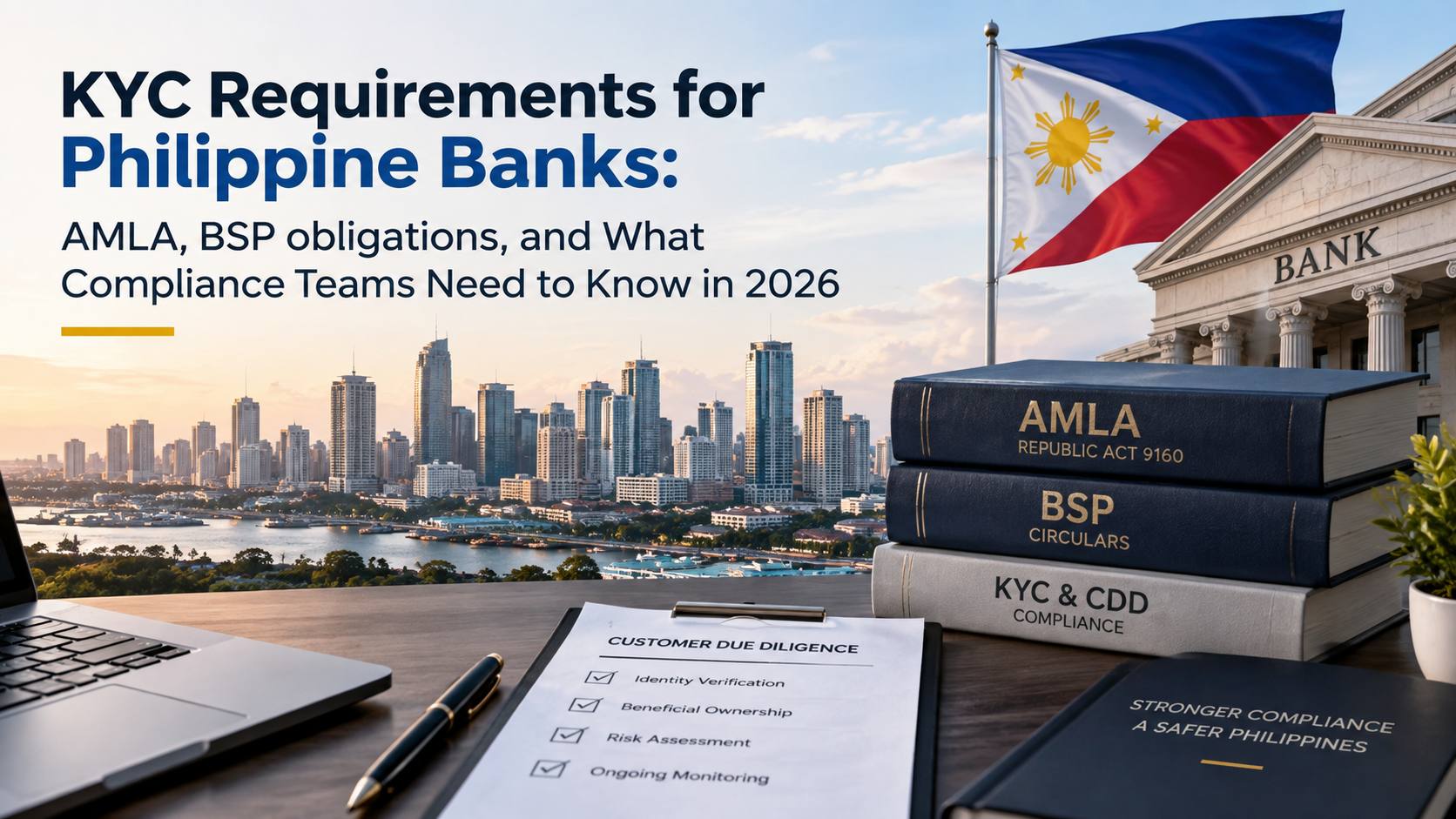
KYC Requirements for Philippine Banks: AMLA, BSP obligations, and What Compliance Teams Need to Know in 2026
The Philippines was removed from the FATF list of jurisdictions under increased monitoring in February 2025. This guide explains current AMLA and BSP KYC/CDD requirements for banks, including beneficial ownership, digital onboarding, reporting and record retention.
KYC Requirements for Philippine Banks: AMLA, BSP obligations, and What Compliance Teams Need to Know in 2026
The Philippines was removed from the FATF list of jurisdictions under increased monitoring in February 2025. This guide explains current AMLA and BSP KYC/CDD requirements for banks, including beneficial ownership, digital onboarding, reporting and record retention.