

AML Transaction Monitoring Software: The Engine Powering Smarter Compliance in Singapore
.svg)
Money moves fast in Singapore. Your monitoring software must move faster.
In one of the world’s most sophisticated financial hubs, transaction monitoring is no longer just a compliance obligation. It is the core engine that protects banks from regulatory exposure, reputational damage, and operational risk. As financial crime becomes more complex and cross-border flows intensify, AML transaction monitoring software has evolved from a rule-based alert generator into an intelligent, real-time decisioning platform.
For banks in Singapore, choosing the right AML transaction monitoring software is not about ticking regulatory boxes. It is about building resilience in a fast-moving, high-risk environment.

Why Transaction Monitoring Is the Heart of AML Compliance
At its core, AML transaction monitoring software analyses customer transactions to identify patterns that may indicate money laundering, terrorist financing, fraud, or other financial crime.
In Singapore, this function is especially critical because:
- The country is a global wealth management hub
- Cross-border payments are frequent and high in value
- Digital banking adoption is widespread
- Instant payment systems such as FAST and PayNow reduce intervention time
The Monetary Authority of Singapore requires financial institutions to adopt a risk-based approach to AML controls. Transaction monitoring is central to this framework. If onboarding is the front door, monitoring is the surveillance system that operates long after the customer relationship begins.
The Shift from Rules to Intelligence
Traditional AML transaction monitoring software relied heavily on static rules:
- Transactions above a certain threshold
- Sudden spikes in activity
- Transfers to high-risk jurisdictions
While these rules still matter, they are no longer sufficient.
Modern financial crime is structured, layered, and often designed to stay just below reporting thresholds. Criminal networks use mule accounts, shell entities, QR-based payment flows, and digital wallets to disguise activity. Static rules generate excessive false positives while missing nuanced behaviour.
Today’s AML transaction monitoring software must go beyond rules. It must understand context.
What Modern AML Transaction Monitoring Software Must Deliver
For banks operating in Singapore’s regulatory environment, modern AML transaction monitoring software must provide five critical capabilities.
1. Real-Time and Near Real-Time Processing
In a world of instant payments, monitoring cannot operate on a 24-hour lag. Systems must evaluate transactions as they occur, assigning risk scores instantly and enabling timely intervention when required.
This is especially important for:
- Rapid pass-through transactions typical of mule accounts
- Cross-border layering through multiple small transfers
- Suspicious activity triggered by account takeover
Real-time capabilities significantly reduce the window in which illicit funds can be dissipated.
2. Scenario-Based Detection
The most effective systems are built around typologies, not just thresholds.
Scenario-based detection allows institutions to model real-world money laundering techniques, such as:
- Round-tripping via related corporate entities
- Dormant account reactivation followed by rapid outward transfers
- Utility payment platforms used for layering
- Structured transactions designed to avoid STR thresholds
By encoding these scenarios into the monitoring engine, banks can detect coordinated behaviour rather than isolated anomalies.
3. Behavioural Risk Profiling
No two customers behave the same way. A high-net-worth individual moving large sums may be normal. A retail account suddenly transferring large amounts internationally may not be.
Advanced AML transaction monitoring software builds behavioural baselines and flags deviations such as:
- Unusual transaction timing
- Geographic inconsistencies
- Sudden velocity increases
- New counterparty relationships
This contextual understanding dramatically reduces noise and enhances precision.
4. Continuous Learning and Adaptability
Financial crime evolves quickly. A monitoring system must adapt just as fast.
Software that supports:
- Continuous scenario updates
- Federated learning models
- Simulation and threshold tuning
- Rapid deployment of new detection logic
gives banks the flexibility to respond to emerging risks without lengthy redevelopment cycles.
5. Explainability and Regulatory Transparency
Singapore’s regulators expect clarity. If a transaction is flagged, compliance teams must be able to explain why.
Effective AML transaction monitoring software provides:
- Clear audit trails
- Transparent risk scoring logic
- Alert narratives for investigators
- Full documentation for regulatory inspections
AI-driven systems must remain explainable. Black-box decisioning is not regulator-friendly.
The Operational Challenge: False Positives and Alert Fatigue
One of the biggest pain points for banks is the volume of alerts.
Excessive false positives:
- Overwhelm compliance teams
- Increase operational costs
- Slow down investigations
- Create regulatory bottlenecks
Singapore’s banks are under pressure not just to detect risk, but to do so efficiently.
Modern AML transaction monitoring software must optimise alert quality, not just quantity. Intelligent prioritisation, contextual scoring, and scenario refinement are key to reducing unnecessary workload.
Singapore-Specific Risk Considerations
AML risks in Singapore have unique characteristics.
Cross-Border Wealth Flows
Singapore’s role as a regional financial centre exposes banks to high-risk jurisdictions and complex ownership structures. Monitoring must account for multi-layered corporate relationships and offshore activity.
Corporate Services Exposure
Shell companies and nominee arrangements can obscure beneficial ownership. Monitoring software must connect transactional patterns with corporate structure intelligence.
Digital Payments and Fintech Integration
With strong fintech adoption, transactions may pass through digital wallets, QR codes, and embedded finance platforms. Monitoring systems must ingest data from diverse channels.
High Regulatory Expectations
MAS inspections increasingly assess whether systems are effective, not just implemented. Banks must demonstrate outcome-based monitoring performance.

Evaluating AML Transaction Monitoring Software: What to Ask
When assessing vendors, Singaporean banks should consider:
- Can the system process transactions in real time?
- Does it support scenario-based detection aligned with local typologies?
- How does it reduce false positives?
- Is the AI explainable and regulator-ready?
- Can compliance teams adjust thresholds without vendor dependency?
- Does it integrate with case management and reporting workflows?
Technology is only as effective as its adaptability and usability.
Tookitaki’s Approach to AML Transaction Monitoring
Tookitaki’s FinCense platform represents a new generation of AML transaction monitoring software built specifically for high-growth markets like Singapore.
Key differentiators include:
Scenario-Driven Architecture
FinCense leverages a library of real-world typologies contributed by the AFC Ecosystem. This ensures that detection logic reflects emerging patterns, not outdated assumptions.
Federated Learning
Instead of training models in isolation, FinCense incorporates anonymised intelligence from across jurisdictions, allowing banks to benefit from collective experience without sharing sensitive data.
Real-Time Risk Scoring
Transactions are evaluated instantly, combining behavioural signals, contextual data, and typology logic to generate accurate risk scores.
Smart Disposition and Case Management
Alerts are not just generated. They are prioritised, explained, and routed efficiently to investigators with built-in narratives and supporting context.
Explainable AI
FinCense ensures that every alert can be justified, audited, and understood, aligning with MAS expectations for governance and transparency.
The Cost of Standing Still
Banks that delay upgrading their AML transaction monitoring software face real risks:
- Increased regulatory scrutiny
- Operational inefficiency
- Higher compliance costs
- Greater reputational exposure
In a competitive financial hub like Singapore, trust is a differentiator. Weak monitoring undermines that trust.
The Future of AML Transaction Monitoring in Singapore
Looking ahead, AML transaction monitoring software will evolve in several ways:
- Greater integration between fraud and AML detection
- Increased use of graph analytics to detect networked behaviour
- AI copilots assisting investigators in real time
- Closer collaboration between institutions through shared intelligence platforms
- Continuous optimisation driven by data feedback loops
Compliance will become more proactive, predictive, and collaborative.
Final Thoughts: Monitoring as a Strategic Advantage
AML transaction monitoring software is no longer just a regulatory requirement. It is a strategic control that protects financial institutions from financial crime, reputational damage, and operational inefficiency.
For banks in Singapore, the question is not whether to invest in smarter monitoring. It is how quickly they can modernise their systems to keep pace with risk.
Speed, intelligence, and explainability are no longer optional features. They are the new baseline.
Institutions that embrace next-generation AML transaction monitoring software will not just comply. They will lead.
Experience the most intelligent AML and fraud prevention platform
Experience the most intelligent AML and fraud prevention platform
Experience the most intelligent AML and fraud prevention platform
Top AML Scenarios in ASEAN
The Role of AML Software in Compliance
The Role of AML Software in Compliance
Talk to an Expert
Our Thought Leadership Guides


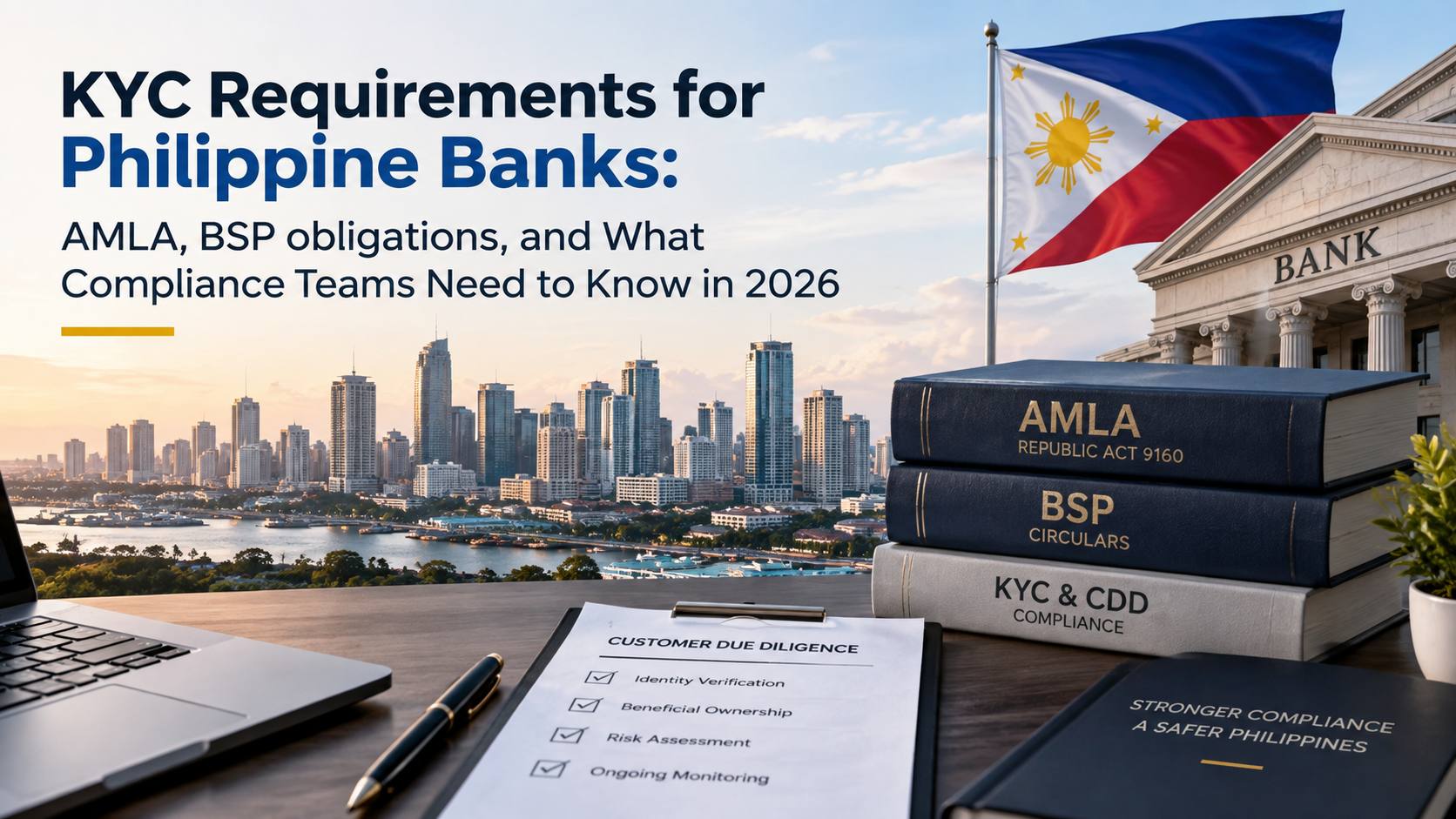
KYC Requirements for Philippine Banks: AMLA, BSP obligations, and What Compliance Teams Need to Know in 2026
The Philippines was removed from the FATF list of jurisdictions under increased monitoring in February 2025. This guide explains current AMLA and BSP KYC/CDD requirements for banks, including beneficial ownership, digital onboarding, reporting and record retention.
KYC Requirements for Philippine Banks: AMLA, BSP obligations, and What Compliance Teams Need to Know in 2026
The Philippines was removed from the FATF list of jurisdictions under increased monitoring in February 2025. This guide explains current AMLA and BSP KYC/CDD requirements for banks, including beneficial ownership, digital onboarding, reporting and record retention.