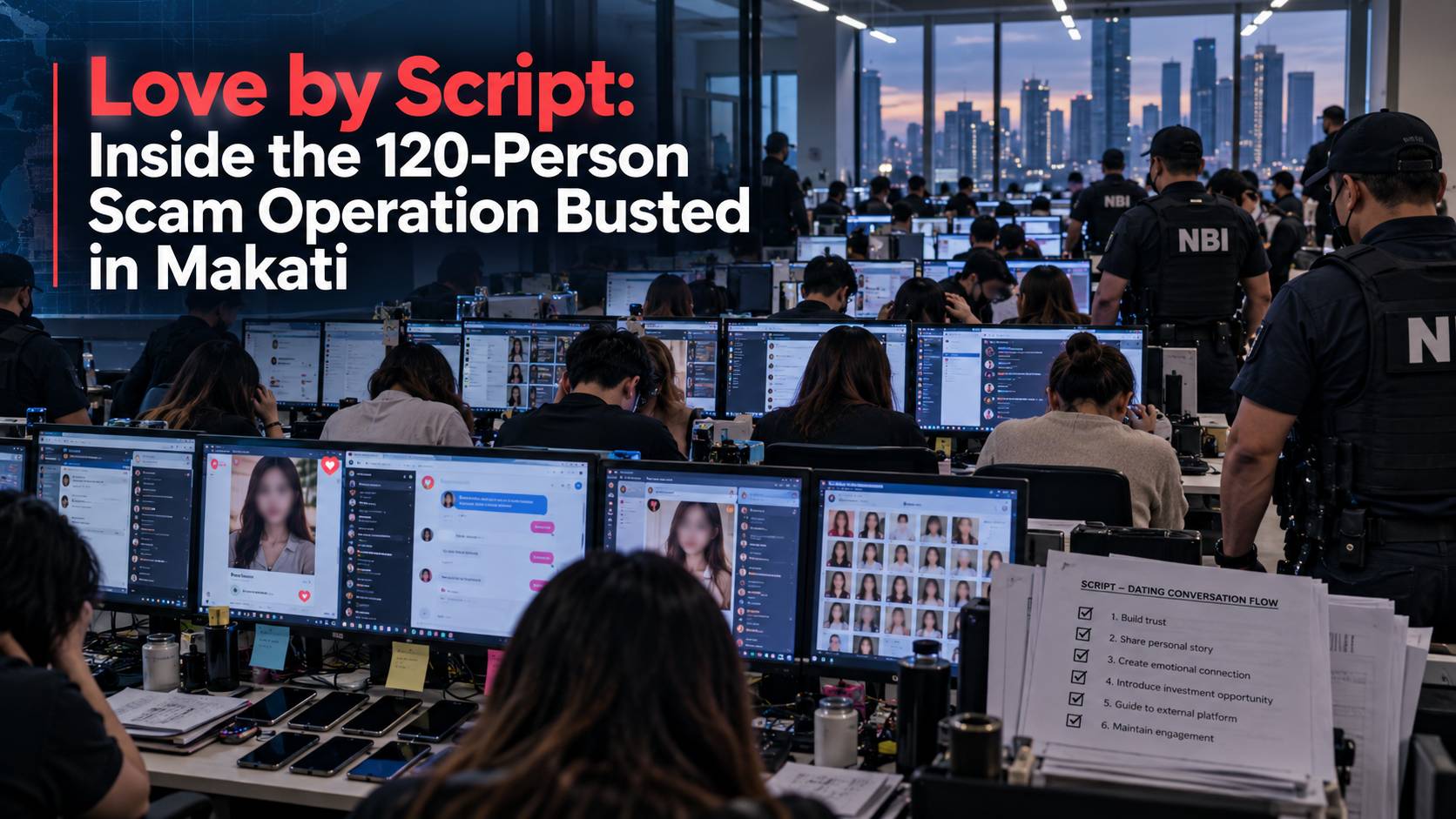
Transaction Monitoring Software in the Age of Real-Time Risk: Why Scale, Intelligence, and Trust Matter
.svg)
In a world of instant payments, transaction monitoring software cannot afford to think in batches.
Introduction
Transaction volumes in the Philippines are growing at a pace few institutions anticipated a decade ago. Real-time payment rails, QR ecosystems, digital wallets, and mobile-first banking have transformed how money moves. What used to be predictable daily cycles of settlement has become a continuous stream of transactions flowing at all hours.
This evolution has brought enormous opportunity. Financial inclusion has expanded. Payment friction has decreased. Businesses operate faster. Consumers transact more freely.
But alongside growth has come complexity.
Fraud syndicates, mule networks, organised crime groups, and cross-border laundering schemes have adapted to this new reality. They no longer rely on large, obvious transactions. They rely on fragmentation, velocity, layering, and networked activity hidden within legitimate flows.
This is where transaction monitoring software becomes the backbone of modern AML compliance.
Not as a regulatory checkbox.
Not as a legacy rule engine.
But as a scalable intelligence system that protects trust at scale.

Why Traditional Transaction Monitoring Software Is No Longer Enough
Many financial institutions still operate transaction monitoring platforms originally designed for lower volumes and slower environments.
These systems typically rely on static rules and fixed thresholds. They generate alerts whenever certain criteria are met. Compliance teams then manually review alerts and determine next steps.
At moderate volumes, this approach functions adequately.
At scale, it begins to fracture.
Alert volumes increase linearly with transaction growth. False positives consume investigative capacity. Threshold tuning becomes reactive. Performance degrades under peak load. Detection becomes inconsistent across products and customer segments.
Most critically, legacy monitoring struggles with context. It treats transactions as isolated events rather than behavioural sequences unfolding across time, accounts, and jurisdictions.
In high-growth environments like the Philippines, this creates an intelligence gap. Institutions see transactions, but they do not always see patterns.
Modern transaction monitoring software must close that gap.
What Modern Transaction Monitoring Software Must Deliver
Today’s transaction monitoring software must meet a far higher standard than simply flagging suspicious activity.
It must deliver:
- Real-time or near real-time detection
- Scalable processing across billions of transactions
- Behaviour-led intelligence
- Reduced false positives
- Explainable outcomes
- End-to-end investigation workflow integration
- Regulatory defensibility
In short, it must function as an intelligent decision engine rather than a rule-triggering mechanism.
The Scale Problem: Monitoring at Volume Without Losing Precision
Transaction volumes in Philippine financial institutions are no longer measured in thousands or even millions. Large banks and payment providers now process hundreds of millions to billions of transactions.
Monitoring at this scale introduces architectural challenges.
First, software must remain performant during transaction spikes. Real-time environments cannot tolerate detection delays.
Second, detection logic must remain precise. Increasing thresholds simply to reduce alerts weakens coverage. Increasing rule sensitivity increases noise.
Third, infrastructure must be resilient and secure. Monitoring systems sit at the core of regulatory compliance and customer trust.
Modern transaction monitoring software must therefore be cloud-native, horizontally scalable, and built for sustained high throughput without degradation.
From Rules to Intelligence: The Behaviour-Led Shift
One of the most significant evolutions in transaction monitoring software is the shift from rule-based logic to behaviour-led detection.
Rules ask whether a transaction exceeds a predefined condition.
Behavioural systems ask whether activity makes sense in context.
For example, a transfer may not breach any amount threshold. However, if it represents a sudden deviation from a customer’s historical corridor, timing, or counterparty pattern, it may indicate elevated risk.
Behaviour-led monitoring identifies:
- Rapid pass-through activity
- Corridor deviations
- Network linkages
- Velocity shifts
- Fragmented structuring patterns
This approach dramatically improves detection quality while reducing unnecessary alerts.
Reducing False Positives Without Reducing Coverage
False positives are one of the most persistent challenges in transaction monitoring.
High alert volumes strain compliance teams and increase investigation backlogs. Investigators spend time clearing noise rather than analysing meaningful cases.
Modern transaction monitoring software must balance sensitivity with precision.
Tookitaki’s approach, as reflected in its deployments across APAC, demonstrates that this balance is achievable.
Institutions using intelligence-led monitoring have achieved:
- 70% reduction in false positives
- 80% high-quality alert accuracy
- 50% reduction in alert disposition time
These outcomes are not the result of relaxed controls. They are the result of smarter detection.
End-to-End Monitoring: From Detection to Reporting
Transaction monitoring does not end when an alert is generated.
Effective transaction monitoring software must integrate seamlessly with investigation workflows, case management, and STR filing.
This means:
- Automatic alert enrichment
- Structured case views
- Audit-ready documentation
- Automated reporting workflows
- Clear escalation paths
An end-to-end platform ensures consistency across the entire compliance lifecycle.
Without integration, detection becomes disconnected from action.

The Trust Layer: Tookitaki’s Approach to Transaction Monitoring Software
Tookitaki positions its platform as The Trust Layer.
This positioning reflects a broader philosophy. Transaction monitoring software should not merely detect anomalies. It should enable institutions to operate confidently at scale.
At the centre of this is FinCense, Tookitaki’s end-to-end AML compliance platform.
FinCense combines:
- Real-time transaction monitoring
- Behaviour-led analytics
- Intelligent alert prioritisation
- FRAML capability
- Automated STR workflows
- Integrated investigation lifecycle management
The platform has been deployed to process over one billion transactions and screen over forty million customers, demonstrating scalability in real-world environments.
Detection logic is enriched continuously through the AFC Ecosystem, a collaborative intelligence network that contributes typologies, red flags, and emerging risk insights. This ensures coverage remains aligned with evolving threats rather than static assumptions.
Agentic AI: Supporting Investigators at Scale
Modern transaction monitoring software must also address investigator efficiency.
This is where FinMate, Tookitaki’s Agentic AI copilot, plays a critical role.
FinMate assists investigators by:
- Summarising transaction patterns
- Highlighting behavioural deviations
- Explaining risk drivers
- Structuring investigative reasoning
This reduces manual effort and improves consistency without replacing human judgment.
As transaction volumes increase, investigator support becomes just as important as detection accuracy.
Regulatory Validation and Governance Strength
Transaction monitoring software must withstand regulatory scrutiny.
Institutions must demonstrate:
- Full risk coverage
- Explainability of detection logic
- Consistency in alert handling
- Strong governance and audit trails
Tookitaki’s platform has received recognition including regulatory case study validation and independent review, reinforcing its compliance credibility.
Cloud-native architecture, SOC2 Type II certification, PCI DSS alignment, and robust code-to-cloud security frameworks further strengthen operational resilience.
In high-volume markets like the Philippines, governance maturity is not optional. It is expected.
A Practical Scenario: Monitoring at Scale in the Philippines
Consider a large financial institution processing real-time digital payments across multiple channels.
Legacy transaction monitoring software generates hundreds of thousands of alerts per month. Investigators struggle to keep pace. False positives dominate case queues.
After implementing behaviour-led transaction monitoring software:
- Alerts decrease significantly
- Risk-based prioritisation surfaces high-impact cases
- Investigation time reduces by half
- Scenario deployment accelerates tenfold
- Compliance confidence improves
The institution maintains payment speed and customer experience while strengthening AML coverage.
This is what modern transaction monitoring software must deliver.
Future-Proofing Monitoring in a Real-Time Economy
The evolution of financial crime will not slow.
Instant payments will expand. Cross-border flows will deepen. Digital wallets will proliferate. Fraud and laundering tactics will adapt.
Transaction monitoring software must therefore be:
- Adaptive
- Scalable
- Behaviour-aware
- AI-enabled
- End-to-end integrated
Predictive intelligence will increasingly complement detection. FRAML integration will become standard. Agentic AI will guide investigative decision-making. Collaborative intelligence will ensure rapid typology adaptation.
Institutions that modernise today will be better positioned for tomorrow’s regulatory and operational demands.
Conclusion
Transaction monitoring software is no longer a background compliance tool. It is a strategic intelligence layer that determines whether institutions can operate safely at scale.
In the Philippines, where transaction volumes are accelerating and digital ecosystems are expanding, monitoring must be real-time, behaviour-led, and architecturally resilient.
Tookitaki’s FinCense platform, supported by FinMate and enriched through the AFC Ecosystem, exemplifies what modern transaction monitoring software should achieve: full risk coverage, measurable reduction in false positives, scalable performance, and regulatory defensibility.
In a financial system built on speed and connectivity, trust is the ultimate currency.
Transaction monitoring software must protect it.
Experience the most intelligent AML and fraud prevention platform
Experience the most intelligent AML and fraud prevention platform
Experience the most intelligent AML and fraud prevention platform
Top AML Scenarios in ASEAN
The Role of AML Software in Compliance
The Role of AML Software in Compliance