

When Machines Learn Risk: How AI Transaction Monitoring Is Reshaping Financial Crime Detection
.svg)
Financial crime no longer follows rules. Detection systems must learn instead.
Introduction
Transaction monitoring has entered a new phase. What was once driven by fixed rules and static thresholds is now being reshaped by artificial intelligence. As financial crime grows more adaptive and fragmented, institutions can no longer rely on systems that only react to predefined conditions.
In the Philippines, this shift is particularly important. Digital banking, instant payments, and e-wallet adoption have increased transaction volumes at unprecedented speed. At the same time, scams, mule networks, and cross-border laundering techniques have become more sophisticated and harder to detect using traditional approaches.
This is where AI transaction monitoring changes the equation. Instead of relying on rigid logic, AI-powered systems learn from data, identify subtle behavioural shifts, and adapt continuously as new patterns emerge. They do not replace human judgment. They strengthen it by surfacing risk that would otherwise remain hidden.
For banks and financial institutions, AI transaction monitoring is no longer experimental. It is quickly becoming the standard for effective, scalable, and defensible financial crime prevention.

Why Traditional Monitoring Struggles in a Digital Economy
Traditional transaction monitoring systems were designed for a slower, more predictable financial environment. They operate primarily on rules that flag transactions when certain conditions are met, such as exceeding a threshold or involving a high-risk jurisdiction.
While these systems still have a role, their limitations are increasingly evident.
Rules are static by nature. Once configured, they remain unchanged until manually updated. Criminals exploit this rigidity by adjusting behaviour to stay just below thresholds or by fragmenting activity across accounts and channels.
False positives are another persistent challenge. Rule-based systems tend to generate large volumes of alerts that require manual review, many of which turn out to be benign. This overwhelms investigators and reduces the time available for analysing genuinely suspicious behaviour.
Most importantly, traditional systems struggle with context. They often evaluate transactions in isolation, without fully considering customer behaviour, historical patterns, or relationships between accounts.
As financial crime becomes faster and more networked, these limitations create blind spots that criminals are quick to exploit.
What Is AI Transaction Monitoring?
AI transaction monitoring refers to the use of artificial intelligence techniques, including machine learning and advanced analytics, to analyse transactions and detect suspicious behaviour.
Unlike traditional systems that rely primarily on predefined rules, AI-driven monitoring systems learn from historical and real-time data. They identify patterns, relationships, and anomalies that indicate risk, even when those patterns do not match known scenarios.
AI does not simply ask whether a transaction breaks a rule. It asks whether the behaviour makes sense given what is known about the customer, the context of the transaction, and broader patterns across the institution.
The result is a more adaptive and intelligent approach to monitoring that evolves alongside financial crime itself.
How AI Changes the Logic of Transaction Monitoring
The most important impact of AI transaction monitoring is not speed or automation, but a fundamental change in how risk is identified.
From Thresholds to Behaviour
AI models focus on behaviour rather than fixed values. They analyse how customers typically transact and establish dynamic baselines. When behaviour changes in a way that cannot be explained by normal variation, risk scores increase.
This allows institutions to detect emerging threats that would never trigger a traditional rule.
From Isolated Events to Patterns Over Time
AI looks at sequences of activity rather than individual transactions. It evaluates how transactions evolve across time, channels, and counterparties, making it more effective at detecting layering, structuring, and mule activity.
From Individual Accounts to Networks
AI excels at identifying relationships. By analysing shared attributes such as devices, IP addresses, counterparties, and transaction flows, AI-powered systems can uncover networks of related activity that would otherwise appear harmless in isolation.
From Manual Calibration to Continuous Learning
Instead of relying on periodic rule tuning, AI models continuously learn from new data. As fraudsters adapt their tactics, the system adapts as well, improving accuracy over time.
Key Capabilities of AI Transaction Monitoring Systems
Modern AI-driven monitoring platforms bring together several advanced capabilities that work in combination.
Behavioural Analytics
Behavioural analytics analyse how customers transact under normal conditions and identify deviations that indicate potential risk. These deviations may involve transaction velocity, timing, amounts, or changes in counterparties.
Behavioural insights are particularly effective for detecting account takeovers and mule activity.
Machine Learning Risk Models
Machine learning models analyse large volumes of historical and live data to identify complex patterns associated with suspicious behaviour. These models can detect correlations that are difficult or impossible to capture with manual rules.
Importantly, leading platforms ensure that these models remain explainable and auditable.
Network and Link Analysis
AI can analyse relationships between accounts, customers, and entities to detect coordinated activity. This is essential for identifying organised crime networks that operate across multiple accounts and institutions.
Real-Time Risk Scoring
AI transaction monitoring systems assign dynamic risk scores to transactions and customers in real time. This enables institutions to prioritise alerts effectively and respond quickly in high-risk situations.
Adaptive Alert Prioritisation
Rather than generating large volumes of low-value alerts, AI systems rank alerts based on overall risk. Investigators can focus on the most critical cases first, improving efficiency and outcomes.
AI Transaction Monitoring in the Philippine Context
Regulatory expectations in the Philippines continue to emphasise effectiveness, proportionality, and risk-based controls. While regulations may not mandate specific technologies, they increasingly expect institutions to demonstrate that their monitoring systems are capable of identifying current and emerging risks.
AI transaction monitoring supports these expectations by improving detection accuracy and reducing reliance on rigid rules. It also provides stronger evidence of effectiveness, as institutions can show how models adapt to changing risk patterns.
At the same time, regulators expect transparency. Institutions must understand how AI influences monitoring decisions and be able to explain outcomes clearly. This makes explainability and governance essential components of any AI-driven solution.
When implemented responsibly, AI transaction monitoring strengthens both compliance and regulatory confidence.

How Tookitaki Applies AI to Transaction Monitoring
Tookitaki applies AI to transaction monitoring with a strong emphasis on explainability, governance, and real-world relevance.
At the core of its approach is FinCense, an end-to-end compliance platform that integrates AI-powered transaction monitoring with risk scoring, investigations, and reporting. FinCense uses machine learning and advanced analytics to identify suspicious patterns while maintaining transparency into how alerts are generated.
Tookitaki also introduces FinMate, an Agentic AI copilot that assists investigators during alert review. FinMate helps summarise transaction behaviour, highlight key risk drivers, and provide context that supports faster and more consistent decision-making.
A unique element of Tookitaki’s approach is the AFC Ecosystem, where financial crime experts contribute typologies, scenarios, and red flags. These real-world insights continuously enrich AI models, ensuring they remain aligned with evolving threats rather than purely theoretical patterns.
This combination of AI, collaboration, and governance allows institutions to adopt advanced monitoring without sacrificing control or explainability.
A Practical Example of AI in Action
Consider a financial institution experiencing an increase in low-value, high-frequency transactions across multiple customer accounts. Individually, these transactions do not breach any thresholds and are initially classified as low risk.
An AI-powered transaction monitoring system identifies a pattern. It detects shared behavioural characteristics, overlapping devices, and similar transaction flows across the accounts. Risk scores increase as the system recognises a coordinated pattern consistent with mule activity.
Investigators receive prioritised alerts with clear context, allowing them to act quickly. Without AI, this pattern might have gone unnoticed until losses or regulatory issues emerged.
This illustrates how AI shifts detection from reactive to proactive.
Benefits of AI Transaction Monitoring
AI transaction monitoring delivers measurable benefits across compliance and operations.
It improves detection accuracy by identifying subtle and emerging patterns. It reduces false positives by focusing on behaviour rather than rigid thresholds. It enables faster response through real-time risk scoring and prioritisation.
From an operational perspective, AI reduces manual workload and supports investigator productivity. From a governance perspective, it provides stronger evidence of effectiveness and adaptability.
Most importantly, AI helps institutions stay ahead of evolving financial crime rather than constantly reacting to it.
The Future of AI Transaction Monitoring
AI will continue to play an increasingly central role in transaction monitoring. Future systems will move beyond detection toward prediction, identifying early indicators of risk before suspicious transactions occur.
Integration between AML and fraud monitoring will deepen, supported by shared AI models and unified risk views. Agentic AI will further assist investigators by interpreting patterns, answering questions, and guiding decisions.
Collaboration will also become more important. Federated learning models will allow institutions to benefit from shared intelligence while preserving data privacy.
Institutions that invest in AI transaction monitoring today will be better positioned to adapt to these developments and maintain resilience in a rapidly changing environment.
Conclusion
AI transaction monitoring represents a fundamental shift in how financial institutions detect and manage risk. By moving beyond static rules and learning from behaviour, AI-driven systems provide deeper insight, greater adaptability, and stronger outcomes.
With platforms like Tookitaki’s FinCense, supported by FinMate and enriched by the AFC Ecosystem, institutions can adopt AI transaction monitoring in a way that is explainable, governed, and aligned with real-world threats.
In an environment where financial crime evolves constantly, the ability to learn from data is no longer optional. It is the foundation of effective, future-ready transaction monitoring.
Experience the most intelligent AML and fraud prevention platform
Experience the most intelligent AML and fraud prevention platform
Experience the most intelligent AML and fraud prevention platform
Top AML Scenarios in ASEAN
The Role of AML Software in Compliance
The Role of AML Software in Compliance
Talk to an Expert
Our Thought Leadership Guides


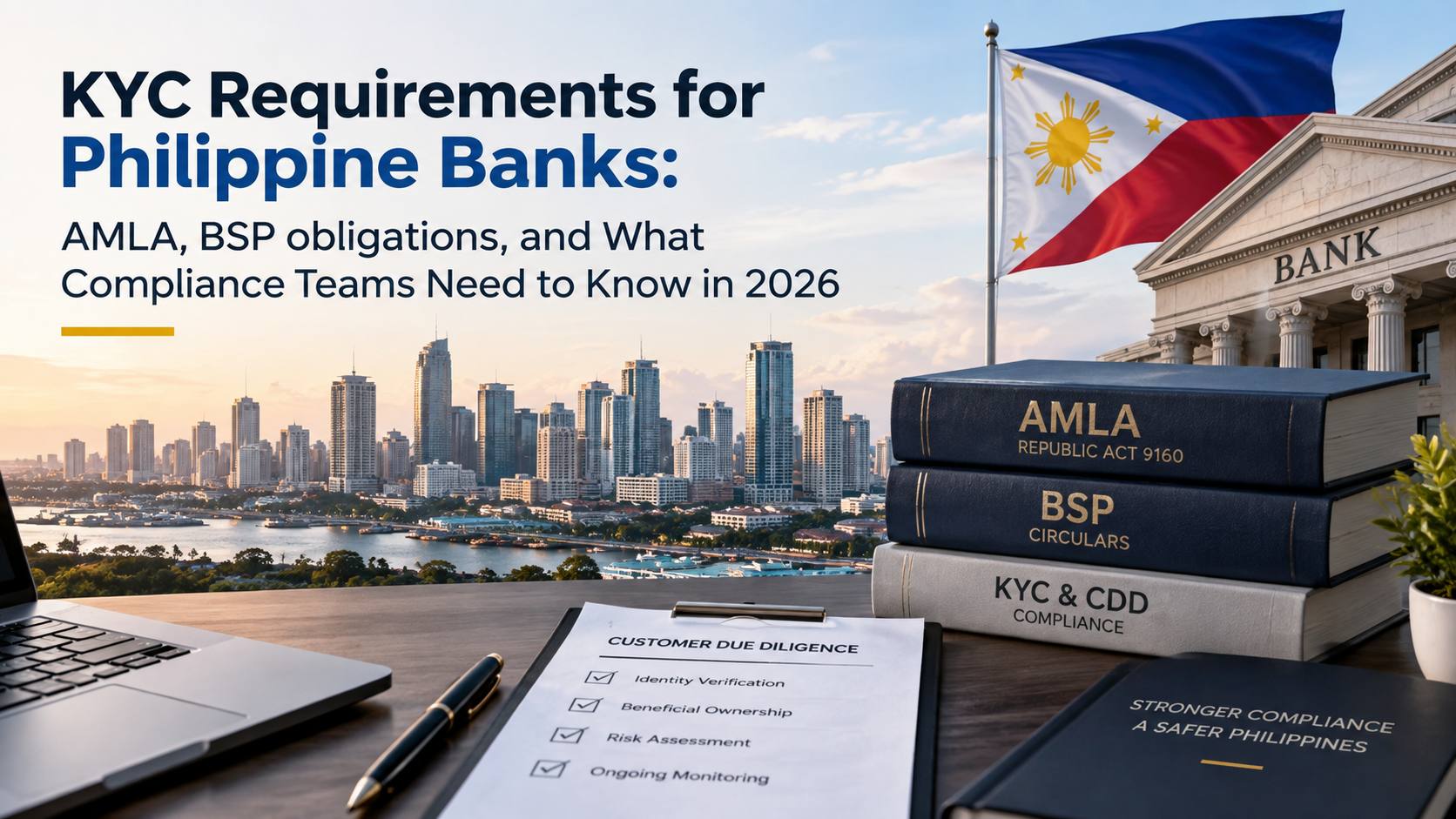
KYC Requirements for Philippine Banks: AMLA, BSP obligations, and What Compliance Teams Need to Know in 2026
The Philippines was removed from the FATF list of jurisdictions under increased monitoring in February 2025. This guide explains current AMLA and BSP KYC/CDD requirements for banks, including beneficial ownership, digital onboarding, reporting and record retention.
KYC Requirements for Philippine Banks: AMLA, BSP obligations, and What Compliance Teams Need to Know in 2026
The Philippines was removed from the FATF list of jurisdictions under increased monitoring in February 2025. This guide explains current AMLA and BSP KYC/CDD requirements for banks, including beneficial ownership, digital onboarding, reporting and record retention.