

Inside Taipei’s USD 970M Gambling Laundering Network
.svg)
1. Introduction to the Case
At the start of 2026, prosecutors in Taipei uncovered a money laundering operation so extensive that its scale alone commanded attention. Nearly NT$30.6 billion, about US$970 million, allegedly moved through the financial system under the guise of ordinary business activity, tied to illegal online gambling operations.
There were no obvious warning signs at first glance. Transactions flowed through payment platforms that looked commercial. Accounts behaved like those of legitimate merchants. A well-known restaurant operated openly, serving customers while quietly anchoring a complex financial network behind the scenes.
What made this case remarkable was not just the volume of illicit funds, but how convincingly they blended into routine economic activity. The money did not rush through obscure channels or sit dormant in hidden accounts. It moved steadily, predictably, and efficiently, much like revenue generated by a real business.
By January 2026, authorities had indicted 35 individuals, bringing years of quiet laundering activity into the open. The case serves as a stark reminder for compliance leaders and financial institutions. The most dangerous laundering schemes today do not look criminal.
They look operational.

2. Anatomy of the Laundering Operation
Unlike traditional laundering schemes that rely on abusing existing financial services, this alleged operation was built around direct ownership and control of payment infrastructure.
Step 1: Building the Payment Layer
Prosecutors allege that the network developed custom payment platforms specifically designed to handle gambling-related funds. These platforms acted as controlled gateways between illegal online gambling sites and regulated financial institutions.
By owning the payment layer, the network could shape how transactions appeared externally. Deposits resembled routine consumer payments rather than gambling stakes. Withdrawals appeared as standard platform disbursements rather than illicit winnings.
The laundering began not after the money entered the system, but at the moment it was framed.
Step 2: Ingesting Illegal Gambling Proceeds
Illegal online gambling platforms operating across multiple jurisdictions reportedly channelled funds into these payment systems. To banks and payment institutions, the activity did not immediately resemble gambling-related flows.
By separating the criminal source of funds from their visible transaction trail, the network reduced contextual clarity early in the lifecycle.
The risk signal weakened with every step removed from the original activity.
Step 3: Using a Restaurant as a Front Business
A legitimate restaurant allegedly played a central role in anchoring the operation. Physical businesses do more than provide cover. They provide credibility.
The restaurant justified the presence of merchant accounts, payment terminals, staff activity, supplier payments, and fluctuating revenue. It created a believable operational backdrop against which large transaction volumes could exist without immediate suspicion.
The business did not replace laundering mechanics.
It normalised them.
Step 4: Rapid Routing and Pass-Through Behaviour
Funds reportedly moved quickly through accounts linked to the payment platforms. Incoming deposits were followed by structured transfers and payouts to downstream accounts, including e-wallets and other financial channels.
High-volume pass-through behaviour limited residual balances and reduced the exposure of any single account. Money rarely paused long enough to draw attention.
Movement itself became the camouflage.
Step 5: Detection and Indictment
Over time, the scale and coordination of activity attracted scrutiny. Prosecutors allege that transaction patterns, account linkages, and platform behaviour revealed a level of organisation inconsistent with legitimate commerce.
In January 2026, authorities announced the indictment of 35 individuals, marking the end of an operation that had quietly integrated itself into everyday financial flows.
The network did not fail because one transaction was flagged.
It failed because the overall pattern stopped making sense.
3. Why This Worked: Control and Credibility
This alleged laundering operation succeeded because it exploited structural assumptions within the financial system rather than technical loopholes.
1. Control of the Transaction Narrative
When criminals control the payment platform, they control how transactions are described, timed, and routed. Labels, settlement patterns, and counterparty relationships all shape perception.
Compliance systems often assess risk against stated business models. In this case, the business model itself was engineered to appear plausible.
2. Trust in Commercial Interfaces
Payments that resemble everyday commerce attract less scrutiny than transactions explicitly linked to gambling or other high-risk activities. Familiar interfaces reduce friction, both for users and for monitoring systems.
Legitimacy was embedded into the design.
3. Fragmented Oversight
Different institutions saw different fragments of the activity. Banks observed account behaviour. Payment institutions saw transaction flows. The restaurant appeared as a normal merchant.
No single entity had a complete view of the end-to-end lifecycle of funds.
4. Scale Without Sudden Noise
Rather than relying on sudden spikes or extreme anomalies, the operation allegedly scaled steadily. This gradual growth allowed transaction patterns to blend into evolving baselines.
Risk accumulated quietly, over time.
4. The Financial Crime Lens Behind the Case
While the predicate offence was illegal gambling, the mechanics of this case reflect broader shifts in financial crime.
1. Infrastructure-Led Laundering
This was not simply the misuse of existing systems. It was the deliberate creation of infrastructure designed to launder money at scale.
Similar patterns are increasingly observed in scam facilitation networks, mule orchestration platforms, and illicit payment services operating across borders.
2. Payment Laundering Over Account Laundering
The focus moved away from individual accounts toward transaction ecosystems. Ownership of flow mattered more than ownership of balances.
Risk became behavioural rather than static.
3. Front Businesses as Integration Points
Legitimate enterprises increasingly serve as anchors where illicit and legitimate funds coexist. This integration blurs the boundary between clean and dirty money, making detection more complex.

5. Red Flags for Banks, Fintechs, and Regulators
This case highlights signals that extend beyond gambling environments.
A. Behavioural Red Flags
- High-volume transaction flows with limited value retention
- Consistent routing patterns across diverse counterparties
- Predictable timing and structuring inconsistent with consumer behaviour
B. Operational Red Flags
- Payment platforms scaling rapidly without proportional business visibility
- Merchants behaving like processors rather than sellers
- Front businesses supporting transaction volumes beyond physical capacity
C. Financial Red Flags
- Large pass-through volumes with minimal margin retention
- Rapid distribution of incoming funds across multiple channels
- Cross-border flows misaligned with stated business geography
Individually, these indicators may appear benign. Together, they tell a story.
6. How Tookitaki Strengthens Defences
Cases like this reinforce why financial crime prevention must evolve beyond static rules and isolated monitoring.
1. Scenario-Driven Intelligence from the AFC Ecosystem
Expert-contributed scenarios capture complex laundering patterns that traditional typologies often miss, including platform-led and infrastructure-driven crime.
These insights help institutions recognise emerging risks earlier in the transaction lifecycle.
2. Behavioural Pattern Recognition
Tookitaki’s approach prioritises flow behaviour, coordination, and lifecycle anomalies rather than focusing solely on transaction values.
When money stops behaving like commerce, the signal emerges early.
3. Cross-Domain Risk Thinking
The same intelligence principles used to detect scam networks, mule rings, and high-velocity fraud apply equally to sophisticated laundering operations hidden behind legitimate interfaces.
Financial crime rarely fits neatly into one category. Detection should not either.
7. Conclusion
The Taipei case is a reminder that modern money laundering no longer relies on secrecy alone.
Sometimes, it relies on efficiency.
This alleged operation blended controlled payment infrastructure, credible business fronts, and transaction flows engineered to look routine. It did not disrupt the system. It embedded itself within it.
As 2026 unfolds, financial institutions face a clear challenge. The most serious laundering risks will not always announce themselves through obvious anomalies. They will appear as businesses that scale smoothly, transact confidently, and behave just convincingly enough to be trusted.
When money moves like business, the warning is already there.
Experience the most intelligent AML and fraud prevention platform
Experience the most intelligent AML and fraud prevention platform
Experience the most intelligent AML and fraud prevention platform
Top AML Scenarios in ASEAN
The Role of AML Software in Compliance
Talk to an Expert
Our Thought Leadership Guides
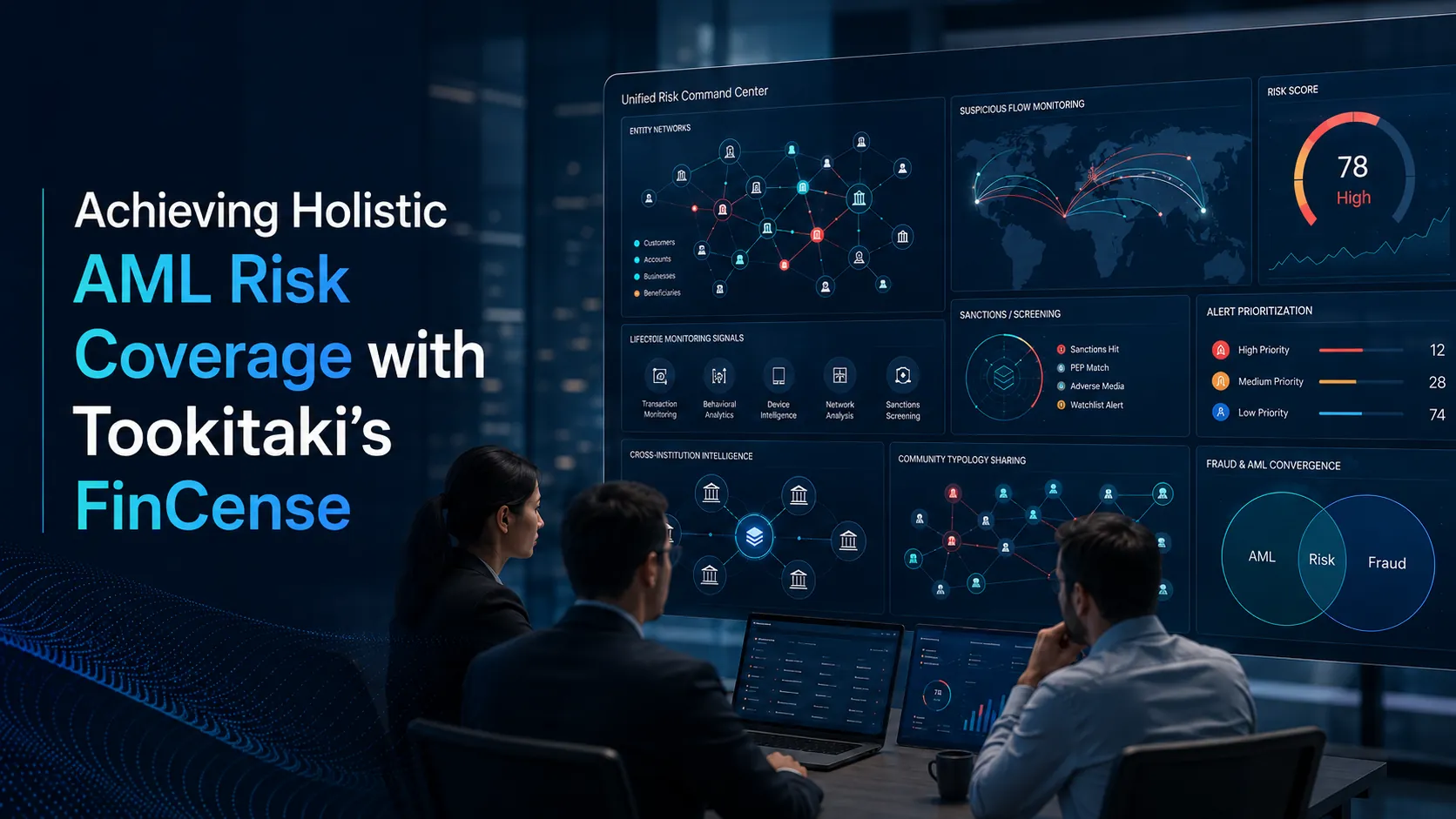
Reducing False Alerts and Improving AML Detection Rates with Tookitaki's FinCense
False positives overwhelm AML compliance teams while genuine financial crime goes undetected. Tookitaki addresses this two ways: an Alert Prioritization AI Agent that works on top of any legacy system, and FinCense Transaction Monitoring with scenario-based detection and automated threshold tuning.
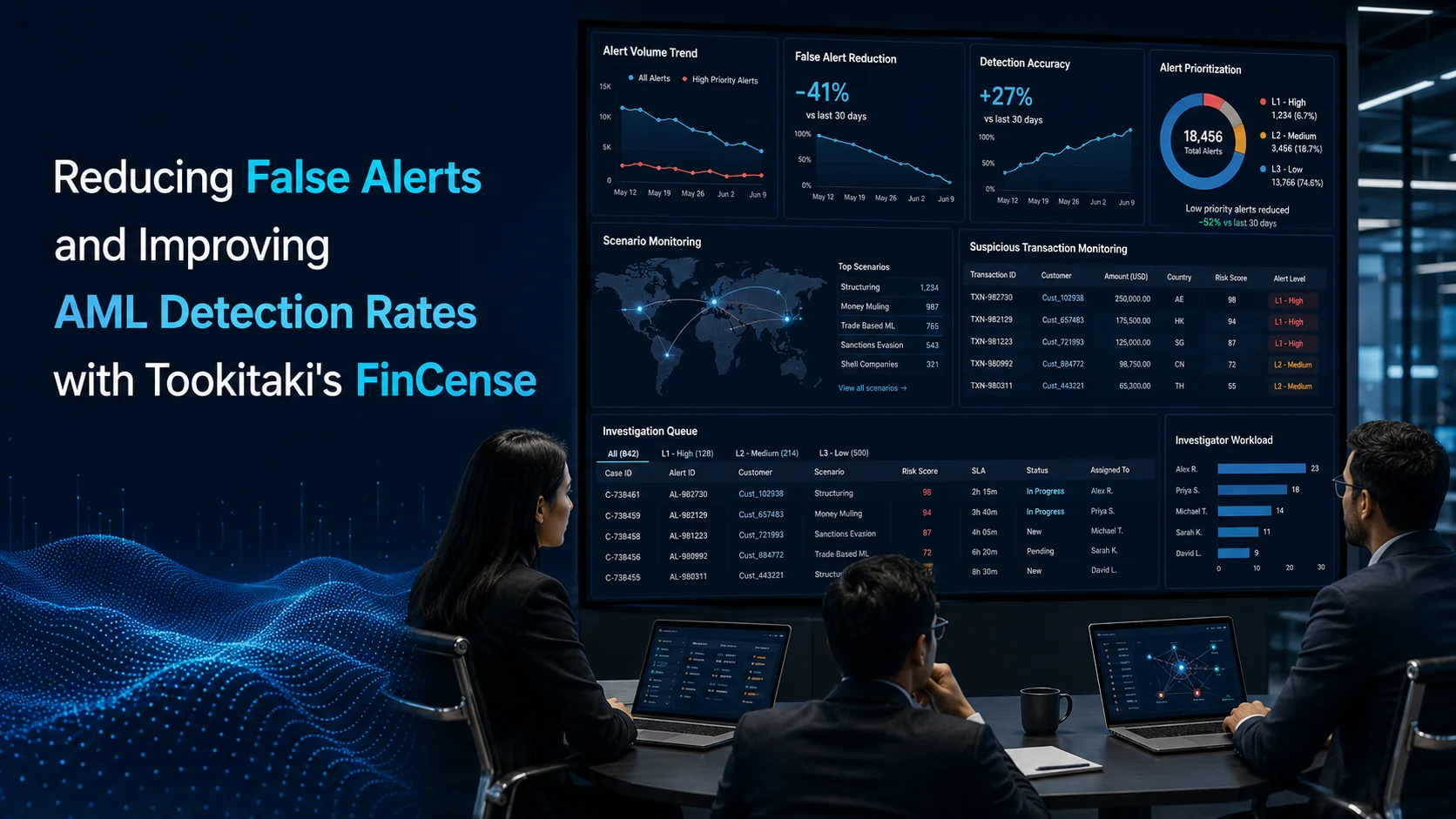
AML Compliance for Digital Banks in Malaysia: Meeting BNM's Requirements with FinCense
Malaysia's digital banks face BNM's 2023 AML/CFT Policy Document, FATF's updated recommendations, and mounting pressure on eKYC and transaction monitoring standards. Here is how FinCense addresses these requirements.

Living Under the STR Clock: The Growing Pressure on AML Investigators
AML investigators face increasing pressure to make Suspicious Transaction Report decisions under tight timelines and growing alert volumes. Explore the challenges behind STR reporting and the shift toward intelligence-led investigations.

