

Beyond Digital Transfers: The New Playbook of Cross-Border Investment Fraud
.svg)
In February 2026, the Singapore Police Force arrested a 41-year-old Malaysian national for his suspected involvement in facilitating an investment scam syndicate. Unlike conventional online fraud cases that rely purely on digital transfers, this case reportedly involved the physical collection of cash, gold, and valuables from victims across Singapore.
At first glance, it may appear to be another enforcement headline in a long list of scam-related arrests. But this case reflects something more structural. It signals an evolution in how organised investment fraud networks operate across borders and how they are deliberately reducing digital footprints to evade detection.
For financial institutions, this is not merely a criminal story. It is a warning about the next phase of scam typologies.

A Familiar Beginning: Digital Grooming and Fabricated Returns
Investment scams typically begin in digital environments. Victims are approached via messaging applications, social media platforms, or dating channels. Fraudsters pose as successful investors, insiders, or professional advisers offering exclusive access to high-yield opportunities.
The grooming process is methodical. Screenshots of fake trading profits are shared. Demo withdrawals are permitted to build credibility. Fabricated dashboards simulate real-time market activity.
Victims are gradually encouraged to increase their investment amounts. By the time suspicion arises, emotional and financial commitment is already significant.
What differentiates the February 2026 case is what happened next.
The Hybrid Shift: From Online Transfers to Physical Collection
As transaction monitoring systems become more sophisticated, fraud syndicates are adapting. Rather than relying exclusively on bank transfers into mule accounts, this network allegedly deployed a physical collector.
Cash, gold bars, and high-value jewellery were reportedly collected directly from victims.
This tactic serves multiple purposes:
- It reduces immediate digital traceability.
- It avoids automated suspicious transaction triggers.
- It delays AML detection cycles.
- It complicates asset recovery efforts.
Physical collection reintroduces an older money laundering technique into modern scam operations. The innovation is not technological. It is strategic.
Why Cross-Border Facilitators Matter
The involvement of a Malaysian national operating in Singapore underscores the cross-border architecture of contemporary investment fraud.
Using foreign facilitators provides operational advantages:
- Reduced long-term financial footprint within the victim jurisdiction.
- Faster entry and exit mobility.
- Compartmentalisation of roles within the syndicate.
- Limited exposure to digital transaction histories.
Collectors often function as intermediaries with minimal visibility into the full structure of the scam. They are paid per assignment and insulated from the digital backend of fraudulent platforms.
This decentralised model mirrors money mule networks, where each participant handles only one fragment of the laundering chain.
The Laundering Layer: What Happens After Collection
Physical collection does not eliminate the need for financial system re-entry. Funds and valuables must eventually be monetised.
Common laundering pathways include:
- Structured cash deposits across multiple accounts.
- Conversion of gold into resale proceeds.
- Transfers via cross-border remittance channels.
- Use of third-party mule accounts for layering.
- Conversion into digital assets before onward transfer.
By introducing time delays between collection and deposit, criminals weaken behavioural linkages that monitoring systems rely upon.
The fragmentation is deliberate.
Enforcement Is Strengthening — But It Is Reactive
Singapore has progressively tightened its anti-scam framework in recent years. Enhanced penalties, closer collaboration between banks and telcos, and proactive account freezing mechanisms reflect a robust enforcement posture.
The February 2026 arrest reinforces that law enforcement is active and responsive.
However, enforcement occurs after victimisation.
The critical compliance question is whether financial institutions could have identified earlier signals before physical handovers occurred.
Early Signals Financial Institutions Should Watch For
Even hybrid scam models leave footprints.
Transaction-Level Indicators
- Sudden liquidation of savings instruments.
- Large ATM withdrawals inconsistent with historical patterns.
- Structured withdrawals below reporting thresholds.
- Rapid increase in daily withdrawal limits.
- Transfers to newly added high-risk payees.
Behavioural Indicators
- Customers expressing urgency tied to investment deadlines.
- Emotional distress or secrecy during branch interactions.
- Resistance to fraud advisories.
- Repeated interactions with unfamiliar individuals during transactions.
KYC and Risk Signals
- Cross-border travel inconsistent with employment profile.
- Linkages to previously flagged mule accounts.
- Accounts newly activated after dormancy.
Individually, these signals may appear benign. Collectively, they form patterns.
Detection capability increasingly depends on contextual correlation rather than isolated rule triggers.

Why Investment Fraud Is Becoming Hybrid
The return to physical collection reflects a calculated response to digital oversight.
As financial institutions deploy real-time transaction monitoring and network analytics, syndicates diversify operational channels. They blend:
- Digital grooming.
- Offline asset collection.
- Cross-border facilitation.
- Structured re-entry into the banking system.
The objective is to distribute risk and dilute visibility.
Hybridisation complicates traditional AML frameworks that were designed primarily around digital flows.
The Cross-Border Risk Environment
The Malaysia–Singapore corridor is characterised by high economic interconnectivity. Labour mobility, trade, tourism, and remittance activity create dense transactional ecosystems.
Such environments provide natural cover for illicit movement.
Short-duration travel combined with asset collection reduces detection exposure. Funds can be transported, converted, or layered outside the primary victim jurisdiction before authorities intervene.
Financial institutions must therefore expand risk assessment models beyond domestic parameters. Cross-border clustering, network graph analytics, and federated intelligence become essential tools.
Strategic Lessons for Compliance Leaders
This case highlights five structural imperatives:
- Integrate behavioural analytics with transaction monitoring.
- Enhance mule network detection using graph-based modelling.
- Monitor structured cash activity alongside digital flows.
- Incorporate cross-border risk scoring into alert prioritisation.
- Continuously update detection scenarios to reflect emerging typologies.
Static rule sets struggle against adaptive syndicates. Scenario-driven frameworks provide greater resilience.
The Compliance Technology Imperative
Hybrid fraud requires hybrid detection.
Modern AML systems must incorporate:
- Real-time anomaly detection.
- Dynamic risk scoring.
- Scenario-based monitoring models.
- Network-level clustering.
- Adaptive learning mechanisms.
The objective is not merely faster alert generation. It is earlier risk identification.
Community-driven intelligence models, where financial institutions contribute and consume emerging typologies, strengthen collective defence. Platforms like Tookitaki’s FinCense, supported by the AFC Ecosystem’s collaborative framework, apply federated learning to continuously update detection logic across institutions. This approach enables earlier recognition of evolving investment scam patterns while reducing investigation time by up to 50 percent.
The focus is prevention, not post-incident reporting.
A Broader Reflection on Financial Crime in 2026
The February 2026 Malaysia–Singapore arrest illustrates a broader reality.
Investment fraud is no longer confined to fake trading apps and mule accounts. It is adaptive, decentralised, and cross-border by design. Physical collection represents not regression but optimisation.
Criminal networks are refining risk management strategies of their own.
For banks and fintechs, the response cannot be incremental. Detection must anticipate adaptation.
Conclusion: The Next Phase of Investment Fraud
Beyond digital transfers lies a more complex fraud architecture.
The February 2026 arrest demonstrates how syndicates blend online deception with offline collection and cross-border facilitation. Each layer is designed to fragment visibility.
Enforcement agencies will continue to dismantle networks. But financial institutions sit at the earliest detection points.
The institutions that succeed will be those that move from reactive compliance to predictive intelligence.
Investment scams are evolving.
So must the systems built to stop them.
Experience the most intelligent AML and fraud prevention platform
Experience the most intelligent AML and fraud prevention platform
Experience the most intelligent AML and fraud prevention platform
Top AML Scenarios in ASEAN
The Role of AML Software in Compliance
Talk to an Expert
Our Thought Leadership Guides

Reducing False Alerts and Improving AML Detection Rates with Tookitaki's FinCense
False positives overwhelm AML compliance teams while genuine financial crime goes undetected. Tookitaki addresses this two ways: an Alert Prioritization AI Agent that works on top of any legacy system, and FinCense Transaction Monitoring with scenario-based detection and automated threshold tuning.

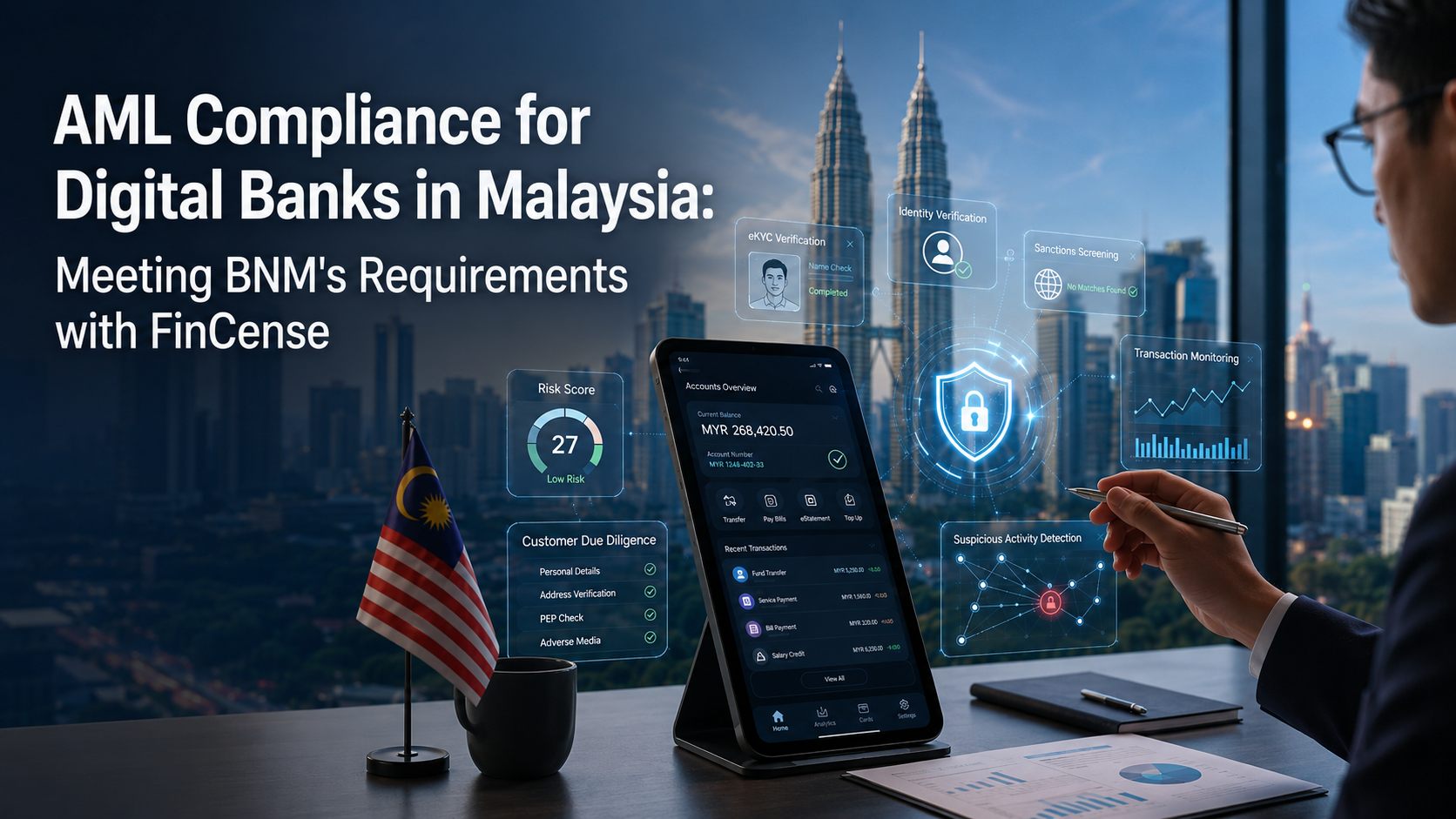
AML Compliance for Digital Banks in Malaysia: Meeting BNM's Requirements with FinCense
Malaysia's digital banks face BNM's 2023 AML/CFT Policy Document, FATF's updated recommendations, and mounting pressure on eKYC and transaction monitoring standards. Here is how FinCense addresses these requirements.

Living Under the STR Clock: The Growing Pressure on AML Investigators
AML investigators face increasing pressure to make Suspicious Transaction Report decisions under tight timelines and growing alert volumes. Explore the challenges behind STR reporting and the shift toward intelligence-led investigations.

