

Beyond List Matching: Why Enterprise Sanctions and PEP Screening Demands Intelligence, Not Just Coverage
.svg)
Sanctions and PEP risk rarely announce themselves clearly. Screening systems must interpret context, not just names.
Introduction
Sanctions and politically exposed person screening sit at the heart of financial crime compliance.
Financial institutions must identify customers, counterparties, and beneficiaries that appear on global sanctions lists or are classified as politically exposed persons. These controls are essential for preventing illicit finance, avoiding regulatory penalties, and protecting institutional reputation.
However, the scale and complexity of modern financial systems have changed the nature of screening.
Customer bases are larger. Cross-border exposure is broader. Global watchlists expand continuously. Naming conventions vary across jurisdictions. False positives overwhelm compliance teams. Meanwhile, regulators expect precision, not just coverage.
This is why enterprise sanctions and PEP screening has become a strategic capability rather than a basic compliance function.
Enterprise-grade screening platforms help institutions manage risk across customers, transactions, and counterparties while maintaining operational efficiency and regulatory defensibility.

Understanding Sanctions and PEP Screening
Sanctions screening focuses on identifying individuals or entities that appear on government or regulatory watchlists.
These may include:
- Government sanctions lists
- Law enforcement watchlists
- Restricted entities and organisations
- High-risk jurisdictions
PEP screening focuses on identifying individuals who hold prominent public positions or are closely associated with them.
These include:
- Politicians
- Senior government officials
- Military leaders
- State-owned enterprise executives
- Family members and close associates
PEPs are not prohibited customers, but they carry higher risk and require enhanced due diligence.
Together, sanctions and PEP screening form a core component of AML and CFT compliance programmes.
Why Enterprise-Level Screening Is Necessary
Basic screening tools often struggle in large-scale environments.
Enterprise financial institutions must screen:
- Millions of customers
- Large transaction volumes
- Multiple payment channels
- Cross-border counterparties
- Beneficial ownership structures
Manual processes or basic matching engines cannot scale effectively.
Enterprise sanctions and PEP screening platforms are designed to operate across this complexity while maintaining performance and accuracy.
The Challenge of Name Matching
One of the biggest challenges in sanctions and PEP screening is name matching.
Names can vary due to:
- Spelling differences
- Transliteration variations
- Cultural naming conventions
- Abbreviations
- Alias usage
For example, a single individual may appear on different lists with multiple name variations.
Basic matching engines often generate excessive alerts when names are similar but unrelated.
Enterprise screening solutions use advanced matching techniques such as:
- Fuzzy matching algorithms
- Phonetic matching
- Token-based matching
- Multilingual matching
These approaches improve detection accuracy while reducing false positives.

Managing False Positives at Scale
False positives are a major operational burden in sanctions and PEP screening.
Common names can generate hundreds of alerts. Investigators must review each match manually, slowing down onboarding and monitoring processes.
Enterprise sanctions and PEP screening solutions reduce false positives by incorporating contextual information such as:
- Date of birth
- Nationality
- Address
- Occupation
- Associated entities
By analysing multiple attributes, the system can differentiate between unrelated individuals with similar names.
This significantly improves screening efficiency.
Real-Time Transaction Screening
Sanctions risk is not limited to onboarding.
Transactions must also be screened in real time to identify payments involving sanctioned individuals or entities.
Enterprise screening solutions support:
- Real-time payment screening
- Batch transaction screening
- Cross-border transfer screening
- Beneficiary screening
Real-time capabilities are especially important in instant payment environments where funds move quickly.
Continuous Customer Screening
Sanctions and PEP status can change over time.
Customers who were previously low risk may later appear on watchlists.
Enterprise screening platforms support continuous monitoring by:
- Updating watchlists automatically
- Re-screening customers when lists change
- Triggering alerts for new matches
Continuous screening ensures institutions remain compliant as risk evolves.
Risk-Based Screening
Not all customers require the same level of scrutiny.
Enterprise sanctions and PEP screening platforms support risk-based approaches.
This allows institutions to:
- Apply stricter matching thresholds for high-risk customers
- Use relaxed thresholds for low-risk customers
- Prioritise high-risk alerts
Risk-based screening improves efficiency while maintaining strong compliance coverage.
Integration with AML Workflows
Sanctions and PEP screening is most effective when integrated with broader AML controls.
Enterprise screening platforms typically integrate with:
- Customer onboarding systems
- Transaction monitoring platforms
- Case management workflows
- Customer risk scoring models
Integration ensures screening results contribute to holistic risk assessment.
Auditability and Governance
Regulators expect institutions to demonstrate strong governance around screening processes.
Enterprise sanctions and PEP screening solutions provide:
- Detailed audit trails
- Configurable matching thresholds
- Alert disposition tracking
- Investigation documentation
These capabilities support regulatory reviews and internal audits.
Where Tookitaki Fits
Tookitaki’s FinCense platform incorporates enterprise sanctions and PEP screening as part of its broader Trust Layer architecture.
The platform provides:
- Real-time sanctions and PEP screening
- Advanced name matching and entity resolution
- Risk-based screening thresholds
- Continuous watchlist updates
- Alert prioritisation and consolidation
- Integrated case management workflows
Screening results are analysed alongside transaction monitoring signals, providing investigators with a unified view of risk.
This integrated approach helps financial institutions manage screening at scale while maintaining accuracy and efficiency.
The Future of Enterprise Screening
Sanctions and PEP screening will continue to evolve as financial crime risks become more complex.
Future innovations may include:
- AI-driven entity resolution
- Enhanced multilingual screening
- Network-based risk detection
- Real-time cross-channel screening
- Adaptive risk scoring
These capabilities will further strengthen screening accuracy and reduce operational burden.
Conclusion
Enterprise sanctions and PEP screening has become a critical component of modern AML compliance.
Financial institutions must screen customers and transactions across large datasets while maintaining accuracy and efficiency.
Advanced screening platforms provide the intelligence needed to manage this complexity. By combining sophisticated matching algorithms, risk-based screening, and integrated workflows, enterprise solutions help institutions detect risk earlier and operate more efficiently.
As regulatory expectations continue to evolve, enterprise sanctions and PEP screening will remain a cornerstone of effective financial crime prevention.
Experience the most intelligent AML and fraud prevention platform
Experience the most intelligent AML and fraud prevention platform
Experience the most intelligent AML and fraud prevention platform
Top AML Scenarios in ASEAN
The Role of AML Software in Compliance
The Role of AML Software in Compliance
Talk to an Expert
Our Thought Leadership Guides

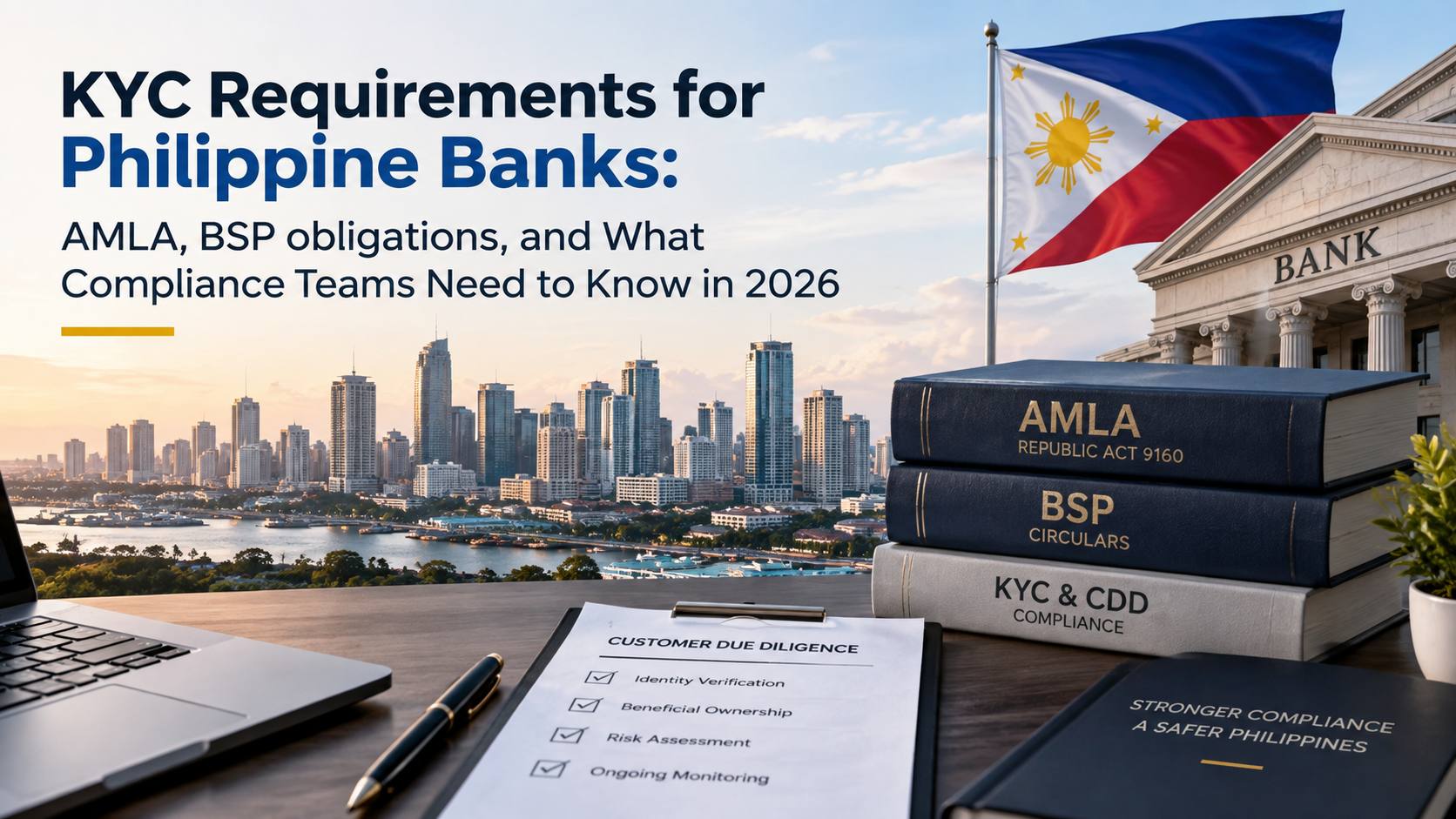
KYC Requirements for Philippine Banks: AMLA, BSP obligations, and What Compliance Teams Need to Know in 2026
The Philippines was removed from the FATF list of jurisdictions under increased monitoring in February 2025. This guide explains current AMLA and BSP KYC/CDD requirements for banks, including beneficial ownership, digital onboarding, reporting and record retention.

KYC Requirements for Philippine Banks: AMLA, BSP obligations, and What Compliance Teams Need to Know in 2026
The Philippines was removed from the FATF list of jurisdictions under increased monitoring in February 2025. This guide explains current AMLA and BSP KYC/CDD requirements for banks, including beneficial ownership, digital onboarding, reporting and record retention.