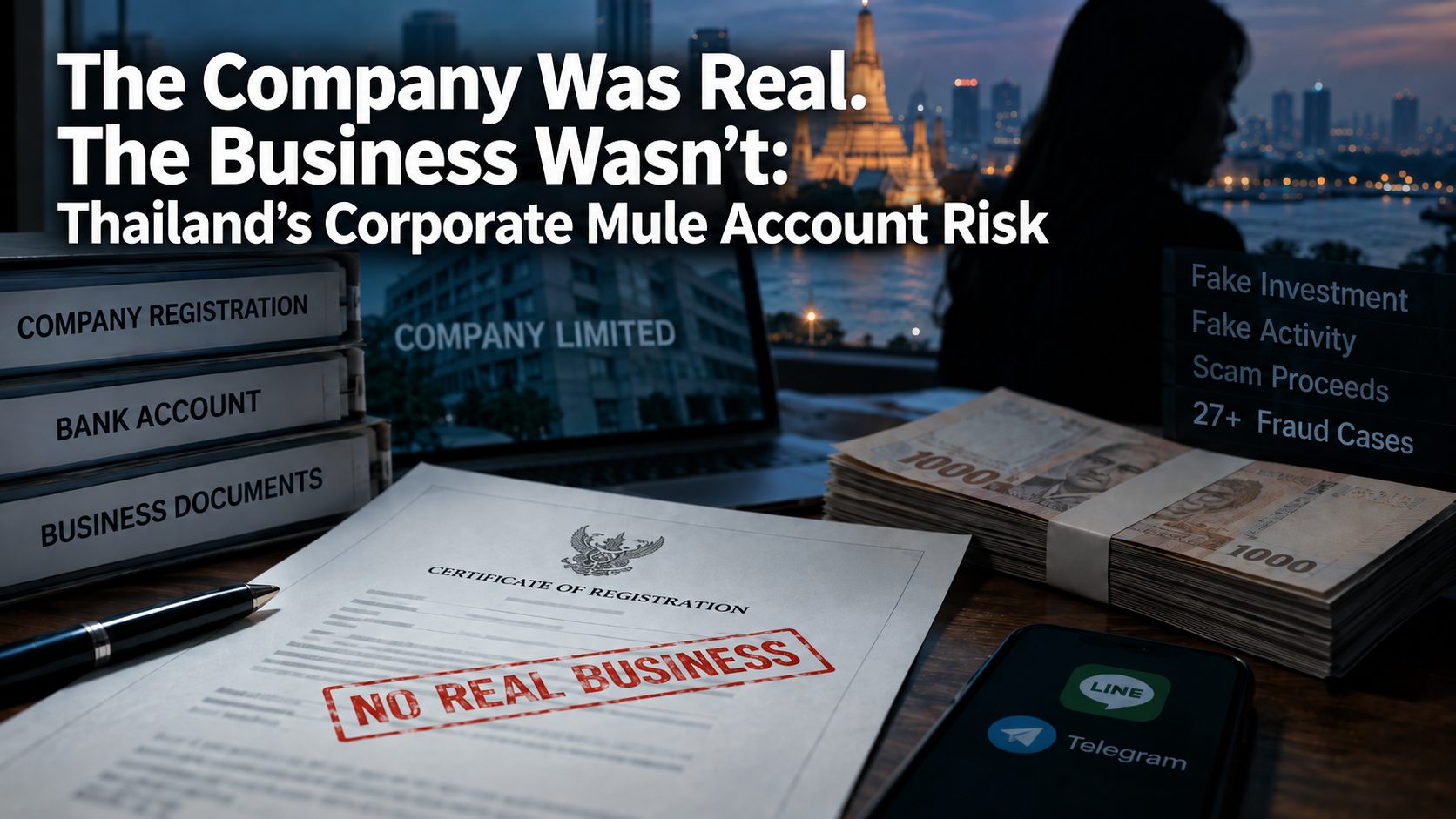
Is Your Business AML Compliant? Why It Matters More Than Ever in Australia
.svg)
With AUSTRAC tightening the screws, AML compliance has become a business-critical issue — not just a legal checkbox.
In Australia’s high-stakes financial environment, anti-money laundering (AML) compliance has evolved from a regulatory obligation to a frontline defence strategy. From banks and remittance firms to casinos and digital platforms, every business operating in or around financial flows is now expected to have robust AML controls — or face the consequences.
What Is AML Compliance, Really?
More Than Just Ticking Boxes
AML compliance is a set of procedures, policies, and technologies that financial institutions and reporting entities must adopt to detect, prevent, and report money laundering and terrorism financing. But it’s not just about satisfying AUSTRAC’s rules — it’s about building resilience into your business.
Who Needs to Comply?
In Australia, AML/CTF compliance is mandatory for ‘reporting entities’ — organisations that provide financial, remittance, gambling, or bullion services. This includes:
- Banks and credit unions
- Fintechs and payment processors
- Foreign exchange dealers
- Digital wallet providers
- Gambling and casino operators
- Remittance and money transfer businesses

The Regulatory Backbone: AUSTRAC and the AML/CTF Act
Australia’s AML/CTF regime is overseen by AUSTRAC, one of the most proactive financial intelligence units globally.
Key obligations include:
- Customer Due Diligence (CDD): Know your customer (KYC) checks at onboarding and ongoing.
- Transaction Monitoring: Detect unusual or suspicious activity.
- Suspicious Matter Reports (SMRs): Mandatory reporting of any transaction that raises red flags.
- Recordkeeping and Auditing: Maintain detailed compliance logs for at least 7 years.
- Ongoing Risk Assessment: Periodic reviews of your AML risks and controls.

Why AML Compliance is Critical in Australia Right Now
1. AUSTRAC’s Crackdown
Over the past five years, AUSTRAC has levied penalties in the hundreds of millions against major players, including Westpac and Crown Resorts. The message is clear: compliance failures are no longer tolerated.
2. Increasingly Sophisticated Financial Crime
From cryptocurrency obfuscation tools to shell company layering, criminals are innovating faster than ever. Static compliance programmes simply can't keep pace without intelligent monitoring systems.
3. Real-Time Payments = Real-Time Risk
With instant payment infrastructure like the New Payments Platform (NPP), criminals can move funds in seconds. AML compliance teams must match that speed in detection and escalation.
4. Consumer Trust is On the Line
In a digital-first financial world, customers expect safety. Poor compliance can lead to reputational damage that takes years to recover from — if ever.
Common AML Compliance Pitfalls in Australian Firms
- Outdated KYC Systems: Failing to update identity verification protocols to include biometrics or real-time checks.
- Manual Transaction Monitoring: Reliance on spreadsheets or legacy tools increases false positives and delays investigations.
- One-size-fits-all Risk Scoring: Ignoring behavioural and contextual factors in assessing client risk.
- Lack of Internal Training: Teams unaware of red flags and reporting responsibilities.
- Vendor Overload: Using fragmented tools instead of integrated compliance platforms.
Best Practices for Strengthening AML Compliance
1. Conduct a Risk-Based Assessment
Start by identifying which products, services, geographies, and customers pose the highest risk. Build your policies and controls around these.
2. Invest in Smart Monitoring Tools
Deploy AI-driven transaction monitoring solutions that detect patterns, anomalies, and emerging typologies.
3. Regularly Update Customer Profiles
Ensure you’re not just verifying customers at onboarding, but also reviewing changes in risk over time.
4. Automate Where Possible
Use technology to automate routine compliance tasks like recordkeeping, screening, and threshold alerting — freeing human analysts for deeper investigations.
5. Train Everyone, Not Just Compliance Teams
AML isn’t just the compliance team’s job. Educate staff across departments to recognise suspicious behaviour and escalate appropriately.
AML Compliance in Action: A Fintech Case Study
An Australian digital payment provider, scaling rapidly across Southeast Asia, was flagged by AUSTRAC for inadequate reporting controls. They were operating across multiple high-risk corridors but lacked real-time monitoring or centralised alert management.
By implementing an end-to-end AML platform with real-time screening and contextual alerts, the company not only avoided further enforcement action but gained deeper insight into their cross-border risks. Today, they maintain over 98% alert accuracy — and have halved their false positive rates.
Tookitaki’s FinCense: Raising the Bar for AML Compliance
Compliance teams across Australia are embracing FinCense, Tookitaki’s flagship AML platform. Purpose-built to address the modern compliance landscape, FinCense brings:
- Federated Intelligence via the AFC Ecosystem, constantly updated with new crime scenarios.
- AI-powered monitoring to detect known and unknown patterns.
- Smart Dispositioning with natural language alert summaries and investigation co-pilot (FinMate).
- Real-time risk scoring for every transaction and customer.
- Audit-ready transparency that keeps regulators assured and investigators empowered.
With FinCense, AML compliance isn’t a burden — it becomes a competitive advantage.
Looking Ahead: The Future of AML Compliance in Australia
AML compliance in Australia is no longer reactive — it’s strategic.
As AUSTRAC continues to demand more sophisticated detection and faster reporting, only those institutions that invest in intelligent, adaptive compliance frameworks will stay ahead.
Pro tip: Make AML a board-level priority. The financial, reputational, and operational risks of non-compliance are simply too high to ignore.
Experience the most intelligent AML and fraud prevention platform
Experience the most intelligent AML and fraud prevention platform
Experience the most intelligent AML and fraud prevention platform
Top AML Scenarios in ASEAN
The Role of AML Software in Compliance
The Role of AML Software in Compliance