

The Last Mile of Compliance: Why AML Case Management Software Matters for Banks and Fintechs in the Philippines
.svg)
An alert is only as strong as the investigation that follows.
Introduction
Financial crime detection does not end when an alert is generated. In fact, that is where the real work begins. Monitoring systems may identify suspicious patterns, screening engines may flag high-risk entities, and risk scoring models may prioritise exposure. But without structured investigation and decision-making, those signals do not translate into compliance outcomes.
This is why AML case management software has become the last mile of compliance for banks and fintechs in the Philippines.
As transaction volumes rise, digital payments accelerate, and regulatory expectations strengthen, financial institutions must manage alerts efficiently while maintaining strong governance. Manual workflows, fragmented tools, and inconsistent documentation create bottlenecks that slow investigations and increase regulatory risk.
Modern AML case management software solves this challenge by connecting alerts, investigations, decision-making, and reporting into a unified workflow. For banks and fintechs in the Philippines, this capability is becoming essential to scale compliance without increasing operational burden.

Why Case Management Is the Weakest Link in AML Programmes
Most financial institutions invest heavily in detection systems. Transaction monitoring, screening, and risk assessment technologies continue to improve. However, the investigation stage often remains fragmented.
Common challenges include:
- Alerts routed manually between teams
- Investigations conducted across spreadsheets and emails
- Inconsistent documentation standards
- Limited visibility into case status
- Delays in escalation and reporting
- Difficulty demonstrating audit trails
These inefficiencies create operational friction. Investigators spend time gathering data instead of analysing risk. Compliance leaders struggle to prioritise high-risk alerts. Regulatory reviews become more complex due to inconsistent documentation.
AML case management software addresses these gaps by structuring the investigation lifecycle from alert to closure.
The Philippines Context: Rising Volumes, Rising Complexity
Banks and fintechs in the Philippines operate in a rapidly evolving financial ecosystem. Real-time payments, digital wallets, remittance corridors, and embedded finance are expanding access to financial services.
This growth introduces new compliance challenges:
- Higher alert volumes from monitoring systems
- Increased cross-border transaction risk
- Rapid onboarding of new customers
- Complex transaction patterns across channels
- Greater regulatory scrutiny
Manual case handling becomes unsustainable in such environments. Institutions need systems that allow investigators to handle more alerts while maintaining consistency and accuracy.
AML case management software provides that operational backbone.
What AML Case Management Software Actually Does
AML case management software manages the full lifecycle of suspicious activity alerts. It transforms raw alerts into structured investigations with defined workflows.
Key capabilities include:
- Automated case creation from alerts
- Investigator assignment and routing
- Centralised evidence collection
- Risk scoring and prioritisation
- Escalation workflows
- Suspicious transaction report preparation
- Audit trail documentation
These capabilities ensure that investigations follow consistent standards and are completed efficiently.
From Alert Overload to Structured Investigation
Without structured workflows, compliance teams face alert overload. Investigators must manually determine which alerts to review first, gather transaction data, and document findings.
AML case management software introduces structure.
Alerts are automatically converted into cases. Cases are prioritised based on risk. Investigators receive contextual information immediately, including transaction patterns, customer risk scores, and screening results.
This reduces manual effort and improves investigation speed.
Improving Investigation Consistency
Consistency is critical for regulatory compliance. Two investigators reviewing similar alerts should reach similar conclusions using the same methodology.
AML case management software enforces consistency through:
- Standardised investigation templates
- Guided workflows
- Structured documentation fields
- Defined escalation criteria
These features reduce variability and improve audit defensibility.
Risk-Based Case Prioritisation
Not all alerts require equal attention. Some represent higher financial crime risk than others.
Modern AML case management software applies risk scoring models to prioritise cases based on:
- Customer risk profile
- Transaction behaviour
- Geographic exposure
- Screening matches
- Historical activity
This ensures investigators focus on high-risk cases first.
For banks and fintechs handling thousands of alerts daily, prioritisation is essential.
Centralised Investigation Workspace
One of the biggest operational challenges is data fragmentation. Investigators often access multiple systems to gather information.
AML case management software provides a single investigation workspace that consolidates:
- Transaction history
- Customer profile data
- Screening results
- Risk scores
- Analyst notes
- Supporting documents
This unified view improves efficiency and reduces investigation time.
Automation and Workflow Efficiency
Automation plays a major role in modern AML case management software.
Automation can:
- Assign cases automatically
- Route escalations
- Pre-populate investigation data
- Trigger additional reviews
- Generate case summaries
- Prepare regulatory reports
These capabilities reduce manual workload and improve productivity.
Automation also ensures that compliance workflows operate consistently across teams.
Supporting Suspicious Transaction Reporting
When investigators identify suspicious activity, institutions must file reports with regulators.
AML case management software integrates suspicious transaction reporting within the investigation workflow.
This allows investigators to:
- Convert cases into reports
- Populate report fields automatically
- Maintain documentation
- Track submission status
This reduces reporting errors and improves regulatory compliance.
Scalability for Banks and Fintechs
Fintechs and digital banks in the Philippines often experience rapid growth. Transaction volumes increase quickly, and alert volumes follow.
AML case management software must scale accordingly.
Modern platforms support:
- High-volume case processing
- Distributed workflow management
- Cloud-native deployment
- Real-time collaboration
Scalability ensures compliance operations grow alongside business expansion.
The Role of AI in Case Management
Artificial intelligence is increasingly integrated into case management platforms.
AI assists investigators by:
- Summarising transaction patterns
- Highlighting anomalies
- Suggesting risk indicators
- Drafting investigation narratives
- Prioritising alerts
These capabilities improve investigation speed and accuracy.
AI also helps reduce investigator fatigue by automating repetitive tasks.

Integration with Monitoring and Screening Systems
AML case management software works best when integrated with detection systems.
Integration allows:
- Monitoring alerts to create cases automatically
- Screening matches to enrich investigations
- Risk scores to prioritise cases
- Investigation outcomes to refine detection models
This creates a closed-loop compliance workflow.
How Tookitaki Supports AML Case Management
Tookitaki’s FinCense platform integrates case management within its Trust Layer architecture. The platform connects transaction monitoring, screening, risk scoring, and investigations.
Key benefits include:
- Unified investigation workflows
- Risk-based prioritisation
- Automated documentation
- Real-time collaboration
- Integrated STR reporting
By combining intelligence-led detection with structured case management, FinCense helps banks and fintechs manage compliance at scale.
Regulatory Expectations for Case Management
Regulators expect financial institutions to demonstrate effective investigation processes.
Institutions must show:
- Timely alert review
- Documented decision-making
- Clear escalation procedures
- Consistent reporting
- Audit-ready records
AML case management software supports these requirements by providing structured workflows and comprehensive audit trails.
Operational Benefits for Philippine Banks and Fintechs
Implementing AML case management software delivers measurable benefits:
- Faster investigation timelines
- Reduced manual workload
- Improved alert prioritisation
- Consistent documentation
- Better audit readiness
- Enhanced compliance scalability
These improvements help institutions manage growing compliance demands efficiently.
The Future of AML Case Management
AML case management will continue evolving alongside financial crime detection technologies.
Future capabilities may include:
- Real-time collaboration across teams
- AI-driven investigation insights
- Network-based case linking
- Automated risk recommendations
- Integrated fraud and AML workflows
Institutions that adopt advanced case management software today will be better prepared for future compliance challenges.
Conclusion
Detection systems generate alerts, but investigations determine outcomes. This makes AML case management software the final and most critical stage of compliance.
For banks and fintechs in the Philippines, rising transaction volumes and regulatory expectations demand structured, scalable investigation workflows.
Modern AML case management software connects alerts, investigations, and reporting into a unified process. It improves efficiency, reduces operational burden, and strengthens compliance.
Platforms like Tookitaki’s FinCense demonstrate how intelligence-led case management can transform compliance from reactive alert handling into proactive financial crime prevention.
The last mile of compliance is where risk is confirmed, decisions are made, and trust is protected.
Experience the most intelligent AML and fraud prevention platform
Experience the most intelligent AML and fraud prevention platform
Experience the most intelligent AML and fraud prevention platform
Top AML Scenarios in ASEAN
The Role of AML Software in Compliance
The Role of AML Software in Compliance
Talk to an Expert
Our Thought Leadership Guides

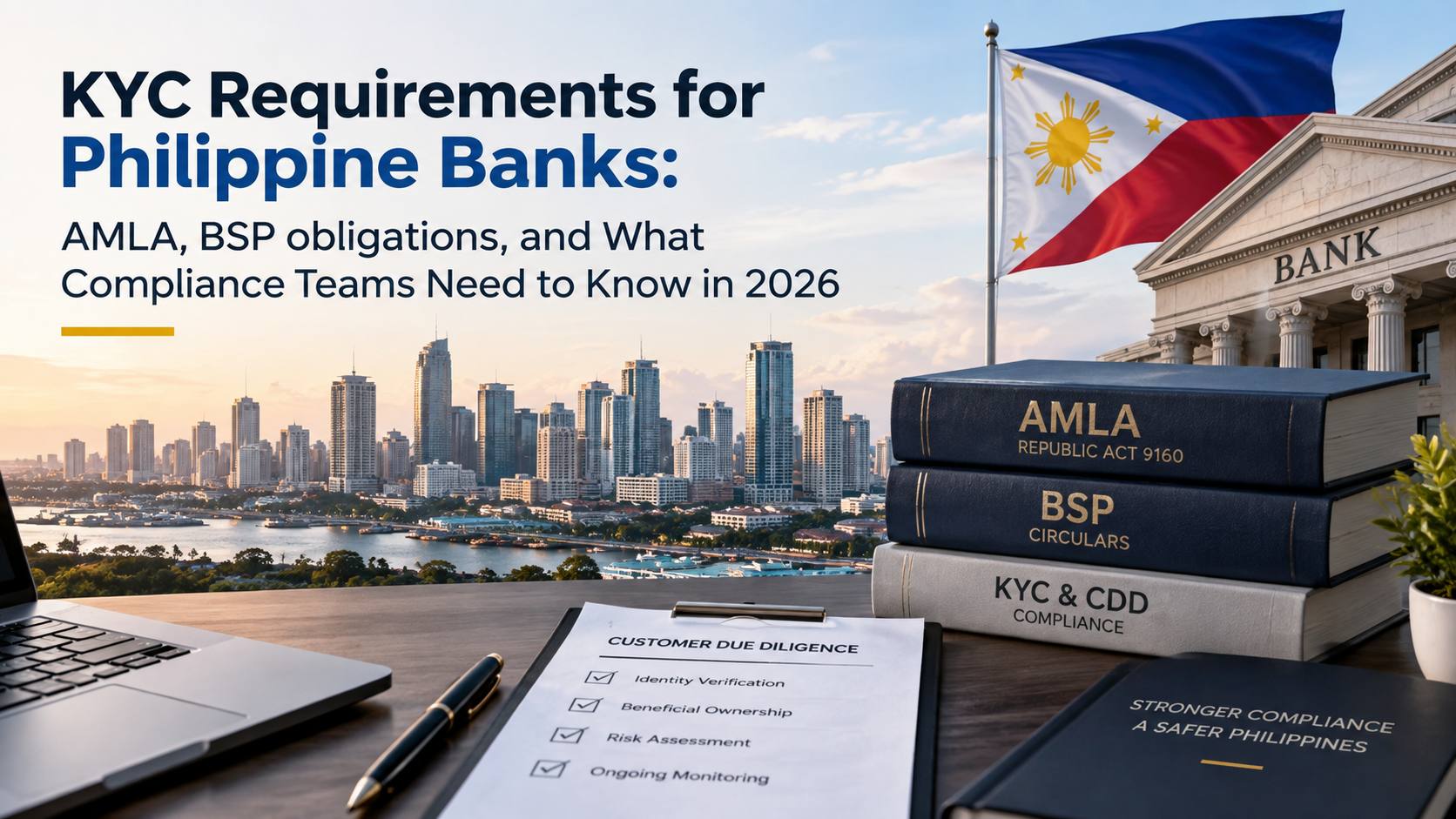
KYC Requirements for Philippine Banks: AMLA, BSP obligations, and What Compliance Teams Need to Know in 2026
The Philippines was removed from the FATF list of jurisdictions under increased monitoring in February 2025. This guide explains current AMLA and BSP KYC/CDD requirements for banks, including beneficial ownership, digital onboarding, reporting and record retention.
KYC Requirements for Philippine Banks: AMLA, BSP obligations, and What Compliance Teams Need to Know in 2026
The Philippines was removed from the FATF list of jurisdictions under increased monitoring in February 2025. This guide explains current AMLA and BSP KYC/CDD requirements for banks, including beneficial ownership, digital onboarding, reporting and record retention.