From Virtual Spins to Real Money Trails: Inside Indonesia’s Boxkia Gambling Bust

A spin looked like entertainment. The prize looked like a collectible. But behind the game-like mechanics sat a real financial system for deposits, withdrawals and value movement.
That is what Indonesian police say they uncovered in their investigation into Boxkia.com, an alleged online gambling operation using a gacha-style mechanism. Players reportedly purchased virtual currency to spin for prizes such as collectible items and cards, which could then be resold.
What makes the case particularly relevant for financial institutions is not simply the gambling mechanism. Investigators identified several ways money allegedly entered and left the platform, including BRIVA, QRIS and USDT for deposits, with withdrawals linked to Bank Permata and BRI accounts through DOKU.
Four suspects were arrested, and authorities are investigating allegations involving both online gambling and money laundering.
The case highlights a growing monitoring challenge: when a game-like interface, virtual currency and multiple payment rails sit between the customer and the underlying economic activity, the true purpose and movement of funds can become harder to see.

What Happened in the Boxkia Case?
Indonesia's Criminal Investigation Agency, Bareskrim Polri, said Boxkia.com offered games resembling a spin or gacha mechanism.
Players allegedly used virtual currency to participate in spins for prizes including collectible items, action figures and cards. Police said those rewards could later be sold for profit.
Investigators also identified a payment structure spanning several channels. Deposits could reportedly be made through BRIVA virtual accounts, QRIS and the cryptoasset USDT, while withdrawals were allegedly processed through Bank Permata and BRI accounts using DOKU.
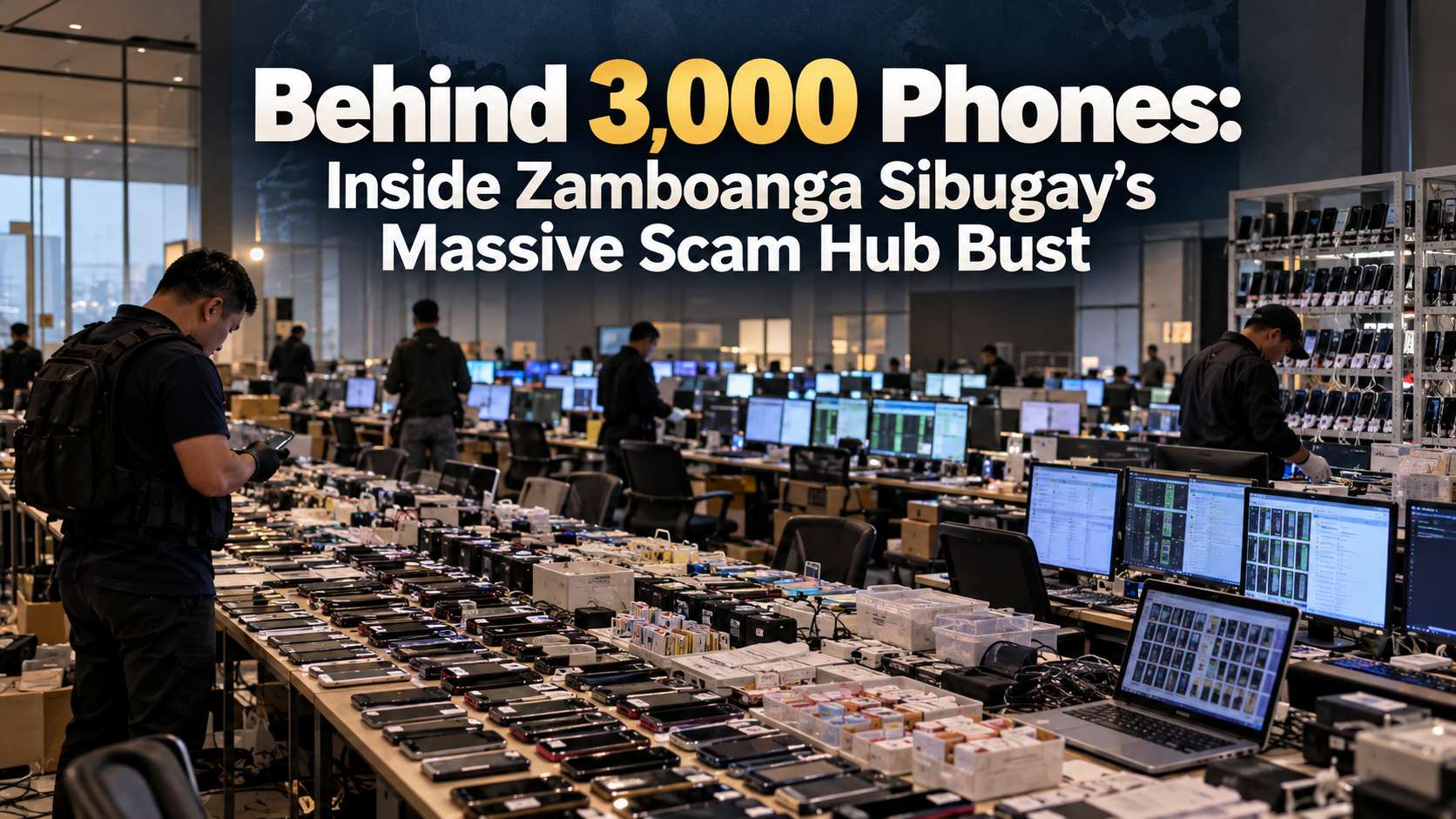
The four suspects arrested were said to have distinct responsibilities covering areas such as overall management, promotional activity, customer service, administration and financial operations. Authorities also seized mobile phones and ATM cards linked to Indonesian and Chinese banks.
Police are conducting further digital-forensic examinations and seeking to block accounts suspected of supporting the operation.
From a financial crime perspective, the important point is not simply that multiple payment methods were available. It is that value could allegedly move through several different forms and channels before being withdrawn.
When a Game Mechanic Obscures the Money Trail
Gacha-style mechanics are widely used in legitimate digital entertainment. The financial crime risk arises when those mechanics form part of an alleged gambling operation and create additional layers between the original payment and the eventual extraction of value.
In the Boxkia case, the reported structure involved fiat payments, virtual currency, chance-based rewards, resaleable items, cryptoassets and bank withdrawals.
Each layer can change how the activity appears.
A QRIS payment may look like an ordinary merchant transaction. A virtual-account transfer may resemble a routine deposit. A crypto transaction may sit outside the institution handling the original payment. A subsequent withdrawal may appear in a different account altogether.
Viewed separately, these activities may provide only fragments of the picture.
The financial crime risk becomes clearer when institutions connect the customer, beneficiary, payment channel, transaction purpose and subsequent movement of funds.
This is particularly important when value changes form several times before it reaches its final destination.
Why Multiple Payment Rails Matter
The reported use of BRIVA, QRIS, USDT, bank accounts and DOKU makes the Boxkia case particularly relevant to modern financial crime monitoring.
Different institutions may see different parts of the same activity. A bank may process the initial transfer, a payment provider may see the merchant interaction, a crypto service may facilitate another leg, and another financial institution may handle the eventual withdrawal.
No single participant necessarily has a complete view.
This fragmentation creates an advantage for illicit networks because suspicious behaviour that is difficult to recognise within one channel may become much clearer once connections across channels are understood.
For financial institutions, the monitoring question therefore needs to move beyond:
Is this individual transaction unusual?
The stronger question is whether a combination of payments, beneficiaries and behaviours matches a known or emerging financial crime pattern.
That shift from transaction-level detection to connected intelligence is increasingly important as criminal activity moves across payment methods.

What Banks and Payment Firms Should Watch
Online gambling and related money-laundering activity can produce signals across customers, merchants, beneficiary accounts and payment channels.
Institutions should pay attention to repetitive deposits or withdrawals that do not align with expected customer behaviour, particularly where transaction frequency rises sharply or funds move rapidly after receipt.
Merchant and beneficiary behaviour can provide further context. Accounts receiving funds from large numbers of unrelated individuals, repeatedly transferring those funds onwards or showing activity inconsistent with the stated purpose of the account may warrant closer scrutiny.
Other relevant indicators can include connections between multiple accounts and common merchants or payment identifiers, repeated movement between fiat accounts and cryptoassets, sudden changes in QRIS or virtual-account activity, and accounts linked to known or suspected gambling platforms.
The strongest signal rarely comes from one indicator alone.
It emerges when institutions combine customer context, transaction behaviour, beneficiary relationships, network connections and current typology intelligence.
That is especially important in cases where the front-end experience looks like entertainment while the underlying financial activity serves a very different purpose.
From Emerging Typology to Financial Crime Control
The Boxkia case illustrates a broader reality: financial crime is a network problem.
Criminal activity can move across bank accounts, payment providers, merchant mechanisms, cryptoassets and other financial channels, while individual institutions often see only the part that occurs inside their own environment.
Tookitaki is the intelligence ecosystem, helping institutions identify emerging threats sooner and adapt as financial crime changes.
The AFC Ecosystem brings together collective typology intelligence, risk patterns and emerging threat insights from the financial crime community. This gives institutions visibility into patterns the wider ecosystem is encountering, rather than relying only on threats that have already appeared within their own environment.
FinCense turns that intelligence into control. It helps financial institutions translate emerging typologies and risk patterns into deployable controls, test scenarios against existing data, recommend thresholds and simulate impact before controls are adapted.
For a typology involving game mechanics, virtual currency, merchant payments, bank accounts and cryptoassets, that intelligence-to-control cycle matters.
A financial institution should not have to wait until a new pattern has repeatedly affected its own customers before its controls begin adapting to it.
The objective is to identify threats sooner, adapt faster and respond with greater confidence.
The Bigger Lesson: Follow the Value Behind the Game
The Boxkia case shows why the appearance of a transaction can be misleading.
To a player, the activity may appear to involve virtual coins, spins and collectible prizes. To a financial institution, one part of the activity may appear as a QRIS payment, a virtual-account deposit or a routine bank transfer.
The wider picture only becomes visible when those pieces are connected.
For banks and payment firms, that means looking beyond what a transaction is called and understanding the economic behaviour underneath it.
When value moves through virtual currency, resaleable rewards, payment services, bank accounts and cryptoassets, institutions need to understand what the network of transactions is actually enabling.
As financial crime adapts to new digital experiences and payment channels, controls need to adapt with it.
The game mechanic may disguise the activity. The connected money trail can reveal it.
Experience the most intelligent AML and fraud prevention platform
Experience the most intelligent AML and fraud prevention platform
Experience the most intelligent AML and fraud prevention platform
Top AML Scenarios in ASEAN
The Role of AML Software in Compliance
The Role of AML Software in Compliance