

When Headlines Become Red Flags: Why Adverse Media Screening Solutions Are Becoming Essential for Modern Compliance
.svg)
Not every risk appears on a sanctions list. Some of it appears in the news first.
Introduction
Financial crime risk does not always arrive through structured watchlists or official sanctions databases. In many cases, the earliest warning signs emerge elsewhere — in investigative reports, regulatory news, court coverage, or negative press tied to fraud, corruption, shell companies, organised crime, or politically exposed networks.
That is why adverse media screening solutions are becoming a critical part of modern compliance.
For banks and fintechs in the Philippines, this matters more than ever. Financial institutions are operating in a fast-moving environment shaped by digital onboarding, real-time payments, cross-border remittances, and growing scrutiny around customer risk. Traditional compliance controls still matter, but they are no longer sufficient on their own. If a customer is linked to serious allegations, enforcement actions, or repeated negative media coverage, institutions need to know early — and act with confidence.
This is where adverse media screening moves from being a “nice-to-have” compliance layer to an essential risk intelligence capability.
Modern adverse media screening solutions help institutions identify hidden exposure earlier, enrich customer due diligence, support stronger monitoring decisions, and reduce the chance of onboarding or retaining customers whose reputational or criminal risk is rising in public view.
In an environment where trust is now one of the most valuable currencies a financial institution holds, ignoring adverse media is no longer a safe option.

Why Adverse Media Matters in Financial Crime Compliance
Watchlist screening tells institutions whether a person or entity appears on a formal list. Adverse media tells them whether risk may be building before formal action catches up.
This distinction is important.
A customer may not yet appear on a sanctions list or internal watchlist, but may already be associated in credible reporting with bribery, fraud, money laundering, corruption, terrorist financing, illegal gambling, shell company abuse, or organised criminal networks. That information, if reliable and properly assessed, can materially affect how an institution should approach customer due diligence, transaction monitoring, and case escalation.
In other words, adverse media screening helps close the gap between official designation and real-world emerging risk.
For financial institutions in the Philippines, this is especially relevant because customer risk increasingly spans multiple jurisdictions, digital platforms, and financial products. Many risks are not obvious at onboarding. They surface over time, often through public reporting, regulatory announcements, or cross-border investigations.
Adverse media screening gives compliance teams a wider lens. It helps them move from a narrow list-based approach toward a broader, more intelligence-led understanding of customer exposure.
Why Traditional Adverse Media Checks Fall Short
Many institutions still handle adverse media screening through manual searches or fragmented tools. Compliance analysts may search online sources, review isolated articles, and make judgment calls based on whatever appears in the moment.
This approach creates several problems.
First, it is inconsistent. Different analysts search differently, interpret news differently, and document findings differently.
Second, it is difficult to scale. Manual review may work for low customer volumes, but not for banks and fintechs onboarding thousands of customers or processing millions of transactions.
Third, it creates noise. Broad keyword searches often return huge numbers of irrelevant articles, especially for common names or businesses with generic identifiers.
Fourth, it is hard to defend. If a regulator asks why one article was treated as material but another was ignored, the institution needs more than ad hoc notes.
Finally, manual adverse media checks are slow. By the time a risk is found and validated, the customer may already be transacting at scale.
In a modern financial ecosystem, these limitations are serious.
Institutions need adverse media screening solutions that are structured, explainable, scalable, and capable of separating signal from noise.
What an Adverse Media Screening Solution Should Actually Do
A modern adverse media screening solution must do much more than search for names in the news.
At a minimum, it should help institutions:
- identify credible negative news linked to customers or counterparties
- distinguish relevant financial crime risk from general negative publicity
- prioritise high-risk findings
- reduce false positives caused by common names or weak matches
- maintain consistent documentation and review workflows
- connect adverse media findings to broader customer risk and AML controls
This means the solution must blend screening logic, contextual analysis, workflow support, and risk governance.
In practice, the strongest platforms evaluate adverse media through a structured lens. They do not simply ask, “Did this name appear in an article?” They ask, “Is this the same person or entity? Is the source credible? Does the content relate to financial crime risk? Should it affect risk scoring, monitoring intensity, or escalation decisions?”
That is a much more useful compliance outcome.
The False Positive Problem in Adverse Media Screening
False positives are one of the biggest operational challenges in adverse media screening.
A bank searching for a common Filipino surname, a widely used corporate name, or a business linked to multiple legal entities can generate overwhelming results. Many of these results are irrelevant. Some involve a different person with the same name. Others refer to non-material issues that do not indicate AML or fraud risk.
If the system cannot distinguish these properly, compliance teams are left reviewing excessive noise.
The result is predictable:
- slower onboarding
- delayed customer reviews
- wasted analyst time
- inconsistent decisions
- investigator fatigue
This is why modern adverse media screening solutions must focus heavily on precision.
Strong matching and contextual filtering are essential. Institutions need to reduce the volume of irrelevant hits while ensuring they do not miss genuinely material media exposure.
This is not simply an efficiency issue. It is also a governance issue. When teams are buried in low-value alerts, the risk of missing something important increases.
Why Context Matters More Than the Article Count
Not all negative media carries the same compliance significance.
A single, credible, well-sourced report linking a customer to a serious financial crime issue may be far more important than multiple low-quality references with weak relevance. Conversely, a customer may appear in several articles that sound negative but do not indicate AML or fraud risk at all.
This is why article count alone is not a useful measure.
Adverse media screening solutions need to assess:
- source credibility
- relevance to financial crime or corruption
- severity of the allegation or event
- recency
- connection confidence between the subject and the customer
- whether the issue changes the institution’s risk posture
This context helps institutions decide whether a result should:
- trigger enhanced due diligence
- increase customer risk scoring
- inform transaction monitoring thresholds
- result in case escalation
- be documented and retained with no further action
Without this context, adverse media screening becomes either too weak or too noisy. Neither outcome is acceptable.

Adverse Media Screening in the Philippine Context
For Philippine institutions, adverse media screening must reflect local realities.
The country’s financial ecosystem is shaped by:
- heavy remittance flows
- growing use of digital wallets
- increasing fintech participation
- corporate structures with cross-border ties
- exposure to regional scam, fraud, and laundering typologies
This creates a risk environment where customer exposure may not be visible through formal lists alone.
For example, customers or connected entities may appear in public reporting tied to:
- investment scams
- mule activity
- shell company networks
- corruption allegations
- online gambling proceeds
- terrorism financing concerns
- cross-border laundering patterns
In such cases, adverse media may be one of the earliest indicators that an institution should reassess exposure.
This does not mean every negative article should result in punitive action. It means institutions need a disciplined, risk-based framework to identify which media findings actually matter.
That is exactly where adverse media screening solutions add value.
Why Adverse Media Screening Must Connect With AML Workflows
Adverse media screening should not operate in isolation.
If a customer is linked to credible negative media, that information must influence the wider compliance framework. Otherwise, it remains an isolated note with little operational impact.
A modern solution should feed into:
- customer risk assessment
- onboarding reviews
- periodic KYC refreshes
- transaction monitoring sensitivity
- case management workflows
- suspicious activity investigations
For example, a customer linked to credible media involving corruption, organised crime, or laundering allegations may warrant enhanced due diligence, closer monitoring, and faster escalation if other alerts emerge later.
This integration is what turns adverse media from a search function into a real compliance control.
How Tookitaki FinCense Strengthens Adverse Media Risk Management
This is the gap Tookitaki FinCense is designed to help close.
As an AI-native compliance platform positioned as The Trust Layer for AML compliance and real-time prevention, FinCense brings together monitoring, screening, customer risk scoring, and investigation workflows in a unified environment.
That matters in adverse media screening because the challenge is not just identifying negative news. It is understanding how that news should affect customer risk and compliance action.
FinCense supports this broader approach by connecting screening intelligence with:
- customer risk profiles
- transaction monitoring outcomes
- case management workflows
- automated STR processes
This makes the adverse media signal operationally useful rather than merely informational.
The broader FinCense architecture also matters. The platform is built to modernise compliance organisations through an AI-native approach to financial crime prevention, with proven outcomes including reduced false positives, reduced alert disposition time, and stronger alert quality. In high-volume environments, that operational efficiency is essential.
For institutions dealing with large customer populations and real-time financial activity, FinCense provides the foundation to turn fragmented adverse media checks into part of a more scalable and intelligence-led compliance process.
The Role of AI in Adverse Media Screening
Artificial intelligence is especially valuable in adverse media screening because this is a domain where volume and ambiguity are high.
Modern AI can help:
- filter irrelevant content
- group similar articles
- identify likely matches more accurately
- extract risk-relevant themes
- support prioritisation
- reduce reviewer overload
However, AI must be used carefully. Compliance teams still need transparency and reviewability. The goal is not to create a black box that decides customer outcomes on its own. The goal is to help compliance teams reach better decisions faster and more consistently.
This is where AI should function as an accelerator of good judgment rather than a replacement for it.
From Adverse Media Hit to Investigative Action
The real value of adverse media screening lies in what happens after a credible hit is found.
A strong workflow should enable teams to:
- validate the identity match
- assess relevance and severity
- capture supporting evidence
- update customer risk where needed
- trigger EDD or escalation when appropriate
- preserve a clear audit trail
This is why investigation workflows matter as much as matching logic.
Tookitaki’s deck highlights the importance of Case Manager, intelligent alert prioritisation, and automated workflow support within FinCense. These capabilities become highly relevant once an adverse media finding needs structured review and documented action.
An adverse media result without a case workflow becomes a note.
An adverse media result inside a well-governed workflow becomes a control.
Scale, Security, and Operational Readiness
For banks and fintechs, adverse media screening is not just a detection problem. It is also a scale and infrastructure problem.
Institutions need solutions that can support:
- large customer bases
- ongoing rescreening
- cross-border exposure
- integration into live compliance environments
The operational backbone matters.
Tookitaki’s deck highlights a platform architecture built for modern compliance delivery, including cloud-native deployment options, secure infrastructure across APAC, SOC 2 Type II certification, PCI DSS certification, and robust code-to-cloud security controls.
These details matter because adverse media screening is not a stand-alone desktop process. It sits inside a broader compliance stack that must be secure, scalable, and reliable under production loads.
What Banks and Fintechs Should Look For in an Adverse Media Screening Solution
When evaluating an adverse media screening solution, institutions should look beyond simple news matching.
They should ask:
- Does the solution distinguish relevant AML or fraud risk from generic negative publicity?
- How does it reduce false positives for common names and weak matches?
- Can it support ongoing screening, not just onboarding checks?
- Does it connect adverse media findings to customer risk and monitoring decisions?
- Does it provide structured workflows and audit trails for review?
- Can it scale across large customer populations?
- Does it fit into a broader compliance architecture?
These questions separate a tactical tool from a real compliance capability.
Frequently Asked Questions About Adverse Media Screening Solutions
What is an adverse media screening solution?
An adverse media screening solution helps financial institutions identify negative public information linked to customers or counterparties that may indicate fraud, corruption, money laundering, or other financial crime risks.
Why is adverse media screening important?
It helps institutions detect emerging risk earlier, especially where no formal sanctions or watchlist designation exists yet.
Is adverse media screening the same as sanctions screening?
No. Sanctions screening checks customers against formal restricted-party lists, while adverse media screening reviews public negative news and reputational risk signals.
Who needs adverse media screening solutions?
Banks, fintechs, payment providers, remittance firms, and other regulated financial institutions all benefit from adverse media screening as part of broader AML and fraud controls.
How should adverse media findings be used?
They should inform customer risk scoring, due diligence, transaction monitoring intensity, and investigation workflows, depending on relevance and severity.
Conclusion
Adverse media screening has become an essential part of modern financial crime compliance because risk does not always wait for formal lists or official actions.
For banks and fintechs in the Philippines, this capability is increasingly important. High-volume digital finance, cross-border exposure, and fast-changing typologies require institutions to identify customer risk earlier and assess it more intelligently.
A strong adverse media screening solution helps institutions move from fragmented searches and inconsistent judgment to a more structured, scalable, and risk-based approach.
And when that capability is embedded within a broader platform like Tookitaki FinCense, it becomes far more powerful. FinCense helps institutions connect screening intelligence to monitoring, risk scoring, investigation, and reporting — which is ultimately what modern compliance requires.
In financial crime compliance, the headline is not the risk.
Failing to act on it is.
Experience the most intelligent AML and fraud prevention platform
Experience the most intelligent AML and fraud prevention platform
Experience the most intelligent AML and fraud prevention platform
Top AML Scenarios in ASEAN
The Role of AML Software in Compliance
The Role of AML Software in Compliance
Talk to an Expert
Our Thought Leadership Guides

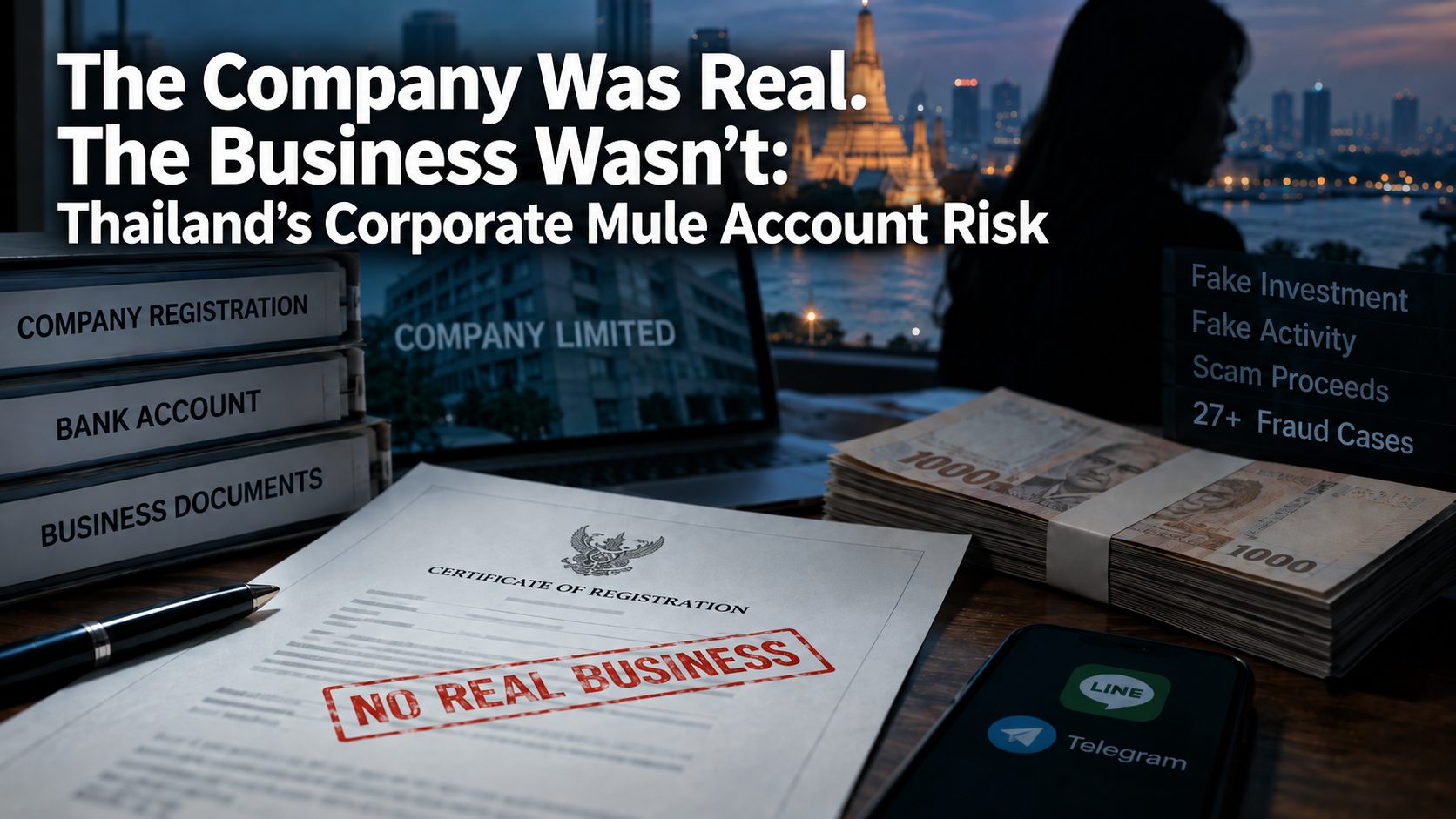
KYC Requirements for Philippine Banks: AMLA, BSP obligations, and What Compliance Teams Need to Know in 2026
The Philippines was removed from the FATF list of jurisdictions under increased monitoring in February 2025. This guide explains current AMLA and BSP KYC/CDD requirements for banks, including beneficial ownership, digital onboarding, reporting and record retention.
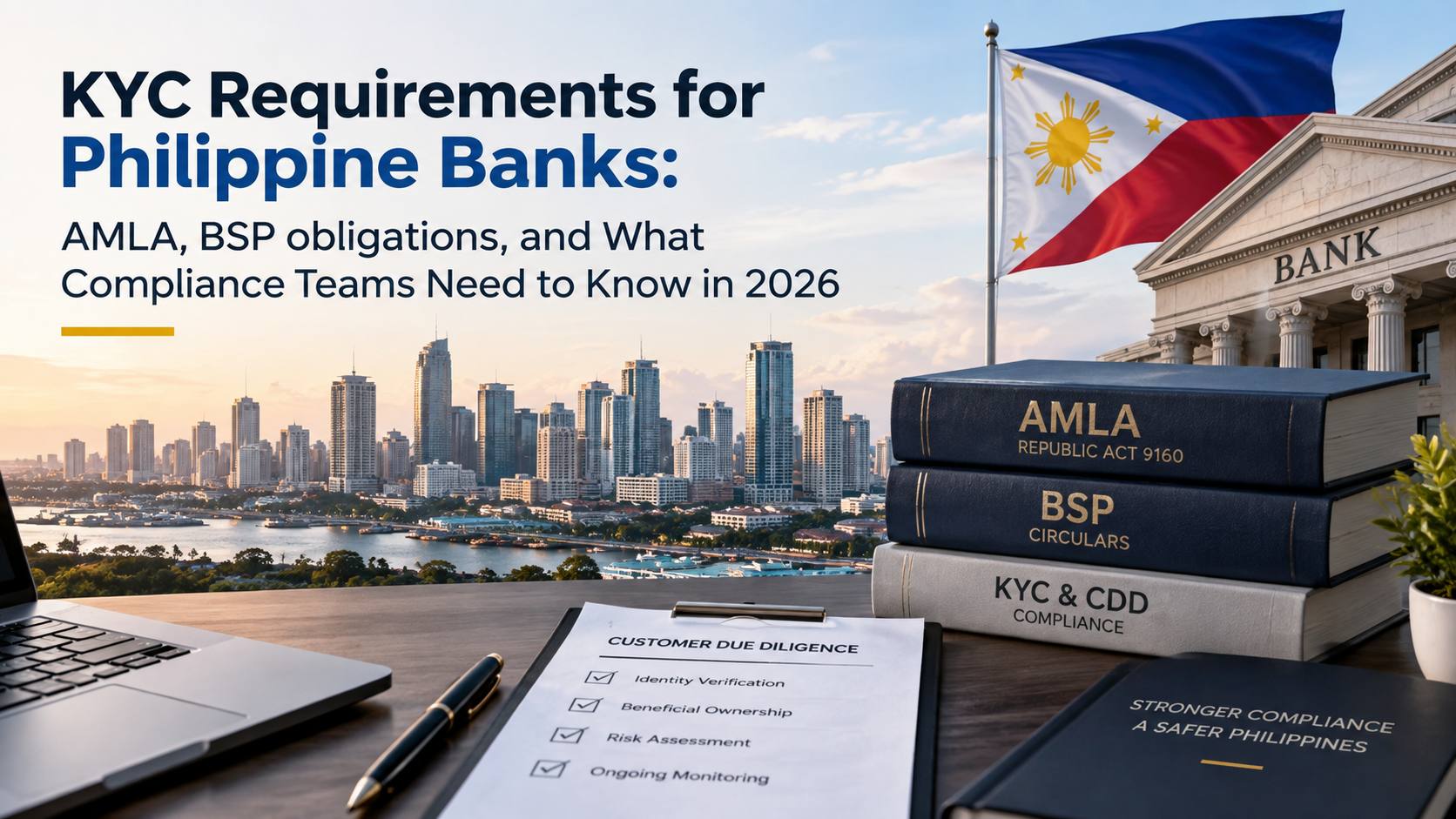
KYC Requirements for Philippine Banks: AMLA, BSP obligations, and What Compliance Teams Need to Know in 2026
The Philippines was removed from the FATF list of jurisdictions under increased monitoring in February 2025. This guide explains current AMLA and BSP KYC/CDD requirements for banks, including beneficial ownership, digital onboarding, reporting and record retention.