

RBNZ vs ASB: Why New Zealand’s AML Expectations Just Changed
.svg)
In December 2025, the Reserve Bank of New Zealand sent one of its clearest signals yet to the financial sector. By filing civil proceedings against ASB Bank for breaches of the AML/CFT Act, the regulator made it clear that compliance in name alone is no longer sufficient. What matters now is whether anti-money laundering controls actually work in practice.
This was not a case about proven money laundering or terrorism financing. It was about operational effectiveness, timeliness, and accountability. For banks and financial institutions across New Zealand, that distinction is significant.
The action marks a turning point in how AML compliance will be assessed going forward. It reflects a shift from reviewing policies and frameworks to testing whether institutions can demonstrate real-world outcomes under scrutiny.

What Happened and Why It Matters
The Reserve Bank’s filing outlines multiple failures by ASB to meet core obligations under the AML/CFT Act. These included shortcomings in maintaining an effective AML programme, carrying out ongoing customer due diligence, applying enhanced due diligence when required, and reporting suspicious activity within mandated timeframes.
ASB admitted liability across all causes of action and cooperated with the regulator. The Reserve Bank also clarified that it was not alleging ASB knowingly facilitated money laundering or terrorism financing.
This clarification is important. The case is not about intent or criminal involvement. It is about whether an institution’s AML framework operated effectively and consistently over time.
For the wider market, this is a regulatory signal rather than an isolated enforcement action.
What the Reserve Bank Is Really Signalling
Read carefully, the Reserve Bank’s message goes beyond one bank. It reflects a broader recalibration of supervisory expectations.
First, AML effectiveness is now central. Regulators are no longer satisfied with documented programmes alone. Institutions must show that controls detect risk, escalate appropriately, and lead to timely action.
Second, speed matters. Delays in suspicious transaction reporting, extended remediation timelines, and slow responses to emerging risks are viewed as material failures, not operational inconveniences.
Third, governance and accountability are under the spotlight. AML effectiveness is not just a technology issue. It reflects resourcing decisions, prioritisation, escalation pathways, and senior oversight.
This mirrors developments in other comparable jurisdictions, including Australia, Singapore, and the United Kingdom, where regulators are increasingly outcome-focused.
Why This Is a Critical Moment for New Zealand’s Financial System
New Zealand’s AML regime has matured significantly over the past decade. Financial institutions have invested heavily in frameworks, teams, and tools. Yet the RBNZ action highlights a persistent gap between programme design and day-to-day execution.
This matters for several reasons.
Public confidence in the financial system depends not only on preventing crime, but on the belief that institutions can detect and respond to risk quickly and effectively.
From an international perspective, New Zealand’s reputation as a well-regulated financial centre supports correspondent banking relationships and cross-border trust. Supervisory actions like this are closely observed beyond domestic borders.
For compliance teams, the message is clear. Supervisory reviews will increasingly test how AML frameworks perform under real-world conditions, not how well they are documented.
Common AML Gaps Brought to Light
While the specifics of each institution differ, the issues raised by the Reserve Bank are widely recognised across the industry.
One common challenge is fragmented visibility. Customer risk data, transaction monitoring outputs, and historical alerts often sit in separate systems. This makes it difficult to build a unified view of risk or spot patterns over time.
Another challenge is static monitoring logic. Rule-based thresholds that are rarely reviewed struggle to keep pace with evolving typologies, particularly in an environment shaped by real-time payments and digital channels.
Ongoing customer due diligence also remains difficult to operationalise at scale. While onboarding checks are often robust, keeping customer risk profiles current requires continuous recalibration based on behaviour, exposure, and external intelligence.
Finally, reporting delays are frequently driven by workflow inefficiencies. Manual reviews, alert backlogs, and inconsistent escalation criteria can all slow the path from detection to reporting.
Individually, these issues may appear manageable. Together, they undermine AML effectiveness.
Why Traditional AML Models Are Under Strain
Many of these gaps stem from legacy AML operating models.
Traditional architectures rely heavily on static rules, manual investigations, and institution-specific intelligence. This approach struggles in an environment where financial crime is increasingly fast-moving, cross-border, and digitally enabled.
Compliance teams face persistent pressure. Alert volumes remain high, false positives consume investigator capacity, and regulatory expectations continue to rise. When resources are stretched, timeliness becomes harder to maintain.
Explainability is another challenge. Regulators expect institutions to articulate why decisions were made, not just that actions occurred. Systems that operate as black boxes make this difficult.
The result is a growing disconnect between regulatory expectations and operational reality.
The Shift Toward Effectiveness-Led AML
The RBNZ action reflects a broader move toward effectiveness-led AML supervision.
Under this approach, success is measured by outcomes rather than intent. Regulators are asking:
- Are risks identified early or only after escalation?
- Are enhanced due diligence triggers applied consistently?
- Are suspicious activities reported promptly and with sufficient context?
- Can institutions clearly explain and evidence their decisions?
Answering these questions requires more than incremental improvements. It requires a rethinking of how AML intelligence is sourced, applied, and validated.

Rethinking AML for the New Zealand Context
Modernising AML does not mean abandoning regulatory principles. It means strengthening how those principles are executed.
One important shift is toward scenario-driven detection. Instead of relying solely on generic thresholds, institutions increasingly use typologies grounded in real-world crime patterns. This aligns monitoring logic more closely with how financial crime actually occurs.
Another shift is toward continuous risk recalibration. Customer risk is not static. Systems that update risk profiles dynamically support more effective ongoing due diligence and reduce downstream escalation issues.
Collaboration also plays a growing role. Financial crime does not respect institutional boundaries. Access to shared intelligence helps institutions stay ahead of emerging threats rather than reacting in isolation.
Finally, transparency matters. Regulators expect clear, auditable logic that explains how risks are assessed and decisions are made.
Where Technology Can Support Better Outcomes
Technology alone does not solve AML challenges, but the right architecture can materially improve effectiveness.
Modern AML platforms increasingly support end-to-end workflows, covering onboarding, screening, transaction monitoring, risk scoring, investigation, and reporting within a connected environment.
Advanced analytics and machine learning can help reduce false positives while improving detection quality, when applied carefully and transparently.
Equally important is the ability to incorporate new intelligence quickly. Systems that can ingest updated typologies without lengthy redevelopment cycles are better suited to evolving risk landscapes.
How Tookitaki Supports This Evolution
Within this shifting environment, Tookitaki supports institutions as they move toward more effective AML outcomes.
FinCense, Tookitaki’s end-to-end compliance platform, is designed to support the full AML lifecycle, from real-time onboarding and screening to transaction monitoring, dynamic risk scoring, investigation, and reporting.
A distinguishing element is its connection to the AFC Ecosystem. This is a collaborative intelligence network where compliance professionals contribute, validate, and refine real-world scenarios based on emerging risks. These scenarios are continuously updated, allowing institutions to benefit from collective insights rather than relying solely on internal discovery.
For New Zealand institutions, this approach supports regulatory priorities around effectiveness, timeliness, and explainability. It strengthens detection quality while maintaining transparency and governance.
Importantly, technology is positioned as an enabler of better outcomes, not a substitute for oversight or accountability.
What Compliance Leaders in New Zealand Should Be Asking Now
In light of the RBNZ action, there are several questions worth asking internally.
- Can we evidence the effectiveness of our AML controls, not just their existence?
- How quickly do alerts move from detection to suspicious transaction reporting?
- Are enhanced due diligence triggers dynamic or static?
- Do we regularly test monitoring logic against emerging typologies?
- Could we confidently explain our AML decisions to the regulator tomorrow?
These questions are not about fault-finding. They are about readiness.
Looking Ahead
The Reserve Bank’s action against ASB marks a clear shift in New Zealand’s AML supervisory landscape. Effectiveness, timeliness, and accountability are now firmly in focus.
For financial institutions, this is both a challenge and an opportunity. Those that proactively strengthen their AML operating models will be better positioned to meet regulatory expectations and build long-term trust.
Ultimately, the lesson extends beyond one case. AML compliance in New Zealand is entering a new phase, one where outcomes matter as much as intent. Institutions that adapt early will define the next standard for financial crime prevention in the market.
Experience the most intelligent AML and fraud prevention platform
Experience the most intelligent AML and fraud prevention platform
Experience the most intelligent AML and fraud prevention platform
Top AML Scenarios in ASEAN
The Role of AML Software in Compliance
Talk to an Expert
Our Thought Leadership Guides

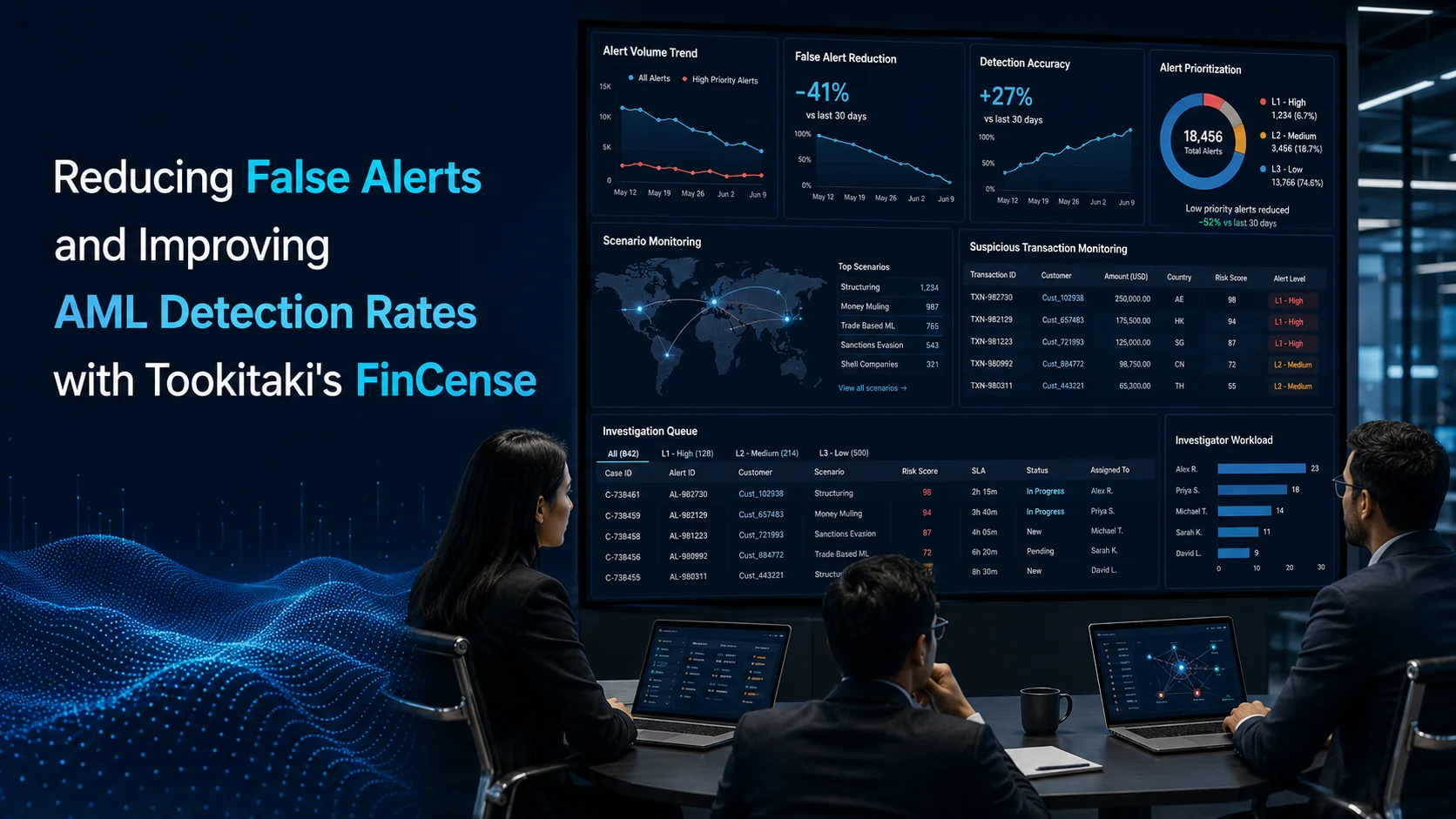
Reducing False Alerts and Improving AML Detection Rates with Tookitaki's FinCense
False positives overwhelm AML compliance teams while genuine financial crime goes undetected. Tookitaki addresses this two ways: an Alert Prioritization AI Agent that works on top of any legacy system, and FinCense Transaction Monitoring with scenario-based detection and automated threshold tuning.
AML Compliance for Digital Banks in Malaysia: Meeting BNM's Requirements with FinCense
Malaysia's digital banks face BNM's 2023 AML/CFT Policy Document, FATF's updated recommendations, and mounting pressure on eKYC and transaction monitoring standards. Here is how FinCense addresses these requirements.


Living Under the STR Clock: The Growing Pressure on AML Investigators
AML investigators face increasing pressure to make Suspicious Transaction Report decisions under tight timelines and growing alert volumes. Explore the challenges behind STR reporting and the shift toward intelligence-led investigations.

