

Inside a S$920,000 Scam: How Fake Officials Turned Trust Into a Weapon
.svg)
In financial crime, the most dangerous scams are often not the loudest. They are the ones that feel official.
That is what makes a recent case in Singapore so unsettling. On 13 March 2026, the Singapore Police Force said a 38-year-old man would be charged for his suspected role in a government-official impersonation scam. In the case, the victim first received a call from someone claiming to be from HSBC. She was then transferred to people posing as officials from the Ministry of Law and the Monetary Authority of Singapore. Told she was implicated in a money laundering case, she handed over gold and luxury watches worth more than S$920,000 over two occasions for supposed safe-keeping. Police later said more than S$92,500 in cash, a cash counting machine, and mobile devices were seized, and that the suspect was believed to be linked to a transnational scam syndicate.
This was not an isolated event. Less than a month earlier, Singapore Police warned of a scam variant involving the physical collection of valuables such as gold bars, jewellery, and luxury watches. Since February 2026, at least 18 reports had been lodged with total losses of at least S$2.9 million. Victims were accused of criminal activity, shown fake documents such as warrants of arrest or financial inspection orders, and told to hand over valuables for investigation purposes.
This is what makes the case worth studying. It is not merely another impersonation scam. It is a clear example of how scammers are turning institutional trust into an attack surface.

When a scam feels like a compliance process
The strength of this scam lies in its structure.
It did not begin with an obviously suspicious demand. It began with a familiar institution and a plausible problem. The victim was told there was a financial irregularity linked to her name. When she denied it, the call escalated. One “official” handed her to another. The issue became more serious. The tone became more formal. The pressure grew. By the time she was asked to surrender valuables, the request no longer felt random. It felt procedural.
That is the real shift. Modern impersonation scams are no longer built only on panic. They are built on procedural realism. Scammers do not just imitate institutions. They imitate how institutions escalate, document, and direct action.
In practical terms, that means the victim is not simply deceived. The victim is managed through a scripted journey that feels consistent from start to finish.
For financial institutions, that distinction matters. Traditional scam prevention often focuses on suspicious transactions or obvious red flags at the point of payment. But in cases like this, the deception matures long before a payment event occurs. By the time value leaves the victim’s control, the psychological manipulation is already deep.
Why this case matters more than the headline amount
The S$920,000 figure is striking, but the amount is not the only reason this case matters.
It matters because it reveals how scam typologies in Singapore are evolving. According to the Singapore Police Force’s Annual Scam and Cybercrime Brief 2025, government-official impersonation scams rose from 1,504 cases in 2024 to 3,363 cases in 2025, with losses reaching about S$242.9 million, making it one of the highest-loss scam categories in the country. The same report noted that these scams have expanded beyond direct bank transfers to include payment service provider accounts, cryptocurrency transfers, and in-person handovers of valuables such as cash, gold, jewellery, and luxury watches.
That is a critical development.
For years, many fraud programmes were designed around digital account compromise, phishing, or unauthorised transfers. But this case shows that criminals are increasingly comfortable moving across both financial and physical channels. The objective is not simply to get money into a mule account. It is to extract value in whatever form is easiest to move, conceal, and monetise.
Gold and luxury watches are attractive for exactly that reason. They are high value, portable, and less dependent on the normal transaction rails that banks monitor most closely.
In other words, the scam starts as impersonation, but it quickly becomes a broader financial crime problem.
The fraud story is only half the story
Cases like this should not be viewed only through a consumer-protection lens.
Behind the victim interaction sits a wider operating model. Someone makes the first call. Someone sustains the deception. Someone coordinates collection. Someone receives, stores, transports, or liquidates the assets. Someone eventually tries to reintroduce the value into the legitimate economy.
In this case, police said the arrested man had received valuables from unknown persons on numerous occasions and was believed to be part of a transnational scam syndicate. That is an important detail because it suggests repeat collection activity, not a one-off pickup.
That is where scam prevention and AML can no longer be treated as separate problems.
The initial event may be social engineering. But the downstream flow is classic laundering risk: collection, movement, layering, conversion, and integration.
For banks and fintechs, this means detection cannot depend only on isolated rules. A large withdrawal, sudden liquidation of savings, urgent purchases of gold, repeated interactions under emotional stress, or unusual movement patterns may each appear explainable on their own. But when connected to current scam typologies, they tell a very different story.
Three lessons for financial institutions in Singapore
The first is that scam typologies are becoming hybrid by default.
This case combined impersonation, false legal threats, fake institutional escalation, and physical asset collection. That is not a narrow call-centre fraud. It is a multi-stage typology that moves across customer communication, behavioural risk, and laundering infrastructure.
The second is that trust itself has become a risk variable.
Banks and regulators spend years building confidence with customers. Scammers now borrow that credibility to make extraordinary requests sound reasonable. That makes impersonation scams especially corrosive. They do not only create losses. They weaken confidence in the institutions the public depends on.
The third is that static controls are poorly suited to dynamic scams.
A rule can identify an unusual transfer. A threshold can detect a large withdrawal. But neither, on its own, can explain why a customer is suddenly behaving outside their normal pattern, or whether that behaviour fits a live scam typology circulating in the market.
That requires context. And context requires connected intelligence.

What a smarter response should look like
Public education remains essential. Singapore authorities continue to emphasise that government officials will never ask members of the public to transfer money, disclose bank credentials, install apps from unofficial sources, or hand over valuables over a call. The Ministry of Home Affairs has also made clear that tackling scams remains a national priority.
But education alone will not be enough.
Financial institutions need to assume that scam patterns will keep mutating. What is gold and watches today may be stablecoins, prepaid instruments, cross-border wallets, or new stores of value tomorrow. The response therefore cannot be limited to isolated controls inside separate fraud, AML, and case-management systems.
What is needed is a more unified operating model that can:
- connect customer behaviour to known scam typologies in near real time
- identify linked fraud and laundering indicators earlier in the journey
- prioritise alerts based on evolving scam intelligence rather than static severity alone
- support investigators with richer context, not just raw transaction anomalies
- adapt faster as scam syndicates change collection methods and value-transfer channels
This is where the difference between traditional monitoring and modern financial crime intelligence becomes clear.
At Tookitaki, the challenge is not viewed as a series of disconnected alerts. It is treated as a typology problem. That matters because scams like this do not unfold as single events. They unfold as patterns. A platform that can connect scam intelligence, behavioural anomalies, laundering signals, and investigation workflows is far better placed to help institutions act before harm escalates.
That is the shift the industry needs to make. From monitoring transactions in isolation to understanding how financial crime actually behaves in the wild.
Final thought
The most disturbing thing about this scam is not the luxury watches or the gold. It is how ordinary the first step sounded.
A bank call. A transfer to another official. A compliance issue. A request framed as part of an investigation.
That is why this case should resonate far beyond one victim or one arrest. It shows that the next generation of scams will be more disciplined, more believable, and more fluid across both digital and physical channels.
For the financial sector, the lesson is simple. Scam prevention can no longer sit at the edge of the system as a public-awareness problem alone. It must be treated as a core financial crime challenge, one that sits at the intersection of fraud, AML, customer protection, and trust.
The institutions that respond best will not be the ones relying on yesterday’s rules. They will be the ones that can read evolving typologies faster, connect risk signals earlier, and recognise that in modern scams, trust is no longer just an asset.
It is a target.
Experience the most intelligent AML and fraud prevention platform
Experience the most intelligent AML and fraud prevention platform
Experience the most intelligent AML and fraud prevention platform
Top AML Scenarios in ASEAN
The Role of AML Software in Compliance
Talk to an Expert
Our Thought Leadership Guides

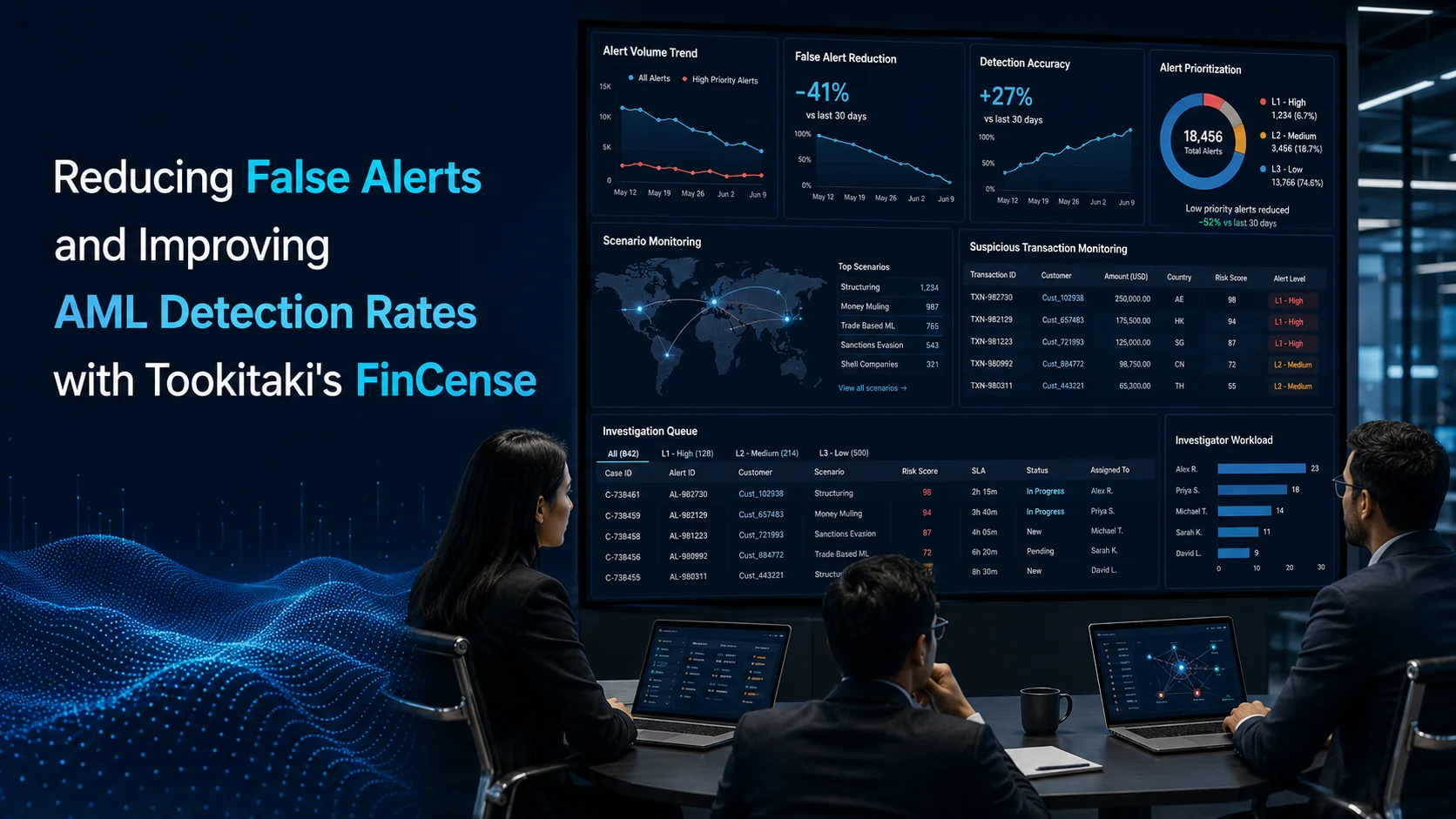
Reducing False Alerts and Improving AML Detection Rates with Tookitaki's FinCense
False positives overwhelm AML compliance teams while genuine financial crime goes undetected. Tookitaki addresses this two ways: an Alert Prioritization AI Agent that works on top of any legacy system, and FinCense Transaction Monitoring with scenario-based detection and automated threshold tuning.
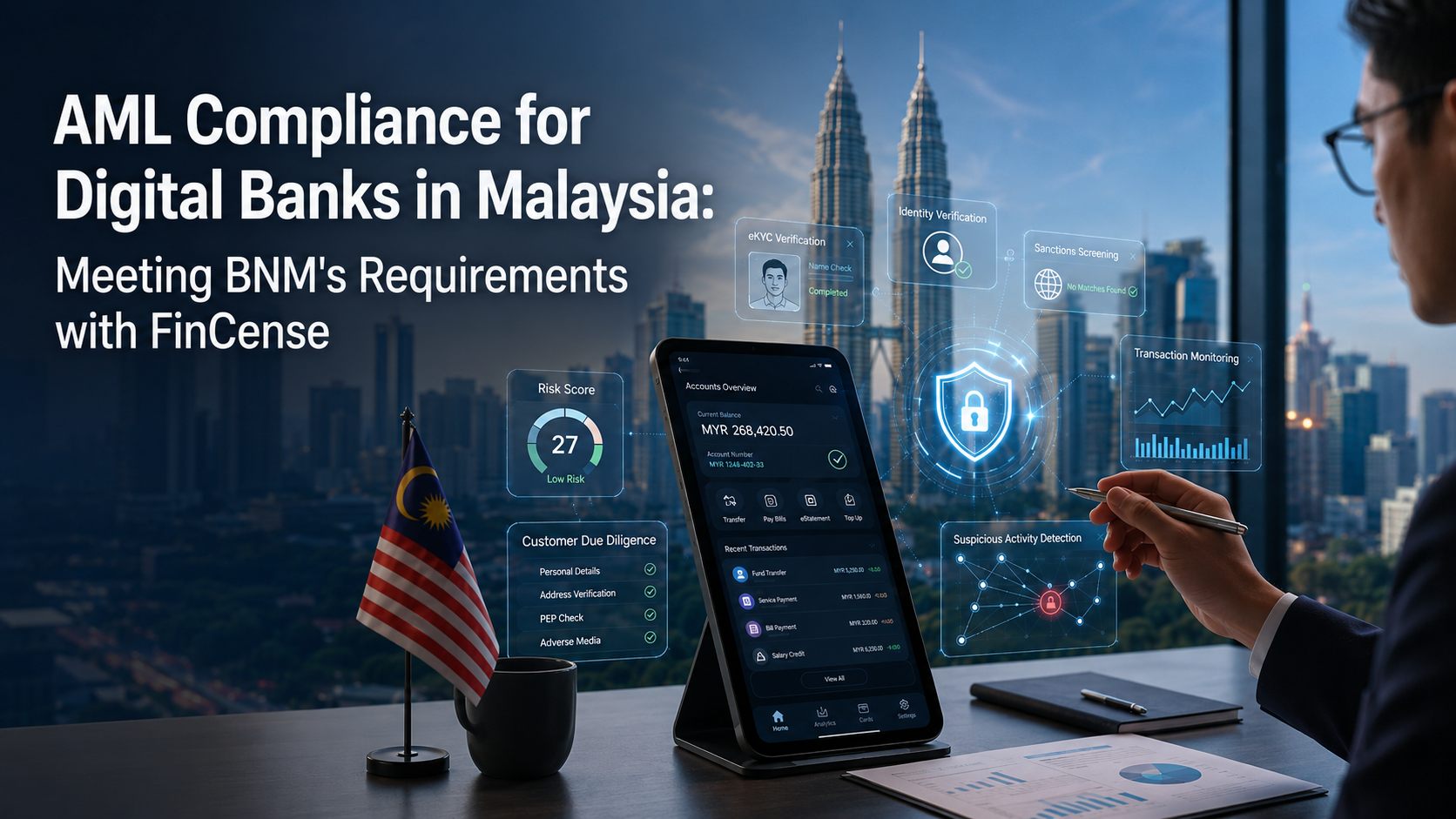
AML Compliance for Digital Banks in Malaysia: Meeting BNM's Requirements with FinCense
Malaysia's digital banks face BNM's 2023 AML/CFT Policy Document, FATF's updated recommendations, and mounting pressure on eKYC and transaction monitoring standards. Here is how FinCense addresses these requirements.

Living Under the STR Clock: The Growing Pressure on AML Investigators
AML investigators face increasing pressure to make Suspicious Transaction Report decisions under tight timelines and growing alert volumes. Explore the challenges behind STR reporting and the shift toward intelligence-led investigations.

The Penthouse Syndicate: Inside Australia’s $100M Mortgage Fraud Scandal
Explore the Penthouse Syndicate mortgage fraud investigation in Australia and how organised crime networks allegedly exploited home loans and property transactions to move illicit funds through the financial system.
