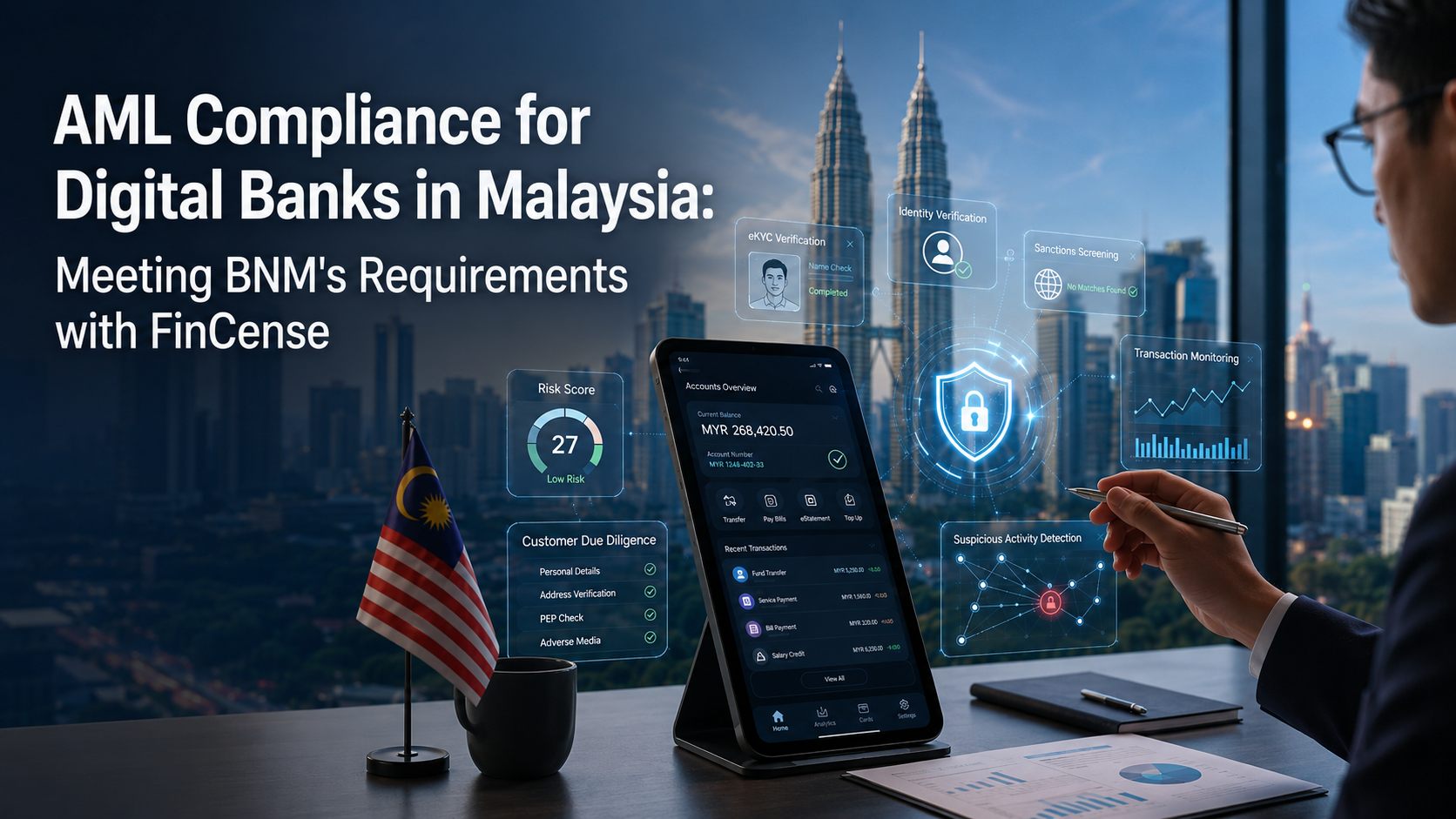
Developing AML Compliance Programs for UAE Money Service Businesses
Money Service Businesses (MSBs) in the United Arab Emirates (UAE) are under increased regulatory scrutiny to prevent money laundering and terrorist financing activities. To comply with the regulations, MSBs need to develop a comprehensive Anti-Money Laundering (AML) compliance program. In this blog, we will discuss how Tookitaki's AML compliance solutions can help MSBs in the UAE to develop a robust and effective AML compliance program.
Understanding the UAE Regulatory Framework for AML Compliance
The UAE has been taking significant measures to combat money laundering and terrorist financing. The country has implemented a strong regulatory framework for AML compliance that financial institutions operating in the country need to adhere to. In recent years, compliance regulation and requirements for the Know Your Customer (KYC) regulations in the UAE have also changed, especially in the banking sector of Dubai and other Emirates. According to a report by the Financial Action Task Force (FATF), UAE has been making significant progress in improving its AML/CFT framework, and it has been recognized as one of the top-performing countries in the Middle East and North Africa region.
.png)
To comply with the UAE's regulatory framework, financial institutions must establish and maintain an effective AML compliance program. They must also have robust systems in place to detect and report any suspicious transactions. Failure to comply with the UAE's AML regulations can result in significant financial and reputational damage.
Recently, the UAE Central Bank has imposed hefty fines on several banks for their non-compliance with AML regulations. The fines ranged from AED 500,000 to AED 10 million, and some banks were also instructed to suspend some of their services temporarily. Therefore, it is crucial for financial institutions operating in the UAE to ensure that they have robust AML compliance programs in place to avoid any legal and financial penalties.
Tookitaki's AML Compliance Solutions for MSBs
Tookitaki is leading the charge in the fight against financial crime with its Anti-Money Laundering Suite and Anti-Financial Crime (AFC) Ecosystem. Its unique community-based approach, powered by federated machine learning, breaks down the siloed approach used by criminals to evade traditional solutions. This results in a more effective AML program with a wider coverage of risk, sharper detection, and fewer false alerts.
Tooktiaki’s approach starts with our AFC ecosystem which is a community-based platform to share information and best practices in the fight against financial crime. The AFC ecosystem is powered through our Typology Repository which is a live database of money laundering techniques and schemes called typologies. These typologies are contributed by financial institutions, regulatory bodies, risk consultants, etc around the world by sharing their own experiences and knowledge of money laundering. The repository includes a wide range of typologies, from traditional methods such as shell companies and money mules, to more recent developments such as digital currency and social media-based schemes.
{{cta-guide}}
The AMLS, on the other hand, is a software deployed at financial institutions, which collaborates with the AFC Ecosystem through federated machine learning. The AMLS extracts the new typologies from the AFC Ecosystem and executes the typologies at the customers' end, ensuring that their AML programs stay ahead of the curve. The AMLS includes several modules such as Transaction Monitoring, Smart Screening, Dynamic Risk Scoring, and Case Manager. These modules work together to provide a comprehensive compliance solution that covers all aspects of AML including detection, investigation, and reporting.
The Transaction Monitoring module is designed to detect suspicious patterns of financial transactions that may indicate money laundering or other financial crimes. It utilizes powerful simulation modes for automated threshold tuning, which allows AML teams to focus on the most relevant alerts and improve their overall efficiency. The module also includes a built-in sandbox environment, which allows financial institutions to test and deploy new typologies in a matter of minutes. This feature enables AML teams to quickly adapt to new money laundering techniques and stay ahead of the criminals.
The Smart Screening module is designed to detect potential matches against sanctions lists, PEPs, and other watchlists. It includes 50+ name matching techniques, supports multiple attributes such as name, address, gender, date of birth, and date of incorporation. It covers 20+ languages and 10 different scripts, and includes a built-in transliteration engine for effective cross-lingual matching. This module is highly configurable, allowing it to be tailored to the specific needs of each financial institution.
The Dynamic Risk Scoring solution is a flexible and scalable customer risk ranking program that adapts to changing customer behavior and compliance requirements. This module creates a dynamic, 360-degree risk profile of customers. It not only enables financial institutions to uncover hidden risks but also opens up new business opportunities.
The Case Manager provides compliance teams with the platform to collaborate on cases and work seamlessly across teams. It comes with a host of automations built to empower investigators. Financial institutions can configure the Case Manager to automate processes such as case creation, allocation, data gathering, and so on, allowing investigators to become more effective.
Benefits of Using Tookitaki's AML Compliance Solutions
Using Tookitaki's AML compliance solutions can help MSBs in the following ways:
Stay Ahead of Regulation: AMLS' ability to stay ahead of regulations, combined with AFC's expertise in the field, helps MSBs navigate the complex regulatory landscape and maintain compliance.
Maximize Efficiency: With transaction monitoring, smart screening and Dynamic Risk Scoring solutions under one platform, MSBs can efficiently identify and mitigate financial crime risks, without wasting valuable resources on false alerts.
Unlock Hidden Risks: AFC's community-based platform provides access to information and best practices that can help MSBs uncover hidden risks and stay ahead of the competition.
Final Thoughts
Tookitaki's AML compliance solutions offer an end-to-end solution for MSBs in the UAE to develop a comprehensive AML compliance program. Using Tookitaki's solutions can help MSBs to comply with regulatory requirements more effectively and efficiently while reducing costs and improving risk management. MSBs can contact Tookitaki to book a demo of the solutions and learn how they can help them with their AML compliance efforts.
Experience the most intelligent AML and fraud prevention platform
Top AML Scenarios in ASEAN
The Role of AML Software in Compliance
Talk to an Expert
Ready to Streamline Your Anti-Financial Crime Compliance?
Our Thought Leadership Guides
When Luck Isn’t Luck: Inside the Crown Casino Deception That Fooled the House
1. Introduction to the Scam
In October 2025, a luxury casino overlooking Sydney Harbour became the unlikely stage for one of Australia’s most unusual fraud cases of the year 2025.
There were no phishing links, fake investment platforms, or anonymous scam calls. Instead, the deception unfolded in plain sight across gaming tables, surveillance cameras, and whispered instructions delivered through hidden earpieces.
What initially appeared to be an extraordinary winning streak soon revealed something far more calculated. Over a series of gambling sessions, a visiting couple allegedly accumulated more than A$1.17 million in winnings at Crown Sydney. By late November, the pattern had raised enough concern for casino staff to alert authorities.
The couple were subsequently arrested and charged by New South Wales Police for allegedly dishonestly obtaining a financial advantage by deception.
This was not a random act of cheating.
It was an alleged technology-assisted, coordinated deception, executed with precision, speed, and behavioural discipline.
The case challenges a common assumption in financial crime. Fraud does not always originate online. Sometimes, it operates openly, exploiting trust in physical presence and gaps in behavioural monitoring.

2. Anatomy of the Scam
Unlike digital payment fraud, this alleged scheme relied on physical execution, real-time coordination, and human decision-making, making it harder to detect in its early stages.
Step 1: Strategic Entry and Short-Term Targeting
The couple arrived in Sydney in October 2025 and began visiting the casino shortly after. Short-stay visitors with no local transaction history often present limited behavioural baselines, particularly in hospitality and gaming environments.
This lack of historical context created an ideal entry point.
Step 2: Use of Covert Recording Devices
Casino staff later identified suspicious equipment allegedly used during gameplay. Police reportedly seized:
- A small concealed camera attached to clothing
- A modified mobile phone with recording attachments
- Custom-built mirrors and magnetised tools
These devices allegedly allowed the capture of live game information not normally accessible to players.
Step 3: Real-Time Remote Coordination
The couple allegedly wore concealed earpieces during play, suggesting live communication with external accomplices. This setup would have enabled:
- Real-time interpretation of captured visuals
- Calculation of betting advantages
- Immediate signalling of wagering decisions
This was not instinct or chance.
It was alleged external intelligence delivered in real time.
Step 4: Repeated High-Value Wins
Across multiple sessions in October and November 2025, the couple reportedly amassed winnings exceeding A$1.17 million. The consistency and scale of success eventually triggered internal alerts within the casino’s surveillance and risk teams.
At this point, the pattern itself became the red flag.
Step 5: Detection and Arrest
Casino staff escalated their concerns to law enforcement. On 27 November 2025, NSW Police arrested the couple, executed search warrants at their accommodation, and seized equipment, cash, and personal items.
The alleged deception ended not because probability failed, but because behaviour stopped making sense.
3. Why This Scam Worked: The Psychology at Play
This case allegedly succeeded because it exploited human assumptions rather than technical weaknesses.
1. The Luck Bias
Casinos are built on probability. Exceptional winning streaks are rare, but not impossible. That uncertainty creates a narrow window where deception can hide behind chance.
2. Trust in Physical Presence
Face-to-face activity feels legitimate. A well-presented individual at a gaming table attracts less suspicion than an anonymous digital transaction.
3. Fragmented Oversight
Unlike banks, where fraud teams monitor end-to-end flows, casinos distribute responsibility across:
- Dealers
- Floor supervisors
- Surveillance teams
- Risk and compliance units
This fragmentation can delay pattern recognition.
4. Short-Duration Execution
The alleged activity unfolded over weeks, not years. Short-lived, high-impact schemes often evade traditional threshold-based monitoring.
4. The Financial Crime Lens Behind the Case
While this incident occurred in a gambling environment, the mechanics closely mirror broader financial crime typologies.
1. Information Asymmetry Exploitation
Covert devices allegedly created an unfair informational advantage, similar to insider abuse or privileged data misuse in financial markets.
2. Real-Time Decision Exploitation
Live coordination and immediate action resemble:
- Authorised push payment fraud
- Account takeover orchestration
- Social engineering campaigns
Speed neutralised conventional controls.
3. Rapid Value Accumulation
Large gains over a compressed timeframe are classic precursors to:
- Asset conversion
- Laundering attempts
- Cross-border fund movement
Had the activity continued, the next phase could have involved integration into the broader financial system.

5. Red Flags for Casinos, Banks, and Regulators
This case highlights behavioural signals that extend well beyond gaming floors.
A. Behavioural Red Flags
- Highly consistent success rates across sessions
- Near-perfect timing of decisions
- Limited variance in betting behaviour
B. Operational Red Flags
- Concealed devices or unusual attire
- Repeated table changes followed by immediate wins
- Non-verbal coordination during gameplay
C. Financial Red Flags
- Sudden accumulation of high-value winnings
- Requests for rapid payout or conversion
- Intent to move value across borders shortly after gains
These indicators closely resemble red flags seen in mule networks and high-velocity fraud schemes.
6. How Tookitaki Strengthens Defences
This case reinforces why fraud prevention must move beyond channel-specific controls.
1. Scenario-Driven Intelligence from the AFC Ecosystem
Expert-contributed scenarios help institutions recognise patterns that fall outside traditional fraud categories, including:
- Behavioural precision
- Coordinated multi-actor execution
- Short-duration, high-impact schemes
2. Behavioural Pattern Recognition
Tookitaki’s intelligence approach prioritises:
- Probability-defying outcomes
- Decision timing anomalies
- Consistency where randomness should exist
These signals often surface risk before losses escalate.
3. Cross-Domain Fraud Thinking
The same intelligence principles used to detect:
- Account takeovers
- Payment scams
- Mule networks
are equally applicable to non-traditional environments where value moves quickly.
Fraud is no longer confined to banks. Detection should not be either.
7. Conclusion
The Crown Sydney deception case is a reminder that modern fraud does not always arrive through screens, links, or malware.
Sometimes, it walks confidently through the front door.
This alleged scheme relied on behavioural discipline, real-time coordination, and technological advantage, all hidden behind the illusion of chance.
As fraud techniques continue to evolve, institutions must look beyond static rules and siloed monitoring. The future of fraud prevention lies in understanding behaviour, recognising improbable patterns, and sharing intelligence across ecosystems.
Because when luck stops looking like luck, the signal is already there.

Singapore’s Financial Shield: Choosing the Right AML Compliance Software Solutions
When trust is currency, AML compliance becomes your strongest asset.
In Singapore’s fast-evolving financial ecosystem, the battle against money laundering is intensifying. With MAS ramping up expectations and international regulators scrutinising cross-border flows, financial institutions must act decisively. Manual processes and outdated tools are no longer enough. What’s needed is a modern, intelligent, and adaptable approach—enter AML compliance software solutions.
This blog takes a close look at what makes a strong AML compliance software solution, the features to prioritise, and how Singapore’s institutions can future-proof their compliance programmes.

Why AML Compliance Software Solutions Matter in Singapore
Singapore is a major financial hub, but that status also makes it a high-risk jurisdiction for complex money laundering techniques. From trade-based laundering and shell companies to cyber-enabled fraud, financial crime threats are becoming more global, fast-moving, and tech-driven.
According to the latest MAS Money Laundering Risk Assessment, sectors like banking and cross-border payments are under increasing pressure. Institutions need:
- Real-time visibility into suspicious behaviour
- Lower false positives
- Faster reporting turnaround
- Cost-effective compliance
The right AML software offers all of this—when chosen well.
What is AML Compliance Software?
AML compliance software refers to digital platforms designed to help financial institutions detect, investigate, report, and prevent financial crime in line with regulatory requirements. These systems combine rule-based logic, machine learning, and scenario-based monitoring to provide end-to-end compliance coverage.
Key use cases include:
- Customer due diligence (CDD)
- Transaction monitoring
- Case management
- Sanctions and watchlist screening
- Regulatory reporting (STR/SAR generation)
Core Features to Look for in AML Compliance Software Solutions
Not all AML platforms are created equal. Here are the top features your solution must have:
1. Real-Time Transaction Monitoring
The ability to flag suspicious activities as they happen—especially critical in high-risk verticals such as remittance, retail banking, and digital assets.
2. Risk-Based Approach
Modern systems allow for dynamic risk scoring based on customer behaviour, transaction patterns, and geographical exposure. This enables prioritised investigations.
3. AI and Machine Learning Models
Look for adaptive learning capabilities that improve accuracy over time, helping to reduce false positives and uncover previously unseen threats.
4. Integrated Screening Engine
Your system should seamlessly screen customers and transactions against global sanctions lists, PEPs, and adverse media sources.
5. End-to-End Case Management
From alert generation to case disposition and reporting, the platform should provide a unified workflow that helps analysts move faster.
6. Regulatory Alignment
Built-in compliance with local MAS guidelines (such as PSN02, AML Notices, and STR filing requirements) is essential for institutions in Singapore.
7. Explainability and Auditability
Tools that provide clear reasoning behind alerts and decisions can ensure internal transparency and regulatory acceptance.

Common Challenges in AML Compliance
Singaporean financial institutions often face the following hurdles:
- High false positive rates
- Fragmented data systems across business lines
- Manual case reviews slowing down investigations
- Delayed or inaccurate regulatory reports
- Difficulty adjusting to new typologies or scams
These challenges aren’t just operational—they can lead to regulatory penalties, reputational damage, and lost customer trust. AML software solutions address these pain points by introducing automation, intelligence, and scalability.
How Tookitaki’s FinCense Delivers End-to-End AML Compliance
Tookitaki’s FinCense platform is purpose-built to solve compliance pain points faced by financial institutions across Singapore and the broader APAC region.
Key Benefits:
- Out-of-the-box scenarios from the AFC Ecosystem that adapt to new risk patterns
- Federated learning to improve model accuracy across institutions without compromising data privacy
- Smart Disposition Engine for automated case narration, regulatory reporting, and audit readiness
- Real-time monitoring with adaptive risk scoring and alert prioritisation
With FinCense, institutions have reported:
- 72% reduction in false positives
- 3.5x increase in analyst efficiency
- Greater regulator confidence due to better audit trails
FinCense isn’t just software—it’s a trust layer for modern financial crime prevention.
Best Practices for Evaluating AML Compliance Software
Before investing, financial institutions should ask:
- Does the software scale with your future growth and risk exposure?
- Can it localise to Singapore’s regulatory and typology landscape?
- Is the AI explainable, and is the platform auditable?
- Can it ingest external intelligence and industry scenarios?
- How quickly can you update detection rules based on new threats?
Singapore’s Regulatory Expectations
The Monetary Authority of Singapore (MAS) has emphasised risk-based, tech-enabled compliance in its guidance. Recent thematic reviews and enforcement actions have highlighted the importance of:
- Timely Suspicious Transaction Reporting (STRs)
- Strong detection of mule accounts and digital fraud patterns
- Collaboration with industry peers to address cross-institution threats
AML software is no longer just about ticking boxes—it must show effectiveness, agility, and accountability.
Conclusion: Future-Ready Compliance Begins with the Right Tools
Singapore’s compliance landscape is becoming more complex, more real-time, and more collaborative. The right AML software helps financial institutions stay one step ahead—not just of regulators, but of financial criminals.
From screening to reporting, from risk scoring to AI-powered decisioning, AML compliance software solutions are no longer optional. They are mission-critical.
Choose wisely, and you don’t just meet compliance—you build competitive trust.

AML Failures Are Now Capital Risks: The Bendigo Case Proves It
When Australian regulators translate AML failures into capital penalties, it signals more than enforcement. It signals a fundamental shift in how financial crime risk is priced, governed, and punished.
The recent action against Bendigo and Adelaide Bank marks a decisive turning point in Australia’s regulatory posture. Weak anti-money laundering controls are no longer viewed as back-office compliance shortcomings. They are now being treated as prudential risks with direct balance-sheet consequences.
This is not just another enforcement headline. It is a clear warning to the entire financial sector.

What happened at Bendigo Bank
Following an independent review, regulators identified significant and persistent deficiencies in Bendigo Bank’s financial crime control framework. What stood out was not only the severity of the gaps, but their duration.
Key weaknesses remained unresolved for more than six years, spanning from 2019 to 2025. These were not confined to a single branch, product, or customer segment. They were assessed as systemic, affecting governance, oversight, and the effectiveness of AML controls across the institution.
In response, regulators acted in coordination:
- Australian Prudential Regulation Authority (APRA) imposed a AUD 50 million operational risk capital add-on, effective January 2026.
- AUSTRAC commenced a formal enforcement investigation into potential breaches of Australia’s AML/CTF legislation.
The framing matters. This was not positioned as punishment for an isolated incident. Regulators explicitly pointed to long-standing control failures and prolonged exposure to financial crime risk.
Why this is not just another AML penalty
This case stands apart from past enforcement actions for one critical reason.
Capital was used as the lever.
A capital add-on is fundamentally different from a fine or enforceable undertaking. By requiring additional capital to be held, APRA is signalling that deficiencies in financial crime controls materially increase an institution’s operational risk profile.
Until those risks are demonstrably addressed, they must be absorbed on the balance sheet.
The consequences are tangible:
- Reduced capital flexibility
- Pressure on return on equity
- Constraints on growth and strategic initiatives
- Prolonged supervisory scrutiny
The underlying message is unambiguous.
AML weaknesses now come with a measurable capital cost.
AML failures are now viewed as prudential risk
This case also signals a shift in how regulators define the problem.
The findings were not limited to missed alerts or procedural non-compliance. Regulators highlighted broader, structural weaknesses, including:
- Ineffective transaction monitoring
- Inadequate customer risk assessment and limited beneficial ownership visibility
- Weak escalation from branch-level operations
- Fragmented oversight between frontline teams and central compliance
- Governance gaps that allowed weaknesses to persist undetected
These are not execution errors.
They are risk management failures.
This explains the joint involvement of APRA and AUSTRAC. Financial crime controls are now firmly embedded within expectations around enterprise risk management, institutional resilience, and safety and soundness.
Six years of exposure is a governance failure
Perhaps the most troubling aspect of the Bendigo case is duration.
When material AML weaknesses persist across multiple years, audit cycles, and regulatory engagements, the issue is no longer technology alone. It becomes a question of:
- Risk culture
- Accountability
- Board oversight
- Management prioritisation
Australian regulators have made it increasingly clear that financial crime risk cannot be fully delegated to second-line functions. Boards and senior executives are expected to understand AML risk in operational and strategic terms, not just policy language.
This reflects a broader global trend. Prolonged AML failures are now widely treated as indicators of governance weakness, not just compliance gaps.
Why joint APRA–AUSTRAC action matters
The coordinated response itself is a signal.
APRA’s mandate centres on institutional stability and resilience. AUSTRAC’s mandate focuses on financial intelligence and the disruption of serious and organised crime. When both regulators act together, it reflects a shared conclusion: financial crime control failures have crossed into systemic risk territory.
This convergence is becoming increasingly common internationally. Regulators are no longer willing to separate AML compliance from prudential supervision when weaknesses are persistent, enterprise-wide, and inadequately addressed.
For Australian institutions, this means AML maturity is now inseparable from broader risk and capital considerations.

The hidden cost of delayed remediation
The Bendigo case also exposes an uncomfortable truth.
Delayed remediation is expensive.
When control weaknesses are allowed to persist, institutions often face:
- Large-scale, multi-year transformation programs
- Significant technology modernisation costs
- Extensive retraining and cultural change initiatives
- Capital locked up until regulators are satisfied
- Sustained supervisory and reputational pressure
What could have been incremental improvements years earlier can escalate into a full institutional overhaul when left unresolved.
In this context, capital add-ons act not just as penalties, but as forcing mechanisms to ensure sustained executive and board-level focus.
What this means for Australian banks and fintechs
This case should prompt serious reflection across the sector.
Several lessons are already clear:
- Static, rules-based monitoring struggles to keep pace with evolving typologies
- Siloed fraud and AML functions miss cross-channel risk patterns
- Documented controls are insufficient if they are not effective in practice
- Regulators are increasingly focused on outcomes, not frameworks
Importantly, this applies beyond major banks. Regional institutions, mutuals, and digitally expanding fintechs are firmly within scope. Scale is no longer a mitigating factor.
Where technology must step in before capital is at risk
Cases like Bendigo expose a widening gap between regulatory expectations and how financial crime controls are still implemented in many institutions. Legacy systems, fragmented monitoring, and periodic reviews are increasingly misaligned with the realities of modern financial crime.
At Tookitaki, financial crime prevention is approached as a continuous intelligence challenge, rather than a static compliance obligation. The emphasis is on adaptability, explainability, and real-time risk visibility, enabling institutions to surface emerging threats before they escalate into supervisory or capital issues.
By combining real-time transaction monitoring with collaborative, scenario-driven intelligence, institutions can reduce blind spots and demonstrate sustained control effectiveness. In an environment where regulators are increasingly focused on whether controls actually work, this ability is becoming central to maintaining regulatory confidence.
Many of the weaknesses highlighted in this case mirror patterns seen across recent regulatory reviews. Institutions that address them early are far better positioned to avoid capital shocks later.
From compliance posture to risk ownership
The clearest takeaway from the Bendigo case is the need for a mindset shift.
Financial crime risk can no longer be treated as a downstream compliance concern. It must be owned as a core institutional risk, alongside credit, liquidity, and operational resilience.
Institutions that proactively modernise their AML capabilities and strengthen governance will be better placed to avoid prolonged remediation, capital constraints, and reputational damage.
A turning point for trust and resilience
The action against Bendigo Bank is not about one institution. It reflects a broader regulatory recalibration.
AML failures are now capital risks.
In Australia’s evolving regulatory landscape, AML is no longer a cost of doing business.
It is a measure of institutional resilience, governance strength, and trustworthiness.
Those that adapt early will navigate this shift with confidence. Those that do not may find that the cost of getting AML wrong is far higher than expected.

When Luck Isn’t Luck: Inside the Crown Casino Deception That Fooled the House
1. Introduction to the Scam
In October 2025, a luxury casino overlooking Sydney Harbour became the unlikely stage for one of Australia’s most unusual fraud cases of the year 2025.
There were no phishing links, fake investment platforms, or anonymous scam calls. Instead, the deception unfolded in plain sight across gaming tables, surveillance cameras, and whispered instructions delivered through hidden earpieces.
What initially appeared to be an extraordinary winning streak soon revealed something far more calculated. Over a series of gambling sessions, a visiting couple allegedly accumulated more than A$1.17 million in winnings at Crown Sydney. By late November, the pattern had raised enough concern for casino staff to alert authorities.
The couple were subsequently arrested and charged by New South Wales Police for allegedly dishonestly obtaining a financial advantage by deception.
This was not a random act of cheating.
It was an alleged technology-assisted, coordinated deception, executed with precision, speed, and behavioural discipline.
The case challenges a common assumption in financial crime. Fraud does not always originate online. Sometimes, it operates openly, exploiting trust in physical presence and gaps in behavioural monitoring.

2. Anatomy of the Scam
Unlike digital payment fraud, this alleged scheme relied on physical execution, real-time coordination, and human decision-making, making it harder to detect in its early stages.
Step 1: Strategic Entry and Short-Term Targeting
The couple arrived in Sydney in October 2025 and began visiting the casino shortly after. Short-stay visitors with no local transaction history often present limited behavioural baselines, particularly in hospitality and gaming environments.
This lack of historical context created an ideal entry point.
Step 2: Use of Covert Recording Devices
Casino staff later identified suspicious equipment allegedly used during gameplay. Police reportedly seized:
- A small concealed camera attached to clothing
- A modified mobile phone with recording attachments
- Custom-built mirrors and magnetised tools
These devices allegedly allowed the capture of live game information not normally accessible to players.
Step 3: Real-Time Remote Coordination
The couple allegedly wore concealed earpieces during play, suggesting live communication with external accomplices. This setup would have enabled:
- Real-time interpretation of captured visuals
- Calculation of betting advantages
- Immediate signalling of wagering decisions
This was not instinct or chance.
It was alleged external intelligence delivered in real time.
Step 4: Repeated High-Value Wins
Across multiple sessions in October and November 2025, the couple reportedly amassed winnings exceeding A$1.17 million. The consistency and scale of success eventually triggered internal alerts within the casino’s surveillance and risk teams.
At this point, the pattern itself became the red flag.
Step 5: Detection and Arrest
Casino staff escalated their concerns to law enforcement. On 27 November 2025, NSW Police arrested the couple, executed search warrants at their accommodation, and seized equipment, cash, and personal items.
The alleged deception ended not because probability failed, but because behaviour stopped making sense.
3. Why This Scam Worked: The Psychology at Play
This case allegedly succeeded because it exploited human assumptions rather than technical weaknesses.
1. The Luck Bias
Casinos are built on probability. Exceptional winning streaks are rare, but not impossible. That uncertainty creates a narrow window where deception can hide behind chance.
2. Trust in Physical Presence
Face-to-face activity feels legitimate. A well-presented individual at a gaming table attracts less suspicion than an anonymous digital transaction.
3. Fragmented Oversight
Unlike banks, where fraud teams monitor end-to-end flows, casinos distribute responsibility across:
- Dealers
- Floor supervisors
- Surveillance teams
- Risk and compliance units
This fragmentation can delay pattern recognition.
4. Short-Duration Execution
The alleged activity unfolded over weeks, not years. Short-lived, high-impact schemes often evade traditional threshold-based monitoring.
4. The Financial Crime Lens Behind the Case
While this incident occurred in a gambling environment, the mechanics closely mirror broader financial crime typologies.
1. Information Asymmetry Exploitation
Covert devices allegedly created an unfair informational advantage, similar to insider abuse or privileged data misuse in financial markets.
2. Real-Time Decision Exploitation
Live coordination and immediate action resemble:
- Authorised push payment fraud
- Account takeover orchestration
- Social engineering campaigns
Speed neutralised conventional controls.
3. Rapid Value Accumulation
Large gains over a compressed timeframe are classic precursors to:
- Asset conversion
- Laundering attempts
- Cross-border fund movement
Had the activity continued, the next phase could have involved integration into the broader financial system.

5. Red Flags for Casinos, Banks, and Regulators
This case highlights behavioural signals that extend well beyond gaming floors.
A. Behavioural Red Flags
- Highly consistent success rates across sessions
- Near-perfect timing of decisions
- Limited variance in betting behaviour
B. Operational Red Flags
- Concealed devices or unusual attire
- Repeated table changes followed by immediate wins
- Non-verbal coordination during gameplay
C. Financial Red Flags
- Sudden accumulation of high-value winnings
- Requests for rapid payout or conversion
- Intent to move value across borders shortly after gains
These indicators closely resemble red flags seen in mule networks and high-velocity fraud schemes.
6. How Tookitaki Strengthens Defences
This case reinforces why fraud prevention must move beyond channel-specific controls.
1. Scenario-Driven Intelligence from the AFC Ecosystem
Expert-contributed scenarios help institutions recognise patterns that fall outside traditional fraud categories, including:
- Behavioural precision
- Coordinated multi-actor execution
- Short-duration, high-impact schemes
2. Behavioural Pattern Recognition
Tookitaki’s intelligence approach prioritises:
- Probability-defying outcomes
- Decision timing anomalies
- Consistency where randomness should exist
These signals often surface risk before losses escalate.
3. Cross-Domain Fraud Thinking
The same intelligence principles used to detect:
- Account takeovers
- Payment scams
- Mule networks
are equally applicable to non-traditional environments where value moves quickly.
Fraud is no longer confined to banks. Detection should not be either.
7. Conclusion
The Crown Sydney deception case is a reminder that modern fraud does not always arrive through screens, links, or malware.
Sometimes, it walks confidently through the front door.
This alleged scheme relied on behavioural discipline, real-time coordination, and technological advantage, all hidden behind the illusion of chance.
As fraud techniques continue to evolve, institutions must look beyond static rules and siloed monitoring. The future of fraud prevention lies in understanding behaviour, recognising improbable patterns, and sharing intelligence across ecosystems.
Because when luck stops looking like luck, the signal is already there.

Singapore’s Financial Shield: Choosing the Right AML Compliance Software Solutions
When trust is currency, AML compliance becomes your strongest asset.
In Singapore’s fast-evolving financial ecosystem, the battle against money laundering is intensifying. With MAS ramping up expectations and international regulators scrutinising cross-border flows, financial institutions must act decisively. Manual processes and outdated tools are no longer enough. What’s needed is a modern, intelligent, and adaptable approach—enter AML compliance software solutions.
This blog takes a close look at what makes a strong AML compliance software solution, the features to prioritise, and how Singapore’s institutions can future-proof their compliance programmes.

Why AML Compliance Software Solutions Matter in Singapore
Singapore is a major financial hub, but that status also makes it a high-risk jurisdiction for complex money laundering techniques. From trade-based laundering and shell companies to cyber-enabled fraud, financial crime threats are becoming more global, fast-moving, and tech-driven.
According to the latest MAS Money Laundering Risk Assessment, sectors like banking and cross-border payments are under increasing pressure. Institutions need:
- Real-time visibility into suspicious behaviour
- Lower false positives
- Faster reporting turnaround
- Cost-effective compliance
The right AML software offers all of this—when chosen well.
What is AML Compliance Software?
AML compliance software refers to digital platforms designed to help financial institutions detect, investigate, report, and prevent financial crime in line with regulatory requirements. These systems combine rule-based logic, machine learning, and scenario-based monitoring to provide end-to-end compliance coverage.
Key use cases include:
- Customer due diligence (CDD)
- Transaction monitoring
- Case management
- Sanctions and watchlist screening
- Regulatory reporting (STR/SAR generation)
Core Features to Look for in AML Compliance Software Solutions
Not all AML platforms are created equal. Here are the top features your solution must have:
1. Real-Time Transaction Monitoring
The ability to flag suspicious activities as they happen—especially critical in high-risk verticals such as remittance, retail banking, and digital assets.
2. Risk-Based Approach
Modern systems allow for dynamic risk scoring based on customer behaviour, transaction patterns, and geographical exposure. This enables prioritised investigations.
3. AI and Machine Learning Models
Look for adaptive learning capabilities that improve accuracy over time, helping to reduce false positives and uncover previously unseen threats.
4. Integrated Screening Engine
Your system should seamlessly screen customers and transactions against global sanctions lists, PEPs, and adverse media sources.
5. End-to-End Case Management
From alert generation to case disposition and reporting, the platform should provide a unified workflow that helps analysts move faster.
6. Regulatory Alignment
Built-in compliance with local MAS guidelines (such as PSN02, AML Notices, and STR filing requirements) is essential for institutions in Singapore.
7. Explainability and Auditability
Tools that provide clear reasoning behind alerts and decisions can ensure internal transparency and regulatory acceptance.

Common Challenges in AML Compliance
Singaporean financial institutions often face the following hurdles:
- High false positive rates
- Fragmented data systems across business lines
- Manual case reviews slowing down investigations
- Delayed or inaccurate regulatory reports
- Difficulty adjusting to new typologies or scams
These challenges aren’t just operational—they can lead to regulatory penalties, reputational damage, and lost customer trust. AML software solutions address these pain points by introducing automation, intelligence, and scalability.
How Tookitaki’s FinCense Delivers End-to-End AML Compliance
Tookitaki’s FinCense platform is purpose-built to solve compliance pain points faced by financial institutions across Singapore and the broader APAC region.
Key Benefits:
- Out-of-the-box scenarios from the AFC Ecosystem that adapt to new risk patterns
- Federated learning to improve model accuracy across institutions without compromising data privacy
- Smart Disposition Engine for automated case narration, regulatory reporting, and audit readiness
- Real-time monitoring with adaptive risk scoring and alert prioritisation
With FinCense, institutions have reported:
- 72% reduction in false positives
- 3.5x increase in analyst efficiency
- Greater regulator confidence due to better audit trails
FinCense isn’t just software—it’s a trust layer for modern financial crime prevention.
Best Practices for Evaluating AML Compliance Software
Before investing, financial institutions should ask:
- Does the software scale with your future growth and risk exposure?
- Can it localise to Singapore’s regulatory and typology landscape?
- Is the AI explainable, and is the platform auditable?
- Can it ingest external intelligence and industry scenarios?
- How quickly can you update detection rules based on new threats?
Singapore’s Regulatory Expectations
The Monetary Authority of Singapore (MAS) has emphasised risk-based, tech-enabled compliance in its guidance. Recent thematic reviews and enforcement actions have highlighted the importance of:
- Timely Suspicious Transaction Reporting (STRs)
- Strong detection of mule accounts and digital fraud patterns
- Collaboration with industry peers to address cross-institution threats
AML software is no longer just about ticking boxes—it must show effectiveness, agility, and accountability.
Conclusion: Future-Ready Compliance Begins with the Right Tools
Singapore’s compliance landscape is becoming more complex, more real-time, and more collaborative. The right AML software helps financial institutions stay one step ahead—not just of regulators, but of financial criminals.
From screening to reporting, from risk scoring to AI-powered decisioning, AML compliance software solutions are no longer optional. They are mission-critical.
Choose wisely, and you don’t just meet compliance—you build competitive trust.

AML Failures Are Now Capital Risks: The Bendigo Case Proves It
When Australian regulators translate AML failures into capital penalties, it signals more than enforcement. It signals a fundamental shift in how financial crime risk is priced, governed, and punished.
The recent action against Bendigo and Adelaide Bank marks a decisive turning point in Australia’s regulatory posture. Weak anti-money laundering controls are no longer viewed as back-office compliance shortcomings. They are now being treated as prudential risks with direct balance-sheet consequences.
This is not just another enforcement headline. It is a clear warning to the entire financial sector.

What happened at Bendigo Bank
Following an independent review, regulators identified significant and persistent deficiencies in Bendigo Bank’s financial crime control framework. What stood out was not only the severity of the gaps, but their duration.
Key weaknesses remained unresolved for more than six years, spanning from 2019 to 2025. These were not confined to a single branch, product, or customer segment. They were assessed as systemic, affecting governance, oversight, and the effectiveness of AML controls across the institution.
In response, regulators acted in coordination:
- Australian Prudential Regulation Authority (APRA) imposed a AUD 50 million operational risk capital add-on, effective January 2026.
- AUSTRAC commenced a formal enforcement investigation into potential breaches of Australia’s AML/CTF legislation.
The framing matters. This was not positioned as punishment for an isolated incident. Regulators explicitly pointed to long-standing control failures and prolonged exposure to financial crime risk.
Why this is not just another AML penalty
This case stands apart from past enforcement actions for one critical reason.
Capital was used as the lever.
A capital add-on is fundamentally different from a fine or enforceable undertaking. By requiring additional capital to be held, APRA is signalling that deficiencies in financial crime controls materially increase an institution’s operational risk profile.
Until those risks are demonstrably addressed, they must be absorbed on the balance sheet.
The consequences are tangible:
- Reduced capital flexibility
- Pressure on return on equity
- Constraints on growth and strategic initiatives
- Prolonged supervisory scrutiny
The underlying message is unambiguous.
AML weaknesses now come with a measurable capital cost.
AML failures are now viewed as prudential risk
This case also signals a shift in how regulators define the problem.
The findings were not limited to missed alerts or procedural non-compliance. Regulators highlighted broader, structural weaknesses, including:
- Ineffective transaction monitoring
- Inadequate customer risk assessment and limited beneficial ownership visibility
- Weak escalation from branch-level operations
- Fragmented oversight between frontline teams and central compliance
- Governance gaps that allowed weaknesses to persist undetected
These are not execution errors.
They are risk management failures.
This explains the joint involvement of APRA and AUSTRAC. Financial crime controls are now firmly embedded within expectations around enterprise risk management, institutional resilience, and safety and soundness.
Six years of exposure is a governance failure
Perhaps the most troubling aspect of the Bendigo case is duration.
When material AML weaknesses persist across multiple years, audit cycles, and regulatory engagements, the issue is no longer technology alone. It becomes a question of:
- Risk culture
- Accountability
- Board oversight
- Management prioritisation
Australian regulators have made it increasingly clear that financial crime risk cannot be fully delegated to second-line functions. Boards and senior executives are expected to understand AML risk in operational and strategic terms, not just policy language.
This reflects a broader global trend. Prolonged AML failures are now widely treated as indicators of governance weakness, not just compliance gaps.
Why joint APRA–AUSTRAC action matters
The coordinated response itself is a signal.
APRA’s mandate centres on institutional stability and resilience. AUSTRAC’s mandate focuses on financial intelligence and the disruption of serious and organised crime. When both regulators act together, it reflects a shared conclusion: financial crime control failures have crossed into systemic risk territory.
This convergence is becoming increasingly common internationally. Regulators are no longer willing to separate AML compliance from prudential supervision when weaknesses are persistent, enterprise-wide, and inadequately addressed.
For Australian institutions, this means AML maturity is now inseparable from broader risk and capital considerations.

The hidden cost of delayed remediation
The Bendigo case also exposes an uncomfortable truth.
Delayed remediation is expensive.
When control weaknesses are allowed to persist, institutions often face:
- Large-scale, multi-year transformation programs
- Significant technology modernisation costs
- Extensive retraining and cultural change initiatives
- Capital locked up until regulators are satisfied
- Sustained supervisory and reputational pressure
What could have been incremental improvements years earlier can escalate into a full institutional overhaul when left unresolved.
In this context, capital add-ons act not just as penalties, but as forcing mechanisms to ensure sustained executive and board-level focus.
What this means for Australian banks and fintechs
This case should prompt serious reflection across the sector.
Several lessons are already clear:
- Static, rules-based monitoring struggles to keep pace with evolving typologies
- Siloed fraud and AML functions miss cross-channel risk patterns
- Documented controls are insufficient if they are not effective in practice
- Regulators are increasingly focused on outcomes, not frameworks
Importantly, this applies beyond major banks. Regional institutions, mutuals, and digitally expanding fintechs are firmly within scope. Scale is no longer a mitigating factor.
Where technology must step in before capital is at risk
Cases like Bendigo expose a widening gap between regulatory expectations and how financial crime controls are still implemented in many institutions. Legacy systems, fragmented monitoring, and periodic reviews are increasingly misaligned with the realities of modern financial crime.
At Tookitaki, financial crime prevention is approached as a continuous intelligence challenge, rather than a static compliance obligation. The emphasis is on adaptability, explainability, and real-time risk visibility, enabling institutions to surface emerging threats before they escalate into supervisory or capital issues.
By combining real-time transaction monitoring with collaborative, scenario-driven intelligence, institutions can reduce blind spots and demonstrate sustained control effectiveness. In an environment where regulators are increasingly focused on whether controls actually work, this ability is becoming central to maintaining regulatory confidence.
Many of the weaknesses highlighted in this case mirror patterns seen across recent regulatory reviews. Institutions that address them early are far better positioned to avoid capital shocks later.
From compliance posture to risk ownership
The clearest takeaway from the Bendigo case is the need for a mindset shift.
Financial crime risk can no longer be treated as a downstream compliance concern. It must be owned as a core institutional risk, alongside credit, liquidity, and operational resilience.
Institutions that proactively modernise their AML capabilities and strengthen governance will be better placed to avoid prolonged remediation, capital constraints, and reputational damage.
A turning point for trust and resilience
The action against Bendigo Bank is not about one institution. It reflects a broader regulatory recalibration.
AML failures are now capital risks.
In Australia’s evolving regulatory landscape, AML is no longer a cost of doing business.
It is a measure of institutional resilience, governance strength, and trustworthiness.
Those that adapt early will navigate this shift with confidence. Those that do not may find that the cost of getting AML wrong is far higher than expected.