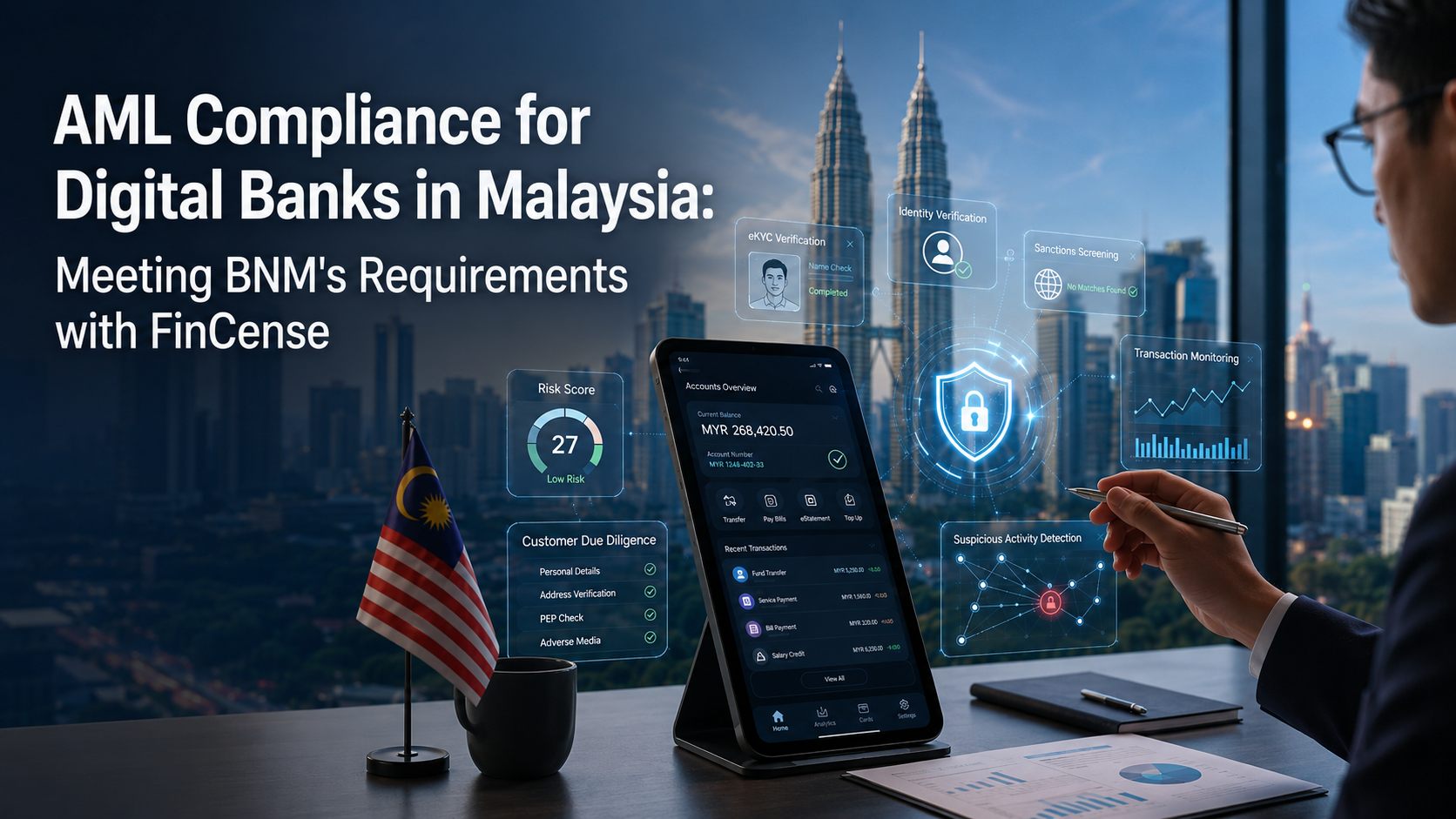
Busted in Bangsar South: Inside Malaysia’s Largest Scam Call Centre Raid
In August 2025, Malaysian police stormed a five-storey office in Bangsar South, Kuala Lumpur, arresting more than 400 people linked to what is now called the country’s largest scam call centre operation.
The raid made headlines worldwide, not only for its scale but also because of its alleged link to Doo Group, a Singapore-based fintech that sponsors English football giant Manchester United. The case has cast a harsh spotlight on the industrial scale of financial crime in Southeast Asia and the reputational risks it poses for both financial institutions and global brands.

Background of the Scam
The dramatic raid took place on 26 August 2025, when Malaysian authorities swept into a commercial tower in Bangsar South, a thriving business district in Kuala Lumpur. Inside, they discovered a massive call centre allegedly set up to defraud victims across multiple countries.
Over 400 individuals were arrested. Videos of employees being escorted into police vans quickly went viral, symbolising the scale and industrial nature of the operation.
Initial reports linked the call centre to Doo Group, a global financial services provider with operations across Singapore, Hong Kong, London, Sydney, and Dubai. While the company has insisted that its operations remain unaffected and that it is cooperating fully with investigators, the reputational damage was already significant.
The Bangsar South raid is part of Malaysia’s wider anti-scam campaign. By mid-2025, authorities had arrested over 11,800 suspects in similar cases, with financial losses amounting to RM 1.5 billion (USD 355 million). The Bangsar South case, however, stands out because of its size, its international profile, and its link to a company with a global brand presence.
What the Case Revealed
The raid revealed troubling insights into how financial crime networks operate in the region:
1. Industrialised Fraud
A workforce of over 400 suggests this was not a small, fly-by-night scam but a structured enterprise. Staff were reportedly trained to follow scripts, handle objections, and target victims methodically, mirroring the efficiency of legitimate customer service operations.
2. Global Targeting
Reports indicate the call centre targeted victims not just in Malaysia but also overseas, raising questions about how funds were laundered across borders. The multilingual capabilities of employees further suggest international reach.
3. Reputation at Risk
The alleged connection to Doo Group highlights how reputable financial companies can be pulled into fraud narratives. Even if not directly complicit, the association underscores how thin the line can be between legitimate fintech operations and the shadow economy.
4. Oversight Gaps
The case also points to challenges regulators face in monitoring sprawling call centre operations and cross-border financial flows. By the time raids occur, thousands of victims may already have been defrauded.
Impact on Financial Institutions and Corporates
The Bangsar South raid is not just a law enforcement victory. It is a warning signal for the financial industry.
1. Reputational Fallout
When a Manchester United sponsor is linked to scams, it is not just the company that suffers. Brand trust in fintech, sports, and banking becomes collateral damage. This raises the stakes for due diligence in sponsorships and partnerships.
2. Investor and Customer Confidence
Digital finance thrives on trust. When fintechs are tied to scandals, investors hesitate and customers second-guess their safety. The Bangsar South case risks dampening enthusiasm for fintech adoption in Malaysia and the wider region.
3. Operational Risks for Banks
For financial institutions, call centre scams translate into suspicious transaction flows, mule account proliferation, and higher compliance costs. Traditional transaction monitoring often struggles to flag layered, cross-border flows connected to scams of this scale.
4. Regional Implications
Malaysia’s crackdown shows commendable resolve, but it also exposes the country as a hub for organised scam activity. This dual image, both a problem centre and an enforcement leader, will shape how regional regulators approach financial crime.

Lessons Learned from the Scam
- Scale ≠ Legitimacy
A large workforce and polished infrastructure do not guarantee a legitimate business. Regulators and partners must look beyond appearances. - Due Diligence is Non-Negotiable
Global brands and institutions need deeper checks before partnerships. A sponsorship or corporate tie-up can quickly become a reputational liability. - Regulatory Vigilance Matters
The Bangsar South raid shows what decisive enforcement looks like, but it also reveals how long such scams can operate before being stopped. - Cross-Border Cooperation is Critical
Victims were likely spread across multiple jurisdictions. Without international collaboration, enforcement remains reactive. - Public Awareness is Essential
Scam call centres thrive because victims are unaware. Public education campaigns must go hand-in-hand with enforcement.
The Role of Technology in Prevention
Conventional compliance methods, such as simple blacklist checks or static rules, are no match for scam call centres operating at an industrial scale. To counter them, financial institutions need adaptive, intelligence-driven defences.
This is where Tookitaki’s FinCense and the AFC Ecosystem come in:
- Typology-Driven Detection
FinCense continuously updates detection logic based on real scam scenarios contributed by 200+ global financial crime experts in the AFC Ecosystem. This means emerging call centre scam patterns can be identified faster. - Agentic AI
At the heart of FinCense is an Agentic AI framework, a network of intelligent agents that not only detect suspicious activity but also explain every decision in plain language. This reduces investigation time and builds regulator confidence. - Federated Learning
Through federated learning, FinCense enables banks to share insights on scam flows and mule account behaviours without compromising sensitive data. It is collective intelligence at scale. - Smart Case Disposition
When alerts are triggered, FinCense’s Agentic AI generates natural-language summaries, helping investigators prioritise critical cases quickly and accurately.
Moving Forward: The Future of Scam Call Centres
The Bangsar South raid may have shut down one operation, but the fight against scam call centres is far from over. As enforcement improves, fraudsters will adopt AI-driven tools, deepfake impersonations, and more sophisticated laundering methods.
For financial institutions, the path forward is clear:
- Strengthen collaboration with regulators and peers to track cross-border scam flows.
- Invest in adaptive technology like FinCense to stay ahead of criminal innovation.
- Educate customers relentlessly about new fraud tactics.
The raid was a victory, but it was also a warning.
If one call centre with 400 employees can operate in plain sight, imagine how many others remain hidden. The only safe strategy for financial institutions is to stay one step ahead with collaboration, intelligence, and next-generation technology.
Experience the most intelligent AML and fraud prevention platform
Top AML Scenarios in ASEAN
The Role of AML Software in Compliance
Talk to an Expert
Ready to Streamline Your Anti-Financial Crime Compliance?
Our Thought Leadership Guides
Inside the Scam Compound: What the Thai-Cambodian Border Case Reveals About Modern Financial Crime
In February 2026, Thai authorities said they uncovered a disturbing trove of evidence inside a scam compound in O’Smach, Cambodia, near the Thai border. According to Reuters reporting, the site contained scam scripts, hundreds of SIM cards, mobile phones, fake police uniforms, and rooms staged to resemble police offices in countries including Singapore and Australia. Officials also said the compound had housed thousands of people, many believed to have been trafficked and forced into scam operations.
This was not just another fraud story. It offered a rare and unusually vivid look into the machinery of modern scam centres. What emerged was the picture of an organised fraud factory built for scale, impersonation, psychological pressure, and cross-border deception. For banks, fintechs, and compliance teams, that makes this case more than a law-enforcement headline. It is a warning about how deeply organised fraud is now intertwined with money laundering, mule networks, and international payment systems.

Background of the Scam Compound
The compound was located in O’Smach, a Cambodian border town opposite Thailand. Thai military officials said the site had been seized during clashes in late 2025, after which investigators recovered evidence of transnational fraud activity. Reuters reported that the material found included 871 SIM cards, written scam scripts, fake police uniforms, and mock offices designed to imitate law-enforcement and financial institutions in multiple countries. Reporting also described rooms set up to resemble a Vietnamese bank office, showing that the deception extended beyond simple call scripts into full visual staging.
That level of detail matters. It shows that today’s scam centres are not makeshift operations. They are carefully structured environments designed to make victims believe they are dealing with legitimate authorities or institutions. In this case, the fake office sets suggest a deliberate attempt to strengthen authority impersonation scams through visual theatre, not just persuasive language. The use of many SIM cards and phones also points to the operational scale needed to rotate identities, numbers, and victim interactions.
This case also sits within a broader regional trend. In March 2026, the United Nations warned that organised fraud networks operating out of Southeast Asia had become a global threat, combining fraud, human trafficking, cybercrime, and transnational money laundering. The organisation described scam centres as only one visible layer of a wider criminal ecosystem.
Impact on Southeast Asia and Global Finance
The immediate impact of scam compounds is obvious. Victims lose money, often through investment scams, romance scams, impersonation fraud, or payment diversion schemes. But the wider impact is much deeper.
For Southeast Asia, the O’Smach case reinforces how scam centres have become embedded in regional criminal economies. These operations exploit cross-border movement, telecom infrastructure, digital platforms, and layered financial channels. They often depend on trafficked labour, scripted deception, and coordinated payment routes to monetise fraud at scale. That means the scam itself is only the front end. Behind it sits a support system of mule accounts, wallets, shell entities, and cash-out channels that allow stolen funds to move quickly and quietly.
For the global financial system, the significance is equally serious. A scam centre may operate physically in one country, target victims in another, use digital infrastructure in several more, and move the proceeds through multiple financial institutions before cash-out. That creates blind spots for banks and fintechs that still separate fraud monitoring from AML monitoring. In reality, organised scam proceeds move through the same payment rails, onboarding systems, and customer accounts that financial institutions manage every day.
There is also a trust impact. When criminals create fake police offices and impersonate authorities, they do more than steal money. They weaken confidence in institutions, digital finance, and cross-border commerce. That reputational damage can linger long after the original fraud event.
Lessons Learned from the Scam Compound Case
1. Fraud has become industrialised
One of the clearest lessons from O’Smach is that modern fraud is no longer merely opportunistic. The fake sets, scripts, uniforms, and telecom inventory point to a workflow-driven operation with processes, roles, and repeatable methods. Financial institutions should assume that many scams are now being run with the discipline and coordination of organised enterprises.
2. Fraud detection and AML monitoring must work together
This case makes clear that scam prevention cannot stop with spotting the initial deception. Once funds leave a victim’s account, the criminal network still needs to receive, layer, transfer, and cash out the proceeds. That is where mule accounts, intermediary entities, and unusual payment behaviour become critical. Institutions that treat fraud and AML as separate control problems risk missing the full picture. This is an inference, but it is strongly supported by the way scam-centre ecosystems are described by the UN and recent enforcement actions.
3. Cross-border intelligence is essential
Scam compounds thrive in fragmented environments. When countries, institutions, and platforms operate in silos, organised fraud networks gain room to scale. The international response now taking shape, from sanctions to new legislation, reflects growing recognition that scam centres are a transnational threat that cannot be contained by isolated action.
4. Authority impersonation is becoming more sophisticated
The discovery of fake police rooms is a reminder that modern scams are investing in credibility. Criminals are not relying only on phone calls or text messages. They are creating environments that make the deception feel official and convincing. For financial institutions, that means customer warnings alone are not enough. Detection systems need to identify the behavioural and transactional signals that typically follow these scams.
Changes in Enforcement and Policy Response
Regional and international responses to scam-centre activity are clearly intensifying.
On March 30, 2026, Cambodia’s lawmakers passed a law aimed at dismantling online scam operations, with penalties reaching life imprisonment in the most serious cases. AP reported that officials said around 250 scam sites had been targeted and 200 dismantled since July, with nearly 700 arrests and close to 10,000 workers repatriated from 23 countries.
International enforcement is also evolving. On March 26, 2026, the UK sanctioned Legend Innovation, described as the operator of Cambodia’s largest scam compound, along with Xinbi, a Chinese-language crypto marketplace accused of facilitating online fraud and distributing stolen data. That move shows how authorities are increasingly targeting not only physical scam infrastructure, but also the digital and financial services that support these operations.
Taken together, these developments show that scam centres are no longer being viewed as isolated cybercrime sites. They are being treated as part of a wider criminal ecosystem involving trafficking, fraud, illicit finance, and digital infrastructure abuse. That shift is important because it raises expectations on financial institutions to identify suspicious patterns earlier and with more context.

The Role of AML Technology in Preventing Future Scandals
The O’Smach case underlines why static controls and manual reviews are no longer enough. Scam-centre operations generate fast-moving, cross-border activity that often looks fragmented when reviewed one transaction at a time. Effective prevention requires technology that can connect those fragments into a meaningful risk picture.
Advanced AML and fraud platforms can help institutions detect sudden changes in customer payment behaviour, suspicious beneficiary networks, mule-account patterns, rapid pass-through activity, and unusual links across accounts, devices, and counterparties. That kind of visibility matters because scam proceeds often move quickly. By the time a manual investigator pieces together the story, the money may already have passed through several layers.
This is also where collaborative intelligence becomes important. Scam tactics evolve quickly. New scripts, new payment flows, new mule structures, and new impersonation narratives emerge all the time. Institutions need systems that do not just monitor transactions, but adapt to how criminal typologies change in the real world.
How Tookitaki Helps Institutions Respond
Tookitaki’s approach is especially relevant in cases like this because the challenge is not just identifying a suspicious payment. It is understanding the broader pattern behind it.
Through FinCense and the AFC Ecosystem, Tookitaki helps financial institutions strengthen transaction monitoring, screening, customer risk assessment, and case management in a more connected way. The AFC Ecosystem adds a collaborative intelligence layer, helping institutions stay updated on emerging typologies and real-world financial crime scenarios. In the context of scam-centre risk, that matters because institutions need to recognise not only isolated red flags, but also the wider behaviours associated with organised fraud, cross-border fund movement, and laundering through intermediary networks.
A more connected, intelligence-led approach helps institutions move from reacting to individual incidents to identifying the patterns that sit behind them.
Moving Forward: Learning from the Present, Preparing for What Comes Next
The Cambodia-linked scam compound near the Thai border is a stark reminder that organised fraud is becoming more structured, more deceptive, and more international. What was uncovered in O’Smach was not merely evidence of one scam operation. It was evidence of scale, process, and criminal adaptation.
For banks, fintechs, and regulators, the lesson is clear. Scam-centre activity should not be treated as a distant law-enforcement issue. It is directly connected to the financial system through payments, onboarding, mule accounts, beneficiary networks, and laundering routes. Institutions that continue to treat fraud, AML, and customer risk as separate challenges will struggle to keep pace with how these networks actually operate.
The future of financial crime prevention will depend on better intelligence sharing, stronger network visibility, and more adaptive monitoring. Cases like this show why institutions need to move beyond reactive controls and toward a more connected, typology-driven model of defence.
Organised scams are no longer fringe threats. They are part of the modern financial crime landscape, and financial institutions must prepare accordingly.

Living Under the STR Clock: The Growing Pressure on AML Investigators
In AML compliance, one decision carries more weight than most: whether to file a Suspicious Transaction Report.
It is rarely obvious.
It is rarely straightforward.
And it often comes with a ticking clock.
Every day, AML investigators review alerts that may or may not indicate financial crime. Some appear suspicious but lack context. Others look normal until connected with broader patterns. The decision to escalate, investigate further, or file an STR must often be made with incomplete information and limited time.
This is the silent pressure shaping modern AML operations.

The Decision Is Harder Than It Looks
From the outside, STR reporting appears procedural. In reality, it is deeply judgment-driven.
Investigators must determine:
- whether behaviour is unusual or suspicious
- whether patterns indicate layering or legitimate activity
- whether escalation is warranted
- whether enough evidence exists to support reporting
These decisions are rarely binary. Many cases sit in a grey zone, requiring careful analysis and documentation.
Complicating matters further, the expectation is not just to detect suspicious activity, but to do so consistently and within regulatory timelines.
The STR Clock Creates Operational Tension
Regulatory frameworks require timely reporting of suspicious activity. While this is essential for financial crime prevention, it also introduces operational pressure.
Investigators must:
- review transaction behaviour
- analyse customer profiles
- identify linked accounts
- assess counterparties
- document findings
- seek internal approvals
All before reporting deadlines.
This creates a constant tension between speed and confidence. Filing too early risks incomplete reporting. Delaying too long risks regulatory breaches.
For many compliance teams, this balancing act is one of the most challenging aspects of STR reporting.
Alert Volumes Add to the Burden
Modern transaction monitoring systems generate large volumes of alerts. While necessary for detection, these alerts often include:
- low-risk activity
- borderline behaviour
- incomplete context
- fragmented signals
Investigators must review each alert carefully, even when many turn out to be non-suspicious.
Over time, this leads to:
- decision fatigue
- longer investigation cycles
- inconsistent assessments
- difficulty prioritising risk
The more alerts investigators receive, the harder it becomes to identify truly suspicious behaviour quickly.
Investigations Are Becoming More Complex
Financial crime has evolved significantly in recent years. Investigators now deal with:
- real-time payments
- mule networks
- cross-border fund movement
- shell entities
- layered transactions
- digital wallet ecosystems
Suspicious activity is no longer confined to a single transaction. It often emerges across multiple accounts, channels, and jurisdictions.
This complexity increases the difficulty of making STR decisions based on limited visibility.
The Human Element Behind STR Reporting
Behind every STR decision is a compliance professional making a judgment call.
They must balance:
- regulatory expectations
- operational workload
- investigative uncertainty
- accountability for decisions
- audit scrutiny
This human element is often overlooked, but it plays a central role in AML effectiveness.
Strong compliance outcomes depend not only on detection systems, but on how well investigators are supported in making informed decisions.
Moving Toward Intelligence-Led Investigations
As alert volumes and transaction complexity grow, many institutions are rethinking traditional investigation workflows.
Instead of relying solely on alerts, there is increasing focus on:
- contextual risk insights
- behavioural analysis
- linked entity visibility
- dynamic prioritisation
- guided investigation workflows
These capabilities help investigators understand risk more quickly and reduce the burden of manual analysis.
The shift is subtle but important: from reviewing alerts to understanding behaviour.

Supporting Investigators, Not Replacing Them
Technology in AML is evolving from detection engines to investigation support tools.
The goal is not to remove human judgment, but to strengthen it.
Modern approaches increasingly provide:
- summarised transaction behaviour
- identification of related entities
- risk-based alert prioritisation
- structured investigation workflows
- consistent documentation support
These capabilities help investigators make more confident STR decisions while maintaining regulatory rigour.
A Gradual Shift in the Industry
Some newer compliance platforms are beginning to incorporate investigation-centric capabilities designed to reduce decision pressure and improve consistency.
For example, solutions like Tookitaki’s FinCense platform focus on bringing together transaction monitoring, screening signals, behavioural insights, and investigation workflows into a unified environment. By providing contextual intelligence and prioritisation, such approaches aim to help investigators assess risk more efficiently without relying solely on manual alert reviews.
This reflects a broader shift in AML compliance: from alert-heavy processes toward intelligence-led investigations that better support the human decision-making process.
The Future of STR Reporting
STR reporting will remain a critical pillar of financial crime prevention. But the environment in which these decisions are made is changing.
Rising transaction volumes, faster payments, and increasingly sophisticated laundering techniques are placing greater pressure on investigators.
To maintain effectiveness, institutions are moving toward approaches that:
- reduce alert noise
- provide contextual intelligence
- improve prioritisation
- support consistent decision-making
- streamline documentation
These changes do not remove the responsibility of STR decisions. But they can make those decisions more informed and less burdensome.
Conclusion
Living under the STR clock is now part of everyday reality for AML investigators. The responsibility to detect suspicious activity within tight timelines, often with incomplete information, creates significant operational pressure.
As financial crime grows more complex, supporting investigators becomes just as important as improving detection.
By shifting toward intelligence-led investigations and better contextual visibility, institutions can help compliance teams make faster, more confident STR decisions — without compromising regulatory expectations.
And ultimately, that support may be the difference between uncertainty and clarity when the STR clock is ticking.

Inside a S$920,000 Scam: How Fake Officials Turned Trust Into a Weapon
In financial crime, the most dangerous scams are often not the loudest. They are the ones that feel official.
That is what makes a recent case in Singapore so unsettling. On 13 March 2026, the Singapore Police Force said a 38-year-old man would be charged for his suspected role in a government-official impersonation scam. In the case, the victim first received a call from someone claiming to be from HSBC. She was then transferred to people posing as officials from the Ministry of Law and the Monetary Authority of Singapore. Told she was implicated in a money laundering case, she handed over gold and luxury watches worth more than S$920,000 over two occasions for supposed safe-keeping. Police later said more than S$92,500 in cash, a cash counting machine, and mobile devices were seized, and that the suspect was believed to be linked to a transnational scam syndicate.
This was not an isolated event. Less than a month earlier, Singapore Police warned of a scam variant involving the physical collection of valuables such as gold bars, jewellery, and luxury watches. Since February 2026, at least 18 reports had been lodged with total losses of at least S$2.9 million. Victims were accused of criminal activity, shown fake documents such as warrants of arrest or financial inspection orders, and told to hand over valuables for investigation purposes.
This is what makes the case worth studying. It is not merely another impersonation scam. It is a clear example of how scammers are turning institutional trust into an attack surface.

When a scam feels like a compliance process
The strength of this scam lies in its structure.
It did not begin with an obviously suspicious demand. It began with a familiar institution and a plausible problem. The victim was told there was a financial irregularity linked to her name. When she denied it, the call escalated. One “official” handed her to another. The issue became more serious. The tone became more formal. The pressure grew. By the time she was asked to surrender valuables, the request no longer felt random. It felt procedural.
That is the real shift. Modern impersonation scams are no longer built only on panic. They are built on procedural realism. Scammers do not just imitate institutions. They imitate how institutions escalate, document, and direct action.
In practical terms, that means the victim is not simply deceived. The victim is managed through a scripted journey that feels consistent from start to finish.
For financial institutions, that distinction matters. Traditional scam prevention often focuses on suspicious transactions or obvious red flags at the point of payment. But in cases like this, the deception matures long before a payment event occurs. By the time value leaves the victim’s control, the psychological manipulation is already deep.
Why this case matters more than the headline amount
The S$920,000 figure is striking, but the amount is not the only reason this case matters.
It matters because it reveals how scam typologies in Singapore are evolving. According to the Singapore Police Force’s Annual Scam and Cybercrime Brief 2025, government-official impersonation scams rose from 1,504 cases in 2024 to 3,363 cases in 2025, with losses reaching about S$242.9 million, making it one of the highest-loss scam categories in the country. The same report noted that these scams have expanded beyond direct bank transfers to include payment service provider accounts, cryptocurrency transfers, and in-person handovers of valuables such as cash, gold, jewellery, and luxury watches.
That is a critical development.
For years, many fraud programmes were designed around digital account compromise, phishing, or unauthorised transfers. But this case shows that criminals are increasingly comfortable moving across both financial and physical channels. The objective is not simply to get money into a mule account. It is to extract value in whatever form is easiest to move, conceal, and monetise.
Gold and luxury watches are attractive for exactly that reason. They are high value, portable, and less dependent on the normal transaction rails that banks monitor most closely.
In other words, the scam starts as impersonation, but it quickly becomes a broader financial crime problem.
The fraud story is only half the story
Cases like this should not be viewed only through a consumer-protection lens.
Behind the victim interaction sits a wider operating model. Someone makes the first call. Someone sustains the deception. Someone coordinates collection. Someone receives, stores, transports, or liquidates the assets. Someone eventually tries to reintroduce the value into the legitimate economy.
In this case, police said the arrested man had received valuables from unknown persons on numerous occasions and was believed to be part of a transnational scam syndicate. That is an important detail because it suggests repeat collection activity, not a one-off pickup.
That is where scam prevention and AML can no longer be treated as separate problems.
The initial event may be social engineering. But the downstream flow is classic laundering risk: collection, movement, layering, conversion, and integration.
For banks and fintechs, this means detection cannot depend only on isolated rules. A large withdrawal, sudden liquidation of savings, urgent purchases of gold, repeated interactions under emotional stress, or unusual movement patterns may each appear explainable on their own. But when connected to current scam typologies, they tell a very different story.
Three lessons for financial institutions in Singapore
The first is that scam typologies are becoming hybrid by default.
This case combined impersonation, false legal threats, fake institutional escalation, and physical asset collection. That is not a narrow call-centre fraud. It is a multi-stage typology that moves across customer communication, behavioural risk, and laundering infrastructure.
The second is that trust itself has become a risk variable.
Banks and regulators spend years building confidence with customers. Scammers now borrow that credibility to make extraordinary requests sound reasonable. That makes impersonation scams especially corrosive. They do not only create losses. They weaken confidence in the institutions the public depends on.
The third is that static controls are poorly suited to dynamic scams.
A rule can identify an unusual transfer. A threshold can detect a large withdrawal. But neither, on its own, can explain why a customer is suddenly behaving outside their normal pattern, or whether that behaviour fits a live scam typology circulating in the market.
That requires context. And context requires connected intelligence.

What a smarter response should look like
Public education remains essential. Singapore authorities continue to emphasise that government officials will never ask members of the public to transfer money, disclose bank credentials, install apps from unofficial sources, or hand over valuables over a call. The Ministry of Home Affairs has also made clear that tackling scams remains a national priority.
But education alone will not be enough.
Financial institutions need to assume that scam patterns will keep mutating. What is gold and watches today may be stablecoins, prepaid instruments, cross-border wallets, or new stores of value tomorrow. The response therefore cannot be limited to isolated controls inside separate fraud, AML, and case-management systems.
What is needed is a more unified operating model that can:
- connect customer behaviour to known scam typologies in near real time
- identify linked fraud and laundering indicators earlier in the journey
- prioritise alerts based on evolving scam intelligence rather than static severity alone
- support investigators with richer context, not just raw transaction anomalies
- adapt faster as scam syndicates change collection methods and value-transfer channels
This is where the difference between traditional monitoring and modern financial crime intelligence becomes clear.
At Tookitaki, the challenge is not viewed as a series of disconnected alerts. It is treated as a typology problem. That matters because scams like this do not unfold as single events. They unfold as patterns. A platform that can connect scam intelligence, behavioural anomalies, laundering signals, and investigation workflows is far better placed to help institutions act before harm escalates.
That is the shift the industry needs to make. From monitoring transactions in isolation to understanding how financial crime actually behaves in the wild.
Final thought
The most disturbing thing about this scam is not the luxury watches or the gold. It is how ordinary the first step sounded.
A bank call. A transfer to another official. A compliance issue. A request framed as part of an investigation.
That is why this case should resonate far beyond one victim or one arrest. It shows that the next generation of scams will be more disciplined, more believable, and more fluid across both digital and physical channels.
For the financial sector, the lesson is simple. Scam prevention can no longer sit at the edge of the system as a public-awareness problem alone. It must be treated as a core financial crime challenge, one that sits at the intersection of fraud, AML, customer protection, and trust.
The institutions that respond best will not be the ones relying on yesterday’s rules. They will be the ones that can read evolving typologies faster, connect risk signals earlier, and recognise that in modern scams, trust is no longer just an asset.
It is a target.

Inside the Scam Compound: What the Thai-Cambodian Border Case Reveals About Modern Financial Crime
In February 2026, Thai authorities said they uncovered a disturbing trove of evidence inside a scam compound in O’Smach, Cambodia, near the Thai border. According to Reuters reporting, the site contained scam scripts, hundreds of SIM cards, mobile phones, fake police uniforms, and rooms staged to resemble police offices in countries including Singapore and Australia. Officials also said the compound had housed thousands of people, many believed to have been trafficked and forced into scam operations.
This was not just another fraud story. It offered a rare and unusually vivid look into the machinery of modern scam centres. What emerged was the picture of an organised fraud factory built for scale, impersonation, psychological pressure, and cross-border deception. For banks, fintechs, and compliance teams, that makes this case more than a law-enforcement headline. It is a warning about how deeply organised fraud is now intertwined with money laundering, mule networks, and international payment systems.

Background of the Scam Compound
The compound was located in O’Smach, a Cambodian border town opposite Thailand. Thai military officials said the site had been seized during clashes in late 2025, after which investigators recovered evidence of transnational fraud activity. Reuters reported that the material found included 871 SIM cards, written scam scripts, fake police uniforms, and mock offices designed to imitate law-enforcement and financial institutions in multiple countries. Reporting also described rooms set up to resemble a Vietnamese bank office, showing that the deception extended beyond simple call scripts into full visual staging.
That level of detail matters. It shows that today’s scam centres are not makeshift operations. They are carefully structured environments designed to make victims believe they are dealing with legitimate authorities or institutions. In this case, the fake office sets suggest a deliberate attempt to strengthen authority impersonation scams through visual theatre, not just persuasive language. The use of many SIM cards and phones also points to the operational scale needed to rotate identities, numbers, and victim interactions.
This case also sits within a broader regional trend. In March 2026, the United Nations warned that organised fraud networks operating out of Southeast Asia had become a global threat, combining fraud, human trafficking, cybercrime, and transnational money laundering. The organisation described scam centres as only one visible layer of a wider criminal ecosystem.
Impact on Southeast Asia and Global Finance
The immediate impact of scam compounds is obvious. Victims lose money, often through investment scams, romance scams, impersonation fraud, or payment diversion schemes. But the wider impact is much deeper.
For Southeast Asia, the O’Smach case reinforces how scam centres have become embedded in regional criminal economies. These operations exploit cross-border movement, telecom infrastructure, digital platforms, and layered financial channels. They often depend on trafficked labour, scripted deception, and coordinated payment routes to monetise fraud at scale. That means the scam itself is only the front end. Behind it sits a support system of mule accounts, wallets, shell entities, and cash-out channels that allow stolen funds to move quickly and quietly.
For the global financial system, the significance is equally serious. A scam centre may operate physically in one country, target victims in another, use digital infrastructure in several more, and move the proceeds through multiple financial institutions before cash-out. That creates blind spots for banks and fintechs that still separate fraud monitoring from AML monitoring. In reality, organised scam proceeds move through the same payment rails, onboarding systems, and customer accounts that financial institutions manage every day.
There is also a trust impact. When criminals create fake police offices and impersonate authorities, they do more than steal money. They weaken confidence in institutions, digital finance, and cross-border commerce. That reputational damage can linger long after the original fraud event.
Lessons Learned from the Scam Compound Case
1. Fraud has become industrialised
One of the clearest lessons from O’Smach is that modern fraud is no longer merely opportunistic. The fake sets, scripts, uniforms, and telecom inventory point to a workflow-driven operation with processes, roles, and repeatable methods. Financial institutions should assume that many scams are now being run with the discipline and coordination of organised enterprises.
2. Fraud detection and AML monitoring must work together
This case makes clear that scam prevention cannot stop with spotting the initial deception. Once funds leave a victim’s account, the criminal network still needs to receive, layer, transfer, and cash out the proceeds. That is where mule accounts, intermediary entities, and unusual payment behaviour become critical. Institutions that treat fraud and AML as separate control problems risk missing the full picture. This is an inference, but it is strongly supported by the way scam-centre ecosystems are described by the UN and recent enforcement actions.
3. Cross-border intelligence is essential
Scam compounds thrive in fragmented environments. When countries, institutions, and platforms operate in silos, organised fraud networks gain room to scale. The international response now taking shape, from sanctions to new legislation, reflects growing recognition that scam centres are a transnational threat that cannot be contained by isolated action.
4. Authority impersonation is becoming more sophisticated
The discovery of fake police rooms is a reminder that modern scams are investing in credibility. Criminals are not relying only on phone calls or text messages. They are creating environments that make the deception feel official and convincing. For financial institutions, that means customer warnings alone are not enough. Detection systems need to identify the behavioural and transactional signals that typically follow these scams.
Changes in Enforcement and Policy Response
Regional and international responses to scam-centre activity are clearly intensifying.
On March 30, 2026, Cambodia’s lawmakers passed a law aimed at dismantling online scam operations, with penalties reaching life imprisonment in the most serious cases. AP reported that officials said around 250 scam sites had been targeted and 200 dismantled since July, with nearly 700 arrests and close to 10,000 workers repatriated from 23 countries.
International enforcement is also evolving. On March 26, 2026, the UK sanctioned Legend Innovation, described as the operator of Cambodia’s largest scam compound, along with Xinbi, a Chinese-language crypto marketplace accused of facilitating online fraud and distributing stolen data. That move shows how authorities are increasingly targeting not only physical scam infrastructure, but also the digital and financial services that support these operations.
Taken together, these developments show that scam centres are no longer being viewed as isolated cybercrime sites. They are being treated as part of a wider criminal ecosystem involving trafficking, fraud, illicit finance, and digital infrastructure abuse. That shift is important because it raises expectations on financial institutions to identify suspicious patterns earlier and with more context.

The Role of AML Technology in Preventing Future Scandals
The O’Smach case underlines why static controls and manual reviews are no longer enough. Scam-centre operations generate fast-moving, cross-border activity that often looks fragmented when reviewed one transaction at a time. Effective prevention requires technology that can connect those fragments into a meaningful risk picture.
Advanced AML and fraud platforms can help institutions detect sudden changes in customer payment behaviour, suspicious beneficiary networks, mule-account patterns, rapid pass-through activity, and unusual links across accounts, devices, and counterparties. That kind of visibility matters because scam proceeds often move quickly. By the time a manual investigator pieces together the story, the money may already have passed through several layers.
This is also where collaborative intelligence becomes important. Scam tactics evolve quickly. New scripts, new payment flows, new mule structures, and new impersonation narratives emerge all the time. Institutions need systems that do not just monitor transactions, but adapt to how criminal typologies change in the real world.
How Tookitaki Helps Institutions Respond
Tookitaki’s approach is especially relevant in cases like this because the challenge is not just identifying a suspicious payment. It is understanding the broader pattern behind it.
Through FinCense and the AFC Ecosystem, Tookitaki helps financial institutions strengthen transaction monitoring, screening, customer risk assessment, and case management in a more connected way. The AFC Ecosystem adds a collaborative intelligence layer, helping institutions stay updated on emerging typologies and real-world financial crime scenarios. In the context of scam-centre risk, that matters because institutions need to recognise not only isolated red flags, but also the wider behaviours associated with organised fraud, cross-border fund movement, and laundering through intermediary networks.
A more connected, intelligence-led approach helps institutions move from reacting to individual incidents to identifying the patterns that sit behind them.
Moving Forward: Learning from the Present, Preparing for What Comes Next
The Cambodia-linked scam compound near the Thai border is a stark reminder that organised fraud is becoming more structured, more deceptive, and more international. What was uncovered in O’Smach was not merely evidence of one scam operation. It was evidence of scale, process, and criminal adaptation.
For banks, fintechs, and regulators, the lesson is clear. Scam-centre activity should not be treated as a distant law-enforcement issue. It is directly connected to the financial system through payments, onboarding, mule accounts, beneficiary networks, and laundering routes. Institutions that continue to treat fraud, AML, and customer risk as separate challenges will struggle to keep pace with how these networks actually operate.
The future of financial crime prevention will depend on better intelligence sharing, stronger network visibility, and more adaptive monitoring. Cases like this show why institutions need to move beyond reactive controls and toward a more connected, typology-driven model of defence.
Organised scams are no longer fringe threats. They are part of the modern financial crime landscape, and financial institutions must prepare accordingly.

Living Under the STR Clock: The Growing Pressure on AML Investigators
In AML compliance, one decision carries more weight than most: whether to file a Suspicious Transaction Report.
It is rarely obvious.
It is rarely straightforward.
And it often comes with a ticking clock.
Every day, AML investigators review alerts that may or may not indicate financial crime. Some appear suspicious but lack context. Others look normal until connected with broader patterns. The decision to escalate, investigate further, or file an STR must often be made with incomplete information and limited time.
This is the silent pressure shaping modern AML operations.

The Decision Is Harder Than It Looks
From the outside, STR reporting appears procedural. In reality, it is deeply judgment-driven.
Investigators must determine:
- whether behaviour is unusual or suspicious
- whether patterns indicate layering or legitimate activity
- whether escalation is warranted
- whether enough evidence exists to support reporting
These decisions are rarely binary. Many cases sit in a grey zone, requiring careful analysis and documentation.
Complicating matters further, the expectation is not just to detect suspicious activity, but to do so consistently and within regulatory timelines.
The STR Clock Creates Operational Tension
Regulatory frameworks require timely reporting of suspicious activity. While this is essential for financial crime prevention, it also introduces operational pressure.
Investigators must:
- review transaction behaviour
- analyse customer profiles
- identify linked accounts
- assess counterparties
- document findings
- seek internal approvals
All before reporting deadlines.
This creates a constant tension between speed and confidence. Filing too early risks incomplete reporting. Delaying too long risks regulatory breaches.
For many compliance teams, this balancing act is one of the most challenging aspects of STR reporting.
Alert Volumes Add to the Burden
Modern transaction monitoring systems generate large volumes of alerts. While necessary for detection, these alerts often include:
- low-risk activity
- borderline behaviour
- incomplete context
- fragmented signals
Investigators must review each alert carefully, even when many turn out to be non-suspicious.
Over time, this leads to:
- decision fatigue
- longer investigation cycles
- inconsistent assessments
- difficulty prioritising risk
The more alerts investigators receive, the harder it becomes to identify truly suspicious behaviour quickly.
Investigations Are Becoming More Complex
Financial crime has evolved significantly in recent years. Investigators now deal with:
- real-time payments
- mule networks
- cross-border fund movement
- shell entities
- layered transactions
- digital wallet ecosystems
Suspicious activity is no longer confined to a single transaction. It often emerges across multiple accounts, channels, and jurisdictions.
This complexity increases the difficulty of making STR decisions based on limited visibility.
The Human Element Behind STR Reporting
Behind every STR decision is a compliance professional making a judgment call.
They must balance:
- regulatory expectations
- operational workload
- investigative uncertainty
- accountability for decisions
- audit scrutiny
This human element is often overlooked, but it plays a central role in AML effectiveness.
Strong compliance outcomes depend not only on detection systems, but on how well investigators are supported in making informed decisions.
Moving Toward Intelligence-Led Investigations
As alert volumes and transaction complexity grow, many institutions are rethinking traditional investigation workflows.
Instead of relying solely on alerts, there is increasing focus on:
- contextual risk insights
- behavioural analysis
- linked entity visibility
- dynamic prioritisation
- guided investigation workflows
These capabilities help investigators understand risk more quickly and reduce the burden of manual analysis.
The shift is subtle but important: from reviewing alerts to understanding behaviour.

Supporting Investigators, Not Replacing Them
Technology in AML is evolving from detection engines to investigation support tools.
The goal is not to remove human judgment, but to strengthen it.
Modern approaches increasingly provide:
- summarised transaction behaviour
- identification of related entities
- risk-based alert prioritisation
- structured investigation workflows
- consistent documentation support
These capabilities help investigators make more confident STR decisions while maintaining regulatory rigour.
A Gradual Shift in the Industry
Some newer compliance platforms are beginning to incorporate investigation-centric capabilities designed to reduce decision pressure and improve consistency.
For example, solutions like Tookitaki’s FinCense platform focus on bringing together transaction monitoring, screening signals, behavioural insights, and investigation workflows into a unified environment. By providing contextual intelligence and prioritisation, such approaches aim to help investigators assess risk more efficiently without relying solely on manual alert reviews.
This reflects a broader shift in AML compliance: from alert-heavy processes toward intelligence-led investigations that better support the human decision-making process.
The Future of STR Reporting
STR reporting will remain a critical pillar of financial crime prevention. But the environment in which these decisions are made is changing.
Rising transaction volumes, faster payments, and increasingly sophisticated laundering techniques are placing greater pressure on investigators.
To maintain effectiveness, institutions are moving toward approaches that:
- reduce alert noise
- provide contextual intelligence
- improve prioritisation
- support consistent decision-making
- streamline documentation
These changes do not remove the responsibility of STR decisions. But they can make those decisions more informed and less burdensome.
Conclusion
Living under the STR clock is now part of everyday reality for AML investigators. The responsibility to detect suspicious activity within tight timelines, often with incomplete information, creates significant operational pressure.
As financial crime grows more complex, supporting investigators becomes just as important as improving detection.
By shifting toward intelligence-led investigations and better contextual visibility, institutions can help compliance teams make faster, more confident STR decisions — without compromising regulatory expectations.
And ultimately, that support may be the difference between uncertainty and clarity when the STR clock is ticking.

Inside a S$920,000 Scam: How Fake Officials Turned Trust Into a Weapon
In financial crime, the most dangerous scams are often not the loudest. They are the ones that feel official.
That is what makes a recent case in Singapore so unsettling. On 13 March 2026, the Singapore Police Force said a 38-year-old man would be charged for his suspected role in a government-official impersonation scam. In the case, the victim first received a call from someone claiming to be from HSBC. She was then transferred to people posing as officials from the Ministry of Law and the Monetary Authority of Singapore. Told she was implicated in a money laundering case, she handed over gold and luxury watches worth more than S$920,000 over two occasions for supposed safe-keeping. Police later said more than S$92,500 in cash, a cash counting machine, and mobile devices were seized, and that the suspect was believed to be linked to a transnational scam syndicate.
This was not an isolated event. Less than a month earlier, Singapore Police warned of a scam variant involving the physical collection of valuables such as gold bars, jewellery, and luxury watches. Since February 2026, at least 18 reports had been lodged with total losses of at least S$2.9 million. Victims were accused of criminal activity, shown fake documents such as warrants of arrest or financial inspection orders, and told to hand over valuables for investigation purposes.
This is what makes the case worth studying. It is not merely another impersonation scam. It is a clear example of how scammers are turning institutional trust into an attack surface.

When a scam feels like a compliance process
The strength of this scam lies in its structure.
It did not begin with an obviously suspicious demand. It began with a familiar institution and a plausible problem. The victim was told there was a financial irregularity linked to her name. When she denied it, the call escalated. One “official” handed her to another. The issue became more serious. The tone became more formal. The pressure grew. By the time she was asked to surrender valuables, the request no longer felt random. It felt procedural.
That is the real shift. Modern impersonation scams are no longer built only on panic. They are built on procedural realism. Scammers do not just imitate institutions. They imitate how institutions escalate, document, and direct action.
In practical terms, that means the victim is not simply deceived. The victim is managed through a scripted journey that feels consistent from start to finish.
For financial institutions, that distinction matters. Traditional scam prevention often focuses on suspicious transactions or obvious red flags at the point of payment. But in cases like this, the deception matures long before a payment event occurs. By the time value leaves the victim’s control, the psychological manipulation is already deep.
Why this case matters more than the headline amount
The S$920,000 figure is striking, but the amount is not the only reason this case matters.
It matters because it reveals how scam typologies in Singapore are evolving. According to the Singapore Police Force’s Annual Scam and Cybercrime Brief 2025, government-official impersonation scams rose from 1,504 cases in 2024 to 3,363 cases in 2025, with losses reaching about S$242.9 million, making it one of the highest-loss scam categories in the country. The same report noted that these scams have expanded beyond direct bank transfers to include payment service provider accounts, cryptocurrency transfers, and in-person handovers of valuables such as cash, gold, jewellery, and luxury watches.
That is a critical development.
For years, many fraud programmes were designed around digital account compromise, phishing, or unauthorised transfers. But this case shows that criminals are increasingly comfortable moving across both financial and physical channels. The objective is not simply to get money into a mule account. It is to extract value in whatever form is easiest to move, conceal, and monetise.
Gold and luxury watches are attractive for exactly that reason. They are high value, portable, and less dependent on the normal transaction rails that banks monitor most closely.
In other words, the scam starts as impersonation, but it quickly becomes a broader financial crime problem.
The fraud story is only half the story
Cases like this should not be viewed only through a consumer-protection lens.
Behind the victim interaction sits a wider operating model. Someone makes the first call. Someone sustains the deception. Someone coordinates collection. Someone receives, stores, transports, or liquidates the assets. Someone eventually tries to reintroduce the value into the legitimate economy.
In this case, police said the arrested man had received valuables from unknown persons on numerous occasions and was believed to be part of a transnational scam syndicate. That is an important detail because it suggests repeat collection activity, not a one-off pickup.
That is where scam prevention and AML can no longer be treated as separate problems.
The initial event may be social engineering. But the downstream flow is classic laundering risk: collection, movement, layering, conversion, and integration.
For banks and fintechs, this means detection cannot depend only on isolated rules. A large withdrawal, sudden liquidation of savings, urgent purchases of gold, repeated interactions under emotional stress, or unusual movement patterns may each appear explainable on their own. But when connected to current scam typologies, they tell a very different story.
Three lessons for financial institutions in Singapore
The first is that scam typologies are becoming hybrid by default.
This case combined impersonation, false legal threats, fake institutional escalation, and physical asset collection. That is not a narrow call-centre fraud. It is a multi-stage typology that moves across customer communication, behavioural risk, and laundering infrastructure.
The second is that trust itself has become a risk variable.
Banks and regulators spend years building confidence with customers. Scammers now borrow that credibility to make extraordinary requests sound reasonable. That makes impersonation scams especially corrosive. They do not only create losses. They weaken confidence in the institutions the public depends on.
The third is that static controls are poorly suited to dynamic scams.
A rule can identify an unusual transfer. A threshold can detect a large withdrawal. But neither, on its own, can explain why a customer is suddenly behaving outside their normal pattern, or whether that behaviour fits a live scam typology circulating in the market.
That requires context. And context requires connected intelligence.

What a smarter response should look like
Public education remains essential. Singapore authorities continue to emphasise that government officials will never ask members of the public to transfer money, disclose bank credentials, install apps from unofficial sources, or hand over valuables over a call. The Ministry of Home Affairs has also made clear that tackling scams remains a national priority.
But education alone will not be enough.
Financial institutions need to assume that scam patterns will keep mutating. What is gold and watches today may be stablecoins, prepaid instruments, cross-border wallets, or new stores of value tomorrow. The response therefore cannot be limited to isolated controls inside separate fraud, AML, and case-management systems.
What is needed is a more unified operating model that can:
- connect customer behaviour to known scam typologies in near real time
- identify linked fraud and laundering indicators earlier in the journey
- prioritise alerts based on evolving scam intelligence rather than static severity alone
- support investigators with richer context, not just raw transaction anomalies
- adapt faster as scam syndicates change collection methods and value-transfer channels
This is where the difference between traditional monitoring and modern financial crime intelligence becomes clear.
At Tookitaki, the challenge is not viewed as a series of disconnected alerts. It is treated as a typology problem. That matters because scams like this do not unfold as single events. They unfold as patterns. A platform that can connect scam intelligence, behavioural anomalies, laundering signals, and investigation workflows is far better placed to help institutions act before harm escalates.
That is the shift the industry needs to make. From monitoring transactions in isolation to understanding how financial crime actually behaves in the wild.
Final thought
The most disturbing thing about this scam is not the luxury watches or the gold. It is how ordinary the first step sounded.
A bank call. A transfer to another official. A compliance issue. A request framed as part of an investigation.
That is why this case should resonate far beyond one victim or one arrest. It shows that the next generation of scams will be more disciplined, more believable, and more fluid across both digital and physical channels.
For the financial sector, the lesson is simple. Scam prevention can no longer sit at the edge of the system as a public-awareness problem alone. It must be treated as a core financial crime challenge, one that sits at the intersection of fraud, AML, customer protection, and trust.
The institutions that respond best will not be the ones relying on yesterday’s rules. They will be the ones that can read evolving typologies faster, connect risk signals earlier, and recognise that in modern scams, trust is no longer just an asset.
It is a target.