

How Illicit Tobacco Became Australia’s Shadow Economy
.svg)
In early December 2025, Australian authorities executed one of the most significant financial crime crackdowns of the year — dismantling a sprawling A$150 million money-laundering syndicate operating across New South Wales. What began as an illicit tobacco investigation quickly escalated into a full-scale disruption of an organised network using shell companies, straw directors, and cross-border transfers to wash millions in criminal proceeds.
This case is more than a police success story. It offers a window into Australia’s evolving financial crime landscape — one where illicit trade, complex laundering tactics, and systemic blind spots intersect to form a powerful engine for organised crime.

The Anatomy of an Illicit Tobacco Syndicate
The syndicate uncovered by Australian Federal Police (AFP), NSW Police, AUSTRAC, and the Illicit Tobacco Taskforce was not a small-time criminal operation. It was a coordinated enterprise that combined distribution networks, financial handlers, logistics operators, and front companies into a single ecosystem.
What investigators seized tells a clear story:
- 10 tonnes of illicit tobacco
- 2.1 million cigarettes packaged for distribution
- Over A$300,000 in cash
- A money-counting machine
- Luxury items, including a Rolex
- A firearm and ammunition
These items paint the picture of a network with scale, structure, and significant illicit revenue streams.
Why illicit tobacco?
Australia’s tobacco excise — among the highest globally — has unintentionally created a lucrative black market. Criminal groups can import or manufacture tobacco products cheaply and sell them at prices far below legal products, yet still generate enormous margins.
As a result, illicit tobacco has grown into one of the country's most profitable predicate crimes, fuelling sophisticated laundering operations.
The Laundering Playbook: How A$150M Moved Through the System
Behind the physical contraband lay an even more intricate financial scheme. The syndicate relied on three primary laundering techniques:
a) Straw Directors and Front Companies
The criminals recruited individuals to:
- Set up companies
- Open business bank accounts
- Serve as “directors” in name only
These companies had no legitimate operations — no payroll, no expenses, no suppliers. Their sole function was to provide a façade of legitimacy for high-volume financial flows.
b) Rapid Layering Across Multiple Accounts
Once operational, these accounts saw intense transactional activity:
- Large incoming deposits
- Immediate outbound transfers
- Funds bouncing between newly created companies
- Volumes inconsistent with stated business profiles
This rapid movement made it difficult for financial institutions to track the money trail or link transactions back to illicit tobacco proceeds.
c) Round-Tripping Funds Overseas
To further obscure the origin of funds, the syndicate:
- Sent money to overseas accounts
- Repatriated it disguised as legitimate business payments or “invoice settlements”
To a bank, these flows could appear routine. But in reality, they were engineered to sever any detectable connection to criminal activity.

Why It Worked: Systemic Blind Spots Criminals Exploited
This laundering scheme did not succeed simply because it was complex — it succeeded because it targeted specific weaknesses in Australia’s financial crime ecosystem.
a) High-Profit Illicit Trade
Australia’s tobacco excise structure unintentionally fuels criminal profitability. With margins this high, illicit networks have the financial resources to build sophisticated laundering infrastructures.
b) Fragmented Visibility Across Entities
Most financial institutions only see one customer at a time. They do not automatically connect multiple companies created by the same introducer, or accounts accessed using the same device fingerprints.
This allows straw-director networks to thrive.
c) Legacy Rule-Based Monitoring
Traditional AML systems rely heavily on static thresholds and siloed rules:
- “Large transaction” alerts
- Basic velocity checks
- Limited behavioural analysis
Criminals know this — and structure their laundering techniques to evade these simplistic rules.
d) Cross-Border Complexity
Once funds leave Australia, visibility drops sharply. When they return disguised as payments from overseas vendors, they often blend into the financial system undetected.
Red Flags Financial Institutions Should Watch For
This case provides powerful lessons for compliance teams. Below are the specific indicators FIs should be alert to.
KYC & Profile Red Flags
- Directors with little financial or business experience
- Recently formed companies with generic business descriptions
- Multiple companies tied to the same:
- phone numbers
- IP addresses
- mailing addresses
- No digital footprint or legitimate online presence
Transaction Red Flags
- High turnover in accounts with minimal retained balances
- Rapid movement of funds with no clear business rationale
- Structured cash deposits
- Transfers between unrelated companies with no commercial relationship
- Overseas remittances followed by identical inbound amounts weeks later
Network Behaviour Red Flags
- Shared device IDs used to access multiple company accounts
- Overlapping beneficiaries across supposedly unrelated entities
- Repeated transactions involving known high-risk sectors (e.g., tobacco, logistics, import/export)
These indicators form the behavioural “signature” of a sophisticated laundering ring.
How Tookitaki Strengthens Defences Against These Schemes
The A$150 million case demonstrates why financial institutions need AML systems that move beyond simple rule-based detection.
Tookitaki helps institutions strengthen their defences by focusing on:
a) Typology-Driven Detection
Pre-built scenarios based on real-world criminal behaviours — including straw directors, shell companies, layering, and round-tripping — ensure early detection of organised laundering patterns.
b) Network Relationship Analysis
FinCense connects multiple entities through shared attributes (IP addresses, devices, common directors), surfacing hidden networks that traditional systems miss.
c) Behavioural Analytics
Instead of static thresholds, Tookitaki analyses patterns in account behaviour, highlighting anomalies even when individual transactions seem normal.
d) Collaborative Intelligence via the AFC Ecosystem
Insights from global financial crime experts empower institutions to stay ahead of emerging laundering techniques, including those tied to illicit trade.
e) AI-Powered Investigation Support
FinMate accelerates investigations by providing contextual insights, summarising risks, and identifying links across accounts and entities.
Together, these capabilities help institutions detect sophisticated laundering activity long before it reaches a scale of A$150 million.
Conclusion: Australia’s New Financial Crime Reality
The A$150 million illicit tobacco laundering bust is more than a headline — it’s a signal.
Illicit trade-based laundering is expanding. Criminal networks are becoming more organised. And traditional monitoring systems are no longer enough to keep up.
For banks, fintechs, regulators, and law enforcement, the implications are clear:
- Financial crime in Australia is evolving.
- Laundering networks now mirror corporate structures.
- Advanced AML technology is essential to stay ahead.
As illicit tobacco continues to grow as a predicate offence, the financial system must be prepared for more complex laundering operations — and more aggressive attempts to exploit gaps in institutional defences.
Experience the most intelligent AML and fraud prevention platform
Experience the most intelligent AML and fraud prevention platform
Experience the most intelligent AML and fraud prevention platform
Top AML Scenarios in ASEAN
The Role of AML Software in Compliance
Talk to an Expert
Our Thought Leadership Guides
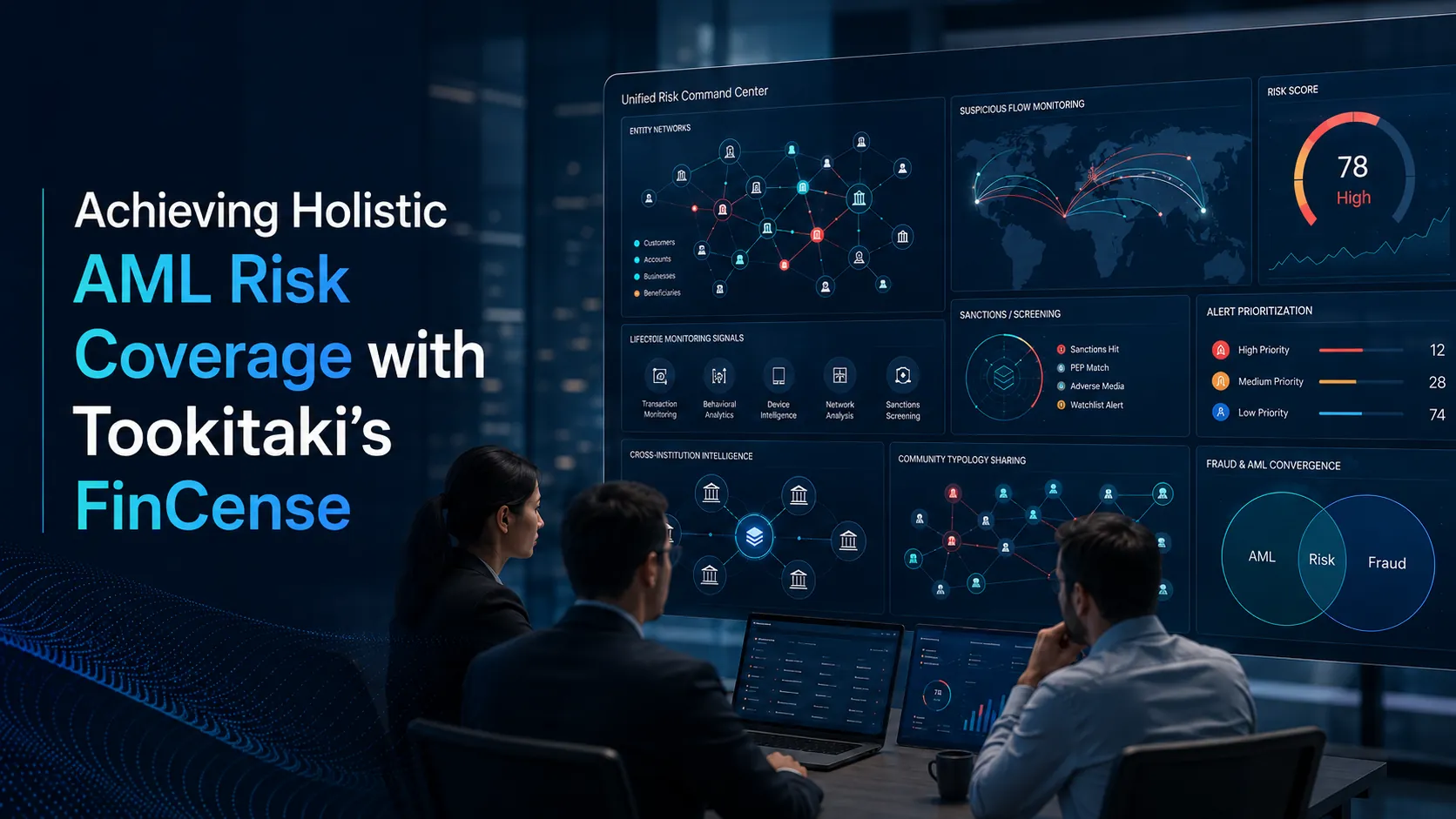
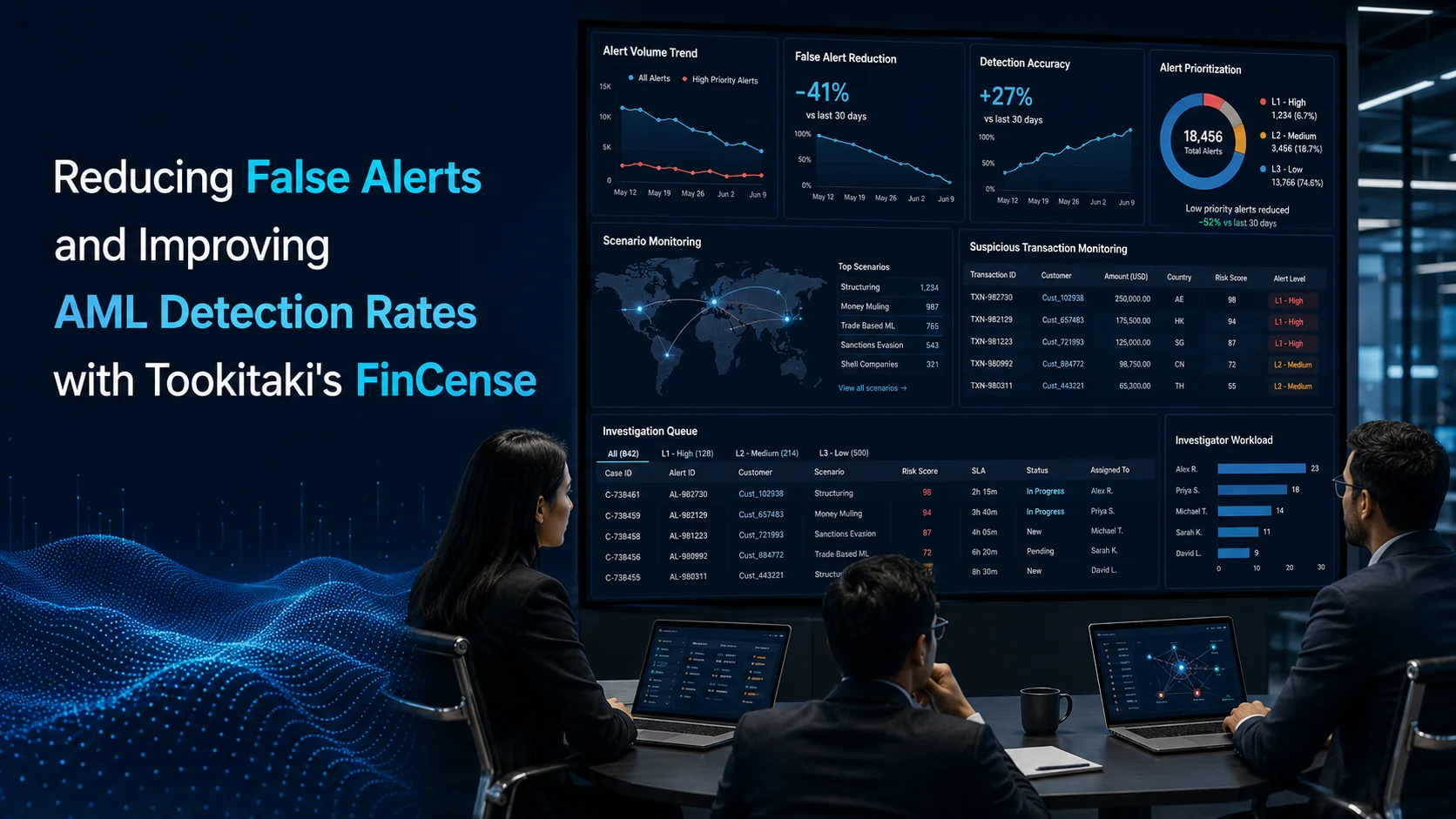
Reducing False Alerts and Improving AML Detection Rates with Tookitaki's FinCense
False positives overwhelm AML compliance teams while genuine financial crime goes undetected. Tookitaki addresses this two ways: an Alert Prioritization AI Agent that works on top of any legacy system, and FinCense Transaction Monitoring with scenario-based detection and automated threshold tuning.
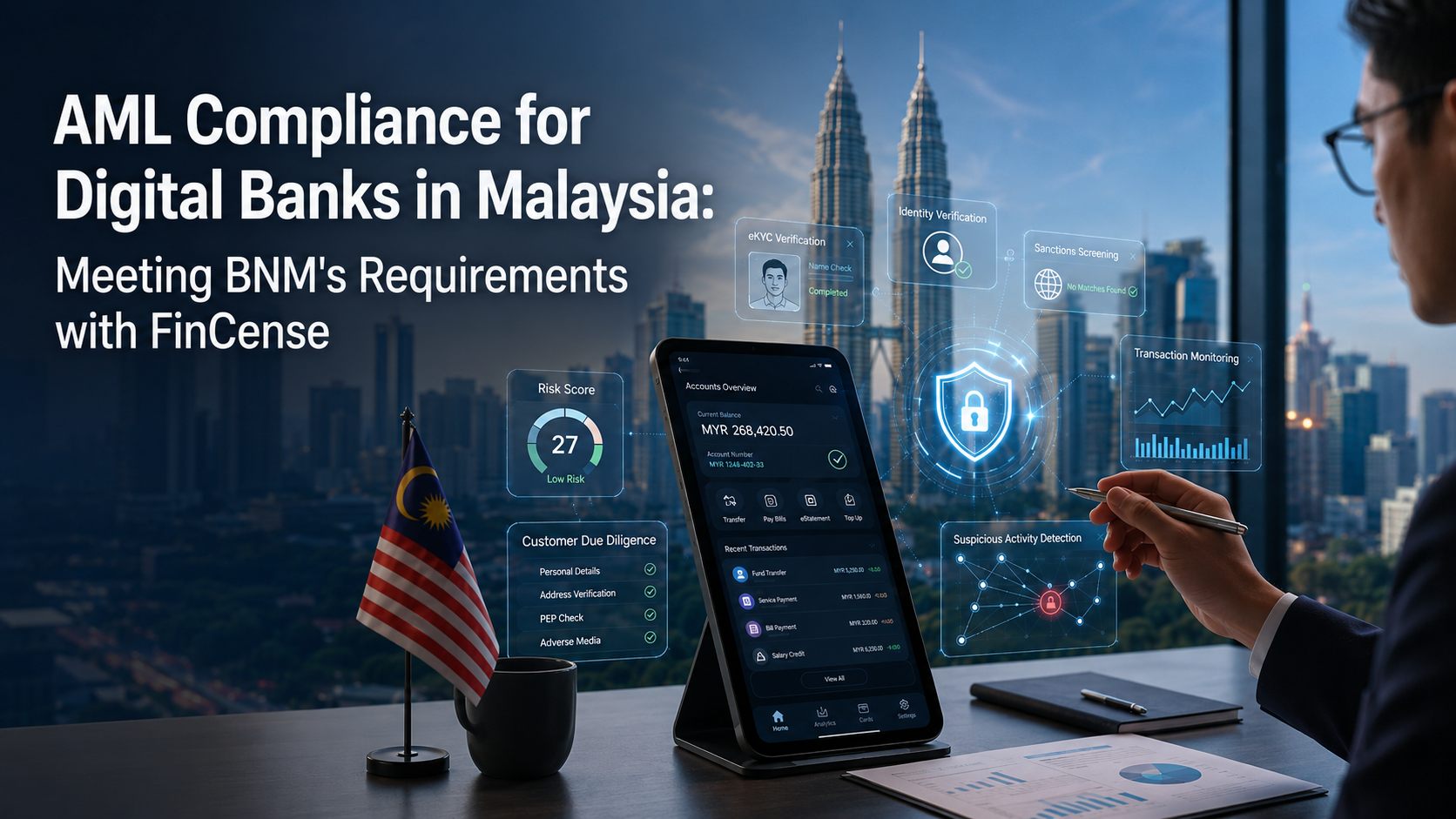
AML Compliance for Digital Banks in Malaysia: Meeting BNM's Requirements with FinCense
Malaysia's digital banks face BNM's 2023 AML/CFT Policy Document, FATF's updated recommendations, and mounting pressure on eKYC and transaction monitoring standards. Here is how FinCense addresses these requirements.

Living Under the STR Clock: The Growing Pressure on AML Investigators
AML investigators face increasing pressure to make Suspicious Transaction Report decisions under tight timelines and growing alert volumes. Explore the challenges behind STR reporting and the shift toward intelligence-led investigations.

