


API-Driven Case Operations and AFC Engagement Visibility
This month’s FinCense update improves external integration and Anti-Financial Crime (AFC) Ecosystem engagement. Clients can now retrieve alert and case lists using flexible filters such as transaction, party, product/source, and status scope, making it easier to locate the right FinCense records from their own systems. They can also update alert and case statuses through controlled APIs with attribution, notes and audit trail. In the AFC Ecosystem, new group-based leaderboards help admins track member engagement across communities, events, and cohorts – while users see the leaderboards most relevant to the groups they belong to.
Retrieve Alerts and Cases Using Flexible Filters
FinCense now provides a client-facing way to retrieve alert and case lists using key business identifiers such as transaction and party identifiers. This allows client systems to look up relevant FinCense alerts/cases without relying on manual searches inside Case Manager. The API contract supports read-only retrieval for alerts and cases, using identifiers such as transaction_key and party_key to obtain the relevant alert_id or case_id.
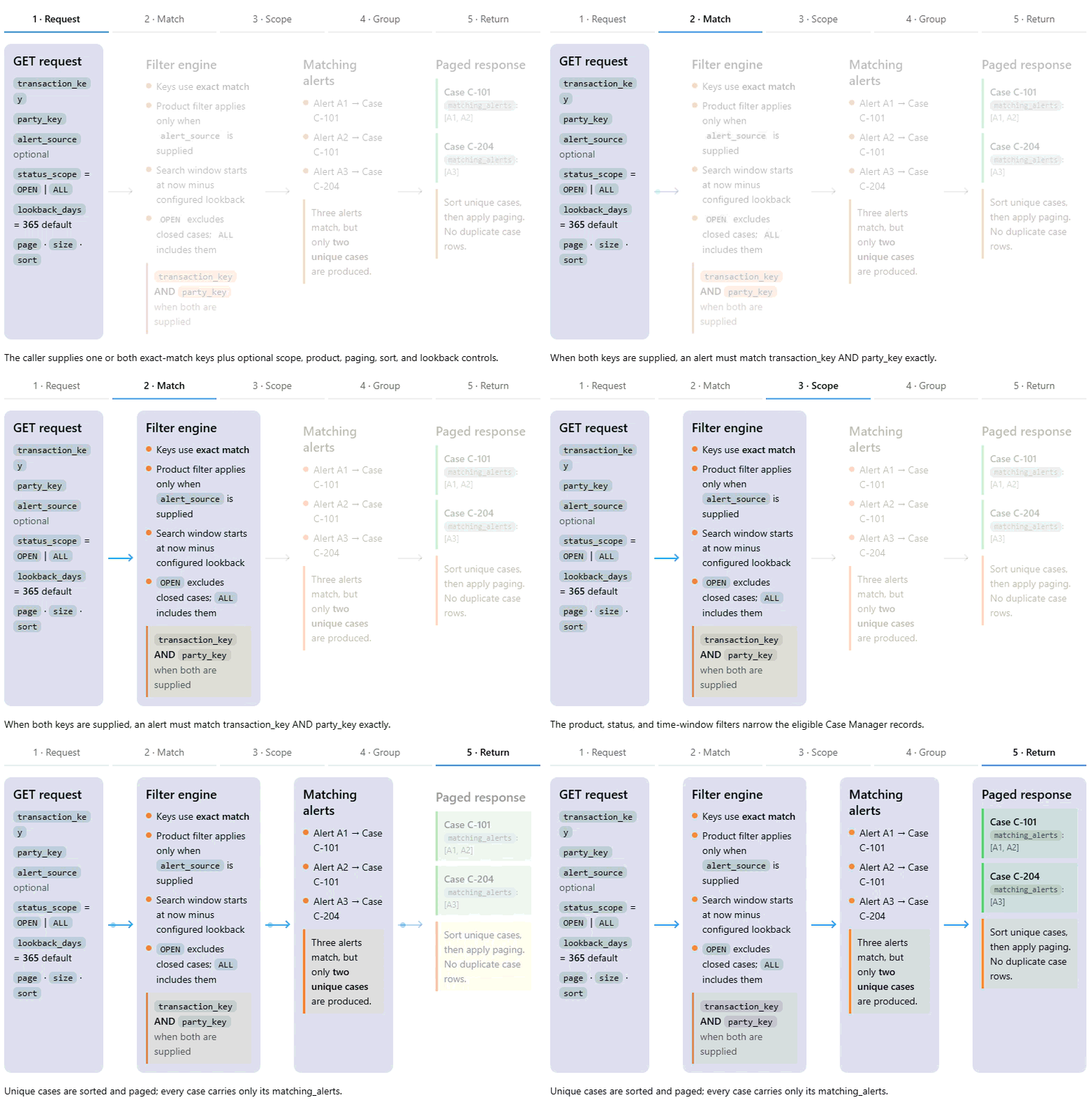
- Client systems can retrieve matching alerts and cases using flexible filters.
- Supports lookups by transaction identifier, party/customer identifier, product/source, status scope, paging, and sort options.
- Case results return relevant matching alerts, making it easier to understand why a case was returned.
- Retrieval is read-only, so it does not accidentally change statuses, create notes, or trigger workflow actions.
{{product-cta-1}}
Update Alert and Case Status Through Controlled APIs
Clients can now update alert and case statuses through external APIs, with proper attribution, notes, and audit trail. This allows client operational systems to trigger the same type of status movement that users perform in Case Manager, while still respecting internal workflow rules and permissions. The API supports status updates for both alerts and cases with full attribution and audit, using the same internal rules as Case Manager UI actions.
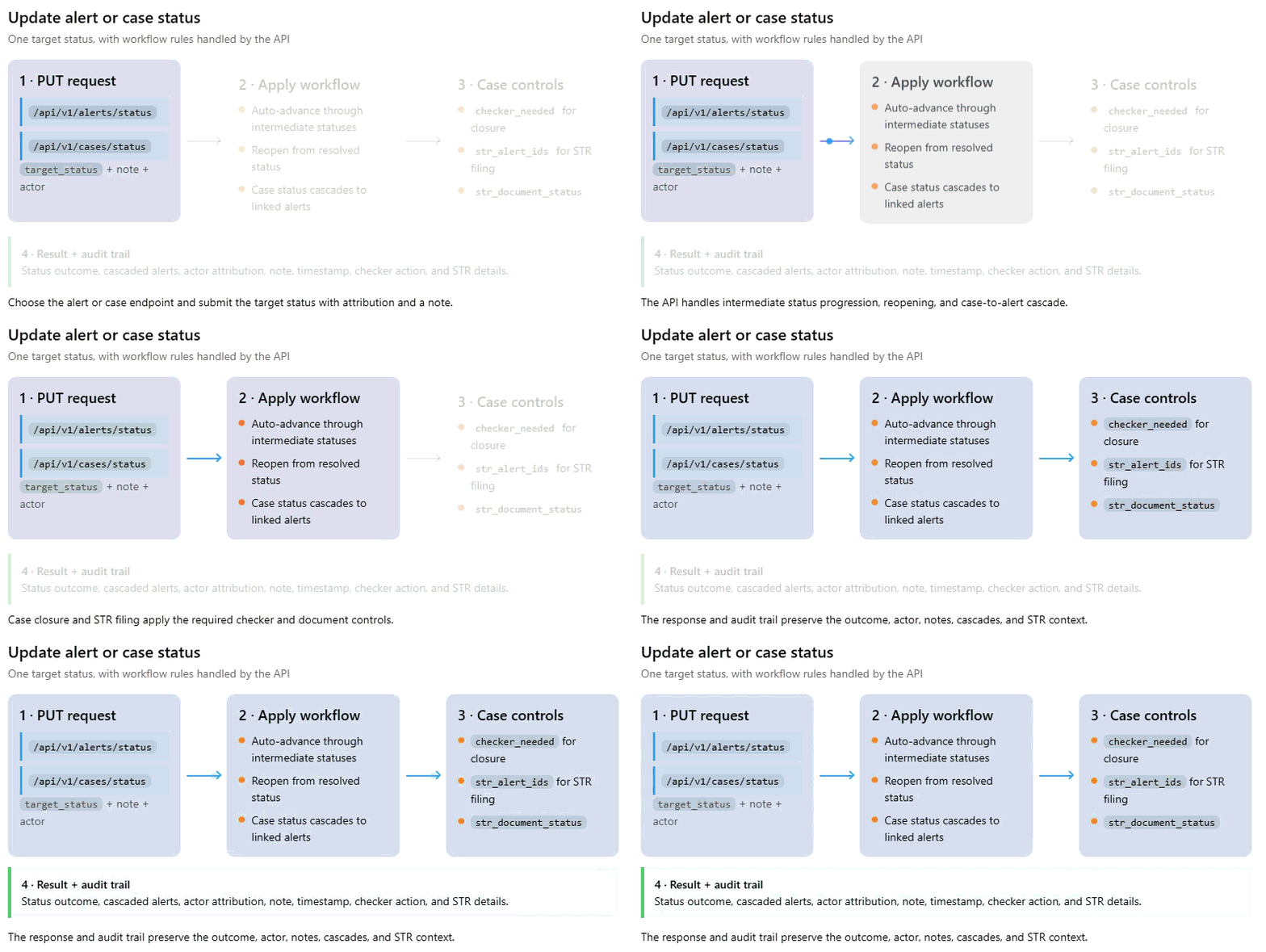
- Client systems can update alert status and case status using controlled API calls.
- Status changes include attribution, remarks/notes, and audit history.
- The system supports target-status updates and can handle intermediate transitions internally where applicable.
- Case-level actions support workflow controls such as maker-checker behavior and STR-related handling where required.
- Updates follow the same internal rules as Case Manager, reducing differences between API-driven and UI-driven actions.
{{product-cta-2}}
AFC Leaderboard for Group-Based Engagement Tracking
The AFC Ecosystem now includes an engagement leaderboard that helps track how members participate across the community. Administrators can create user groups—such as AFC Spring Event 2026 or AFC Brown Bag Event 2026—and map users to one or more groups. When users log in, they can view the leaderboard relevant to the group or groups they belong to, while admins can also access a global leaderboard.
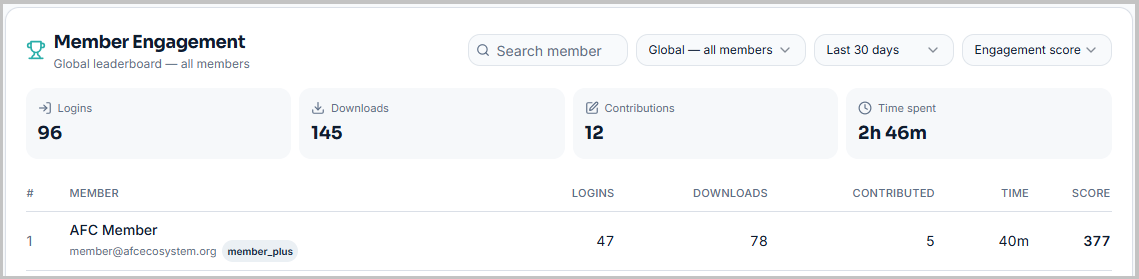
- AFC admins can create engagement groups and map users to those groups, while tracking all members via a global leaderboard.
- A user can belong to multiple leaderboards when they are part of multiple communities or events.
- Users see leaderboard views relevant to their group membership.
- Engagement metrics include activity signals such as logins, downloads, contributions, time spent, and overall engagement score.
{{product-cta-3}}