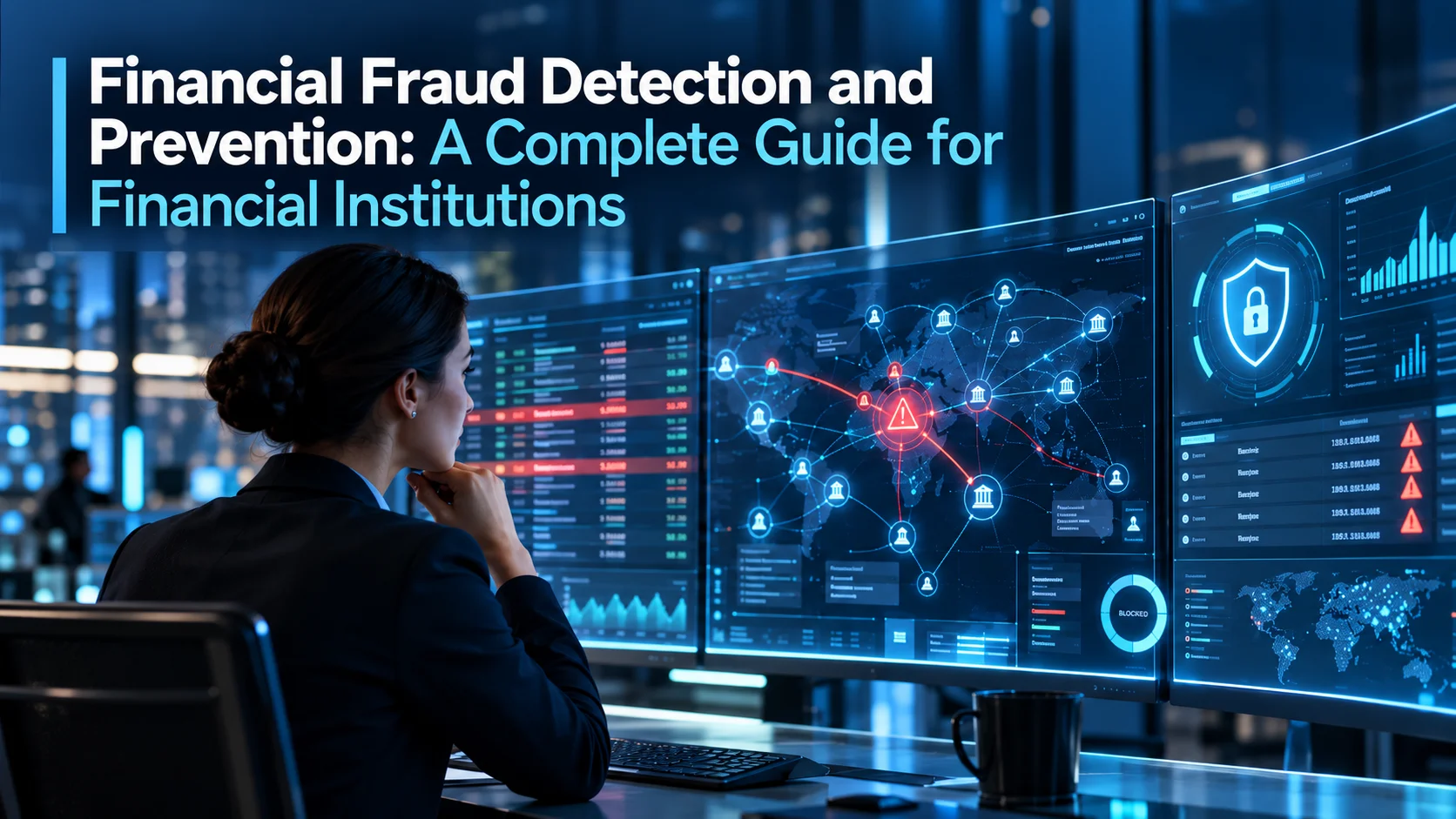
From Alerts to Insight: What Modern Money Laundering Solutions Get Right
.svg)
Money laundering does not exploit gaps in regulation. It exploits gaps in understanding.
Introduction
Money laundering remains one of the most complex and persistent challenges facing financial institutions. As criminal networks become more sophisticated and globalised, the methods used to disguise illicit funds continue to evolve. What once involved obvious red flags and isolated transactions now unfolds across digital platforms, jurisdictions, and interconnected accounts.
In the Philippines, this challenge is particularly acute. Rapid digitalisation, increased cross-border flows, and growing adoption of real-time payments have expanded financial access and efficiency. At the same time, they have created new pathways for laundering proceeds from fraud, scams, cybercrime, and organised criminal activity.
Against this backdrop, money laundering solutions can no longer be limited to compliance checklists or siloed systems. Institutions need integrated, intelligence-driven solutions that reflect how laundering actually occurs today. The focus has shifted from simply detecting suspicious transactions to understanding risk holistically and responding effectively.

Why Traditional Approaches to Money Laundering Fall Short
For many years, money laundering controls were built around static frameworks. Institutions relied on rule-based transaction monitoring, manual reviews, and periodic reporting to meet regulatory expectations.
While these approaches established a baseline of compliance, they struggle to address modern laundering techniques.
Criminals now fragment activity into small, frequent transactions to avoid thresholds. They move funds rapidly across accounts and channels, often using mule networks and digital wallets. They exploit speed, anonymity, and complexity to blend illicit flows into legitimate activity.
Traditional systems often fail in this environment for several reasons. They focus on isolated transactions rather than patterns over time. They generate large volumes of alerts with limited prioritisation. They lack context across products and channels. Most importantly, they are slow to adapt as laundering typologies evolve.
These limitations have forced institutions to rethink what effective money laundering solutions really look like.
What Are Money Laundering Solutions Today?
Modern money laundering solutions are not single tools or standalone modules. They are comprehensive frameworks that combine technology, intelligence, and governance to manage risk end to end.
At a high level, these solutions aim to achieve three objectives. First, they help institutions identify suspicious behaviour early. Second, they enable consistent and explainable investigation and decision-making. Third, they support strong regulatory reporting and oversight.
Unlike traditional approaches, modern solutions operate continuously. They draw insights from transactions, customer behaviour, networks, and emerging typologies to provide a dynamic view of risk.
Effective money laundering solutions therefore span multiple capabilities that work together rather than in isolation.
Core Pillars of Effective Money Laundering Solutions
Risk-Based Customer Understanding
Strong money laundering solutions begin with a deep understanding of customer risk. This goes beyond static attributes such as occupation or geography.
Modern solutions continuously update customer risk profiles based on behaviour, transaction patterns, and exposure to emerging threats. This ensures that controls remain proportionate and responsive rather than generic.
Intelligent Transaction Monitoring
Transaction monitoring remains a central pillar, but it must evolve. Effective solutions analyse transactions in context, looking at behaviour over time and relationships between accounts rather than individual events.
By combining rules, behavioural analytics, and machine learning, modern monitoring systems improve detection accuracy while reducing false positives.
Network and Relationship Analysis
Money laundering rarely occurs in isolation. Criminal networks rely on multiple accounts, intermediaries, and counterparties to move funds.
Modern solutions use network analysis to identify connections between customers, accounts, and transactions. This capability is particularly effective for detecting mule networks and layered laundering schemes.
Scenario-Driven Detection
Detection logic should be grounded in real-world typologies. Scenarios translate known laundering methods into actionable detection patterns.
Effective money laundering solutions allow scenarios to evolve continuously, incorporating new intelligence as threats change.
Integrated Case Management and Investigation
Detection is only the first step. Solutions must support consistent, well-documented investigations.
Integrated case management brings together alerts, customer data, transaction history, and contextual insights into a single view. This improves investigation quality and supports defensible decision-making.
Regulatory Reporting and Governance
Strong governance is essential. Money laundering solutions must provide clear audit trails, explainability, and reporting aligned with regulatory expectations.
This includes the ability to demonstrate how risk is assessed, how alerts are prioritised, and how decisions are reached.
Money Laundering Solutions in the Philippine Context
Financial institutions in the Philippines operate in a rapidly evolving risk environment. Digital payments, remittances, and online platforms play a central role in everyday financial activity. While this supports growth and inclusion, it also increases exposure to complex laundering schemes.
Regulators expect institutions to adopt a risk-based approach that reflects local threats and evolving typologies. Institutions must show that their controls are effective, proportionate, and continuously improved.
This makes adaptability critical. Static frameworks quickly become outdated, while intelligence-driven solutions provide the flexibility needed to respond to emerging risks.
Money laundering solutions that integrate behavioural analysis, typology intelligence, and strong governance are best suited to meeting these expectations.
How Tookitaki Approaches Money Laundering Solutions
Tookitaki approaches money laundering solutions as a unified intelligence framework rather than a collection of disconnected controls.
At the centre of this framework is FinCense, an end-to-end compliance platform that brings together transaction monitoring, customer risk scoring, case management, and reporting into a single system. FinCense applies advanced analytics and machine learning to identify suspicious behaviour with greater precision and transparency.
A key strength of Tookitaki’s approach is FinMate, an Agentic AI copilot that supports compliance teams throughout the investigation process. FinMate helps summarise alerts, explain risk drivers, highlight patterns, and support consistent decision-making. This reduces investigation time while improving quality.
Tookitaki is also differentiated by the AFC Ecosystem, a collaborative intelligence network where financial crime experts contribute real-world typologies, scenarios, and red flags. These insights continuously enhance FinCense, ensuring that detection logic remains aligned with current laundering techniques.
Together, these elements enable institutions to move from reactive compliance to proactive risk management.

A Practical View: Strengthening Money Laundering Controls
Consider a financial institution facing increasing volumes of low-value digital transactions. Traditional monitoring generates large numbers of alerts, many of which are closed as false positives. At the same time, concerns remain about missing coordinated laundering activity.
By implementing a modern money laundering solution, the institution shifts to behaviour-led detection. Transaction patterns are analysed over time, relationships between accounts are examined, and scenarios are refined using emerging typologies.
Alert volumes decrease, but detection quality improves. Investigators receive richer context and clearer explanations, enabling faster and more consistent decisions. Management gains visibility into risk exposure across products and customer segments.
The result is stronger control with lower operational strain.
Benefits of Modern Money Laundering Solutions
Institutions that adopt modern money laundering solutions experience benefits across compliance and operations.
Detection accuracy improves as systems focus on meaningful patterns rather than isolated events. False positives decline, freeing resources for higher-value investigations. Investigations become faster and more consistent, supported by automation and AI-assisted insights.
From a governance perspective, institutions gain clearer audit trails, stronger explainability, and improved regulatory confidence. Compliance teams can demonstrate not only that controls exist, but that they are effective.
Most importantly, modern solutions support trust. By preventing illicit activity from flowing through legitimate channels, institutions protect their reputation and the integrity of the financial system.
The Future of Money Laundering Solutions
Money laundering solutions will continue to evolve alongside financial crime.
Future frameworks will place greater emphasis on predictive intelligence, identifying early indicators of risk before suspicious transactions occur. Integration between AML and fraud solutions will deepen, enabling a unified view of financial crime risk.
Agentic AI will play a larger role in supporting investigators, interpreting complex patterns, and guiding decisions. Collaborative intelligence models will allow institutions to benefit from shared insights while preserving data privacy.
Institutions that invest in modern, intelligence-driven solutions today will be better positioned to adapt to these changes and maintain resilience.
Conclusion
Money laundering is no longer a problem that can be addressed with isolated controls or static rules. It requires a comprehensive, intelligence-driven approach that reflects how financial crime actually operates.
Modern money laundering solutions bring together behavioural analysis, advanced monitoring, scenario intelligence, and strong governance into a cohesive framework. They help institutions detect risk earlier, investigate more effectively, and demonstrate control with confidence.
With Tookitaki’s FinCense platform, enhanced by FinMate and enriched by the AFC Ecosystem, institutions can move beyond checkbox compliance and build robust, future-ready defences against money laundering.
In a financial world defined by speed and complexity, moving from alerts to insight is what truly sets effective money laundering solutions apart.
Experience the most intelligent AML and fraud prevention platform
Experience the most intelligent AML and fraud prevention platform
Experience the most intelligent AML and fraud prevention platform
Top AML Scenarios in ASEAN
The Role of AML Software in Compliance
The Role of AML Software in Compliance