How AML Software is Evolving: Smarter, Faster, Stronger Compliance
.svg)
In today’s financial world, the rules of the game have changed — and so must the tools we use to play it.
As criminals become more sophisticated, regulatory pressures intensify, and digital finance explodes, banks and fintechs in Singapore are upgrading their anti-money laundering (AML) tech stacks. At the heart of this transformation is AML software: smarter, faster, and more integrated than ever before.

What is AML Software?
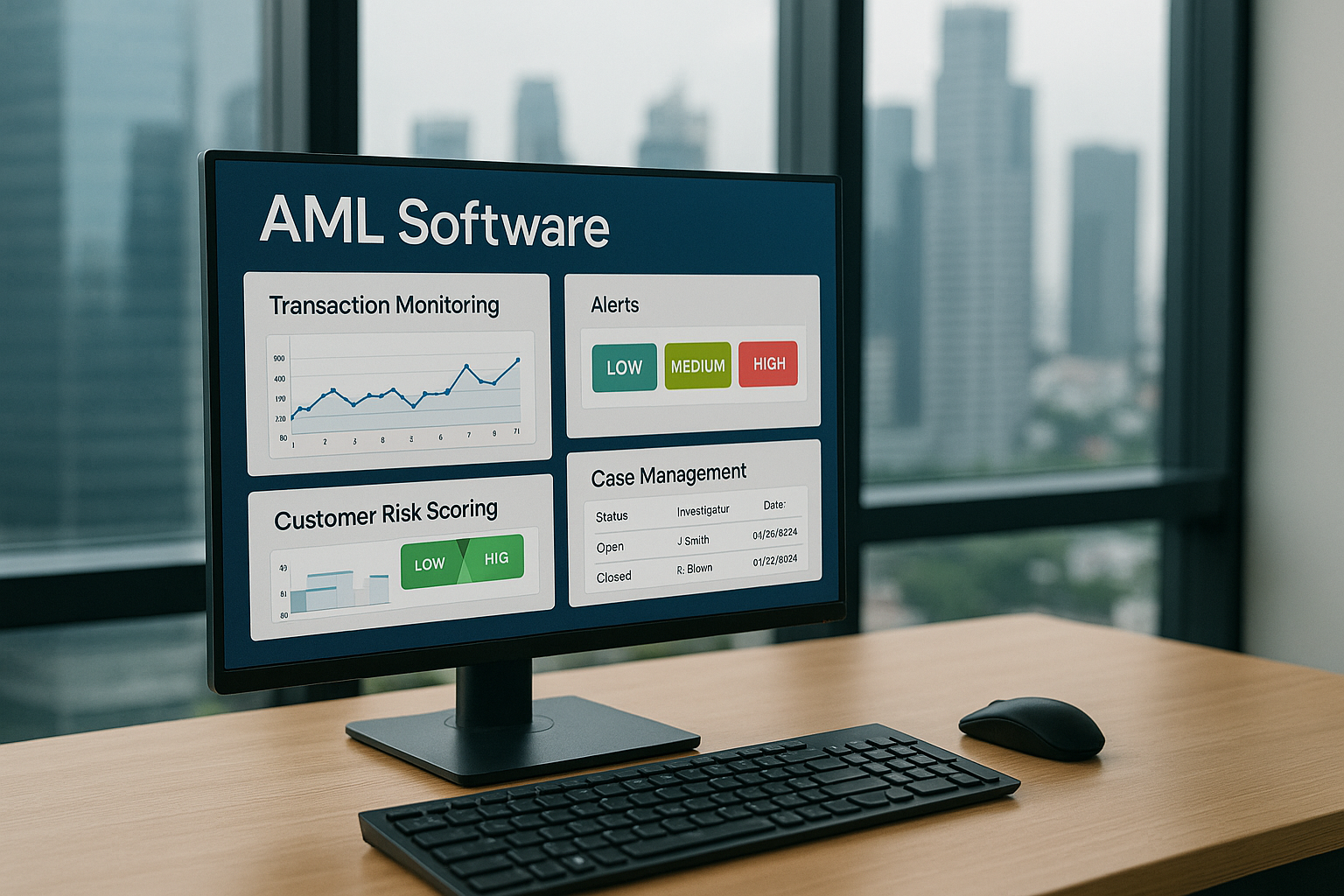
AML software is a suite of technology solutions designed to help financial institutions detect, investigate, and report suspicious activities linked to money laundering, terrorism financing, and other financial crimes.
A typical AML software system includes:
- Transaction Monitoring
- Name Screening (Sanctions, PEPs, Adverse Media)
- Case Management
- Customer Risk Scoring
- Regulatory Reporting (STR/SAR filing)
Modern AML platforms go even further, offering AI-powered features, real-time analytics, and community-driven intelligence to stay ahead of criminals.
Why AML Software Matters in Singapore
Singapore is a global finance hub — but that makes it a prime target for illicit activity.
With the Monetary Authority of Singapore (MAS) raising expectations, banks and digital payment providers face increasing pressure to:
- Detect new fraud and laundering patterns
- Reduce false positives
- File timely Suspicious Transaction Reports (STRs)
- Demonstrate effectiveness of controls
In this context, AML software is no longer a back-office utility. It’s a frontline defence mechanism.
Key Features of Next-Gen AML Software
Let’s explore what separates industry-leading AML software:
1. AI-Powered Detection
Legacy rule-based systems struggle to detect evolving threats. The best AML software today combines rules with AI and machine learning to:
- Identify complex typologies
- Spot previously unseen patterns
- Continuously improve based on feedback
2. Scenario-Based Monitoring
Rather than flagging single rules, scenario-based systems simulate real-world laundering behaviour — such as layering via wallets or round-tripping via shell firms.
This reduces alert fatigue and increases true positive rates.
3. Federated Learning
Privacy is a key challenge in AML. Federated learning models allow multiple institutions to share intelligence without exposing data. Tookitaki’s FinCense platform, for example, uses federated AI to learn from over 1,200 community-contributed typologies.
4. GenAI for Investigations
Modern platforms come equipped with AI copilots that assist analysts by:
- Narrating alerts in natural language
- Summarising key case data
- Suggesting investigation paths
This cuts investigation time and boosts consistency.
5. Modular and Scalable Design
Top AML software platforms are API-first and cloud-native, allowing financial institutions to:
- Integrate seamlessly with existing systems
- Scale as business grows
- Tailor features to compliance needs
6. Smart Disposition and Automation
Another game-changing innovation is the use of smart disposition tools that automatically close low-risk alerts while flagging high-risk cases for review. This not only reduces manual workload but also ensures investigators focus on what truly matters.
7. Risk-Based Customer Segmentation
Risk isn’t one-size-fits-all. Better AML software supports adaptive customer risk models, enabling banks to assign varying levels of monitoring and documentation based on actual behaviour, not just profiles.
The Tookitaki Difference
Tookitaki’s AML software — FinCense — is designed for Asia’s fast-evolving financial crime landscape. It offers:
- End-to-end AML coverage: Screening, Monitoring, Risk Scoring, and Reporting
- Scenario-based typology library built by the AFC Ecosystem
- Auto-Narration and Alert Clustering features for faster reviews
- Real-time insights through graph-based risk visualisation
- Compliance-ready reports for MAS and other regulators
It’s no surprise that leading banks and fintechs across Singapore trust Tookitaki as their AML technology partner.
Benefits of Implementing the Right AML Software
The right software delivers value across the board:
- Efficiency: Faster investigations, fewer false positives
- Effectiveness: Better risk detection and STR quality
- Auditability: Full traceability and audit logs
- Regulatory Alignment: Easier compliance with MAS TRM and AML guidelines
- Future-Readiness: Rapid response to emerging crime trends
Beyond the basics, AML software today also plays a strategic role. By enabling early detection of syndicated frauds and emerging typologies, it gives financial institutions a first-mover advantage in safeguarding assets and reputation.
Local Trends to Watch
1. Real-Time Payment Risks
As Singapore expands FAST and PayNow, AML software must handle real-time transaction flows. Features like instant alerting and risk scoring are crucial.
2. Cross-Border Mule Networks
Organised crime groups are using Singapore as a pass-through hub. AML platforms must detect smurfing, layering, and proxy-controlled accounts across borders.
3. Digital Payment Platforms
With the rise of e-wallets, BNPL apps, and alternative lenders, AML software needs to adapt to newer transaction types and user behaviours.
4. Crypto and DeFi Threats
Even as regulations for digital assets evolve, AML tools must evolve faster — especially to monitor wallets, mixers, and anonymised chains. Platforms with crypto intelligence capabilities are emerging as essential components of a future-proof AML stack.
Common Challenges in Choosing AML Software
Even with a growing vendor landscape, not all AML software is created equal. Watch out for:
- Poor integration support
- Lack of local compliance features (e.g., MAS STR formats)
- Over-reliance on manual rule tuning
- No support for typology simulation
Some institutions also face challenges with legacy tech debt or internal resistance to automation. That’s why vendor support, training, and ongoing upgrades are just as critical as features.
How to Evaluate AML Software Providers
When assessing an AML solution, ask these questions:
- Can the platform simulate real-life financial crime scenarios?
- Does it offer intelligence beyond just transaction data?
- How accurate and explainable are its AI models?
- Is it MAS-compliant and audit-ready?
- Does it reduce false positives while boosting true positives?
The best platforms will demonstrate value in both detection capabilities and operational impact.
Conclusion: Don’t Just Comply — Compete
AML compliance is no longer just about ticking boxes. With regulators watching, criminals evolving, and reputational risks soaring — smart AML software is a competitive advantage.
Banks and fintechs that invest in intelligent, adaptable platforms will not only stay safe, but also move faster, serve better, and scale stronger.
Tookitaki’s FinCense platform is helping make that future a reality — through AI, collaboration, and real-world detection.
Experience the most intelligent AML and fraud prevention platform
Experience the most intelligent AML and fraud prevention platform
Experience the most intelligent AML and fraud prevention platform
Top AML Scenarios in ASEAN
The Role of AML Software in Compliance
The Role of AML Software in Compliance