Navigating AML Compliance Regulations in Singapore: What Financial Institutions Must Get Right
.svg)
Anti money laundering compliance has become one of the most critical responsibilities for financial institutions operating in Singapore. As financial crime grows more sophisticated, regulators are tightening expectations around transaction monitoring, customer due diligence, and suspicious activity reporting.
Banks, fintech companies, and payment providers must now operate within a regulatory environment that demands strong governance, continuous monitoring, and advanced detection capabilities.
Understanding AML compliance regulations is no longer just a legal requirement. It is a strategic necessity for institutions seeking to protect customers, maintain trust, and operate confidently in Singapore’s highly regulated financial ecosystem.
With increasing scrutiny from regulators and the growing complexity of financial crime, institutions must ensure their AML programmes are both comprehensive and technology driven.

What Are AML Compliance Regulations?
AML compliance regulations refer to the legal and regulatory requirements designed to prevent financial institutions from being used for money laundering, terrorism financing, and related financial crimes.
These regulations require institutions to implement structured controls across several areas, including:
- Customer due diligence
- Transaction monitoring
- Risk assessment frameworks
- Watchlist and sanctions screening
- Suspicious transaction reporting
- Ongoing customer monitoring
- Record keeping and audit trails
In Singapore, AML compliance regulations apply to banks, fintech companies, payment service providers, digital asset platforms, and other regulated entities.
The objective is to ensure financial institutions can detect suspicious activity, report potential financial crime, and prevent misuse of the financial system.
AML Regulatory Framework in Singapore
Singapore maintains one of the most robust AML regulatory frameworks in the world.
Financial institutions are primarily governed by the Monetary Authority of Singapore, which issues detailed guidelines covering anti money laundering and countering the financing of terrorism requirements.
These guidelines establish expectations for financial institutions in areas such as:
- Risk based AML frameworks
- Customer due diligence and enhanced due diligence
- Ongoing transaction monitoring
- Screening against sanctions and watchlists
- Suspicious transaction reporting obligations
- Internal controls and governance
Institutions must demonstrate that their AML controls are proportionate to the risks they face.
This means higher risk customers, geographies, and transaction types require enhanced monitoring and due diligence.
Risk Based Approach to AML Compliance
A central principle of AML compliance regulations is the risk based approach.
Financial institutions are expected to assess their exposure to money laundering risk and apply appropriate controls.
This involves evaluating risk across multiple dimensions, including:
Customer risk
Customer occupation, business activities, and ownership structure may influence risk levels.
Geographic risk
Transactions involving high risk jurisdictions require enhanced monitoring.
Product risk
Certain financial products such as cross border transfers or trade finance may carry higher risk.
Transaction risk
Unusual transaction behaviour may indicate potential money laundering activity.
By adopting a risk based approach, institutions can focus compliance resources where risk is highest.
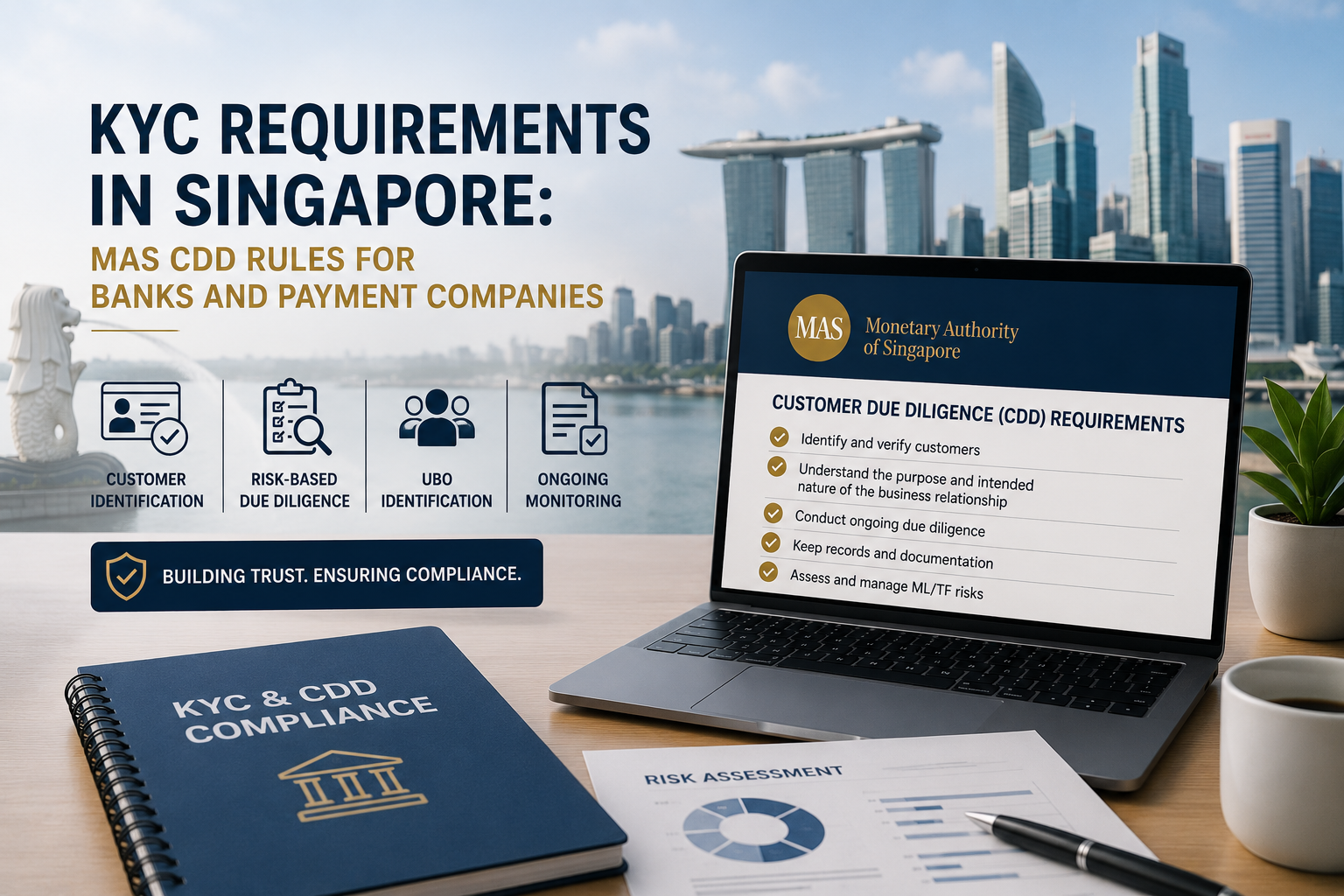
Customer Due Diligence Requirements
Customer due diligence is a core component of AML compliance regulations.
Financial institutions must verify customer identities, understand business relationships, and assess risk levels before establishing accounts.
CDD requirements typically include:
Identity verification
Institutions must confirm the identity of individuals and legal entities.
Beneficial ownership identification
Institutions must identify individuals who ultimately control corporate entities.
Purpose of account
Institutions must understand why the account is being opened.
Risk classification
Customers must be assigned risk ratings based on AML risk factors.
For higher risk customers, enhanced due diligence is required.
This may include additional documentation, source of wealth verification, and ongoing monitoring.
Ongoing Monitoring Obligations
AML compliance regulations require institutions to continuously monitor customer activity.
This ensures that behaviour remains consistent with the customer’s risk profile.
Ongoing monitoring includes:
Transaction monitoring
Reviewing financial activity for suspicious patterns.
Customer profile updates
Updating customer risk information periodically.
Screening updates
Checking customers against updated sanctions and watchlists.
Behavioural analysis
Identifying changes in transaction patterns.
Ongoing monitoring helps institutions detect suspicious activity that may emerge after account onboarding.
Transaction Monitoring Requirements
Transaction monitoring is one of the most important elements of AML compliance.
Institutions must implement systems capable of detecting suspicious behaviour.
Monitoring systems should identify patterns such as:
Rapid movement of funds
Unusual transaction volumes
Structuring transactions
Cross border layering
Use of multiple linked accounts
AML compliance regulations expect monitoring systems to be calibrated based on risk.
Institutions must also periodically review and refine detection scenarios.
Suspicious Transaction Reporting
Financial institutions are required to report suspicious activity to relevant authorities.
When unusual behaviour is identified, investigators must review alerts and determine whether the activity warrants reporting.
Suspicious transaction reports should include:
Details of the customer
Description of suspicious activity
Transaction history
Investigation findings
Supporting documentation
Timely reporting is critical to AML compliance.
Institutions must also maintain audit trails documenting how alerts were investigated.
Sanctions and Watchlist Screening Requirements
AML compliance regulations require institutions to screen customers and transactions against sanctions lists and watchlists.
This includes:
Politically exposed person screening
Sanctions screening
Adverse media screening
Internal watchlist screening
Screening must occur during onboarding and on an ongoing basis.
Institutions must also ensure alerts generated by screening systems are reviewed and resolved.

Challenges in Meeting AML Compliance Regulations
Financial institutions face several challenges when implementing AML compliance requirements.
One challenge is the volume of transactions processed daily.
Large banks may process millions of transactions, making manual monitoring impossible.
Another challenge is alert overload.
Rule based systems often generate excessive alerts, increasing operational burden.
Data fragmentation is also a common issue.
Customer data, transaction data, and external intelligence sources may reside in separate systems.
This makes investigations time consuming.
To address these challenges, institutions are adopting advanced AML platforms.
Role of Technology in AML Compliance
Technology plays a critical role in meeting AML compliance regulations.
Modern AML platforms provide integrated capabilities including:
Transaction monitoring
Customer risk scoring
Screening automation
Case management
Regulatory reporting workflows
Artificial intelligence is also improving AML compliance.
Machine learning models help detect suspicious patterns and reduce false positives.
Automation enables investigators to focus on high risk alerts.
Advanced analytics provide better visibility into complex transaction behaviour.
Together, these capabilities help institutions strengthen compliance frameworks.
Tookitaki’s Approach to AML Compliance
Tookitaki’s FinCense platform is designed to support financial institutions in meeting AML compliance regulations.
The platform integrates monitoring, screening, and investigation capabilities within a unified architecture.
Key capabilities include:
Typology driven transaction monitoring
AI powered alert prioritisation
Integrated case management workflows
Continuous risk monitoring
Regulatory reporting support
FinCense also incorporates collaborative intelligence, enabling institutions to update detection scenarios as new financial crime typologies emerge.
This ensures compliance frameworks remain aligned with evolving risks.
The Future of AML Compliance Regulations
AML compliance regulations will continue to evolve as financial crime techniques become more sophisticated.
Regulators are increasingly focusing on:
Real time transaction monitoring
AI driven detection models
Cross border collaboration
Enhanced risk based frameworks
Improved governance and auditability
Financial institutions must therefore adopt flexible AML platforms capable of adapting to regulatory change.
Technology driven compliance will become essential for managing future financial crime risks.
Conclusion
AML compliance regulations form the foundation of financial crime prevention in Singapore.
Financial institutions must implement strong controls across customer due diligence, transaction monitoring, screening, and reporting.
However, meeting regulatory expectations requires more than manual processes and legacy systems.
Modern AML platforms provide the intelligence, automation, and analytics needed to detect suspicious behaviour and support efficient investigations.
By combining technology with risk based compliance frameworks, institutions can strengthen their AML programmes and protect the integrity of Singapore’s financial system.
As financial crime continues to evolve, staying aligned with AML compliance regulations will remain essential for banks, fintech companies, and payment providers.
Experience the most intelligent AML and fraud prevention platform
Experience the most intelligent AML and fraud prevention platform
Experience the most intelligent AML and fraud prevention platform
Top AML Scenarios in ASEAN
The Role of AML Software in Compliance
The Role of AML Software in Compliance