


Smarter Risk Evaluation, Stronger Access Control, and Deeper Explainability
September’s FinCense update focuses on improving how risk teams evaluate customers, control access, and explain risk outcomes. Prospect Risk Scoring (PRS) can now evaluate multi-value customer attributes more accurately, Customer Risk Scoring (CRS) and Case Manager (CM) now support stronger Business Unit-level visibility controls, and CRS explainability now allows investigators to trace score drivers back to the exact transactions behind them.
Together, these updates help teams make risk decisions that are more accurate, better governed, and easier to explain.
PRS Native Multi-Value Attribute Evaluation in Risk Rules
Prospect Risk Scoring (PRS) can now evaluate multi-value customer attributes directly within risk rules. This is useful when a single business attribute can contain more than one value, such as a customer declaring multiple Sources of Funds. Instead of treating the attribute as one combined value, PRS can evaluate each constituent value independently and calculate the correct Risk Indicator result.
- PRS can support attributes with zero, one, or multiple values.
- Each value within a multi-value attribute can be evaluated independently against configured risk rules.
- The current scope supports ANY-value matching, where a rule is matched if at least one value satisfies the configured rule.
- Existing PRS scoring behaviour continues to apply: where multiple rules match within the same Risk Indicator, the highest matching rule score determines the Risk Indicator score.
- Evaluation is order-independent, so the result does not change based on the sequence in which values are received.
- The capability is generic and is not hard-coded to a specific client, field, or fixed number of values.
- Existing single-value PRS configurations continue to work without migration or configuration changes.
{{product-cta-1}}
BU-Level Access Control for CRS and Case Manager
Customer Risk Scoring (CRS) and Case Manager now support Business Unit (BU)-level access control, so users only see the customers, alerts, and cases that belong to the BUs they are authorised to access. This improves data segregation and supports operating models where different teams must work within their own permitted business-unit scope.
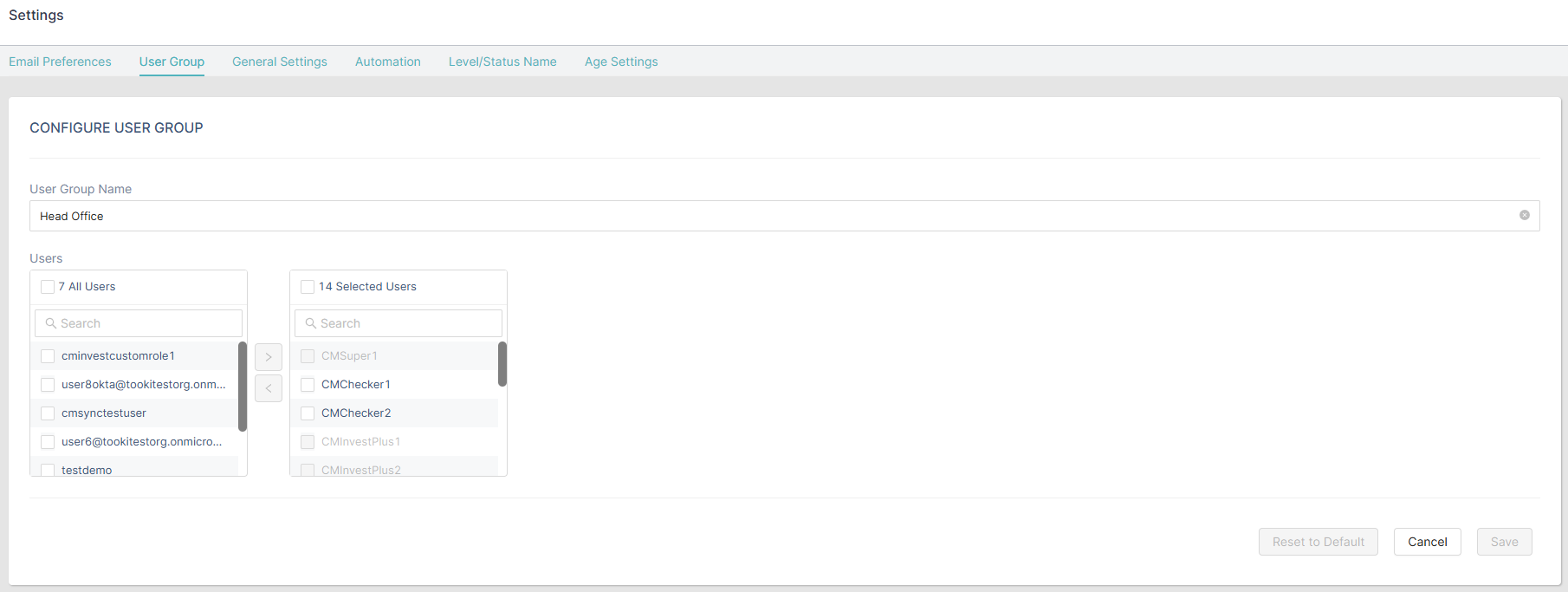
- User visibility can now be restricted based on Business Unit access.
- CRS users only see customers and risk information within the BUs they are allowed to access.
- Case Manager users only see cases and alerts that fall within their permitted BU scope.
- BU-level filtering applies consistently across CRS and CM views.
- Access control is aligned to the user’s assigned BU permissions, reducing unintended visibility across unrelated business units.
{{product-cta-2}}
Transaction Lineage Drill-Down from CRS Score Explainability
Customer Risk Scoring (CRS) score explainability now allows investigators to drill down from transaction-based score drivers to the exact transactions behind the computed value. Instead of only seeing that a transaction-derived rule contributed to the score, users can trace the supporting transactions directly from the explainability view.
- Transaction-derived CRS rule values can be investigated from Score Explainability.
- Users can drill down from a computed score driver to the underlying transactions used to calculate it.
- Investigators can see the evidence behind transaction-based risk indicators without switching to separate manual searches.
- The same explainability improvement is available where CRS details are viewed through Case Manager.
- This gives users a clearer path from risk score → risk driver → supporting transaction evidence.
{{product-cta-3}}