

The end-of-year holiday season is here, but we still have some FinCense updates for December. Get ready for a new user management interface to go along with our secure Keycloak implementation. Also, our automation feature now allows segment-specific hibernation rules in Transaction Monitoring. Read on for the details.
Centralised User and Access Management
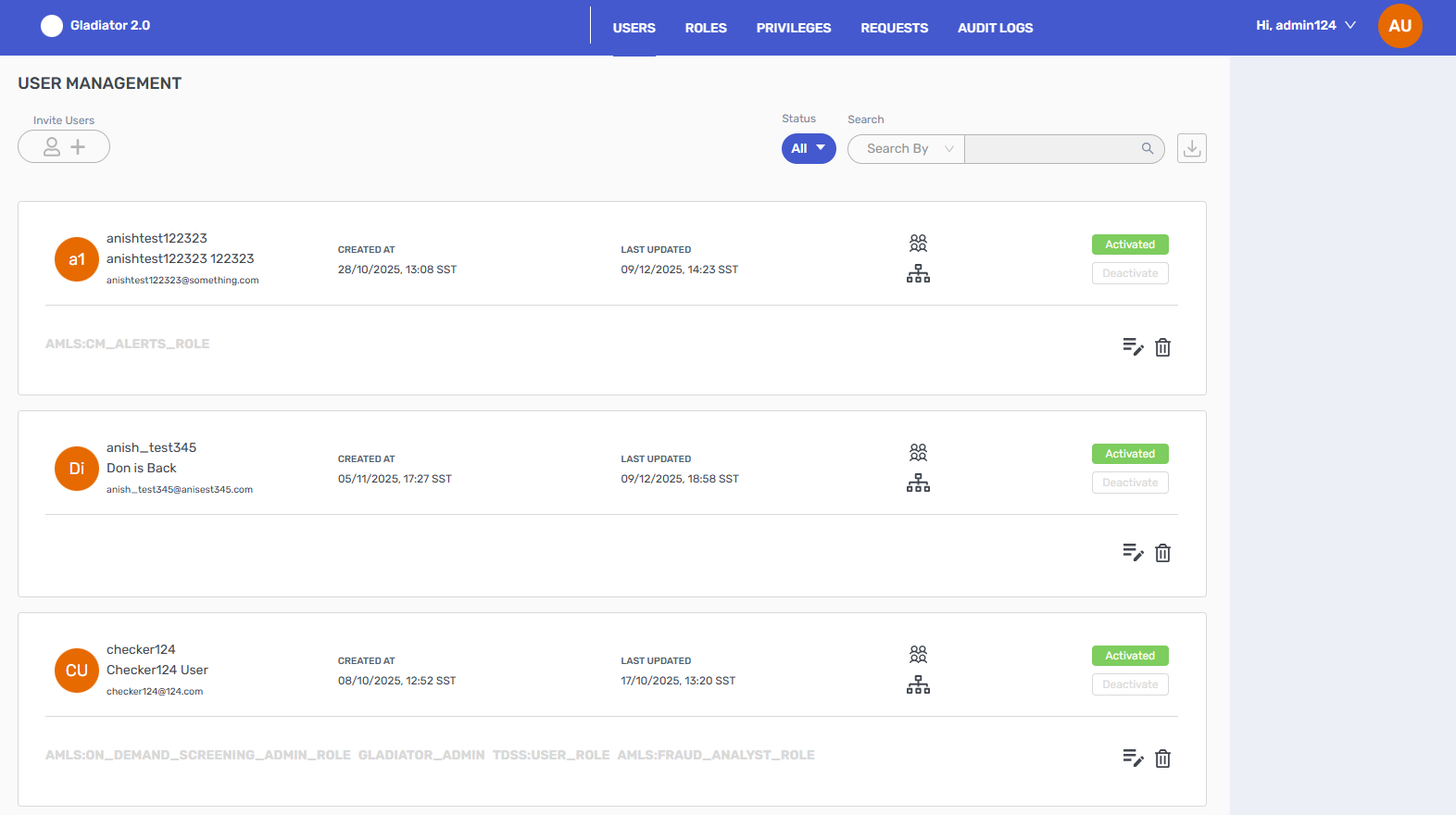
As FinCense scales across enterprises, access governance must be as robust as detection itself. This month, we introduce a dedicated centralised user and access management module, powered by Keycloak and Gladiator 2.0, to bring consistency, control, and auditability across the platform:
- SSO with Azure AD allows automatic user access and role assignment without the need for manual provisioning.
- Centralised user lifecycle management (create, update, activate/deactivate).
- Role-based access managed once and enforced consistently across FinCense.
Governance and Control
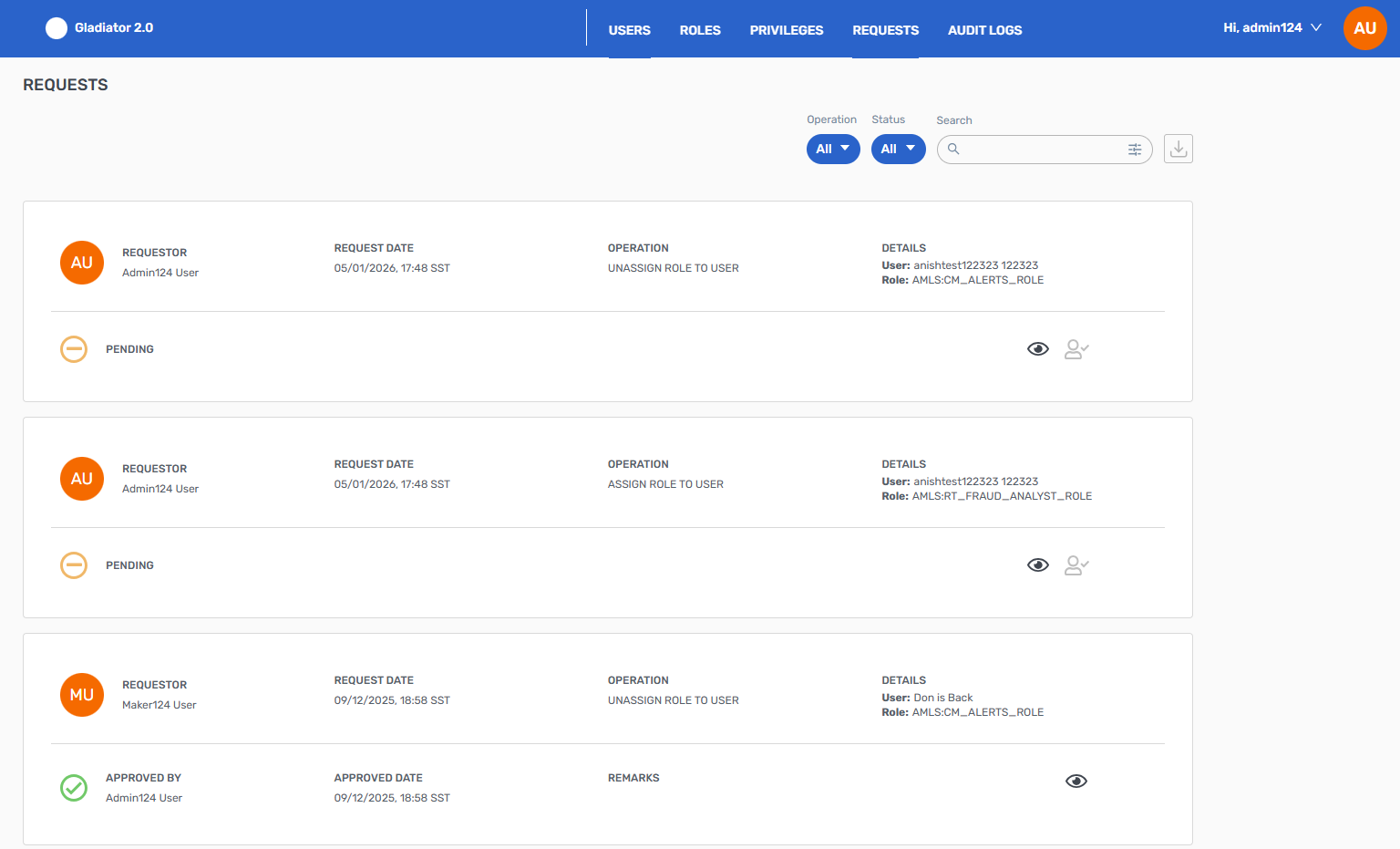
- Maker–checker workflows for sensitive access changes.
- Clear audit trails and stronger RBAC enforcement.
- Immediate access revocation for leavers or temporary suspensions.
Built for what’s next, this IAM foundation is future-ready — designed to support SAML-based SSO, advanced session controls, and login monitoring as enterprise needs evolve.
{{product-cta-1}}
Segment-Specific Automation
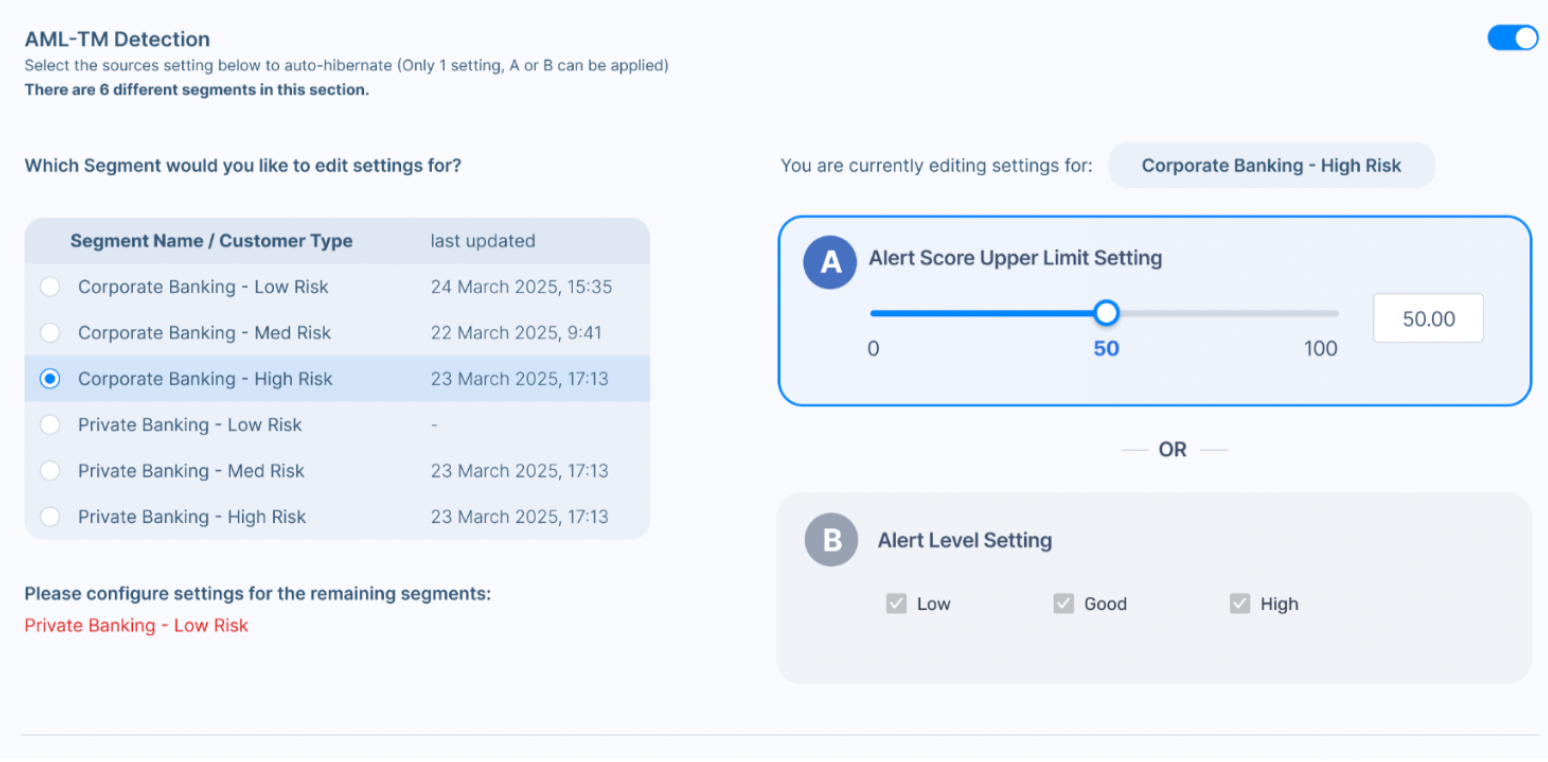
Case Manager Admins can now define segment-specific auto-hibernation rules for transaction monitoring alerts. Instead of relying only on global rules, administrators can customise configurations for each segment flowing from Transaction Monitoring, enabling greater accuracy in managing alerts and investigations.
{{product-cta-2}}