

Transaction Fraud Prevention Solutions: Safeguarding Malaysia’s Digital Payments Economy
.svg)
As digital payments accelerate, transaction fraud prevention solutions have become the frontline defence protecting trust in Malaysia’s financial system.
Malaysia’s Transaction Boom Is Creating New Fraud Risks
Malaysia’s payments landscape has transformed at remarkable speed. Real-time transfers, DuitNow QR, e-wallets, online marketplaces, and cross-border digital commerce now power everyday transactions for consumers and businesses alike.
This growth has brought undeniable benefits. Faster payments, broader financial inclusion, and seamless digital experiences have reshaped how money moves across the country.
However, the same speed and convenience are being exploited by criminal networks. Fraud is no longer opportunistic or manual. It is organised, automated, and designed to move money before institutions can respond.
Banks and fintechs in Malaysia are now facing a surge in:
- Account takeover driven transaction fraud
- Scam related fund transfers
- Mule assisted payment fraud
- QR based fraud schemes
- Merchant fraud and fake storefronts
- Cross border transaction abuse
- Rapid layering through instant payments
Transaction fraud is no longer an isolated problem. It is tightly linked to money laundering, reputational risk, and customer trust.
This is why transaction fraud prevention solutions have become mission critical for Malaysia’s financial ecosystem.

What Are Transaction Fraud Prevention Solutions?
Transaction fraud prevention solutions are technology platforms designed to detect, prevent, and respond to fraudulent payment activity in real time.
They analyse transaction behaviour, customer profiles, device signals, and contextual data to identify suspicious activity before funds are irreversibly lost.
Modern solutions typically support:
- Real-time transaction monitoring
- Behavioural analysis
- Risk scoring and decisioning
- Fraud pattern detection
- Blocking or challenging suspicious transactions
- Alert investigation and resolution
- Integration with AML and case management systems
Unlike traditional post-transaction review tools, modern transaction fraud prevention solutions operate during the transaction, not after the loss has occurred.
Their goal is prevention, not recovery.
Why Transaction Fraud Prevention Matters in Malaysia
Malaysia’s financial ecosystem presents a unique combination of opportunity and exposure.
Several factors make advanced fraud prevention essential.
1. Instant Payments Leave No Room for Delay
With DuitNow and real-time transfers, fraudulent funds can exit the system within seconds. Manual reviews or batch monitoring are no longer effective.
2. Scams Are Driving Transaction Fraud
Investment scams, impersonation scams, and social engineering attacks often rely on victims initiating legitimate looking transfers that are, in reality, fraudulent.
3. Mule Networks Enable Scale
Criminal syndicates recruit mules to move fraud proceeds through multiple accounts, making individual transactions appear low risk.
4. Cross Border Exposure Is Rising
Fraud proceeds are often routed quickly to offshore accounts, crypto platforms, or foreign payment services.
5. Regulatory Expectations Are Increasing
Bank Negara Malaysia expects institutions to demonstrate strong controls over transaction risk, real-time detection, and effective response mechanisms.
Transaction fraud prevention solutions address these risks by analysing intent, behaviour, and context at the moment of payment.
How Transaction Fraud Prevention Solutions Work
Effective fraud prevention systems operate through a multi-layered decision process.
1. Transaction Data Ingestion
Each payment is analysed as it is initiated. The system ingests transaction attributes such as amount, frequency, beneficiary details, channel, and timing.
2. Behavioural Profiling
The system compares the transaction against the customer’s historical behaviour. Deviations from normal patterns raise risk indicators.
3. Device and Channel Intelligence
Device fingerprints, IP address patterns, and channel usage provide additional context on whether a transaction is legitimate.
4. Machine Learning Detection
ML models identify anomalies such as unusual velocity, new beneficiaries, out of pattern transfers, or coordinated behaviour across accounts.
5. Risk Scoring and Decisioning
Each transaction receives a risk score. Based on this score, the system can allow, block, or challenge the transaction in real time.
6. Alert Generation and Review
High-risk transactions generate alerts for investigation. Evidence is captured automatically to support review.
7. Continuous Learning
Investigator outcomes feed back into the models, improving accuracy over time.
This real-time loop is what makes modern fraud prevention effective against fast-moving threats.
Why Legacy Fraud Controls Are No Longer Enough
Many Malaysian institutions still rely on rule-based or reactive fraud systems. These systems struggle in today’s environment.
Common shortcomings include:
- Static rules that miss new fraud patterns
- High false positives that frustrate customers
- Manual intervention that slows response
- Limited understanding of behavioural context
- Siloed fraud and AML platforms
- Inability to detect coordinated mule activity
Criminals adapt faster than static systems. Fraud prevention must be adaptive, intelligent, and connected.

The Role of AI in Transaction Fraud Prevention
Artificial intelligence has fundamentally changed how fraud is detected and prevented.
1. Behavioural Intelligence
AI understands what is normal for each customer and flags deviations that rules cannot capture.
2. Predictive Detection
Models identify fraud patterns early, even before a transaction looks obviously suspicious.
3. Real-Time Decisioning
AI enables instant decisions without human delay.
4. Reduced False Positives
Contextual analysis ensures that legitimate customers are not unnecessarily blocked.
5. Explainable Decisions
Modern AI systems provide clear reasons for each decision, supporting customer communication and regulatory review.
AI powered transaction fraud prevention solutions are now essential for any institution operating in real time payment environments.
Tookitaki’s FinCense: A Unified Transaction Fraud Prevention Solution for Malaysia
While many platforms treat fraud as a standalone problem, Tookitaki’s FinCense approaches transaction fraud prevention as part of a broader financial crime ecosystem.
FinCense delivers a unified solution that combines fraud prevention, AML detection, onboarding intelligence, and case management into one platform.
This holistic approach is especially powerful in Malaysia’s fast-moving payments environment.
Agentic AI for Real-Time Fraud Decisions
FinCense uses Agentic AI to support real-time fraud prevention.
The system:
- Analyses transaction context instantly
- Identifies coordinated behaviour across accounts
- Generates clear explanations for risk decisions
- Recommends actions based on learned patterns
Agentic AI ensures speed without sacrificing accuracy.
Federated Intelligence Through the AFC Ecosystem
Fraud patterns rarely remain confined to one institution or one country.
FinCense connects to the Anti-Financial Crime (AFC) Ecosystem, enabling transaction fraud prevention to benefit from regional intelligence.
Malaysian institutions gain visibility into:
- Scam driven transaction patterns seen in neighbouring markets
- Mule behaviour observed across ASEAN
- Emerging QR fraud techniques
- New transaction laundering pathways
This shared intelligence strengthens fraud defences without sharing sensitive customer data.
Explainable AI for Trust and Governance
FinCense provides transparent explanations for every fraud decision.
Investigators, compliance teams, and regulators can clearly see:
- Which behaviours triggered a decision
- How risk was assessed
- Why a transaction was blocked or allowed
This transparency supports strong governance and customer communication.
Integrated Fraud and AML Protection
Transaction fraud often feeds directly into money laundering.
FinCense connects fraud events to downstream AML monitoring, enabling institutions to:
- Detect mule assisted fraud early
- Track fraud proceeds through transaction flows
- Prevent laundering before it escalates
This integrated approach is critical for disrupting organised crime.
Scenario Example: Preventing a Scam Driven Transfer in Real Time
A Malaysian customer initiates a large transfer after receiving investment advice through a messaging app.
Individually, the transaction looks legitimate. The customer is authenticated and has sufficient balance.
FinCense identifies the risk in real time:
- Behavioural analysis flags an unusual transfer amount for the customer.
- The beneficiary account is new and linked to multiple recent inflows.
- Transaction timing matches known scam patterns from regional intelligence.
- Agentic AI generates a risk explanation in seconds.
- The transaction is blocked and escalated for review.
The customer is protected. Funds remain secure. The scam fails.
Benefits of Transaction Fraud Prevention Solutions for Malaysian Institutions
Advanced fraud prevention delivers tangible outcomes.
- Reduced fraud losses
- Faster response to emerging threats
- Lower false positives
- Improved customer experience
- Stronger regulatory confidence
- Better visibility into fraud networks
- Seamless integration with AML controls
Transaction fraud prevention becomes a trust enabler rather than a friction point.
What to Look for in Transaction Fraud Prevention Solutions
When evaluating fraud prevention platforms, Malaysian institutions should prioritise:
Real-Time Capability
Decisions must happen during the transaction.
Behavioural Intelligence
Understanding customer behaviour is critical.
Explainability
Every decision should be transparent and defensible.
Integration
Fraud prevention must connect with AML and case management.
Regional Intelligence
ASEAN-specific fraud patterns must be included.
Scalability
Systems must perform under high transaction volumes.
FinCense meets all these criteria through its unified, AI-driven architecture.
The Future of Transaction Fraud Prevention in Malaysia
Transaction fraud will continue to evolve as criminals adapt to new technologies.
Future trends include:
- Greater use of behavioural biometrics
- Cross-institution intelligence sharing
- Real-time scam intervention workflows
- Stronger consumer education integration
- Deeper convergence of fraud and AML platforms
- Responsible AI governance frameworks
Malaysia’s strong digital adoption and regulatory focus position it well to lead in advanced fraud prevention.
Conclusion
Transaction fraud is no longer a secondary risk. It is a central threat to trust in Malaysia’s digital payments ecosystem.
Transaction fraud prevention solutions must operate in real time, understand behaviour, and integrate seamlessly with AML defences.
Tookitaki’s FinCense delivers exactly this. By combining Agentic AI, federated intelligence, explainable decisioning, and unified fraud and AML protection, FinCense empowers Malaysian institutions to stop fraud before money leaves the system.
In a world where payments move instantly, prevention must move faster.
Experience the most intelligent AML and fraud prevention platform
Experience the most intelligent AML and fraud prevention platform
Experience the most intelligent AML and fraud prevention platform
Top AML Scenarios in ASEAN
The Role of AML Software in Compliance
The Role of AML Software in Compliance
Talk to an Expert
Our Thought Leadership Guides


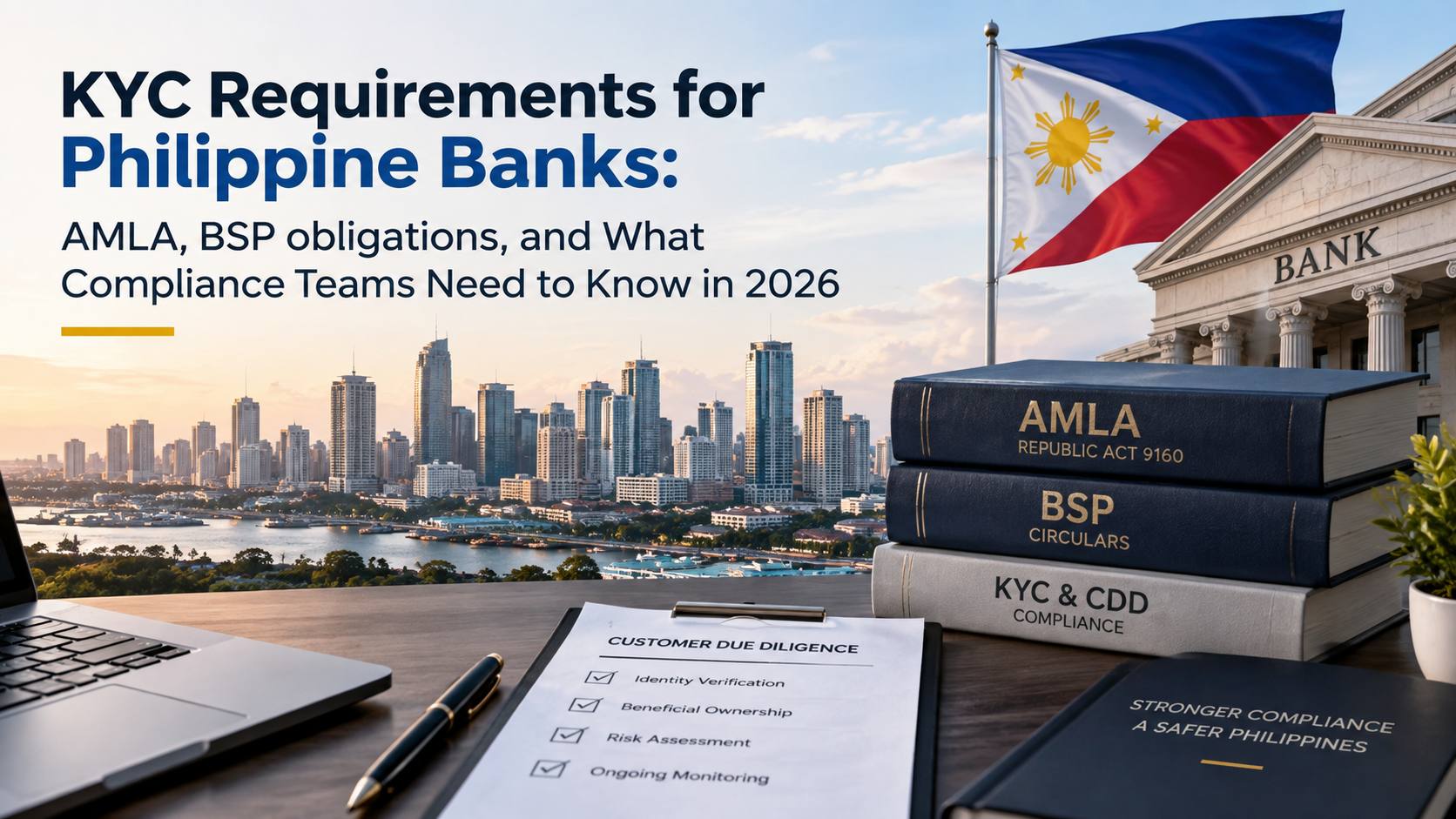
KYC Requirements for Philippine Banks: AMLA, BSP obligations, and What Compliance Teams Need to Know in 2026
The Philippines was removed from the FATF list of jurisdictions under increased monitoring in February 2025. This guide explains current AMLA and BSP KYC/CDD requirements for banks, including beneficial ownership, digital onboarding, reporting and record retention.
KYC Requirements for Philippine Banks: AMLA, BSP obligations, and What Compliance Teams Need to Know in 2026
The Philippines was removed from the FATF list of jurisdictions under increased monitoring in February 2025. This guide explains current AMLA and BSP KYC/CDD requirements for banks, including beneficial ownership, digital onboarding, reporting and record retention.