Compliance Hub

Fraud Fighters 2026: The Tools Leading the Charge Against Financial Crime

Site Logo
Tookitaki
07 Apr 2026
7 min
read

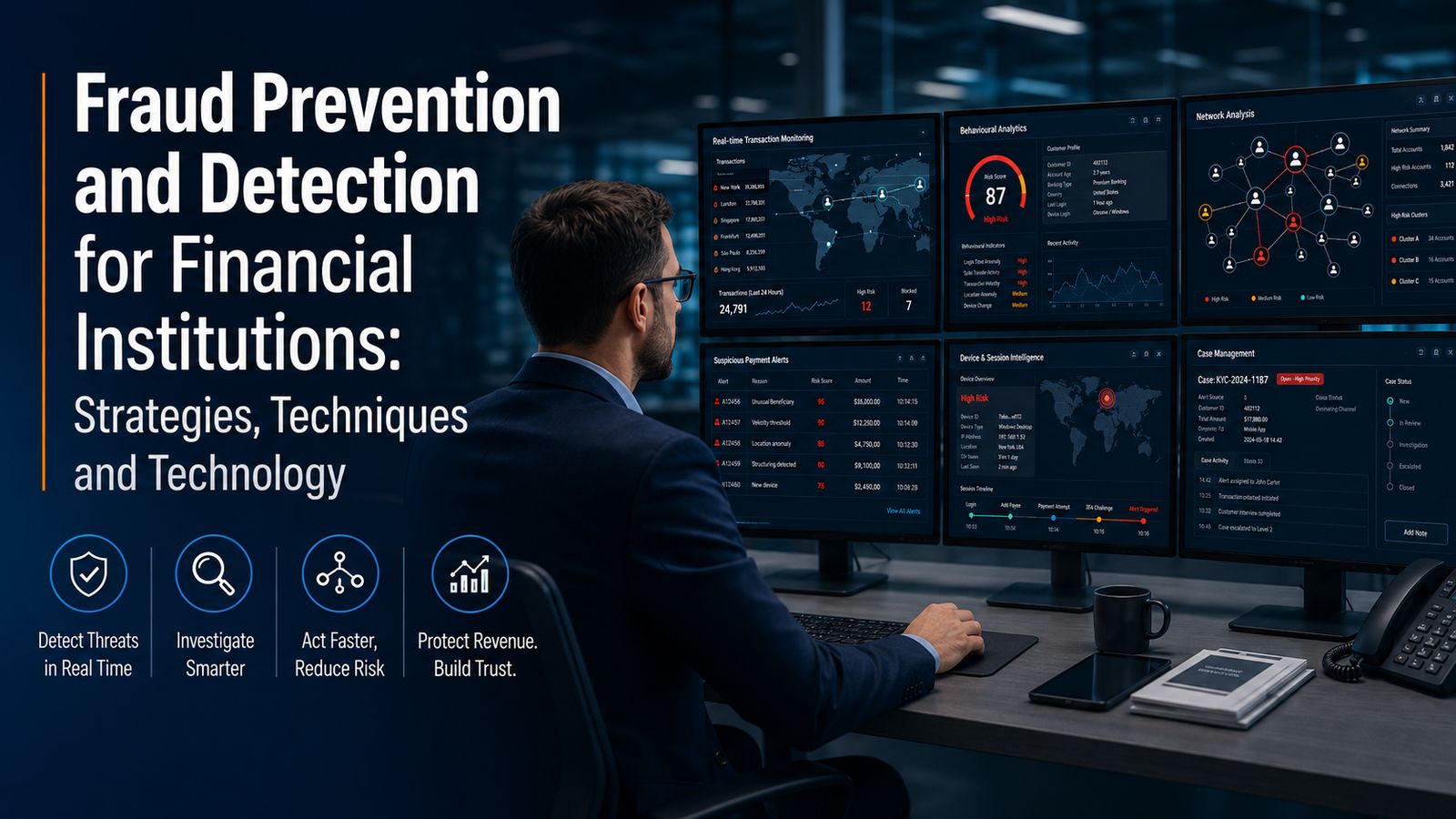
In 2026, deploying top fraud prevention tools is crucial for fintech companies to combat sophisticated financial crimes.

As digital transactions become more prevalent, fraudsters are leveraging advanced technologies like AI to execute complex scams. Fintech firms must stay ahead by integrating cutting-edge fraud prevention solutions that offer real-time monitoring, behavioural analytics, and machine learning capabilities.

This article explores the leading fraud prevention tools of 2026, highlighting their features and how they empower fintech companies to protect their operations and customers effectively.

The Critical Role of Fraud Prevention Tools in Fintech

In today’s digital-first financial ecosystem, fraud prevention is no longer optional—it’s a strategic imperative. For fintech companies, choosing the right fraud prevention tools can mean the difference between sustained growth and reputational damage.

The best fraud prevention companies leverage cutting-edge technologies such as machine learning, behavioural analytics, and artificial intelligence. These tools go beyond traditional rule-based systems to detect anomalies in real time, flag suspicious transactions, and prevent fraud before it occurs.

By analysing large volumes of transactional data, these solutions identify emerging threats and adapt quickly to evolving fraud patterns. This proactive defence empowers fintechs to take immediate action, mitigating losses and minimising customer impact.

Ultimately, robust fraud prevention tools help fintech businesses maintain trust, comply with regulatory standards, and protect their bottom line. In an industry built on speed and innovation, the ability to detect and prevent fraud in real time is not just a benefit—it’s a necessity.

{{cta-first}}

Understanding Fraud Detection Solutions and Their Impact

Fraud detection solutions form the backbone of any robust fraud prevention strategy. Used by the best fraud prevention companies, these tools harness advanced technologies to flag and respond to suspicious activities in real-time.

By analysing high volumes of transaction data, these solutions uncover hidden patterns, behavioural anomalies, and red flags that may signal fraud. This early detection capability allows fintechs and financial institutions to act fast—preventing financial losses before they escalate.

The impact is twofold: not only do businesses mitigate risk, but they also reinforce customer trust. In the competitive fintech space, reputation is everything—and fraud incidents can severely damage consumer confidence.

Ultimately, investing in modern fraud detection solutions is more than just risk mitigation. It’s a forward-looking strategy that strengthens compliance, supports business continuity, and helps companies scale securely in a rapidly evolving financial landscape.

Risk Management: The First Line of Defence Against Fraud

Risk management is the cornerstone of any effective fraud prevention framework. As practised by the best fraud prevention companies, it goes beyond detection, focusing on anticipation and prevention of fraudulent activity before it occurs.

At its core, risk management involves identifying, evaluating, and prioritising potential vulnerabilities, especially those exploited in digital financial ecosystems. Through regular audits, threat assessments, and system testing, businesses can uncover weak points that could be targeted by fraudsters.

Leading fraud prevention strategies also involve implementing strong security policies—such as multi-factor authentication, data encryption, and continuous software updates. These controls significantly reduce exposure to cyber threats and unauthorised access.

In an increasingly digital world, risk management is not just a security function—it’s a strategic necessity. It empowers businesses to stay one step ahead, protect customer trust, and build resilient operations from the ground up.

Security Measures: Building a Fortified Financial Fraud Prevention System

Security measures are the foundation of any effective fraud prevention system. They act as digital barriers, protecting sensitive financial data from unauthorised access, breaches, and manipulation. The best fraud prevention companies implement a layered security approach, combining both foundational and advanced defences to stay ahead of evolving threats.

Multi-factor authentication (MFA) is a cornerstone of modern fraud defence. By requiring users to verify their identity through a combination of factors—such as a password, a device, or biometric data—MFA significantly reduces the risk of account takeovers and identity theft.

Another key line of defence is encryption. This method transforms sensitive data into unreadable code, which can only be unlocked using a decryption key. Whether it's safeguarding credit card numbers or user credentials, encryption is essential for maintaining data integrity during storage or transmission.

Together, these measures help build a resilient fraud prevention system—one that not only detects and blocks threats, but also fosters trust in digital financial services.

Behaviour Analytics: The Smart Way to Monitor Suspicious Activity

Behaviour analytics is emerging as a vital layer in modern fraud prevention strategies. By tracking and analysing user actions—such as login frequency, location, transaction size, and device usage—institutions can identify anomalies that may signal fraudulent activity.

The best fraud prevention companies leverage machine learning algorithms to power this behavioural analysis. These intelligent systems process vast volumes of user data in real time, identifying subtle shifts and patterns that may otherwise go unnoticed. Whether it's a sudden overseas login or an unusual spending spree, behaviour analytics helps flag risks before they escalate.

However, this tool works best as part of a broader fraud prevention ecosystem. While it significantly enhances early detection capabilities, final verification and action still depend on human investigators who review flagged activity and determine the appropriate response.

By combining machine learning with human oversight, financial institutions can create smarter, more responsive fraud detection systems—critical for staying ahead of today’s increasingly sophisticated threats.

The Evolution of Fraud Detection Tools: From Manual to Automated

Fraud detection has come a long way—from manual, labour-intensive reviews to intelligent, automated systems. Traditionally, investigators had to pore over spreadsheets and transaction logs to identify suspicious activities. This approach was slow, error-prone, and limited in scale.

Today, the landscape looks entirely different. Automated fraud detection tools powered by artificial intelligence and machine learning have transformed how financial institutions combat fraud. These tools can scan millions of transactions in real-time, identify hidden patterns, and flag potential risks with remarkable speed and precision.

The best fraud prevention companies have led this transformation by building systems that not only detect fraud but also learn from emerging threats. As fraudsters become more sophisticated, these tools adapt—continuously improving their detection capabilities and reducing false positives.

Still, even the most advanced systems benefit from human expertise. Automation enhances efficiency, but critical decision-making and context-driven insights remain the domain of experienced compliance teams. Together, human intelligence and smart automation offer a balanced, future-ready approach to fraud prevention.

Reducing False Positives: A Balancing Act in Fraud Detection

One of the biggest challenges in fraud detection is managing false positives—legitimate transactions that get flagged as suspicious. While caution is necessary, excessive false positives can frustrate customers, slow down operations, and burden compliance teams with unnecessary reviews.

The best fraud prevention companies tackle this challenge using machine learning and behaviour analytics. These technologies continuously learn from historical data and adapt their models to more accurately distinguish between real threats and normal customer activity. The result? Sharper detection with fewer false alarms.

Reducing false positives is about finding the right balance—tight enough to catch fraud, but flexible enough to avoid disrupting genuine transactions. As fraud patterns evolve, staying ahead means choosing solutions that not only detect threats but also prioritise seamless customer experience.

Identity Verification: The Keystone of Fraud Prevention

Identity verification is at the heart of modern fraud prevention. It ensures that individuals or entities involved in a transaction are who they claim to be—forming the first barrier against identity theft, account takeover, and synthetic fraud.

The best fraud prevention companies leverage advanced verification methods such as biometric authentication, multi-factor authentication (MFA), and real-time document validation. These tools allow financial institutions to confirm identities instantly and accurately, even as fraud tactics become more sophisticated.

But identity verification isn’t a one-size-fits-all solution. High-risk transactions may require deeper authentication layers, while low-risk activities can remain seamless for the user. That’s why flexible, risk-based identity verification systems are crucial to balancing security and user experience—without slowing down legitimate activity.

Tackling Account Takeover: Strategies and Tools

Account takeover is a type of fraud where a criminal gains access to a victim's account, often through phishing or malware attacks. Once in control, the fraudster can make unauthorised transactions, change account details, or even lock the legitimate user out. This type of fraud can lead to significant financial losses and damage to a company's reputation.

Preventing account takeover requires a multi-faceted approach. This includes strong password policies, regular monitoring for suspicious activity, and the use of fraud detection tools that can identify unusual behaviour patterns. Machine learning algorithms can be particularly effective in this regard, as they can learn from past incidents and adapt to new fraud tactics.

In addition, educating customers about the risks of account takeover and how to protect themselves is crucial. This includes advising them on safe online practices, such as avoiding suspicious emails and using secure networks. By combining technological solutions with customer education, financial institutions can significantly reduce the risk of account takeover.

The Anatomy of an Effective Fraud Prevention System

A robust fraud prevention system is a critical component of any financial institution's security strategy. It serves as the first line of defence against fraudulent activities, protecting both the institution and its customers from financial loss and reputational damage. But what makes a fraud prevention system effective?

Firstly, it should be comprehensive, covering all possible points of vulnerability. This includes online transactions, mobile banking, ATM withdrawals, and more. It should also be able to detect a wide range of fraud types, from identity theft to account takeover.

Secondly, an effective system should be proactive, not just reactive. It should use predictive analytics and machine learning algorithms to identify potential fraud before it occurs. This requires continuous monitoring and updating to keep up with evolving fraud tactics.

Lastly, a good fraud prevention system should strike a balance between security and customer convenience. Overly stringent measures can frustrate customers and lead to a poor user experience. Therefore, it's important to implement security measures that are robust, yet user-friendly.

Top Fraud Prevention Tools for 2026

Financial institutions evaluating fraud prevention tools in 2026 are looking for more than basic detection. They need platforms that can respond in real time, adapt to fast-changing fraud patterns, and support teams under growing operational pressure.

Some of the recognised names in this market include Tookitaki, SEON, ComplyAdvantage, and F5. Each may appear in vendor evaluations, but the right fit depends on what an institution values most: detection accuracy, speed, scalability, compliance alignment, and ease of operational use.

✅ Tookitaki
Tookitaki offers an AI-powered fraud prevention platform built for financial institutions that need agility, precision, and real-time responsiveness. Through FinCense and its integration with the AFC Ecosystem, Tookitaki brings together technology and community-driven intelligence to help institutions stay ahead of emerging fraud risks while improving efficiency and reducing noise.

✅ SEON
SEON is a known provider in the fraud prevention space and is often evaluated by digital businesses.

✅ ComplyAdvantage
ComplyAdvantage is an established vendor in the wider financial crime compliance market and is frequently considered in regulated environments.

✅ F5
F5 is another recognised player, particularly in larger enterprise technology environments.

Ultimately, choosing the right fraud prevention platform is about finding a solution that fits your fraud risks, customer base, and operating model, while giving teams the ability to detect threats earlier and respond with confidence.

Comparing Fraud Prevention Systems: What Sets the Best Apart

When evaluating fraud prevention systems, several factors distinguish the best from the rest. Here’s what to consider:

  • Scalability and Flexibility: A top fraud prevention system must grow with your business. The system must handle growing transaction volumes and changing fraud patterns. It should be flexible for both small and large businesses.
  • Fraud Detection Accuracy and Reducing False Positives: The best systems find fraud and cut false positives. High accuracy avoids false flags on genuine transactions. This reduces disruptions to your business.
  • Customisation Options and Industry-Specific Features: Businesses in different industries face unique fraud challenges. A good fraud prevention system allows for customisation. It must have industry-specific features that meet your sector's needs, whether in finance, retail, or e-commerce.
  • Cost-Effectiveness and ROI: The initial investment in fraud prevention software can be high. But, its long-term savings from preventing fraud make it cost-effective. The best systems offer a high ROI. They protect your revenue and reputation.

Credit Cards and High-Risk Transactions: Enhancing Protection Measures

Credit cards remain one of the most frequent targets for fraudsters due to their widespread use, global acceptance, and potential for high-value transactions. As a result, enhancing fraud protection around credit card usage is a top priority for any organisation aiming to reduce financial crime.

The best fraud prevention companies in 2026 are deploying layered security protocols—including real-time transaction monitoring, advanced encryption, and multi-factor authentication—to safeguard sensitive card data. These tools not only protect customers but also reduce chargebacks and financial losses for businesses.

High-risk transactions—such as those involving unusually large amounts, rapid-fire purchases, or activity originating from high-fraud geographies—require even greater scrutiny. Modern fraud prevention systems powered by machine learning and behavioural analytics can instantly detect such risks and trigger alerts before any damage is done.

In a constantly shifting threat landscape, continuous monitoring and dynamic risk scoring are essential. By partnering with the best fraud prevention company, financial institutions and fintechs can ensure that their defences evolve in tandem with emerging fraud patterns, delivering both agility and trust.

Machine Learning Algorithms: Revolutionizing Fraud Detection

Machine learning algorithms are at the forefront of innovation in fraud prevention. These intelligent systems are transforming how financial institutions detect and respond to fraud by analysing massive volumes of transaction data in real time. By spotting subtle anomalies and behavioural deviations, they can detect fraudulent activity at its earliest stages—often before any financial damage occurs.

What makes machine learning especially powerful is its ability to learn and adapt. As algorithms process more data over time, they become increasingly accurate, reducing false positives and enhancing the precision of fraud alerts. This evolution is vital in today’s fast-changing fraud landscape, where criminals continuously refine their tactics to bypass outdated systems.

The best fraud prevention companies are harnessing the power of machine learning to deliver scalable, adaptive solutions that stay ahead of these evolving threats. While implementing these technologies requires a strong foundation of data science expertise and infrastructure, the benefits—real-time fraud detection, improved compliance, and reduced operational cost—are undeniable.

For fintechs and financial institutions looking to future-proof their defences, machine learning isn’t just a competitive advantage—it’s a necessity.

Real-Time Fraud Detection Software: The Need for Speed

When it comes to financial crime, every second counts. Fraudsters operate at lightning speed, and delays in detection can lead to significant financial and reputational damage. That’s why real-time fraud detection software has become a non-negotiable tool in any modern fraud prevention strategy.

These advanced systems continuously monitor transactions as they happen, instantly flagging suspicious activity. Leveraging a blend of behaviour analytics, machine learning algorithms, and pattern recognition, they provide real-time insights that help stop fraud before it escalates.

Real-time detection not only reduces potential losses but also enhances customer trust—minimising false positives and avoiding unnecessary transaction disruptions. The best fraud prevention companies integrate these real-time capabilities into scalable solutions tailored to different industries and risk profiles.

Choosing the right software requires aligning your institution’s goals with a solution’s technical capabilities, adaptability, and ease of integration. But once in place, real-time detection becomes a powerful first responder—giving your compliance and fraud teams the speed and intelligence needed to stay ahead of emerging threats.

{{cta-ebook}}

Identity Theft: Understanding the Threat and Prevention Tactics

In today’s hyper-connected world, identity theft is one of the most prevalent and damaging forms of financial crime. Fraudsters use tactics such as phishing emails, social engineering, and large-scale data breaches to steal personally identifiable information (PII). Once compromised, this data can be exploited to open fraudulent accounts, conduct unauthorised transactions, or even commit long-term financial fraud under a victim’s identity.

Preventing identity theft requires a layered defence. Robust encryption, multi-factor authentication (MFA), and secure access protocols are essential to protect sensitive customer data. Equally important is consumer education—empowering users to recognise red flags and avoid falling victim to scams.

The best fraud prevention companies go a step further by deploying advanced detection technologies. These include machine learning models and behavioural analytics that can detect anomalies in real-time—such as sudden changes in login locations or spending patterns—that may signal identity misuse. Early detection allows institutions to intervene swiftly, protecting both the customer and the integrity of the financial system.

As identity theft tactics become more sophisticated, only a proactive, tech-powered approach can provide the speed and intelligence needed to stay ahead of bad actors.

The Future of Fraud Detection and Prevention: Trends and Predictions

Fraud prevention is entering a transformative era—driven by technological innovation and the evolving tactics of fraudsters. As financial institutions look ahead, three major trends are set to shape the future of fraud detection.

1. AI and Machine Learning Will Lead the Way
Artificial intelligence (AI) and machine learning are becoming central to fraud prevention strategies. These technologies can process and analyse massive volumes of transactional data in real time, identifying suspicious patterns and anomalies that human analysts or rule-based systems may miss. The best fraud prevention companies are already leveraging these tools to deliver faster, more accurate alerts and reduce false positives—empowering compliance teams to act swiftly on genuine threats.

2. Cross-Industry Collaboration is Gaining Traction
Fraud doesn’t stop at borders—or industries. Financial institutions, fintech companies, and regulators are increasingly working together to share intelligence, emerging threat data, and typologies. This community-driven model allows for faster detection and a stronger collective defence. The future lies in ecosystems where insights are pooled to stay ahead of sophisticated, cross-border fraud networks.

3. Digital Banking Demands Smarter Security
As mobile and online banking usage soars, fraudsters are shifting their focus to digital channels. This has made robust digital defences more important than ever. Multi-factor authentication (MFA), biometric verification, behavioural analytics, and real-time fraud monitoring are no longer optional—they’re essential. To stay competitive and compliant, institutions must prioritise solutions that can protect against evolving digital threats.

In summary, the financial institutions that embrace AI-powered tools, foster collaboration, and build secure digital ecosystems will lead the charge. Partnering with the best fraud prevention company ensures you’re not just reacting to fraud—but staying ahead of it.

How Tookitaki’s Fraud Prevention Software Stands Out

When it comes to protecting your institution from financial crime, choosing the right partner is essential—and Tookitaki is redefining what it means to be the best fraud prevention company in today’s complex landscape.

At the core of our solution is FinCense, a next-generation, AI-powered platform built to deliver real-time, end-to-end protection against fraud. With up to 90% detection accuracy, Tookitaki empowers banks and fintechs to identify and prevent fraud across a wide spectrum of scenarios—from account takeovers to complex money mule networks.

What makes Tookitaki different is the strength of our Anti-Financial Crime (AFC) Ecosystem. This global, community-driven repository of financial crime typologies provides access to the latest red flags and evolving fraud techniques. It allows compliance teams to stay ahead of threats with real-world insights contributed by experts around the world.

With advanced machine learning, Tookitaki’s software continuously learns and adapts to emerging fraud patterns. It integrates seamlessly with your existing systems, reducing false positives, streamlining workflows, and allowing your compliance team to focus on what matters most—real threats.

Whether you're a growing fintech or a global bank, Tookitaki offers a future-ready solution designed to scale with your needs, improve accuracy, and strengthen your defence. This is why we’re trusted by leading institutions—and why we’re often regarded as one of the best fraud prevention companies in the industry today.

Conclusion: Choosing the Right Fraud Prevention Tools for Your Business

In today’s rapidly evolving digital environment, selecting the right fraud prevention tools is not just important—it’s essential. As cybercriminals become more sophisticated, businesses must adopt smarter, faster, and more adaptive strategies to protect their operations and customers.

When evaluating tools, look for critical features like real-time monitoring, AI-driven detection, and seamless integration. These capabilities are no longer optional—they are must-haves for building a resilient, future-ready fraud prevention framework.

The tools covered in this blog cater to a wide range of industries and operational needs, helping businesses strengthen their defences against identity theft, account takeover, and transactional fraud. However, the most effective tool is one that aligns with your specific risk landscape and operational goals.

If you're looking to partner with the best fraud prevention company, consider Tookitaki. Our AI-powered platform, FinCense, backed by the AFC Ecosystem, delivers real-time insights and community-sourced intelligence to help you stay ahead of emerging threats. With Tookitaki, your compliance team can focus on real risks while achieving greater accuracy, efficiency, and peace of mind.

Ready to future-proof your fraud prevention strategy? Discover how Tookitaki can help your business thrive securely.

Frequently Asked Questions

1. What should businesses look for in a fraud prevention company?
Businesses should look for fraud prevention platforms that offer real-time detection, low false positives, strong analytics, scalability, and the ability to adapt to evolving fraud patterns. Integration with existing systems and ease of operational use are also important factors.

2. What features are most important in fraud prevention tools?
Key features include real-time transaction monitoring, AI or machine learning-based detection, behavioural analytics, risk scoring, alert prioritisation, case management, and the ability to reduce false positives while maintaining detection accuracy.

3. How do fraud prevention platforms reduce false positives?
Modern fraud prevention platforms use behavioural analytics, machine learning, and contextual risk scoring to distinguish legitimate customer activity from suspicious behaviour. This helps reduce unnecessary alerts while maintaining strong detection capabilities.

4. Are fraud prevention tools suitable for both banks and fintechs?
Yes. Fraud prevention tools are used by banks, fintechs, payment providers, and digital financial institutions. The right platform depends on transaction volume, risk exposure, regulatory requirements, and operational complexity.

5. What is the difference between fraud detection and fraud prevention?
Fraud detection focuses on identifying suspicious activity after it occurs, while fraud prevention aims to stop fraudulent transactions before they are completed. Most modern platforms combine both capabilities.

6. How do organisations choose the right fraud prevention vendor?
Organisations typically evaluate vendors based on detection accuracy, scalability, implementation effort, integration capabilities, regulatory alignment, and overall operational efficiency. A solution that balances detection strength with usability often delivers the best results.

Talk to an Expert

Ready to Streamline Your Anti-Financial Crime Compliance?

Our Thought Leadership Guides

Blogs
14 Apr 2026
5 min
read

The “King” Who Promised Wealth: Inside the Philippines Investment Scam That Fooled Many

When authority is fabricated and trust is engineered, even the most implausible promises can start to feel real.

The Scam That Made Headlines

In a recent crackdown, the Philippine National Police arrested 15 individuals linked to an alleged investment scam that had been quietly unfolding across parts of the country.

At the centre of it all was a man posing as a “King” — a self-styled figure of authority who convinced victims that he had access to exclusive investment opportunities capable of delivering extraordinary returns.

Victims were drawn in through a mix of persuasion, perceived legitimacy, and carefully orchestrated narratives. Money was collected, trust was exploited, and by the time doubts surfaced, the damage had already been done.

While the arrests mark a significant step forward, the mechanics behind this scam reveal something far more concerning, a pattern that financial institutions are increasingly struggling to detect in real time.

Talk to an Expert

Inside the Illusion: How the “King” Investment Scam Worked

At first glance, the premise sounds almost unbelievable. But scams like these rarely rely on logic, they rely on psychology.

The operation appears to have followed a familiar but evolving playbook:

1. Authority Creation

The central figure positioned himself as a “King” — not in a literal sense, but as someone with influence, access, and insider privilege. This created an immediate power dynamic. People tend to trust authority, especially when it is presented confidently and consistently.

2. Exclusive Opportunity Framing

Victims were offered access to “limited” investment opportunities. The framing was deliberate — not everyone could participate. This sense of exclusivity reduced skepticism and increased urgency.

3. Social Proof and Reinforcement

Scams of this nature often rely on group dynamics. Early participants, whether real or planted, reinforce credibility. Testimonials, referrals, and word-of-mouth create a false sense of validation.

4. Controlled Payment Channels

Funds were collected through a combination of cash handling and potentially structured transfers. This reduces traceability and delays detection.

5. Delayed Realisation

By the time inconsistencies surfaced, victims had already committed funds. The illusion held just long enough for the operators to extract value and move on.

This wasn’t just deception. It was structured manipulation, designed to bypass rational thinking and exploit human behaviour.

Why This Scam Is More Dangerous Than It Looks

It’s easy to dismiss this as an isolated case of fraud. But that would be a mistake.

What makes this incident particularly concerning is not the narrative — it’s the adaptability of the model.

Unlike traditional fraud schemes that rely heavily on digital infrastructure, this scam blended offline trust-building with flexible payment collection methods. That makes it significantly harder to detect using conventional monitoring systems.

More importantly, it highlights a shift: Fraud is no longer just about exploiting system vulnerabilities. It’s about exploiting human behaviour and using financial systems as the final execution layer.

For banks and fintechs, this creates a blind spot.

Following the Money: The Likely Financial Footprint

From a compliance and AML perspective, scams like this leave behind patterns — but rarely in a clean, linear form.

Based on the nature of the operation, the financial footprint may include:

  • Multiple small-value deposits or transfers from different individuals, often appearing unrelated
  • Use of intermediary accounts to collect and consolidate funds
  • Rapid movement of funds across accounts to break transaction trails
  • Cash-heavy collection points, reducing digital visibility
  • Inconsistent transaction behaviour compared to customer profiles

Individually, these signals may not trigger alerts. But together, they form a pattern — one that requires contextual intelligence to detect.

Red Flags Financial Institutions Should Watch

For compliance teams, the challenge lies in identifying these patterns early — before the damage escalates.

Transaction-Level Indicators

  • Sudden inflow of funds from multiple unrelated individuals into a single account
  • Frequent small-value transfers followed by rapid aggregation
  • Outbound transfers shortly after deposits, often to new or unverified beneficiaries
  • Structuring behaviour that avoids typical threshold-based alerts
  • Unusual spikes in account activity inconsistent with historical patterns

Behavioural Indicators

  • Customers participating in transactions tied to “investment opportunities” without clear documentation
  • Increased urgency in fund transfers, often under external pressure
  • Reluctance or inability to explain transaction purpose clearly
  • Repeated interactions with a specific set of counterparties

Channel & Activity Indicators

  • Use of informal or non-digital communication channels to coordinate transactions
  • Sudden activation of dormant accounts
  • Multiple accounts linked indirectly through shared beneficiaries or devices
  • Patterns suggesting third-party control or influence

These are not standalone signals. They need to be connected, contextualised, and interpreted in real time.

The Real Challenge: Why These Scams Slip Through

This is where things get complicated.

Scams like the “King” investment scheme are difficult to detect because they often appear legitimate — at least on the surface.

  • Transactions are customer-initiated, not system-triggered
  • Payment amounts are often below risk thresholds
  • There is no immediate fraud signal at the point of transaction
  • The story behind the payment exists outside the financial system

Traditional rule-based systems struggle in such scenarios. They are designed to detect known patterns, not evolving behaviours.

And by the time a pattern becomes obvious, the funds have usually moved.

The fake king investment scam

Where Technology Makes the Difference

Addressing these risks requires a shift in how financial institutions approach detection.

Instead of looking at transactions in isolation, institutions need to focus on behavioural patterns, contextual signals, and scenario-based intelligence.

This is where modern platforms like Tookitaki’s FinCense play a critical role.

By leveraging:

  • Scenario-driven detection models informed by real-world cases
  • Cross-entity behavioural analysis to identify hidden connections
  • Real-time monitoring capabilities for faster intervention
  • Collaborative intelligence from ecosystems like the AFC Ecosystem

…institutions can move from reactive detection to proactive prevention.

The goal is not just to catch fraud after it happens, but to interrupt it while it is still unfolding.

From Headlines to Prevention

The arrest of those involved in the “King” investment scam is a reminder that enforcement is catching up. But it also highlights a deeper truth: Scams are evolving faster than traditional detection systems.

What starts as an unbelievable story can quickly become a widespread financial risk — especially when trust is weaponised and financial systems are used as conduits.

For banks and fintechs, the takeaway is clear.

Prevention cannot rely on static rules or delayed signals. It requires continuous adaptation, shared intelligence, and a deeper understanding of how modern scams operate.

Because the next “King” may not call himself one.

But the playbook will look very familiar.

The “King” Who Promised Wealth: Inside the Philippines Investment Scam That Fooled Many
Blogs
14 Apr 2026
5 min
read

Transaction Monitoring in Singapore: MAS Requirements and Best Practices

In August 2023, Singapore Police Force executed the largest money laundering operation in the country's history. S$3 billion in assets were seized from ten foreign nationals who had moved funds through Singapore's financial system for years — through banks, through licensed payment institutions, through corporate accounts holding everything from luxury cars to commercial property.

For compliance teams at Singapore-licensed financial institutions, the question that followed was not abstract. It was: would our transaction monitoring have caught this?

MAS has been examining that question across the industry since, through an intensified supervisory programme that has put transaction monitoring under closer scrutiny than at any point in the past decade. This guide covers what Singapore law requires, what MAS examiners actually check, and what a genuinely effective transaction monitoring programme looks like in a Singapore context.

Talk to an Expert

Singapore's Transaction Monitoring Regulatory Framework

Transaction monitoring obligations in Singapore flow from three regulatory instruments. Understanding the differences between them matters — particularly for payment service providers, whose obligations are sometimes confused with bank requirements.

MAS Notice 626 (Banks)

MAS Notice 626, issued under the Banking Act, is the primary AML/CFT requirement for Singapore-licensed banks. Paragraphs 19–27 set out monitoring requirements: banks must implement systems to detect unusual or suspicious transactions, investigate alerts within defined timeframes, and document monitoring outcomes in a form that MAS can review.

The full obligations under Notice 626 are covered in detail in our [MAS Notice 626 Transaction Monitoring Requirements guide](/compliance-hub/mas-notice-626-transaction-monitoring). What matters for this discussion is that Notice 626 sets a floor, not a ceiling. MAS expectations in examination have consistently run ahead of the minimum text.

MAS Notices PSN01 and PSN02 (Payment Service Providers)

Since the Payment Services Act (PSA) came into force in 2020, licensed payment institutions — standard payment institutions and major payment institutions — have had AML/CFT obligations that mirror the core requirements of Notice 626, adapted for the payment services context.

A cross-border remittance operator has the same obligation to monitor for unusual activity as a bank. The typologies look different — faster transaction cycling, higher cross-border transfer volumes, shorter customer history — but the regulatory requirement is equivalent.

This matters because some licensed payment institutions still treat their monitoring obligations as lighter than bank-grade. MAS examination findings published in the 2024 supervisory expectations document specifically noted that AML controls at payment institutions were "less mature" than at banks — which means this is now an examination priority.

MAS AML/CFT Supervisory Expectations (2024)

The 2024 MAS supervisory expectations document is the most direct signal of what MAS is looking for. It followed the 2023 enforcement action and a broader review of AML/CFT controls across supervised institutions.

Transaction monitoring appears in three of the five priority areas in that document:

  • Alert logic that is not calibrated to the institution's specific risk profile
  • Insufficient monitoring intensity for high-risk customers
  • Weak documentation of alert investigation outcomes

None of these are technical failures. They are process and governance failures — which is what makes them significant. An institution can have sophisticated monitoring software and still fail on all three.

What MAS Examiners Actually Check

Notice 626 describes what is required. MAS examinations test whether requirements are met in practice. Based on examination findings and regulatory guidance, MAS reviewers focus on four areas in transaction monitoring assessments.

Alert calibration against actual risk

MAS does not expect every institution to use the same alert thresholds. It expects every institution to use thresholds that reflect its own customer risk profile.

An institution whose customers are predominantly high-net-worth individuals with complex cross-border financial structures should have monitoring rules calibrated for that population — not rules designed for retail banking that happen to flag some of the same transactions.

In practice, examiners ask: how were these thresholds set? When were they last reviewed? What changed in your customer book since the last calibration, and how did the monitoring reflect that? Institutions that cannot answer these questions specifically — with dates, documented rationale, and sign-off from a named senior officer — are likely to receive findings.

Alert investigation documentation

This is where most examination failures occur, and it is not because institutions failed to review alerts.

MAS expects a written record for each alert: what the analyst found, why the transaction was or was not considered suspicious, and what action was or was not taken. A disposition of "reviewed — no SAR required" without supporting rationale does not satisfy this requirement. The expectation is closer to: "reviewed the customer's transaction history, the stated purpose of the account, and the counterparty profile. The transaction pattern is consistent with the customer's documented business activities and does not meet the threshold for filing."

Institutions that have good detection logic but poor investigation documentation often present worse in examination than institutions with simpler detection that document everything carefully.

Coverage of high-risk customers

FATF Recommendation 10 and Notice 626 both require enhanced monitoring for high-risk customers. MAS examiners check whether the monitoring programme reflects this operationally — not just in policy.

A specific check: do high-risk customers generate more alerts per capita than standard-risk customers? If not, one of two things is happening: either the monitoring programme is not applying enhanced measures to high-risk accounts, or it is applying enhanced measures but they are not generating additional alerts — which means the enhanced measures are not actually detecting more.

Either way, the institution needs to be able to explain the distribution clearly.

The audit trail

When MAS examines a monitoring programme, examiners review a sample of alerts from the past 12 months. For each sampled alert, they should be able to see: which rule or model triggered it, when it was assigned for investigation, who reviewed it, what the disposition decision was, the written rationale, and whether an STR was filed.

If any of these elements cannot be produced — because the system does not log them, or because records were not retained — the examination finding is straightforward.

Post-2023: What Changed

The 2023 enforcement action changed the operational context for transaction monitoring in Singapore in three specific ways.

Typology libraries need to reflect the patterns that were missed. The S$3 billion case involved specific patterns: shell companies receiving large transfers followed by property purchases, multiple entities with overlapping beneficial ownership, cash-intensive businesses used to layer funds into the formal banking system. These are not novel typologies — FATF and MAS had documented them before 2023. The question is whether monitoring rules were actually in place to detect them.

MAS has increased examination intensity. Following the 2023 case, MAS publicly committed to strengthening AML/CFT supervision, including more frequent and more intrusive examinations of systemically important institutions. Compliance teams that previously experienced relatively light-touch monitoring reviews should expect more detailed examination engagement going forward.

The reputational context for non-compliance has shifted. Before 2023, AML failures in Singapore were largely a technical compliance matter. After an enforcement action that received global coverage and led to diplomatic implications, the reputational consequences of a significant AML failure for a Singapore-licensed institution are much more visible.

Transaction Monitoring for PSA-Licensed Payment Institutions

For firms licensed under the PSA, there are specific practical considerations that bank-focused guidance does not address.

Shorter customer history. Payment service firms typically have shorter customer relationships than banks — sometimes months rather than years. ML-based anomaly detection models need historical data to establish baseline behaviour. When that history is limited, rules-based detection of known typologies needs to carry more weight in the alert logic.

Cross-border transaction volumes. PSA licensees handling international remittances have inherently higher cross-border exposure. Monitoring typologies must specifically address: structuring across multiple corridors, unusual shifts in destination country distribution, and dormant accounts that suddenly receive high-volume cross-border inflows.

Account lifecycle monitoring. New accounts that begin transacting immediately at high volume, or accounts that show no activity for an extended period before suddenly becoming active, are specific patterns that PSA-specific monitoring rules should address.

MAS has stated directly that it expects payment institutions to "uplift" their AML/CFT controls to a level closer to bank-grade. For transaction monitoring specifically, that means investment in calibration, documentation, and governance — not simply deploying a vendor system and assuming requirements are met.

Focused professional in modern office setting

What Effective Transaction Monitoring Looks Like in Singapore

Across MAS guidance, examination findings, and the post-2023 supervisory environment, an effective Singapore TM programme has six characteristics:

1. Documented calibration rationale. Alert thresholds are set with reference to the institution's customer risk assessment and reviewed when the customer book changes. Every threshold has a documented basis.

2. Coverage of Singapore-specific typologies. Beyond generic AML typologies, the monitoring library includes patterns documented in Singapore enforcement actions: shell company structuring, property-linked layering, cross-border transfer cycling across high-risk jurisdictions.

3. Alert investigation documentation that can survive examination. Every alert has a written disposition, not a checkbox. High-risk customer alerts have enhanced documentation. STR filings link back to specific alerts.

4. Defined escalation process. When an analyst is uncertain, there is a clear path to the Money Laundering Reporting Officer. Escalation decisions are recorded.

5. Regular calibration review. The monitoring programme is tested — whether through independent review, internal audit, or structured self-assessment — at least annually. Results and follow-up actions are documented.

6. Model governance for ML components. Where ML-based detection is used, model performance is tracked, validation is documented, and retraining triggers are defined. The validation record sits with the institution.

Taking the Next Step

If your institution is preparing for a MAS examination, reviewing its monitoring programme post-2023, or evaluating new transaction monitoring software, the starting point is a clear-eyed assessment of where your current programme sits against MAS expectations.

Tookitaki's FinCense platform is used by financial institutions across Singapore, Malaysia, Australia, and the Philippines. It is pre-configured with APAC-specific typologies — including patterns documented in Singapore enforcement actions and produces alert documentation in the format MAS examiners review.

Book a discussion with Tookitaki's team to see FinCense in a live environment calibrated for your institution type and region.

For a broader introduction to transaction monitoring requirements across all five APAC markets — Singapore, Australia, Malaysia, Philippines, and New Zealand — see our [complete transaction monitoring guide].

Transaction Monitoring in Singapore: MAS Requirements and Best Practices
Blogs
14 Apr 2026
6 min
read

Transaction Monitoring Software: A Buyer's Guide for Banks and Fintechs

The compliance officer who bought their current transaction monitoring system probably saw a very good demo. Alert accuracy was 90% in the sandbox. Implementation was "6–8 weeks." The vendor had a case study from a Tier-1 bank.

Eighteen months later, the team processes 600 alerts per day, 530 of which are false positives. Two analysts have left. The backlog is three weeks long. An AUSTRAC examination is booked for Q4.

What happened between the demo and now is usually the same story: the sandbox didn't reflect production data, the rules weren't tuned for the actual customer base, and the implementation timeline quietly became six months.

This guide is not a vendor comparison. It is a diagnostic framework for telling effective transaction monitoring software from systems that look good until they're live.

Talk to an Expert

Why Most TM Software Evaluations Go Wrong

Most procurement processes ask vendors to list their features. That is the wrong test.

Features are table stakes. What matters is performance in your specific environment — your customer mix, your transaction volumes, your risk profile. And vendor demonstrations are optimised to impress, not to replicate reality.

Three problems appear repeatedly in post-implementation reviews:

Alert accuracy drops between demo and production. Sandbox environments use curated, clean datasets. Production data is messier: duplicate records, legacy fields, missing counterparty data. Alert models calibrated on clean data degrade when they hit the real thing.

Rule libraries built for someone else. A retail bank in Sydney and a cross-border remittance operator in Singapore do not share transaction patterns. A rule library tuned for one will generate noise for the other. Most vendors deploy the same library for both and call it "risk-based."

"Transparent" models that cannot be tuned. Vendors frequently describe their ML systems as transparent and auditable. The test is whether your team can actually adjust the models when performance drifts, or whether every change requires a vendor engagement.

What "Effective" Means to Regulators

Before comparing systems, it is worth knowing what your regulator will assess. In APAC, the standard is consistent: regulators do not want to see a system that exists. They want evidence it works.

AUSTRAC (Australia): AML/CTF Rule 16 requires monitoring to be risk-based — thresholds must reflect your specific customer risk assessment, not generic defaults. AUSTRAC's enforcement record is specific on this point: both the Commonwealth Bank's AUD 700 million settlement in 2018 and Westpac's AUD 1.3 billion settlement in 2021 cited inadequate transaction monitoring as a direct failure — not the absence of a system, but the failure of one already in place.

MAS (Singapore): Notice 626 (paragraphs 19–27) requires FIs to detect, monitor, and report unusual transactions. MAS supervisory expectations published in 2024 flagged two recurring weaknesses across supervised firms: inadequate alert calibration and insufficient documentation of monitoring outcomes. Both are failures of execution, not of system selection.

BNM (Malaysia): The AML/CFT Policy Document (2023) requires an "effective" monitoring programme. Effectiveness is assessed through examination — specifically, whether the alerts generated correspond to the actual risk in the institution's customer base.

The practical consequence: an RFP that evaluates features without assessing tuning capability, calibration flexibility, and audit trail quality is not evaluating what regulators will look at.

7 Questions to Ask Any TM Vendor

1. What is your false positive rate in a live environment comparable to ours?

This is the single number that determines analyst workload. A false positive rate of 98% means 98 of every 100 alerts require investigation time before the analyst can close them as non-suspicious. At a mid-sized bank processing 500 alerts per day, that is 490 dead-end investigations.

The benchmark: well-tuned AI-augmented systems reach false positive rates of 80–85% in production. Legacy rule-only systems routinely run at 97–99%.

Ask the vendor to show actual data from a comparable client, not an anonymised case study. If they cannot, ask why.

2. How are alerts generated — rules, models, or a combination?

Pure rules-based systems are easy to validate for audit purposes but brittle: they miss patterns they were not programmed to detect, and new typologies go unnoticed until the rules are manually updated.

Pure ML systems can detect novel patterns but are harder to validate and explain to regulators who need to understand why an alert was raised.

Hybrid systems — rules for known typologies, models for anomaly detection — are generally more defensible. Ask specifically: how does the vendor update the rules and models when the regulatory environment changes? What happened when AUSTRAC updated its rules in 2023, or when MAS revised its supervisory expectations in 2024?

3. What does the analyst workflow look like after an alert fires?

Detection is only the first step. Analysts spend more time on alert investigation than on any other compliance task. A system that generates 200 precise, context-rich alerts is worth more operationally than one that generates 500 alerts requiring 40 minutes of manual research each before a disposition decision can be made.

Ask to see the actual analyst interface, not the executive dashboard. Check whether the alert displays customer history, previous alerts, peer comparison, and relevant counterparty data — or whether the analyst has to pull all of that separately.

4. What does a MAS- or AUSTRAC-ready audit log look like?

When a regulator examines your monitoring programme, they review the logic that generated each alert, the analyst's disposition decision, and the written rationale. They check whether high-risk customers received appropriate monitoring intensity and whether there is a documented escalation path for uncertain cases.

Ask the vendor to show you a sample audit log from a recent client examination. It should show: the rule or model that triggered the alert, the analyst who reviewed it, the decision, the rationale, and the time between alert generation and disposition. If the vendor cannot produce this, the system is not regulatory-examination-ready.

5. What does implementation actually take?

Ask for the implementation timeline — from contract to production-ready performance — for the vendor's most recent three comparable deployments. Not the standard brochure. Not the best case. Three actual recent clients.

Specifically: how long from contract signature to go-live? How long from go-live to the point where alert accuracy reached its steady-state level? Those are two different numbers, and the second one is the one that matters for planning.

6. How does the vendor handle model drift?

ML models degrade over time as transaction patterns change. A model trained on 2023 data will underperform against 2026 transaction patterns if it has not been retrained. Ask how frequently models are retrained, who initiates the review, and what triggers a retraining event.

Also ask: who holds the model validation documentation? Model governance is an emerging examination focus for MAS, AUSTRAC, and BNM. The validation record needs to sit with the institution, not only with the vendor.

7. How does the system handle regulatory updates?

APAC's AML/CFT rules change more frequently than in other regions. AUSTRAC updated Chapter 16 in 2023. MAS revised its AML/CFT supervisory expectations in 2024. BNM issued a revised AML/CFT Policy Document in 2023.

When these changes occur, who updates the system — and how quickly? Some vendors treat regulatory updates as professional services engagements billed separately. Others maintain a regulatory content team that pushes updates to all clients. Ask which model applies and get the answer in writing.

Digital transaction monitoring in action

Banks vs. Fintechs: Different Needs, Different Priorities

A Tier-2 bank with 8 million retail customers and a PSA-licensed payment institution handling cross-border transfers have different TM requirements. The evaluation criteria shift accordingly.

For banks:

Volume and integration architecture matter first. A system processing 500,000 transactions per day needs different infrastructure than one processing 5,000. Ask specifically about latency in real-time monitoring scenarios and how the system handles peak volumes. Integration with core banking — particularly if the core is a legacy platform — is where implementations most commonly fail.

For fintechs and payment service providers:

Real-time detection weight is higher relative to batch processing. Cross-border typologies differ from domestic banking typologies — the vendor's rule library should include patterns specific to cross-border payment fraud, structuring across multiple jurisdictions, and rapid account cycling. Customer history is often short, which means models that require 12+ months of transaction data to perform will underperform in fast-growing books.

Total Cost of Ownership: The Number Most RFPs Undercount

The licence fee is the visible cost. The actual costs include:

  • Implementation and integration: Typically 2–4x the first-year licence cost for a mid-size institution. A vendor that quotes "6–8 weeks" for implementation should be asked for the last five clients' actual implementation timelines before that number is used in any business case.
  • Analyst capacity: A high false positive rate is not just an accuracy problem — it is a staffing cost. At a 97% false positive rate, a team processing 400 daily alerts spends approximately 85% of its investigation time on non-suspicious transactions. A 10-percentage-point improvement in accuracy frees roughly 2,400 analyst-hours per year at a 30-person operations team.
  • Regulatory risk: The cost of an enforcement action should be in the risk-adjusted total cost of ownership calculation. Westpac's 2021 settlement was AUD 1.3 billion. The remediation programme that followed cost additional hundreds of millions. Against those figures, the difference between a well-tuned system and an adequate one looks very different on a business case.

What Tookitaki's FinCense Does Differently

FinCense is Tookitaki's transaction monitoring platform, built specifically for APAC financial institutions.

The core technical differentiator is federated learning. Most ML-based TM systems train models on a single institution's data, which limits pattern diversity. FinCense's models learn from typology patterns across the Tookitaki client network — without sharing raw transaction data between institutions. The result is detection capability that reflects a broader range of financial crime patterns than any single institution's data could produce.

In production deployments across APAC, FinCense has reduced false positive rates by up to 50% compared to legacy rule-based systems. In analyst workflow terms: a team processing 400 alerts per day at a 97% false positive rate could reduce that to approximately 200 alerts at the same investigation standard — roughly halving the time spent on non-productive reviews.

The platform is pre-integrated with APAC-specific typologies for AUSTRAC, MAS, BNM, BSP, and FMA regulatory environments. Regulatory updates are included in the standard contract.

Ready to Evaluate?

If your institution is reviewing its transaction monitoring system or implementing one for the first time, the seven questions in this guide are a starting framework. The answers will tell you more about a vendor's actual capability than any feature demonstration.

Book a discussion with Tookitaki's team to see FinCense in a live environment calibrated for your institution type and region. Or read our complete guide to "what is transaction monitoring? The Complete 2026 Guide" before the vendor conversations begin.

Transaction Monitoring Software: A Buyer's Guide for Banks and Fintechs